Old Town: The City That Reformed Itself
85 min · 2.6 km · moderate
Zurich reads to most visitors as banks, trams and watch shops, but the deeper story of this city is that it reformed itself: it emptied its own churches, dissolved a thousand-year-old abbey of ruling women, and remade itself into a bare Protestant republic, all with real conviction and real cruelty in the same few years. That act of self-reformation is the thread that runs through the whole city, from the founding hill above the Limmat to the glass towers rising over a former factory quarter. Zurich is a place that keeps deciding to become something new, and then keeps the bones of what it was in plain sight. Walk it slowly and the pattern shows up everywhere.
The city that reformed itself
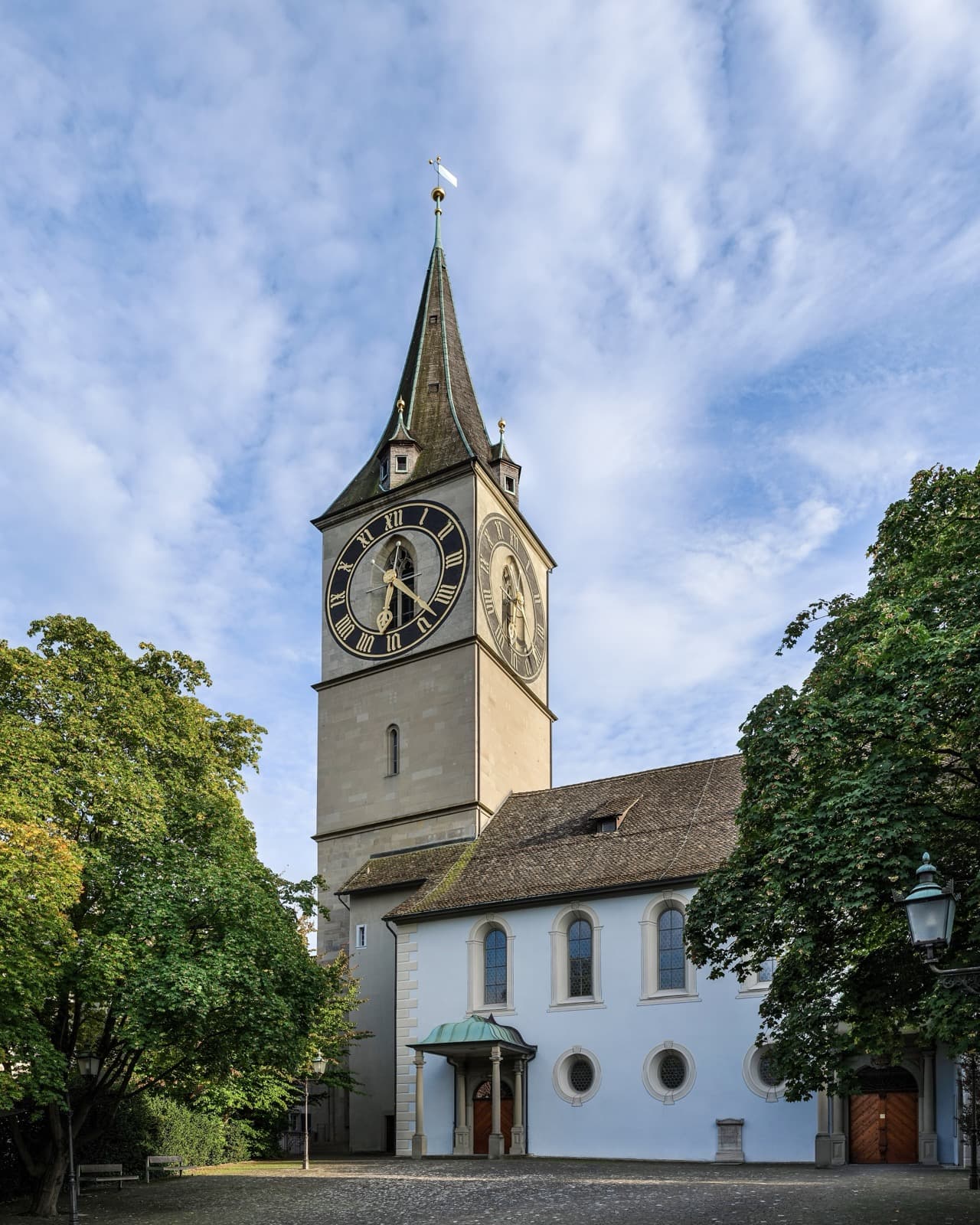
The old town is where the pattern was set. On the low green hill of Lindenhof, the Romans built a customs fort they called Turicum, and that name became Zurich. Everything below grew outward from that ground. A few steps down stands Sankt Peter, the oldest parish church in the city, carrying on its medieval tower the largest church clock face in Europe, a dial eight point six four metres across. It is a quiet joke that a city which would later make its fortune from precision timekeeping once told the whole quarter the hour from that single giant face.
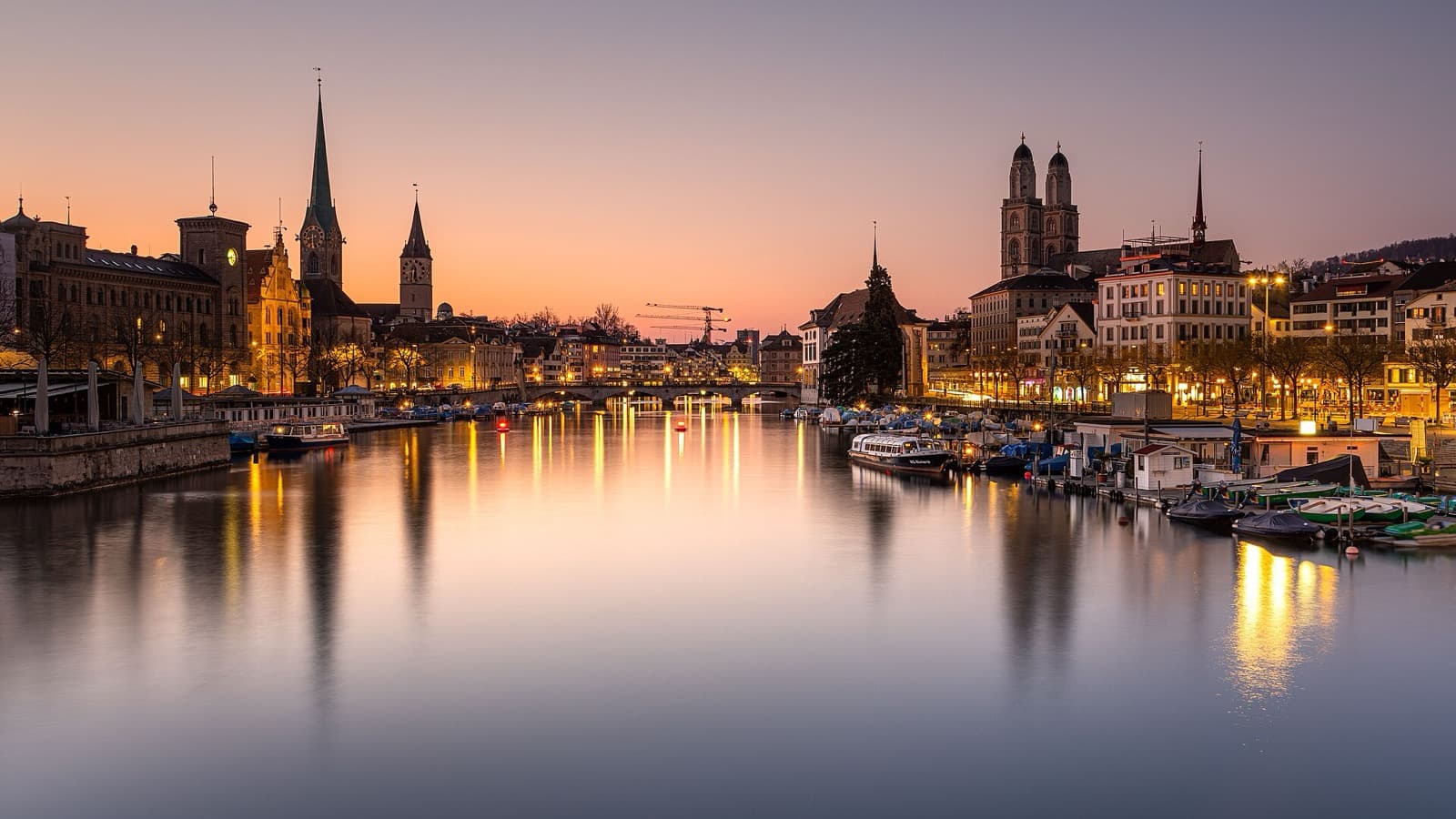
The real turn came from the pulpit of the Grossmuenster, the twin-towered Romanesque minster that is the symbol of Zurich. There, on the first of January, fifteen nineteen, a preacher named Huldrych Zwingli gave his first sermon and launched the Swiss-German Reformation. His argument was that faith should rest on scripture alone, and the city followed him. In fifteen twenty-four the organ and the religious statues were removed and the church was stripped bare. Across the river, the same austerity fell on the Fraumuenster, the old abbey founded in eight fifty-three by Louis the German for his daughter Hildegard. Its abbesses had once held the right to mint Zurich's coin, granted by King Henry the Third in ten forty-five, which made them among the most powerful figures in the medieval town. The abbey was dissolved on the thirtieth of November, fifteen twenty-four, and the church was emptied of its images.
The cost was not only architectural. On the Muensterbruecke between the two minsters, the Limmat itself became a place of execution. Radical reformers known as Anabaptists rejected the baptism of infants, and the Zurich council made adult re-baptism punishable by drowning. Under that edict, Felix Manz, the first Swiss Anabaptist martyr, was drowned in this water on the fifth of January, fifteen twenty-seven. The Reformation was conviction, and it was also cruelty, in the same green current and the same reforming city. Zwingli himself did not die peacefully: he was killed at the Battle of Kappel on the eleventh of October, fifteen thirty-one. The walk that traces all of this, from Lindenhof to the Rathaus that sits anchored in the river as the old seat of the Republic of Zurich, is the Old Town: The City That Reformed Itself tour. The final twist is worth holding onto: the Fraumuenster, emptied of art five centuries ago, is now visited above all for the five stained-glass windows Marc Chagall made for its choir in nineteen seventy. A church stripped of images has become a place people come for colour.
The street that turned defence into display
Hear a stop from this walk
Rathaus: The Council House Standing on the River
The same instinct to sweep away the old order and build something confident in its place shaped the grandest avenue in the city. When Zurich pulled down its medieval fortifications, it laid Bahnhofstrasse from eighteen sixty-four along the exact line of the filled-in moat, once nicknamed the Froeschengraben, the ditch of the frogs. The trace of the city's old defences became a promenade of lime trees and luxury shops, often called the most expensive street in Europe. A city that could no longer imagine being besieged filled its moat and sold the frontage.
Halfway down sits Paradeplatz, the banking heart of Switzerland, a square that was for centuries a livestock market before a major Swiss bank was founded here in eighteen sixty-five, the very year it took its present name. The Bahnhofstrasse: The Street of Gold and the Lake tour holds two Zuriches together on this line: the postcard of money and watches, and the heavier reckoning beneath it. In the nineteen nineties the question of dormant Holocaust-era bank accounts, together with Switzerland's restrictive wartime refugee policy, became a serious reckoning. An independent commission led by the former US Federal Reserve chairman Paul Volcker was set up in nineteen ninety-six, and in August nineteen ninety-eight the two largest banks agreed to a settlement of one and a quarter billion dollars.
The avenue also carries the memory of the merchant republic. The guild houses, like the Zunfthaus zur Meisen built in seventeen fifty-seven, recall the guild masters who governed Zurich from the constitution of thirteen thirty-six under Rudolf Brun, half the council drawn from the guilds, for more than four centuries, until the French Revolutionary armies dissolved the old order in the spring of seventeen ninety-eight. At the foot of the street, the avenue reaches the lake at Buerkliplatz, named for the city engineer Arnold Buerkli, who directed the building of the lakeside quays between eighteen eighty-one and eighteen eighty-seven, reclaiming land from the water using rubble carted from the demolished city fortifications. The same stones that once walled Zurich in were tipped into the lake to make the promenade. That confident decade also raised the Opera House, opened in eighteen ninety-one, the first opera house in Europe to be lit by electricity.
The factory quarter kept whole
The clearest modern proof of Zurich's habit sits west of the centre. For about a century, the quarter west of the old town was the city's engine room: factories, foundries, breweries and a shipbuilding hall along the railway and the Limmat. When heavy industry left in the late twentieth century, a wealthy city could have cleared the grimy past and built clean. Zurich did the surprising thing and kept the bones. The Zurich-West: The Factory District Reborn tour reads the clearest place in the country where a rich city reinvented its industrial history rather than erasing it.
A stone railway viaduct from eighteen ninety-four had thirty-six of its arches converted, in the Im Viadukt project completed in twenty ten, into a market street of shops and studios, with trains still running overhead. The Loewenbraeu brewery, built in eighteen ninety-seven and closed in nineteen eighty-six, became a centre for contemporary art housing the Kunsthalle Zurich and the Migros Museum. The Schiffbau, a shipbuilding hall from eighteen ninety-one that once built parts for lake steamers, reopened in two thousand as a home for the Schauspielhaus Zurich, its raw iron structure left visible around the stages. The boldest single act is Puls 5, built around a former iron foundry of eighteen ninety-eight whose overhead travelling cranes were kept in place and simply handed to the public. Around all of this rose the Prime Tower, a faceted green-glass office building one hundred and twenty-six metres and thirty-six storeys tall, completed in December twenty eleven, the tallest building in Switzerland until the Roche Tower in Basel overtook it in twenty fifteen, and still the tallest in Zurich. Brick chimneys stand beside green glass, the industrial past and the reinvented present sharing one skyline.
Read the city at your own pace
Three walks, one instinct. A church stripped bare and then filled with Chagall's blue glass. A moat drained and turned into the street of gold. A foundry floor kept whole and given to the public. Zurich keeps reforming itself and keeps the evidence in view. The reward of walking it alone is that you set the clock: linger on Lindenhof, stand on the bridge where the Anabaptists drowned, or sit under a viaduct arch while a train rumbles above, moving on only when you are ready. Start with the Zurich walking tours and follow the city that reformed itself.
Sources
- Old Town: The City That Reformed Itself, Roamer self-guided tour (Lindenhof, Sankt Peter, Fraumuenster, Grossmuenster, Muensterbruecke, Rathaus).
- Bahnhofstrasse: The Street of Gold and the Lake, Roamer self-guided tour (Main Station, Paradeplatz, guild houses, Buerkliplatz, Opera House, Quaibruecke).
- Zurich-West: The Factory District Reborn, Roamer self-guided tour (Im Viadukt, Loewenbraeu-Areal, Schiffbau, Prime Tower, Puls 5, Frau Gerolds Garten).
- Grossmuenster Zurich, on Huldrych Zwingli and the launch of the Swiss Reformation in fifteen nineteen.
- Fraumuenster Zurich, on the abbey's founding in eight fifty-three and the Marc Chagall windows of nineteen seventy.
Frequently asked questions
- Where did the Swiss Reformation begin in Zurich?
- The Swiss-German Reformation began at the Grossmuenster, the twin-towered Romanesque minster on the east bank of the Limmat. There, on the first of January, fifteen nineteen, the preacher Huldrych Zwingli gave his first sermon and argued that faith should rest on scripture alone. In fifteen twenty-four the church's organ and religious statues were removed, leaving the interior deliberately bare.
- What happened to the Anabaptists in Zurich?
- During the Reformation, radical reformers known as Anabaptists rejected infant baptism, and the Zurich council made adult re-baptism punishable by drowning. Felix Manz, the first Swiss Anabaptist martyr, was drowned in the Limmat between the two minsters on the fifth of January, fifteen twenty-seven. The executions took place in the same river the reforming city crossed daily.
- Why is the Fraumuenster in Zurich famous?
- The Fraumuenster was founded in eight fifty-three by Louis the German as an abbey for aristocratic women, whose abbesses held the right to mint Zurich's coin from ten forty-five. The abbey was dissolved in fifteen twenty-four during the Reformation and its images stripped. Today it is visited above all for the five stained-glass windows Marc Chagall made for its choir, installed in nineteen seventy.
- What is Zurich-West and why did the factories become culture spaces?
- Zurich-West is the city's former industrial quarter of factories, foundries, breweries and a shipbuilding hall. When heavy industry left in the late twentieth century, Zurich kept the structures rather than demolishing them: a railway viaduct became a market street, a brewery became a contemporary art centre, a shipbuilding hall became the Schauspielhaus theatre, and a foundry became the public Puls 5 hall with its cranes still overhead. The Prime Tower, completed in twenty eleven, added a glass skyline.
- What is Bahnhofstrasse built on?
- Bahnhofstrasse was laid out from eighteen sixty-four along the exact line of Zurich's filled-in medieval moat, once nicknamed the Froeschengraben, the ditch of the frogs. The city demolished its fortifications and turned the trace of its old defences into a lime-lined luxury avenue running from the main station down to Lake Zurich, often called the most expensive street in Europe.
Ready to experience it?
Old Town: The City That Reformed Itself
85 min · 2.6 km · moderate
More from Zurich
Explore more at your own pace.
One Day in Zurich: A Walkable Itinerary from Old Town to the Lake
Bahnhofstrasse: The Moat Beneath Zurich's Street of Gold
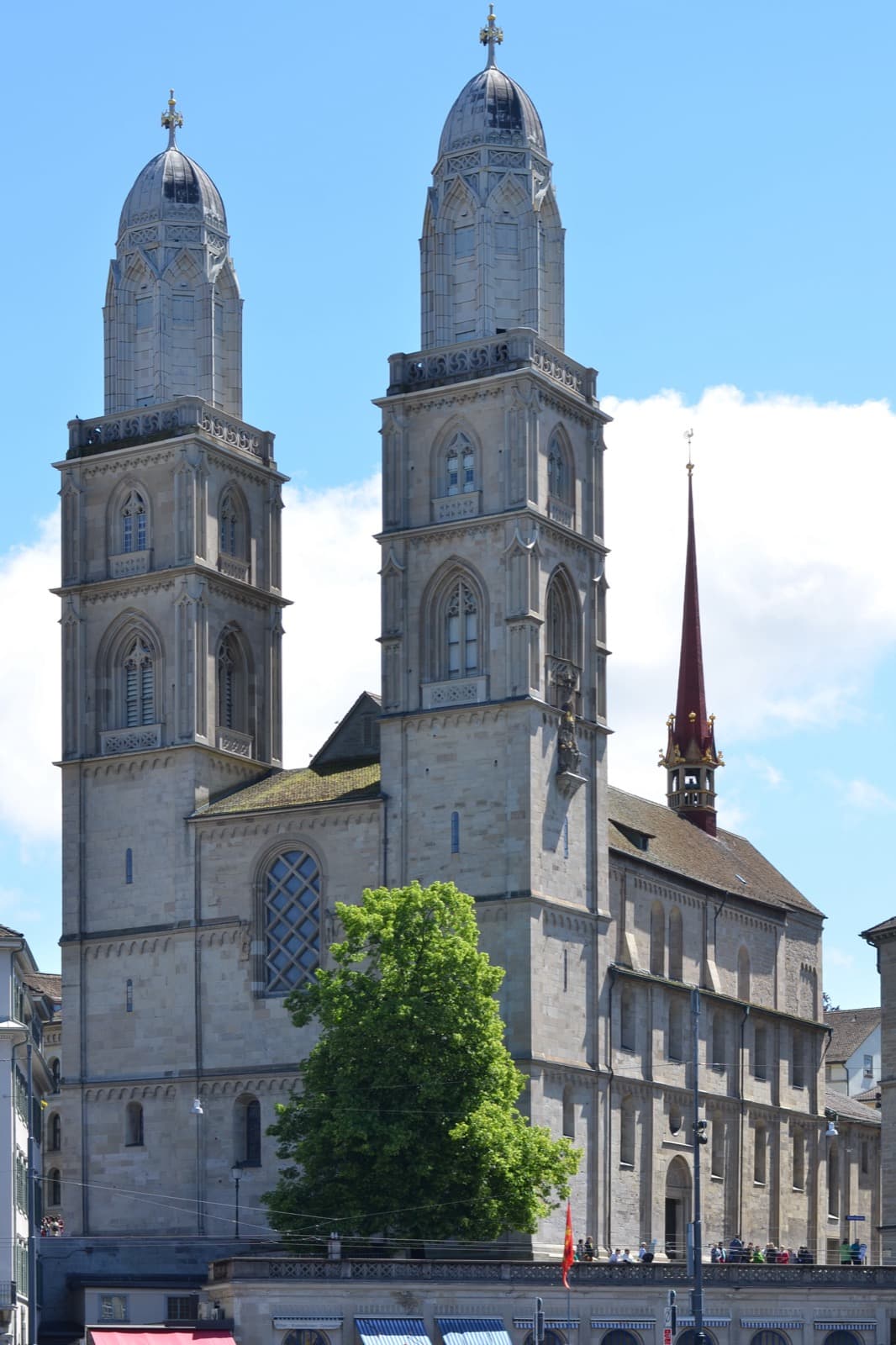
The Grossmünster and the City That Emptied Its Own Churches
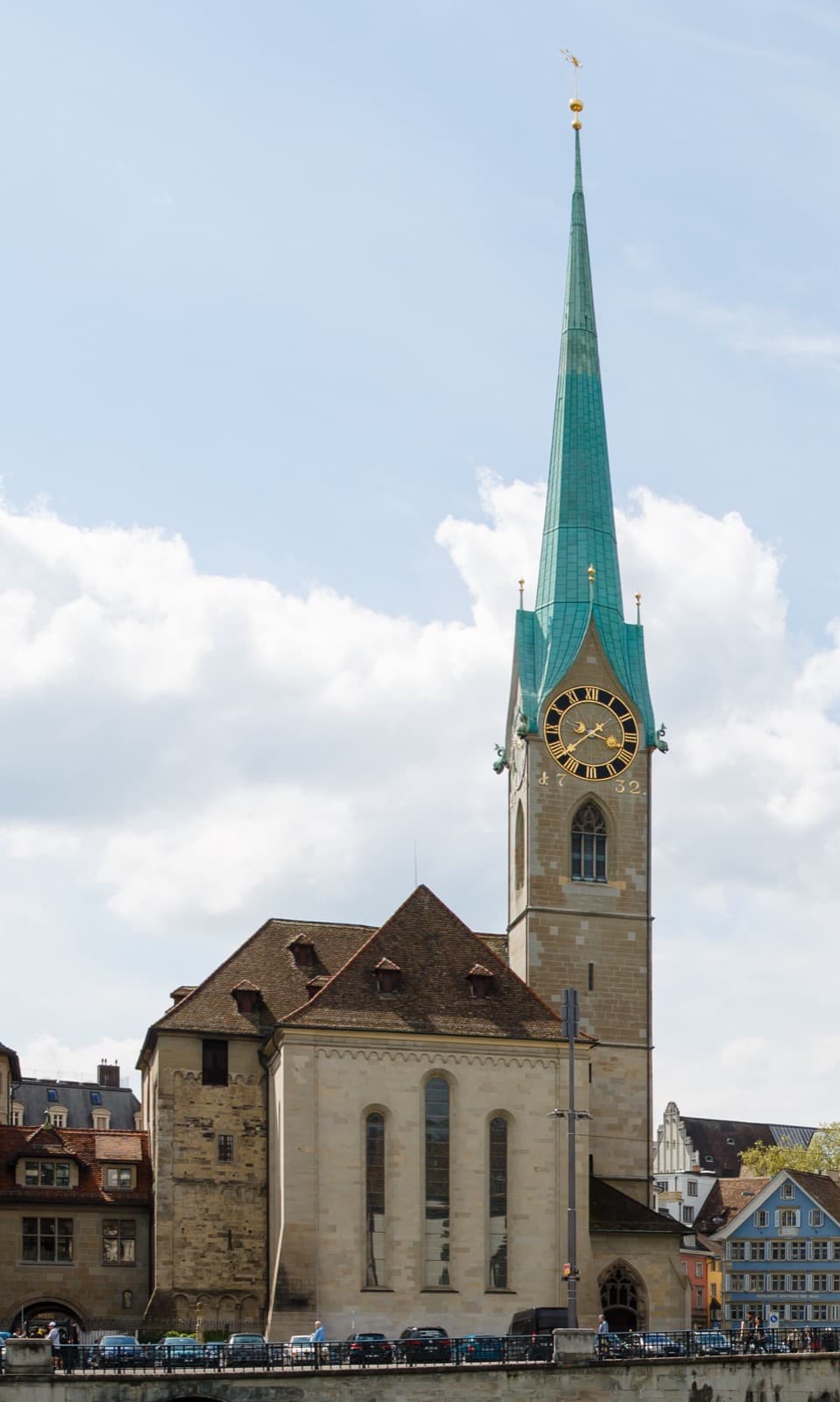
Fraumünster: The Abbey of Ruling Women That the Reformation Emptied and Chagall Refilled
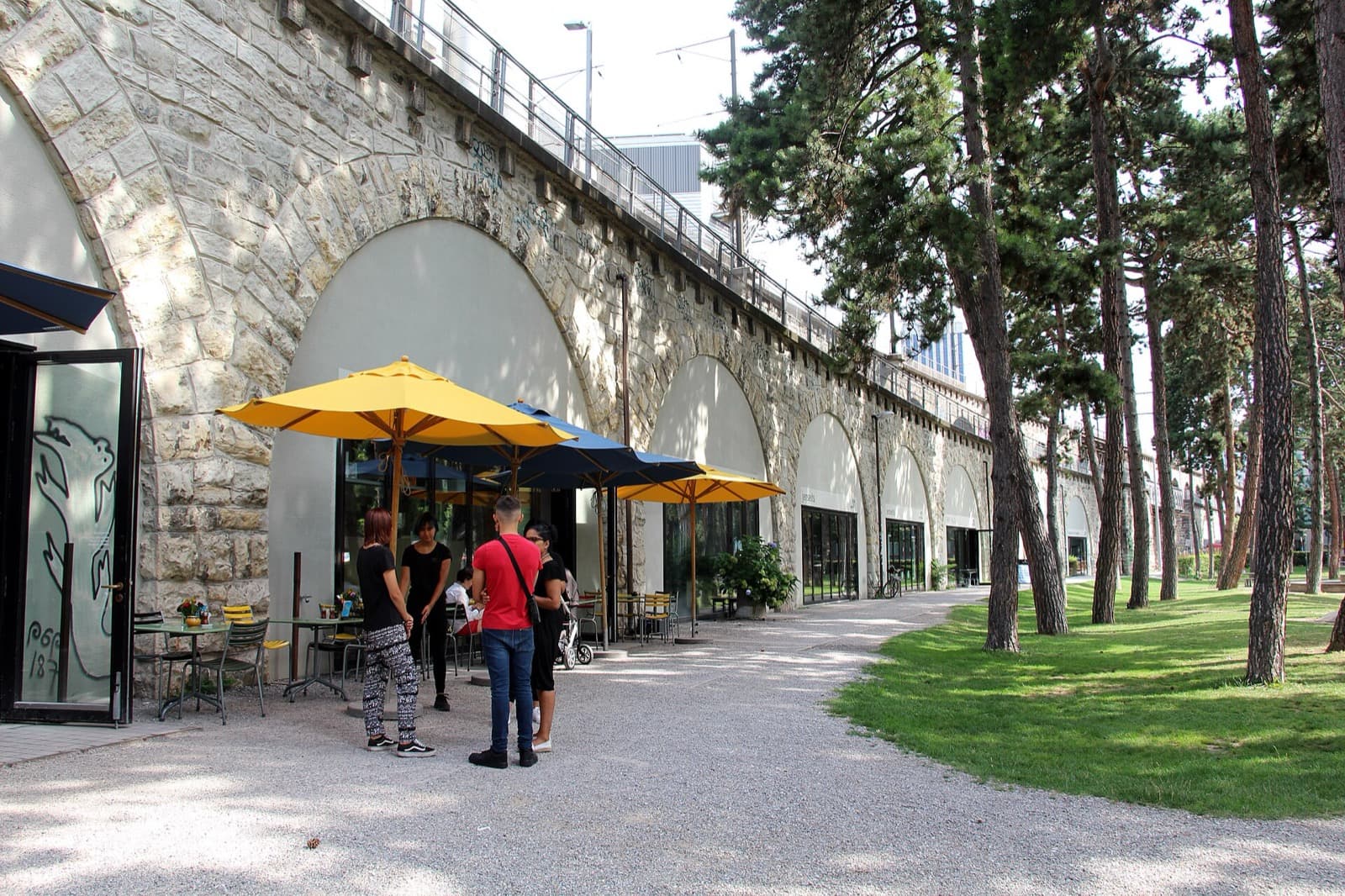
Im Viadukt: How Zurich Turned a Railway Wall Into a Market Street