
Old Town: The City That Reformed Itself
85 min · 2.6 km · moderate
If you want to eat like a local in Zurich, start with one plate: Zürcher Geschnetzeltes, thin strips of veal in a white wine and cream sauce, usually with mushrooms, served over crisp golden rösti. This is the city's signature dish, and the rest of a good Zurich food day builds outward from it: rösti as the potato base of Swiss comfort food, Tirggel honey biscuits from the medieval guilds, Luxemburgerli macarons from Confiserie Sprüngli on Paradeplatz, and the Alpine cheese rituals of fondue and raclette that every visitor eventually shares. Below is what each dish is, where the tradition comes from, and how to order it without looking like you just got off the train.
Zurich is an expensive city and its restaurants know it, so eating well here is less about finding secret cheap spots and more about knowing which few dishes actually belong to this place. Almost all of these are worth pairing with a walk, and the old town where the guilds and the abbey once ran the city is the natural place to do both. Our Zurich walking tours trace the same lanes where these traditions were born, and you can browse the routes on the Zurich city page.
Zürcher Geschnetzeltes: the plate that is actually from here
Order this first. Zürcher Geschnetzeltes means "Zurich-style sliced meat," and it is thinly cut veal, seared fast, then finished in a sauce of white wine, cream, and often mushrooms. It arrives with rösti, the shredded potato cake that soaks up the sauce. It is one of Switzerland's best-known regional dishes, and it genuinely originated in the Zurich region. Its first written record sits in a Swiss cookbook from 1947, and that early recipe was simpler: veal, white wine, cream, and demiglace, with mushrooms and kidney entering the picture in later versions.
Here is the local detail most menus quietly assume you know. The traditional Zurich version includes veal kidneys, called Nierli in Swiss German, alongside the veal strips, though most modern recipes leave them out. Many restaurants now let you choose "mit Nierli" (with kidneys) or without, so if a waiter asks, that is the question. If you want the old-guild version, say yes. If offal is not your thing, the plain veal version is completely standard and no one blinks.
Two of the best-known places to eat it are guild-house and grande-dame restaurants: the Zunfthaus zur Waag, a former guild house, and the Kronenhalle, whose walls carry genuine works by artists including Chagall and Miró. Both are proud, sit-down, francs-not-euros establishments, so treat them as a planned meal rather than a quick bite.
Rösti: the potato base of everything
Hear a stop from this walk
Rathaus: The Council House Standing on the River
Rösti is grated potato pressed into a pan and fried until the outside is crisp and golden. It began as farmers' food in the canton of Bern, historically a breakfast fried from potatoes in butter or fat, and it spread across German-speaking Switzerland into the everyday plate it is now. In Zurich you will most often meet it as the bed under Geschnetzeltes, but it also appears on its own, sometimes topped with cheese, a fried egg, or bacon.
How to order like a local: rösti is a side or a light main, not a garnish to ignore. If you see it offered as a full plate with egg on top, that is a legitimate, satisfying, and relatively affordable lunch in an otherwise pricey city.
Tirggel: the guild biscuit older than the banks
Tirggel are thin, brittle, honey-and-spice biscuits stamped with detailed pictures, and they are one of the oldest food traditions the city still makes. They are first recorded in Zurich as "Dirgel" in 1461, and they are made largely from honey, with the honey content running to roughly a third of the dough, plus spices like ginger, aniseed, and coriander. For centuries they were a guild specialty, and until 1840 only the city's own bakers were permitted to make them, which is why the wooden molds carried crests, biblical scenes, and guild symbols.
They are seasonal, most associated with Christmas and public festivals, and they are more a keepsake-crisp treat than a soft cookie. You can find them at department stores and confectioners in town. Buy one for the picture on it as much as the taste, and know you are eating something that predates the entire modern reputation of the city.
Luxemburgerli and Sprüngli: the sweet stop on Paradeplatz
The single most Zurich sweet is the Luxemburgerli, a bite-sized, airy macaron made by Confiserie Sprüngli. It is smaller and lighter than a French macaron, sold in a range of flavors, and it was first sold by Sprüngli in 1957 after being developed by one of the confectionery's makers who came from Luxembourg. Sprüngli now turns out hundreds of kilograms of them a day.
The house behind them is a Zurich institution. Confiserie Sprüngli was founded in 1836 when David Sprüngli bought a confectioner's shop, and its flagship café has sat on Paradeplatz since 1859. In 1892 the family's chocolate side split off and became the global Lindt & Sprüngli, while the café and confectionery stayed independent. So when you stand on Paradeplatz you are near the origin point of one of the world's famous chocolate names, with the pastry counter that spun off from it right in front of you.
How to order: Luxemburgerli are sold loose by weight, so you point at the colors you want and they box them. They are delicate and best eaten the same day, not carried home for a week.
Fondue and raclette: Swiss, not strictly Zurich, but do it anyway
Fondue (bread dipped in a pot of melted cheese and white wine) and raclette (cheese melted and scraped over potatoes and pickles) are the cheese rituals every visitor wants. Be honest with yourself about the geography: these are Alpine traditions, and raclette in particular is tied to the Valais canton in the west, not to Zurich specifically. Raclette du Valais even carries a protected designation, meaning the genuine article is made there. Zurich serves both well, especially in the colder months, but you are eating a national dish here rather than a local one.
Order them as a shared, slow, sit-down experience, ideally in autumn or winter. They are social meals meant to be lingered over, which suits a self-guided trip: no fixed schedule, no rush, just a table, a pot, and time.
A simple eating plan for one day
Morning, get a coffee and a first look at the old town. Midday, sit down for Zürcher Geschnetzeltes with rösti in a guild house, the one meal you should not skip. Afternoon, cross to Paradeplatz for Luxemburgerli at Sprüngli and pick up a few Tirggel to carry. Evening, if it is cool out, book a fondue or raclette table and make it last. Walk between all of it. The stops are close, the lanes are the story, and our Zurich walking tours thread the exact old-town streets, from the founding hill of Lindenhof to the guild houses and the river, where this food culture grew up. Start planning from the Zurich city page.
Sources
Frequently asked questions
- What is the traditional dish of Zurich?
- Zürcher Geschnetzeltes is the signature dish of Zurich. It is thinly sliced veal cooked in a white wine and cream sauce, usually with mushrooms, and served with crisp rösti potatoes. It genuinely originated in the Zurich region and is one of Switzerland's best-known regional dishes.
- What are Luxemburgerli and where do I get them?
- Luxemburgerli are small, airy macarons made by Confiserie Sprüngli. They were first sold in 1957 and were developed by a Sprüngli confectioner from Luxembourg. You can buy them at Sprüngli's flagship café on Paradeplatz, which has stood there since 1859, sold loose by weight.
- What is Tirggel?
- Tirggel are thin, crisp honey-and-spice biscuits stamped with detailed pictures, one of Zurich's oldest food traditions. They are first recorded in the city as 'Dirgel' in 1461, are roughly a third honey, and until 1840 only Zurich's own city bakers were allowed to make them. They are most associated with Christmas and festivals.
- Are fondue and raclette actually from Zurich?
- Not specifically. Fondue and raclette are Alpine cheese traditions eaten across Switzerland, and raclette in particular is tied to the Valais canton in the west, where Raclette du Valais holds a protected designation. Zurich serves both well, especially in autumn and winter, but you are eating a national dish rather than a local Zurich one.
- Should Zürcher Geschnetzeltes be ordered with kidneys?
- The traditional Zurich version includes veal kidneys, called Nierli in Swiss German, alongside the veal strips, though most modern recipes leave them out. Many restaurants now let you choose the dish with or without kidneys, so if the waiter asks, that is the question. Both versions are standard, so order it however you prefer.
- Is eating out in Zurich expensive?
- Yes, Zurich is one of the more expensive cities in the world for dining, and prices are in Swiss francs, not euros. Sit-down meals at guild houses and grand restaurants like the Kronenhalle or Zunfthaus zur Waag are best treated as planned meals. A full plate of rösti with an egg on top is a more affordable local lunch option.
Ready to experience it?
Old Town: The City That Reformed Itself
85 min · 2.6 km · moderate
More from Zurich
Explore more at your own pace.
One Day in Zurich: A Walkable Itinerary from Old Town to the Lake
Zurich: The City That Reformed Itself
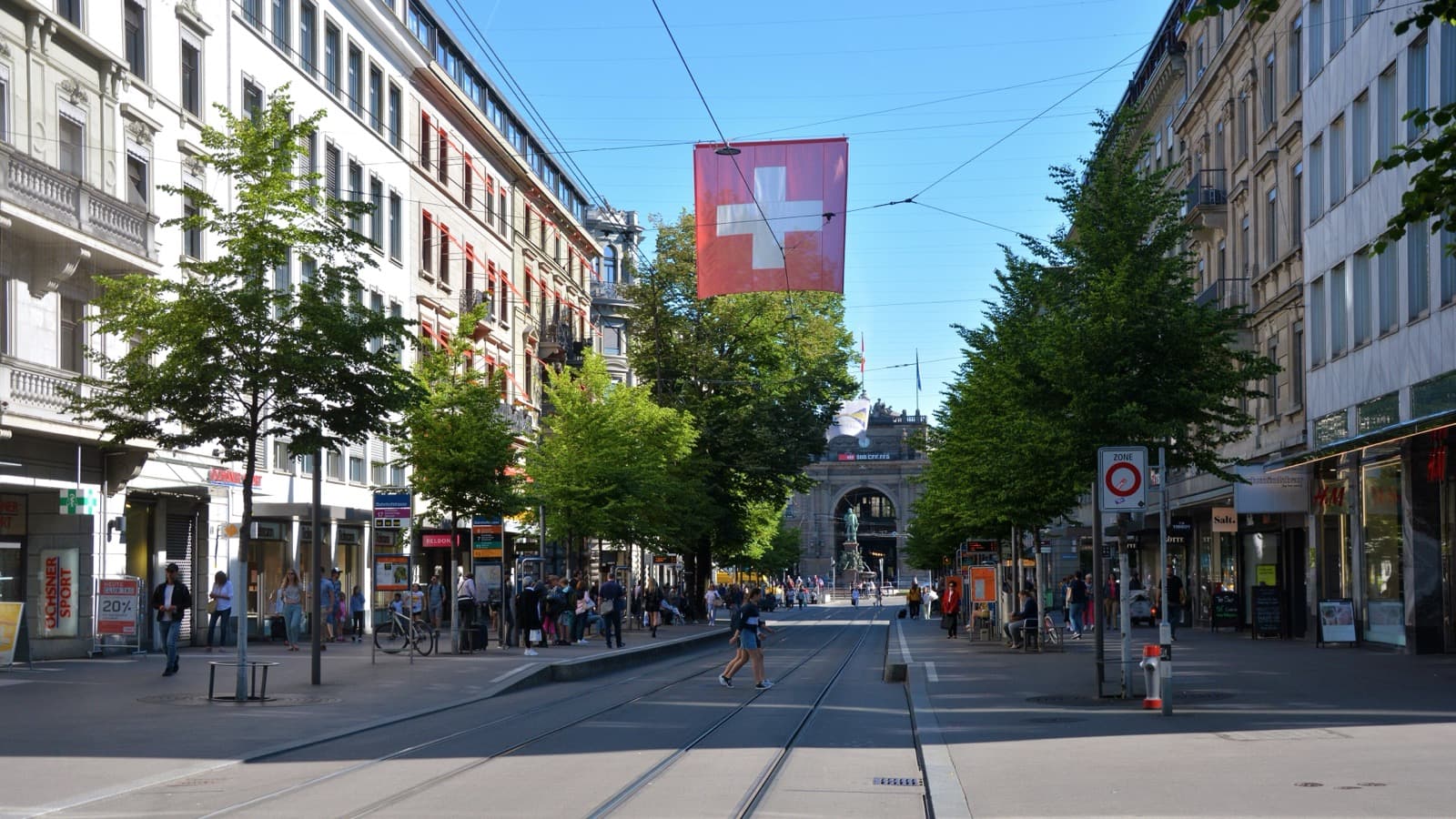
Bahnhofstrasse: The Moat Beneath Zurich's Street of Gold
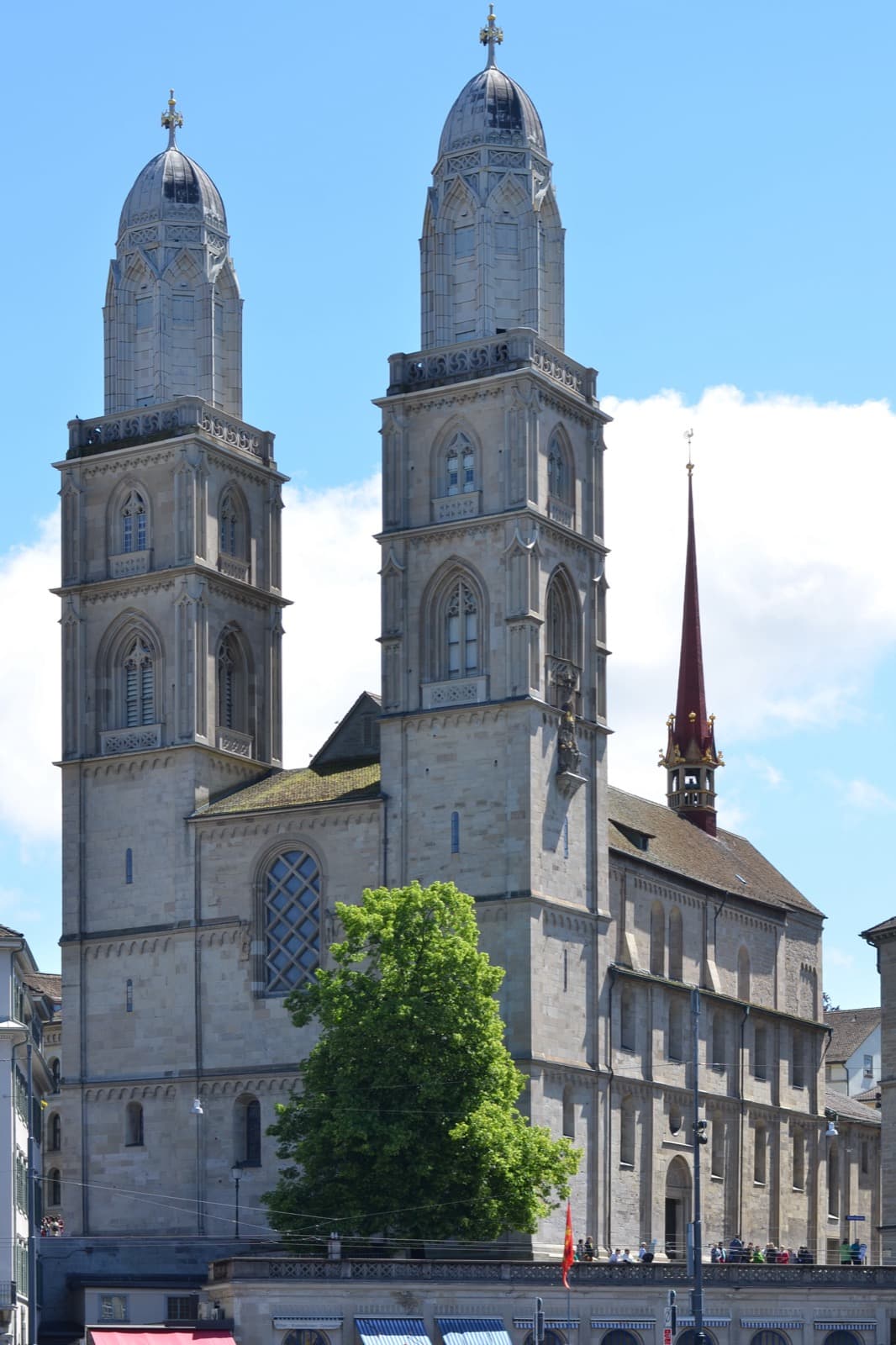
The Grossmünster and the City That Emptied Its Own Churches
Fraumünster: The Abbey of Ruling Women That the Reformation Emptied and Chagall Refilled