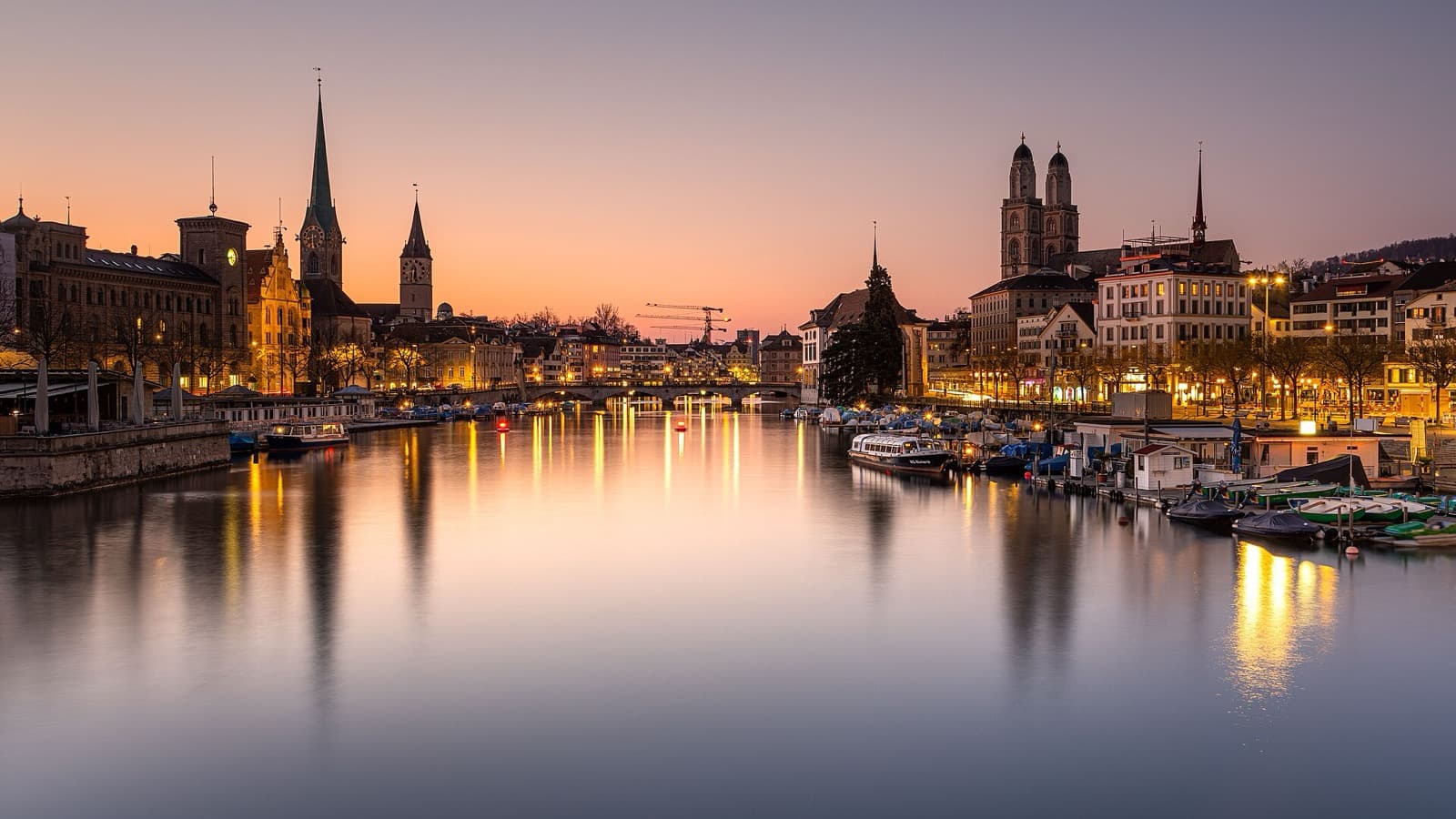
Zurich reads as banks and watches, but its old town hides a stranger story: this is the city that lit the Swiss Reformation and then stripped its own churches bare. Trace it from the founding hill of Lindenhof across the green Limmat to Chagall's blue glass and the twin-towered minster where Huldrych Zwingli began.
Start · Lindenhof: The Green Hill Where Zurich Began
DirectionsStops
- 1
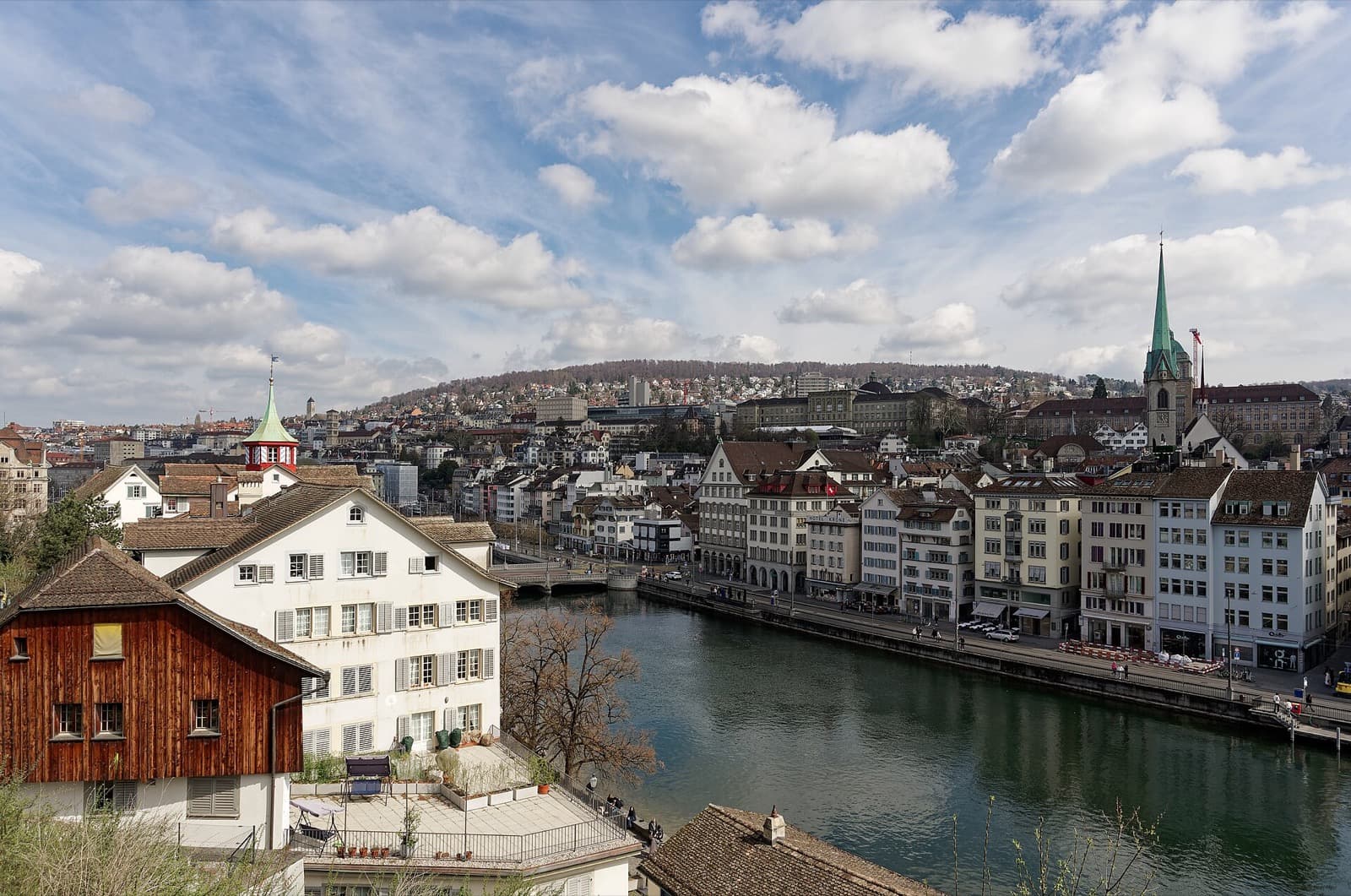
Lindenhof: The Green Hill Where Zurich Began
A tree-shaded terrace on the low hill above the Limmat, the founding site of Zurich and a quiet viewpoint over the old-town roofs.
- 2
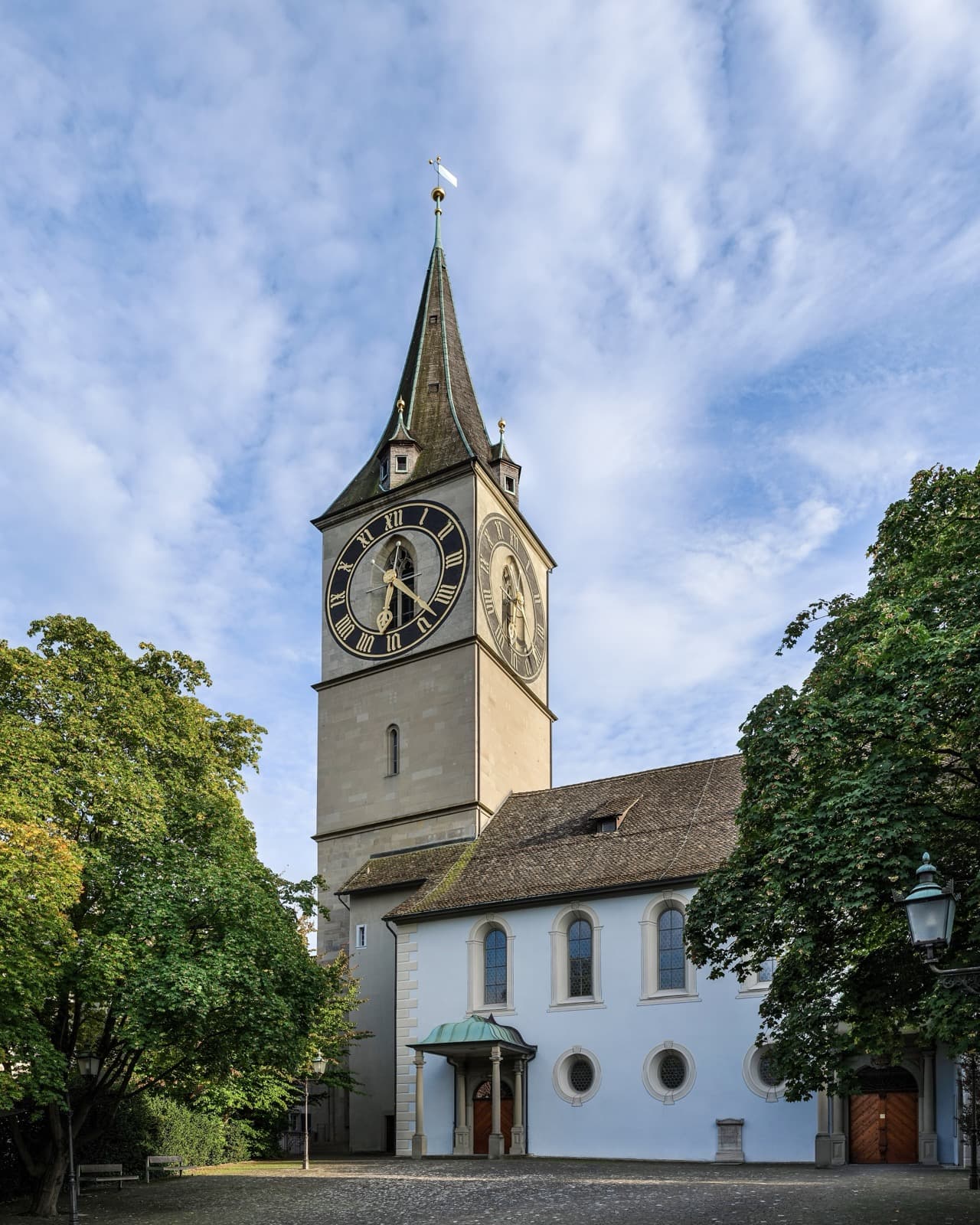
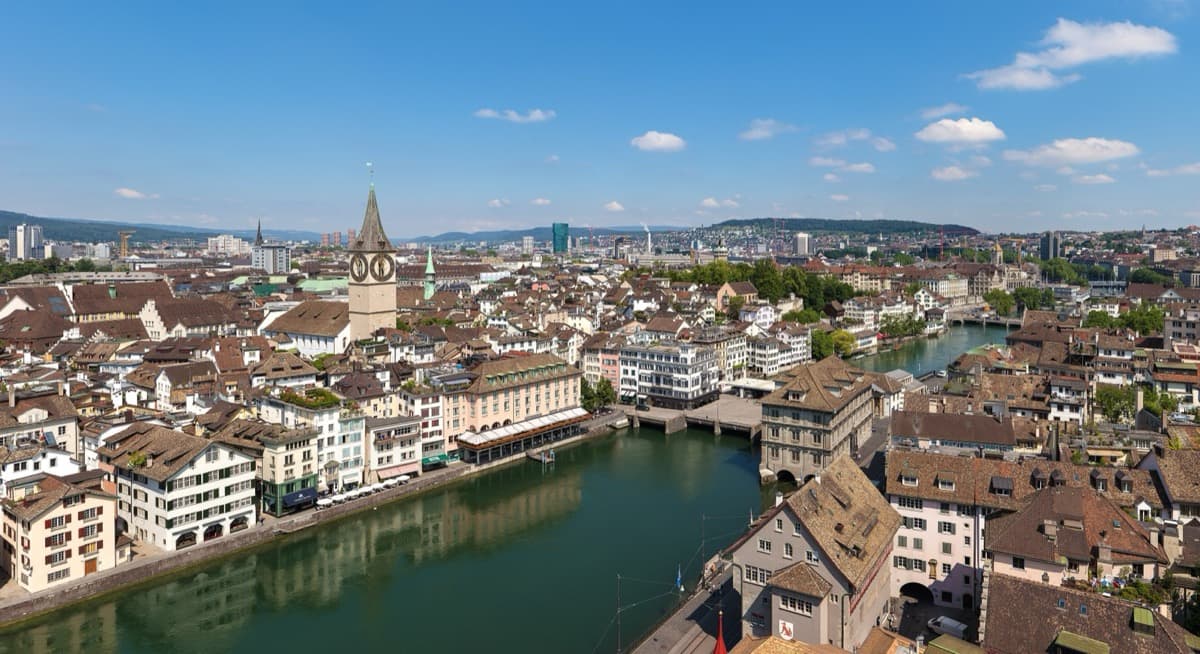
Sankt Peter: The Old Parish Church Wearing Europe's Biggest Clock
The oldest parish church in Zurich, carrying the largest church clock face in Europe on its medieval tower just below the Lindenhof.
- 3
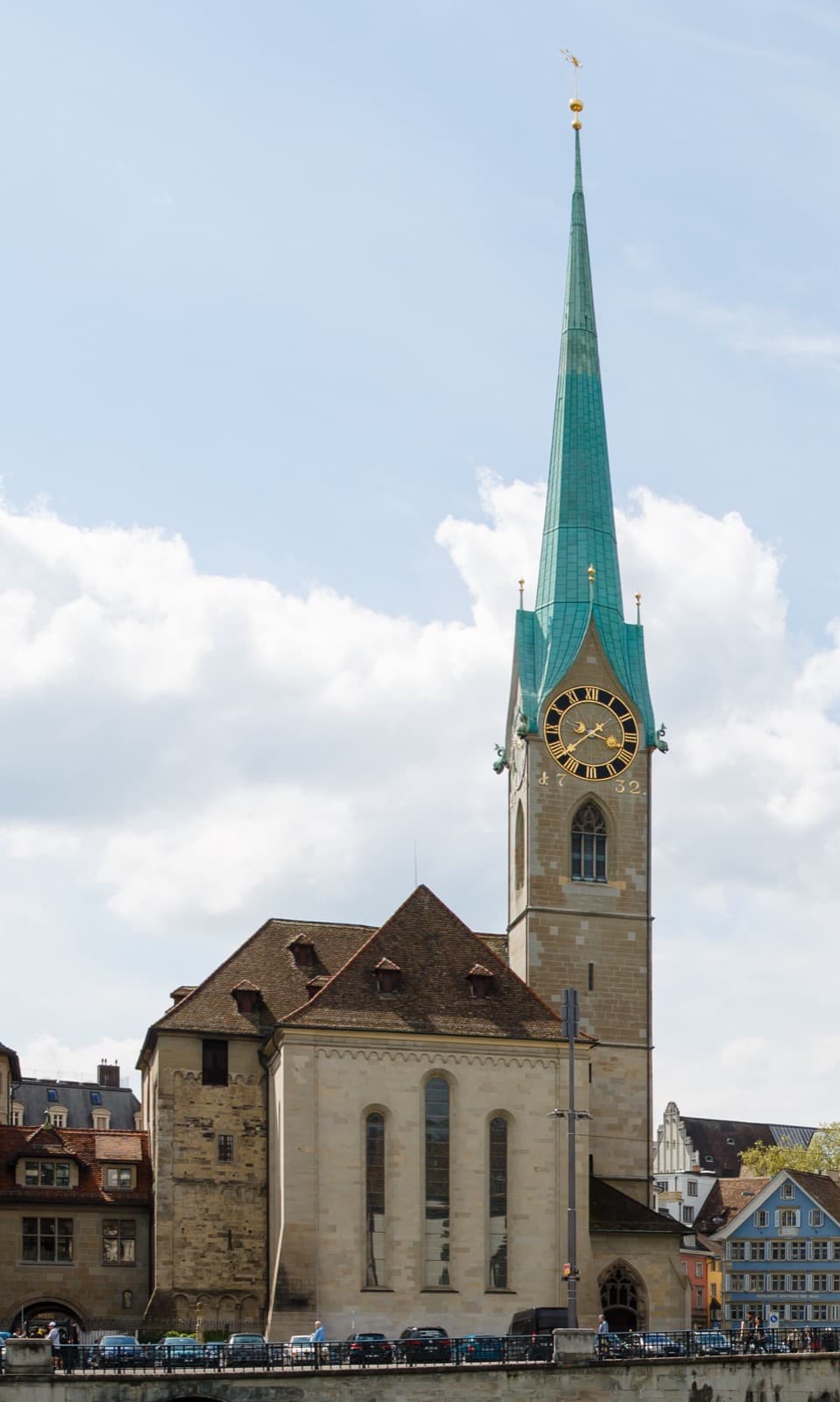
Fraumuenster: The Abbey of Ruling Abbesses, Now Lit by Chagall
A former abbey of aristocratic women whose abbesses once minted Zurich's coin, its choir now filled with five stained-glass windows by Marc Chagall.
- 4
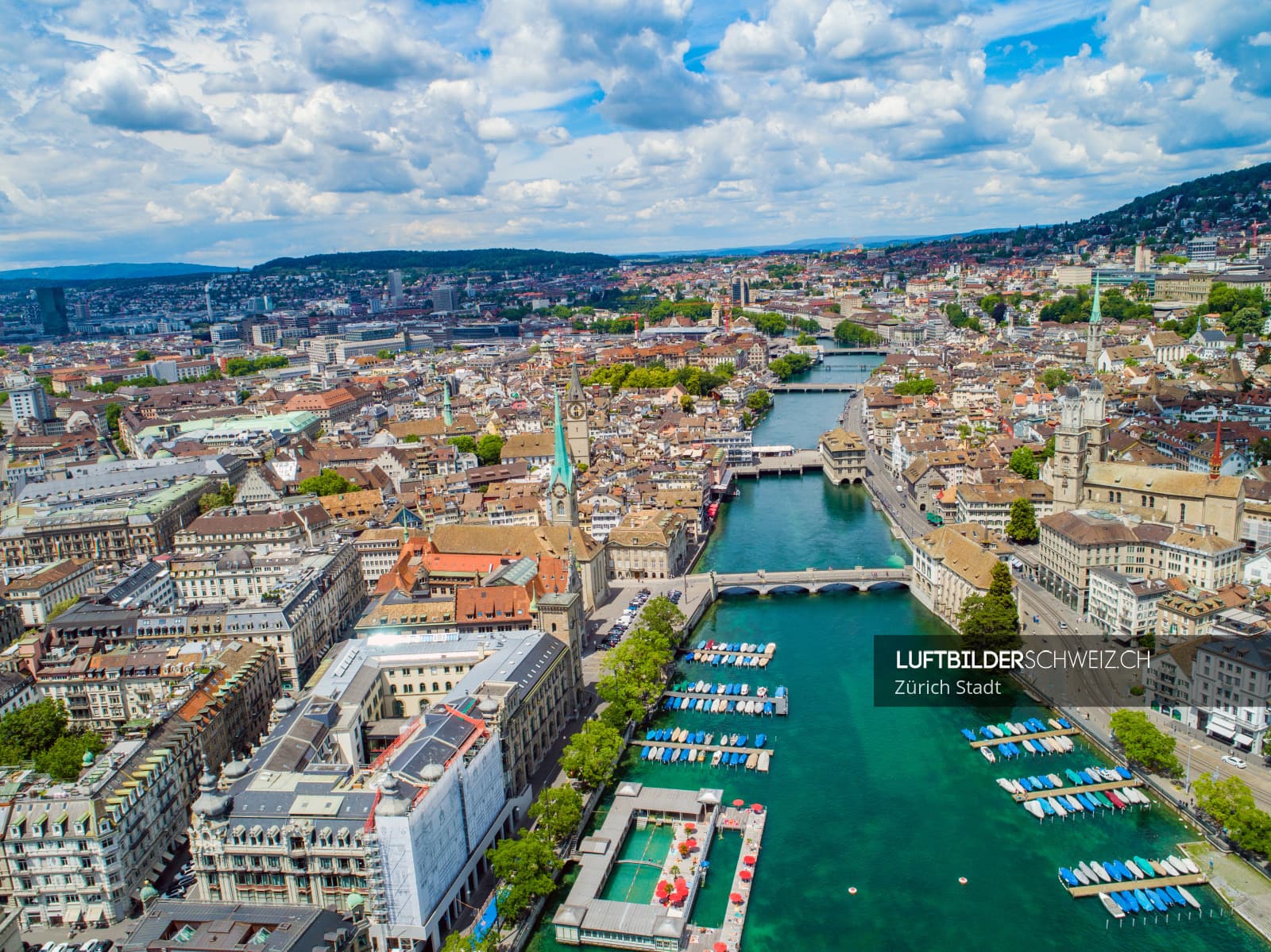
Muensterbruecke: The River Between the Two Minsters
The stone bridge over the green Limmat between the Fraumuenster and the Grossmuenster, beautiful and, in the Reformation, the site of grave persecution.
- 5
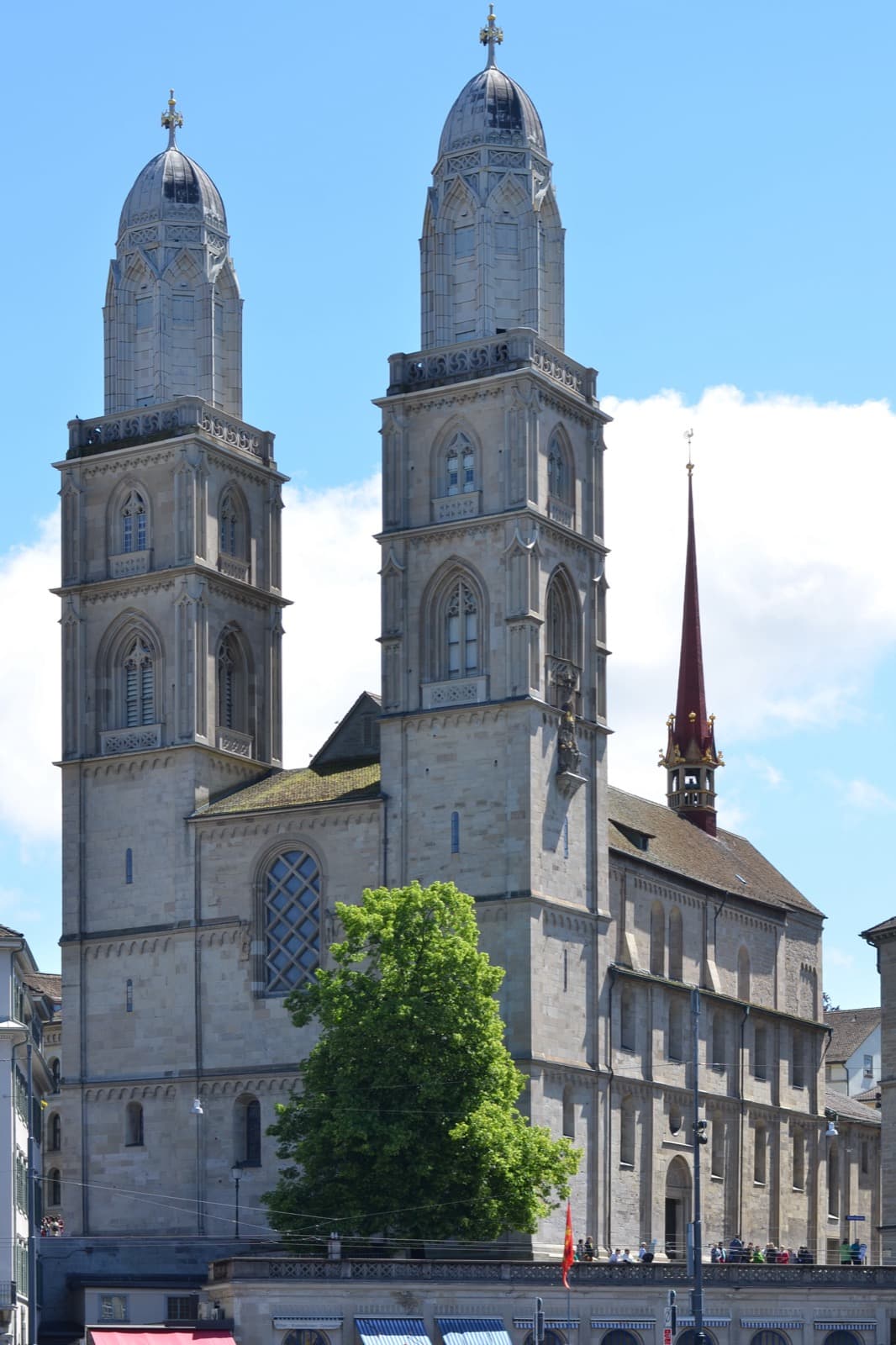
Grossmuenster: The Twin-Towered Minster Where the Swiss Reformation Began
The twin-towered Romanesque minster and symbol of Zurich, where Huldrych Zwingli launched the Swiss-German Reformation in fifteen nineteen.
- 6
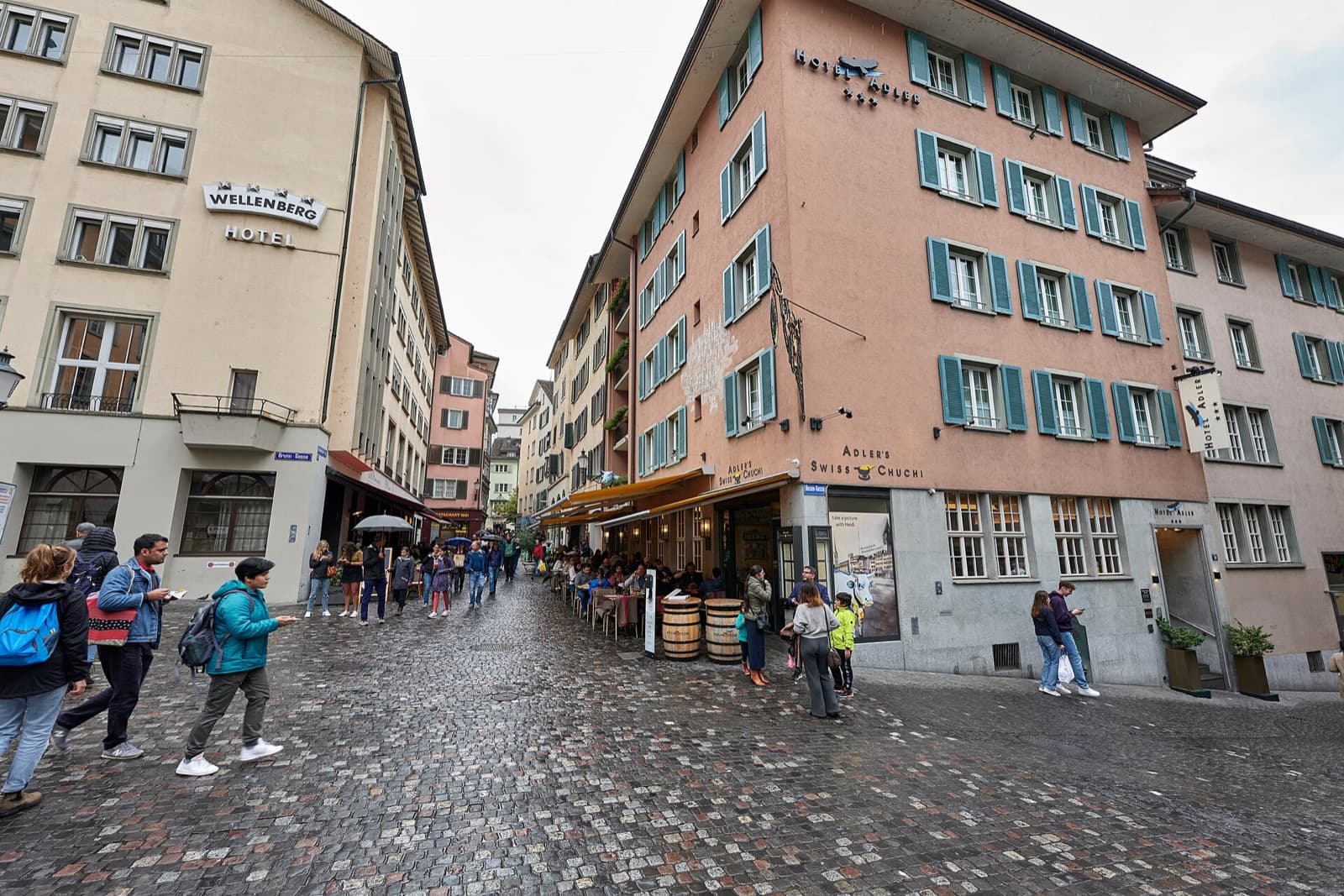
Niederdorf: The Tight Old Lanes of the Lower Town
The car-free 'Doerfli' of winding cobbled lanes on the east bank behind the Grossmuenster, the living heart of the lower town.
- 7
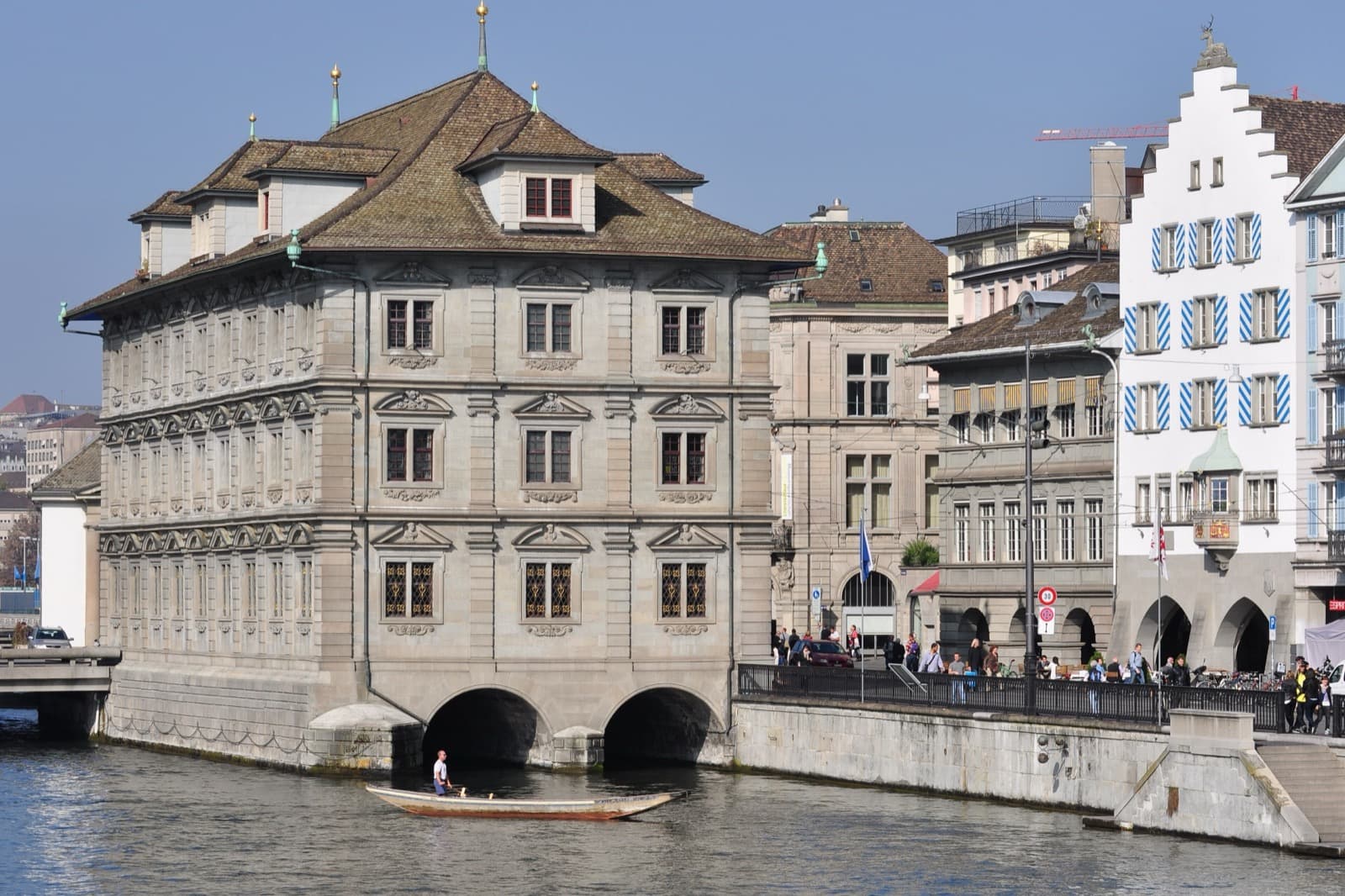
Rathaus: The Council House Standing on the River
The late-Renaissance Town Hall built out over the Limmat, once the seat of the Republic of Zurich and now home to the cantonal and city parliaments.
Details
Best Time to Visit
Late morning to mid-afternoon on a weekday is ideal, when the old-town lanes are open and lively but not at their busiest, and the light falls well on the Limmat and the two minsters. The Fraumuenster's Chagall windows glow best in bright daylight, so a clear day rewards the choir; early morning or late afternoon gives the quietest walking in the Niederdorf and on Lindenhof. Spring through early autumn offers the warmest riverside pauses, while winter brings shorter days but calmer squares.
Pro Tips
- •Go at your own pace: the whole loop is about two kilometres and needs only around ninety minutes, so there is no reason to rush, and lingering on Lindenhof or in the Niederdorf is where the walk pays off most.
- •Save the Fraumuenster's Chagall windows for a bright moment; the deep blues and reds of the glass come alive in strong daylight, and the bare Protestant interior makes the colour hit harder.
- •The two minsters face each other across the Limmat, so read them as a pair: the Fraumuenster's abbess history on the west bank and the Grossmuenster's Reformation on the east, with the river of the Anabaptist drownings between them.
- •Church entry to the Fraumuenster and Grossmuenster is generally free, but the Fraumuenster crypt and the Grossmuenster tower climb are ticketed in Swiss francs, so carry a card or local cash if you want to go up or below.
- •Let the Niederdorf be unstructured: pick any lane that draws you rather than following a fixed order, and the tangle of squares and fountains behind the minster becomes the most rewarding part of the loop.
- •Look up at Sankt Peter early on so the scale of Europe's largest church clock face registers, then notice how a city that later thrived on precision timekeeping once told the hour from that single giant dial.
Safety & Precautions
- •Trams and cyclists move quickly along the Limmatquai and cross near Bahnhofstrasse and the old-town edges, so watch crossings and step out of the lanes before checking your route or phone.
- •The old-town cobbles and the descent from Lindenhof can be uneven and slick after rain, and the Grossmuenster tower climb is steep and narrow, so wear stable shoes and take the steps with care.
- •The Fraumuenster and Grossmuenster are working churches: dress modestly, keep your voice low, and be mindful during any service, especially around the Chagall choir.
- •Prices for the ticketed crypt, tower climb and any museums are in Swiss francs, not euros; keep valuables discreet in the busier lanes, and bring sun protection and a light waterproof, as riverside weather can change quickly.
Travel advisory: Exercise Normal Precautions (Level 1).
Gallery
Related Reading
Go deeper on what you'll see, hear, and walk through.
Overview
Best Self-Guided Walking Tours in Zurich (2026)
4 min
Overview
One Day in Zurich: A Walkable Itinerary from Old Town to the Lake
8 min
Overview
Zurich Travel Guide: How Many Days, Getting Around, Safety, and Costs
7 min
Thematic
Best History Walking Tours in Zurich (2026)
2 min
Thematic
Zurich: The City That Reformed Itself
8 min
Companion
The Grossmünster and the City That Emptied Its Own Churches
6 min
Deep dive
Fraumünster: The Abbey of Ruling Women That the Reformation Emptied and Chagall Refilled
6 min
Read
What to Eat in Zurich: The Local Dishes and How to Order Them
7 min
Read the walk
The full story of Old Town: The City That Reformed Itself, in words. Prefer to listen? Play it narrated, from home or on location.
Introduction
Zurich in Switzerland is known for banks, trams and watch shops, but the older and stranger story sits in its old town, in the churches by the river. This is the city that set off the Swiss Reformation and then, at its own pace, reformed itself into a bare Protestant republic. Your route is a continuous walk of about two and a half kilometres with seven stops, and it takes roughly eighty-five minutes at an unhurried pace, longer if you linger, which is the whole point of going without a group. You set the clock. There is no schedule, no tip pressure, and no one threading the lanes ahead of you. The arc is simple. You begin on the green hill where Rome, then the city, took root. You pass Sankt Peter with its enormous clock and the Fraumuenster, the old abbey of ruling abbesses now lit by Marc Chagall's glass. You cross the Limmat between the two minsters, where beauty and gravity share one frame, and you reach the Grossmuenster, where a reformer named Huldrych Zwingli began preaching in fifteen nineteen. Then the tight lower-town lanes of the Niederdorf ease you toward the Town Hall on the water, the seat of the republic that remade itself. Much of Zurich's marquee heritage runs on packaged group circuits and lake cruises. Here you carry your own quiet map instead, pausing where the story catches you and moving on when you are ready. Along the way the walk names the reformers and the abbesses plainly, and it treats the Reformation's cruelties with sobriety rather than spectacle. When you arrive at Lindenhof, begin with stop one.
1. Lindenhof: The Green Hill Where Zurich Began
This tree-shaded terrace is where Zurich began. The Romans took the hill around fifteen BC and built a fort they called Turicum, and that name became Zurich. A customs station with a small civilian settlement grew here in the final decades of the first century before Christ, watching the river traffic. Later, against raids from across the frontier, a late-Roman citadel went up under Emperor Valentinian the First, who reigned from three sixty-four to three seventy-five, its walls two metres thick with a ring of towers. In the ninth century the hill carried an imperial residence rebuilt for Louis the German, whose name will return at the next great church. Then there is the story that everyone here tells, and it is worth telling as what it is: a legend, not the historical record. During a siege in twelve ninety-two, the women of Zurich are said to have put on armour and stood along these walls, creating the illusion of a full garrison and frightening the attackers away. A fountain on the square remembers the tale. Whether it happened or not, it tells you how the city likes to see itself: resourceful, and defended from this very ground. Today the hill is a calm square with a chess board scratched into the pavement, players leaning over it, and a low wall where the old-town roofs fall away toward the Grossmuenster's twin towers across the water. It is the natural place to begin, because everything below you grew outward from here. Take the view for as long as you like. Nobody is waiting to move you along. When you are ready, the streets drop gently down toward the next stop and its very large clock.
2. Sankt Peter: The Old Parish Church Wearing Europe's Biggest Clock
Just below the hill stands Sankt Peter, Saint Peter's church, the oldest parish church in Zurich. Parts of it reach back before the year nine hundred, and for centuries it was the town's principal parish church, the place where ordinary Zurich baptised, married and buried. Look up at the tower and you meet its most famous feature. The clock face measures eight point six four metres across, and it is the largest church clock face in Europe. Once you know that number it is hard to unsee: the four dials wrap the tower like great pale moons, and from the squares below they told the whole quarter the time long before anyone carried a watch, which is a quiet joke in a city that would later make its fortune from precision clocks. The medieval tower itself was raised to about sixty-four metres around fourteen fifty, on a base that had risen storey by storey from the early thirteenth century. The church you can step into is newer than the tower. Its present nave was consecrated in seventeen oh six, and it is described as the first church built under Protestant rule in Zurich, which places it firmly on the far side of the Reformation you will meet across the river. The largest of its bells weighs over six thousand kilograms. What makes Sankt Peter worth this pause is the layering: a pre-medieval parish under a medieval tower under Europe's biggest clock, all still keeping time above a working church. Give the tower a long look from the little square. When you are ready, the way bends south toward a church founded for a king's daughter.
3. Fraumuenster: The Abbey of Ruling Abbesses, Now Lit by Chagall
The Fraumuenster is the Church of Our Lady, and muenster means minster. It was founded in eight fifty-three by Louis the German for his daughter Hildegard, as a convent for women of aristocratic families. Hold onto that, because the women who ran this abbey held real worldly power. In ten forty-five King Henry the Third granted the abbess the right to hold markets, to collect tolls, and to mint coin, so the money that changed hands in early Zurich carried her authority. In twelve eighteen the emperor confirmed the abbey's imperial independence. For centuries an abbess here was, in effect, a ruler of the town. Then came the Reformation. The abbey was dissolved on the thirtieth of November, fifteen twenty-four, under the reform movement led by Zwingli, and the church was stripped of its images and turned to Protestant use, its walls left bare. That bareness is the history: what you do not see is the point. And yet today people come for colour, because the choir holds five tall stained-glass windows made by the artist Marc Chagall and installed in nineteen seventy, glowing in deep blue and red with scenes drawn from scripture. A large window by Augusto Giacometti, from nineteen forty, adds its own light. So the story folds back on itself. A church emptied of art five centuries ago is now visited above all for its glass. Stand in the choir and let the windows take the time they deserve. When you are ready, the river is a few steps east, and you cross it between the two minsters.
4. Muensterbruecke: The River Between the Two Minsters
The Muensterbruecke, the minster bridge, carries you across the Limmat, the green river that flows out of Lake Zurich and through the heart of the old town. On one bank stands the Fraumuenster you just left; on the other rise the twin towers of the Grossmuenster ahead. Despite…
Full narration for this stop unlocks with the tour.
5. Grossmuenster: The Twin-Towered Minster Where the Swiss Reformation Began
The Grossmuenster, the great minster, is the twin-towered Romanesque church that is the very symbol of Zurich. Tradition holds that Charlemagne founded a church here after his horse knelt at the tombs of the city's patron saints Felix, Regula and Exuperantius, and archaeology…
Full narration for this stop unlocks with the tour.
6. Niederdorf: The Tight Old Lanes of the Lower Town
Behind the minster you slip into the Niederdorf, which the city calls the Doerfli, the little village. This is the car-free quarter of the lower town, a tangle of narrow cobbled lanes on the east bank of the Limmat, and it has been the medieval and early-modern heart of everyday…
Full narration for this stop unlocks with the tour.
7. Rathaus: The Council House Standing on the River
The Rathaus, the Town Hall, ends the walk where a city's story usually settles: at the seat of its government, and rathaus means town hall. This late-Renaissance building was constructed between sixteen ninety-four and sixteen ninety-eight, and its most striking fact is…
Full narration for this stop unlocks with the tour.