Old Town: The City That Reformed Itself
85 min · 2.6 km · moderate
You can walk Zurich end to end in one day. Start in the old town where the Swiss Reformation began, follow Bahnhofstrasse down to Lake Zurich, and finish among the converted factories of Zurich-West. The three walks total roughly nine kilometres of mostly flat, largely car-free ground, and each maps onto one of Roamer's self-guided audio tours, so you set the pace and skip nothing you care about. This guide sequences the day morning to evening, names the few places that charge a small entry fee, and flags the opening hours worth planning around.
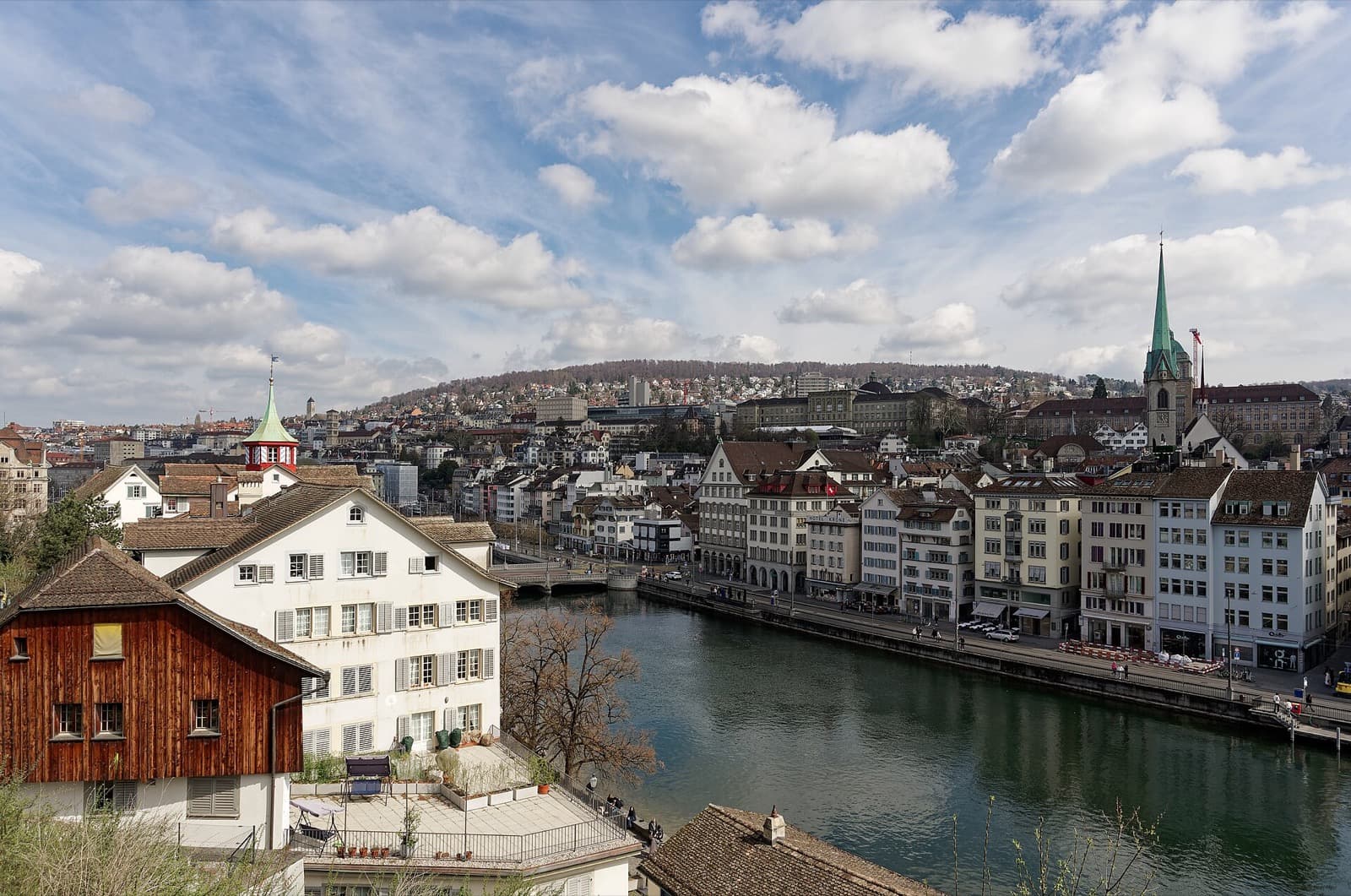
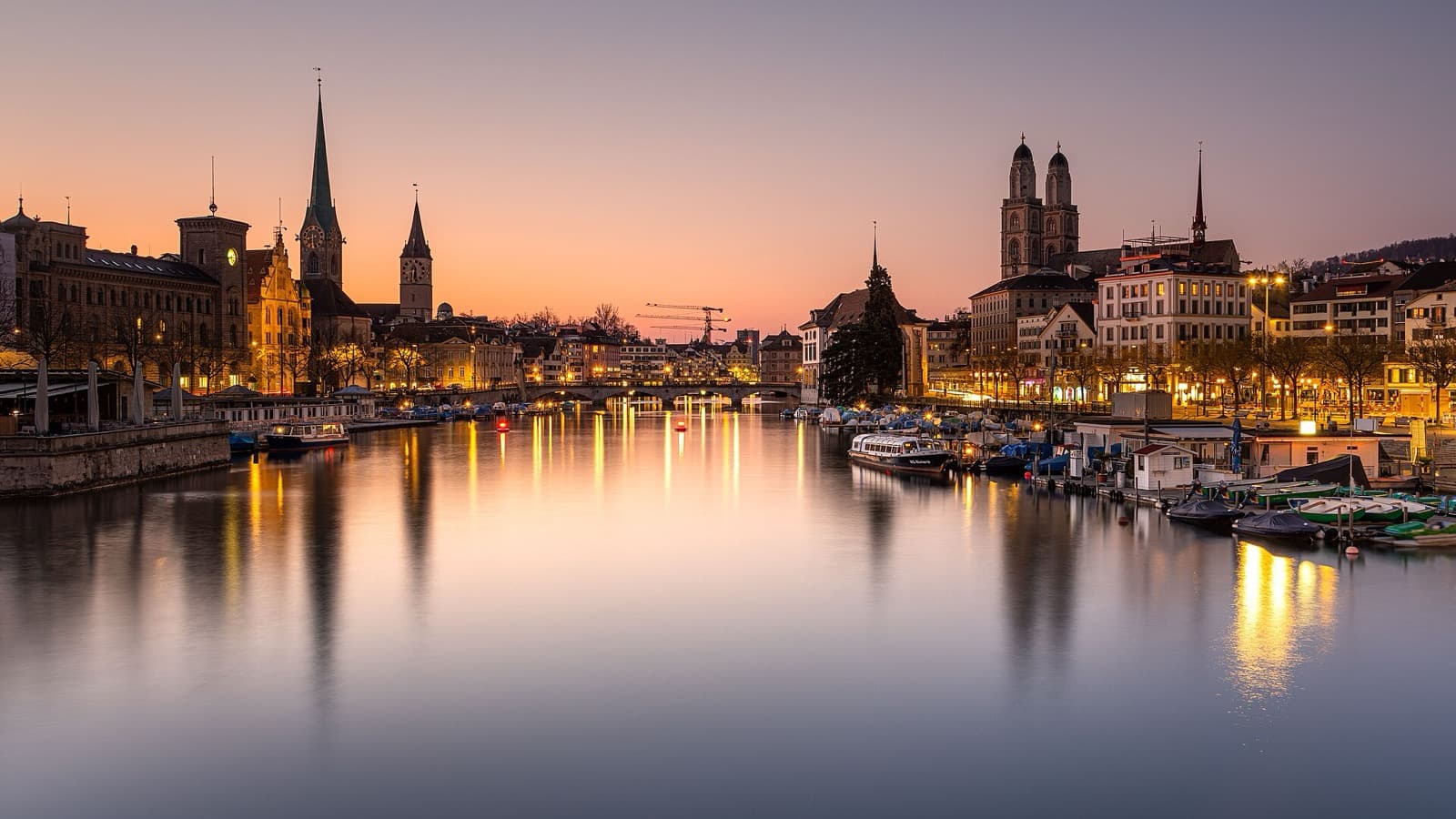
The logic of the route is geography. Zurich's old town sits on two low banks of the green River Limmat where it leaves the lake. Bahnhofstrasse runs straight from the main railway station south to the water. Zurich-West lies northwest along the same river, an easy tram ride or a longer walk from the centre. Do the old town first while the churches are open, drop to the lake for lunch, then head west for the afternoon. Full context and the tour handoffs live on the Zurich walking tours hub and the city page at /switzerland/zurich.
Morning: the old town and the Reformation (about 85 minutes on foot)
Begin on Lindenhof, the tree-shaded hill where the Romans built a fort they called Turicum around fifteen BC, the name that became Zurich. It is a free public square with a chess board scratched into the pavement and a view across the Limmat to the Grossmuenster's twin towers. From here the Old Town: The City That Reformed Itself walk runs about 2.6 kilometres over seven stops, roughly 85 minutes at an unhurried pace.
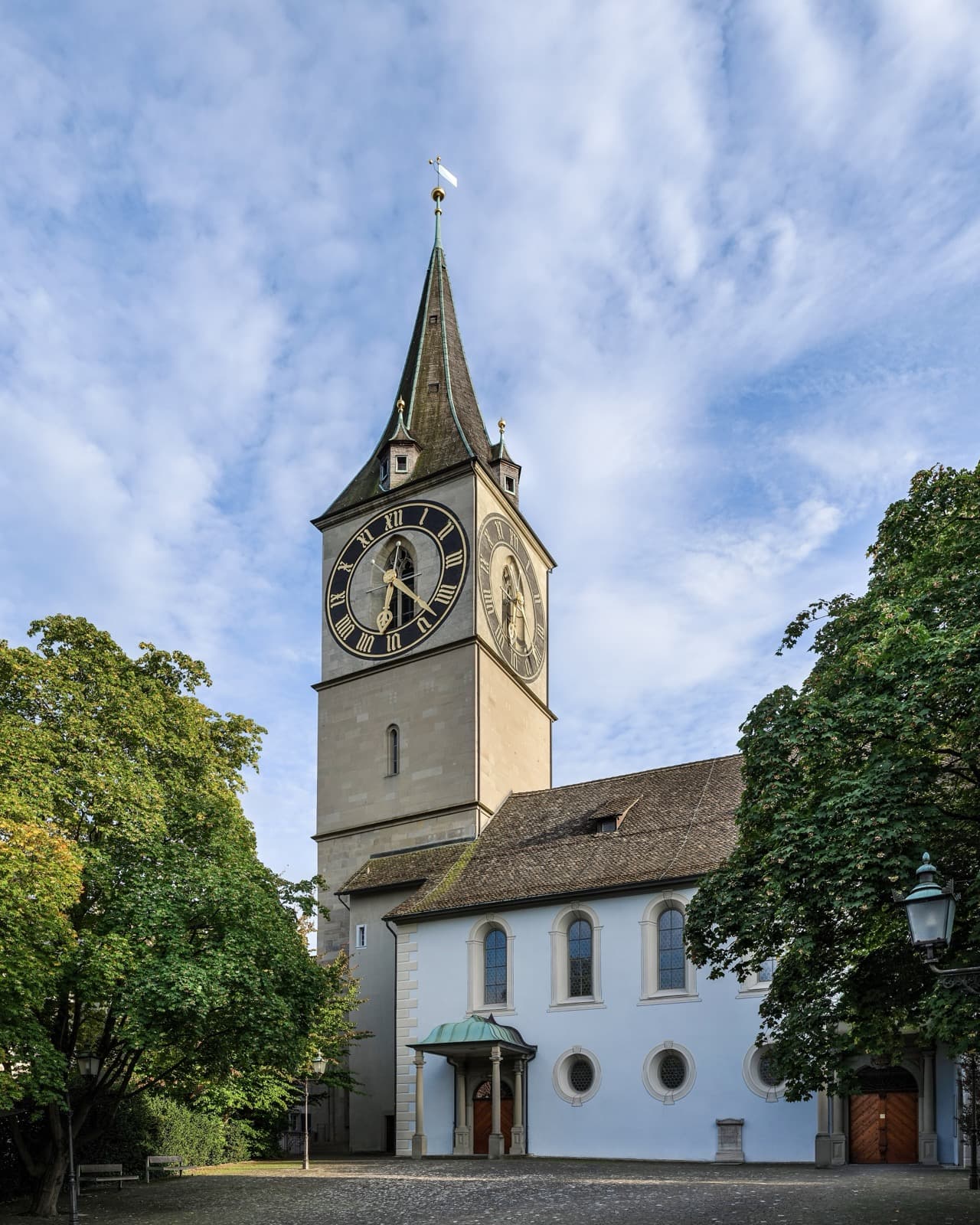
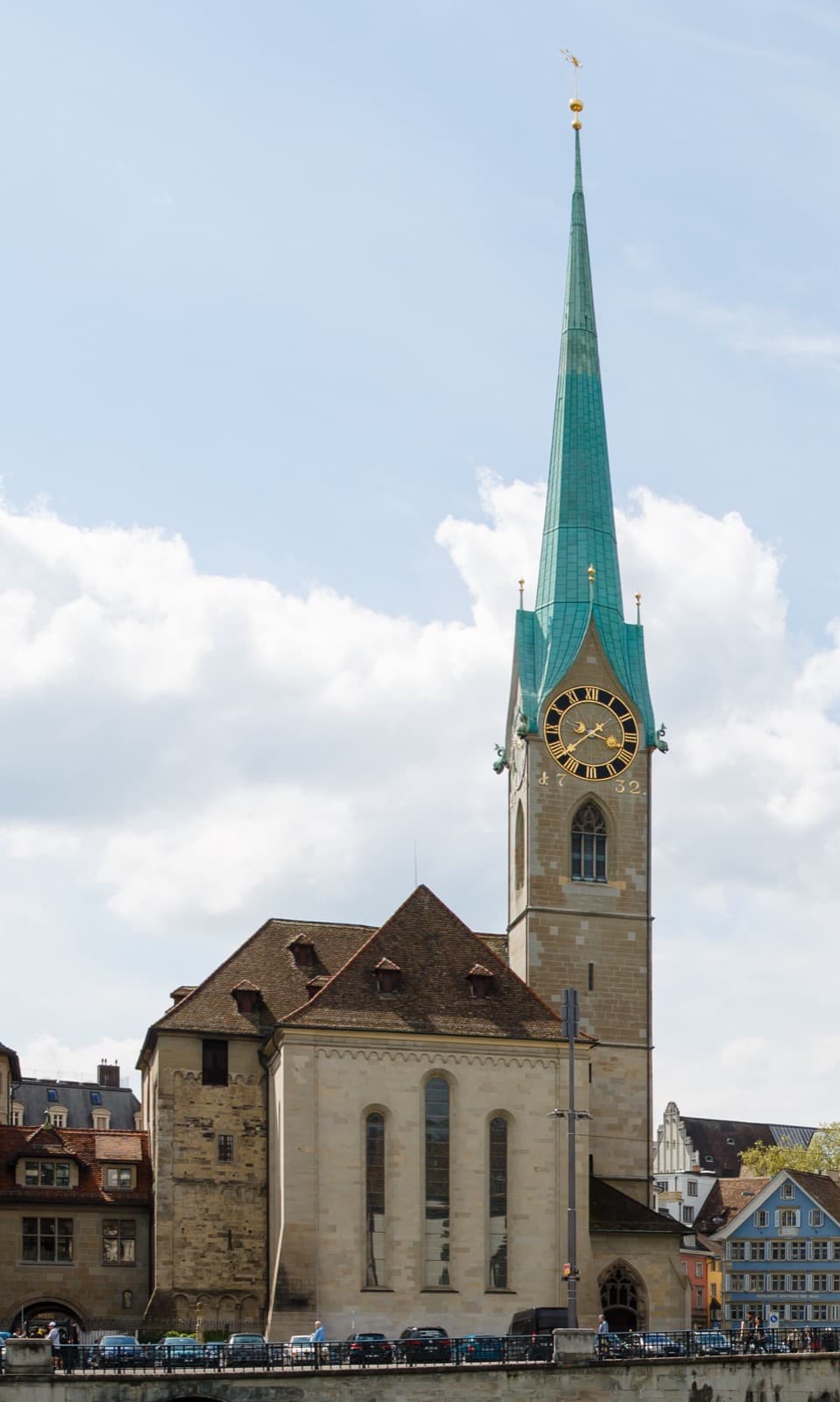
Drop to Sankt Peter, the oldest parish church in Zurich, whose tower carries the largest church clock face in Europe at 8.64 metres across. The church is free to enter. Continue to the Fraumuenster, founded in eight fifty-three, whose choir holds five stained-glass windows made by Marc Chagall and installed in nineteen seventy. This is the one morning stop with a ticket: entry is CHF 5, which includes the crypt museum and an audio guide, and it is free for anyone under sixteen or entering to pray. Between March and October the church opens Monday to Saturday from 10:00 to 18:00 and Sundays after the service; from November to February it closes an hour earlier. The deep blue and red glass reads best in bright daylight, so a clear morning rewards the choir.
Cross the Muensterbruecke, the stone bridge built between eighteen thirty-six and eighteen thirty-eight, to the Grossmuenster. Here Huldrych Zwingli gave his first sermon on the first of January, fifteen nineteen, and launched the Swiss-German Reformation. The church is free for quiet visits. If you want the view, the Karlsturm tower climb costs CHF 5 for adults and CHF 2 reduced, with the last ascent one hour before the church closes. Note that the church shuts on Tuesdays for organ lessons, so check the day if the tower is your goal. Finish through the Niederdorf, the car-free lower-town lanes locals call the Doerfli, ending at the Rathaus, the Town Hall built out over the Limmat between sixteen ninety-four and sixteen ninety-eight.
Midday: Bahnhofstrasse to the lake (about 90 minutes, mostly flat)
Hear a stop from this walk
Rathaus: The Council House Standing on the River
Walk back across the river to the main station and pick up the Bahnhofstrasse: The Street of Gold and the Lake route, about three kilometres over seven stops, roughly 90 minutes to two hours if you linger. This is the easiest of the three: almost entirely level, largely pedestrian, with trams you can ride if you tire.
Zurich Main Station opened in eighteen seventy-one and is the largest railway station in Switzerland. Across the tracks stands the castle-like Swiss National Museum, a good rainy-hour option: adult admission is CHF 13, reduced CHF 10, and free for children up to sixteen, open Tuesday to Sunday from 10:00 to 17:00 and until 19:00 on Thursdays, closed Mondays. Bahnhofstrasse itself was laid from eighteen sixty-four on the line of the city's filled-in moat, and a widely cited study in twenty eleven ranked it among the most expensive retail streets in the world. Halfway down sits Paradeplatz, the banking heart of Switzerland, which was for centuries a pig market before it took its present name in eighteen sixty-five.
Step one block toward the river to the Zunfthaus zur Meisen, a guild house built in seventeen fifty-seven, a reminder that guild masters governed Zurich from a constitution of thirteen thirty-six until the French ended the old order in seventeen ninety-eight. The avenue ends at Buerkliplatz on the lake, where the city engineer Arnold Buerkli directed the building of the lakeside quays between eighteen eighty-one and eighteen eighty-seven using rubble from the demolished fortifications. This is the natural lunch stop: buy something from the market stalls or a lakeside kiosk and sit on the Buerkliterrasse, where on a clear day the water runs south toward the snow of the Alps. Cross the Quaibruecke, opened in eighteen eighty-five, to the Opera House, opened in eighteen ninety-one and, by its own record, the first opera house in Europe lit by electricity.
Afternoon and evening: Zurich-West, the factory district reborn (about 90 minutes)
From Buerkliplatz, ride a tram back through the centre and out to Zurich-West, or return to the main station and take the short hop to Hardbruecke. The Zurich-West: The Factory District Reborn walk is about 3.6 kilometres over seven stops, roughly 90 minutes, all on level ground. This is where a wealthy city chose to convert its factories rather than clear them.
Start under Im Viadukt, a stone railway viaduct built in eighteen ninety-four whose thirty-six arches were turned into shops, studios and a covered market hall in a conversion completed in twenty ten. Trains still run overhead. Move to the Loewenbraeu-Areal, a red-brick brewery of eighteen ninety-seven that stopped making beer in nineteen eighty-six and now houses the Kunsthalle Zurich and the Migros Museum of Contemporary Art; the complex is free to enter, and the galleries charge admission in Swiss francs if you want to step inside. The Schiffbau, an iron shipbuilding hall of eighteen ninety-one, reopened in two thousand as a home of the Schauspielhaus Zurich with its raw ironwork kept intact, and it holds the Moods jazz club, which is the reason this walk suits the evening.
The Prime Tower, a faceted green-glass office building one hundred and twenty-six metres tall, was the tallest building in Switzerland from twenty eleven until the Roche Tower in Basel overtook it in twenty fifteen; it is private, so read it from the street. Puls 5 is built around an iron foundry hall of eighteen ninety-eight whose overhead cranes were kept in place above a free public hall. Frau Gerolds Garten, a container-and-garden space that opened in the summer of twenty twelve, is the district's low-key end-of-day spot for a drink beside the arches. Close on the reclaimed Limmat riverside path, and if it is a warm afternoon, the Oberer and Unterer Letten stretches nearby are known for summer swimming.
Practical notes
Getting around is simple. A Zürich Card gives unlimited tram, bus, train and boat travel plus museum discounts and costs about CHF 29 for 24 hours or CHF 56 for 72 hours, which pays off quickly if you ride between districts and enter a museum or two. Payment across Switzerland is in Swiss francs, not euros, and most sites take contactless cards or the local TWINT app; carry a little cash for the church tickets, which are sold on site only.
Zurich is a calm, low-crime city to walk. The honest cautions are ordinary ones: trams and cyclists move fast along the Limmatquai and Bahnhofstrasse, so step clear of the rails before you stop to check your route; old-town cobbles and the descent from Lindenhof get slick after rain; and the working churches ask for modest dress and quiet, especially around the Fraumuenster's Chagall choir. Weather changes fast off the lake and the Alps, so a light waterproof is worth carrying even on a bright morning. If you want the fullest markets and container-garden life in Zurich-West, come on a weekend.
Sources
Frequently asked questions
- Can you see Zurich in one day on foot?
- Yes. Zurich's core sights sit close together along the River Limmat and the lake, and the classic day splits into three walks totaling roughly nine kilometres of mostly flat, largely car-free ground. A morning old-town loop of about 2.6 kilometres, a Bahnhofstrasse-to-lake stretch of about 3 kilometres, and an afternoon Zurich-West walk of about 3.6 kilometres cover the city end to end. Trams connect the districts if you tire.
- How much does it cost to enter the Fraumünster and Grossmünster churches?
- Basic church entry to the Grossmünster is free for quiet visits, and the Karlsturm tower climb costs CHF 5 for adults and CHF 2 reduced. The Fraumünster charges CHF 5, which includes its crypt museum and an audio guide, and entry is free for anyone under sixteen or entering to pray. Tickets are sold on site only, with cash, card or TWINT accepted.
- What are the opening hours for Zurich's main churches?
- Between March and October the Fraumünster opens Monday to Saturday from 10:00 to 18:00 and Sundays after the service, closing an hour earlier from November to February. The Grossmünster keeps similar seasonal hours but closes on Tuesdays for organ lessons, and the last tower ascent is one hour before the church closes. Both are working churches, so hours can shift around services.
- Is the Zürich Card worth buying for a day trip?
- It often is if you ride between districts and visit a museum. The Zürich Card gives unlimited travel by tram, bus, train and boat plus museum discounts, and costs about CHF 29 for 24 hours or CHF 56 for 72 hours. Since a single Swiss National Museum adult ticket is CHF 13 and inter-district tram rides add up, the card can pay for itself in a busy day.
- How do I get from the old town to Zurich-West?
- Zurich-West lies northwest of the centre along the Limmat, reached in a few minutes by tram or a short train hop to Hardbruecke station. From Buerkliplatz on the lake you can ride a tram back through the centre and out to the district. Walking the whole way is possible but adds distance, so most people combine a tram with the on-foot Zurich-West walk.
- What is the best order to walk Zurich in a day?
- Do the old town first while the churches are open in the morning, then follow Bahnhofstrasse downhill to Lake Zurich for a midday break at Buerkliplatz. Spend the afternoon and early evening in Zurich-West, where the Schiffbau theatre and Moods jazz club and the Frau Gerolds Garten make natural end-of-day stops. This sequence keeps the day flat, sunlit and unhurried.
Ready to experience it?
Old Town: The City That Reformed Itself
85 min · 2.6 km · moderate
More from Zurich
Explore more at your own pace.
Zurich: The City That Reformed Itself
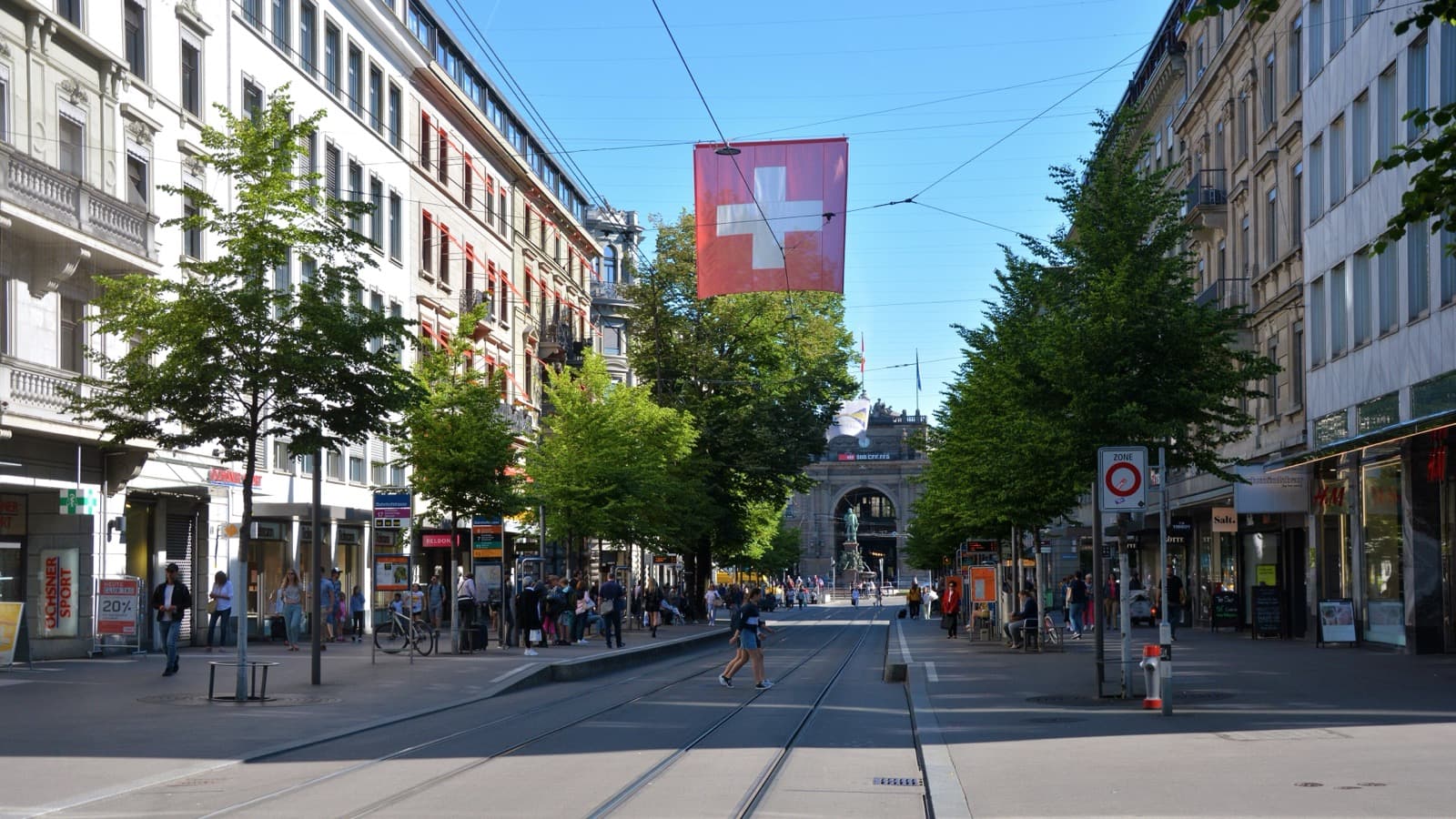
Bahnhofstrasse: The Moat Beneath Zurich's Street of Gold
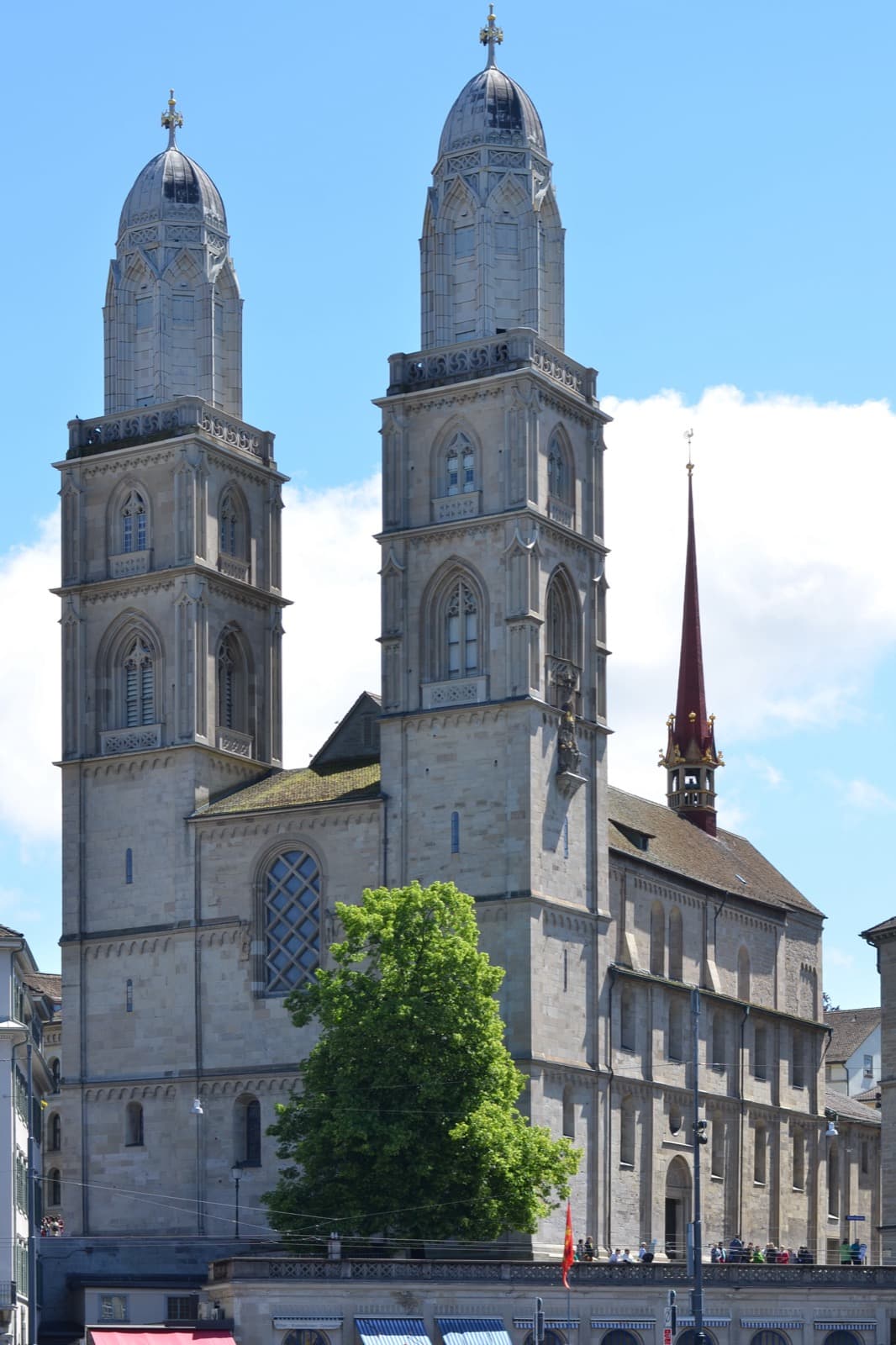
The Grossmünster and the City That Emptied Its Own Churches
Fraumünster: The Abbey of Ruling Women That the Reformation Emptied and Chagall Refilled
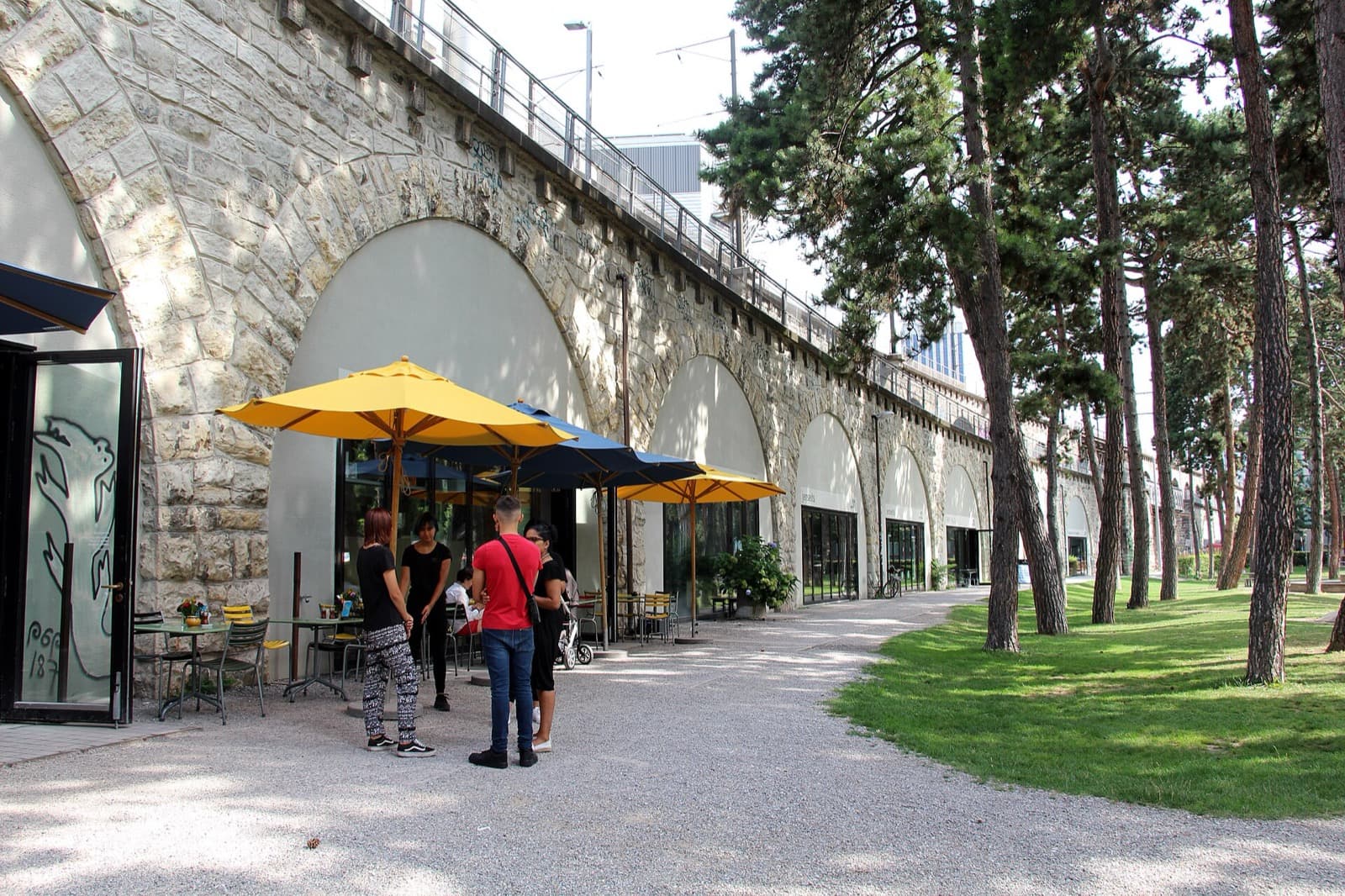
Im Viadukt: How Zurich Turned a Railway Wall Into a Market Street