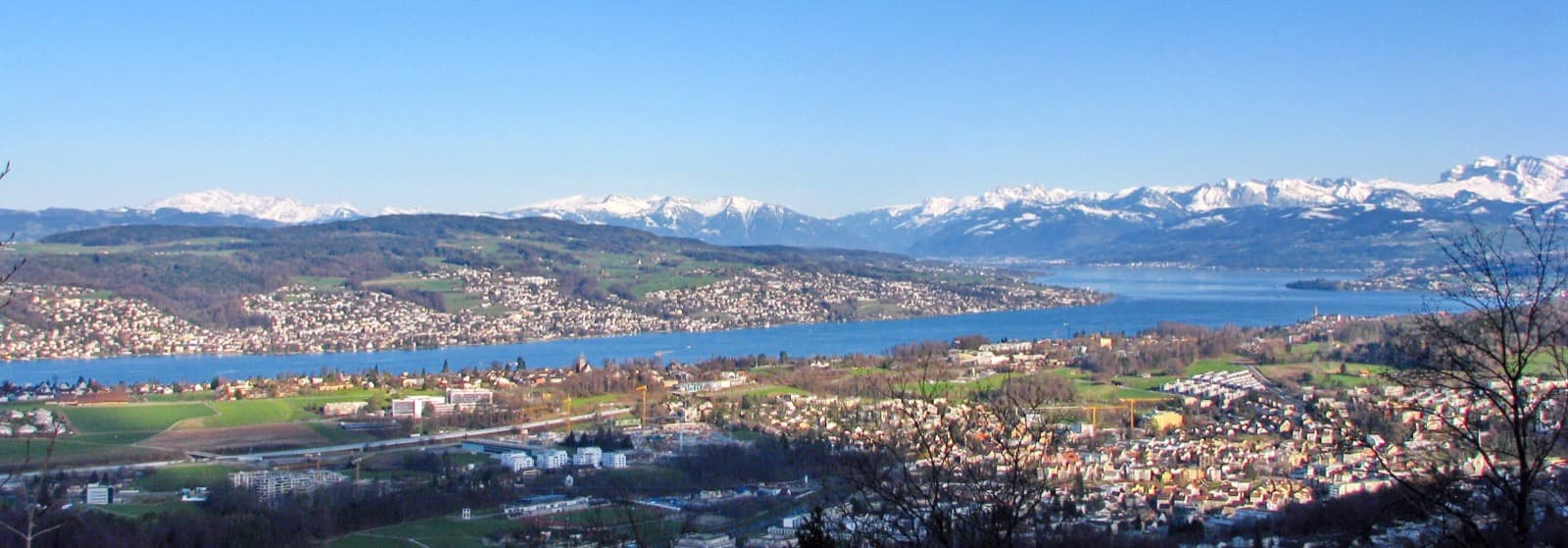
Follow Zurich's most famous avenue from the great railway station down to Lake Zurich, reading the merchant city of banks, guilds and water beneath the shine, all at your own pace.
Start · The Main Station and the Swiss National Museum: The Head of the Avenue
DirectionsStops
- 1
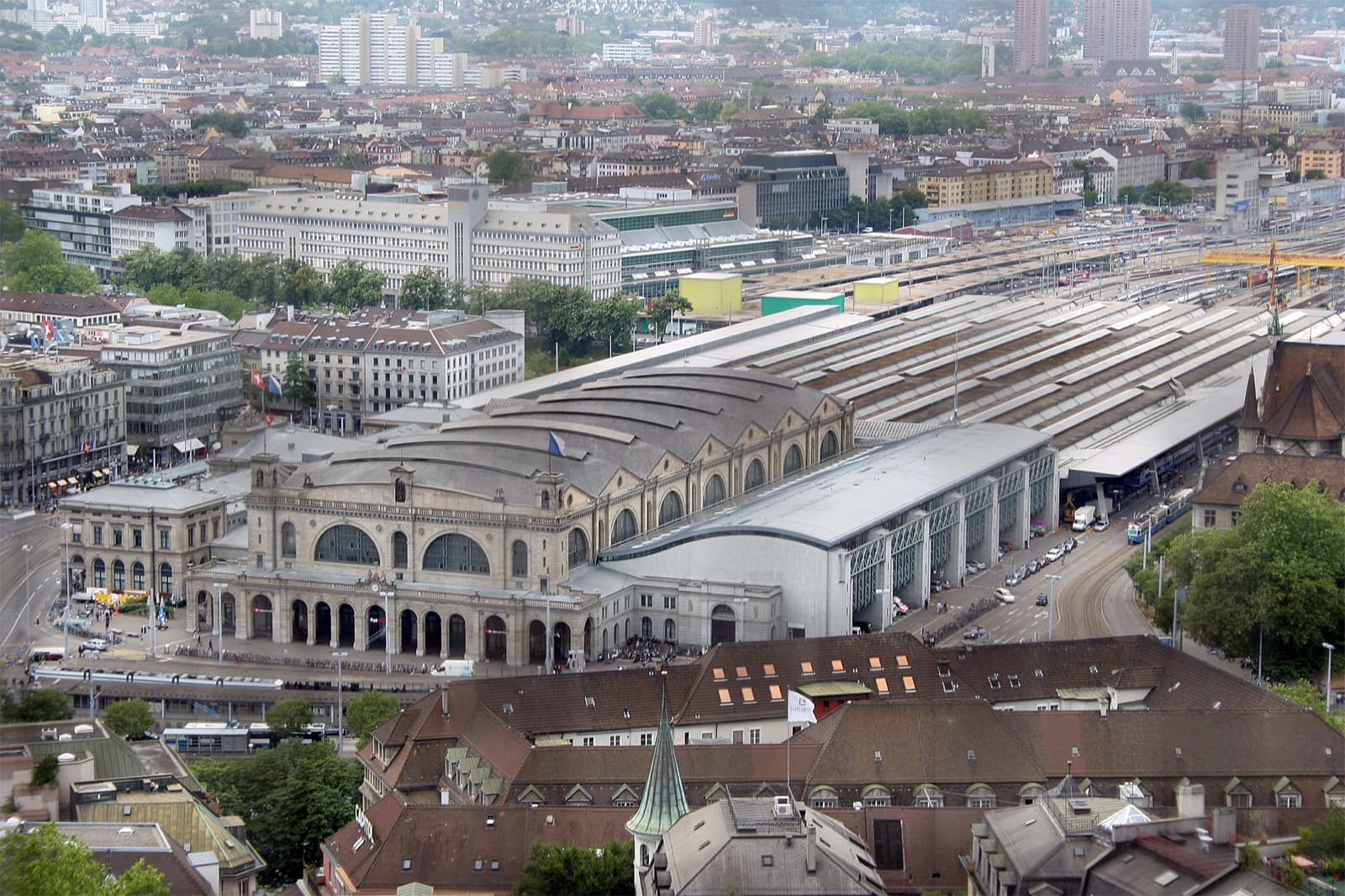
The Main Station and the Swiss National Museum: The Head of the Avenue
The grand railway station and the castle-like national museum stand together here, at the northern head of Bahnhofstrasse.
- 2
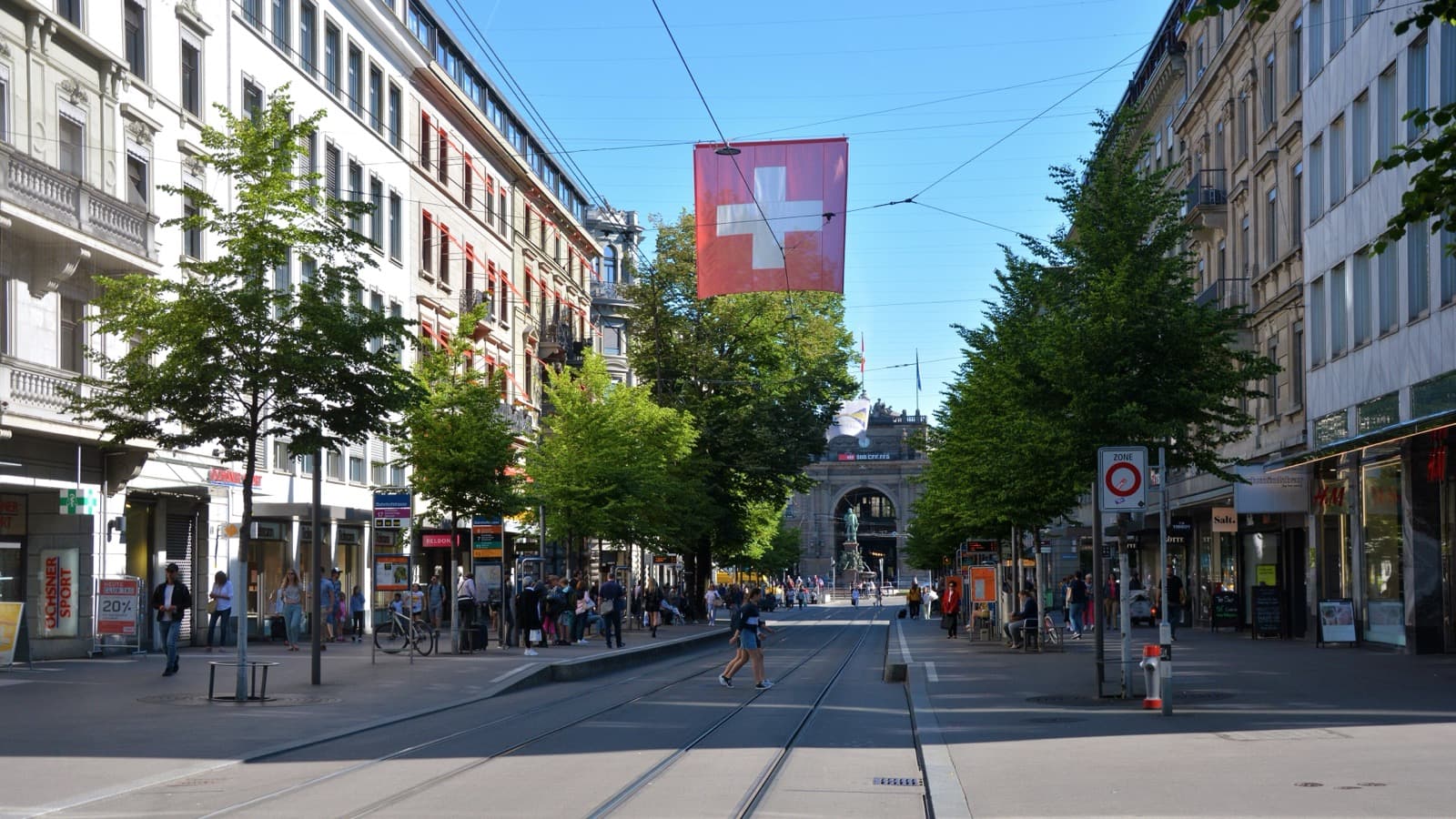
Bahnhofstrasse: The Street on the Old Moat
The broad shopping avenue laid out in the eighteen sixties on the line of the filled-in city moat.
- 3
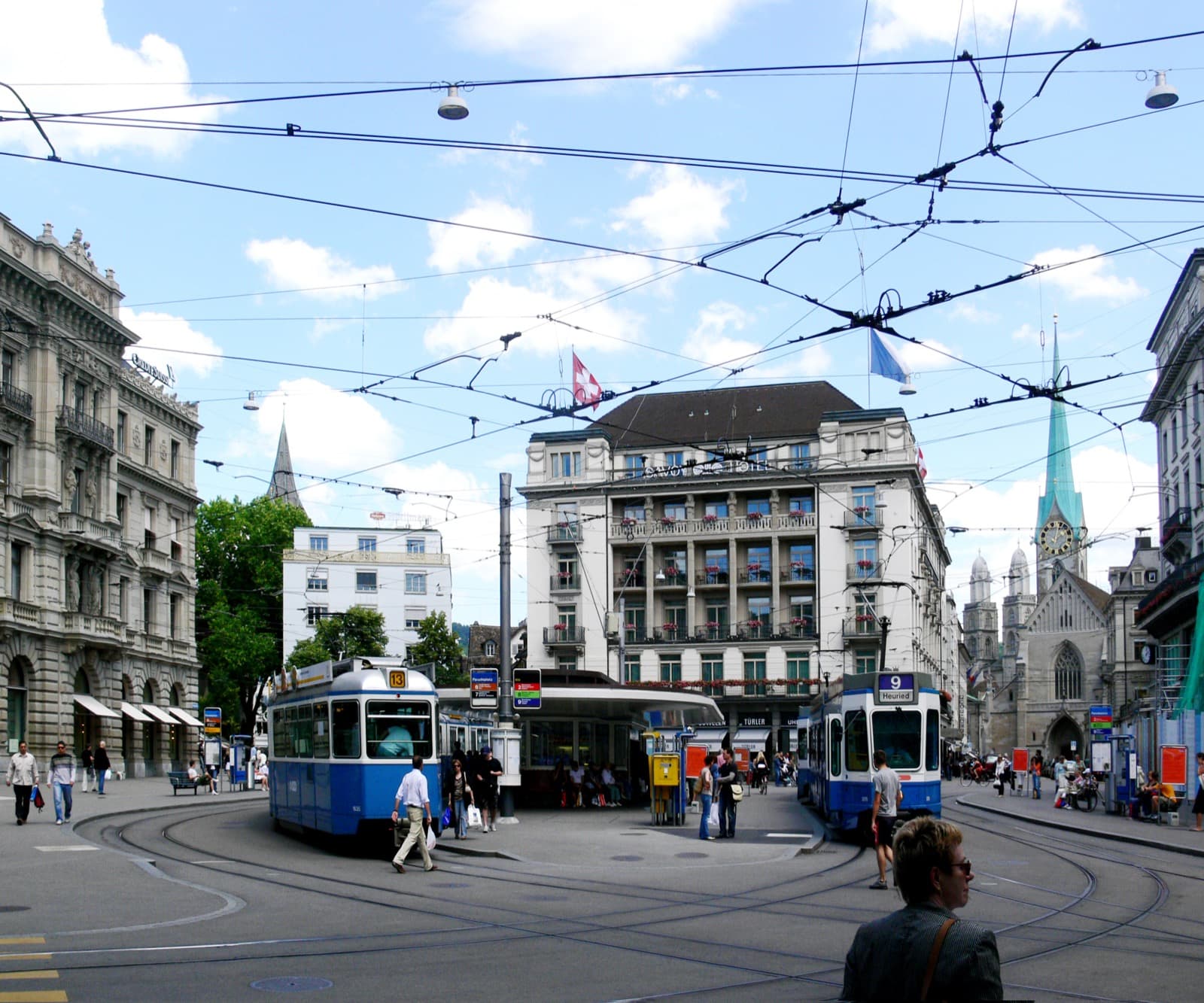
Paradeplatz: The Banking Heart and the Reckoning Beneath
The quiet square about halfway down the avenue that is the traditional heart of Swiss banking.
- 4
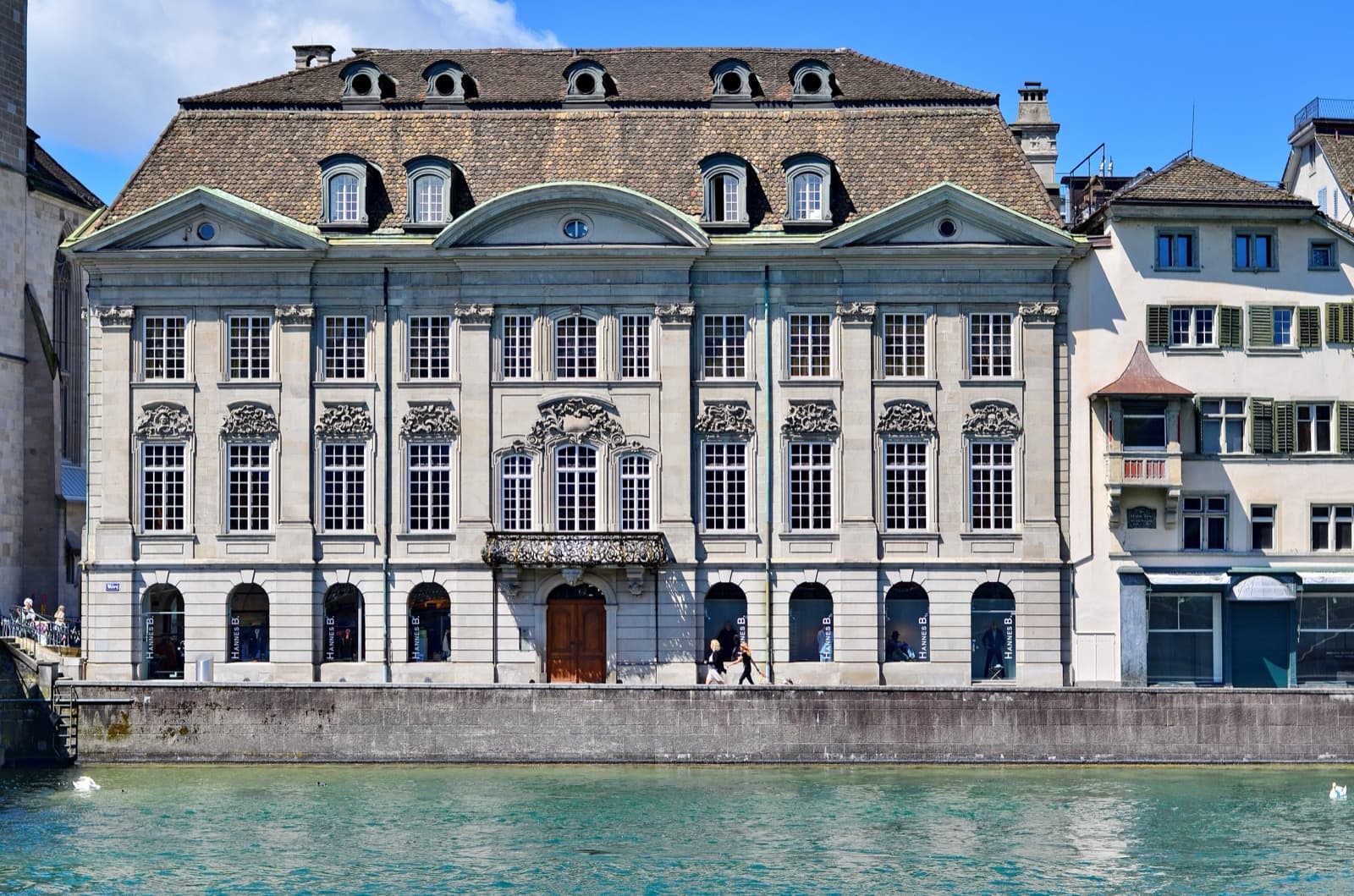
Zunfthaus zur Meisen: The Houses of the Guilds
An ornate eighteenth-century guild house near the Fraumuenster, a survivor of the merchant guilds that once governed Zurich.
- 5
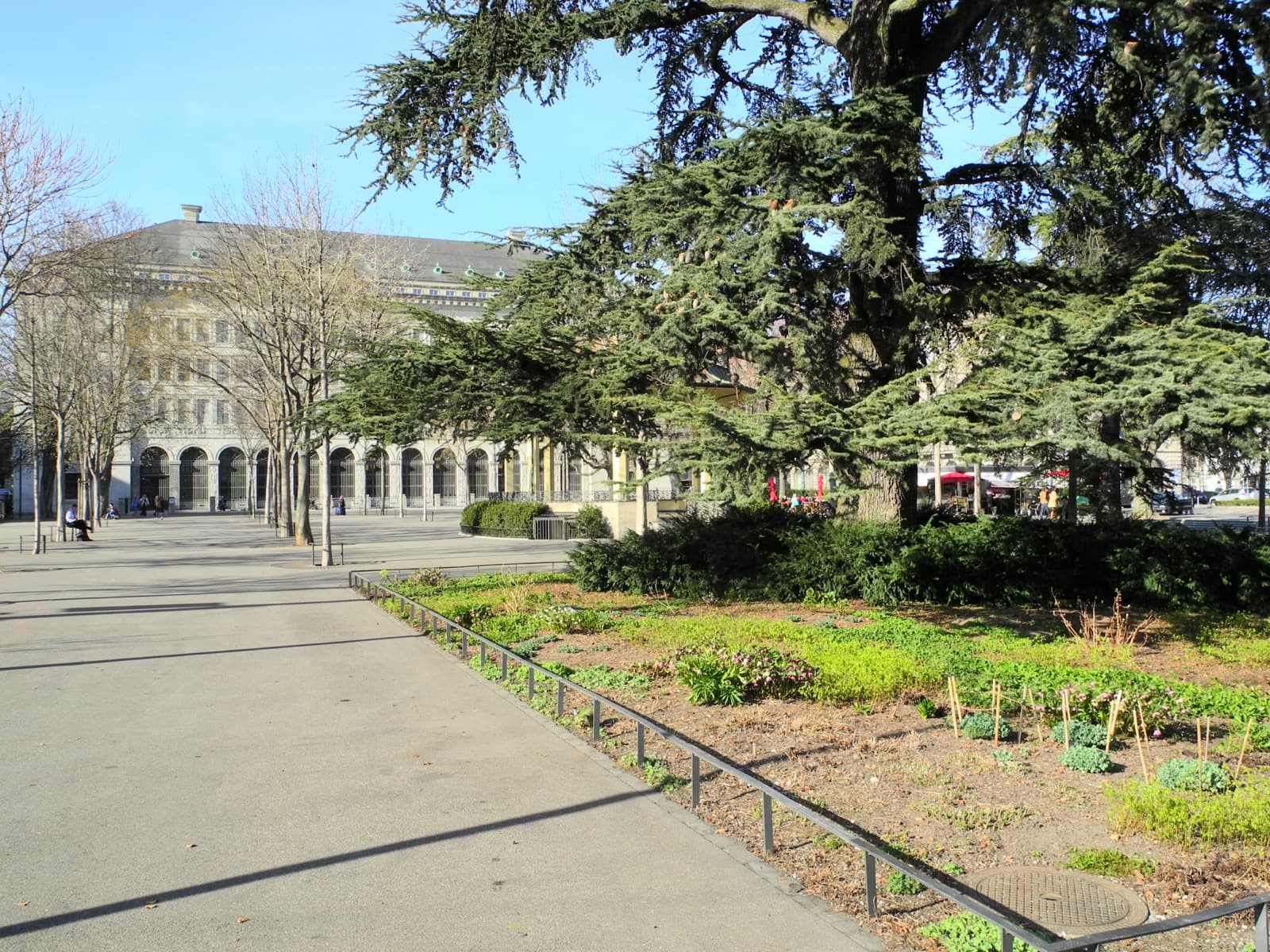
Buerkliplatz: Where the Street of Gold Meets the Lake
The square at the foot of Bahnhofstrasse where the avenue meets Lake Zurich and the view opens toward the Alps.
- 6
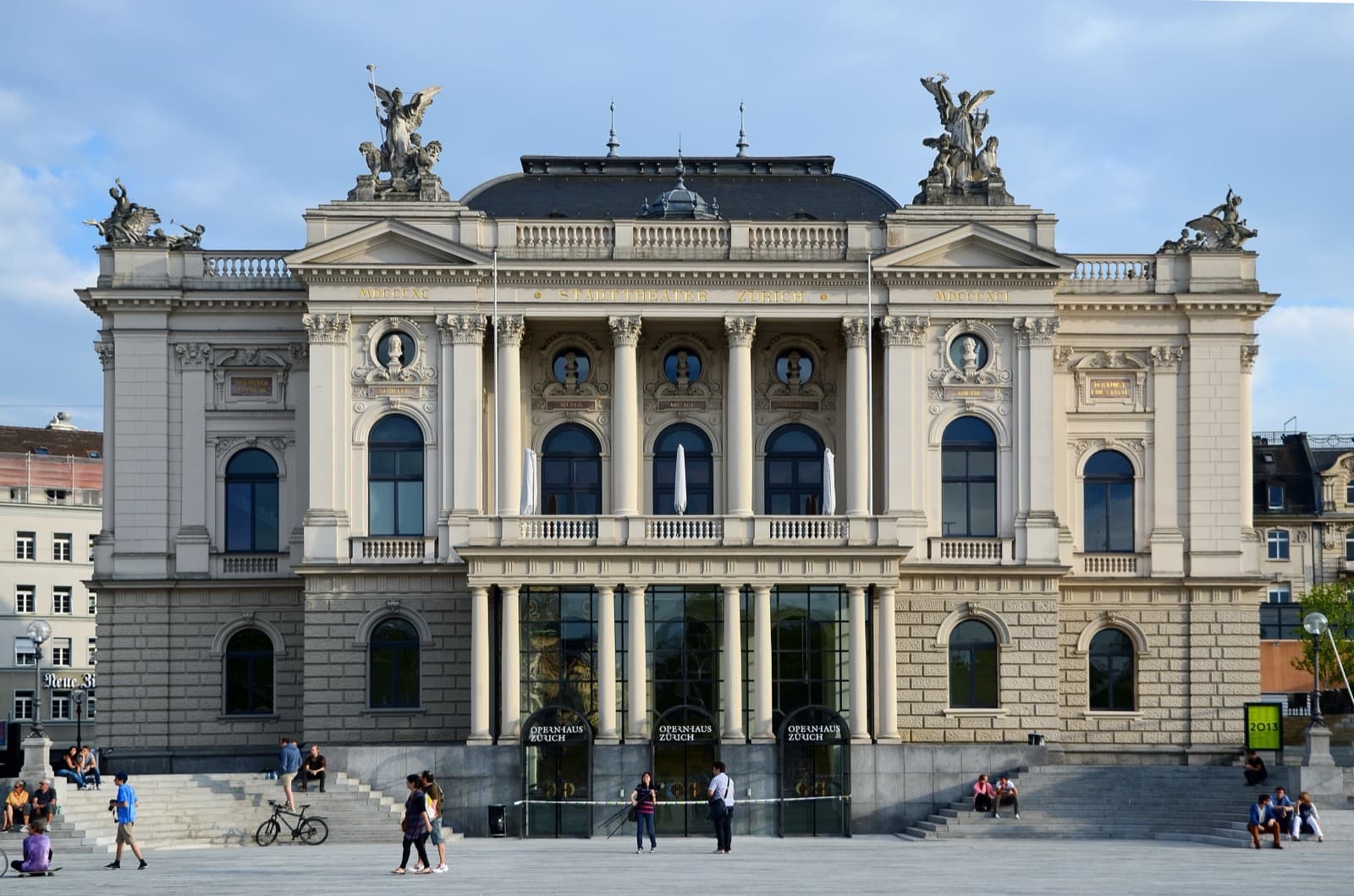
The Quays and the Opera House: The Confident Century at the Water
The reclaimed lakeside promenade and the neo-Baroque Opera House on the eastern shore, the confident nineteenth-century remaking of the waterfront.
- 7
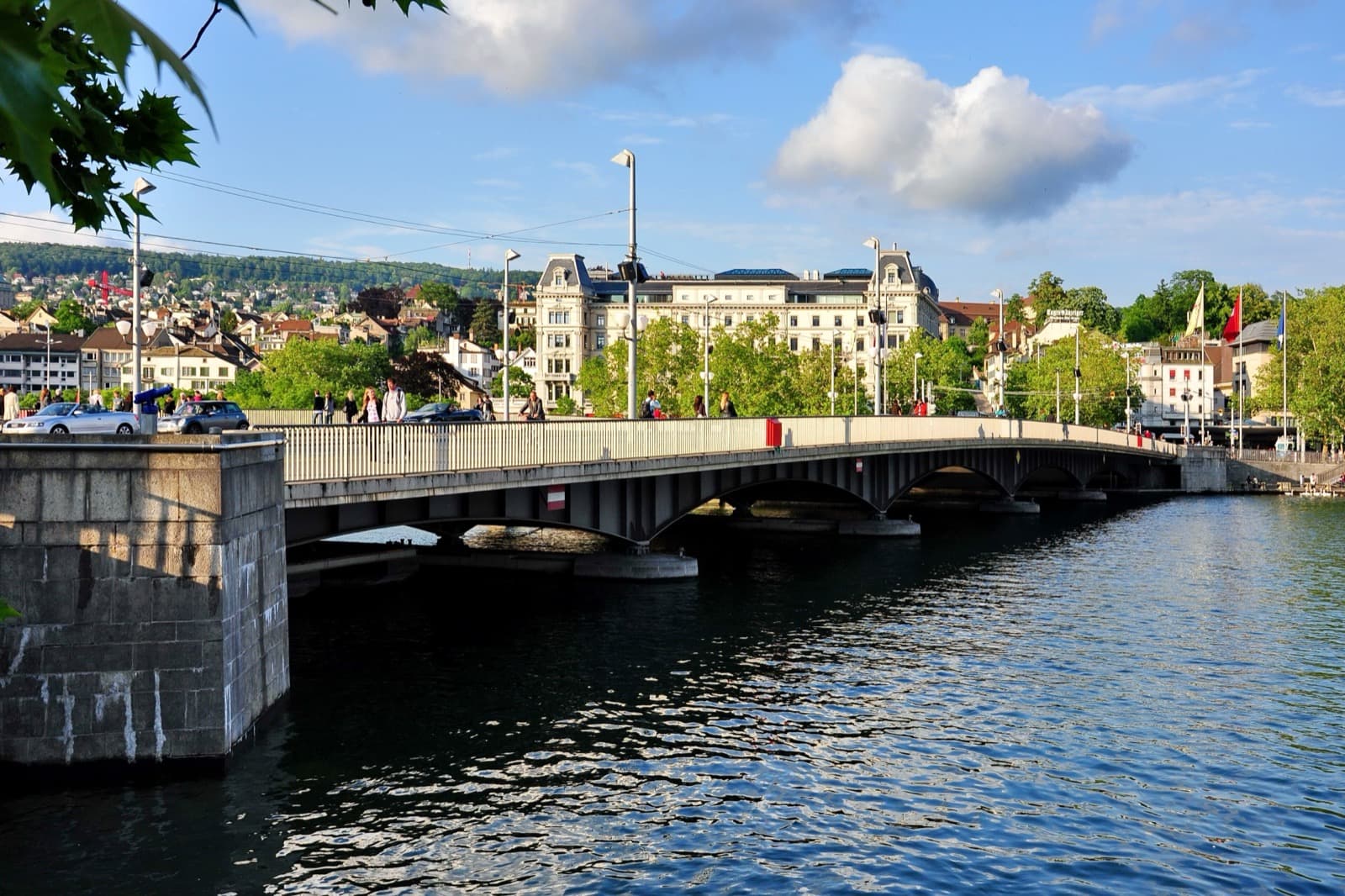
The Quaibruecke: The View to the Alps
The lake bridge at the outflow of Lake Zurich, the single vantage from which river, lake, old town and Alps all open at once.
Details
Best Time to Visit
Come on a clear morning when Bahnhofstrasse is quiet before the shops fill and the light is soft on the lake, or in the late afternoon when the sun drops toward the Alps beyond the water. Weekdays show the banking square at work; Saturdays bring markets to Buerkliplatz. Spring and autumn are gentlest, and on a bright day the snow of the distant mountains is visible from the lake end. Avoid the midday summer crowds if you can, and note that Swiss weather changes fast, so a settled sky is worth waiting for.
Pro Tips
- •Walk the avenue downhill from the station to the lake, not the other way around, so the whole route ends on the open water and the view toward the Alps.
- •Start early or come in the late afternoon; Bahnhofstrasse is calmest before the shops open and again as the light turns gold over the lake.
- •Step one block off the lower avenue to Muensterhof to see the guild house up close, since the finest merchant halls sit just off the main street, not on it.
- •From the Buerkliterrasse at the lake end, look south down the water on a clear day for the classic view toward the snow of the Alps.
- •Cross the Quaibruecke on foot to reach the quays and the Opera on the east shore; it is the single best vantage over river, lake and mountains together.
- •Trams run the length of Bahnhofstrasse, so you can ride a stretch and walk the rest if you tire, and the avenue is largely pedestrian in its core.
Safety & Precautions
- •Trams cross and run along Bahnhofstrasse and through the old-town lanes near the lake, so watch the rails and step clear before you pause to look.
- •The lake end is open and can be windy and cool even on a warm day, so bring a layer for the quays and the bridge.
- •Museums, towers and the Opera charge entry, and payment across Switzerland is in Swiss francs, not euros, while the quays, squares and bridge are free and open.
- •Old-town cobbles near Muensterhof and the lakefront can be uneven and slippery when wet, and the working minster and churches nearby ask for modest dress and quiet.
Travel advisory: Exercise Normal Precautions (Level 1).
Gallery
Related Reading
Go deeper on what you'll see, hear, and walk through.
Overview
Best Self-Guided Walking Tours in Zurich (2026)
4 min
Overview
One Day in Zurich: A Walkable Itinerary from Old Town to the Lake
8 min
Overview
Zurich Travel Guide: How Many Days, Getting Around, Safety, and Costs
7 min
Thematic
Best History Walking Tours in Zurich (2026)
2 min
Thematic
Zurich: The City That Reformed Itself
8 min
Companion
Bahnhofstrasse: The Moat Beneath Zurich's Street of Gold
7 min
Deep dive
Paradeplatz: The Pig Market That Became the Heart of Swiss Banking
7 min
Read
What to Eat in Zurich: The Local Dishes and How to Order Them
7 min
Read the walk
The full story of Bahnhofstrasse: The Street of Gold and the Lake, in words. Prefer to listen? Play it narrated, from home or on location.
Introduction
This is a self-guided walk down the spine of Zurich, Switzerland, from the head of the country's largest railway station to the open water of Lake Zurich. It follows Bahnhofstrasse, the broad avenue laid on a filled-in medieval moat, past the banking heart of the nation and the ornate houses of the guilds that once ran the republic, out to the quays and the distant Alps. Over seven stops and about three kilometres, it holds two Zuriches together: the postcard of money, watches and the lake, and the older, heavier story beneath the gleam. The reformer Huldrych Zwingli's city of the fifteen twenties, the guild masters who governed until the French ended them in seventeen ninety-eight, and the sober reckoning of the nineteen nineties over dormant wartime bank accounts all live on this same line. Expect to spend about ninety minutes to two hours at an unhurried pace, with short stops you can skip or linger over as you like. There is no group and no schedule here, so you can sit by the lake as long as you please, read a guild house from across a square, or pause on a bridge and let the whole geography settle. The route is almost entirely flat and largely pedestrian, an easy walk on a clear day. Along the way, precise dates and the engineers who shaped this shoreline are named as we go. When you arrive at the front of Zurich Main Station, begin with stop one.
1. The Main Station and the Swiss National Museum: The Head of the Avenue
Begin at the northern head of the avenue, where the country arrives and departs. The grand station facing you, Zurich Main Station, opened in eighteen seventy-one, designed by the architect Jakob Friedrich Wanner, its monumental front turned to face the newly laid Bahnhofstrasse. It is the largest railway station in Switzerland and among the busiest in Europe. The Swiss railway records place the country's first line back in eighteen forty-seven, the little Spanish-bun railway, and from that beginning grew the network that pours through these platforms. Across the tracks, on the peninsula between two rivers, the Limmat and the Sihl, rises a building that looks like a castle. That is the Swiss National Museum, the Landesmuseum, opened in eighteen ninety-eight to a design by the architect Gustav Gull. Its turrets, courts and steep roofs are deliberate historicism, a fortress built not for defence but for memory, raised to house the cultural story of a young federal nation. So the avenue opens between two kinds of power: the practical machinery of the railway that made modern Zurich move, and the castle of national memory beside it. One sends trains south to the lake and the mountains; the other keeps the objects that tell the country who it is. From here the street runs straight ahead toward the water, about two kilometres of it, laid on ground that was once the city's defensive moat. Take a moment to see the whole line before you set off down it.
2. Bahnhofstrasse: The Street on the Old Moat
Now consider the ground under your feet, because the grandest avenue in the city sits on a drained ditch. When Zurich pulled down its medieval fortifications, the City of Zurich laid out Bahnhofstrasse from eighteen sixty-four along the exact line of the filled-in moat. The old moat here even had a homely name, the Froeschengraben, the ditch of the frogs. So this broad and elegant street, lined with lime trees, is quite literally the trace of the city's old defences, softened into a promenade. It runs about one and a half kilometres from the station down to Buerkliplatz on the lake, a little under a mile, largely given to walkers, with trams threading through. And it became famous for one thing above all: money made visible. A widely cited study in twenty eleven ranked it among the most expensive retail streets in the world, and it is often called the most expensive street in Europe. Watches, jewellery and the great names of luxury line these blocks. But hold the two things together. The avenue is a piece of engineering as much as a showcase, a confident nineteenth-century decision to sweep away walls and replace them with commerce and light. The city that could no longer imagine being besieged filled its moat and sold the frontage. As you walk down it, the shine grows brighter toward the middle, where the banks gather. Keep going toward the water; the street is telling you a story about a city that turned its defences into a display.
3. Paradeplatz: The Banking Heart and the Reckoning Beneath
About halfway down the avenue you reach a square that looks almost too quiet for its reputation. This is Paradeplatz, the traditional heart of Swiss banking, the headquarters square of the country's largest banks. One of the great Swiss banks was founded right here in eighteen sixty-five, the same year the square took its present name. Before that it was something far earthier. For centuries this was a livestock market, the Saeumaert, a pig market, held on open ground. It was renamed Neumarkt, the new market, in eighteen nineteen, then Paradeplatz in eighteen sixty-five, once Bahnhofstrasse had turned it into a grand address. So the banking heart of Switzerland stands on an old market for pigs. By long tradition, great vaults of gold lie beneath this pavement. Mark that clearly as legend, the kind of story a rich city tells about itself, not documented fact. But there is a documented weight here too, and it deserves plain words. In the nineteen nineties the question of dormant bank accounts from the Holocaust era, together with Switzerland's restrictive wartime refugee policy that turned away many Jewish people fleeing Nazi persecution, became a serious reckoning. An independent commission led by the former US Federal Reserve chairman Paul Volcker was set up in nineteen ninety-six to investigate. In August nineteen ninety-eight the two largest banks agreed to a settlement of one and a quarter billion dollars. State it soberly, neither as accusation nor as apology. This square holds both truths at once: the gleam above the pavement, and the ground truth beneath the shine.
4. Zunfthaus zur Meisen: The Houses of the Guilds
Step a short way off the lower avenue toward the river, to Muensterhof beside the Fraumuenster, and the story reaches back before the banks. Here stands the Zunfthaus zur Meisen, a guild house, its pale front curving in elegant late-Baroque lines. The word zunfthaus simply means…
Full narration for this stop unlocks with the tour.
5. Buerkliplatz: Where the Street of Gold Meets the Lake
Here, at the foot of the avenue, the street of gold meets the open water. This is Buerkliplatz, the square where Bahnhofstrasse arrives at Lake Zurich, at the very point where the River Limmat leaves the lake and begins its run through the old town. The square is named after the…
Full narration for this stop unlocks with the tour.
6. The Quays and the Opera House: The Confident Century at the Water
Cross to the eastern shore now, on foot over the lake bridge, and walk the great promenade that the nineteenth century laid along the water. These are the quays, the Quaianlagen, engineered by Arnold Buerkli between eighteen eighty-one and eighteen eighty-seven. The City of…
Full narration for this stop unlocks with the tour.
7. The Quaibruecke: The View to the Alps
End on the bridge, because it is from here that the whole city finally makes sense. This is the Quaibruecke, and bruecke simply means bridge. It spans the mouth of Lake Zurich, at the exact point where the lake narrows and becomes the River Limmat, linking Buerkliplatz on one…
Full narration for this stop unlocks with the tour.