A self-guided walk through Zurich's old engine room, where a wealthy city chose to convert its factories, foundries and railway arches into culture rather than clear them away.
Start · Im Viadukt: The Railway Arches Turned Market Street
DirectionsStops
- 1
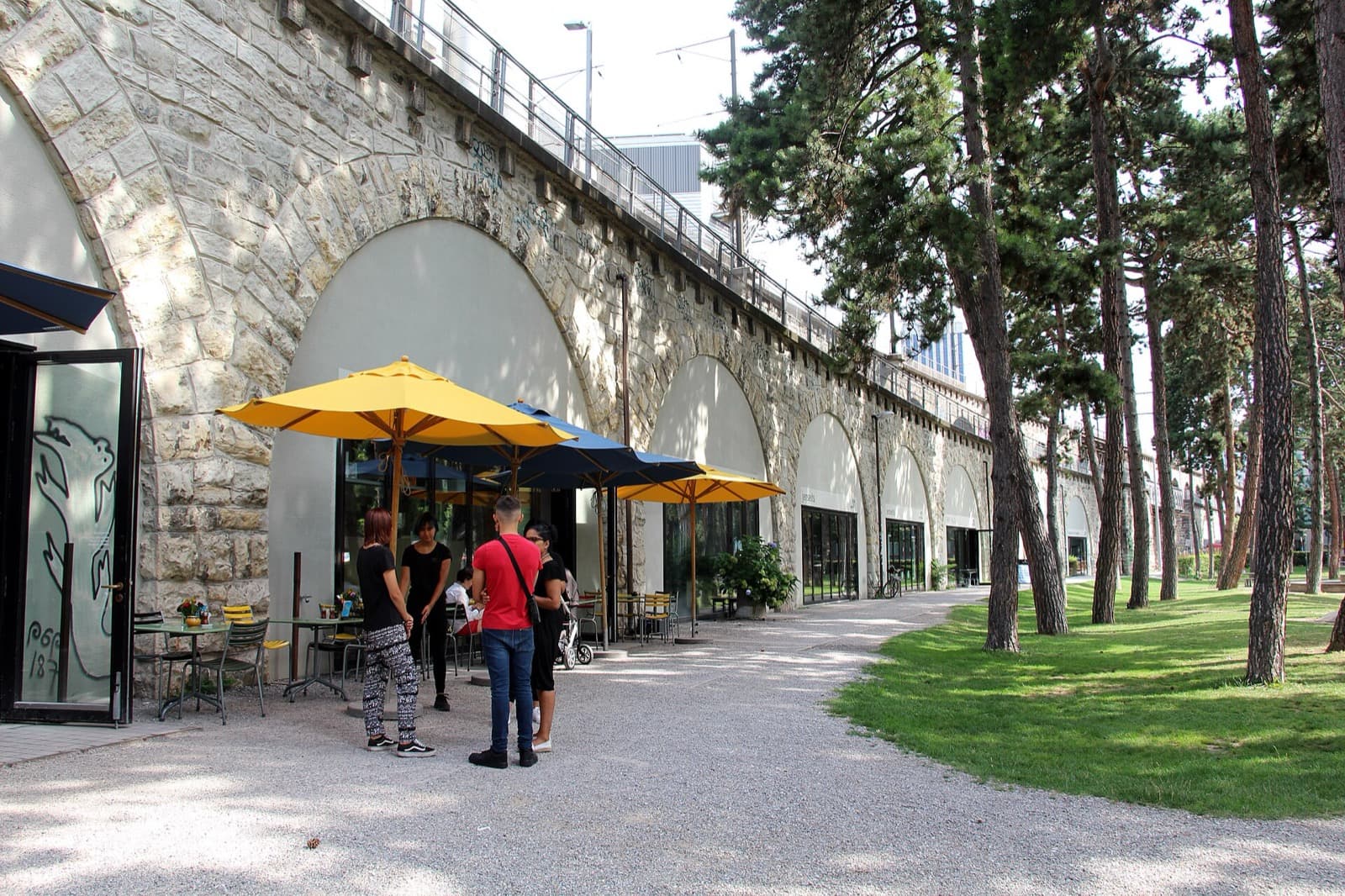
Im Viadukt: The Railway Arches Turned Market Street
A stone railway viaduct whose thirty-six arches were converted into a chain of shops, studios and a market hall, beneath trains that still run overhead.
- 2
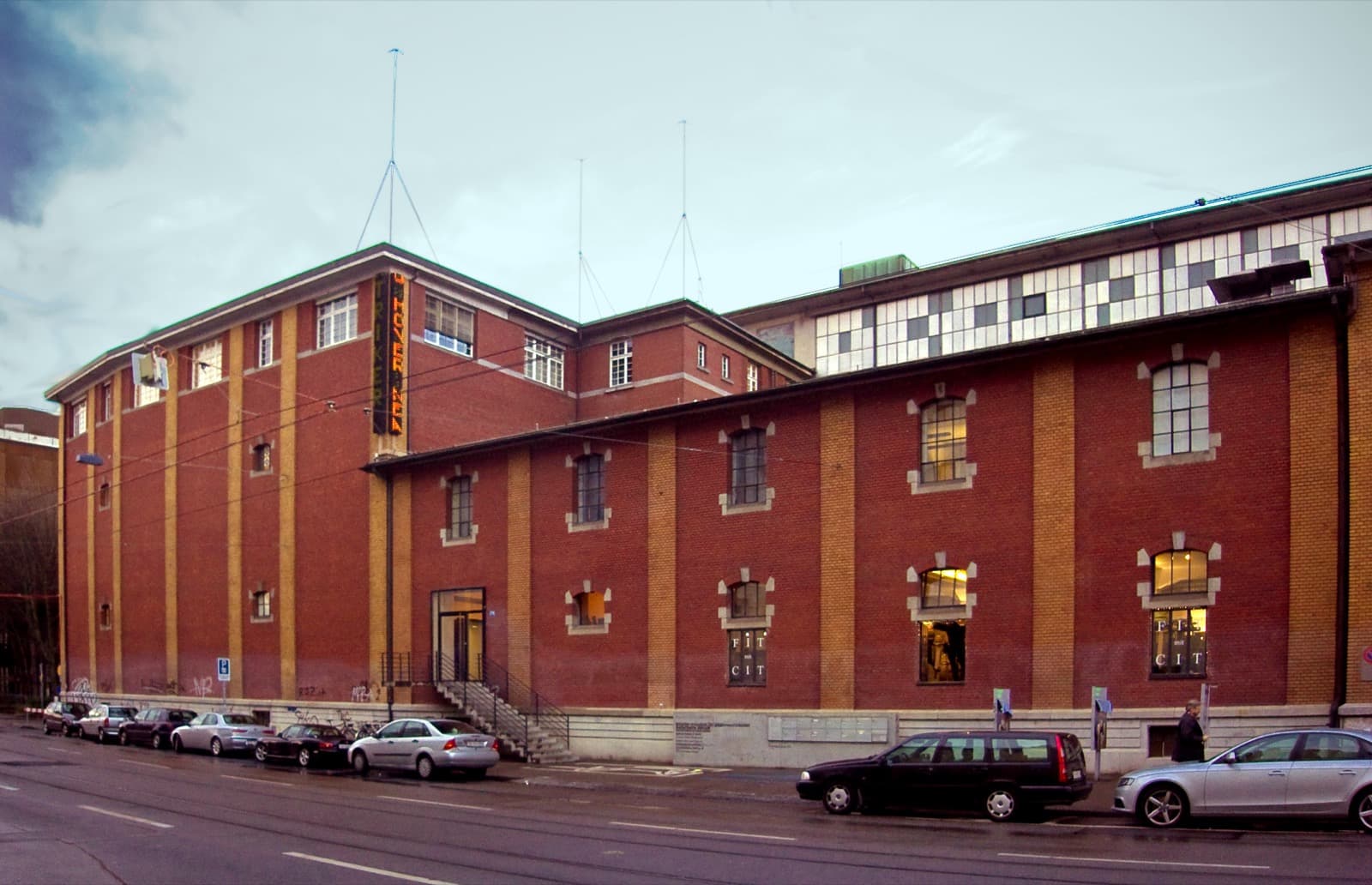
Loewenbraeu-Areal: The Brewery That Now Brews Contemporary Art
A red-brick brewery that stopped making beer in the nineteen eighties and became one of Zurich's main centres for contemporary art.
- 3
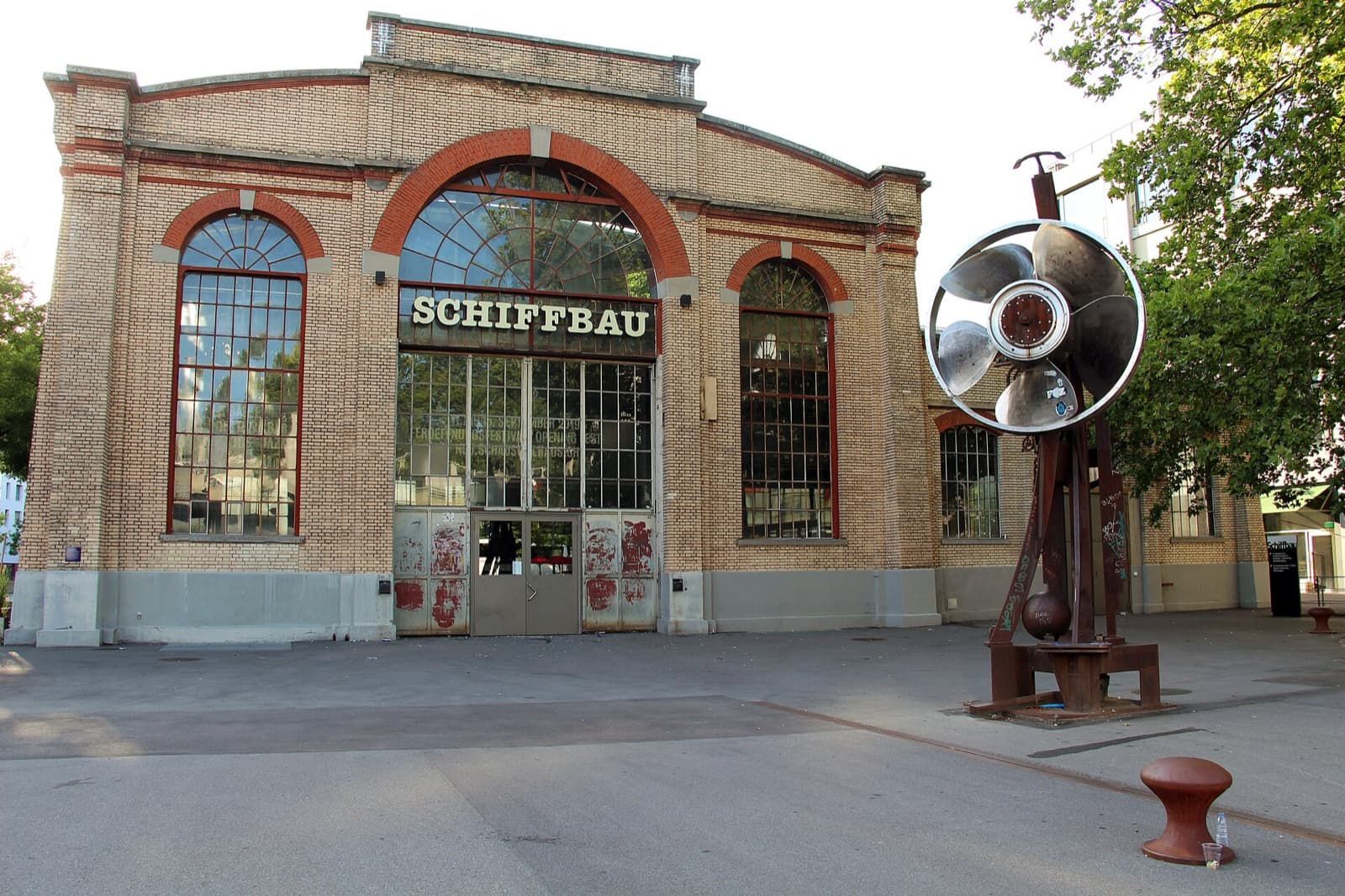
The Schiffbau: The Iron Shipbuilding Hall Now Full of Theatre
An iron shipbuilding hall where lake steamers and marine engines were once built, now a home of the Schauspielhaus Zurich with its raw ironwork kept intact.
- 4
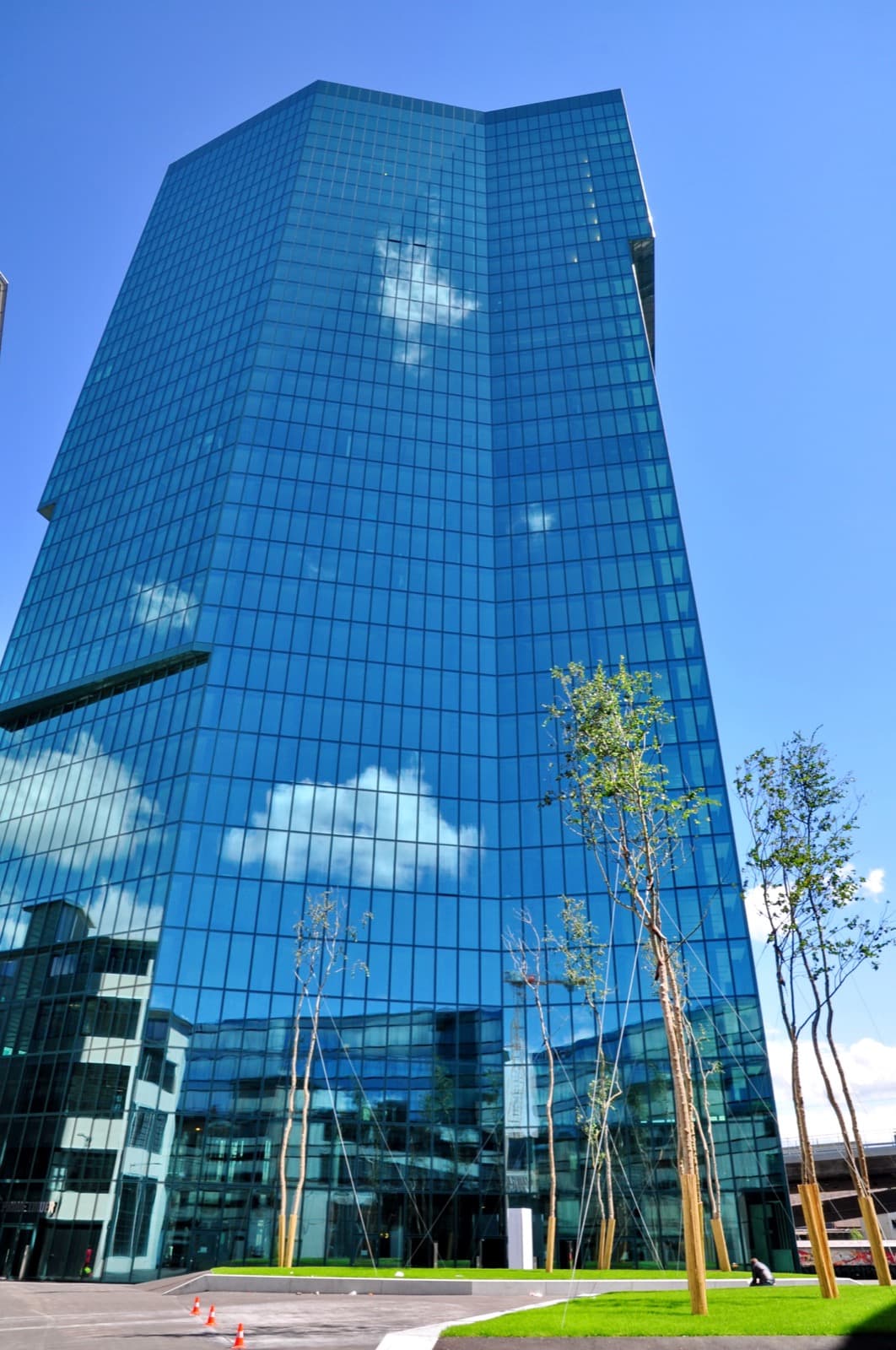
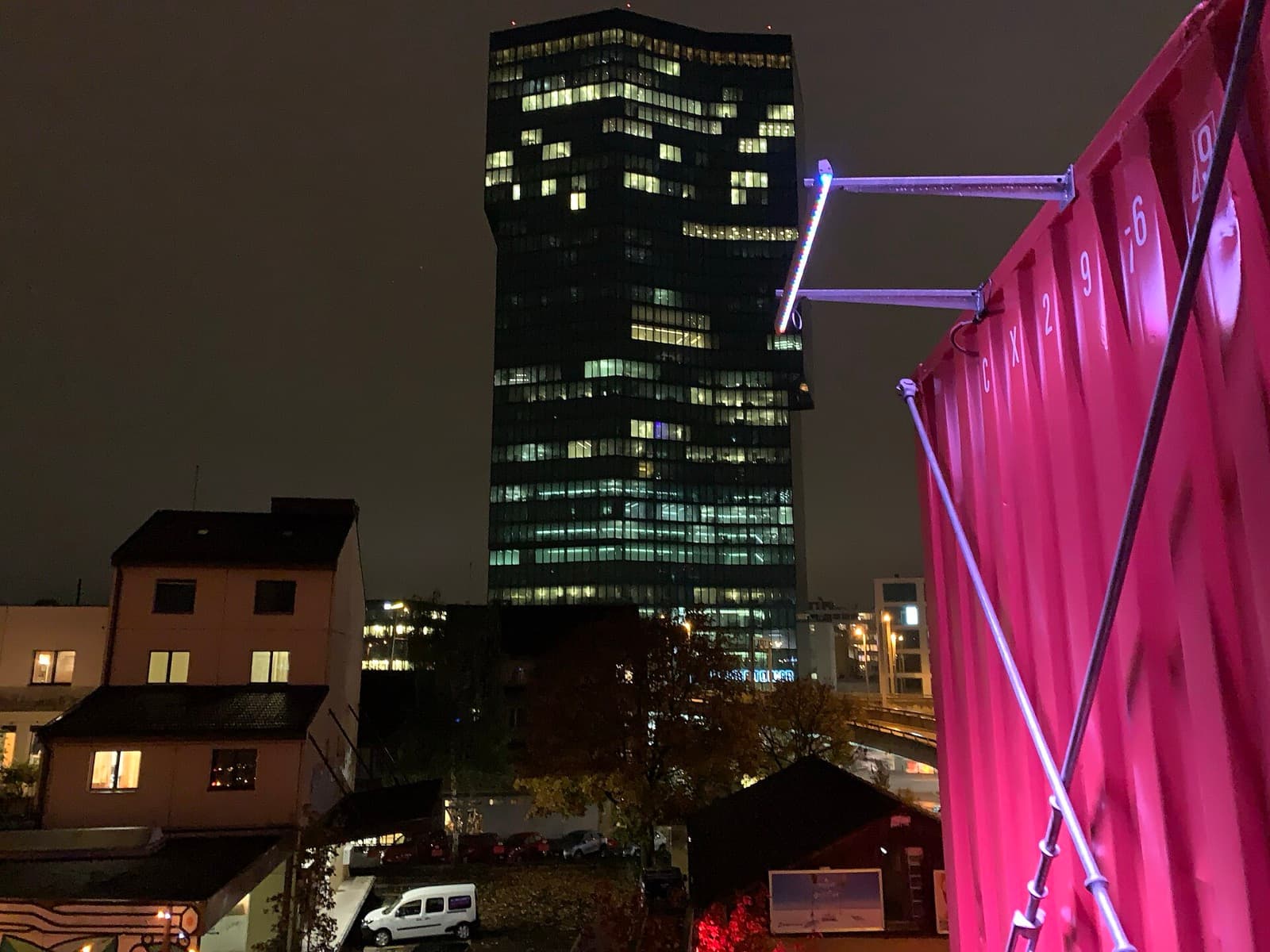
The Prime Tower: The Glass Tower That Gave the Factory Quarter a Skyline
A faceted green-glass office tower raised on a former industrial site, for several years the tallest building in Switzerland and the emblem of the new Zurich-West skyline.
- 5
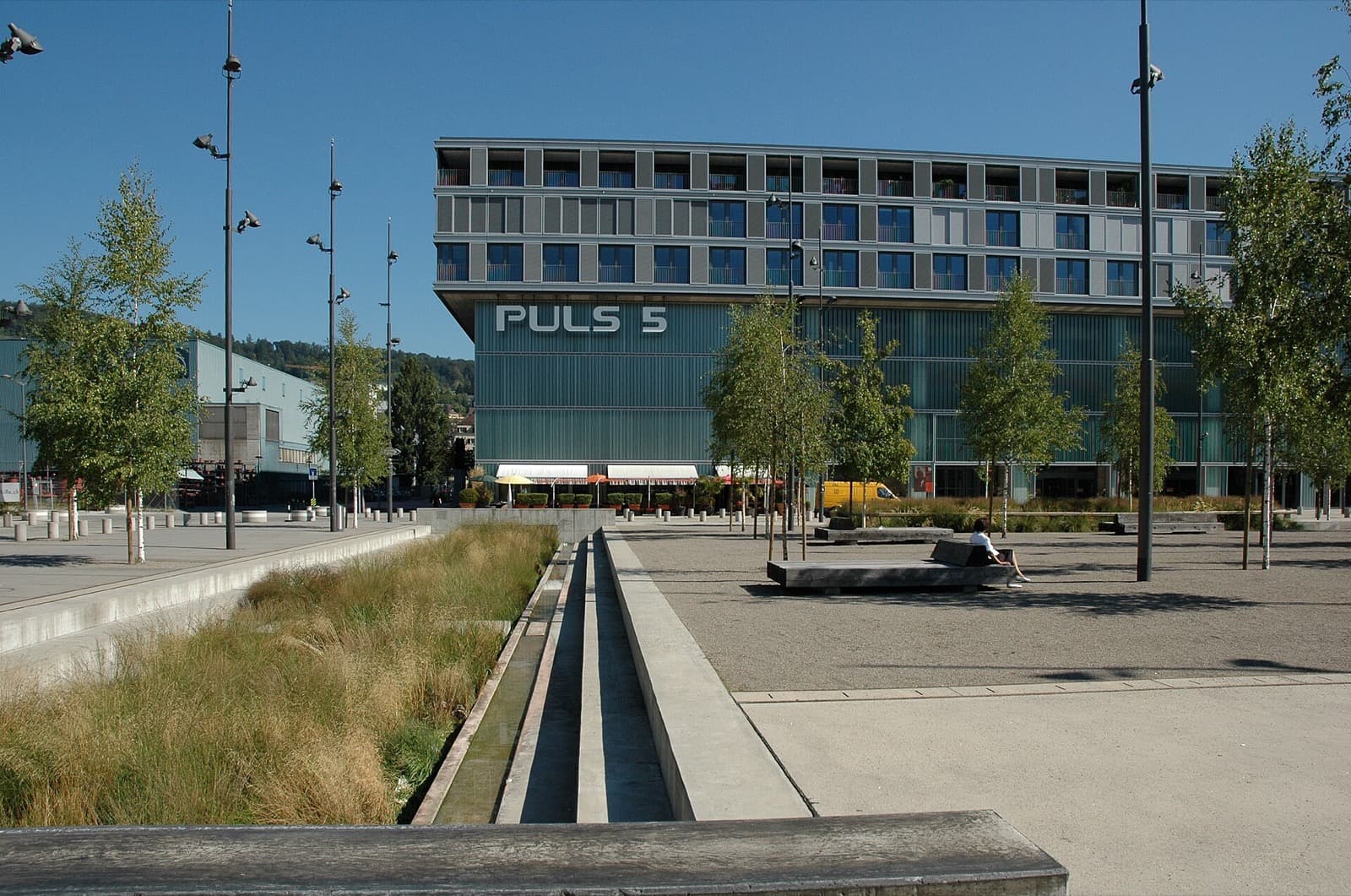
Puls 5: The Foundry Floor Kept Whole
This former iron foundry hall is now a vast covered public hall with a green courtyard. Its structure and overhead travelling cranes were kept intact.
- 6
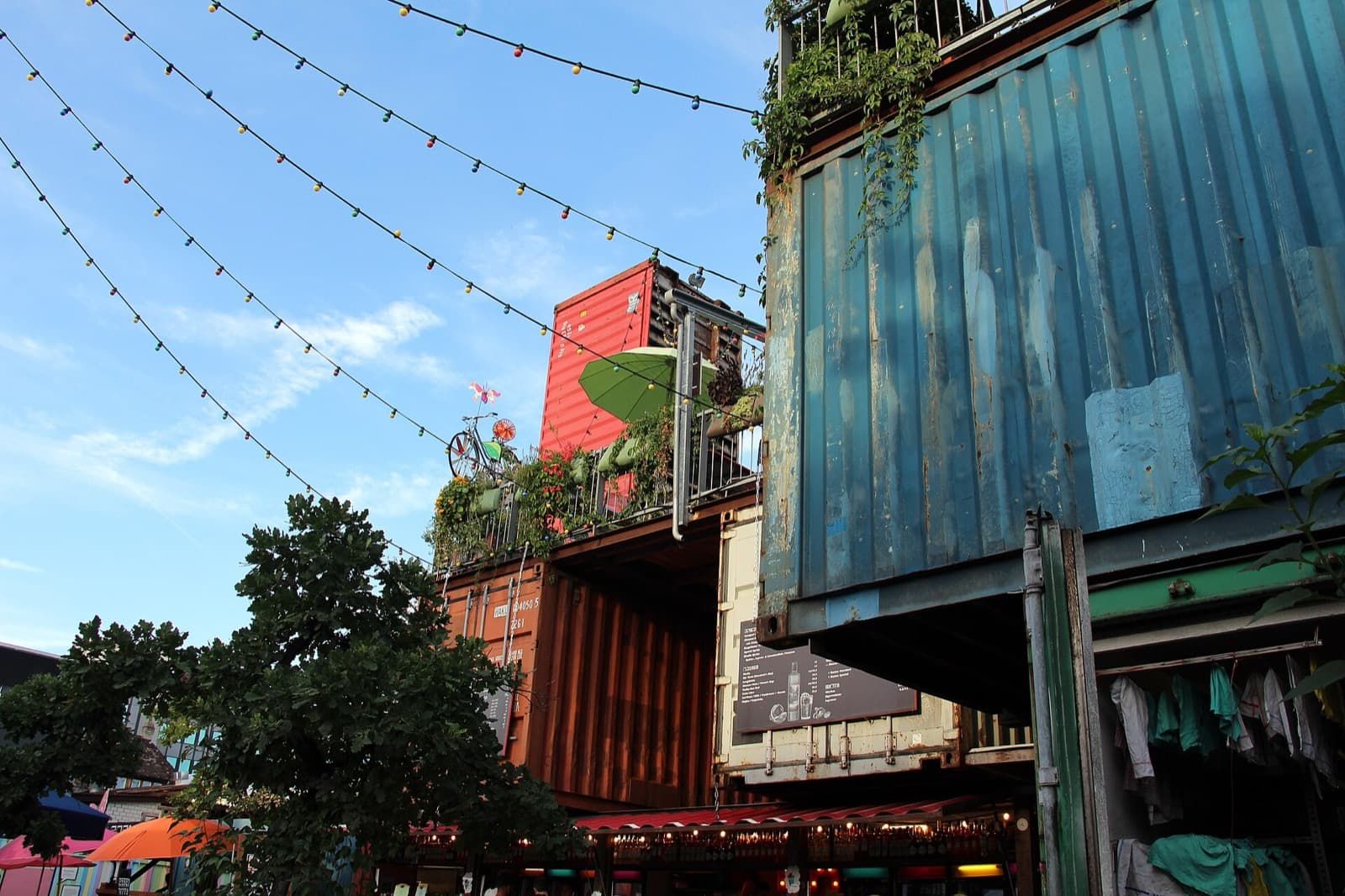
Frau Gerolds Garten: The Garden of Containers Grown in the Gap
An urban garden and stacked-container space grown on former industrial railway land, a clear example of the temporary, do-it-yourself uses that filled the district in its in-between years.
- 7
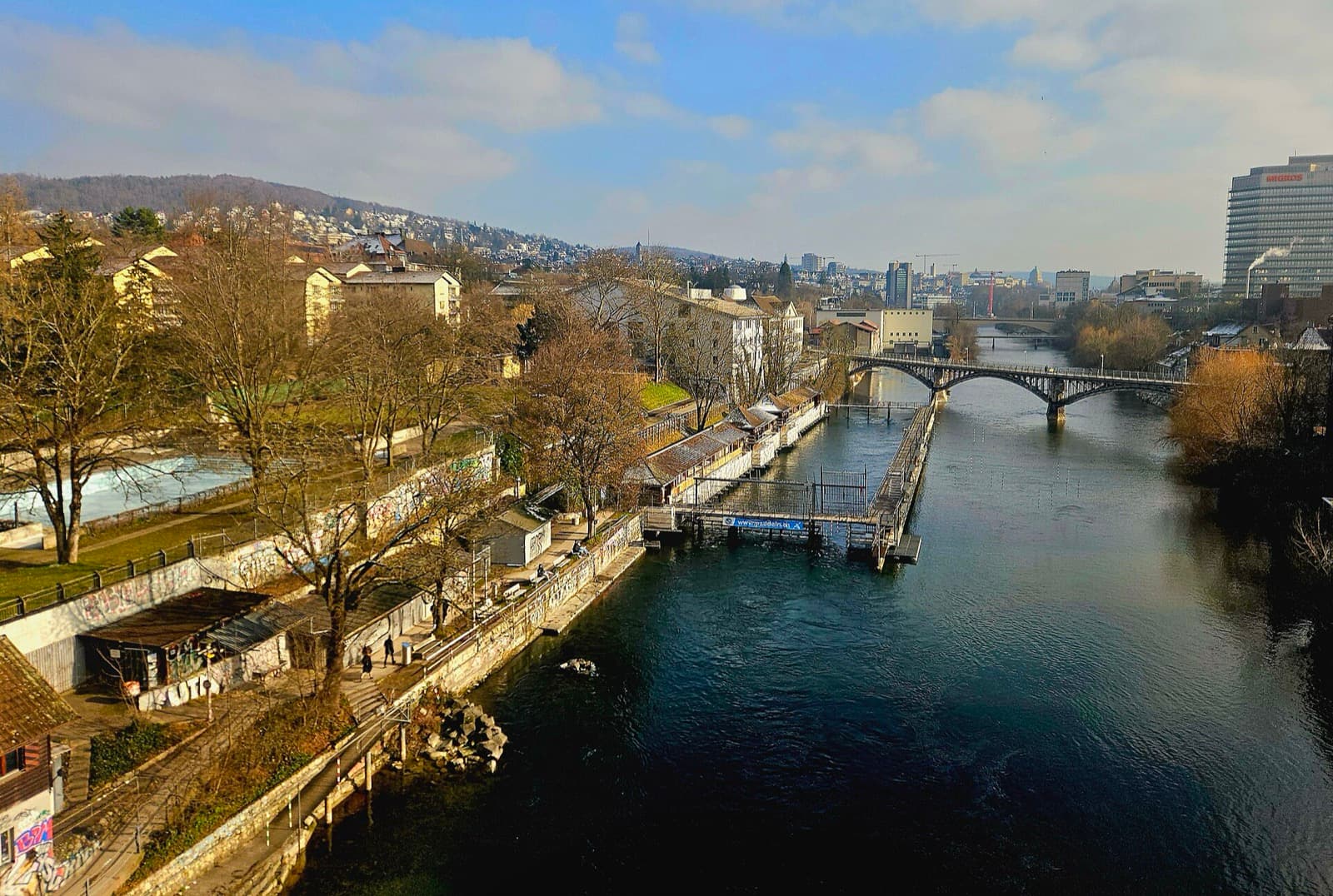
The Limmat Bank: The Working River Given Back to Walkers
The district's industrial waterfront has been reclaimed here as a public riverside path. It runs past converted halls and new housing.
Details
Best Time to Visit
Late morning through the afternoon suits this walk best, when the arcade shops under the Viadukt are open, the covered halls are lively, and the light is good for photographs of brick chimneys standing beside green glass. Weekends bring the market hall and the container garden fully to life, while a weekday morning is quieter if you prefer the district to yourself. The riverside path is loveliest in the softer light of late afternoon and early evening in the warmer months.
Pro Tips
- •Start at the Viadukt and follow the stops in order. The route reads as a story, from the arches that set the district's logic to the foundry and the river, and the numbered sequence keeps that arc intact.
- •This is a continuous walk of roughly two kilometres on level ground, so comfortable shoes are all you need, and you can pause under an arch or by the river for as long as you like.
- •The covered halls, the market and the container garden are free to enter and wander. The theatre, the jazz club and the contemporary-art museums charge admission in Swiss francs, so decide as you go which you want to step inside.
- •The Prime Tower is a private office building with no public access to its upper floors, so plan to read it from the outside as part of the skyline rather than expecting a viewpoint.
- •Look up wherever you can. The best of this district hides overhead, in the trains crossing the viaduct, the iron beams inside the shipbuilding hall, and the old foundry cranes still hanging above the public hall at Puls 5.
- •Weekend and market days give the arches and the garden their fullest life, while a quiet weekday morning suits anyone who wants the halls and the riverside more to themselves.
Safety & Precautions
- •This is an active railway district. Trains run on the line above the Viadukt, and trams and traffic cross the streets around the Hardbruecke and the Prime Tower, so cross with care and mind the tram lanes.
- •Parts of Zurich-West involve a gentle rise between the river-level halls and the higher ground near the tower, and surfaces range from smooth new paving to older industrial cobbles, so watch your footing.
- •The riverside path along the Limmat can be uneven and slippery when wet, and the current in the river is strong, so keep back from the edge and take care if you go near the water.
- •Museums, the theatre and the jazz club charge entry in Swiss francs, not euros, since the currency here is the Swiss franc, and Alpine weather can change quickly, so a light waterproof and sun protection are both worth carrying.
Travel advisory: Exercise Normal Precautions (Level 1).
Gallery
Related Reading
Go deeper on what you'll see, hear, and walk through.
Overview
Best Self-Guided Walking Tours in Zurich (2026)
4 min
Overview
One Day in Zurich: A Walkable Itinerary from Old Town to the Lake
8 min
Overview
Zurich Travel Guide: How Many Days, Getting Around, Safety, and Costs
7 min
Thematic
Zurich: The City That Reformed Itself
8 min
Companion
The Prime Tower: How Zurich Rebuilt Its Factory District Without Erasing It
6 min
Deep dive
Im Viadukt: How Zurich Turned a Railway Wall Into a Market Street
6 min
Read
What to Eat in Zurich: The Local Dishes and How to Order Them
7 min
Read the walk
The full story of Zurich-West: The Factory District Reborn, in words. Prefer to listen? Play it narrated, from home or on location.
Introduction
For about a century, the quarter west of central Zurich, in Switzerland, was the city's engine room. Factories, foundries, breweries and a shipbuilding hall stood along the railway and the River Limmat, their chimneys smoking above the water. When heavy industry left in the late twentieth century, the great sheds fell empty, and here is where Zurich did the surprising thing. Instead of clearing the grimy past to build clean, it kept the sheds, the cranes and the arches, and turned them over to culture and design. A railway viaduct became a market street. A shipbuilding hall became a theatre. A brewery became a house of contemporary art. An iron foundry became a covered public hall. Around them rose glass towers, brick chimneys now standing beside green glass. This walk reads the clearest place in Switzerland where a wealthy city reinvented its industrial history rather than erasing it. There are seven stops, and the route runs about three and a half kilometres over roughly ninety minutes on foot, all of it a continuous walk. This is yours to take at your own pace, with no group and no schedule. Linger under an arch, sit by the river, skip a stop that does not draw you, or double back to one that does. The whole quarter rewards an unhurried eye for the iron beams and old cranes hiding inside the new galleries. When you arrive at the Viadukt on Viaduktstrasse, begin with stop one.
1. Im Viadukt: The Railway Arches Turned Market Street
You are standing beneath a stone railway viaduct built in eighteen ninety-four, and the trains still run on the line above your head. For decades these arches stood underused, a long grey wall through the district. Then, in the project called Im Viadukt, completed in twenty ten by the Zurich architects EM2N, thirty-six of the arches were converted into a chain of shops, studios, galleries and cafes, with a covered market hall at its heart offering space for local farmers and food vendors. The space runs roughly five hundred metres along Viaduktstrasse, a street of makers set into the belly of a working railway. This is the opening image of the district's whole logic. Rather than demolish the old structure, Zurich threaded new life through it and left the bones plainly visible. The arches carry their trains as they always did, and underneath, the quarter's reinvention begins. Take your time here. Walk the length of it at your own pace, step into an arch that catches your eye, or simply stand and feel the rumble overhead while a market goes about its day below. There is no set order and no one hurrying you along. What makes this stop the key to everything that follows is the doubling: the past kept in full use, the present grown inside it, and the two coexisting without pretending the other away. Hold that idea as you go, because you will see it again in a shipbuilding hall, a brewery and a foundry. When you have had your fill of the arches, the walk continues north toward Limmatstrasse and the old brewery.
2. Loewenbraeu-Areal: The Brewery That Now Brews Contemporary Art
This handsome red-brick building on Limmatstrasse was once a brewery. It was built in eighteen ninety-seven, and beer was brewed here under the Loewenbraeu name, the name meaning lion's brew, until the brewery closed in nineteen eighty-six. Rather than let the site vanish, Zurich turned it into one of the city's main centres for contemporary art. Today the complex houses two seminal institutions, the Kunsthalle Zurich and the Migros Museum of Contemporary Art, which opened in nineteen ninety-six, along with galleries. In twenty twelve the arts centre reopened after a rebuild by the architects Gigon and Guyer with Atelier WW, who kept the old brewing halls and added new spaces above them, including a dark cantilevered tower rising over the original brick. So the beat here is a plain one and it fits the whole district: the brewery that now brews contemporary art. The vats and coppers are long gone, but the industrial shell remains, its exhibition halls carved from rooms that once held the machinery of brewing. You can wander into the complex at your own pace and see how the new grafts onto the old, glass and steel meeting brick. If contemporary art draws you, the galleries charge admission in Swiss francs, and you can spend as long inside as you like. If it does not, the building itself tells the story from the street, the red brick and the new tower reading together as one long act of reuse. When you are ready, the walk turns toward Schiffbaustrasse and the old shipbuilding hall.
3. The Schiffbau: The Iron Shipbuilding Hall Now Full of Theatre
This great hall was built in eighteen ninety-one as a shipbuilding and machine hall of the Maschinenfabrik Escher, Wyss and Company. Inside these walls, parts for lake steamers and marine engines were built. The works turned out hundreds of vessels over its life, and two of the paddle steamers connected to this tradition, named Stadt Zurich, from nineteen oh nine, and Stadt Rapperswil, from nineteen fourteen, still run on Lake Zurich today. When the industry faded, the listed hall was converted between nineteen ninety-six and two thousand by the architects Ortner and Ortner, and it reopened in two thousand as a home for the Schauspielhaus Zurich, the city's principal theatre company. The conversion did something bold. It kept the raw iron structure of the works, the beams and columns of a factory floor, and set stages inside them. There is a large hall, a smaller studio, a still smaller black-box space, and the Moods jazz club, all held within the old ironwork. The name of the beat writes itself: the iron shipbuilding hall now full of theatre. When you stand near it, look for the industrial skeleton showing through, the frame that once cradled ships now framing a stage. The exterior is free to see at your own pace, and performances inside are ticketed in Swiss francs if you want to return in the evening. What is worth carrying onward is the same district logic once more: the working bones left visible, a new life poured into the old vessel. When you are ready, the walk heads toward the Prime Tower and the new skyline.
4. The Prime Tower: The Glass Tower That Gave the Factory Quarter a Skyline
Rising above the old factory quarter is a faceted tower of green glass, one hundred and twenty-six metres tall and thirty-six storeys high. It is called the Prime Tower, and it was built on a former industrial site near the Hardbruecke railway bridge by the architects Gigon and…
Full narration for this stop unlocks with the tour.
5. Puls 5: The Foundry Floor Kept Whole
This is the boldest single act of preservation in the district. Puls 5 is built around a former iron foundry hall, the Giessereihalle, raised in eighteen ninety-eight by Escher Wyss. Rather than clear the great shed, its builders kept the structure whole, and above all they kept…
Full narration for this stop unlocks with the tour.
6. Frau Gerolds Garten: The Garden of Containers Grown in the Gap
On a strip of former industrial railway land beside the Viadukt, behind a tower built of stacked shipping containers, a garden grew in the gap. Frau Gerolds Garten opened in the summer of twenty twelve on land leased from the city on a short, temporary basis. Shipping containers…
Full narration for this stop unlocks with the tour.
7. The Limmat Bank: The Working River Given Back to Walkers
The walk ends at the water, and this is where the district's turn comes full circle. The River Limmat runs along the western and northern edge of Zurich-West. This river once powered and served the quarter's factories, carrying and driving the works that lined its banks. As the…
Full narration for this stop unlocks with the tour.