Old Town: The Sino-Portuguese Town
85 min · 2.5 km · easy
Eat your way through Phuket Old Town and you are eating the tin trade: the Hokkien Chinese who mined the island in the eighteen and early nineteen hundreds brought braised pork, five-spice, and wheat noodles, then married those to Malay and southern Thai flavors until a hybrid Peranakan cuisine settled onto Thalang Road. The dishes to order are specific and mostly local to this island, not generic Thai food. This guide names the regional plates, where each tradition comes from, and how to order like a local, then points you into the streets where the food and the history sit on the same block.
Phuket's food identity is official, not marketing. In 2015 UNESCO named Phuket a Creative City of Gastronomy, the first city in Thailand and in ASEAN to earn that listing. What sets the island apart is that, by some estimates, around seventy percent of Phuket's population carries some Peranakan (Straits Chinese) ancestry, so the home cooking of a mining port never got diluted into mainland Thai menus. When you walk the old town, you can trace the same story on the plate and on the pastel shophouse facades. The Phuket Peranakan tour reads that Baba-Nyonya heritage through the schoolhouse, mansions, and old bank; this article is the eating companion to it.
The five dishes that define Phuket
Start with moo hong. It is Phuket's signature plate: pork belly braised slow in soy, palm sugar, garlic, pepper, and Chinese five-spice until it turns dark and tender. The dish came with Hokkien and Teochew migrants from southern China by way of the Straits settlements, and locals treat it as comfort food. Order it with plain rice; the sauce is the point.
Next, mee hokkien (Hokkien noodles). These are yellow wheat noodles stir-fried with pork, seafood, egg, and greens in a savory dark soy-based sauce, reworked over generations for the southern Thai palate. Every food stall along the Sunday market sells a version, and no two are identical.
For dessert, get o-aew. It is a shaved-ice bowl built on a soft, clear jelly set from the seeds of the o-aew plant and banana starch, served over ice with red beans, grass jelly, and sweet red syrup. It arrived with the Hokkien settlers and is found almost nowhere else in Thailand, which makes it the one sweet you should not leave the island without trying.
Then there is loba, the dish that shows how far the Hokkien kitchen goes. It is deep-fried pork offal, tofu, and fritters, sliced and served with a tart-sweet dipping sauce sharpened by tamarind and palm sugar and a scatter of chili. The textures run from crisp to chewy to soft, and the five-spice ties it together. It is a snack, a starter, and a conversation all at once.
Round it out with yum som o, a pomelo salad that balances the fatty pork plates. Pomelo segments are tossed with dried shrimp or chicken, toasted coconut, shallots, chili, and lime, so it lands somewhere between sweet, sour, and hot. If you see charcoal-grilled coconut pancakes called kanom a-pong, buy a few; they are crisp at the rim and soft in the middle, cooked in cast-iron molds over coals.
How to order like a local
Hear a stop from this walk
Shrine of the Serene Light: The Community's Spirit
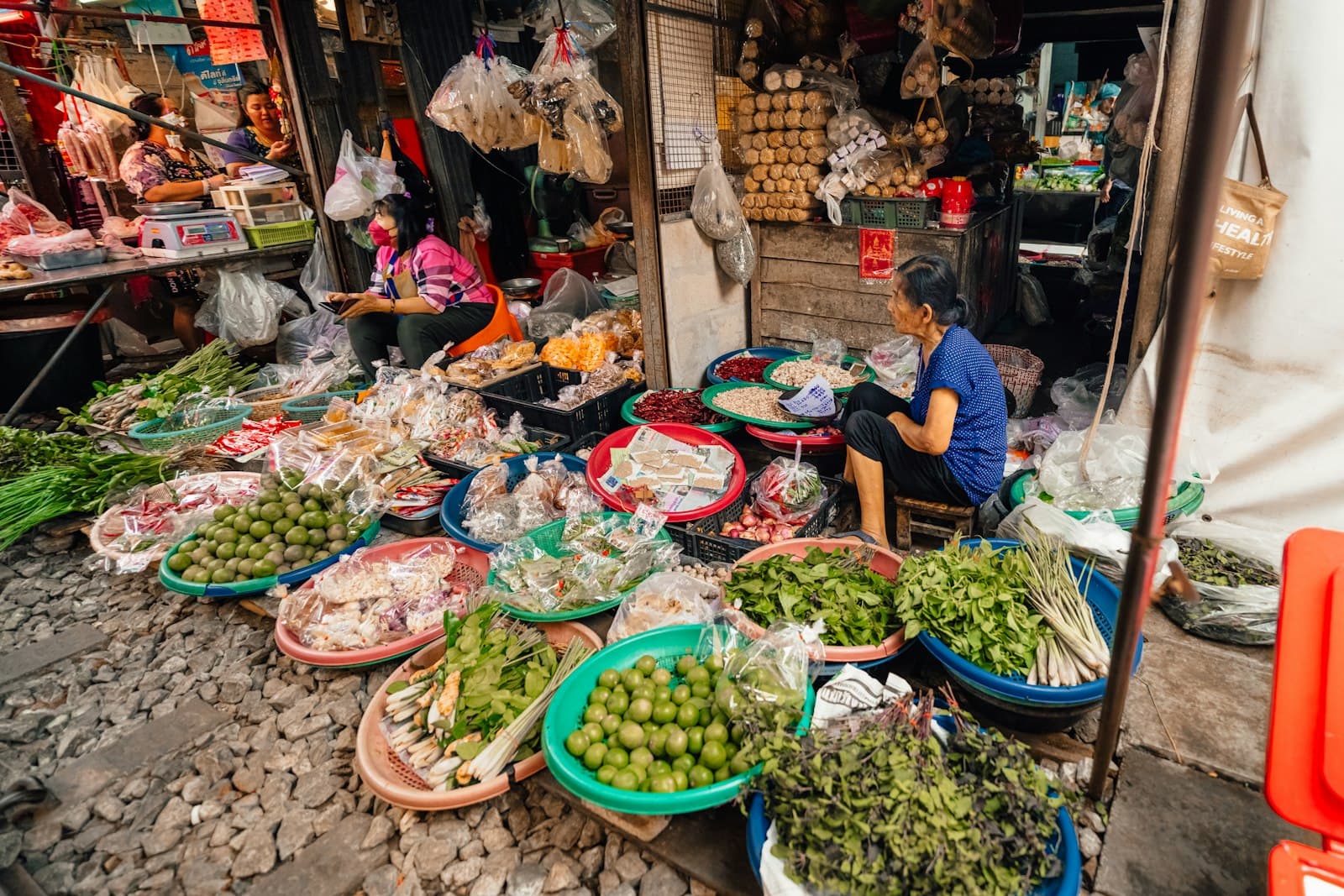
Point and eat. Many stalls in Old Town display the food, so you can order by gesture even without Thai. A few habits help. Ask for a dish "not too spicy" (or the reverse) and vendors will adjust. Moo hong and loba are usually eaten with a shared plate of rice, so order one protein plate per person and rice to pass around. Save o-aew and kanom a-pong for the end; they are street-corner desserts, not restaurant courses.
If you land in October, the rules change for a week. The Phuket Vegetarian Festival, the Taoist Nine Emperor Gods festival, falls in the ninth lunar month, running 10 to 18 October in 2026. Stalls and restaurants that serve the festival food fly a yellow flag with red Chinese characters meaning "jay," the strict vegetarian (effectively vegan) diet the observance requires. During those nine days, follow the yellow flags for meat-free versions of the same Hokkien noodles and curries, cooked without meat, egg, or dairy. The processions can be intense, with piercing and firewalking, but the food side is calm and open to everyone. Frame it as a cultural event to witness respectfully, not a spectacle to crowd.
Where the food and the walk overlap
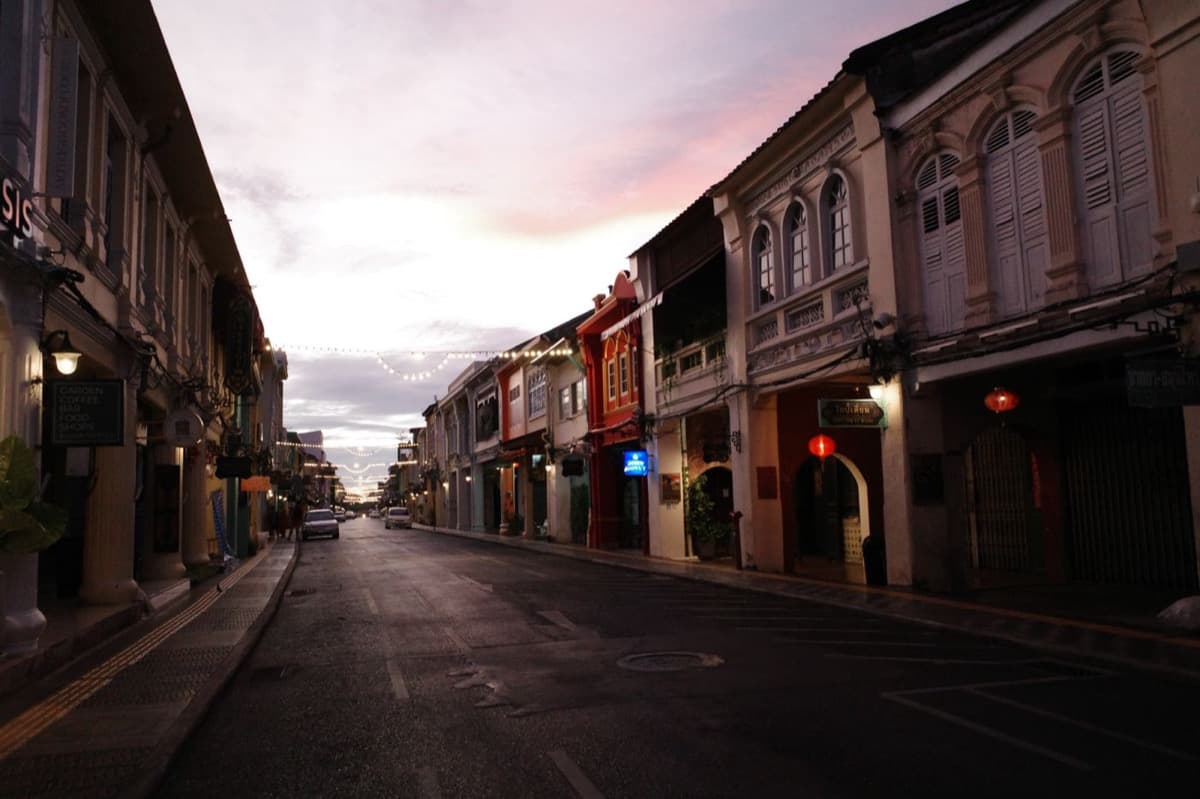
The single best place to graze is Thalang Road on a Sunday. From late afternoon until about 9pm, the street closes to traffic and becomes the Lard Yai Walking Street, lined with dozens of food vendors selling Hokkien noodles, grilled squid, roti, o-aew, and more, with the pastel shophouses lit overhead. It spills onto parallel Phang Nga Road when the crowd grows.
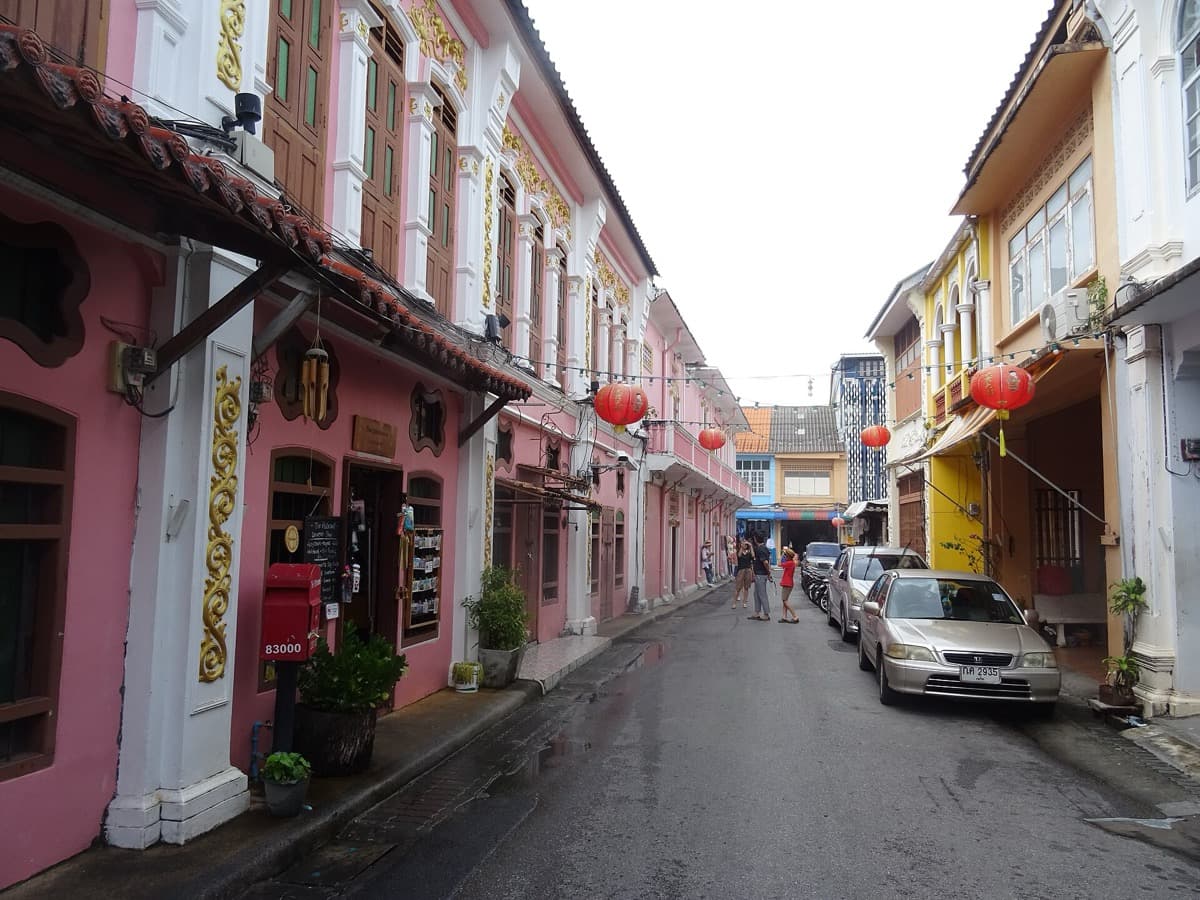
That same Thalang Road is the spine of the Phuket Old Town walking tour, which reads the street as a Straits Chinese port where tin money went straight into the facades. Walking the tour by day and returning for the market at night is the cleanest way to connect the story to the plate: you learn whose fortune built the shophouses, then eat the food those same families cooked at home. The season matters for both. Phuket's dry, walkable window is roughly November through April; the May-to-October monsoon brings heavy afternoon rain, so an early start or an evening market visit dodges the worst of it.
For the deeper cultural thread behind the food, the three Old Town tours line up neatly: the Peranakan tour for the Baba-Nyonya families whose kitchens shaped the cuisine, the shrines tour for the temples behind the Vegetarian Festival, and the Old Town tour for the merchant street where you will actually eat. Pick the route that fits your day, then let the market do the rest.
Sources
Frequently asked questions
- What is Phuket's signature dish?
- Moo hong, a pork belly braised slow in soy, palm sugar, garlic, pepper, and Chinese five-spice until it turns dark and tender. It came to Phuket with Hokkien and Teochew Chinese migrants and is widely treated as the island's signature plate. It is usually eaten with plain rice.
- What is o-aew and where can I find it?
- O-aew is a Phuket shaved-ice dessert built on a soft clear jelly set from o-aew plant seeds and banana starch, served over ice with red beans, grass jelly, and sweet red syrup. It arrived with Hokkien settlers and is found almost nowhere else in Thailand. Look for it at dessert stalls in Phuket Old Town and along Thalang Road.
- Why is Phuket food different from the rest of Thailand?
- By some estimates around seventy percent of Phuket's population carries some Peranakan (Straits Chinese) ancestry, so the Hokkien home cooking of a tin-mining port fused with Malay and southern Thai flavors instead of blending into mainland Thai menus. In 2015 UNESCO named Phuket a Creative City of Gastronomy, the first city in Thailand and ASEAN to earn the listing. That is why dishes like moo hong, loba, and o-aew are specific to the island.
- When is the Phuket food market on Thalang Road?
- The Lard Yai Sunday Walking Street runs every Sunday on Thalang Road in Phuket Old Town, from late afternoon around 4pm until about 9pm. The street closes to traffic and fills with food vendors selling Hokkien noodles, grilled squid, roti, and o-aew. It gets busiest from around 7pm.
- What food is served during the Phuket Vegetarian Festival?
- During the festival, stalls and restaurants serve jay food, a strict vegetarian (effectively vegan) diet cooked without meat, egg, or dairy. Vendors serving it fly a yellow flag with red Chinese characters. The 2026 festival runs 10 to 18 October during the ninth lunar month, and you can find meat-free versions of Hokkien noodles, curries, and soups throughout Phuket Town.
- What is the best time of year to eat street food in Phuket?
- The dry, walkable season is roughly November through April, which is the easiest window for market grazing and old-town walks. The May-to-October monsoon brings heavy afternoon rain, so an early start or an evening visit to the Sunday market dodges the worst of it. Food stalls operate year-round regardless.
Ready to experience it?
Old Town: The Sino-Portuguese Town
85 min · 2.5 km · easy
More from Phuket
Explore more at your own pace.
One Day in Phuket Old Town: A Walkable Morning-to-Evening Plan
Phuket Before the Beaches: The Tin Island's Straits Chinese Port
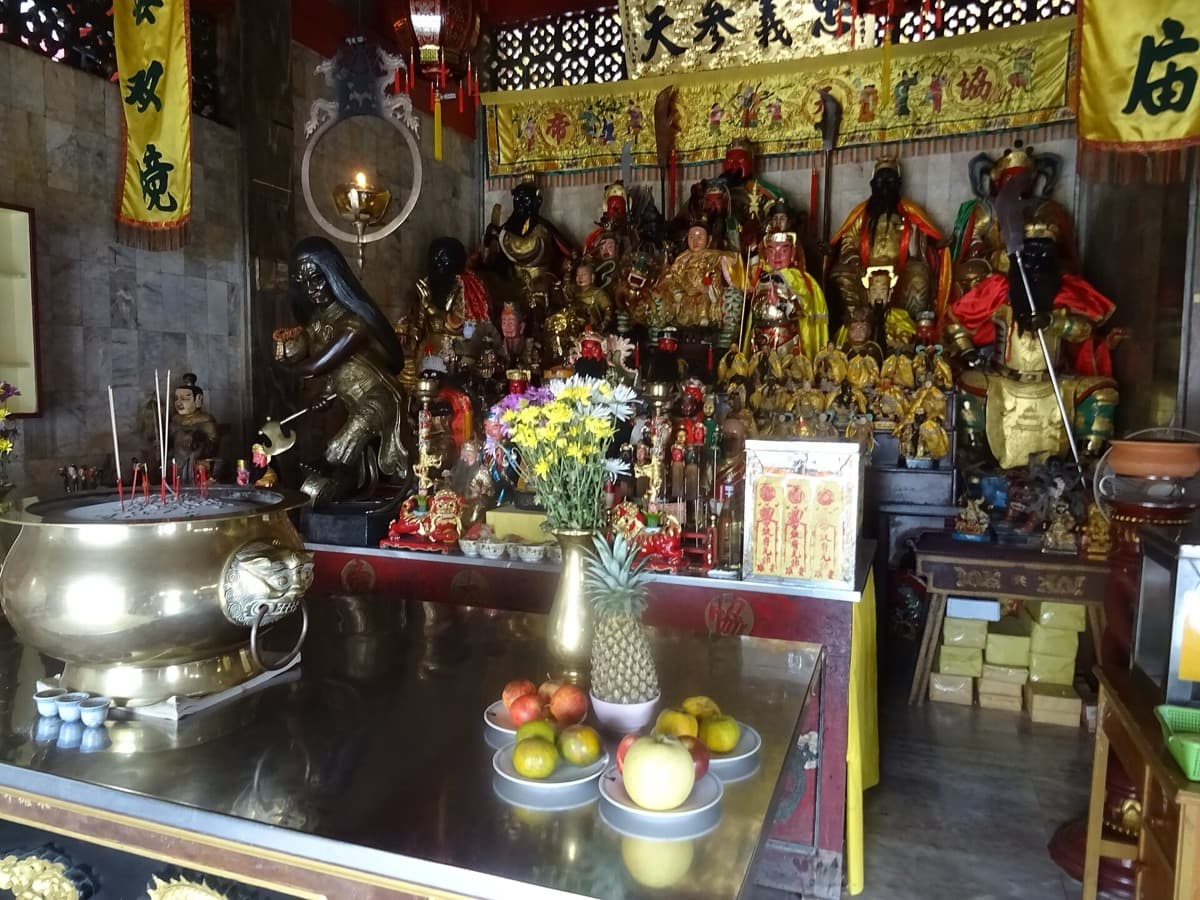
Jui Tui Shrine: The Ceremonial Engine Behind Phuket's Vegetarian Festival
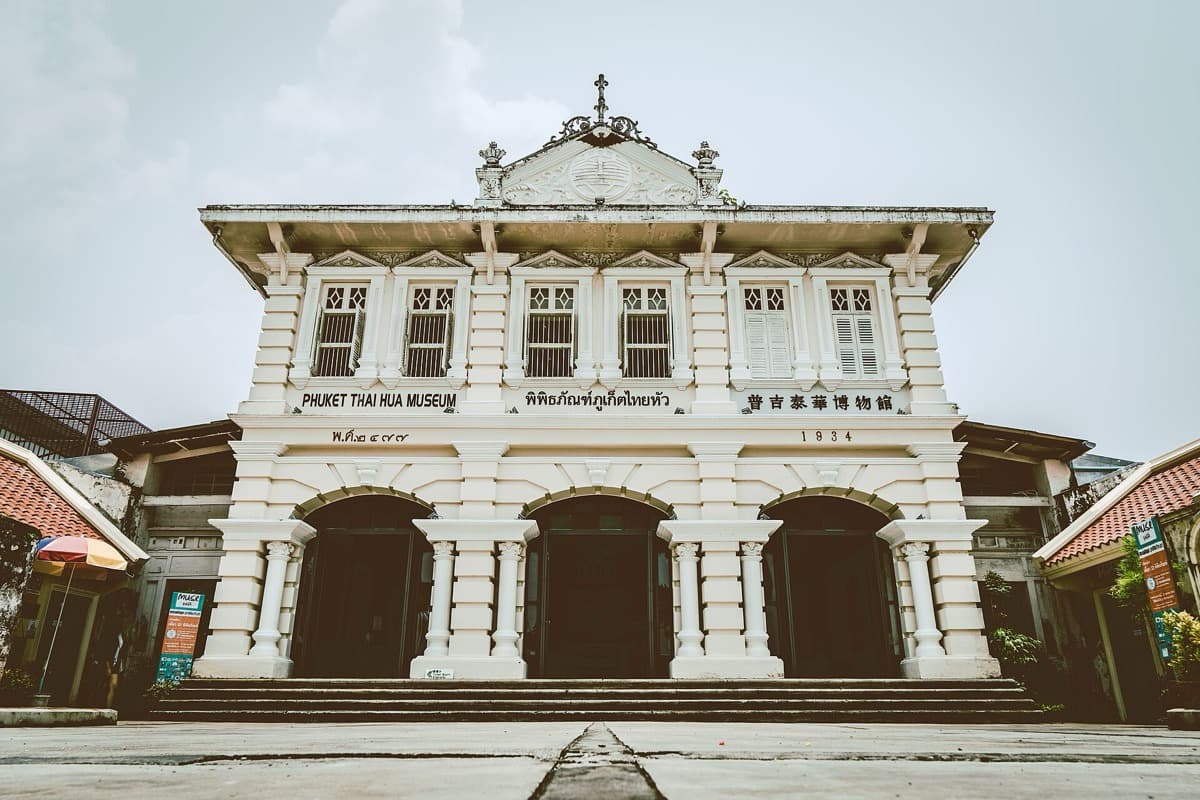
Thai Hua Museum: Where Phuket's Peranakan Story Begins
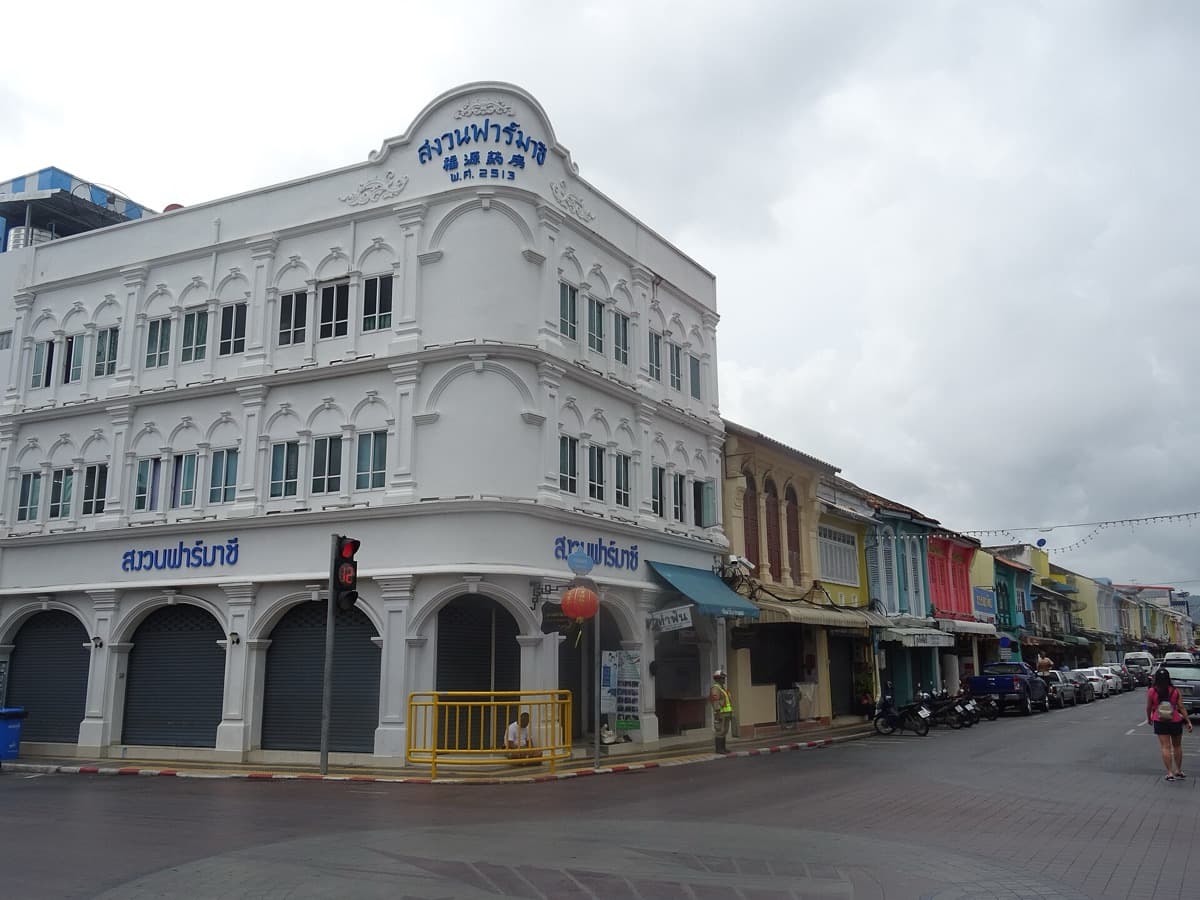
Thalang Road: How Tin Money Built Phuket Old Town