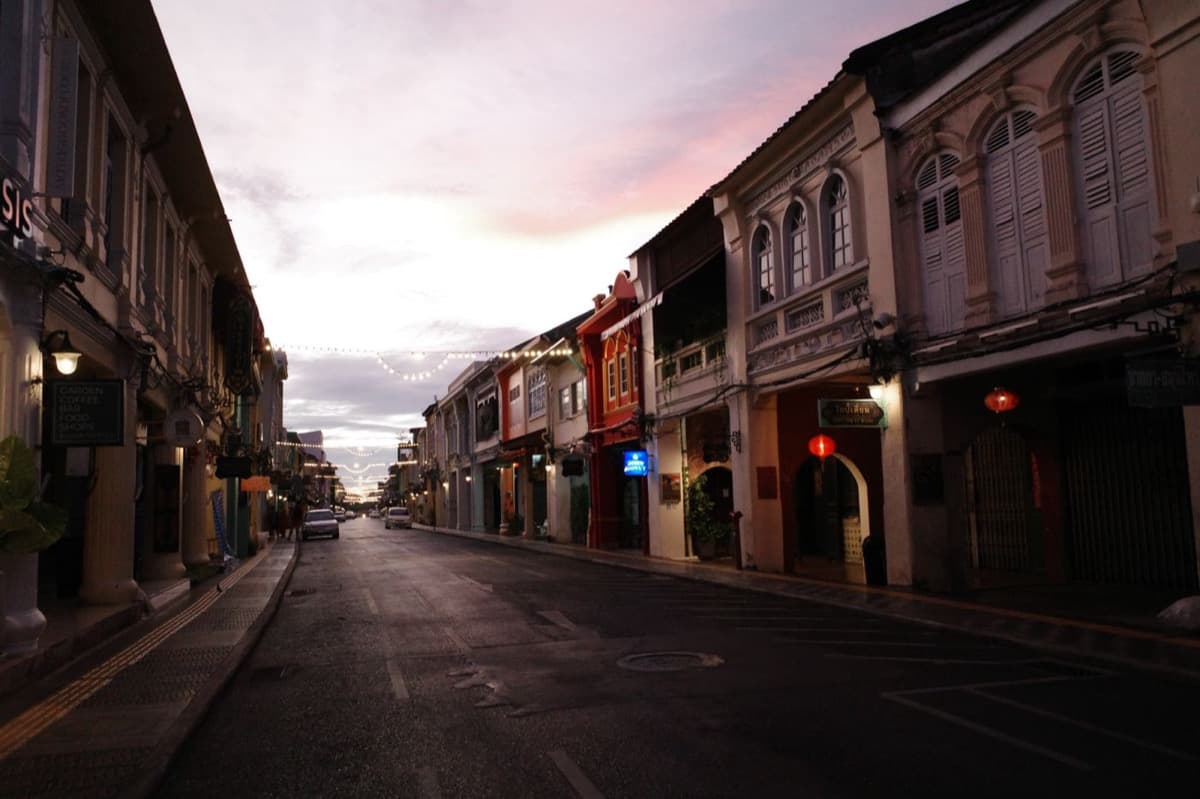
Before the beaches, Phuket was a tin island, and the fortunes that money made are still standing on Thalang Road. This walk reads Phuket Old Town as a Straits Chinese port, where the wealth came out of the ground and went straight into the pastel facades.
Start · Thalang Road: The Merchant Spine
DirectionsStops
- 1
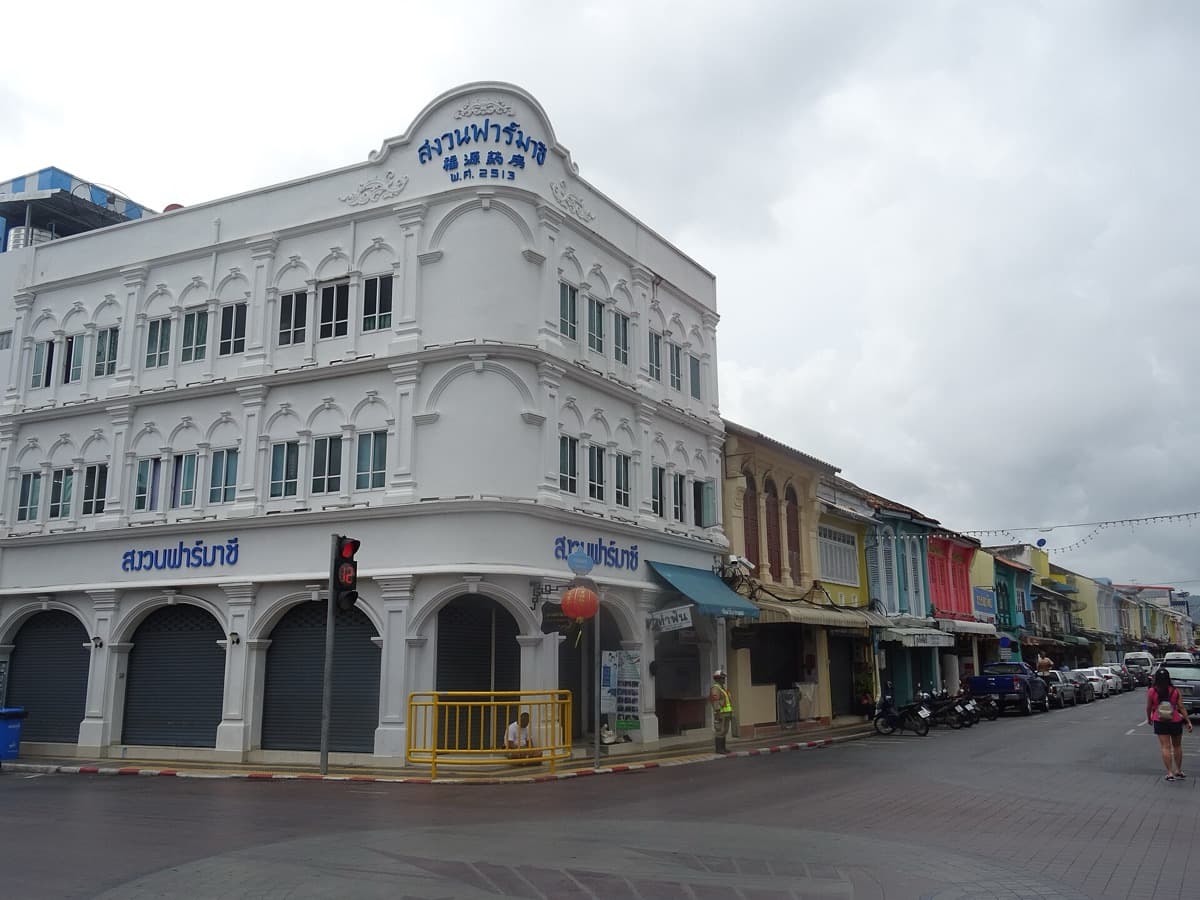
Thalang Road: The Merchant Spine
The historic main street of Phuket Old Town, lined with well-preserved Sino-Portuguese shophouses that made tin wealth visible.
- 2
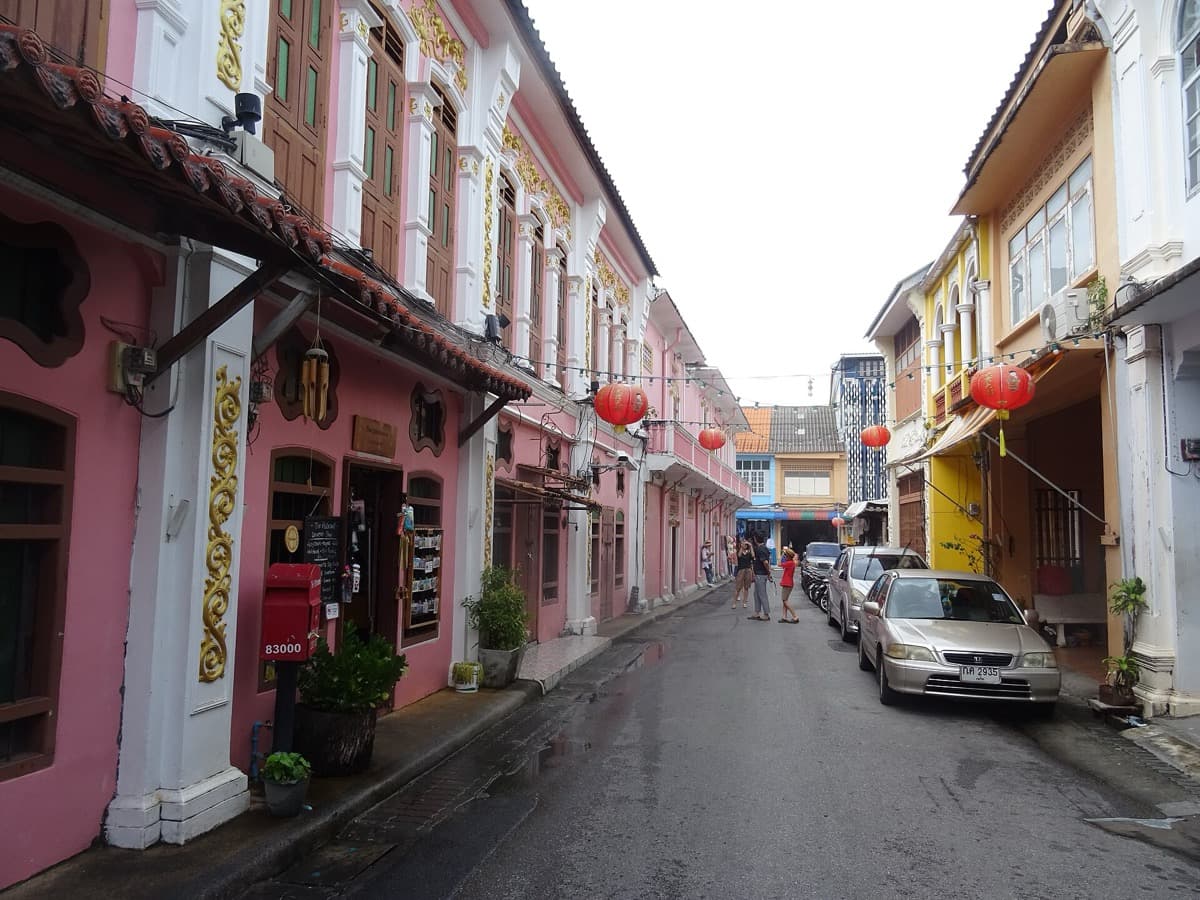
Soi Romanee: The Underside of the Boom
A short, brightly painted lane off Thalang Road that was once Phuket town's red-light street serving the tin miners.
- 3
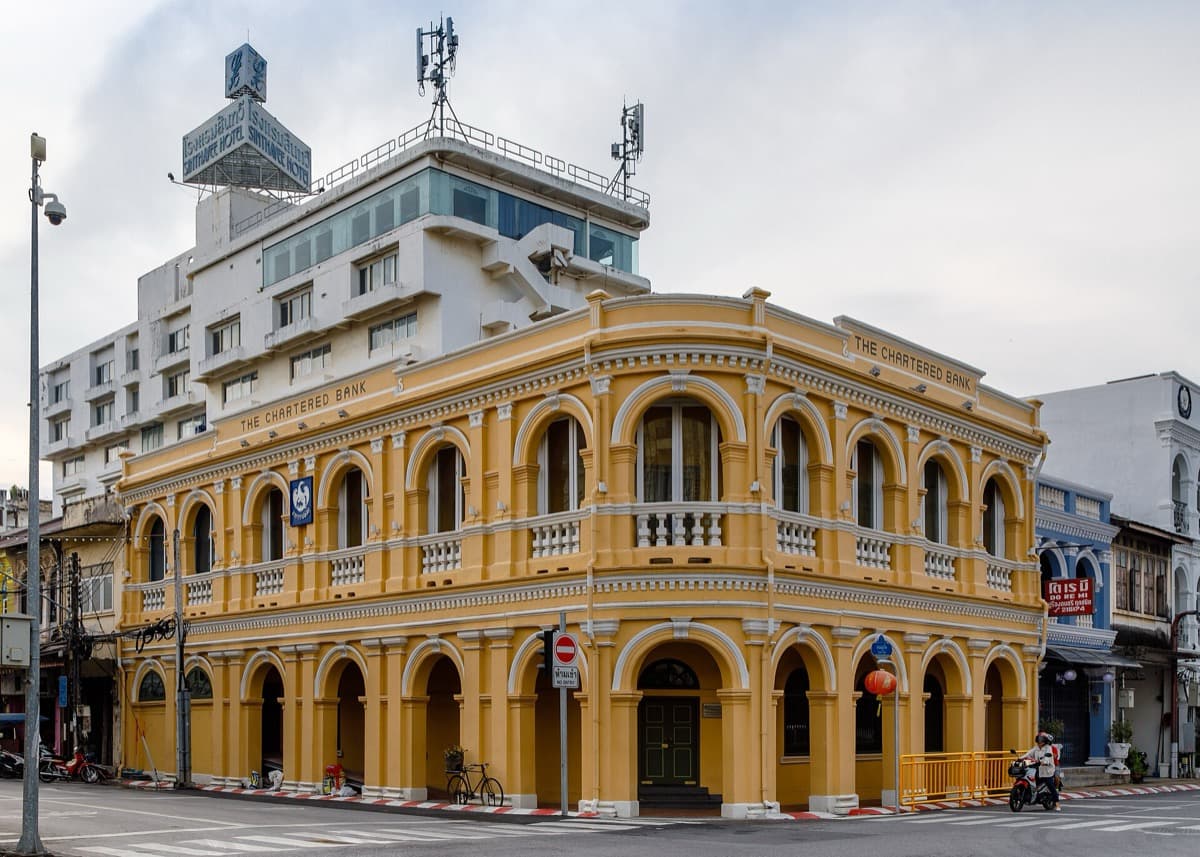
The Chartered Bank Building: Tin Turned to Credit
The former Standard Chartered Bank, a sun-yellow Sino-Portuguese building now housing a Peranakan culture museum.
- 4
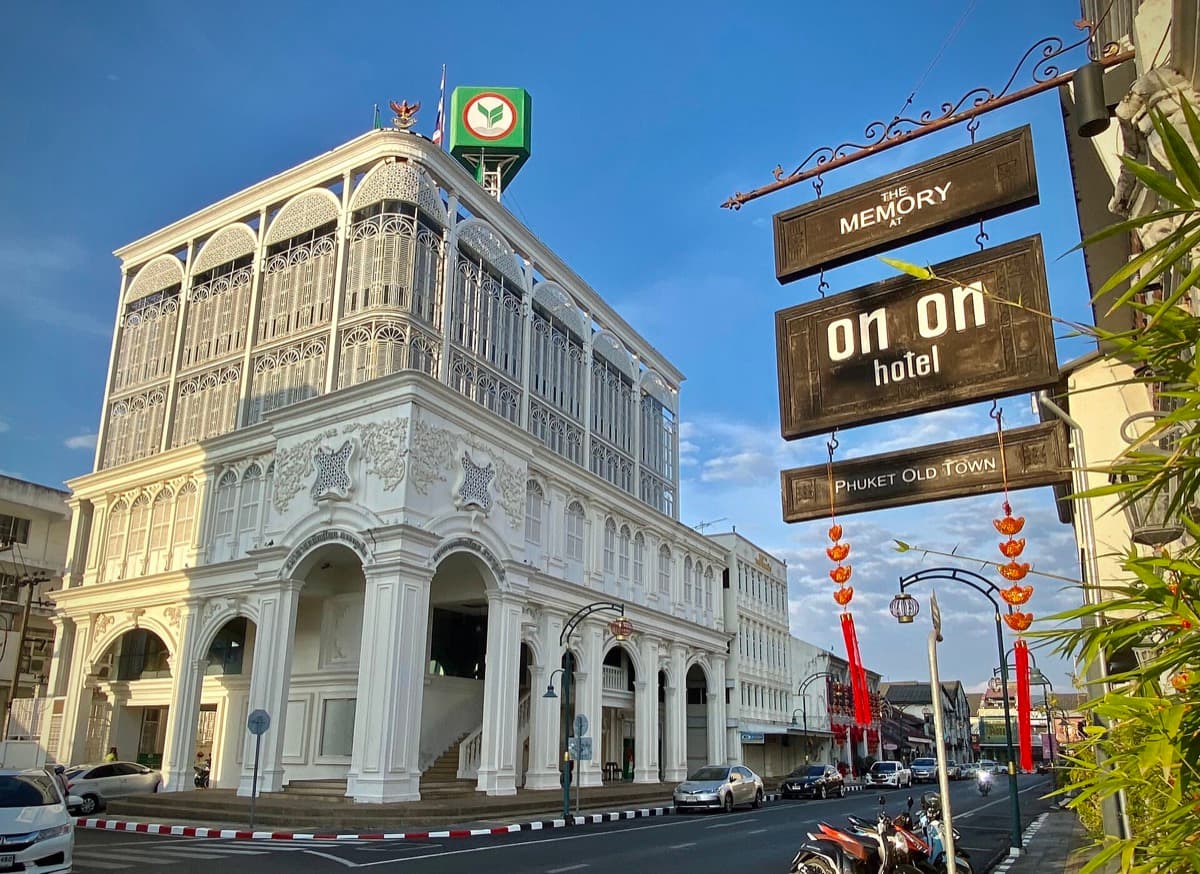
On On Hotel: Where the Traders Slept
A Sino-Portuguese heritage hotel on Phang Nga Road, opened in the nineteen twenties to lodge merchants passing through the tin port.
- 5
Baan Chinpracha: Inside a Tin Baron's House
A grand Sino-colonial mansion on Krabi Road, built in nineteen oh three by a tin baron and now a house museum.
- 6
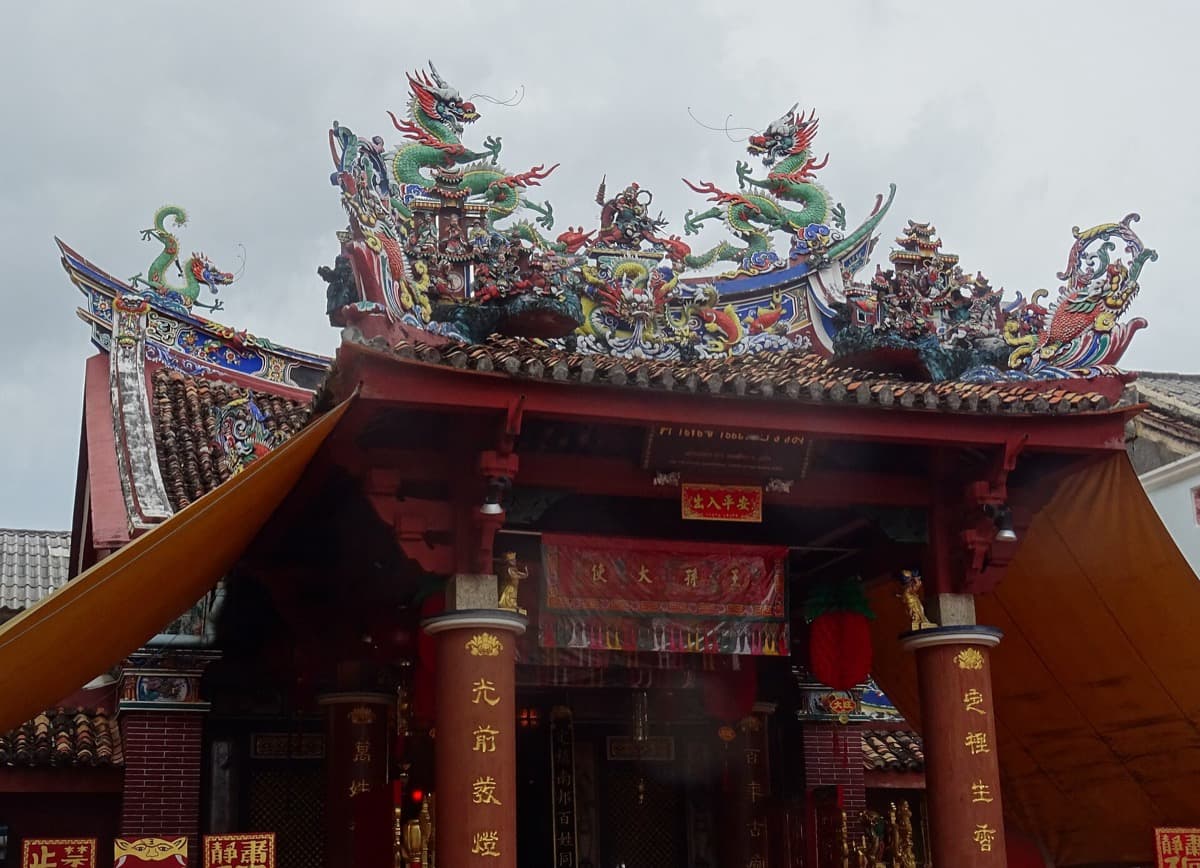
Shrine of the Serene Light: The Community's Spirit
A small Hokkien Taoist shrine hidden down a lane off Phang Nga Road, built in eighteen ninety-one as a private family place of worship.
Details
Best Time to Visit
Early morning or the cooler hours of late afternoon, roughly before ten in the morning or after four in the afternoon, when the tropical heat eases and the low light warms the pastel facades. The old town is quietest early, before the tour groups and the midday sun arrive. If you want the mansion and bank museum interiors, come during their daytime opening hours, roughly nine in the morning to late afternoon. The dry season, broadly November through April, is the most comfortable for walking; the monsoon months bring heavy afternoon downpours.
Pro Tips
- •Wear light, breathable clothing and carry water. The stops are close together on flat streets, but Phuket's heat and humidity are intense, so pace yourself and use the shaded five-foot walkways.
- •The two museum interiors, Baan Chinpracha mansion and the Peranakan museum in the old bank, are the deepest stops. Baan Chinpracha runs about one hundred and fifty baht and keeps roughly daytime hours, so plan to arrive while they are open if you want to go inside.
- •Soi Romanee is the most photographed lane in the old town. Go early for the color without the crowds, and be respectful, since these pastel houses are guesthouses and homes, not a film set.
- •Carry small baht notes for the mansion entry and for a donation at the shrine. Not everywhere takes cards, and the shrine welcomes small offerings.
- •The whole loop is walkable in about ninety minutes, but the stops are self-contained, so linger at the mansion or skip ahead as your energy and the weather allow.
- •Look up as you walk. The best details of the Sino-Portuguese shophouses, the stucco work, shuttered upper windows, and faded family signage, live above the ground-floor shopfronts.
Safety & Precautions
- •Heat and humidity are the main risk. Hydrate constantly, seek the shaded arcades between stops, and slow down or rest if you feel light-headed, especially in the midday hours.
- •At the Shrine of the Serene Light, dress and behave respectfully as you would at any active place of worship: cover shoulders and knees, lower your voice, do not point your feet at the altars, and follow any shoes-off signs at thresholds. Ask before photographing people at prayer.
- •Monsoon season brings sudden, heavy afternoon rain that can flood the old-town streets quickly. Check the forecast, carry a compact umbrella or light rain layer, and watch your footing on wet, uneven pavement.
- •The old town has narrow lanes and vehicle traffic, including scooters that use the same streets. Stay alert at intersections, use the covered walkways where you can, and apply sun protection, since the reflected glare off the pale facades is stronger than it looks.
- •Carry a bag zipped and worn across your body on the side away from the traffic. Bags snatched from passing scooters are an occasional problem in Phuket, and the old town's narrow lanes put you close to moving bikes.
- •If you take a tuk-tuk or taxi between areas, agree the fare before you get in, since Phuket's tourist zones are known for overcharging. Ride-hailing apps like Grab or Bolt give a fixed price up front.
Travel advisory: Exercise Normal Precautions (Level 1).
Gallery
Related Reading
Go deeper on what you'll see, hear, and walk through.
Overview
Best Self-Guided Walking Tours in Phuket (2026)
3 min
Overview
One Day in Phuket Old Town: A Walkable Morning-to-Evening Plan
8 min
Overview
Phuket Travel Guide: How Many Days, Getting Around, Best Time, and Safety (2026)
7 min
Thematic
Phuket Before the Beaches: The Tin Island's Straits Chinese Port
7 min
Companion
Thalang Road: How Tin Money Built Phuket Old Town
6 min
Deep dive
Soi Romanee: The Prettiest Lane in Phuket Was Its Vice District
6 min
Read
What to Eat in Phuket: The Local Dishes and Where They Come From
6 min
Read the walk
The full story of Old Town: The Sino-Portuguese Town, in words. Prefer to listen? Play it narrated, from home or on location.
Introduction
Most people arrive in Phuket for the beaches and the nightlife, and never learn that this island has an older, stranger story hidden a few blocks inland. Long before the resorts, Phuket, in southern Thailand, was a tin island. In the eighteen and early nineteen hundreds, Hokkien Chinese migrants poured in to mine the metal out of the ground, grew rich, and built a town in the Sino-Portuguese style of the Straits: pastel shophouses with arcaded walkways, and grand mansions behind them. It is a world culturally closer to Penang and Malacca than to Bangkok, and by the reign of King Rama the Fifth, who reigned from eighteen sixty-eight to nineteen ten, the style was already well established. This walk moves through six stops over roughly ninety minutes and about two and a half kilometres of flat, easy streets, and you can move at your own pace, lingering or skipping as you like. We begin on the merchant spine of the old town, turn up a bright lane to find the underside of all that prosperity, then read the institutions the boom created: the foreign bank that turned tin into credit, the heritage hotel that housed passing traders, the mansion where a tin baron actually lived, and finally a private family shrine where the community kept its spiritual life. The question underneath every stop is simple: whose money built this, and who did the digging. When you arrive at Thalang Road, begin with stop one.
1. Thalang Road: The Merchant Spine
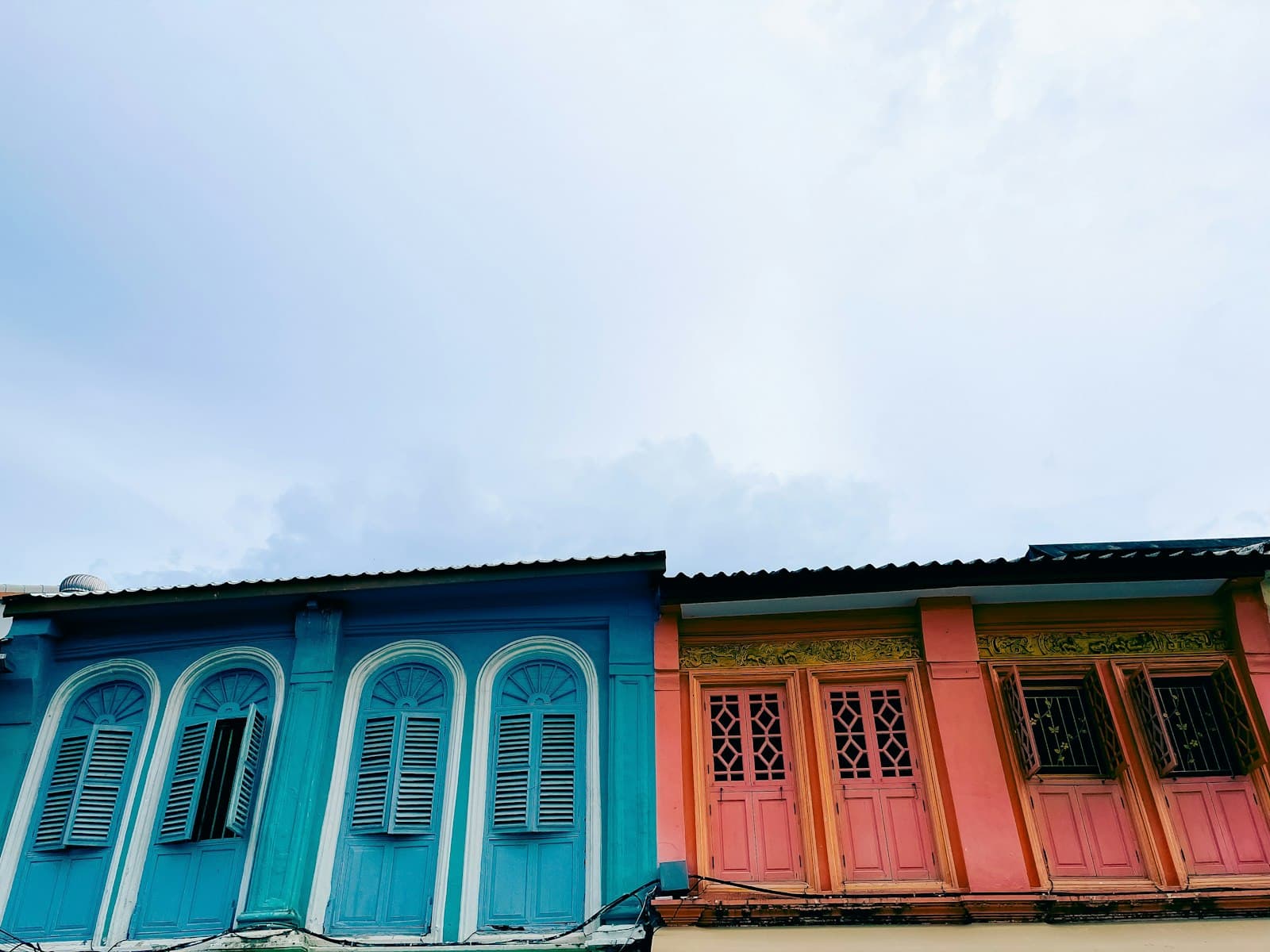
Stand here and look down the length of Thalang Road, because this street is the whole thesis of the walk in one view. On both sides run rows of shophouses two and three storeys tall, their ground floors built for commerce and the rooms above for the families who owned them. Notice the covered walkway that threads along the front of the buildings, a continuous arcade the Straits Chinese called the five-foot way, meant to shelter you from both the tropical sun and the monsoon rain. This is Sino-Portuguese architecture, a style Phuket shares with the old Chinese port towns of Penang and Malacca, and it did not appear here by accident. From the sixteenth century Europeans came to trade for tin, and in the seventeen and eighteen hundreds Hokkien Chinese migrants arrived to mine it in earnest, and it was these migrant merchant families who built this section of the old city. Records of Phuket Old Town confirm the main streets, Thalang among them, as the core of that Sino-Portuguese grid. In the early twentieth century a High Commissioner named Phraya Ratsadanupradit, also known as Phraya Rassada, brought foreign capital to the island, invited the Chartered Bank down from Penang, and laid out roads and canals to serve the boom. So these candy-colored facades are not just pretty. They are a balance sheet. The tin came out of the ground, the money came into these families, and it went straight into the walls you are looking at. Take your time along the arcade before you turn off it, and keep asking the question the rest of the walk will keep answering: who paid for all this color, and who did the digging that funded it.
2. Soi Romanee: The Underside of the Boom
Turn up this narrow lane and the mood shifts. Today Soi Romanee is the most photographed street in the old town, a row of pastel houses so pretty it looks staged. But its history is the exact underside of the prosperity you just saw on the main street. During the tin boom this short lane was Phuket town's red-light district, packed with brothels, opium dens, and gambling houses that served the Chinese mine laborers, the coolies who did the actual digging. Local Phuket heritage guides and a Phuket News feature titled Tin Fever, Opium and Sin confirm that vice-district history plainly. The men who broke their bodies in the mines came here to spend what little they earned, and the money circled back to the same merchant economy that built the grand facades. Now for the name, and here you have to be careful, because a good story has grown up around it. Locals will tell you the lane was named after a famous Romanian madam who worked here, and some accounts add that women were brought all the way from Macau. Treat that as local legend, not fact. The likelier root is much plainer: the Thai word rommani simply means beautiful, or adorable. When the mines finally closed, the trade reportedly moved on and the lane fell quiet and neglected, until local artists and preservationists brought it back to life as the guesthouse-and-cafe lane you see today. So enjoy the color, but hold the two truths together. This is the prettiest street in Phuket Old Town, and it earned its living from the hardest lives on the island.
3. The Chartered Bank Building: Tin Turned to Credit
Here the tin economy gets formal. This sun-yellow building, standing at the corner where Phang Nga Road meets Phuket Road, was the local branch of the Chartered Bank, later Standard Chartered, and today it holds a museum of Peranakan, or Baba, culture. To understand why a…
Full narration for this stop unlocks with the tour.
4. On On Hotel: Where the Traders Slept
Every boom town needs somewhere to put the people passing through it, and this is where Phuket housed them. The On On Hotel opened on Phang Nga Road in nineteen twenty-seven, at the height of the tin era, and local Phuket guides confirm that year. It was built to lodge the…
Full narration for this stop unlocks with the tour.
5. Baan Chinpracha: Inside a Tin Baron's House
Now you get to step inside the private world all this money built. Baan Chinpracha, on Krabi Road, is a grand mansion completed in nineteen oh three, and local Phuket heritage guides confirm that date. It was built by a prominent Thai-Chinese tin baron named Phra Pitak…
Full narration for this stop unlocks with the tour.
6. Shrine of the Serene Light: The Community's Spirit
The walk ends where the community kept its soul, tucked out of sight behind the shophouses. The Shrine of the Serene Light, also called Sang Tham, sits down a narrow lane off Phang Nga Road, and for most of its life it was genuinely hidden, screened from the street by the…
Full narration for this stop unlocks with the tour.