Old Town: The Sino-Portuguese Town
85 min · 2.5 km · easy
Phuket was a tin island long before it was a beach island, and the fortune that miners dug out of the ground built a Straits Chinese port whose pastel shophouses, extreme festivals, and Baba-Nyonya society still stand a few blocks inland from the resorts. Read the old town this way and the story reorders itself: the tin came first, the migrants came for the tin, and the culture (the architecture, the shrines, the food, the mixed-marriage community that named itself Peranakan) came out of that. Three Roamer walks trace the same buried identity from three angles. One reads the merchant town the tin money built. One reads the migrant faith the miners carried across the sea. One reads the hybrid Baba-Nyonya world all of it produced.
The tin came first
Most people arrive in Phuket for the coast and never learn that the island has an older economy running underneath it. In the eighteenth and nineteenth centuries, Hokkien Chinese migrants poured into southern Thailand to mine tin, grew rich, and built a town in the Sino-Portuguese style of the Straits, culturally closer to Penang and Malacca than to Bangkok. By the reign of King Rama the Fifth, who reigned from eighteen sixty-eight to nineteen ten, that style was already well established.
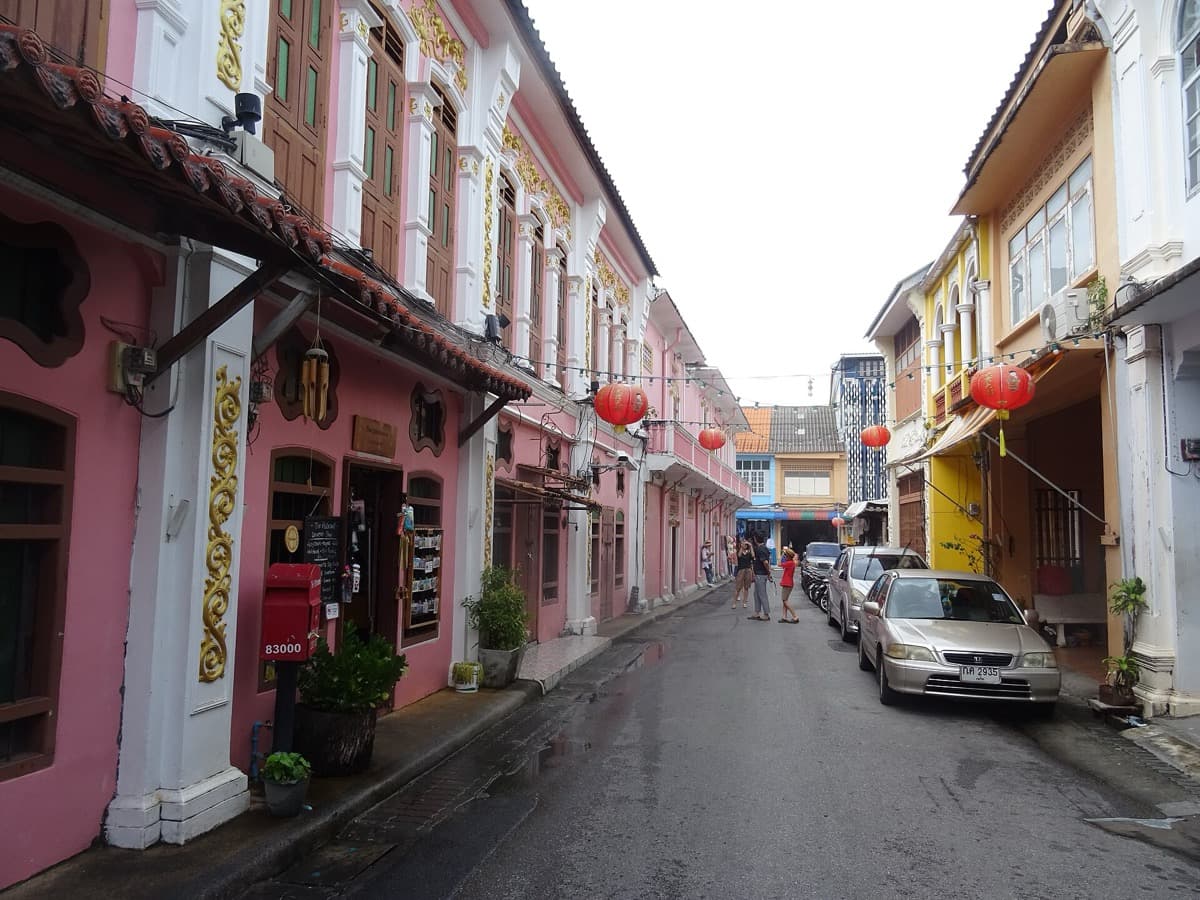
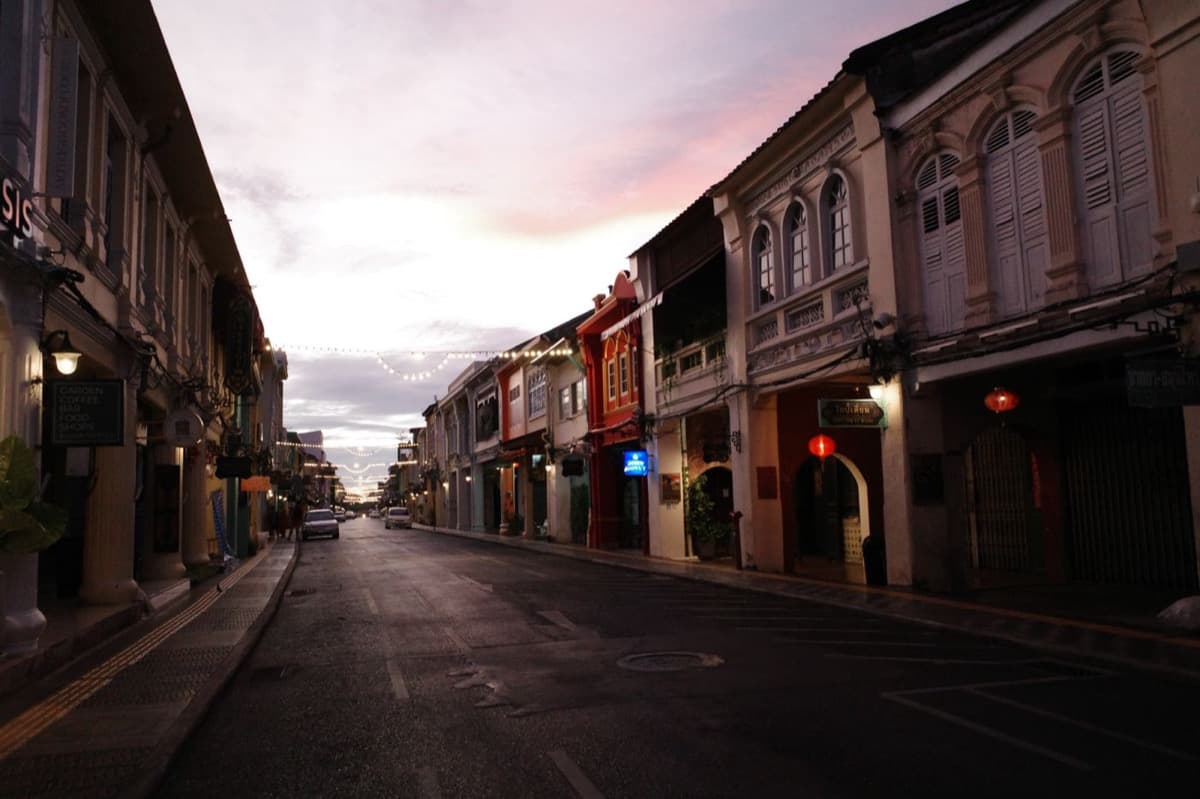
The Sino-Portuguese Town reads the town as a balance sheet. Thalang Road, the merchant spine, is lined with two- and three-storey shophouses fronted by the arcaded covered walkway the Straits Chinese called the five-foot way. High Commissioner Phraya Ratsadanupradit, also known as Phraya Rassada, modernized the island in the early twentieth century, invited the Chartered Bank down from Penang, and laid out roads and canals to serve the boom. That bank is the moment tin became credit. The sun-yellow Chartered Bank building, where Phang Nga Road meets Phuket Road, turned metal in the ground into money a merchant could borrow against, with a police station reportedly built directly opposite it for security.
The wealth then took the shape of houses. Baan Chinpracha on Krabi Road, completed in nineteen oh three, was built by the Thai-Chinese tin baron Phra Pitak Chinpracha, also known as Tan Ma Siang, whose father came from Fujian around the eighteen fifties for the tin. Phra Pitak was born in Phuket in eighteen eighty-three, which means he built the mansion at about the age of twenty. Locals call the style Angmor Lao, house of the red-haired people, the Hokkien term for Westerners. It is Chinese ancestry wearing borrowed European grandeur, and it announces exactly what tin did to a migrant family.
The walk is careful about the underside of that prosperity. Soi Romanee, the most photographed lane in the old town today, was the town's red-light street during the boom, packed with brothels, opium dens, and gambling houses that served the Chinese mine laborers who did the actual digging. The tour holds two truths together: this is the prettiest street in the old town, and it earned its living from the hardest lives on the island. The question underneath every stop is the same one, whose money built this, and who did the digging.
The migrants carried their gods
Hear a stop from this walk
Shrine of the Serene Light: The Community's Spirit
The miners did not cross the sea alone. They brought their deities, and that faith is still the most startling thing on the island. The Gods of the Miners reads Phuket's Vegetarian Festival from the inside, as the surviving spiritual machinery of a diaspora rather than as spectacle.
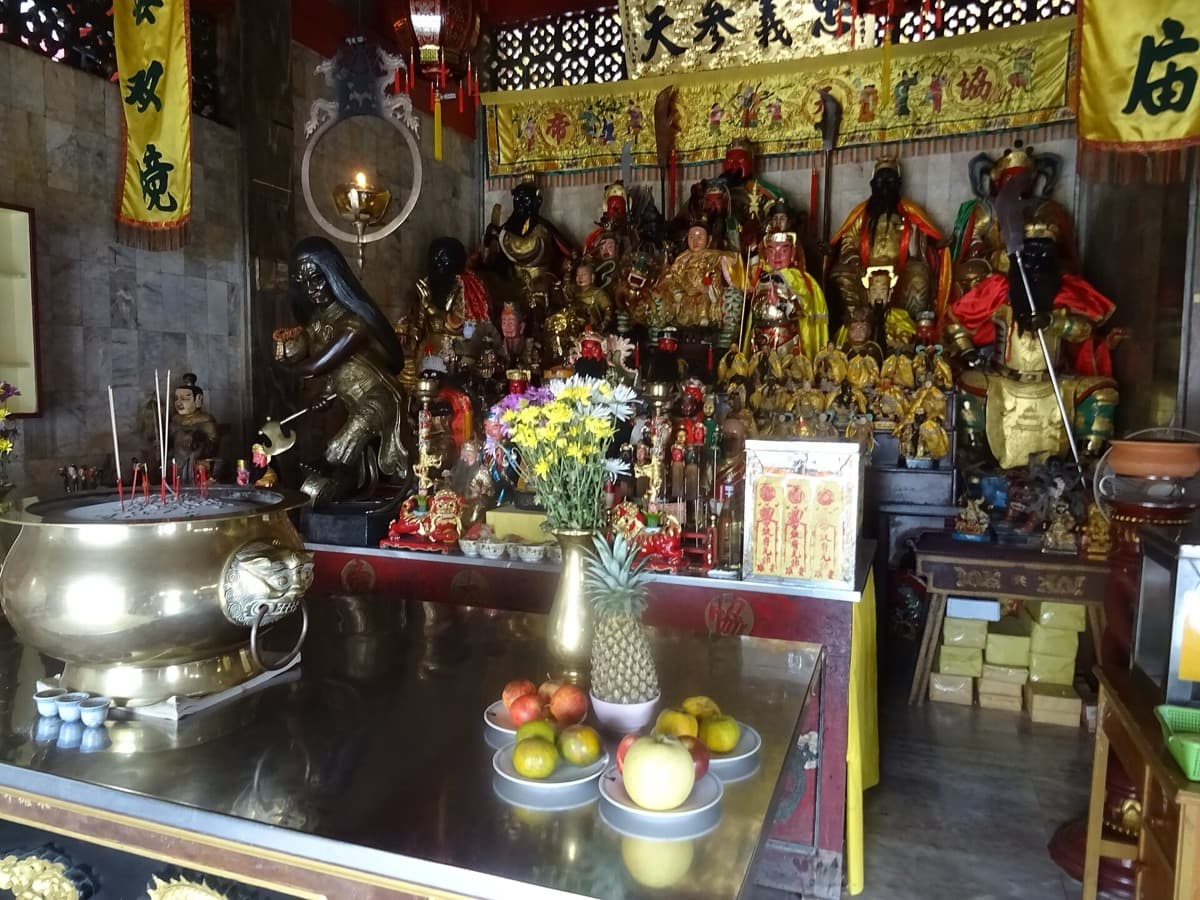
The walk begins with mercy, not blades. Put Jaw, whose Hokkien name means Temple of Kuan Im, is the shrine the island remembers as its oldest Chinese temple, said to be over two hundred years old and built by the Hokkien settlers who came for tin. It belongs to Kuan Im, the goddess of compassion, and by tradition you visit it before its larger neighbor. Jui Tui, next door, is the ceremonial engine: its present hall traces to about nineteen eleven, and its courtyard is where worshippers raise the go teng, the tall bamboo pole that invites the Nine Emperor Gods to descend for the festival's nine days.
The festival itself is the Nine Emperor Gods Festival, a Taoist observance held over the first nine days of the ninth lunar month, across September and October. The Nine Emperor Gods are celestial star lords tied to the Big Dipper, not historical rulers. The famous fire-walking and blade-ladders and cheek-piercing are performed by the mah song, the horses of the gods, unmarried spirit mediums who carry the community's sickness and misfortune away. The island tells an origin story, framed openly as legend, that in eighteen twenty-five a travelling Hokkien opera troupe performing for tin miners in the inland Kathu district fell ill, resumed the neglected ninth-month rites, and recovered. Legend or not, it names whose festival this is: miners and migrants.
The sea underneath all of it surfaces at Sam San Shrine on Krabi Road, built in eighteen fifty-three and dedicated to Mazu, the goddess of the sea. It belongs to the Foochow community from Fuzhou, distinct from Phuket's majority-Hokkien shrines, and its name, Three Mountains, is an old name for Fuzhou. Before there was a festival, there was a voyage, and Mazu was the goddess who was supposed to bring you through it. The walk closes at Saphan Hin, the tin-dredging waterfront, where the Sixty Year Mine Monument, built in nineteen sixty-nine, honors Captain Edward Thomas Miles, an Australian who brought the first metal ore dredge to Phuket in nineteen oh nine. On the festival's final day the closing procession travels here to send the gods home. Tin is why they came, the gods are what they carried, and both end at the same water.
The fortune became a culture
Migration turned into fortune, and fortune turned into a hybrid identity. The Baba-Nyonya World reads that culture, born when Hokkien men married local women and their descendants called themselves Peranakan, a Malay word meaning roughly born here. The men were Baba, the women Nyonya.
A community usually decides who it is in a classroom first. The Thai Hua building on Krabi Road opened in nineteen thirty-four as the island's first Chinese-language school, teaching Hokkien and Mandarin alongside Thai, its name stating the dual identity in two words. The Peranakannitat Museum finally names the culture out loud, housed in the former Chartered Bank that opened in nineteen oh seven and the old police station with its clock tower. It opened in May twenty seventeen, presided over by Princess Maha Chakri Sirindhorn, and lays the world out plainly: a Nyonya bride's outfit pairs a lace dress, a Malay batik sarong, and layered Chinese gold. Chinese ancestry, Malay dress, Thai home.
The culture is not frozen. It lives on Thalang Road, about three hundred fifty metres of restored shophouses that in twenty ten became the first street in Phuket to bury its cables underground, and in the Baba Wedding, a staged annual revival whose reported twelfth edition was held in May twenty twenty-five. The organizers openly note that fewer young people feel connected each year, so the wedding is memory deliberately performed. The surer thread is on the plate: moo hong braised pork, mee hokkien noodles, o-aew shaved-ice jelly, yum som o pomelo salad. By some estimates around seventy percent of Phuket's population carries some Peranakan ancestry, which is why this food is simply what many families cook.
Together the three walks make one argument. The beach island has a forgotten first identity as a Straits Chinese tin port, and it is legible in the shophouses tin built, the shrines the miners carried, and the Baba-Nyonya world both produced. Start with Phuket walking tours to choose your angle.
Sources
- Phuket Old Town heritage: Sino-Portuguese architecture, Thalang Road, Soi Romanee, Chartered Bank, On On Hotel, Baan Chinpracha, and the Shrine of the Serene Light (as documented in the Roamer tour transcripts and their cited local guides).
- Phuket Vegetarian Festival / Nine Emperor Gods Festival background (Wikipedia; National Geographic coverage of the opera-troupe origin legend).
- phuket101 and the Novotel Phuket old-town guide on Put Jaw, Jui Tui, Bang Neow, and Sam San shrines.
- Window on Phuket on the Saphan Hin Sixty Year Mine Monument and Captain Edward Thomas Miles.
- Phuket Thai Hua Museum and Peranakannitat Museum institutional histories.
Frequently asked questions
- Why is Phuket called a tin island?
- Long before tourism, Phuket's economy ran on tin. In the eighteenth and nineteenth centuries Hokkien Chinese migrants came to mine the metal, and that industry funded the old-town shophouses and mansions. A dredger-shaped monument at Saphan Hin, the Sixty Year Mine Monument built in nineteen sixty-nine, marks sixty years of tin dredging from nineteen oh nine to nineteen sixty-nine.
- What is Sino-Portuguese architecture in Phuket?
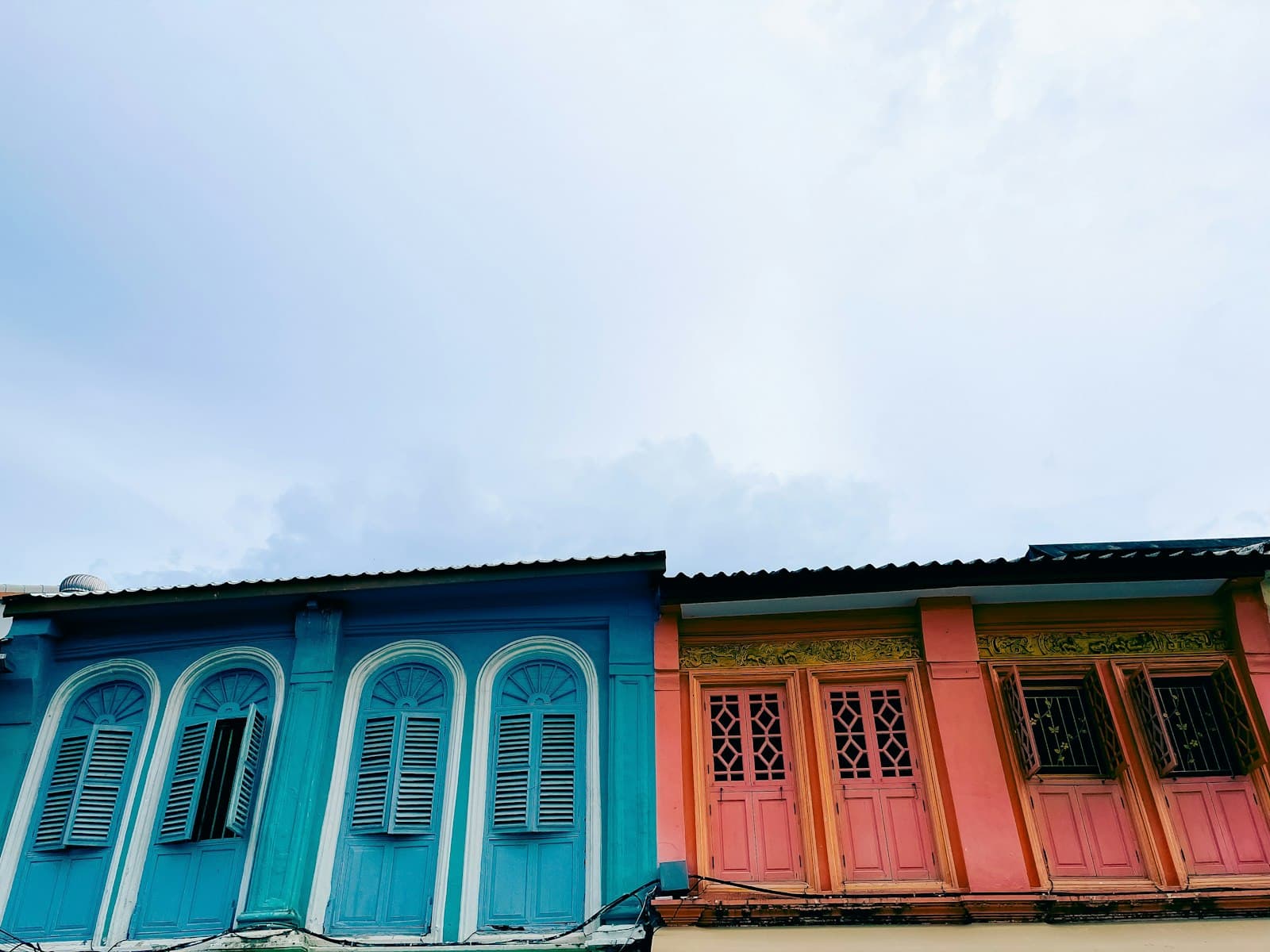
- It is the pastel shophouse-and-mansion style Phuket shares with the old Straits Chinese ports of Penang and Malacca. Two- and three-storey shophouses front an arcaded covered walkway called the five-foot way, built by Hokkien tin-mining families. By the reign of King Rama the Fifth (eighteen sixty-eight to nineteen ten) the style was already well established on Thalang Road.
- Who are the Baba-Nyonya of Phuket?
- They are the Peranakan community, descended from Hokkien Chinese men who came for the tin and married local women. Peranakan is a Malay word meaning roughly born here; the men are called Baba and the women Nyonya. By some estimates around seventy percent of Phuket's population carries some Peranakan ancestry, and the culture is preserved at museums like the Peranakannitat Museum and Thai Hua.
- What is Phuket's Vegetarian Festival really about?
- It is the Nine Emperor Gods Festival, a Taoist observance over the first nine days of the ninth lunar month, in September or October. The famous fire-walking and cheek-piercing are performed by spirit mediums called mah song to carry away the community's misfortune, and the whole tradition descends from the tin-mining Hokkien migrants who kept their gods after crossing the sea.
- Which Phuket Old Town sites best tell the tin-port story?
- Thalang Road and Soi Romanee show the merchant boom and its underside; the sun-yellow former Chartered Bank shows tin turned to credit; Baan Chinpracha (nineteen oh three) shows a tin baron's home; and the Chinese shrines like Put Jaw, Jui Tui, and Sam San show the migrant faith. Roamer's three Phuket tours walk these in themed arcs.
Ready to experience it?
Old Town: The Sino-Portuguese Town
85 min · 2.5 km · easy
More from Phuket
Explore more at your own pace.
One Day in Phuket Old Town: A Walkable Morning-to-Evening Plan
Phuket Travel Guide: How Many Days, Getting Around, Best Time, and Safety (2026)
Jui Tui Shrine: The Ceremonial Engine Behind Phuket's Vegetarian Festival
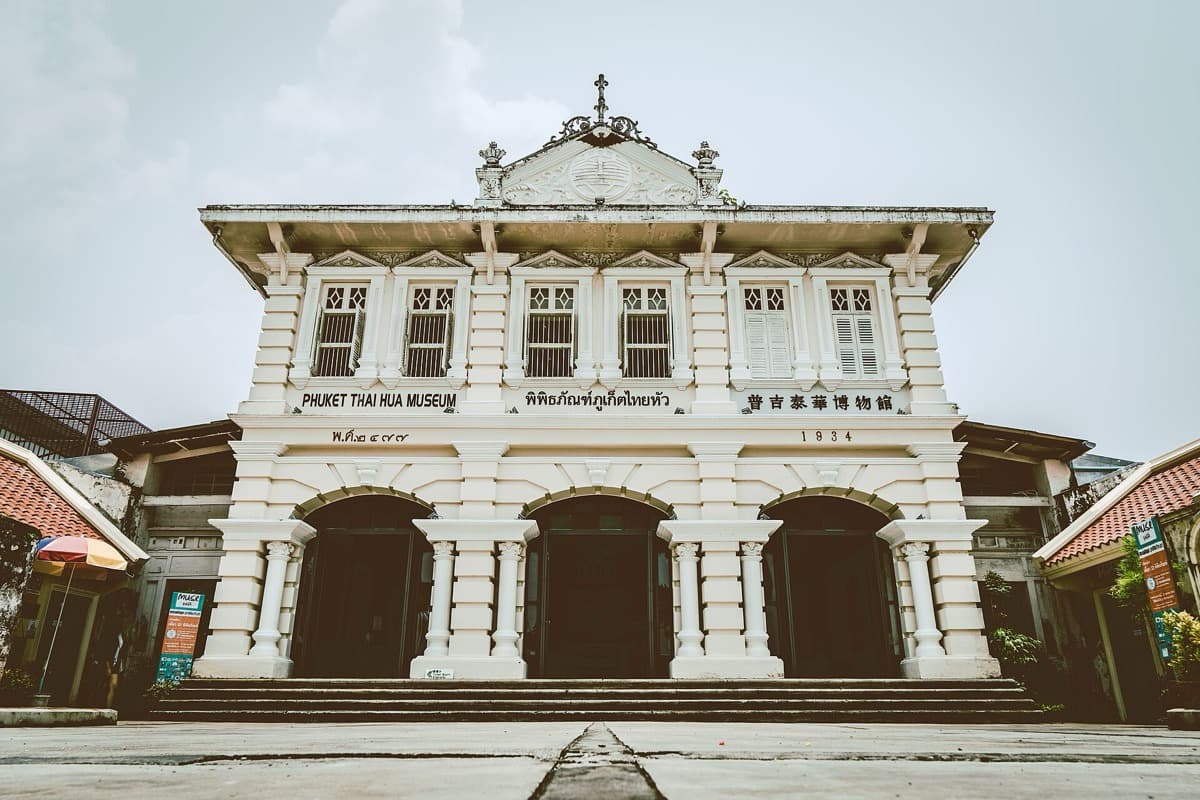
Thai Hua Museum: Where Phuket's Peranakan Story Begins
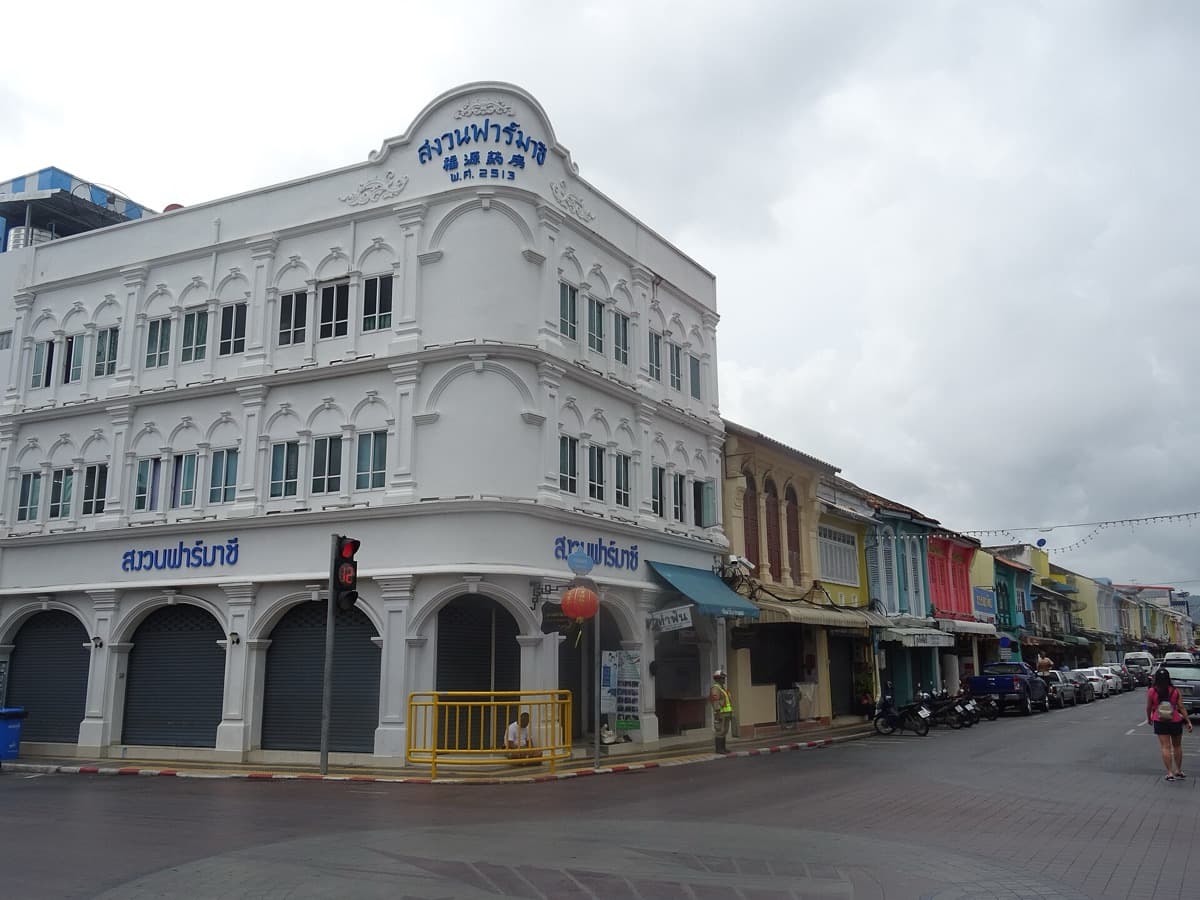
Thalang Road: How Tin Money Built Phuket Old Town