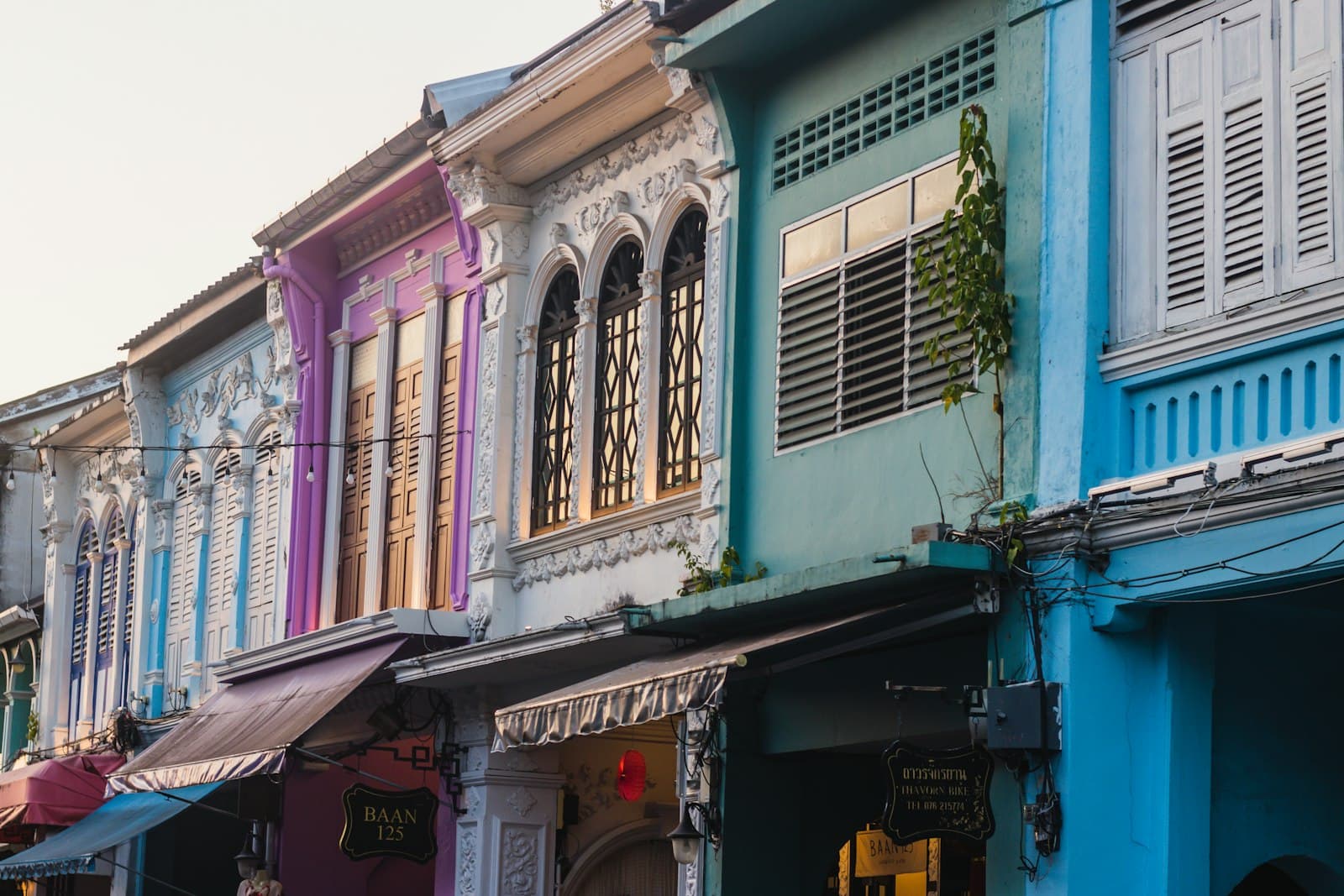
Follow the tin fortune of Phuket's Straits-Chinese families through the schoolhouse, mansions, and old bank that hold their story, and taste the hybrid Peranakan culture still alive on the old-town streets.
Start · Thai Hua Museum: The Schoolhouse That Named a Community
DirectionsStops
- 1
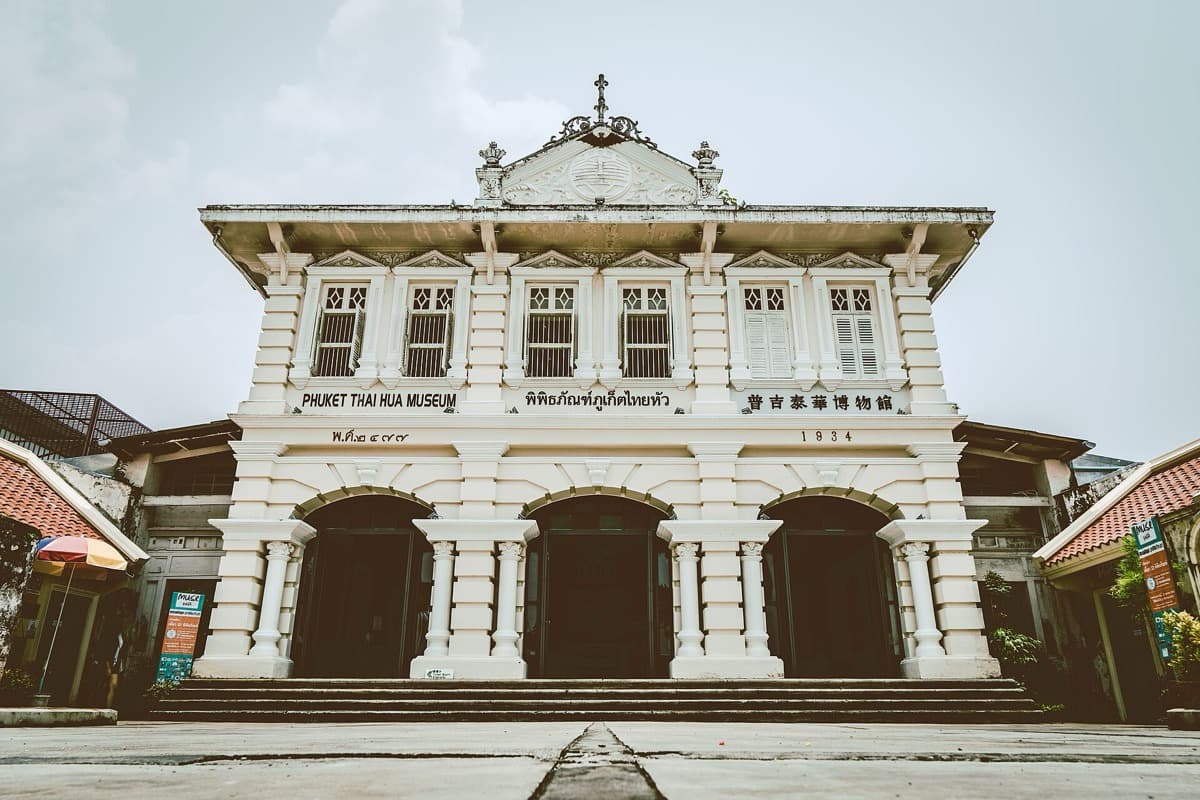
Thai Hua Museum: The Schoolhouse That Named a Community
The island's first Chinese-language school, built by the Hokkien community in nineteen thirty-four and now a museum of Phuket's Chinese and Peranakan history.
- 2
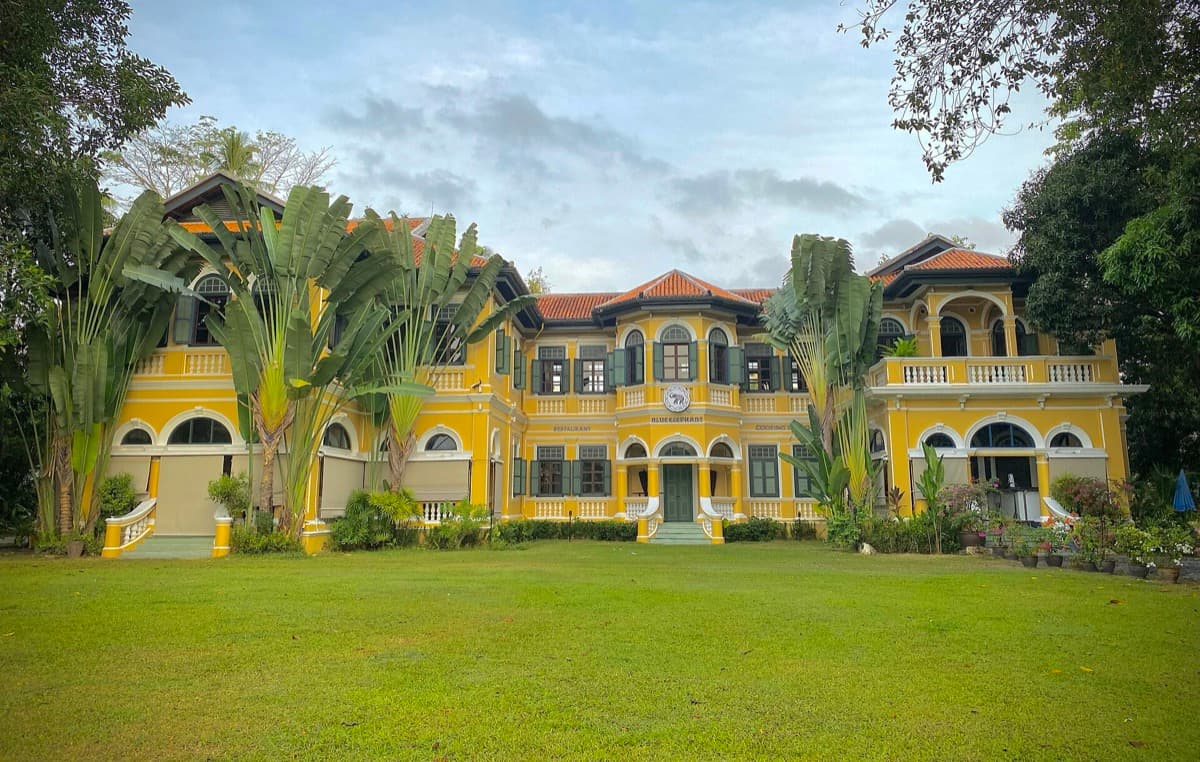
Phra Pitak Chinpracha Mansion: The Tin Fortune Made Visible
A grand Sino-Portuguese mansion of nineteen oh three, a former governor's residence now restored as the Blue Elephant restaurant, and a monument to tin-era wealth and Penang taste.
- 3
Baan Chinpracha: Inside a Peranakan Household
A preserved Peranakan house museum of nineteen oh three, built by Phrapitak Chinpracha and still home to his descendants upstairs, showing Baba-Nyonya domestic life on the ground floor.
- 4
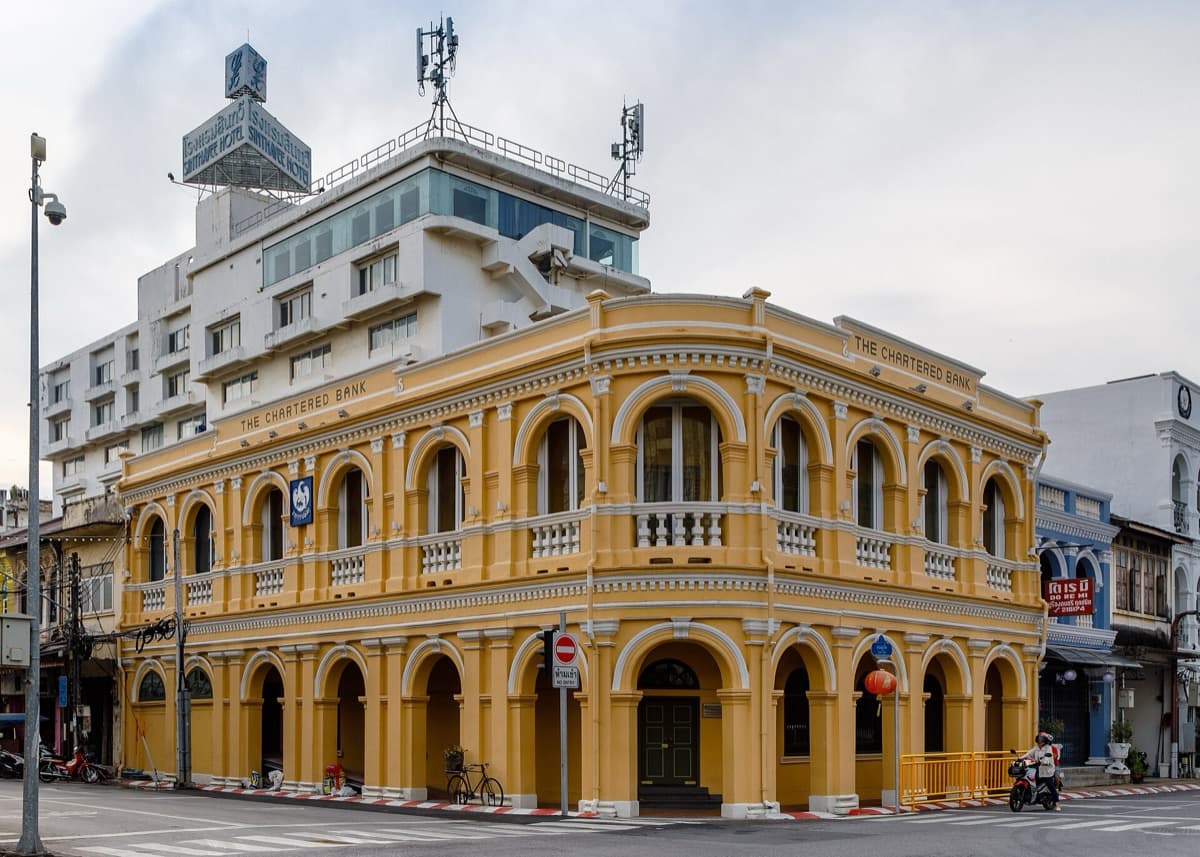
Peranakannitat Museum: The Culture Named Out Loud
A dedicated Peranakan culture museum inside the sun-yellow former Chartered Bank of nineteen oh seven and the old police station with its clock tower, where the community's own story is catalogued.
- 5
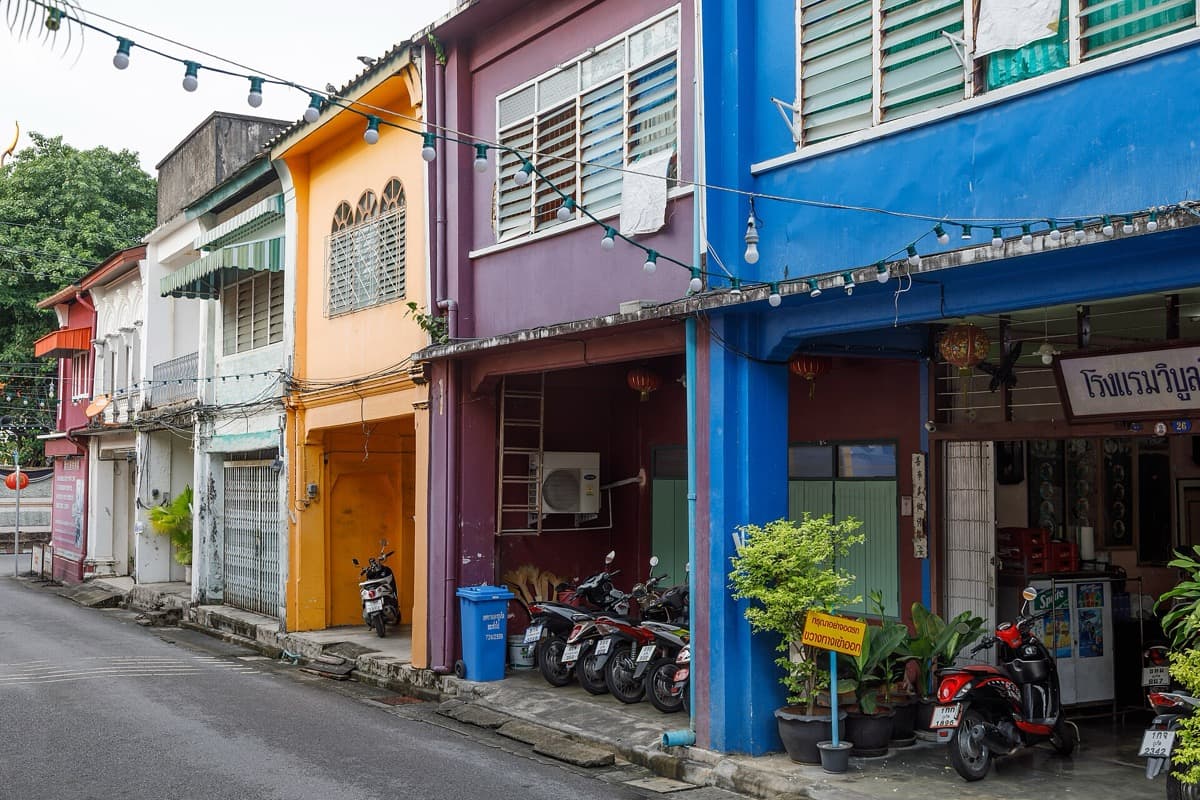
Thalang Road and Queen Sirikit Park: The Living Old-Town Heart
About three hundred fifty metres of restored Sino-Portuguese shophouses on Thalang Road, with a modern public square, Queen Sirikit Park, where old-town life and festivals gather today.
- 6
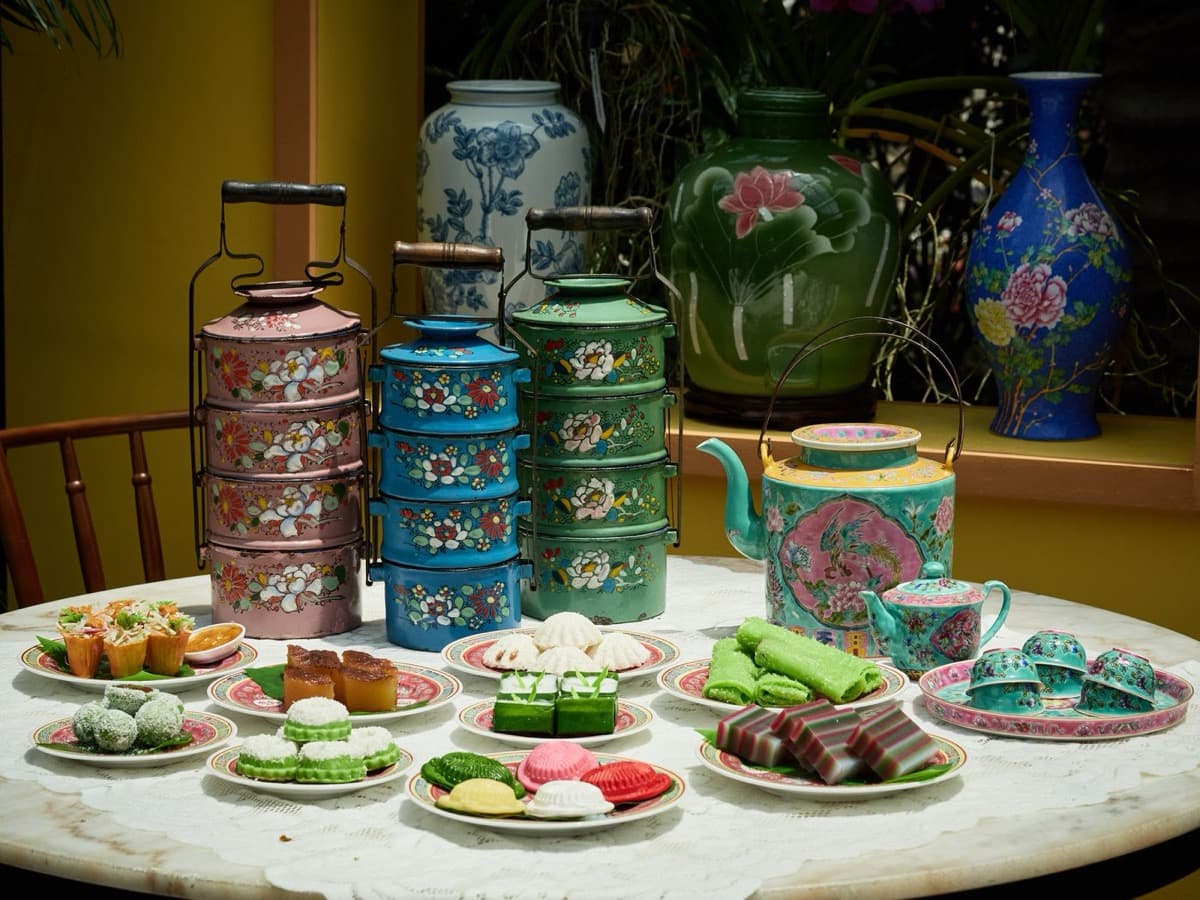
The Baba Wedding and Peranakan Cuisine: Heritage Without a Building
The living Baba-Nyonya heritage of the old town: a staged annual Baba wedding revival and a Hokkien-Malay-Thai fusion cuisine that carries the identity forward without any single landmark.
Details
Best Time to Visit
Early morning or late afternoon, roughly before ten in the morning or after four in the afternoon, to avoid the strongest midday heat and glare. Weekday visits are calmest for the mansions and museums. A Sunday visit adds the Thalang Road Walking Street Market in the evening, which brings crowds and food stalls but also more heat and congestion. Aim for the dry season, roughly November through April, since the May-to-October monsoon brings heavy afternoon downpours.
Pro Tips
- •Two of the six stops are paid interiors. Thai Hua Museum runs around two hundred baht for adults and Baan Chinpracha around one hundred fifty baht, while the Peranakannitat Museum is free. Carry small baht cash and confirm current rates at the door.
- •The Phra Pitak mansion (Blue Elephant) reads fully from the exterior and grounds. You do not need a meal reservation to appreciate it, so treat it as an outdoor stop unless you specifically want to dine.
- •Baan Chinpracha is a living family home, so only the ground floor is open and hours run roughly nine in the morning to four thirty in the afternoon. Time your visit inside those hours and be quiet and respectful indoors.
- •The whole route sits within about six hundred metres in Talat Nuea and Talat Yai, so wear comfortable shoes and simply walk it; there is no need for taxis or tuk-tuks between stops.
- •Duck into the free, air-conditioned Peranakannitat Museum to cool down and reset midway, ideally at the hottest point of your walk.
- •If you want to see the Baba Wedding parade or the Sunday market, check dates ahead of time, since the wedding is a once-a-year event with shifting dates and the market runs on Sunday evenings.
Safety & Precautions
- •Phuket is hot and humid year round. Carry water, wear a hat and sunscreen, and pace yourself, since shade is limited along the shophouse streets and heat exhaustion is a real risk in the midday sun.
- •This walk passes shrines and religious sites within the Chinese-Thai community. Dress modestly with shoulders and knees covered, remove your shoes where signs or a pile of footwear indicate, lower your voice, and always ask before photographing people or altars.
- •During the May-to-October monsoon, sudden heavy downpours can flood streets within minutes. Carry a light rain layer, watch your footing on wet tiled pavements, and be ready to shelter under a shophouse arcade.
- •Old-town lanes carry motorbike and car traffic with narrow or interrupted footpaths. Cross with care, stay alert to scooters weaving close to the curb, and do not step into the road while looking up at the facades.
Travel advisory: Exercise Normal Precautions (Level 1).
Gallery
Related Reading
Go deeper on what you'll see, hear, and walk through.
Overview
Best Self-Guided Walking Tours in Phuket (2026)
3 min
Overview
One Day in Phuket Old Town: A Walkable Morning-to-Evening Plan
8 min
Overview
Phuket Travel Guide: How Many Days, Getting Around, Best Time, and Safety (2026)
7 min
Thematic
Best Culture Walking Tours in Phuket (2026)
2 min
Thematic
Phuket Before the Beaches: The Tin Island's Straits Chinese Port
7 min
Companion
Thai Hua Museum: Where Phuket's Peranakan Story Begins
7 min
Read
What to Eat in Phuket: The Local Dishes and Where They Come From
6 min
Read the walk
The full story of Peranakan: The Baba-Nyonya World, in words. Prefer to listen? Play it narrated, from home or on location.
Introduction
Some cities keep their history in castles. Phuket keeps it in a schoolhouse, a few mansions, and an old bank, all within a short walk of one another in the old town of Phuket, Thailand. This is a story about migration turning into fortune, and fortune turning into a culture. In the tin-mining era, Hokkien Chinese men crossed the sea to work these mines, married local women, and over three generations built one of the wealthiest hybrid communities in Southeast Asia. They called themselves Peranakan, a Malay word meaning roughly born here. The men were Baba, the women Nyonya. This walk has six stops and covers a little under one and a half kilometres, so plan on about ninety minutes at a relaxed pace, longer if you step inside the museums. It moves in one clean arc. You begin where the community taught itself who it was, then walk to the mansions where the tin money took architectural form, then into the museum that finally names the culture out loud. From there you widen out to the shophouse street and its square, where daily life still gathers, and you close on the living heritage, the weddings and the food, that carries the identity forward without needing any building at all. Go at your own pace. Every stop stands on its own, so linger where something catches you and move on where it does not. When you arrive at the Thai Hua Museum on Krabi Road, begin with stop one.
1. Thai Hua Museum: The Schoolhouse That Named a Community
Start here, because a community usually decides who it is in a classroom before it decides anywhere else. This building on Krabi Road opened in nineteen thirty-four, built by Phuket's Hokkien Chinese community as a school. Sources including phuket101 describe it as the first Chinese-language school on the island, teaching Hokkien and Mandarin alongside Thai. The name Thai Hua tells you the whole ambition in two words: Thai and Chinese, side by side. Look up at the front gable and you will find a red bat. In Chinese tradition the bat is a symbol of good fortune, and there is a quiet joke in putting it on a school, because for a migrant community the greatest fortune was literacy, the ability to read, to trade, to write a contract, to hold your own. The architecture is Sino-Portuguese, two storeys, the same hybrid grammar you will see all over this old town. The school did not have an easy life. It closed for a time in nineteen forty-one, when Chinese-language school licenses were revoked in Thailand during the Second World War era. It reopened, outgrew this building, and moved to a new campus in nineteen ninety-five. In twenty ten the old building became the Phuket Thai Hua Museum, with themed rooms on migration, on tin mining, and on the food this community made its own. Before you walk on, hold one pair of words that the rest of this tour turns on. Baba means the men of this Peranakan community, Nyonya means the women. Both names begin, in a sense, right here, in the place where the community first sat down to teach itself.
2. Phra Pitak Chinpracha Mansion: The Tin Fortune Made Visible
Now the money. This mansion at ninety-six Krabi Road was built in nineteen oh three, and it is described as a governor's residence from the tin-mining era. Stand back and read it as a statement rather than a house. The wealthy families of Phuket did not invent this style from nothing. They spent years in Penang, across the water, where they traded and sent their children to be educated, and they brought a look home with them. Locally it earned a Hokkien nickname, Ang Mor Lao, which means roughly the house of the red-headed people, the red-heads being Europeans. It is a knowing phrase. These families were Chinese by ancestry and Thai by soil, and here they were wearing a borrowed European grandeur like a well-cut coat, and they knew exactly what they were doing. For decades this particular mansion stood abandoned and derelict. The Blue Elephant restaurant group, a Thai fine-dining company founded in nineteen eighty, rented it from Chinpracha descendants and restored it over about two years, keeping the original green-and-white chequered tile floors and the teakwood fittings, with their mix of Chinese, Thai, and European detail. You do not need to go inside or eat here to read the point. What matters is what the exterior says out loud. Tin turned migrant miners into people who could commission architecture, and architecture is the most public way a fortune can speak. Hold that thought, because a few doors along you will step into a house from the very same moment, built for the very same reason, and see what that money looked like not from the street but from the inside.
3. Baan Chinpracha: Inside a Peranakan Household
A few doors on, at ninety-eight Krabi Road, the story moves indoors. This is Baan Chinpracha, built in nineteen oh three, during the reign of King Chulalongkorn, Rama the Fifth. According to phuket101, it was built by Phrapitak Chinpracha, whose Thai name was Tan Ma Siang, born…
Full narration for this stop unlocks with the tour.
4. Peranakannitat Museum: The Culture Named Out Loud
Everything so far has been implied. Here it is finally named. This is the Peranakannitat Museum, and its home is worth pausing on, because it is not a tin baron's mansion at all. The main sun-yellow, Sino-Portuguese building at the corner of Phuket Road and Phang Nga Road was…
Full narration for this stop unlocks with the tour.
5. Thalang Road and Queen Sirikit Park: The Living Old-Town Heart
Step out of the single buildings now and onto the street that holds them all together. Thalang Road runs about three hundred fifty metres through the heart of old Phuket, a line of restored pastel Sino-Portuguese shophouses. This is where Hokkien migrants first settled and…
Full narration for this stop unlocks with the tour.
6. The Baba Wedding and Peranakan Cuisine: Heritage Without a Building
End without a building, because the last piece of this story does not live in stone. The clearest sign that the Peranakan identity is still alive is the Phuket Baba Wedding, a staged annual event that revives the old rituals in public. It is long-running, with a reported twelfth…
Full narration for this stop unlocks with the tour.