Old Town: The Sino-Portuguese Town
85 min · 2.5 km · easy
One day in Phuket Old Town is best spent as a slow walking loop through the Sino-Portuguese grid: start on Thalang Road in the cool morning, work through the tin-era mansions and museums before the midday heat, break for a Peranakan lunch, and end at the shrines or, if it is a Sunday, at the Lard Yai walking street on Thalang Road itself. The whole old town is flat, compact, and genuinely walkable. You can see the core in a single unhurried day on foot, with three self-guided audio tours doing the storytelling as you go.
This guide assumes you are basing yourself in or near the old town, roughly the streets around Thalang, Dibuk, Krabi, and Phang Nga Road. If you are staying at the beaches (Patong, Kata, Karon), plan for a 30 to 60 minute drive in and treat this as a full day trip. Everything below is a walking distance of a few hundred metres between stops, so the day is about pacing yourself against the heat, not covering ground.
The short answer: a walkable one-day plan
Morning (roughly 9:00 to 12:00). Begin on Thalang Road, the merchant spine of the old town, then walk the museums while they are open and cool: the Thai Hua Museum and the Chinpracha House mansion. Detour up Soi Romanee, the most photographed lane in the quarter, for color without midday crowds.
Midday (roughly 12:00 to 14:00). Eat. This is when Phuket's heat peaks, so use it for a long, shaded lunch of Peranakan or Hokkien food and a rest.
Afternoon (roughly 14:00 to 17:00). Walk the Chinese shrines: Put Jaw and Jui Tui sit close together west of the center, with Bang Neow and Sam San filling out the picture. All are free to enter.
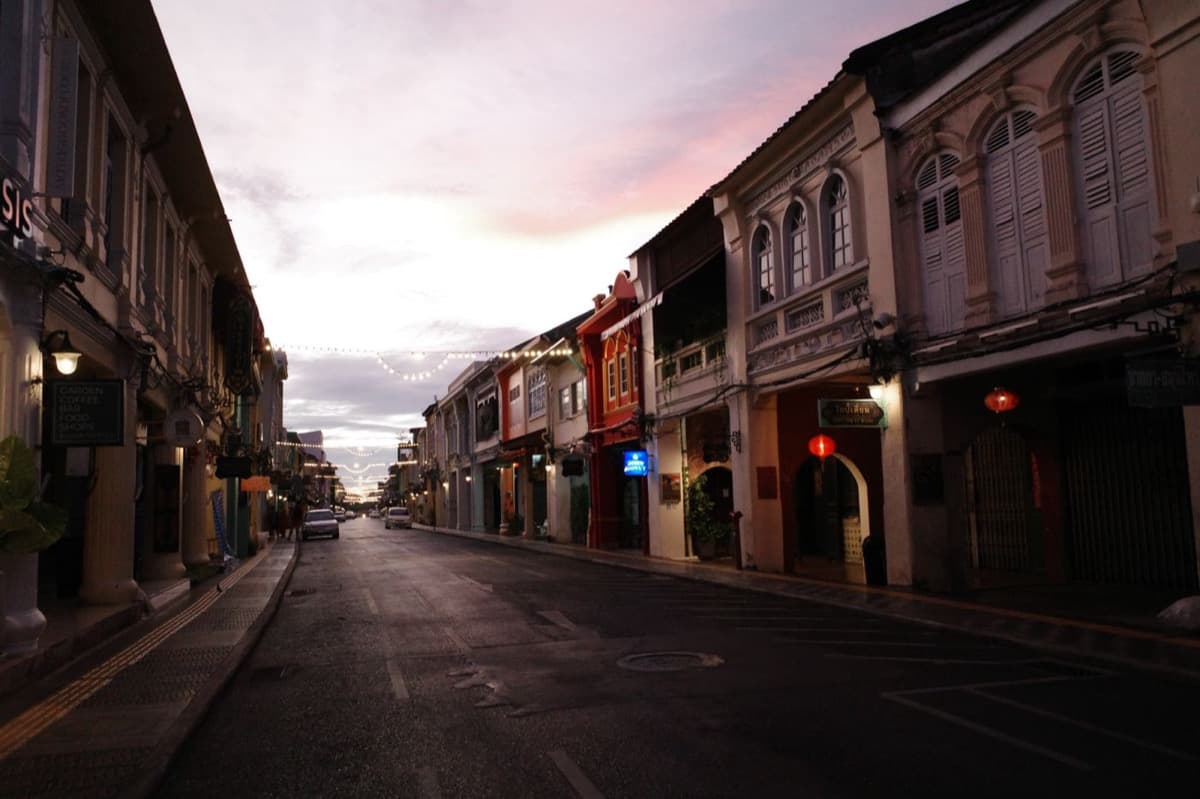
Evening. On a Sunday, Thalang Road closes to traffic for the Lard Yai walking street, roughly 16:00 to 22:00, and the old town turns into a food-and-craft market under fairy lights. Any other night, pick a rooftop or a shophouse cafe and let the pastel facades glow.
For a deeper route breakdown, see the Phuket walking tours hub, and browse everything on the /thailand/phuket city page.
Morning: the merchant spine and the mansions
Hear a stop from this walk
Shrine of the Serene Light: The Community's Spirit
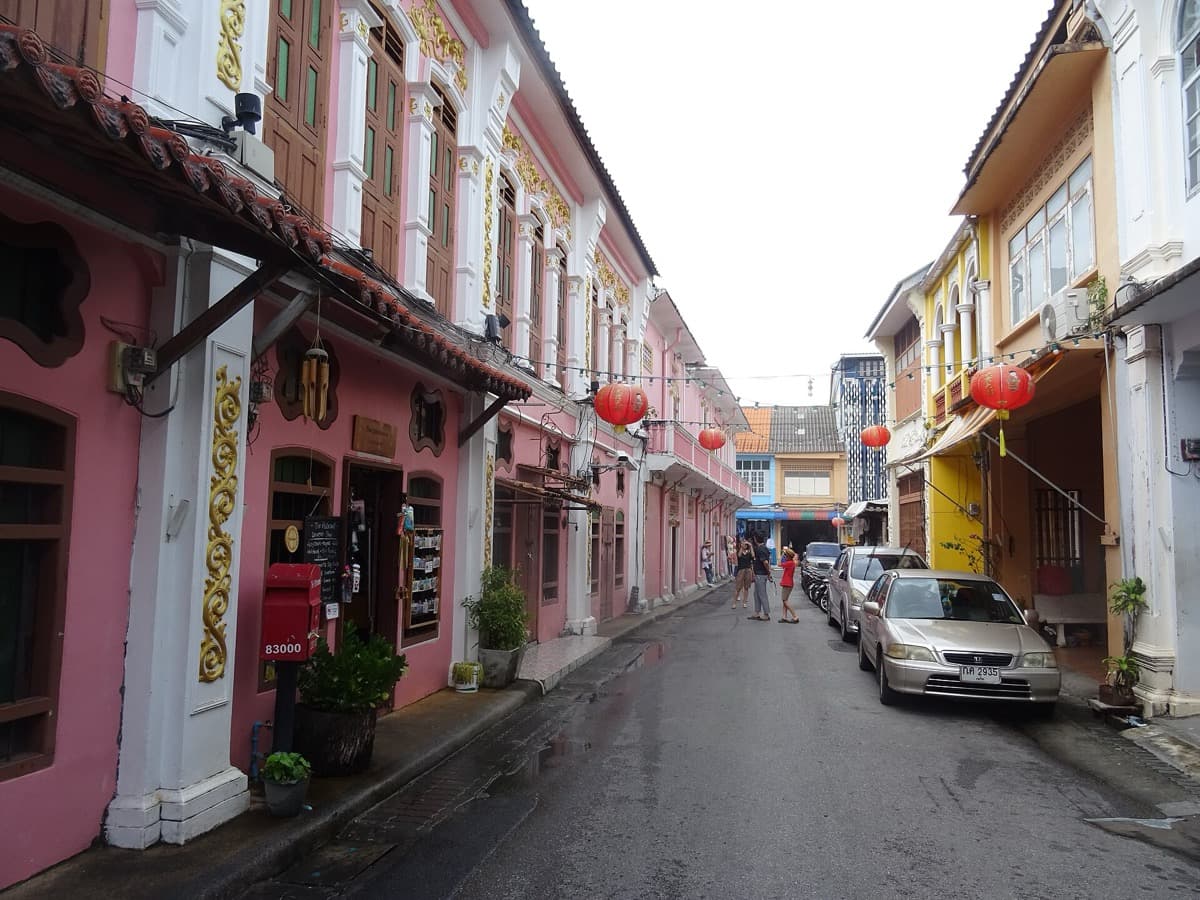
Start where the money is most visible. Thalang Road is a run of two and three storey Sino-Portuguese shophouses, their ground floors built for trade and the rooms above for the families who owned them. Look for the covered arcade along the shopfronts, the walkway the Straits Chinese called the five-foot way, which shelters you from both sun and monsoon rain. Phuket built this quarter on tin, not tourism: from the 18th century, Hokkien Chinese migrants poured in to mine the metal, grew rich, and poured the profit into these facades. The Phuket Old Town audio tour reads the whole street as a balance sheet, tin money turned into architecture.
Two indoor stops are worth timing your morning around, because both keep daytime hours and both are far more pleasant before the heat builds.
The Thai Hua Museum on Krabi Road sits in a 1930s building that began as a Hokkien Chinese school. It tells the migrant story directly, room by room. It opens daily except Wednesday, roughly 9:00 to 17:00, and foreign admission is about 200 baht (confirm the current figure at the door). If Wednesday is your only day, skip it and lean on the mansion instead.
Chinpracha House (Baan Chinpracha), a block away on Krabi Road, is a grand Sino-colonial mansion built by a tin baron and still lived in on its upper floor by the family's descendants. The ground floor is a preserved house museum with a central courtyard open to the sky, original furniture, and imported porcelain. It opens daily, roughly 9:00 to 16:30, with foreign admission about 150 baht. Carry small baht notes, since not everywhere takes cards.
Between the two, cut up Soi Romanee. It is a short, pastel lane that was the town's red-light street during the mining boom and is now a row of guesthouses and cafes. Go early for the photographs, and remember these are homes, not a film set.
Midday: eat, and let the heat pass
Phuket's midday humidity is the real hazard of this walk, more than any traffic or crime. The sensible move is to treat noon to early afternoon as a long lunch in the shade. The old town is a strong food destination in its own right: Hokkien-style noodles, Peranakan curries, dim sum, and old kopitiam coffee shops all sit within a few blocks of Thalang Road. Drink more water than you think you need, and use the arcaded walkways to move between blocks out of the direct sun.
If you want the food and hybrid culture as the throughline of your day rather than a break in it, the Phuket Peranakan tour is built around exactly that: the Straits Chinese families, their schoolhouse and mansions, and the Baba cuisine still cooked on these streets. It is the shortest of the three routes, about 1.5 kilometres, so it folds neatly into a food-focused afternoon.
Afternoon: the shrines
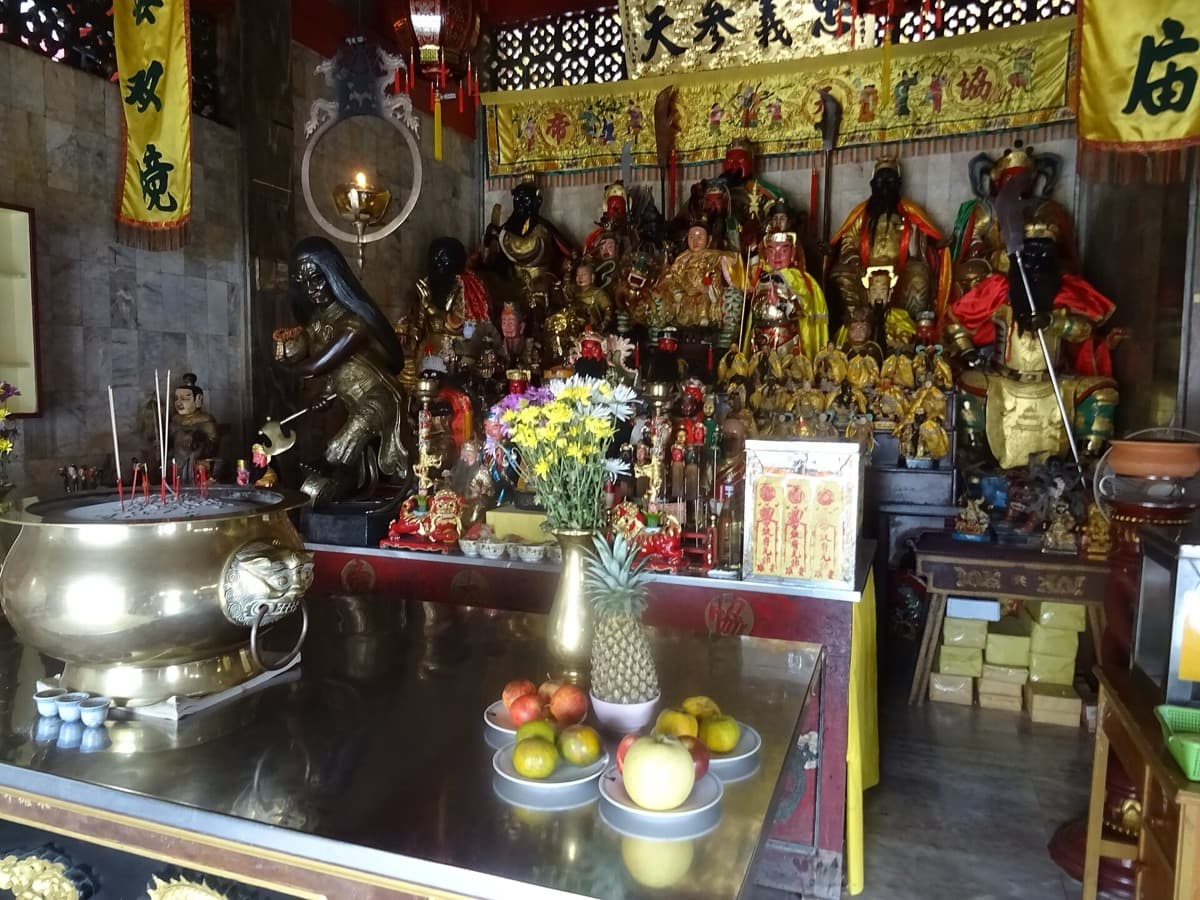
When the light softens, walk the Chinese shrines. These are the spiritual counterweight to all the commerce, the places the mining community kept for itself. Put Jaw and Jui Tui sit close together a short walk west of the old-town core and are the two most important in town; Bang Neow and Sam San round out the set. All are free to enter, though a small donation is welcome, and they are active places of worship, so dress modestly, cover shoulders and knees, lower your voice, and follow any shoes-off signs.
These shrines are also the stage for the Phuket Vegetarian Festival, the island's most intense event, a nine-day Taoist observance of the Nine Emperor Gods with white-clad devotees, street processions, and dramatic piercing and firewalking rituals. It follows the ninth lunar month, which in 2026 falls on October 10 to 18. All ceremonies are free and open to the public. If your day lands inside those dates, the shrines are the center of the island's attention and the walk changes completely. The Phuket Shrines audio tour traces this route and reads the festival from the inside; at about 4.5 kilometres it is the longest and most physical of the three, so save energy for it.
Evening: Sunday market or a quiet rooftop
Time your visit for a Sunday if you can. From roughly 16:00, Thalang Road closes to traffic and becomes the Lard Yai walking street, a night market of food stalls, crafts, and street performers running until about 22:00. It is busiest between 18:00 and 20:00, and the same shophouses you studied in the morning glow under strings of lights. On any other evening, the old town stays walkable and calm: pick a rooftop bar or a shophouse cafe, and end the day where you started, on the merchant spine, watching the pastel facades go warm in the low light.
Practical logistics
Getting in from the airport. Phuket International Airport is about 30 to 45 minutes from the old town by road. The cheapest option is the airport bus (around 120 baht, roughly hourly). Shared minivans run about 200 baht per person but wait to fill and make hotel stops. A private taxi or transfer is the fastest at around 45 minutes. Confirm current fares at the airport counters, since prices shift.
Best time to walk. Early morning (before 10:00) or late afternoon (after 16:00) are the comfortable windows; the dry season, broadly November through April, is easiest for walking, while the monsoon months bring heavy, sudden afternoon rain that can flood the streets fast. Carry a compact umbrella in the wet season.
Safety, framed honestly. The old town is calm and easy to walk. The genuine risks are heat and traffic, not crime: hydrate constantly, use the shaded arcades, and stay alert for scooters that share the narrow lanes. Watch your footing on wet, uneven pavement after rain.
Money. Bring small baht notes for museum entries, shrine donations, and market food. Cards are accepted unevenly.
Sources
Frequently asked questions
- Can you see Phuket Old Town in one day?
- Yes. The old town is flat and compact, with the main sights clustered around Thalang, Krabi, Dibuk, and Phang Nga Road within a few hundred metres of each other. A single unhurried day on foot covers the shophouse streets, one or two museums, the shrines, and an evening meal, with time built in to rest through the midday heat.
- What are the opening hours and entry fees for Chinpracha House and the Thai Hua Museum?
- Chinpracha House (Baan Chinpracha) opens daily roughly 9:00 to 16:30, with foreign admission about 150 baht. The Thai Hua Museum opens daily except Wednesday, roughly 9:00 to 17:00, with foreign admission about 200 baht. Only the ground floor of Chinpracha House is open, since the family still lives upstairs. Confirm current prices at the door, as they change.
- When is the Phuket Vegetarian Festival in 2026?
- The Phuket Vegetarian Festival runs October 10 to 18, 2026, following the ninth lunar month. It is a nine-day Taoist celebration of the Nine Emperor Gods, centred on the town's Chinese shrines, with white-clad devotees, street processions, and firewalking and piercing rituals. All ceremonies and processions are free and open to the public.
- How do you get from Phuket Airport to Phuket Old Town?
- Phuket International Airport is about 30 to 45 minutes from the old town by road. The airport bus costs around 120 baht and runs roughly hourly. Shared minivans are about 200 baht per person but wait to fill up and make hotel stops. A private taxi or transfer is the fastest option at around 45 minutes.
- Is Phuket Old Town safe to walk?
- Yes, the old town is calm and easy to walk. The real risks are heat and traffic rather than crime: hydrate constantly, use the shaded five-foot arcades between stops, and stay alert for scooters in the narrow lanes. After rain, watch your footing on wet, uneven pavement, and carry a compact umbrella in the monsoon months.
- What is the Lard Yai Sunday Walking Street?
- Lard Yai is a Sunday night market held on Thalang Road in Phuket Old Town. From roughly 16:00 the street closes to traffic and fills with food stalls, crafts, and street performers until about 22:00, busiest between 18:00 and 20:00. It runs along the same shophouse street you can walk by day, lit up under strings of lights.
Ready to experience it?
Old Town: The Sino-Portuguese Town
85 min · 2.5 km · easy
More from Phuket
Explore more at your own pace.
Phuket Travel Guide: How Many Days, Getting Around, Best Time, and Safety (2026)
Phuket Before the Beaches: The Tin Island's Straits Chinese Port
Jui Tui Shrine: The Ceremonial Engine Behind Phuket's Vegetarian Festival
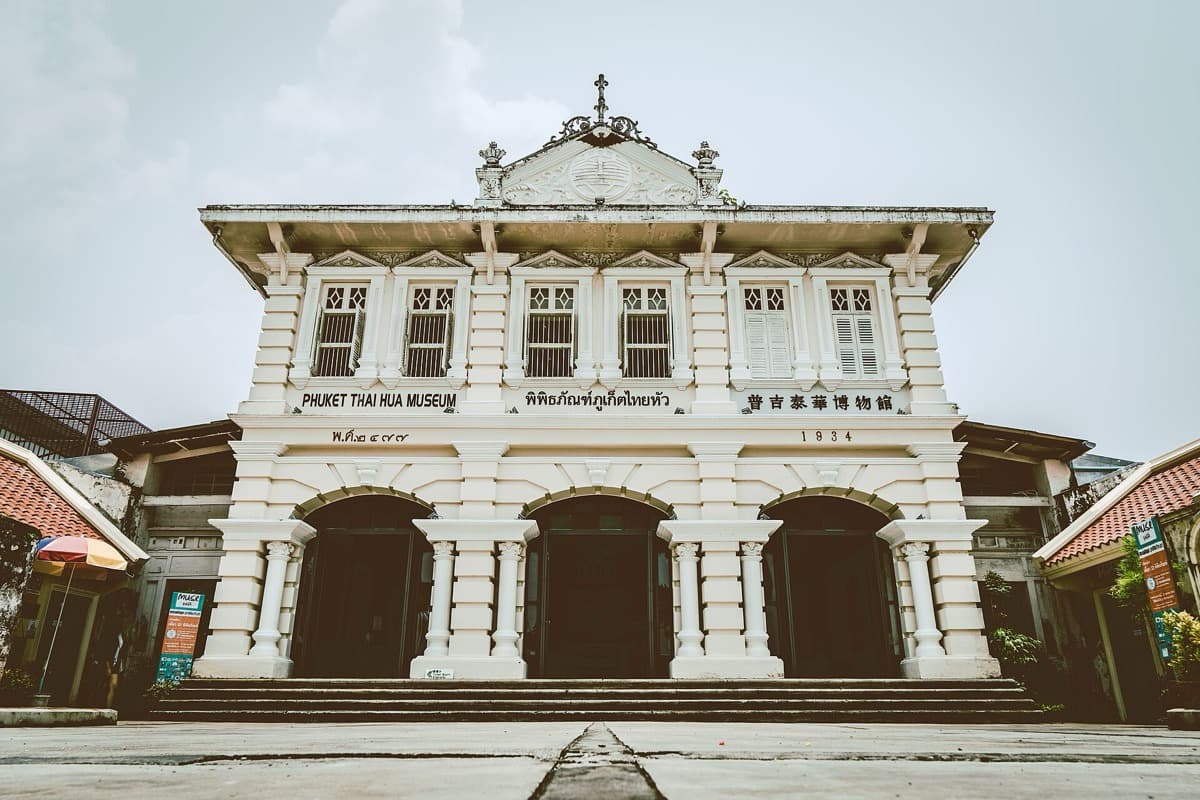
Thai Hua Museum: Where Phuket's Peranakan Story Begins
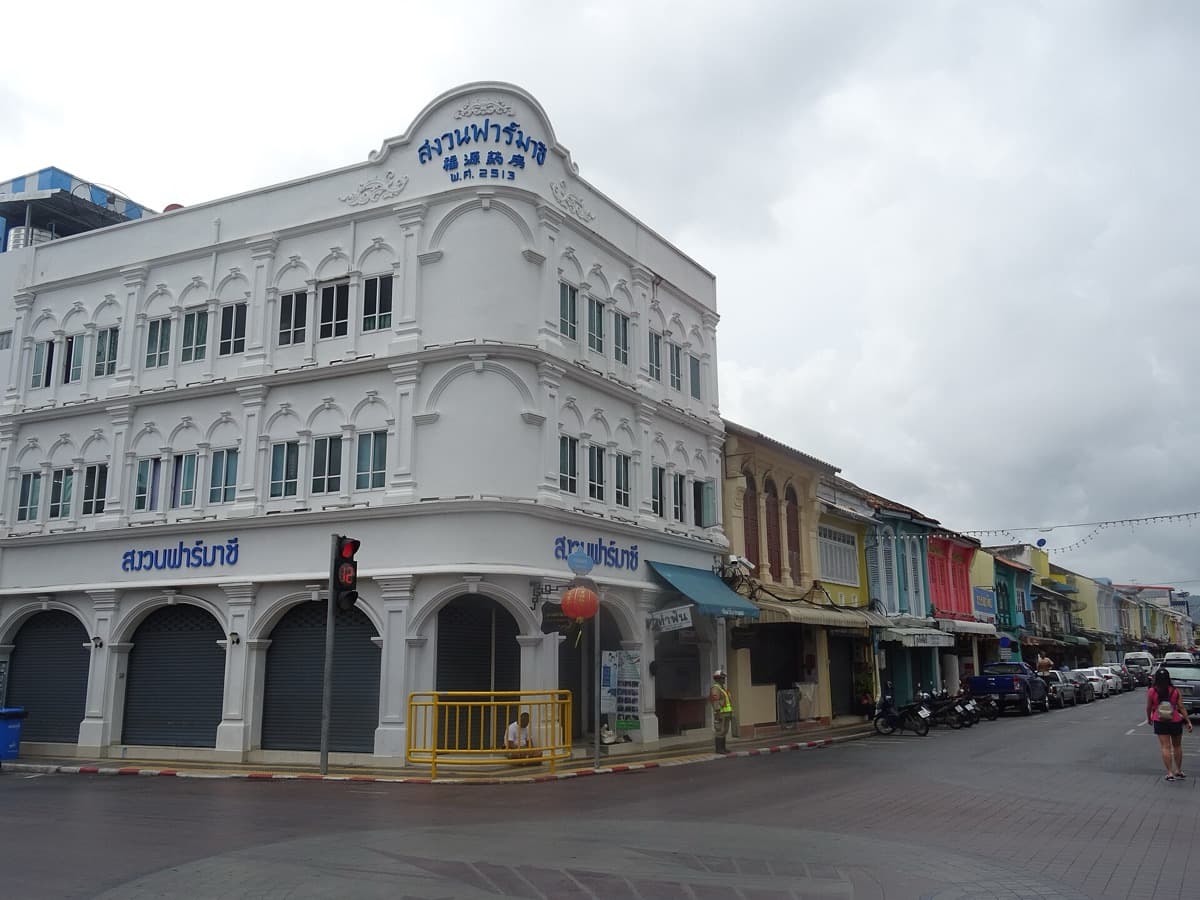
Thalang Road: How Tin Money Built Phuket Old Town