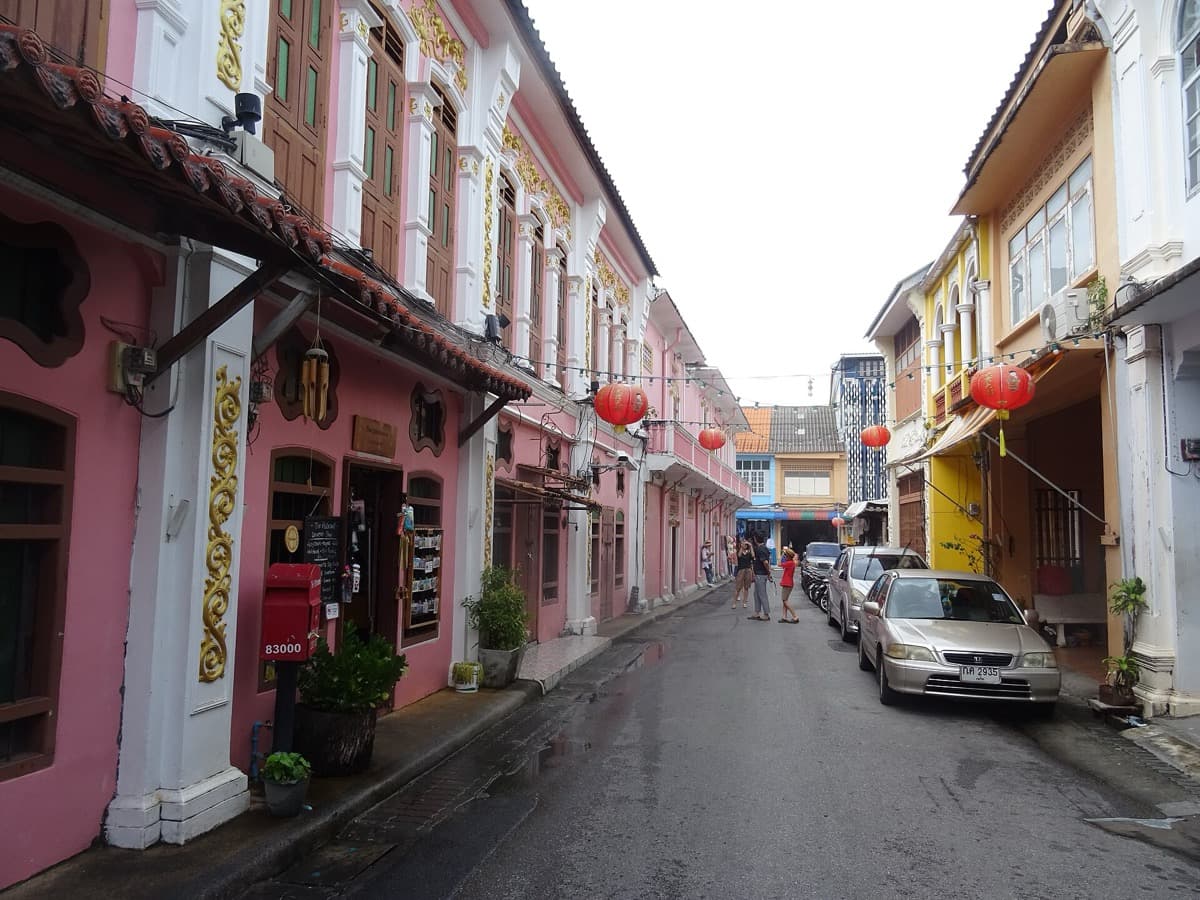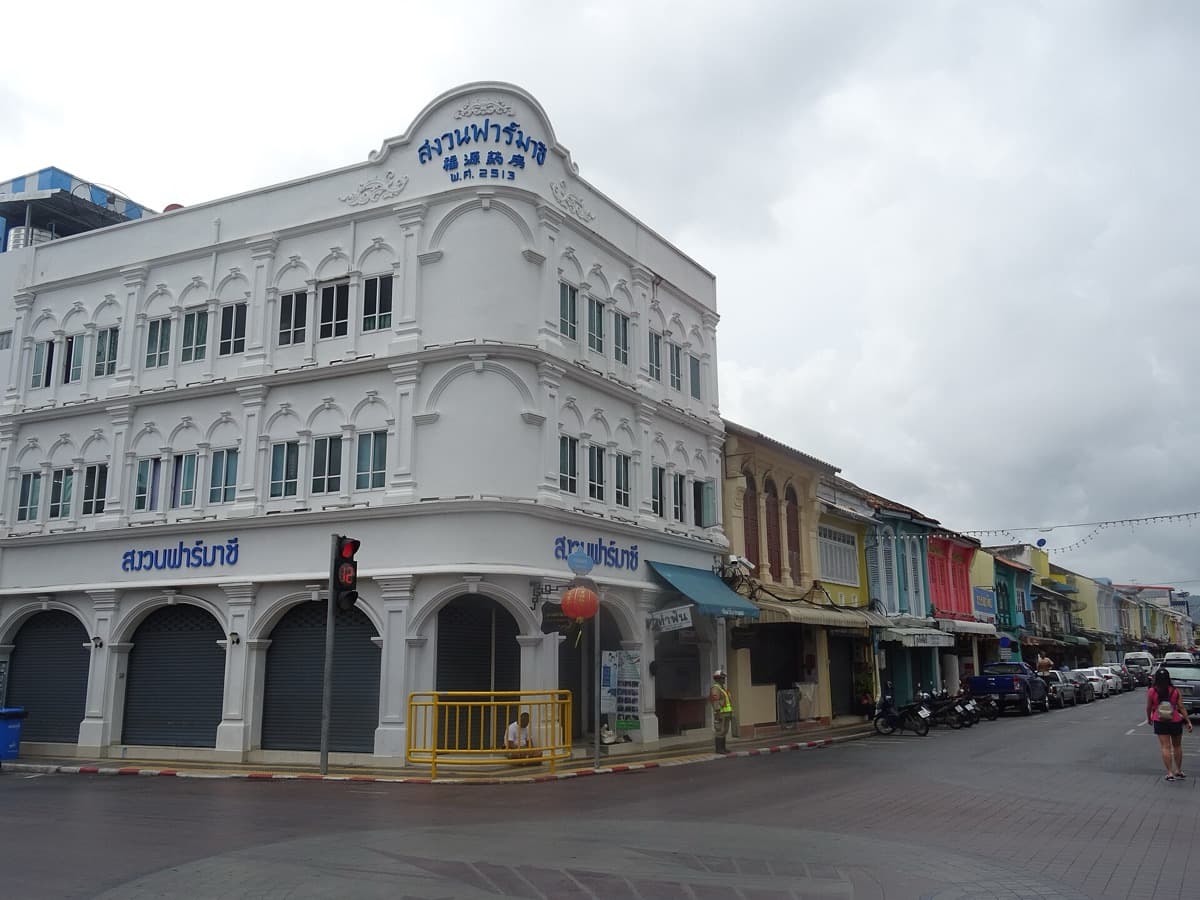
Thalang Road is a balance sheet you can walk down. The pastel Sino-Portuguese shophouses lining both sides of Phuket Old Town's merchant spine were paid for by tin, and reading them building by building is how you understand this island as a Straits Chinese port rather than a beach resort. The money came out of the ground, passed into Hokkien Chinese merchant families, and went straight into these walls. Stand at the head of the street and the whole argument of the town is in one view: commerce below, families above, and a continuous covered walkway threading the fronts to keep the sun and the monsoon off the trade.
The street is the thesis
The shophouses run two and three storeys tall, built to work as both business and home. Ground floors were shopfronts. The rooms above were living quarters for the families who owned them. This dual function is the first thing to notice, because it tells you these were not tenements or speculative rows. They were owner-occupied merchant houses, and the people who built them wanted the wealth to show.
That arcade running along the front has a name worth carrying with you: the five-foot way. The Straits Chinese used the same feature in the old Chinese port towns of Penang and Malacca, and its presence here is the clearest possible signal of where Phuket's cultural gravity actually pointed. This town was closer, in style and in trade, to the Malay Straits than to Bangkok. The five-foot way was practical infrastructure, meant to shelter a walker from tropical sun and heavy rain alike, but it was also a shared architectural grammar that marked a building as belonging to a particular commercial world.
The style did not arrive by accident. Europeans were trading for Phuket's tin as far back as the sixteenth century, long before large-scale mining. In the seventeen and eighteen hundreds, Hokkien Chinese migrants came to mine the metal in earnest, and it was these migrant merchant families who built this section of the old city. Records of the old town confirm Thalang and the surrounding main streets as the core of that Sino-Portuguese grid. By the reign of King Rama the Fifth, who reigned from eighteen sixty-eight to nineteen ten, the style was already well established, attested by period photographs.
The engineer of the boom
Hear a stop from this walk
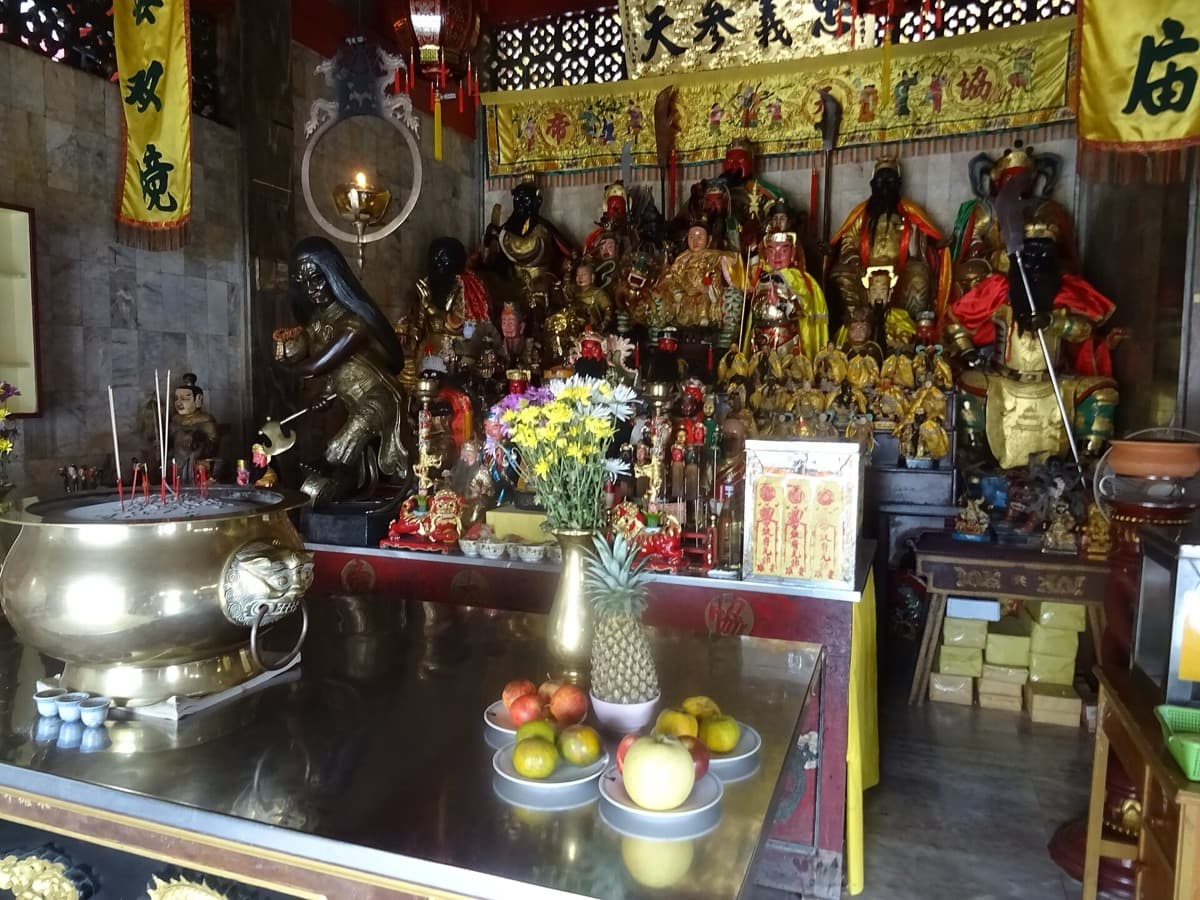
Shrine of the Serene Light: The Community's Spirit
One figure ties the whole street together. High Commissioner Phraya Ratsadanupradit, also known as Phraya Rassada, modernized the island in the early twentieth century. He brought foreign capital in, invited the Chartered Bank down from Penang to finance the mining, and laid out roads and canals to serve the boom. When you look at Thalang's ordered grid and the institutions that grew from it, you are looking at deliberate infrastructure, not organic sprawl. A boom needs credit, roads, and a way to move both ore and money, and Phraya Rassada built the frame that let the tin wealth compound into architecture.
So the candy-colored facades are not just pretty. They are the output side of an economic engine. And the question the rest of the walk keeps answering sits underneath every stop on Thalang: who paid for all this color, and who did the digging that funded it.
Reading the rest of the ledger from here
Thalang is stop one because it sets the frame every other stop fills in. A few steps off the main street, Soi Romanee is the exact underside of the prosperity you just read. Today it is the most photographed lane in the old town, a row of pastel houses so pretty it looks staged. During the tin boom it was the town's red-light district, concentrating the brothels, opium dens, and gambling houses that served the Chinese mine laborers who did the actual digging. Hold two truths together there: it is the prettiest street in Phuket Old Town, and it earned its living from the hardest lives on the island. (A note on the name: the popular story of a Romanian madam is local legend, not documented fact. The Thai word rommani, meaning beautiful or adorable, is the likelier root.)
Then the economy turns formal. The sun-yellow former Chartered Bank building, at the corner where Phang Nga Road meets Phuket Road, is where tin became credit a merchant could borrow against. It now holds a museum of Peranakan, or Baba, culture, the community born when Hokkien Chinese men married local women. Around the corner, the On On Hotel opened on Phang Nga Road in nineteen twenty-seven, originally the Un Un Hotel, built to lodge the traders and sailors churning through a working port. In the year two thousand it turned up in the film The Beach, starring Leonardo DiCaprio, back when it was a shabby backpacker haunt, before its restoration into a heritage hotel.
For the private side of all this public money, Baan Chinpracha on Krabi Road, completed in nineteen oh three, is the house a tin baron actually lived in. Phra Pitak Chinpracha, also known as Tan Ma Siang, born in Phuket in eighteen eighty-three, built it at roughly the age of twenty. Its style carries a local name, Angmor Lao, literally house of the red-haired people, the Hokkien term for Westerners. The signature feature is a central courtyard open to the sky, pulling light, air, and rainwater into the house. Descendants of the family still live on the upper floor. The walk closes at the Shrine of the Serene Light, also called Sang Tham, built in eighteen ninety-one by Luang Amnat Nararak, known as Tan Khuat, as a private family shrine to Taoist deities. Screened behind the shophouses for most of its life, it reopened in February two thousand thirteen after a restoration using craftsmen from China.
That is the arc: street, vice lane, bank, hotel, mansion, shrine. The tin built the facades, and the last stop is where the people behind them prayed. Start on Thalang, and each stop after it reads as another line in the same ledger. If you want the full route and the other old-town walks, see our guide to Phuket walking tours, or browse everything on offer in Phuket.
Sources
- Sino-Portuguese architecture, Wikipedia. Background on the shophouse style and five-foot way shared with Penang and Malacca.
- "The father of Phuket: Phraya Rassada Na-Ranong," The Phuket News. On the High Commissioner who invited foreign capital and modernized the island.
- Chinpracha House Museum (Baan Chinpracha), Phuket101. On the nineteen oh three mansion, the Angmor Lao style, and the family still in residence.
- "Shrine Of The Serene Light," Phuket101 and The Smart Local. On the eighteen ninety-one founding date and the twenty-thirteen restoration.
- "Soi Romanee In Phuket Town," Phuket101. On the lane's red-light history and the disputed origin of its name.
Ready to experience it?
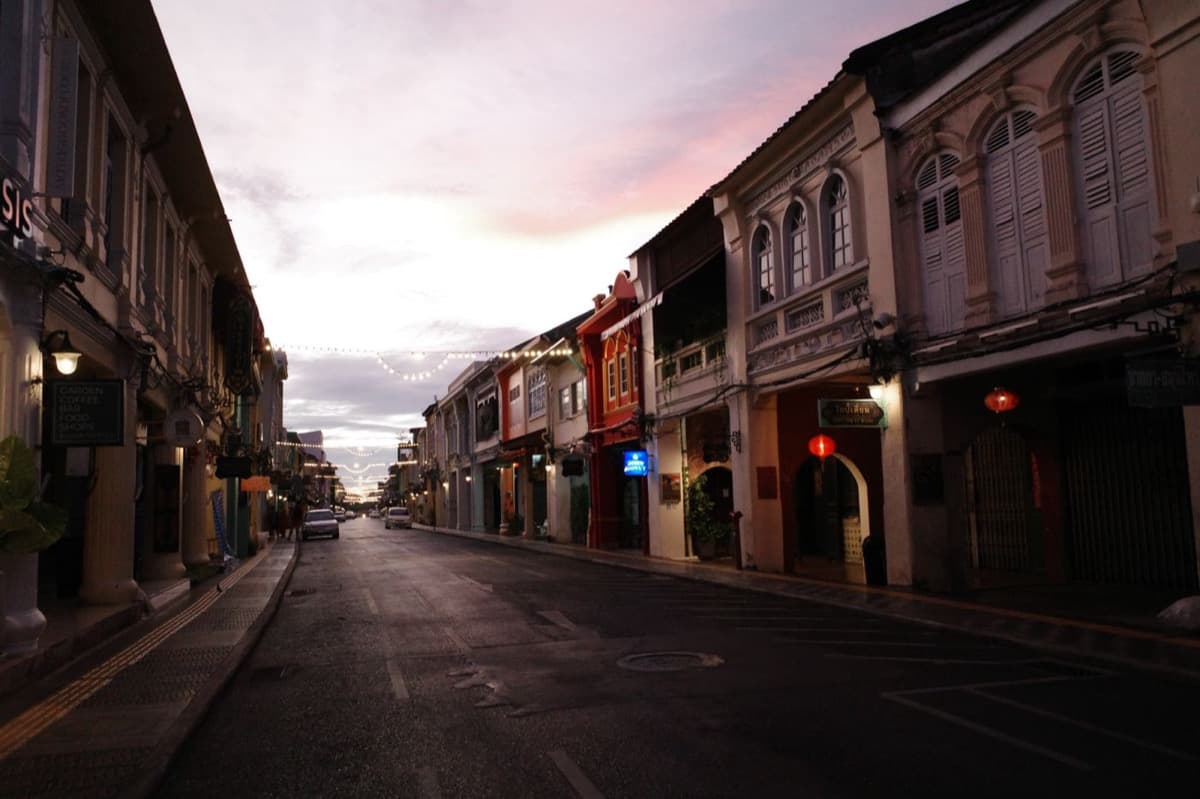
Old Town: The Sino-Portuguese Town
85 min · 2.5 km · easy
More from Phuket
Explore more at your own pace.
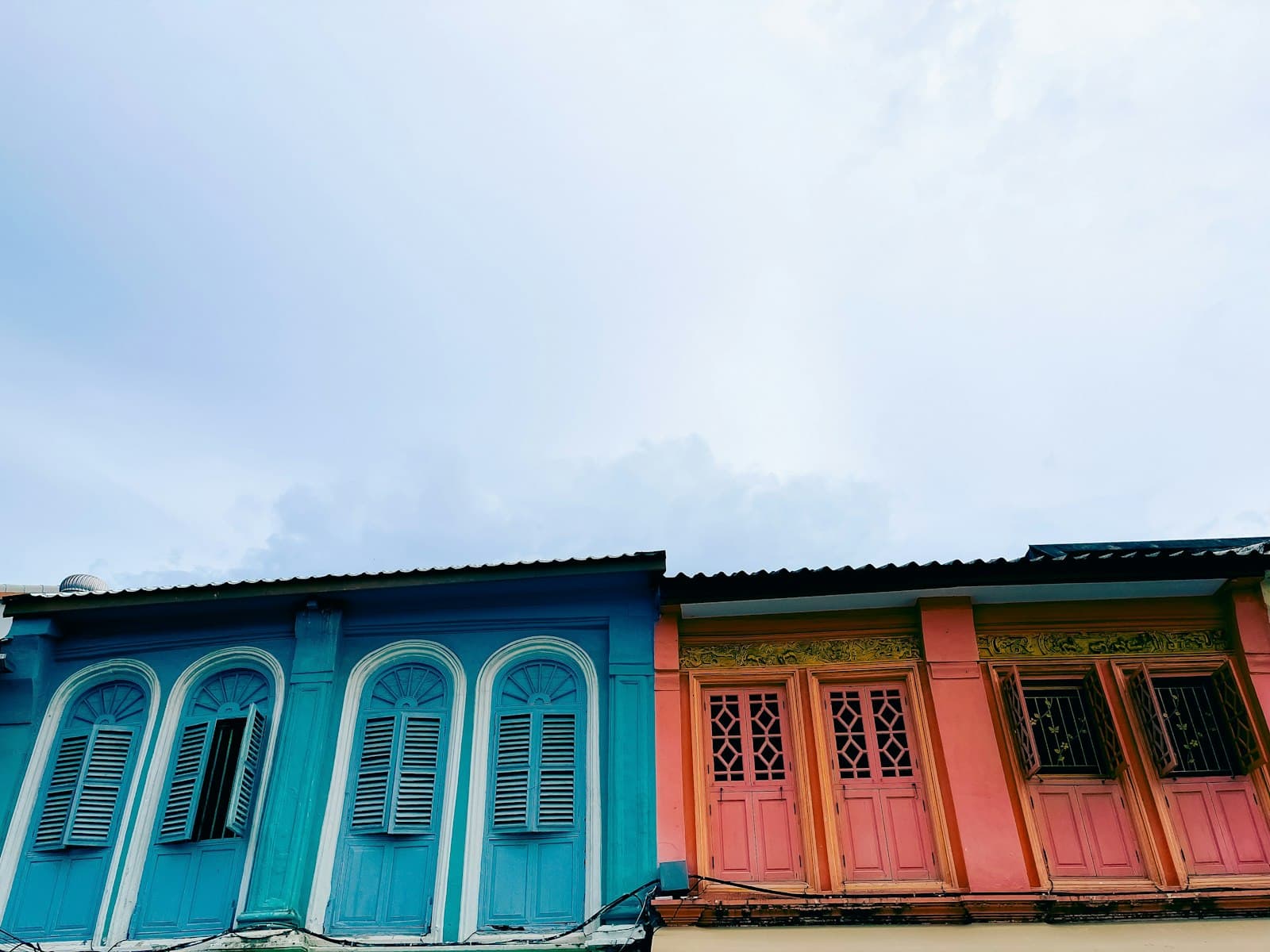
One Day in Phuket Old Town: A Walkable Morning-to-Evening Plan
Phuket Travel Guide: How Many Days, Getting Around, Best Time, and Safety (2026)
Phuket Before the Beaches: The Tin Island's Straits Chinese Port
Jui Tui Shrine: The Ceremonial Engine Behind Phuket's Vegetarian Festival
Thai Hua Museum: Where Phuket's Peranakan Story Begins