Markt: The Two Squares That Ran a Medieval City
50 min · 0.7 km · easy
If you want to eat well in Bruges, order the dishes the region actually built its kitchens around: moules-frites (mussels with fries), carbonade flamande (beef slow-cooked in dark Belgian beer), waterzooi (a creamy Flemish stew), a cone of twice-fried frites with mayonnaise, and a warm waffle, then wash it down with Brugse Zot, the beer brewed inside the old town. This guide covers what each dish is, where the tradition comes from, and how to order it without looking like you just stepped off the coach.
Bruges is a small city with an outsized food identity, and most of it is Flemish comfort cooking plus the two things Belgium is genuinely world-class at: beer and chocolate. You do not need a reservation at a famous name to eat the real thing. You need to know which words on the menu mean the local dish, and which ones are tourist shorthand.
The savory dishes to order
Moules-frites is the plate most people picture when they think of Belgium. Mussels arrive steaming in a lidded cast-iron pot, usually cooked with celery, onion, and white wine, and they come with a cone or bowl of fries on the side. Belgium sits on the North Sea, so mussels are a coastal staple, though the classic culinary mussel is farmed. Order it "nature" for the plain white-wine version, or ask for the version cooked in beer if the menu offers it. You eat them by using an empty shell as tongs to pick the next one out.
Carbonade flamande, written on Flemish menus as stoofvlees or Vlaamse stoverij, is the dish to order on a grey day. It is beef slow-cooked in dark Belgian beer with onions, and the sauce is thickened and sharpened with bread spread in mustard. Beer has been cooked into food across the Low Countries for centuries, partly because dark beer was safer to drink than the local well water. The earliest written recipe most sources point to appears in an 1861 Flemish cookbook, De Spaerzame Keukenmeid (The Thrifty Kitchen Maid) by the chef Philippe Cauderlier. It is almost always served with frites, and mopping the sauce with them is the whole point.
Waterzooi is a creamy stew, gentler than the beef stew, made with either fish or chicken in a broth thickened with cream and egg yolk and softened with vegetables. It is strongly associated with Ghent, half an hour away by train, but you will find it on Bruges menus as a regional Flemish classic. The fish version leans on the North Sea catch; the chicken version is the one you will see most often.
Frites: order them right
Hear a stop from this walk
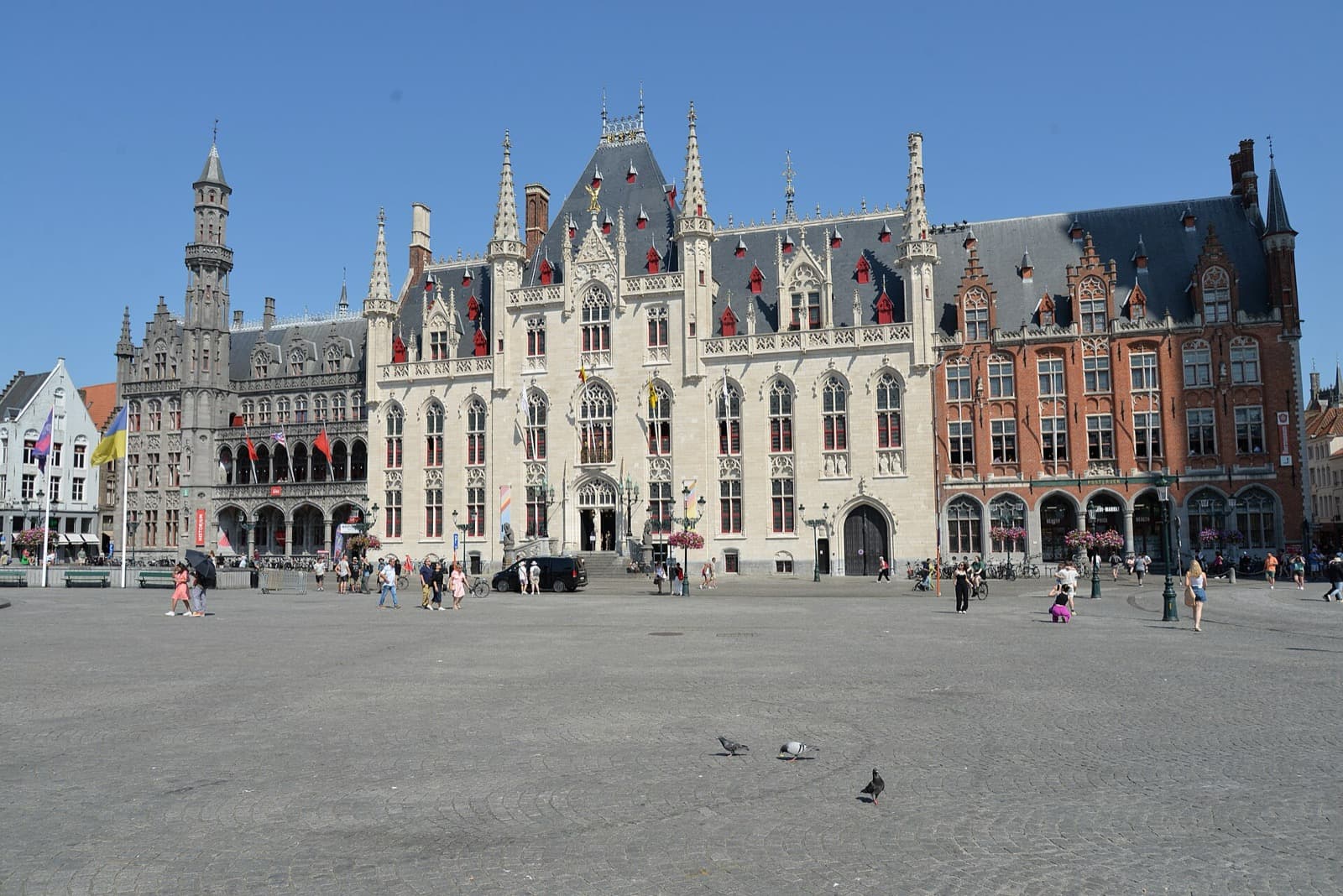
The Burg and the Town Hall: The Square of Power
Belgian frites are not a side thought, they are a craft. They are thick-cut, fried once at a lower temperature, rested, then fried again hot so the outside crisps while the inside stays soft. The origin story that Belgians defend most fiercely places fries in the Meuse valley around Namur in the seventeenth to eighteenth centuries, where villagers who fried small river fish switched to potatoes when the river froze. Fries and their mayonnaise culture were recognized as intangible cultural heritage within Belgium in 2017, and there have been repeated campaigns to push that recognition to the UNESCO level.
To order like a local, find a frituur (also called a frietkot or frietkraam), the walk-up fry shop. Ask for a cone, then pick a sauce. Mayonnaise is the default and it is not the same thin stuff you get elsewhere: Belgian mayonnaise is richer, and its recipe is even defined by royal decree. If you want to sound at home, try andalouse or samurai sauce instead. Fries are usually eaten standing up with a small fork.
Beer, chocolate, and waffles
Bruges has its own city beer, Brugse Zot, brewed by the family-run De Halve Maan brewery on the Walplein, a business that traces back to 1856. In 2016 the brewery opened a roughly three-kilometer underground beer pipeline, the idea of head brewer Xavier Vanneste, to move beer from the old-town brewhouse to a suburban bottling plant without sending tanker trucks through the medieval streets. The standard 45-minute brewery tour runs daily and includes one beer taster; a longer weekend tour with three tastings is also offered. Even if you skip the tour, order a Brugse Zot blond in any cafe and you are drinking the local beer at its source.
Belgian chocolate and the filled praline are worth a stop at a proper chocolatier rather than a souvenir shelf. The modern Belgian praline, a chocolate shell with a soft filling, is generally credited to Jean Neuhaus the Second in Brussels in 1912. Look for shops that make their own on site.
For waffles, know the two kinds before you queue. The Brussels waffle is light, rectangular, made from a thin batter, and often served on a plate with toppings. The Liège waffle is smaller, denser, oval, and studded with pearl sugar that caramelizes into a chewy, sweet crust, and it is the one meant to be eaten from a napkin as you walk. Locals will tell you the towering cream-and-fruit versions in some windows are aimed at tourists; a plain warm Liège waffle is the honest choice.
Where the food meets the walk
Two stops on our self-guided routes tie directly to what is on your plate. The Markt route through the historic center, one of our Bruges walking tours, passes the Vismarkt (Fish Market), reached through the arched Blinde-Ezelstraat lane. It is Belgium's oldest surviving fish market, its Classical colonnade dating to around 1820, and vendors have sold North Sea catch under it since 1821. It still trades Wednesday through Saturday mornings, so time your walk for the morning if you want to see it working.
The art-and-golden-age route stops at the Gruuthuse, a palace whose fortune came from gruut, the herb mixture used to flavor and preserve beer before hops took over. It is a direct line from a medieval family's beer-spice monopoly to the Brugse Zot you can drink today.
A practical note on cost and calm: Bruges is a safe, walkable city, but the central squares fill by mid-morning and the most famous restaurants on the Markt charge for the view. Walk one or two streets off the main squares for better food at fairer prices, eat your main sit-down meal at lunch when many kitchens offer a set menu, and save frites and a waffle for a standing snack. Plan the loop and the food stops together on the Bruges city page.
Sources
Frequently asked questions
- What is the traditional food to eat in Bruges?
- The core Flemish dishes are moules-frites (mussels with fries), carbonade flamande (beef stewed in dark Belgian beer, called stoofvlees on Flemish menus), and waterzooi (a creamy fish or chicken stew). Alongside these, Bruges is known for twice-fried frites with mayonnaise, its local Brugse Zot beer, Belgian pralines, and waffles. Most of it is comfort cooking rather than fine dining.
- What is Brugse Zot and where is it brewed?
- Brugse Zot is the city beer of Bruges, a blond ale brewed by the family-run De Halve Maan brewery on the Walplein, a business dating back to 1856. In 2016 the brewery opened a roughly three-kilometer underground pipeline to move beer to its bottling plant without sending trucks through the medieval streets. You can order it in any cafe, or take the 45-minute brewery tour that includes a beer taster.
- Are fries really Belgian and not French?
- Belgians firmly claim fries as their own. The most defended origin story places them in the Meuse valley around Namur between the seventeenth and eighteenth centuries, where villagers fried potatoes when the frozen river stopped their usual fish frying. Belgian fries are thick-cut and fried twice, and they were recognized as intangible cultural heritage within Belgium in 2017. They are traditionally served in a cone with rich Belgian mayonnaise.
- What is the difference between a Brussels waffle and a Liège waffle?
- The Brussels waffle is light and rectangular, made from a thin batter, and usually served on a plate with toppings. The Liège waffle is smaller, denser, and oval, made with pearl sugar that caramelizes into a chewy sweet crust, and it is designed to be eaten from a napkin while you walk. In Bruges, a plain warm Liège waffle is the more authentic street snack than the tall cream-topped versions in tourist windows.
- Where can I buy fresh seafood at the Bruges fish market?
- The Vismarkt (Fish Market) sits just off the historic center, reached through the arched Blinde-Ezelstraat lane. It is Belgium's oldest surviving fish market, with a Classical colonnade from around 1820, and vendors have sold North Sea catch there since 1821. It trades Wednesday through Saturday mornings, so visit in the morning to see it working.
- How do I eat cheaply and well in Bruges?
- Walk one or two streets away from the Markt and the Burg, where restaurants charge a premium for the view. Eat your main sit-down meal at lunch, when many kitchens offer a fixed-price menu, and keep frites and a waffle as standing snacks from a walk-up frituur. This gives you the traditional dishes at fairer prices while keeping the famous squares for sightseeing.
Ready to experience it?
Markt: The Two Squares That Ran a Medieval City
50 min · 0.7 km · easy
More from Bruges
Explore more at your own pace.
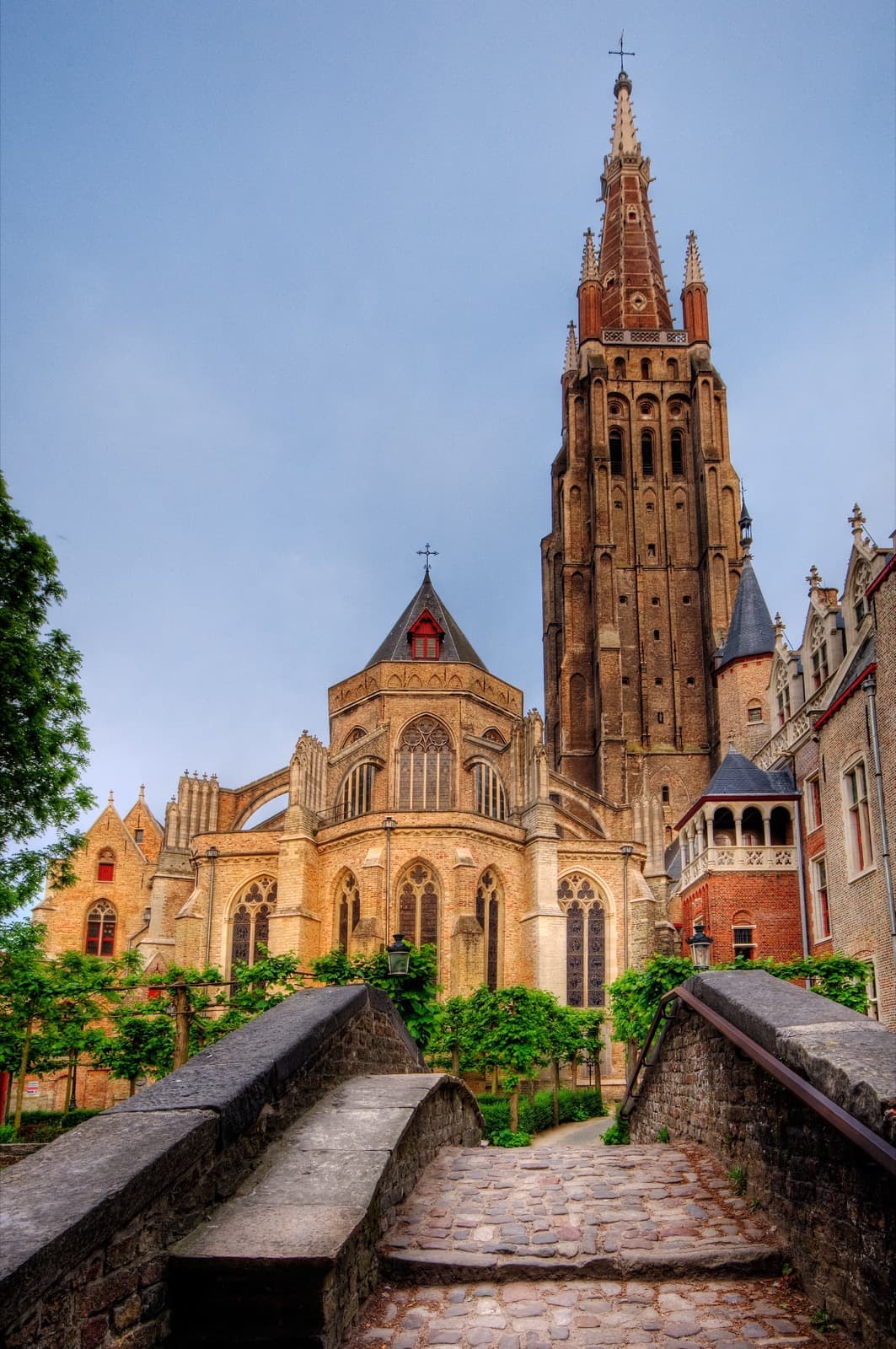
The Church of Our Lady in Bruges: A Michelangelo Madonna and the Frozen Golden Age
The Markt and the Belfry: How Two Squares Ran Medieval Bruges
The Silent Beguinage: How an Emptied Harbour Preserved Bruges
Minnewater in Bruges: The Lake of Love That Was Once a Harbor
The Basilica of the Holy Blood in Bruges: One Church, Two Chapels, One Relic