Markt: The Two Squares That Ran a Medieval City
50 min · 0.7 km · easy
If you have one day in Bruges, walk it: start early at the Markt under the Belfry, work through the Burg and the canals by late morning, spend the afternoon on the Beguinage and the museums, and end at the Rozenhoedkaai at dusk. The medieval center is small and almost entirely pedestrian, so a single day on foot covers the squares, the water, and the golden-age art without ever needing a bus. This guide lays out that day hour by hour, ties each stretch to a self-guided Bruges walking tour you can play as you walk, and flags the few places where a ticket or an opening hour actually matters.
Bruges rewards walking more than most cities because of an accident of history. The tidal inlet that once made it one of the busiest ports of northern Europe silted up around 1500, trade moved to Antwerp, and the town fell poor and quiet for centuries. That long sleep is the reason the medieval core survived intact, and why UNESCO inscribed the Historic Centre of Bruges as a World Heritage Site in the year 2000. You are walking through a working harbor that history switched off.
The short answer: your one-day route
Morning: the two great squares. Start on the Markt under the Belfry, cross to the Burg for the Town Hall and the Basilica of the Holy Blood, then drop down the Blinde-Ezelstraat to the Fish Market and the Rozenhoedkaai. This is the core of the Historic Center tour, a compact loop of about 0.7 km that takes roughly 50 minutes of audio plus your own stops.
Midday: the water. Follow the canals south to the Lake of Love (Minnewater) and the walled Beguinage, then back north along the green canals toward the Hanseatic quays. This is the longer, quieter canal walk, about 3.1 km end to end.
Afternoon: the art. The Church of Our Lady holds a Michelangelo Madonna, and the Groeningemuseum a few steps away holds the Flemish Primitives. This cluster runs about 2 km.
Evening: come back to the Rozenhoedkaai for the light. It is free, it never closes, and at dusk it is the single most photographed corner of the city.
You can do all three stretches in a full day if you keep museum stops brief, or pick the one that suits you and let the others wait.
Morning: the Markt and the Burg (roughly 8:30 to 11:30)
Hear a stop from this walk
The Burg and the Town Hall: The Square of Power
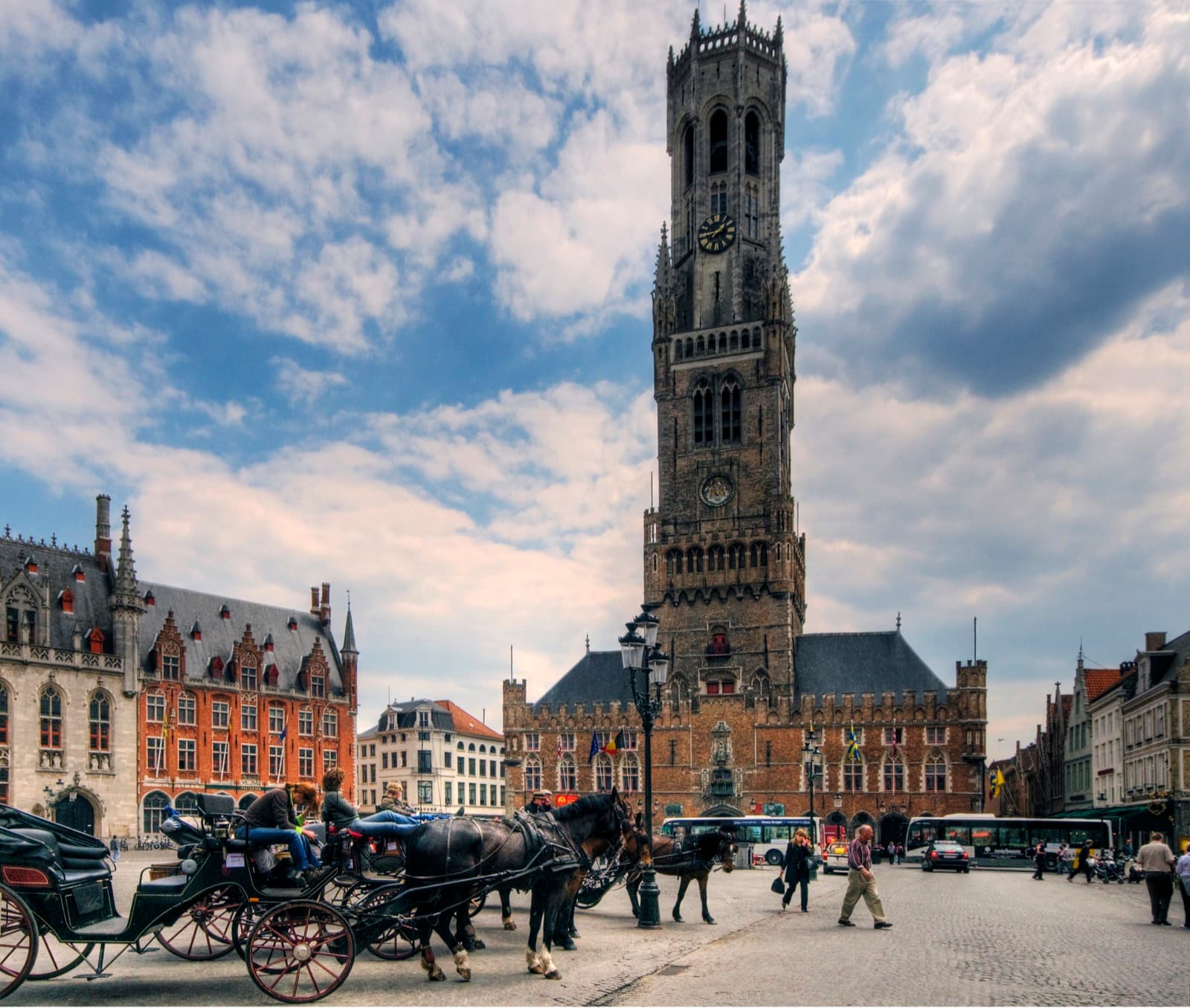
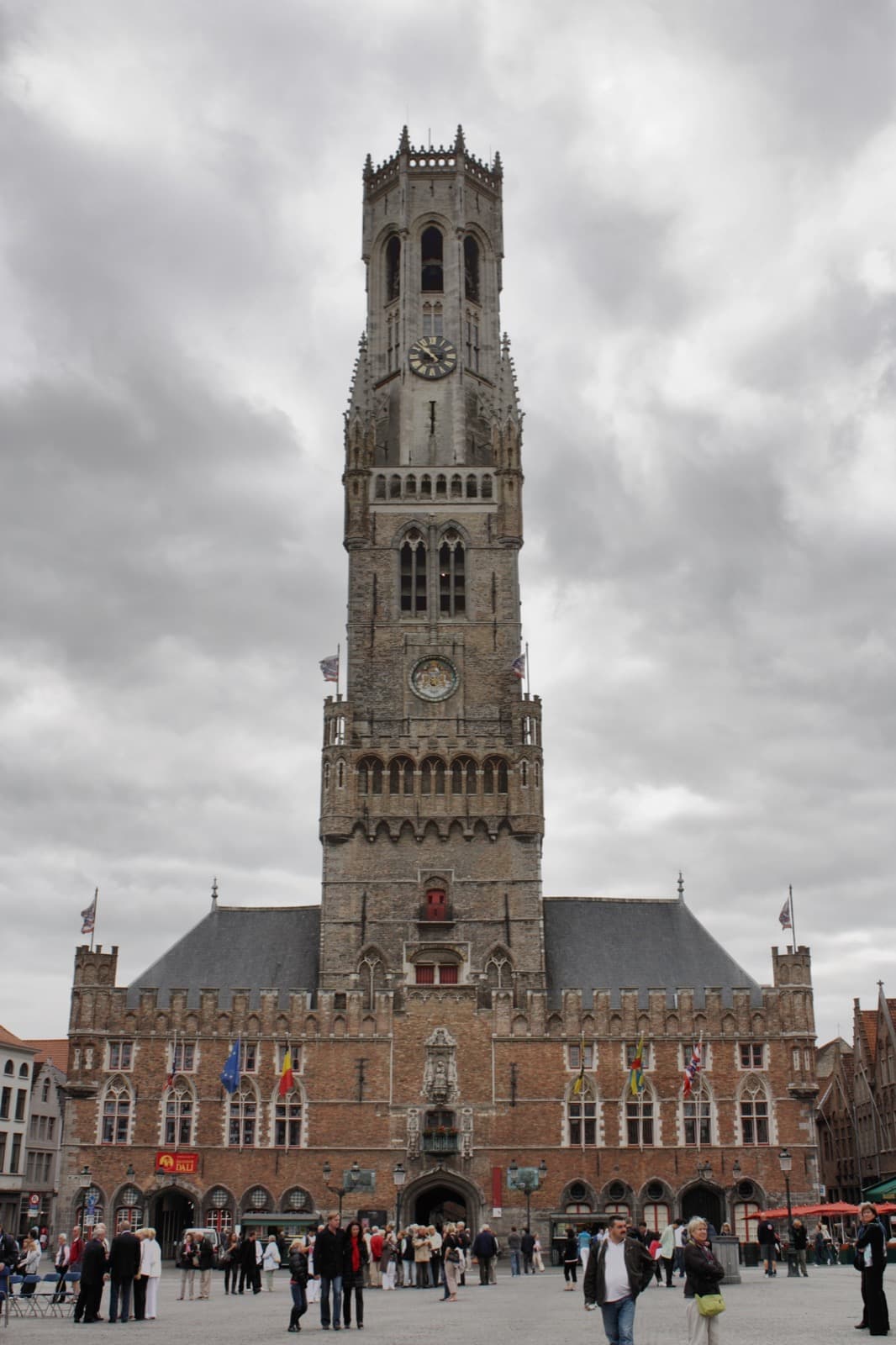
Begin on the Markt while it is still quiet. The square itself is free and open at all hours, and the first hour after the sites open is the calmest time to have it mostly to yourself. The Belfry rising over the old cloth halls is the landmark you will orient by all day. If you want to climb it, the tower has 366 narrow steps and no elevator, with an adult ticket around 15 to 16 euros depending on season, and it opens at 9:30 am. Queues build fast because the number of people allowed up at once is limited, so climb early or skip it and keep the free square in your plans regardless. Last entry is one hour before closing.
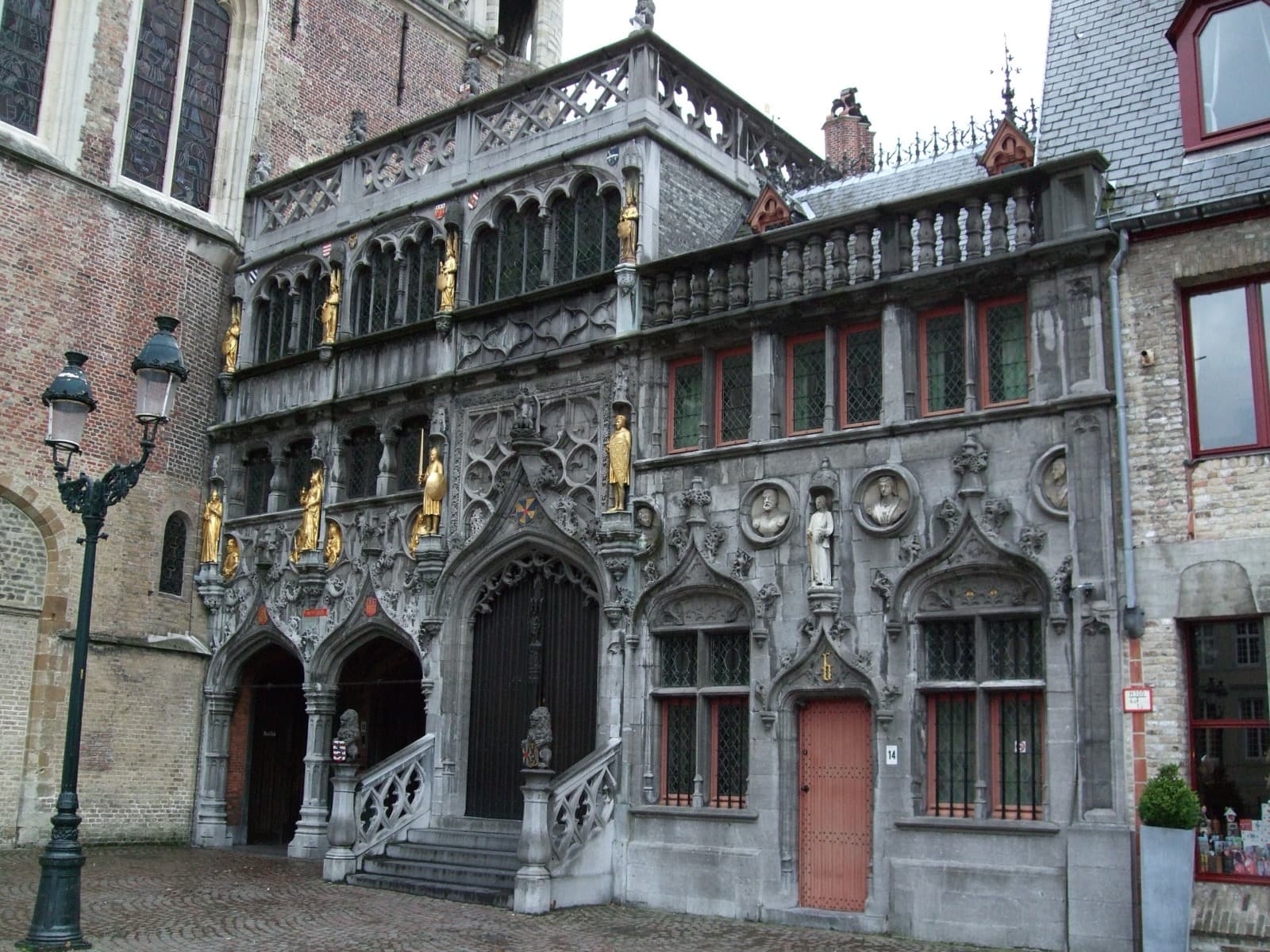
A few minutes east sits the Burg, the square of power rather than commerce. The Gothic Town Hall is one of the oldest in the Low Countries, and its Gothic Hall carries a small admission if you want to go in. Beside it, the Basilica of the Holy Blood is free to enter. The relic it guards, a cloth said to hold the blood of Christ, is brought out for veneration at set times each day, and a separate treasury museum charges a few euros (around 5 euros for adults). Check the daily veneration window if that is why you are coming, since the basilica keeps a split morning and afternoon schedule.
From the Burg, slip through the Blinde-Ezelstraat (Blind Donkey Street) under its arch and down to the Fish Market and the Rozenhoedkaai. This is where the Markt and Historic Center tour ends, and it is the natural handoff into the canal walk. The whole morning loop is short on distance and long on density, which is exactly what makes it walkable.
Midday: the canals and the Beguinage (roughly 11:30 to 2:30)
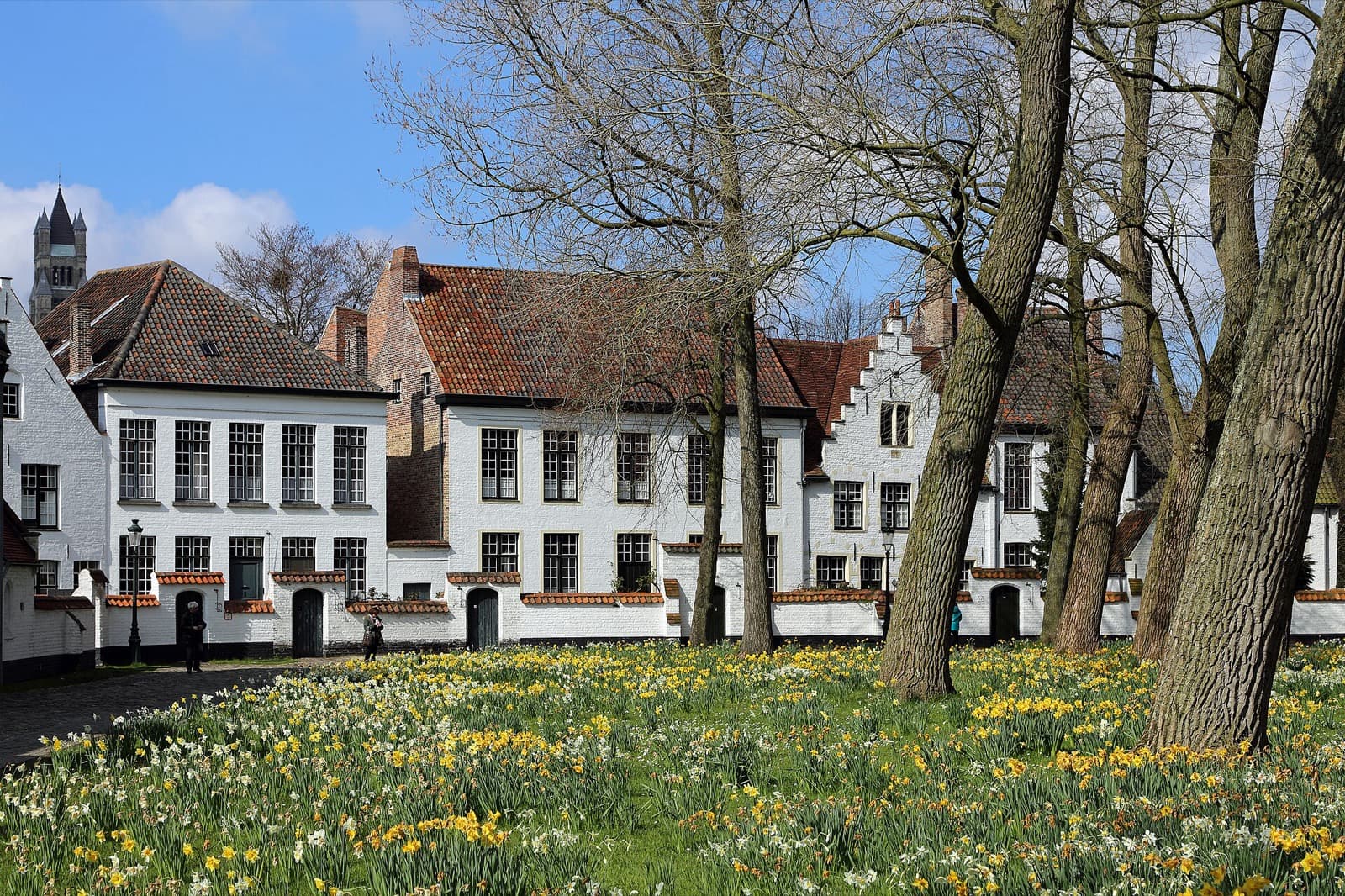
The canal walk is the calm heart of the day and almost entirely free. From the Rozenhoedkaai, follow the water south to the Lake of Love and the Princely Beguinage Ten Wijngaerde, a walled court of white houses founded in the thirteenth century and now home to Benedictine nuns. Keep your voice down inside the court, since it is a living religious community, not a set. The Beguine's House museum charges a small fee, around 2 euros, but the court and the green are free.
From there the route reads the city through its canals, the reien, that once carried the ships that made Bruges rich. You pass the Bonifacius Bridge, the Dijver, and the green Groenerei before the quays open toward Jan van Eyck Square and the old Hanseatic merchant quarter. If you want to see the water from the water, the canal boats run in season, with an adult ticket around 15 euros for a loop of about half an hour, though the walk stands on its own without one. The full canal loop is about 3.1 km, so this is the stretch where comfortable shoes earn their keep. The cobbles and hump-backed bridges are uneven and turn slick after the frequent northern rain.
For lunch, the lanes off the Markt and around the Fish Market are easiest, though prices near the squares run higher than the streets a block or two back.
Afternoon: golden-age art (roughly 2:30 to 5:00)
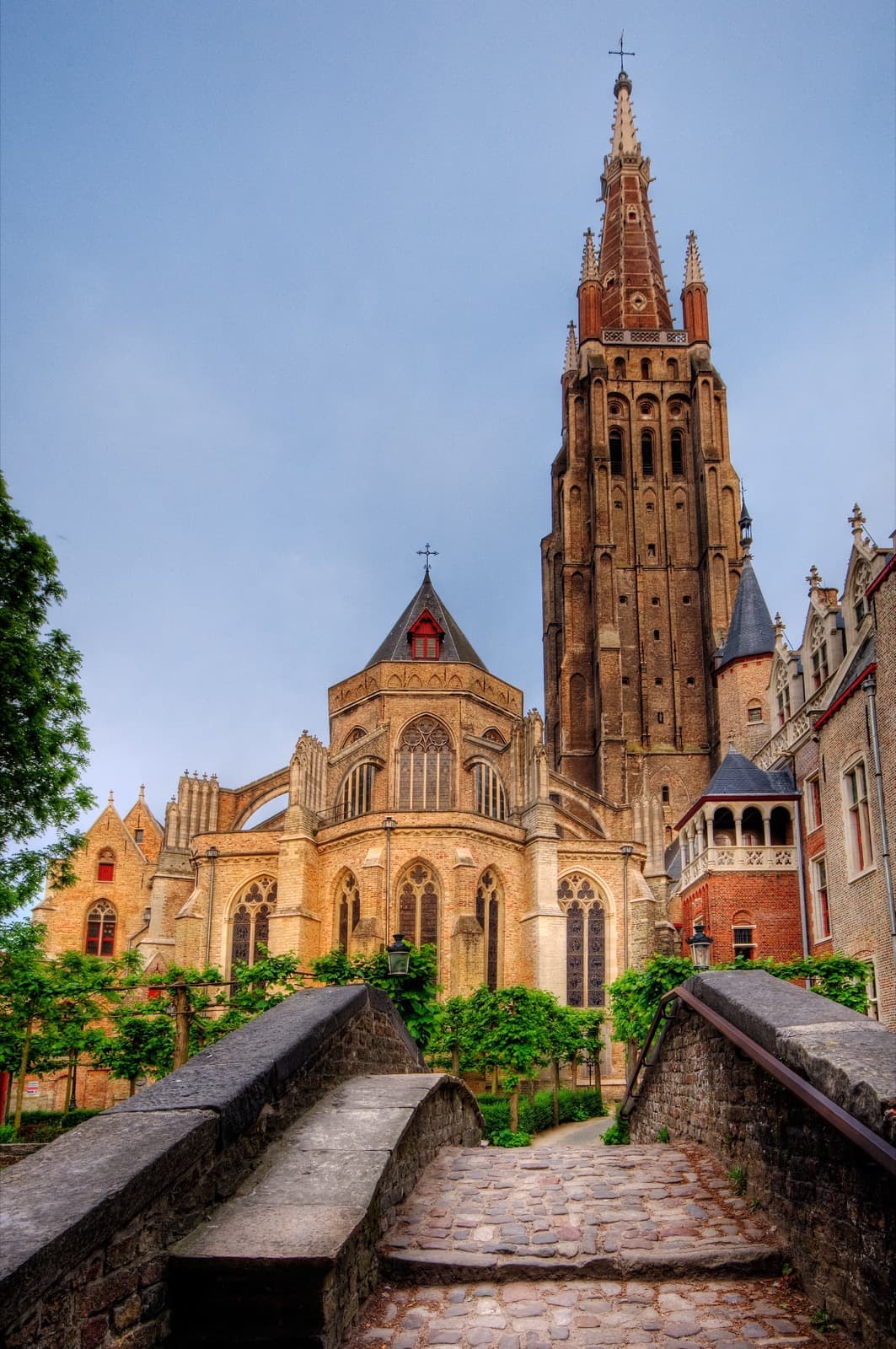
Bruges kept its fifteenth-century art for the same reason it kept its streets: the city was too poor to replace anything. Two stops carry the afternoon. The Church of Our Lady holds Michelangelo's marble Madonna and Child, one of the few works by the artist to leave Italy in his lifetime, along with the tombs of Charles the Bold and Mary of Burgundy. The nave is free; the museum section with the Madonna carries an admission of roughly 8 to 9 euros.
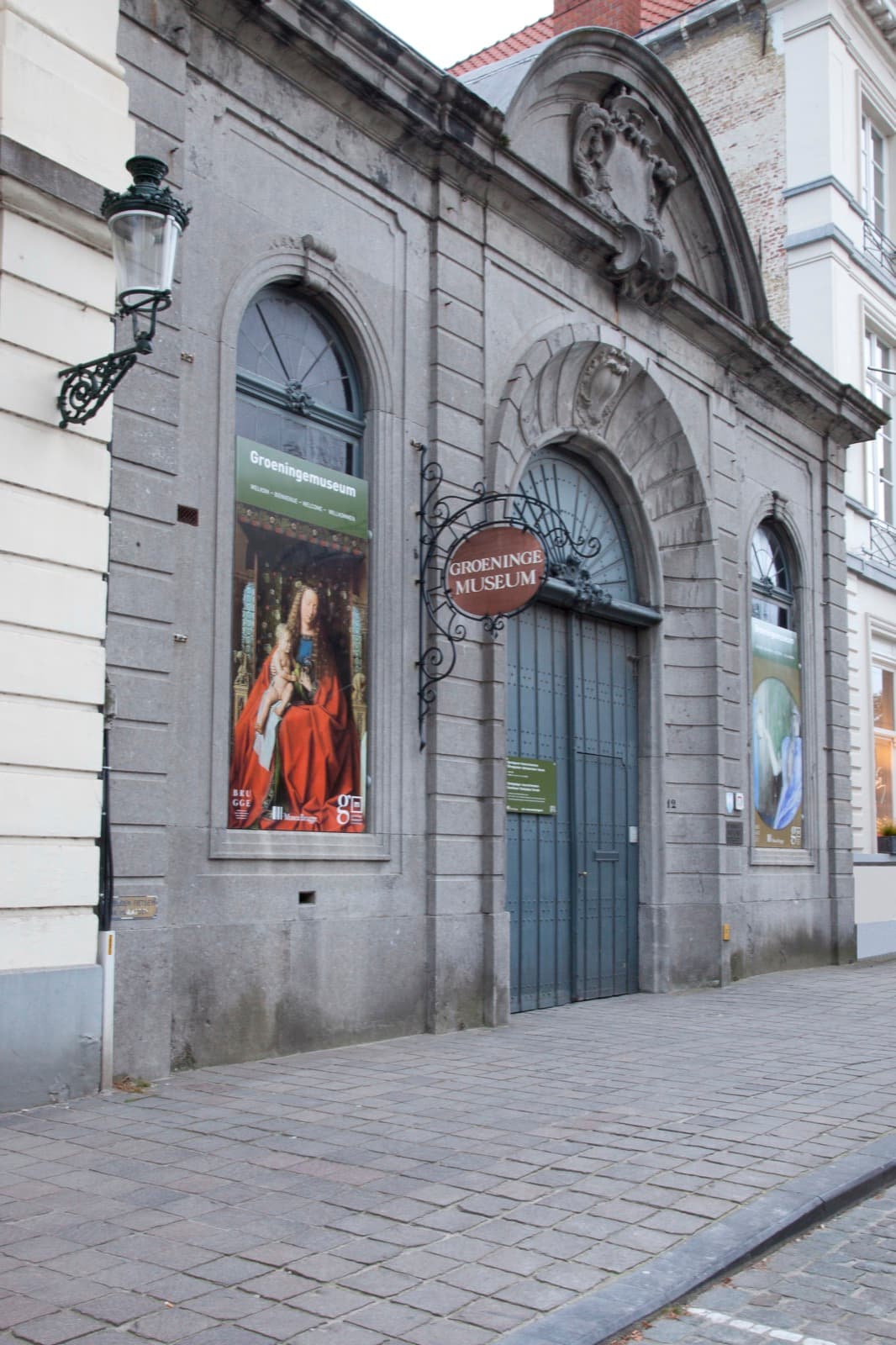
A short walk away, the Groeningemuseum holds the Flemish Primitives, including Jan van Eyck and the room that defines the city's golden age. Adult admission runs about 12 euros. If you plan to enter more than one museum, buy a Musea Brugge combination pass or card, which covers the Groeningemuseum, the Gruuthusemuseum, the Old Saint John's Hospital, and the Church of Our Lady museum section under one price and saves money over separate tickets. Most of these museums close Mondays and run to about 5 pm, with last entry earlier, so put the art in the afternoon rather than the tail of the day. The full golden-age art walk is about 2 km.
Evening: the Rozenhoedkaai at dusk
End where the medieval city gathers into one reflection. The Rozenhoedkaai is free, always open, and at golden hour or under the lamps it is the view Bruges is known for. Come back here after the museums close, when the day-trip crowds have thinned and the canals fall still. It is a five-minute walk from either the Markt or the museum quarter, so it fits the end of any of the three routes.
Getting there and getting around
Bruges is easy to reach and easier to walk. Direct trains from Brussels take roughly an hour, with frequent daily service, and the ride from Brussels Central runs close to 1 hour and 5 minutes on average. From Bruges station the Markt is about a 20-minute walk, roughly 1.5 to 1.7 km straight into the historic core, so you can start the day on foot the moment you step off the train. Inside the center, walking is the fastest way to move: the old town is compact, largely pedestrian, and most of what you came for sits within a fifteen-minute walk of the Markt.
A few honest cautions, none alarming. The center is paved in uneven cobbles that catch a heel or a wheel, so watch your footing, especially on wet lanes and around the Fish Market slabs. Many canal quays, including the Rozenhoedkaai and the Dijver, sit right at the waterline with low or no railings, so keep back from the edge and mind children when you stop to take a photo. Bruges is a calm, safe city to walk; the hazards are the water and the stones, not the streets.
How the self-guided tours fit your day
Each stretch of this itinerary maps to one self-guided audio tour you can start and stop as you please. The Markt and Historic Center tour covers the morning squares, the canal-and-Beguinage tour covers the midday water, and the golden-age art tour covers the afternoon museums. Because they are self-guided, you set the pace: linger at the Belfry, skip the tower, sit at the Rozenhoedkaai as long as the light holds. Browse all three on the Bruges walking tours page and pick the one that matches how you want to spend the hours you have.
Sources
Frequently asked questions
- Can you see Bruges in one day?
- Yes. The historic center is small, flat, and largely pedestrian, so one day on foot covers the two main squares, the canals, the Beguinage, and the golden-age museums. Start early at the Markt, do the canals midday, and see the art in the afternoon. Keep museum stops brief and you can fit all three stretches into a full day.
- How much does it cost to climb the Belfry in Bruges?
- An adult ticket to climb the Belfry runs around 15 to 16 euros depending on the season, with the higher price in the April to early November period. The climb is 366 narrow steps with no elevator, and it opens at 9:30 am. Last entry is one hour before closing, and online booking is recommended because capacity at the top is limited.
- Is the Basilica of the Holy Blood free to enter?
- Yes, entering the Basilica of the Holy Blood is free. The relic is brought out for veneration at set times each day on a split morning and afternoon schedule. A separate treasury museum charges a small fee, around 5 euros for adults, so check the daily veneration window if seeing the relic is your reason for visiting.
- Do I need to buy museum tickets in advance for Bruges?
- For the Belfry, advance online booking is recommended because the tower fills quickly. For the art museums, buy a Musea Brugge combination pass or card if you plan to enter more than one, since it covers the Groeningemuseum, Gruuthusemuseum, Old Saint John's Hospital, and the Church of Our Lady museum section under one price. Most of these museums close on Mondays and run to about 5 pm.
- How do you get from Bruges train station to the Markt?
- The Markt is about a 20-minute walk from Bruges station, roughly 1.5 to 1.7 km straight into the historic core. Walking is the fastest and simplest option, and you can begin the itinerary on foot the moment you leave the station. Direct trains from Brussels take about an hour.
- What is the best time of day to visit the Rozenhoedkaai?
- Early morning or the last hour before dusk. The Rozenhoedkaai is free and never closes, and at golden hour or under the lamps it is the most photographed view in Bruges. Come back after the museums close, when the day-trip crowds have thinned and the canals fall still.
Ready to experience it?
Markt: The Two Squares That Ran a Medieval City
50 min · 0.7 km · easy
More from Bruges
Explore more at your own pace.
The Church of Our Lady in Bruges: A Michelangelo Madonna and the Frozen Golden Age
The Markt and the Belfry: How Two Squares Ran Medieval Bruges
The Silent Beguinage: How an Emptied Harbour Preserved Bruges
Minnewater in Bruges: The Lake of Love That Was Once a Harbor
The Basilica of the Holy Blood in Bruges: One Church, Two Chapels, One Relic