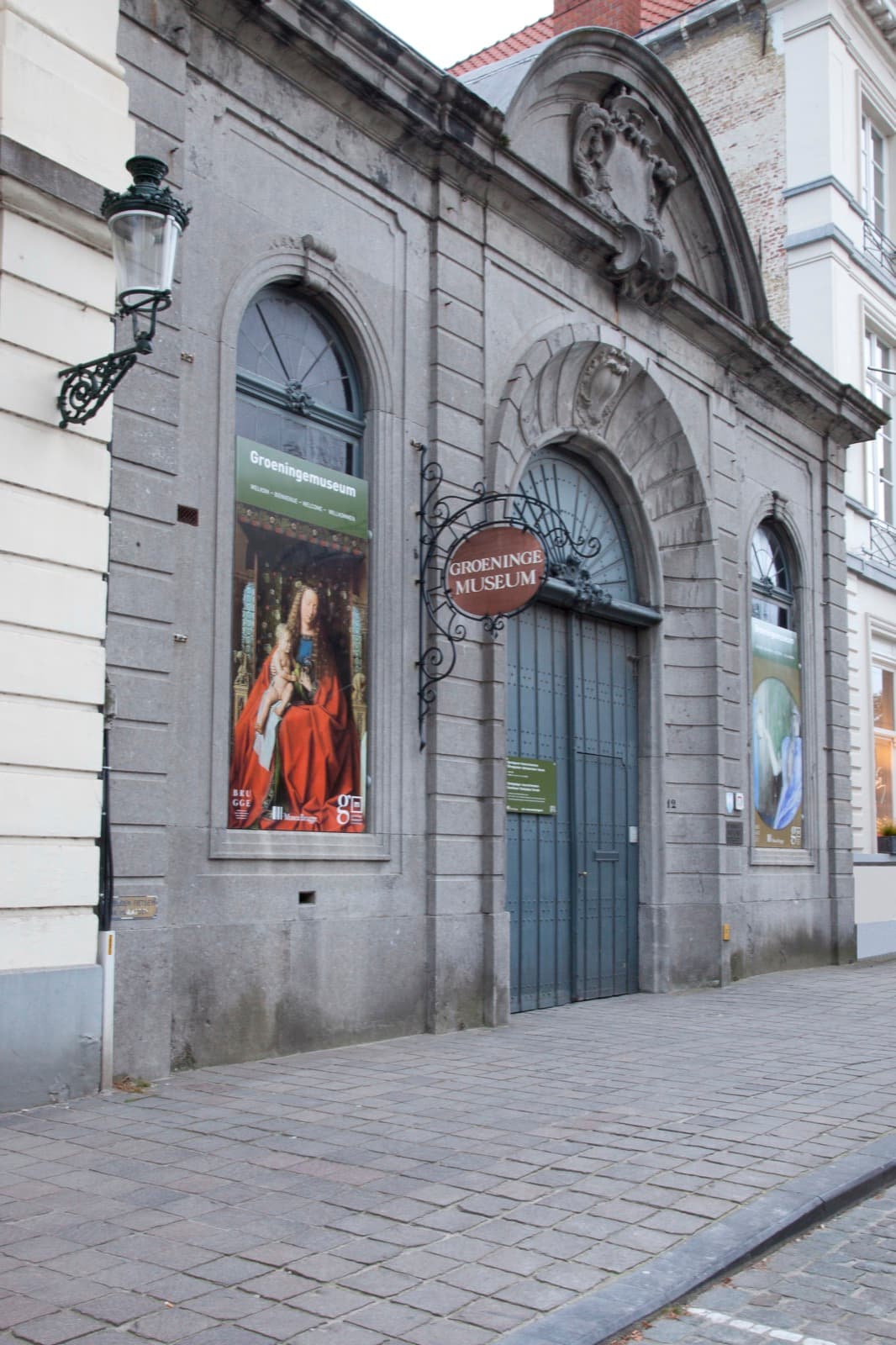
The Groeningemuseum holds the painting Bruges is measured by. On the Dijver canal, in a set of quiet rooms opened in 1930, hangs Jan van Eyck's Virgin and Child with Canon van der Paele, and standing in front of it is the reason to come. This is the room where you can watch oil painting come of age, in the city whose wealth paid for it, close enough to lean in until the brushwork resolves into thread, metal, and skin. If you understand one thing about the Groeningemuseum before you go, understand that: it is not a warehouse of famous names, it is a place to stand still in front of one surface until you have actually seen it.
The one painting to stand in front of
Van Eyck made the Virgin and Child with Canon van der Paele around 1434 to 1436, for a collegiate church in Bruges. Look at it and the argument for oil paint makes itself without a word of explanation. The velvet has weight. The Persian carpet has pile. The old canon's stubbled chin and the reflections sliding across the armour are rendered with a precision that had simply not existed before. Van Eyck did not invent oil painting, and it would be a fabrication to say he did. What you can see in this room is something more interesting: a painter carrying the medium to a height no one had reached.
The precision is the point, not a party trick. Oil dries slowly, so it can be built up in thin translucent layers, and light seems to pass into the paint and bounce back out. That is why the metal looks like metal and the wool looks like wool. The merchants and clergy who commissioned pictures like this wanted their world shown in full glittering detail, and they had the money to demand it. The wealth of golden-age Bruges is what paid for surfaces this dense. When you stand here, you are looking at the visible receipt of that wealth.
The painting has its own long journey. It was made for Saint Donatian's collegiate church in Bruges, looted to France during the revolutionary years, and returned to the city in 1816, which is part of why it is here in a civic museum today rather than in a church across the water or a national gallery abroad. It came home.
Why standing close is the whole experience
Hear a stop from this walk
The Old Saint John's Hospital: A Medieval Ward Full of Memling
Here is the quiet luxury of the Groeningemuseum, and the reason a self-guided visit suits it so well. In most of the world you meet a Van Eyck of this rank through a crowd, over shoulders, on a moving line that will not let you stop. You get thirty seconds and a photograph you never look at again.
In Bruges you can stand before the jewelled surface with no group at your back and no schedule pulling you forward. You can lean in until the brushwork breaks into individual strands. You can step back to see the whole composition settle, then move in again to check a single reflection. Nobody is counting heads. The painting was made to reward exactly this kind of attention, because the men who paid for it wanted to be seen in extraordinary detail, and detail only exists if you look. Give the room the time the paintings ask for. If the Van Eyck holds you, let the rest of the museum wait.
The company it keeps
The Groeningemuseum is part of Musea Brugge, the city's group of civic museums, and its collection gathers the Flemish Primitives, the northern painters who worked in and around Bruges during its golden age. Alongside Van Eyck you will find works by Hans Memling and by Gerard David, whose starkly moralising Judgment of Cambyses is dated 1498. From there the collection reaches across six centuries of Flemish and Belgian painting, so a single visit runs from the fifteenth-century brilliance of the Primitives forward into much later work in the same rooms.
The building sits on the site of the medieval Eekhout Abbey, which is a fitting detail for this city: a museum of Bruges painting standing on a lost piece of Bruges itself. The city has a habit of building its present directly on top of a vanished past, and here the pattern is literal.
The one thing to understand standing here
If you take a single idea out of the Groeningemuseum, take this. The paintings survived because the city that made them grew poor.
Bruges was the richest market city of northern Europe in the fifteenth century, wealthy enough to summon painters like Van Eyck and to demand the most expensive surfaces they could produce. Then the tidal inlet that linked the city to the sea silted up around 1500, trade moved to Antwerp, and Bruges fell quiet and impoverished for centuries. A rich city can afford great art. A poor city cannot afford to sell it, replace it, or modernise around it. Bruges was too poor to let its masterpieces go, and so they stayed, in the same city, and in some cases the same neighbourhoods, where they were painted. The Groeningemuseum is the room where the boom and the long ruin meet: brilliance bought at the height of the wealth, kept intact by the poverty that followed.
That is why the museum is not a stop to rush. You are not looking at art that was shipped in to fill a gallery. You are looking at Bruges looking at itself, five hundred years on, in paint that never left.
Walk it, don't just read it
The Groeningemuseum is one stop on a walk built around exactly this idea, the golden age and the strange decline that preserved it. On the same route you pass a marble Madonna the young Michelangelo let leave Italy, a palace that grew rich on beer herbs, a medieval hospital hung with Memling, and the dead harbour whose silting froze the whole city in place. The self-guided audio tour lets you stand as long as you like in front of the Van Eyck, then move on when you please, at your own pace and with no group at your back.
Plan the wider visit with our Bruges walking tours guide, or start from the Bruges city page to see how this museum fits the golden-age route through the historic centre.
Sources
- Groeningemuseum (Wikipedia): overview of the museum, its Flemish and Belgian collection spanning six centuries, and its position on the site of the former Eekhout Abbey. https://en.wikipedia.org/wiki/Groeningemuseum
- Virgin and Child with Canon van der Paele (Wikipedia): dating of the panel to about 1434 to 1436, its commission for Saint Donatian's collegiate church, its transfer to France in 1794, and its return to Bruges in 1816 and display in the Groeningemuseum since 1930. https://en.wikipedia.org/wiki/Virgin_and_Child_with_Canon_van_der_Paele
- Musea Brugge official site: the civic museum group that includes the Groeningemuseum and the 1498 dating of Gerard David's Judgment of Cambyses. https://www.museabrugge.be/en
- Roamer, Bruges: Van Eyck, Michelangelo and the Frozen Golden Age (fact-audited tour transcript): the audited source for this article's claims about the museum and the wider walk.
Ready to experience it?
Church of Our Lady: Van Eyck, Michelangelo and the Frozen Golden Age
65 min · 2 km · moderate
More from Bruges
Explore more at your own pace.
Bruges Travel Guide 2026: Days, Transport, Timing, Safety, Budget
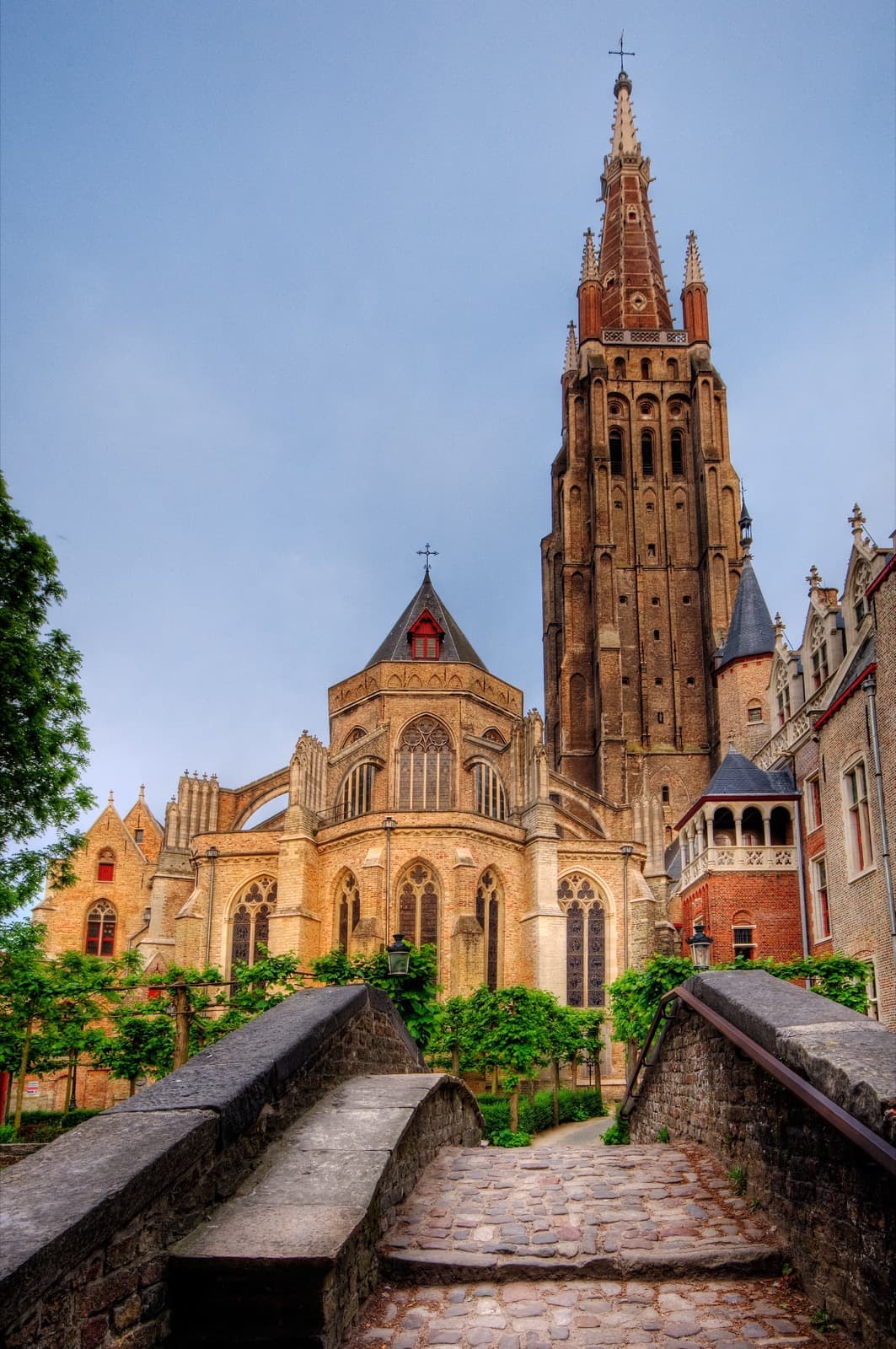
The Church of Our Lady in Bruges: A Michelangelo Madonna and the Frozen Golden Age
The Markt and the Belfry: How Two Squares Ran Medieval Bruges
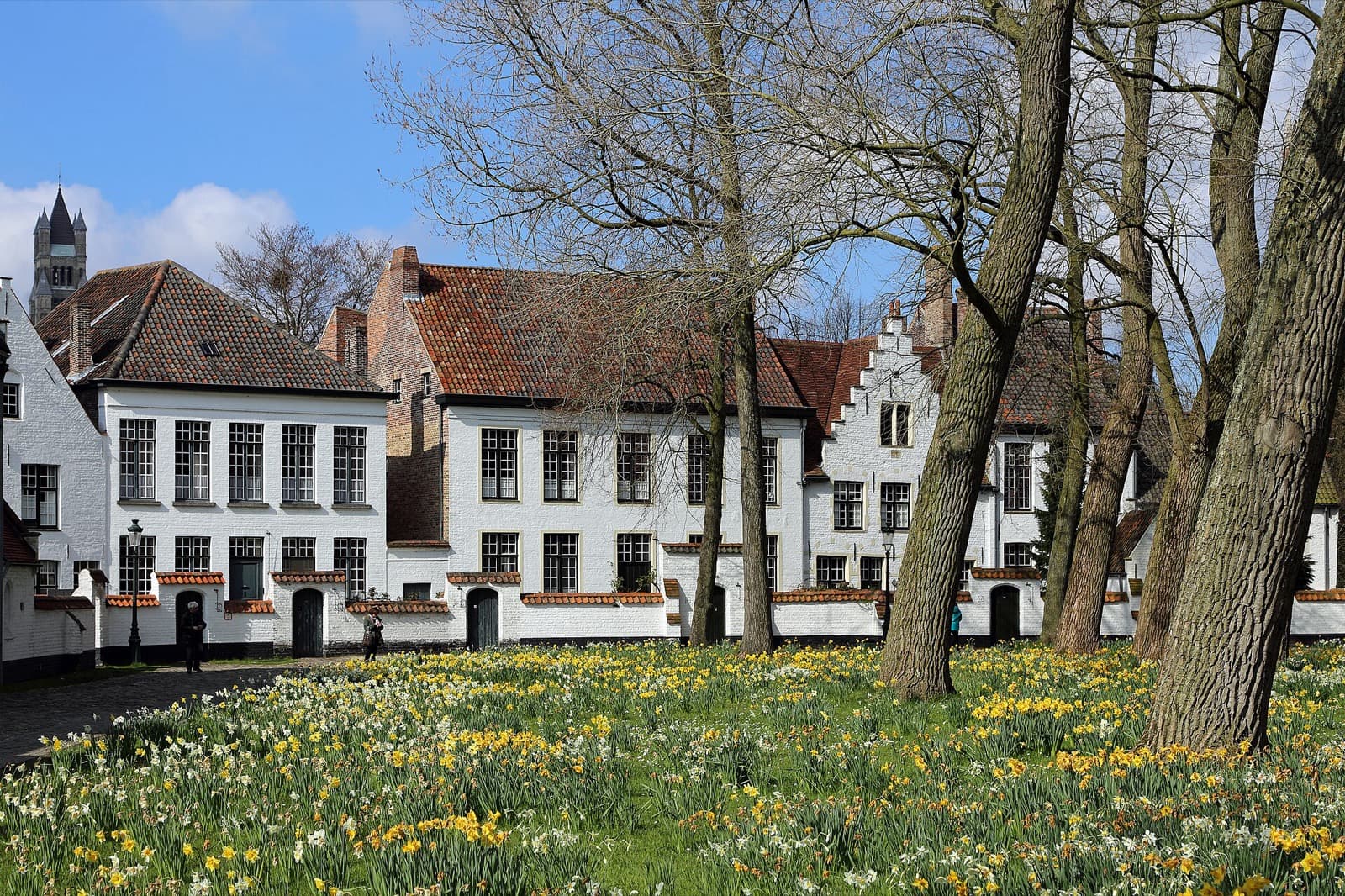
The Silent Beguinage: How an Emptied Harbour Preserved Bruges
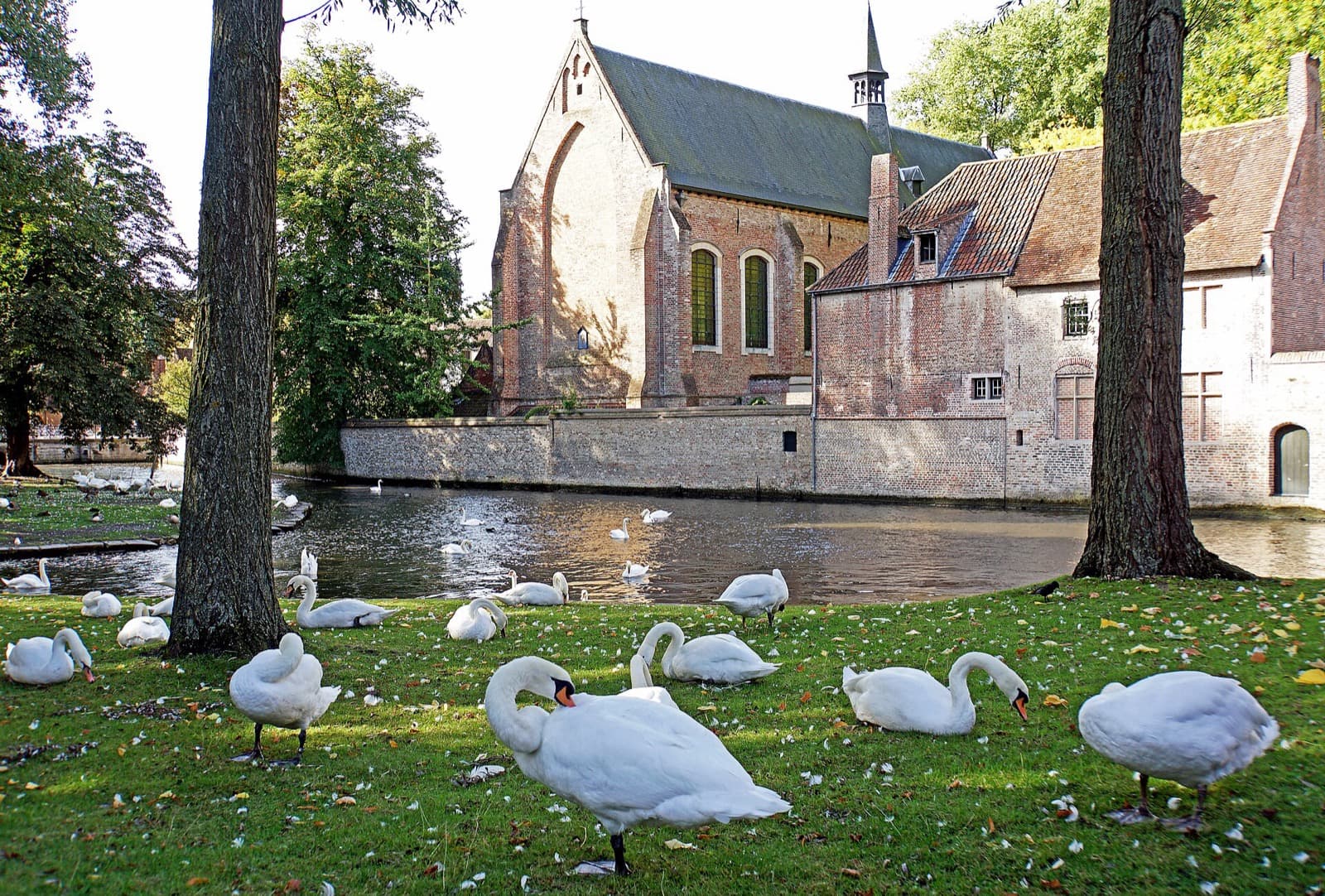
Minnewater in Bruges: The Lake of Love That Was Once a Harbor