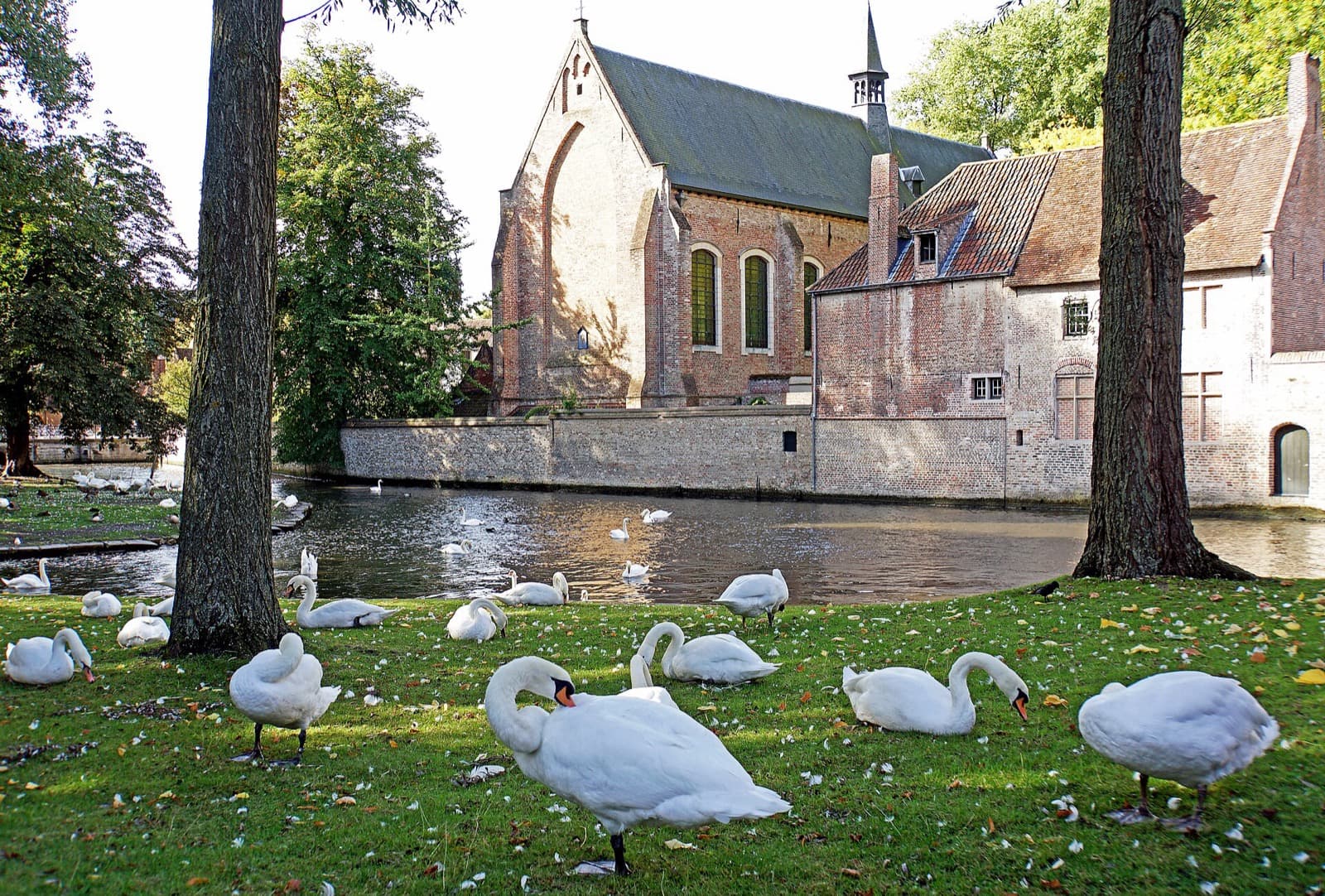
Stand at the southern edge of the Bruges old town and you will find a broad, still basin of green water called the Minnewater, marketed today as the Lake of Love. The lock house on the bank, the low bridge, the willows leaning over the surface: all of it reads as romance. But the calm you are looking at is not decoration. The Minnewater was once a working inner harbor, a place where trading barges moored on their way to and from the North Sea, and the stillness that makes it beautiful now is the trace of a port that history switched off. Understanding that single fact changes how you see the whole lake.
A harbor, not a pond
Bruges grew where a tidal inlet reached inland, and in the medieval golden age its canals, the reien, carried the ships and barges that made the city one of the busiest ports of northern Europe. The Minnewater sat inside that network. It was not an ornamental pond added to please tourists. It was infrastructure: an inner harbor where barges tied up, connected through the Reie to the open sea. Cargo waited here. The water was busy, functional, loud in the way a working waterfront is loud.
Then the sea route silted and the golden age ended. The harbor emptied. And here is the quiet paradox that runs under everything in Bruges: that emptiness is the reason the medieval city was never torn down. A port that stayed rich would have kept rebuilding, replacing old quays with newer, bigger ones. A port that stopped simply held still. The Minnewater is the calmest water in Bruges precisely because the trade that once filled it drained away. When you watch the reflection settle on the surface, you are watching survival, not scenery.
Where the name comes from
Hear a stop from this walk
The Ramparts and the Windmills: The Green Wall on the Edge of the Water City
The romantic name deserves a careful footnote, because it is more folklore than fact, and the honest version is more interesting than the marketing one. One tradition links Minnewater to minnen, tied to a folk belief that water nymphs once lived in the lake, and the name plays gently on the Dutch word for love. That is a story the water tells about itself, not a documented etymology. Treat it as legend, and it becomes a nice thing to know rather than a claim you have to defend.
The second legend belongs to the swans, and it is worth telling in full because you will see swans on these waters. In fourteen eighty-eight the townspeople of Bruges executed an official of Maximilian of Austria named Pieter Lanchals, whose family name suggested "long neck" and whose coat of arms carried a swan. Maximilian was held captive in the city at the time and, folklore says, forced to watch the execution. In revenge, the story goes, he ordered Bruges to keep swans, the long-necks, on its waters forever. Some retellings even count fifty-two swans on the city's canals. None of that is confirmed as documented record. It is popular tradition, retold so many times it has hardened into something that feels true, and swans were in fact swimming on the canals before fourteen eighty-eight. What is genuinely true is quieter and more durable: swans have long been a Bruges custom, and the birds you see gliding across the Minnewater carry a legend the city has decided to keep.
What to understand standing in front of it
If you take one idea away while looking at the Minnewater, let it be this: the beauty here is the residue of an economic accident. Bruges was a great trading city until its link to the sea closed, and the moment the ships stopped coming, the whole medieval fabric stopped changing. The lake in front of you is the clearest single expression of that. It was the inner harbor. It went quiet. It stayed quiet for centuries. You are standing at the exact point where the water city meets its own stillness.
That reframing is useful because it saves you from the flatter version of the Minnewater, the one where it is only a pretty lake for a photograph. It is a pretty lake. It is also the beginning of an argument the entire city makes: that preservation, here, was not a plan but a consequence. The best thing to do is exactly what the place invites. Sit on the bank as long as you please, because nobody is going to move you along. Watch the reflection of the willows and the lock house settle when the water goes still, which happens most reliably early in the morning or in the last hour before dusk, before the canal boats churn the surface and the day-trip crowds arrive. Let it be as calm as it wants to be, and then read the rest of Bruges the same way: as a working harbor that was switched off, and preserved by the switching.
Walk it, don't just view it
The Minnewater is the first stop on a longer route that treats water as the key to the whole city. From the lake, the path enters the walled silence of the Beguinage, then follows the leafiest, least crowded canals, the Dijver and the Groenerei, past hump-backed stone bridges to the Spiegelrei, the old Hanseatic waterfront where foreign merchants once moored, and finally out to the green ramparts where the windmills still stand. It is a continuous walk on foot of about three kilometers, roughly ninety minutes at an easy pace, and every stop returns to the same idea you can already see in the Lake of Love: that Bruges is calm today because its harbor emptied centuries ago.
You can do it entirely on your own clock, with no group at your back and no boat queue you have to join. The self-guided Bruges canals and Beguinage tour starts you right here at the Minnewater and gives you the story of each canal and bridge as you reach it, so you can linger on any bridge as long as you like and walk on only when you are ready. For the wider set of routes through the old town, browse the full list of Bruges walking tours.
Sources
- Visit Bruges official tourism site, on the Minnewater and the city's canals. Confirms the lake's romantic framing and its place in the canal network.
- World Heritage Journeys of Europe, "The legend of the swans." Documents the Pieter Lanchals swan folklore tied to fourteen eighty-eight and Maximilian of Austria.
- Belgium Break, "Minnewater Lake, love in Bruges." Travel-guide overview of the lake's history as an inner harbor and its present-day setting.
- Roamer tour transcript, "The Canals: Venice of the North and the Silent Beguinage." Fact-audited narration grounding the harbor history and the distinction between legend and documented record.
Ready to experience it?
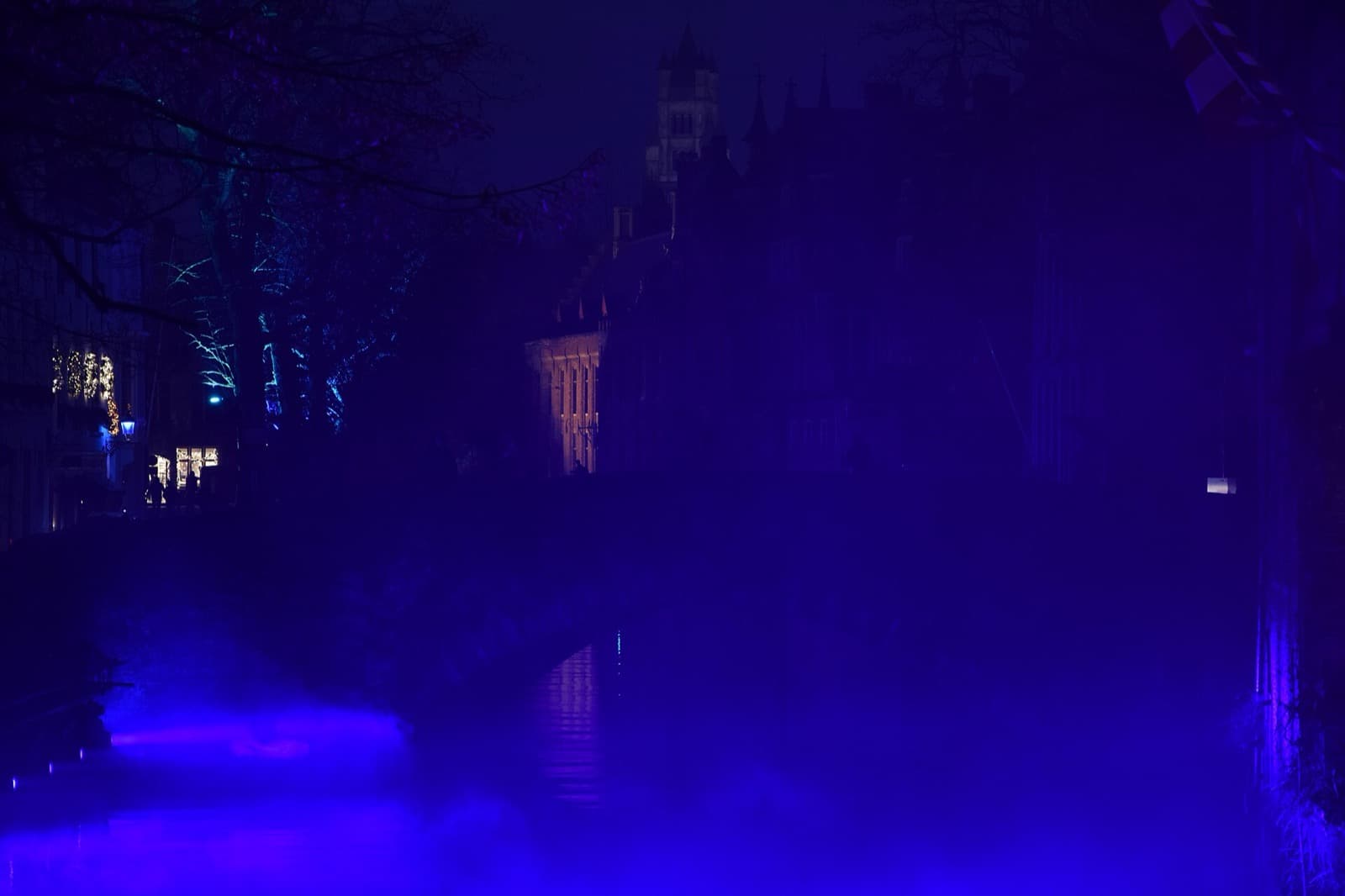
The Canals: Venice of the North and the Silent Beguinage
80 min · 3.1 km · easy
More from Bruges
Explore more at your own pace.
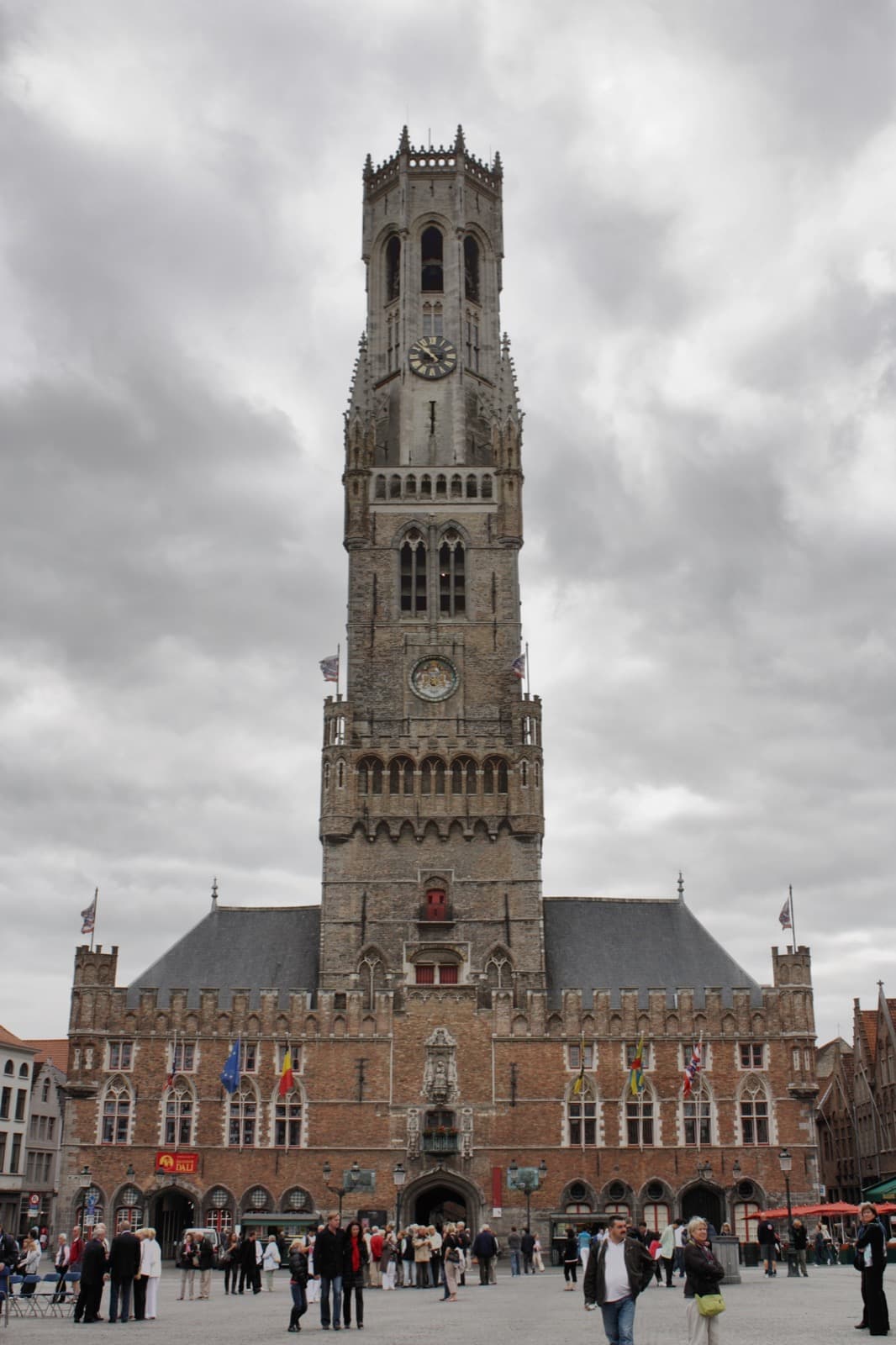
Bruges Travel Guide 2026: Days, Transport, Timing, Safety, Budget
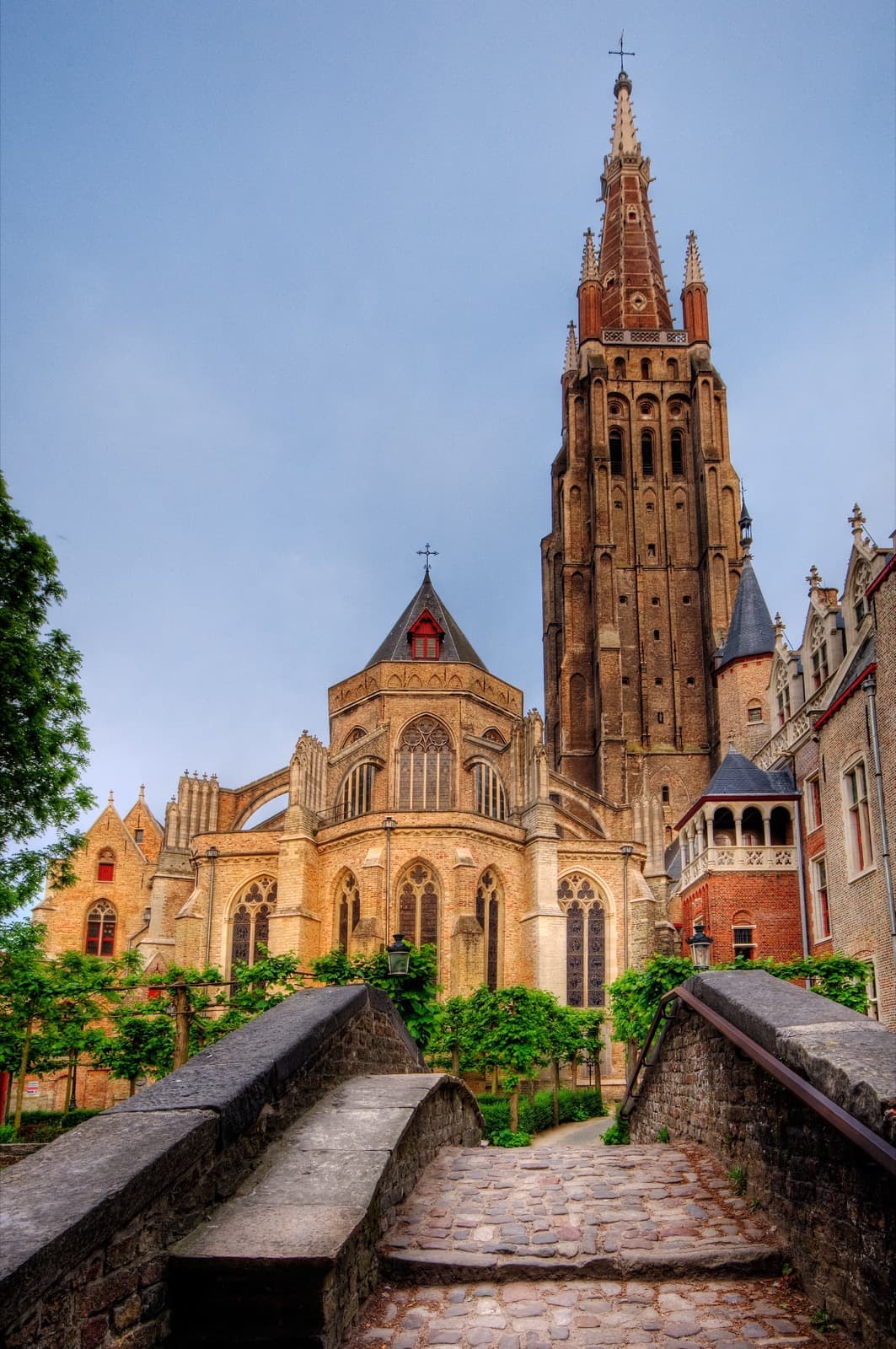
The Church of Our Lady in Bruges: A Michelangelo Madonna and the Frozen Golden Age
The Markt and the Belfry: How Two Squares Ran Medieval Bruges
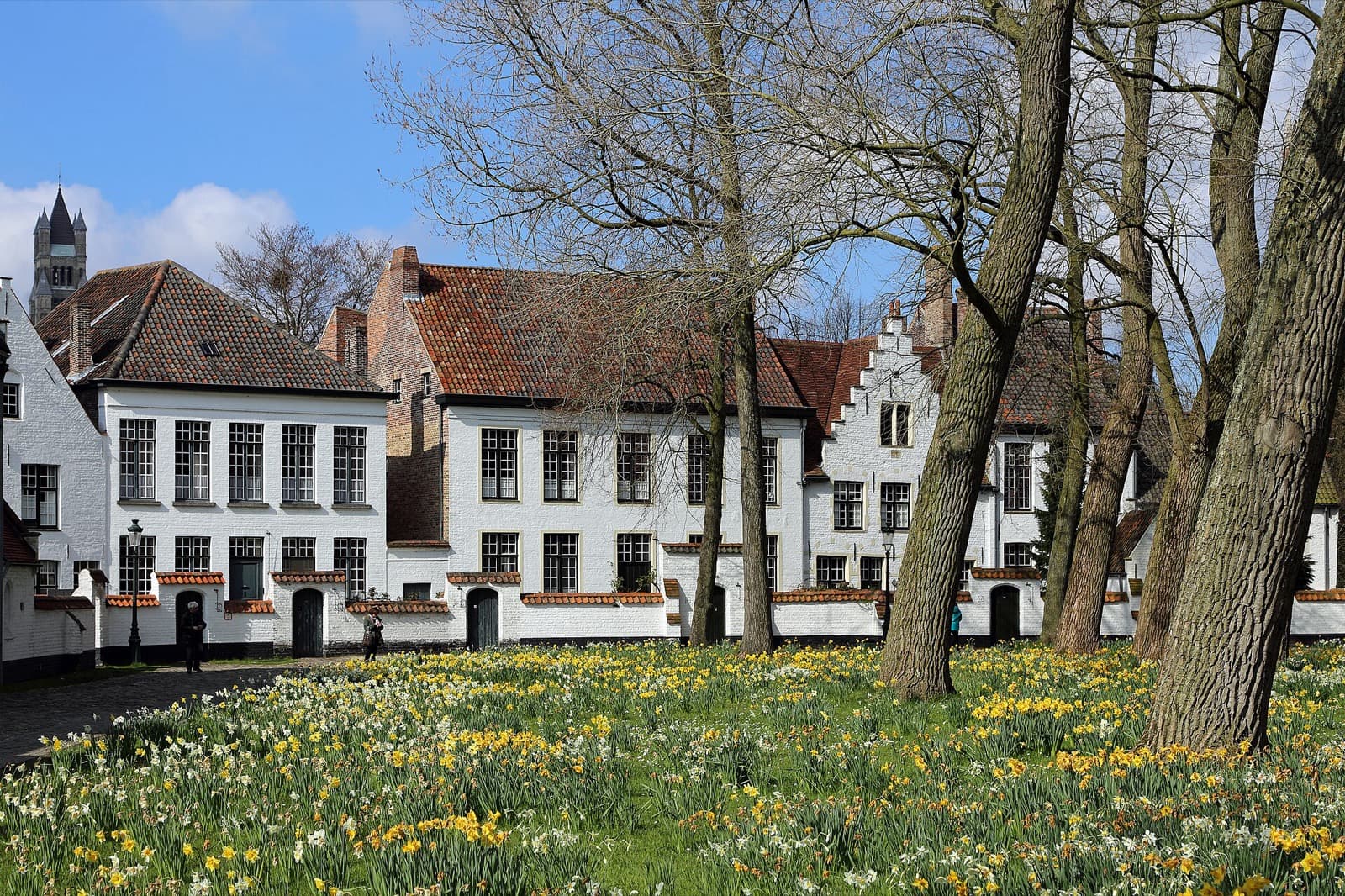
The Silent Beguinage: How an Emptied Harbour Preserved Bruges
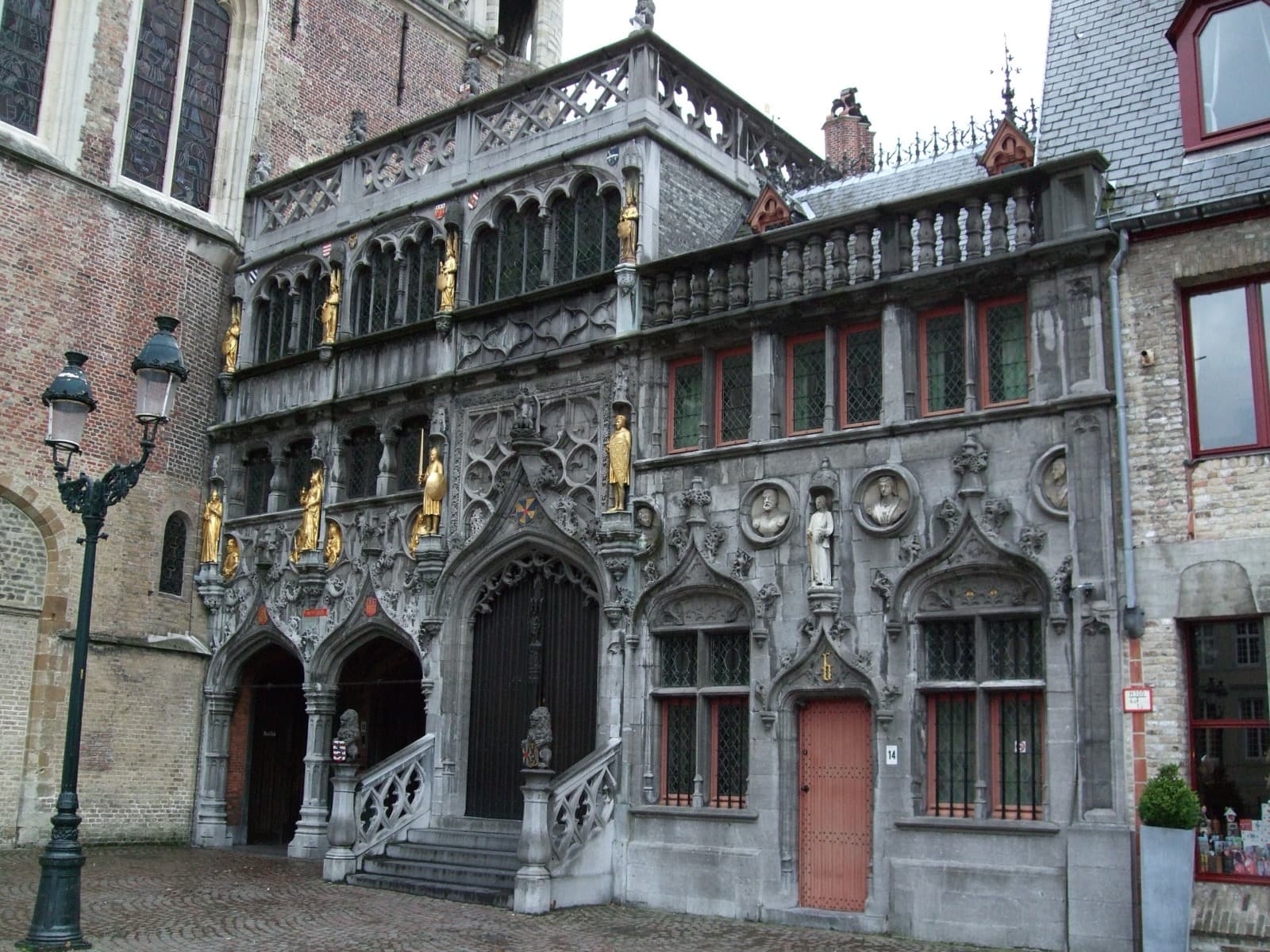
The Basilica of the Holy Blood in Bruges: One Church, Two Chapels, One Relic