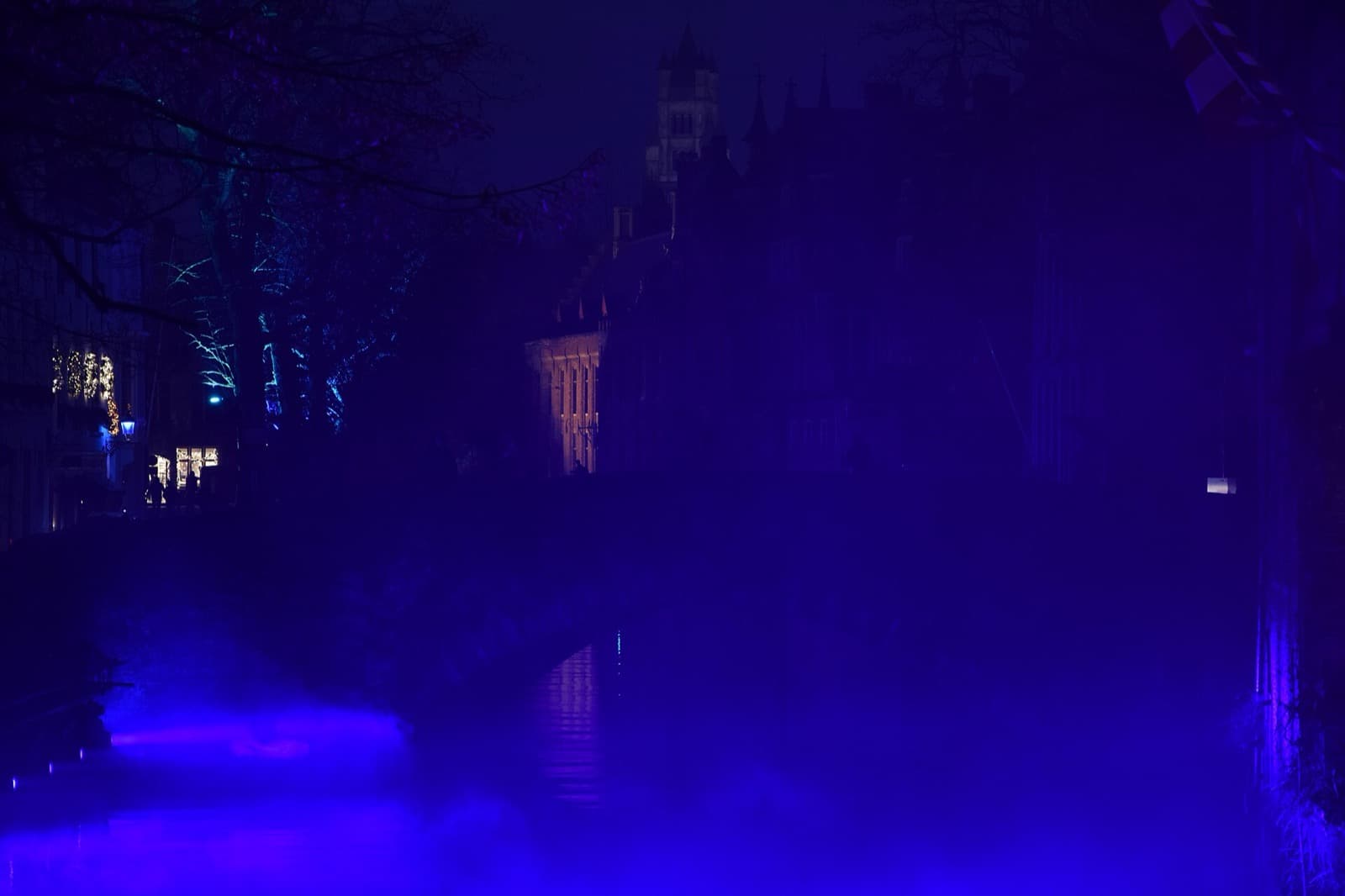
A quiet walk that reads Bruges through its water, from the Lake of Love and the silent walled Beguinage along the greenest canals to the Hanseatic quays and the windmills on the ramparts.
Start · The Minnewater: The Lake Where the Ships Once Waited
DirectionsStops
- 1
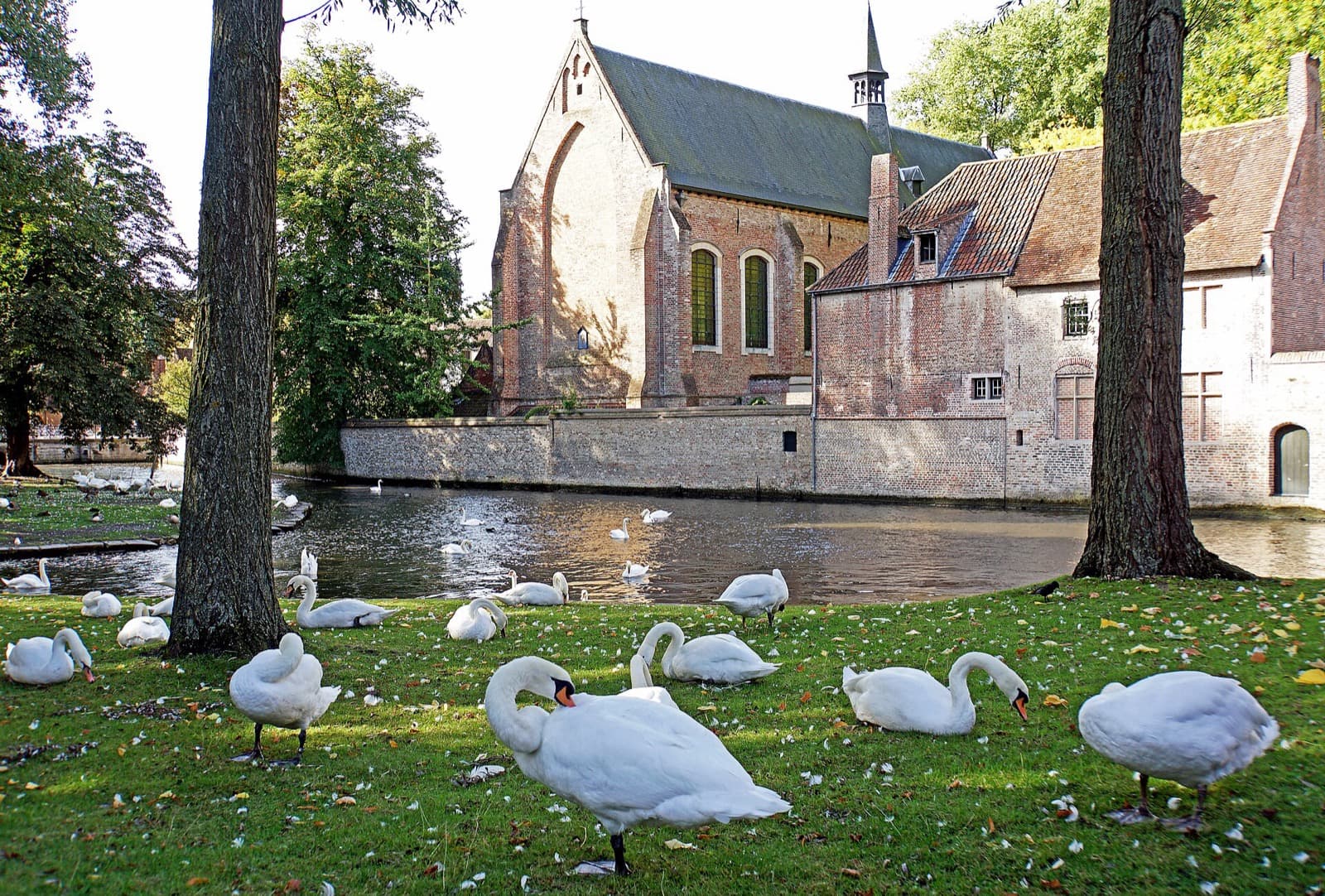
The Minnewater: The Lake Where the Ships Once Waited
A calm canal basin at the southern edge of the old town, the Lake of Love, once the city's inner harbour and now its stillest water.
- 2
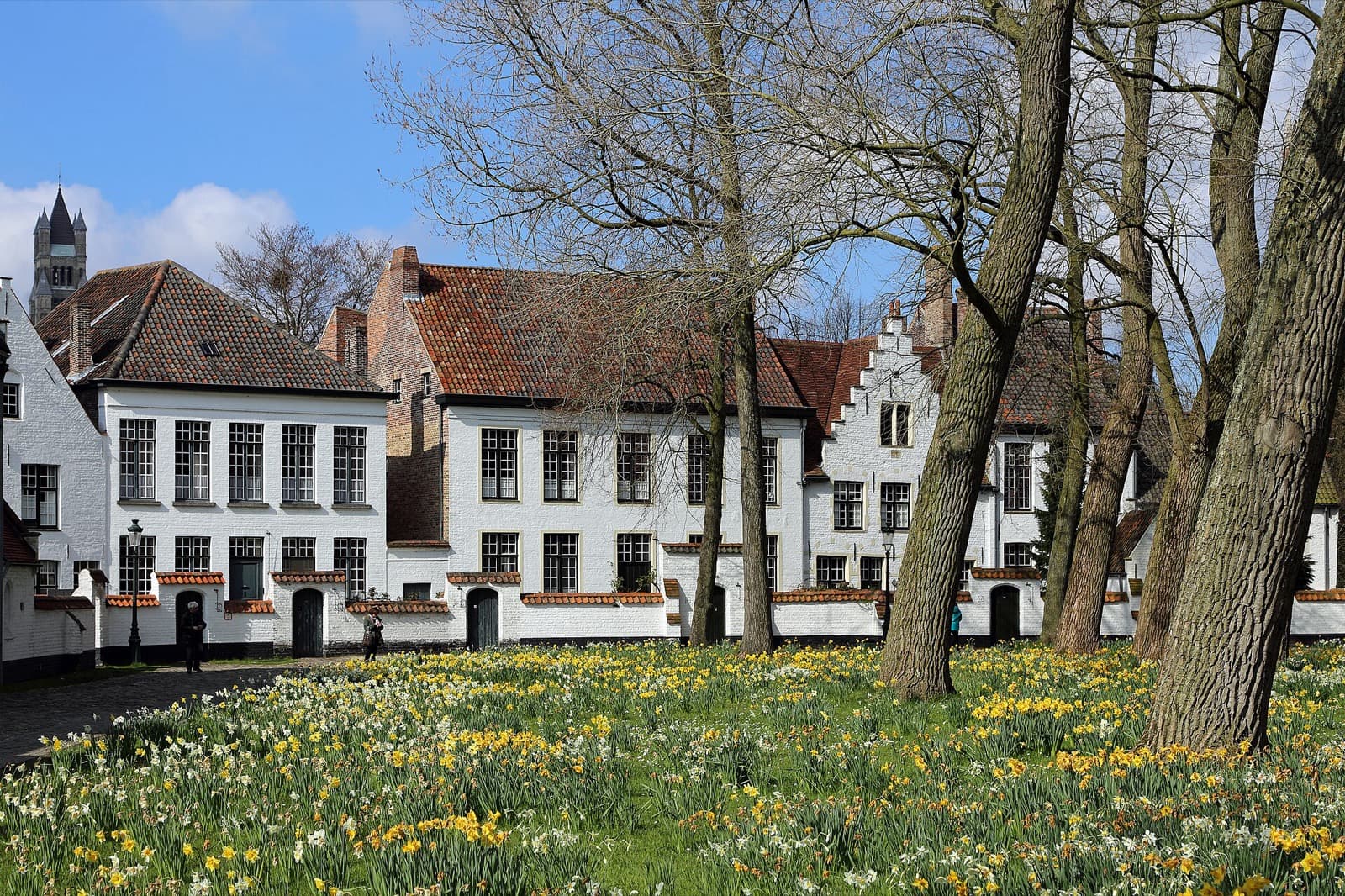
The Beguinage: The Silent Walled Court of White Houses
The Princely Beguinage Ten Wijngaerde, a walled court of whitewashed houses and poplars where laywomen lived a quiet religious life, now a UNESCO World Heritage site.
- 3
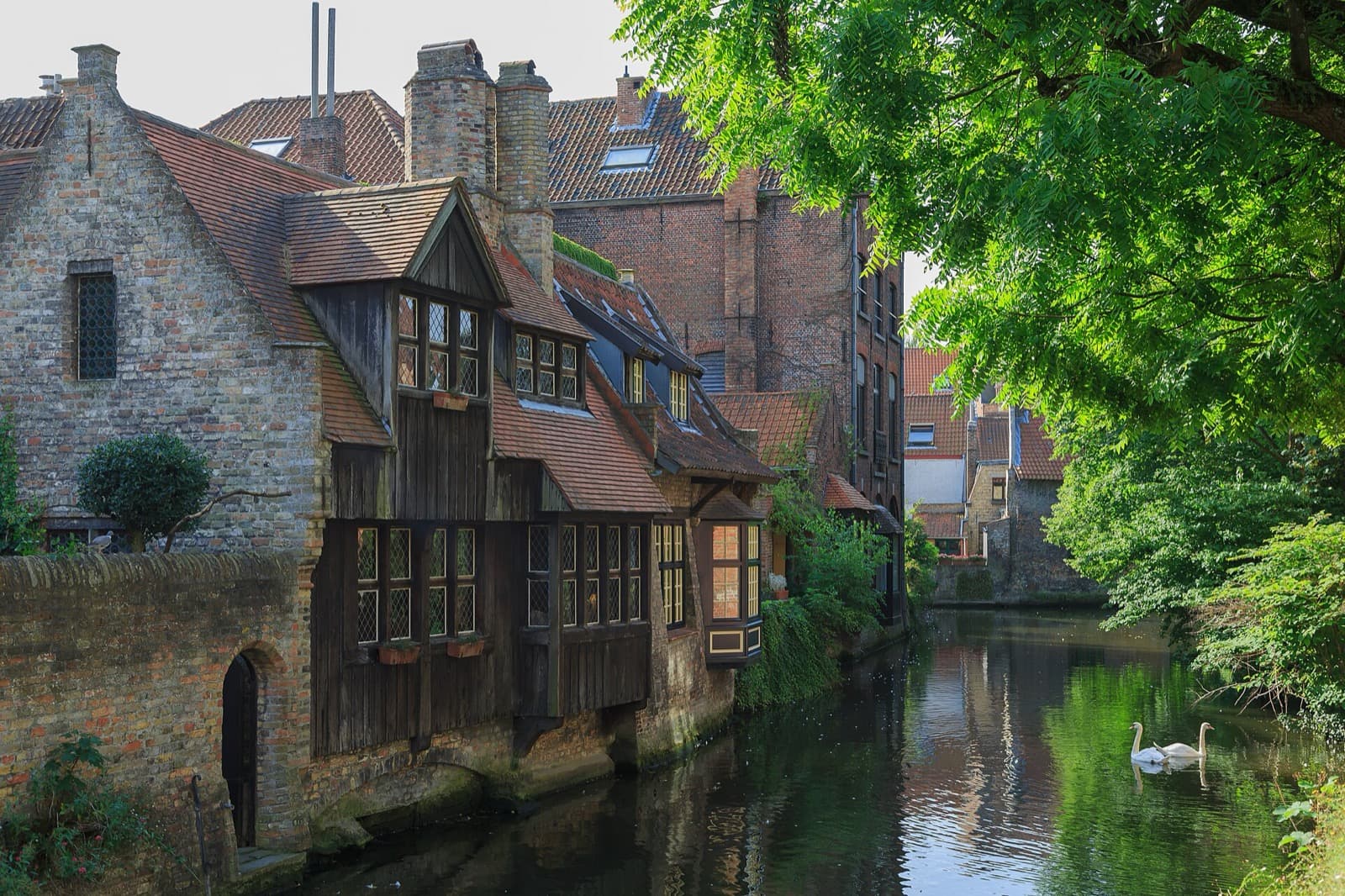
Wijngaardplein and the Bonifacius Bridge: The Corner That Looks Older Than It Is
A small square with a horse trough and, a step away, a tiny arched footbridge that looks medieval but is barely a century old.
- 4
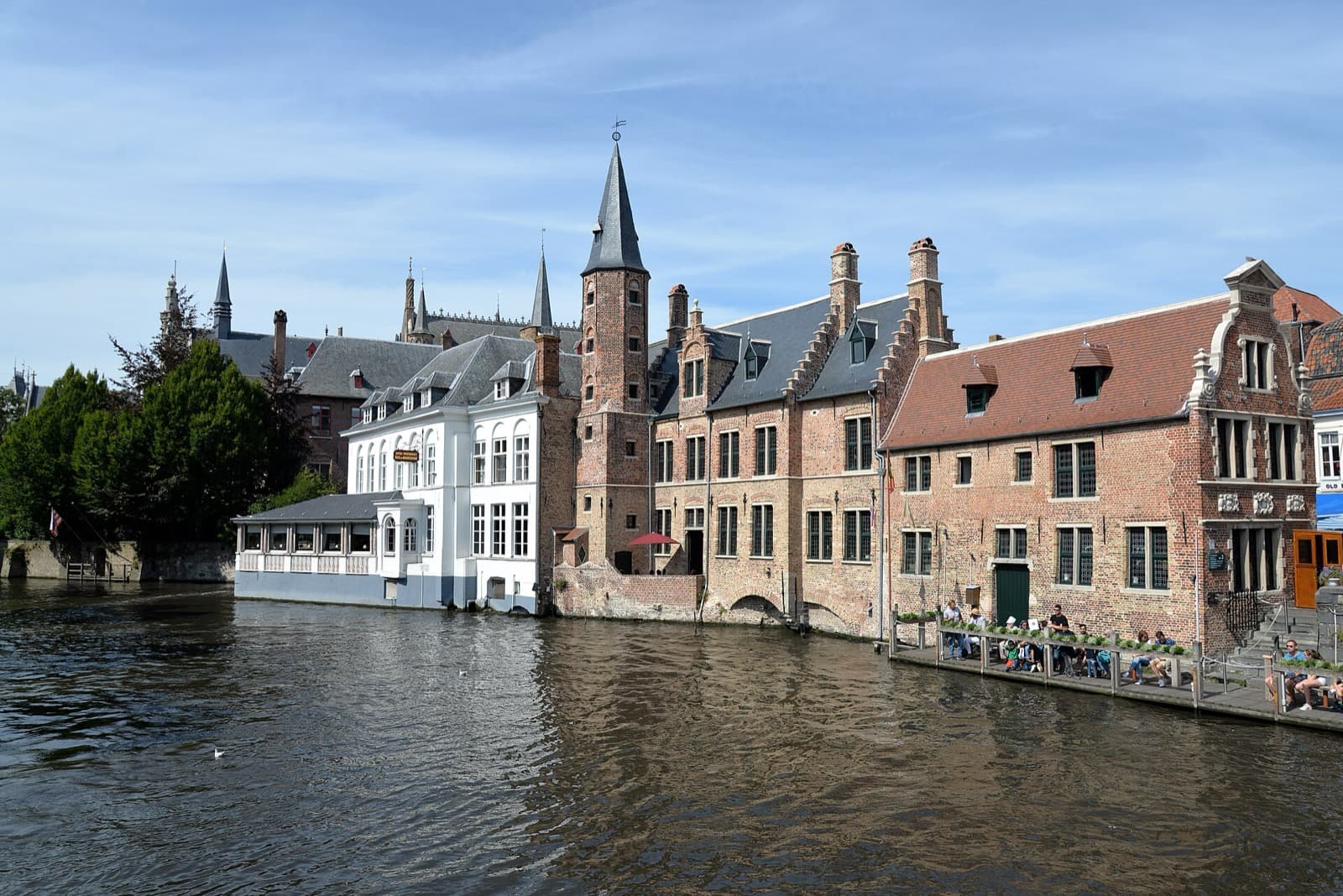
The Dijver: The Leafy Central Canal Where the City Meets Its Reflection
A tree-lined canal quay in the heart of the old town, running past grand mansions and museums, where the water mirrors the medieval facades.
- 5
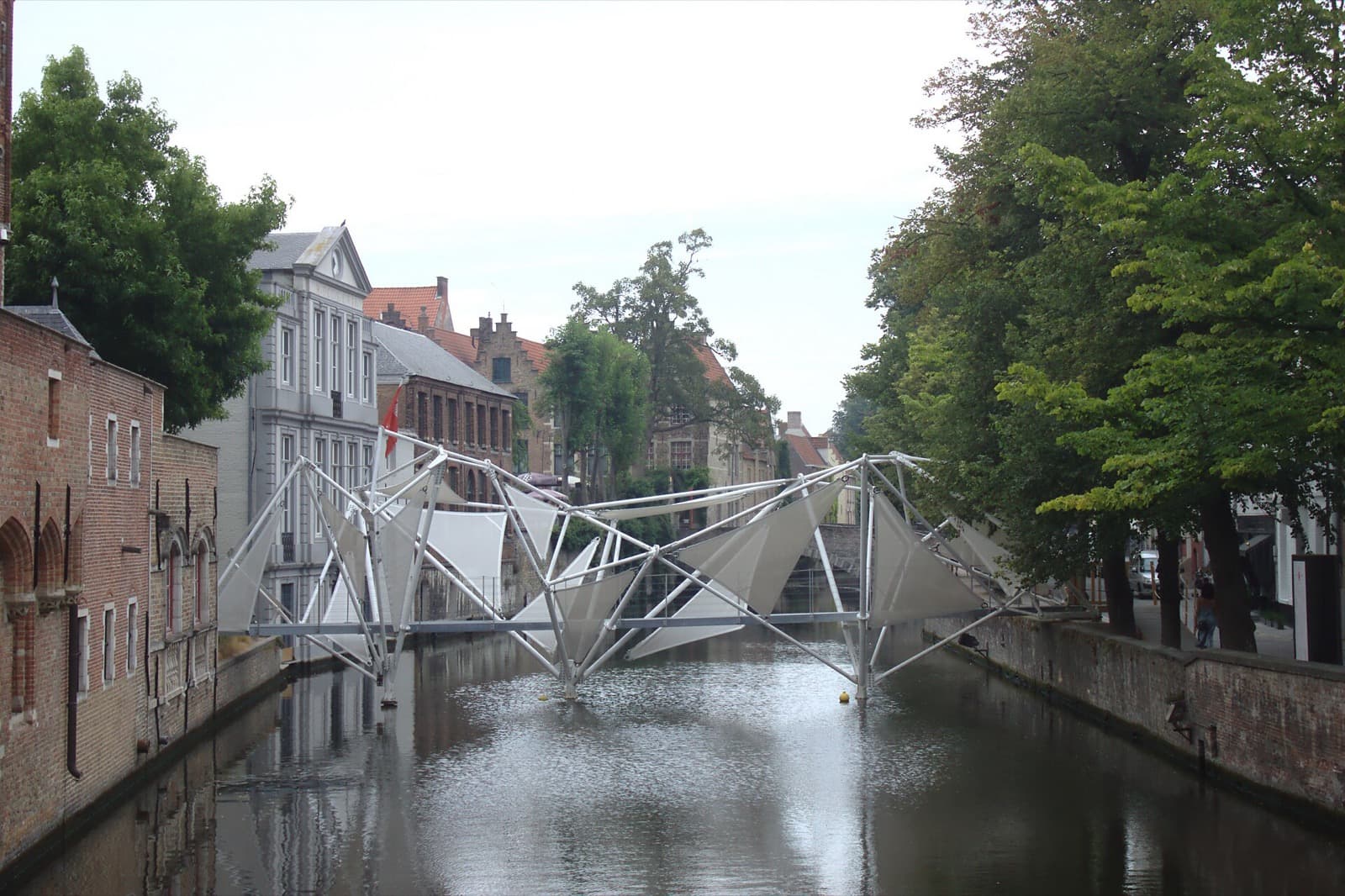
The Groenerei: The Greenest, Stillest Canal and Its Medieval Bridges
The Green Canal, lined with trees, ivy, and almshouses and crossed by old hump-backed stone bridges, the canal that best keeps the medieval hush.
- 6
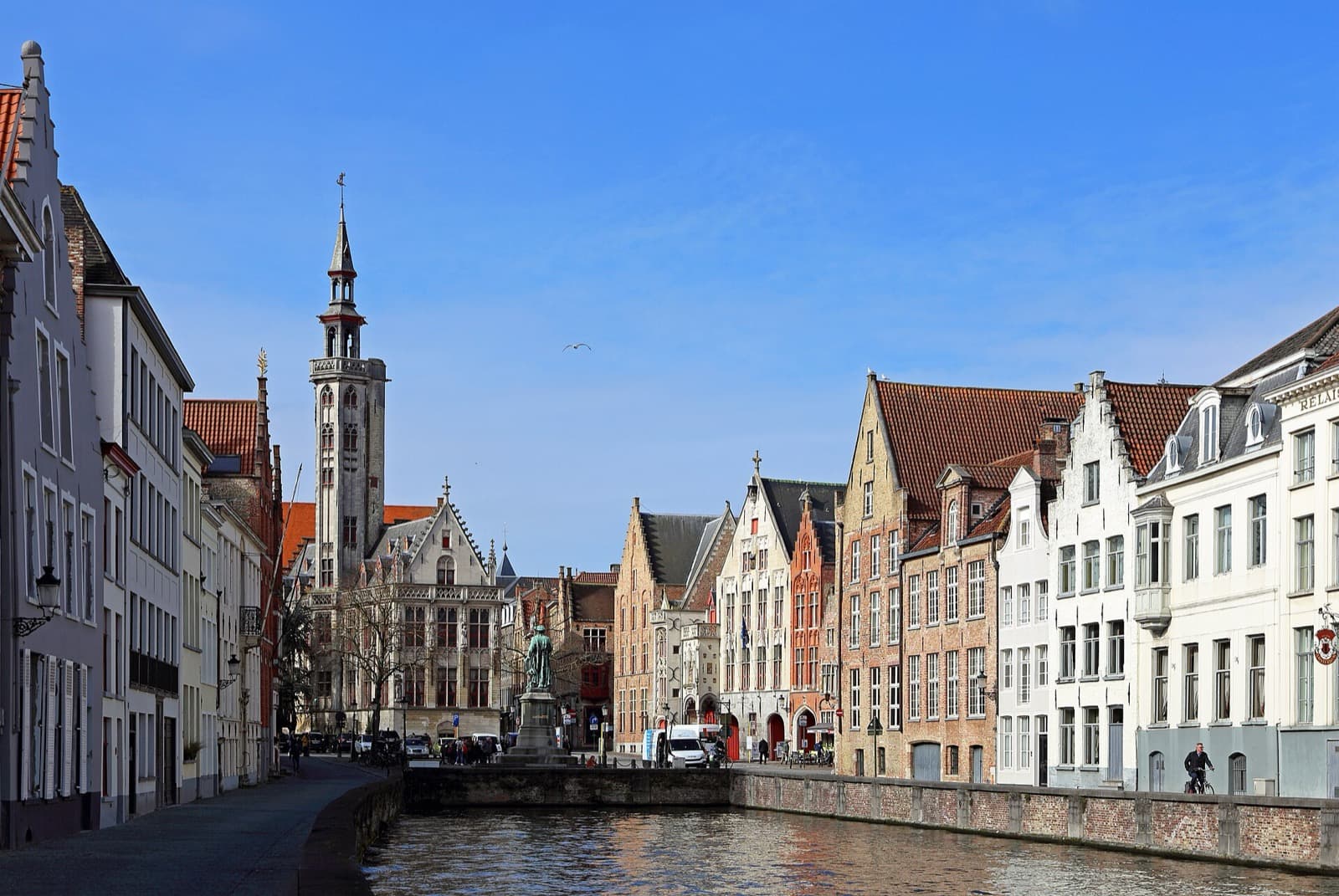
The Spiegelrei and the Hanseatic Quays: The Vanished Golden-Age Port
The old Hanseatic waterfront around Jan van Eyck Square, once the beating heart of international trade, now a broad and quiet canal reflecting the merchant houses.
- 7
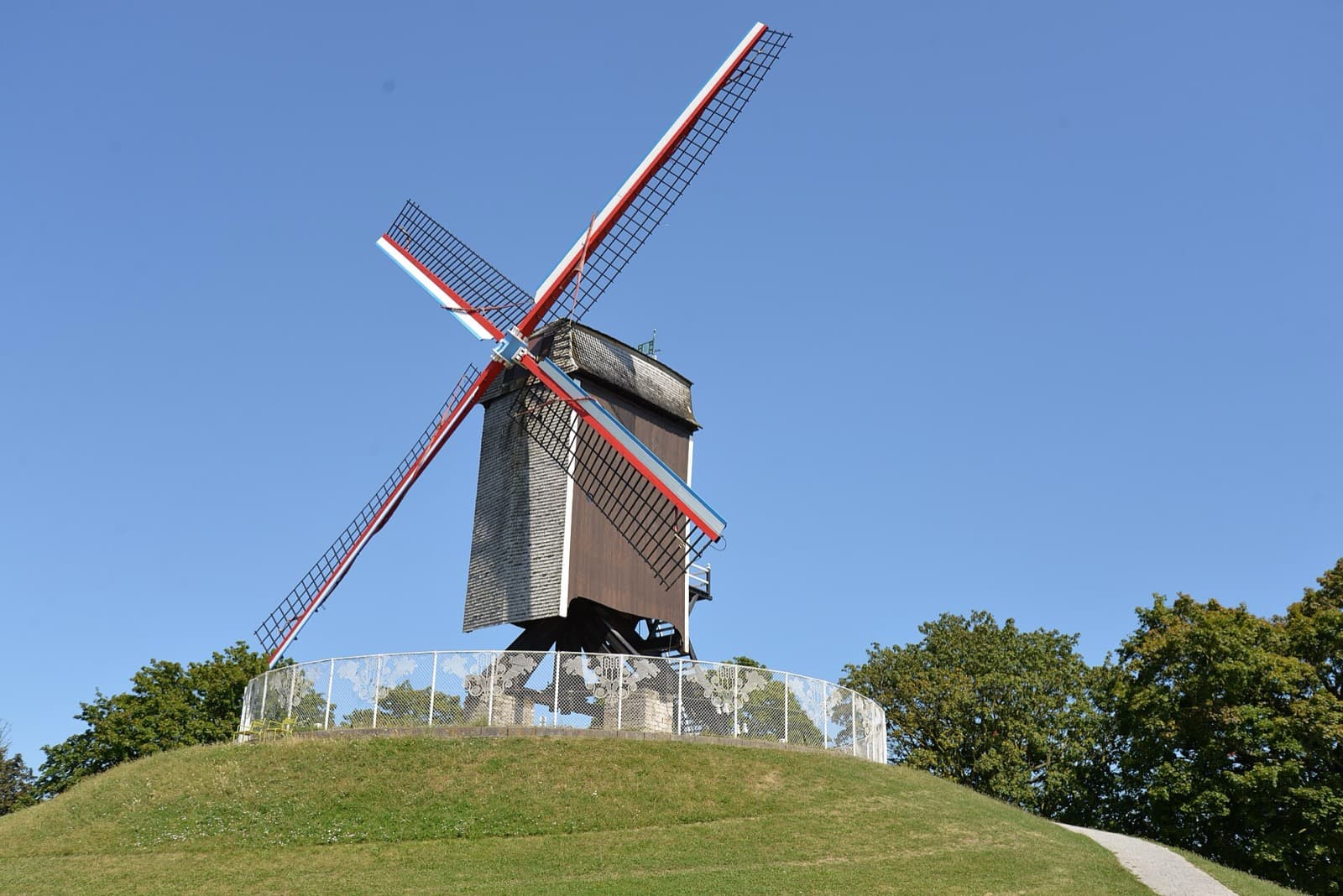
The Ramparts and the Windmills: The Green Wall on the Edge of the Water City
The green eastern rampart of Bruges, a raised earthwork park where four windmills stand, one of which still grinds grain above the old city wall.
Details
Best Time to Visit
Come early in the morning or in the last hour before dusk, when the day-trip crowds and the boat queues thin out and the canals fall genuinely still. Spring brings daffodils to the Beguinage green and Flanders can be gentle; autumn light on the water is soft and golden. Weekdays outside the summer peak are quietest, and the low, changeable northern sun makes the reflections at their most beautiful when the water is calm and unruffled.
Pro Tips
- •The whole route is free and outdoors; only the Beguine's House museum, around two euros, and the interior of the Sint-Janshuis Mill, around six euros, charge admission, so you can walk the entire water city without buying a single ticket.
- •Keep the Beguinage genuinely silent: it is a living religious community of Benedictine nuns, so lower your voice, and stand in the court a while before you reach for a camera.
- •The best canal reflections come when the water is still, so time your bridge stops for early morning or late evening rather than midday when the boats churn the surface.
- •If you want the canal boat trip, join at the Dijver landing and let the walk resume afterward; if you would rather stay on foot, simply skip the queue, since every view on this route is reachable from the quays.
- •Wear proper walking shoes: the quays, bridge humps, and rampart path are uneven, and the cobbled lanes between stops are hard on thin soles over close to three kilometres.
- •Save the ramparts and the Sint-Janshuis Mill for a clear-skied hour if you can, since the open green wall is at its best in wind and light and the mill only turns and grinds in season.
Safety & Precautions
- •Canal edges in Bruges often have no railing and the quays sit right at the waterline, so mind your footing near the edge, especially on the Groenerei bridges and with children.
- •The cobbles and hump-backed bridges are uneven and can be slick after the frequent northern rain, so tread carefully and carry a waterproof, as Flanders weather changes fast.
- •The Sint-Janshuis Mill interior is seasonal, roughly April to early November and closed on Mondays, and the canal boats run to the weather and season, so check current hours before counting on either.
- •The Beguinage church and Bruges's working churches expect quiet and modest dress, and bikes share the streets and quays everywhere in Flanders, so listen for bells and keep left of cyclists on shared paths.
Gallery
Related Reading
Go deeper on what you'll see, hear, and walk through.
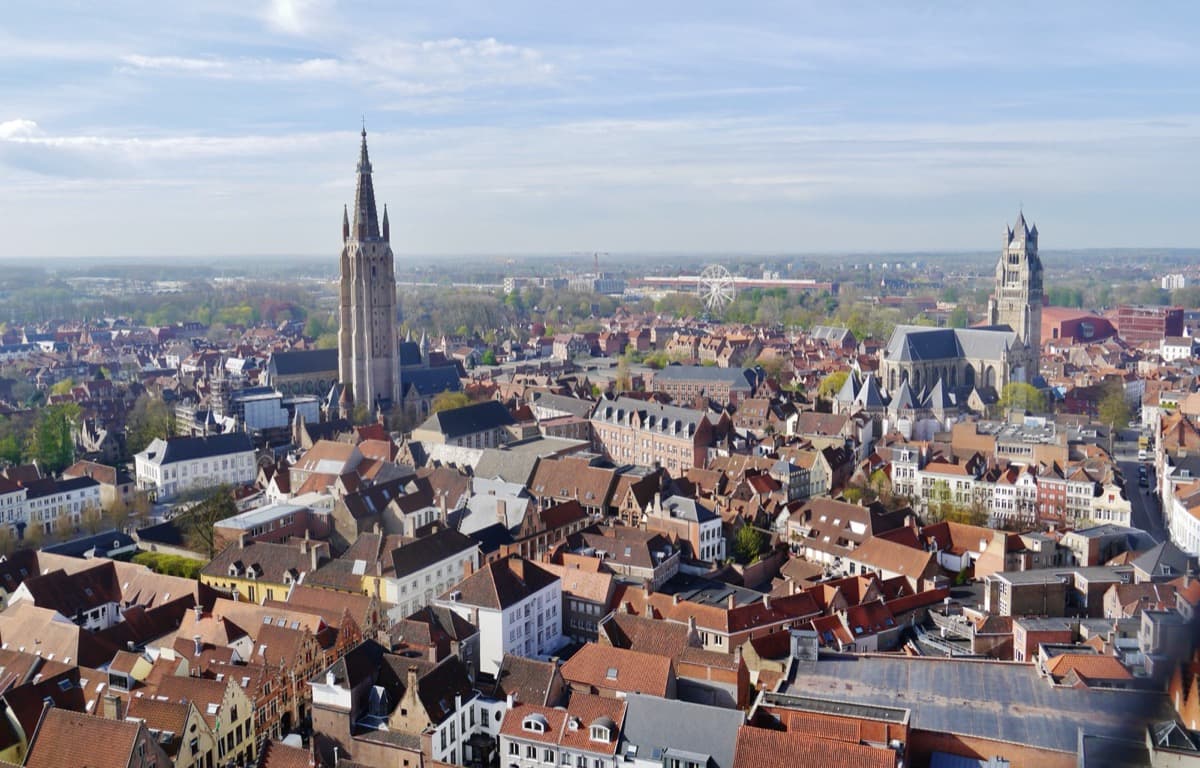
Overview
Best Self-Guided Walking Tours in Bruges (2026)
4 min
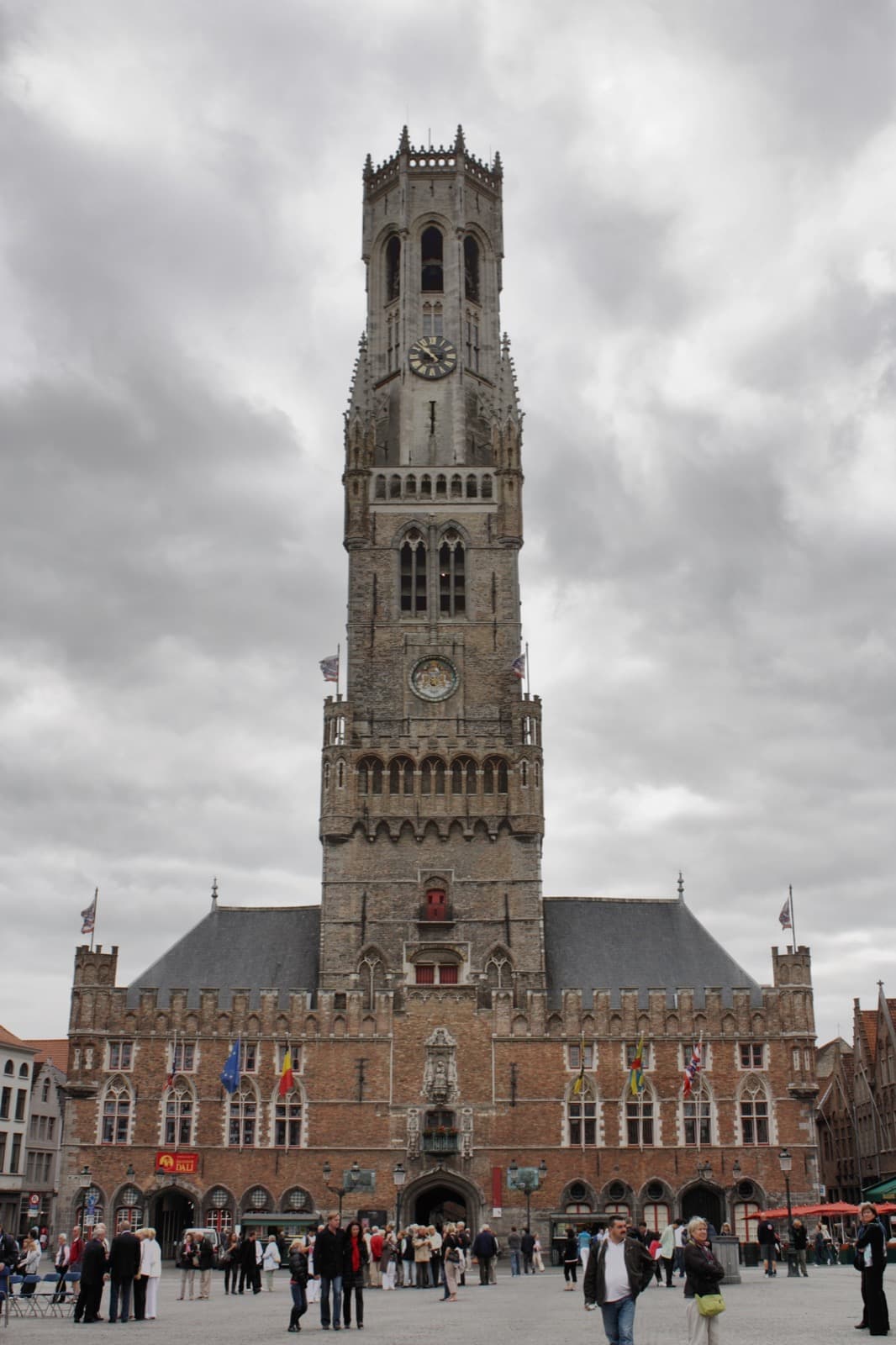
Overview
Bruges Travel Guide 2026: Days, Transport, Timing, Safety, Budget
7 min
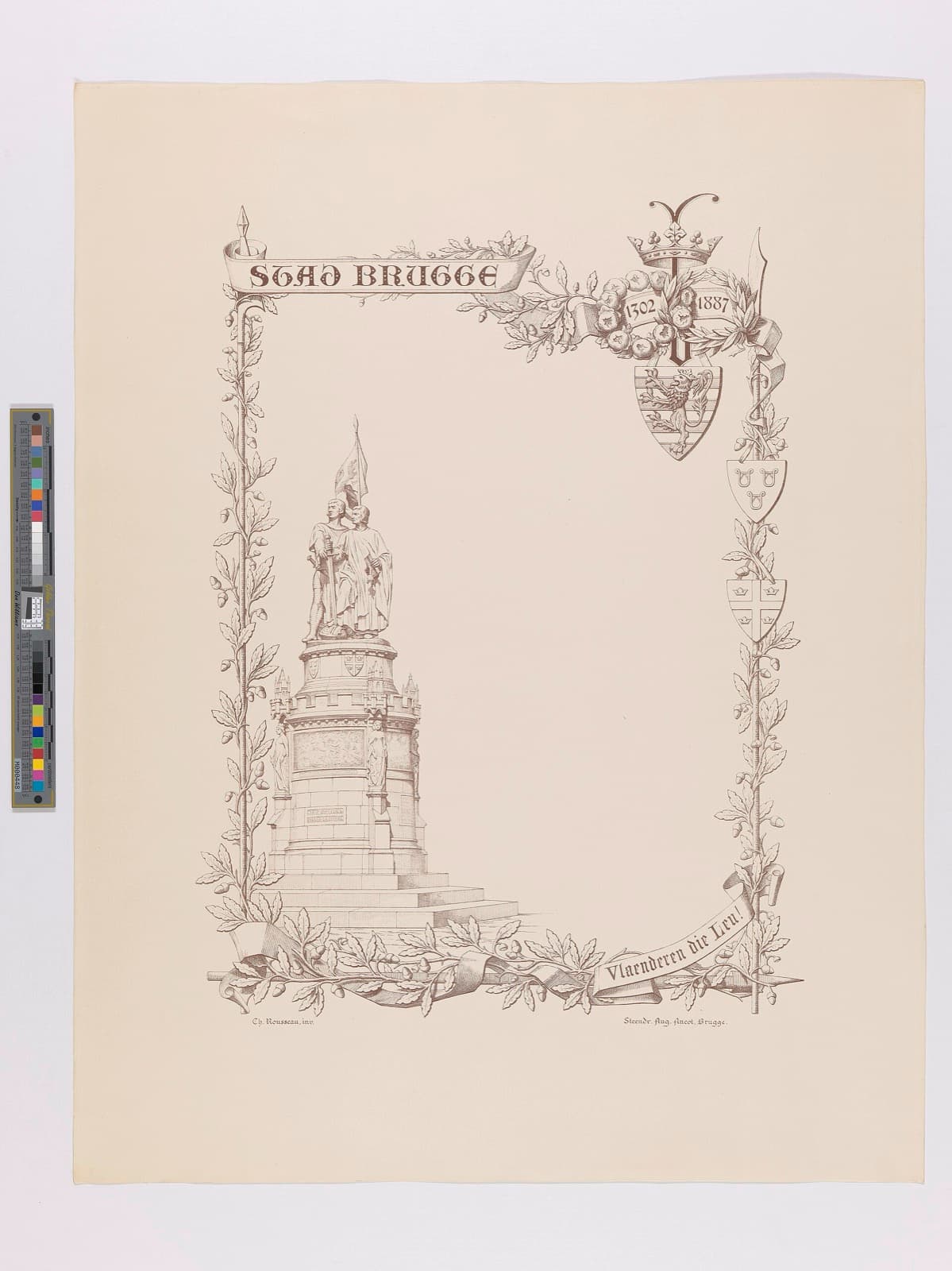
Overview
One Day in Bruges: A Walkable Itinerary from Morning to Dusk
8 min
Thematic
Best Culture Walking Tours in Bruges (2026)
2 min
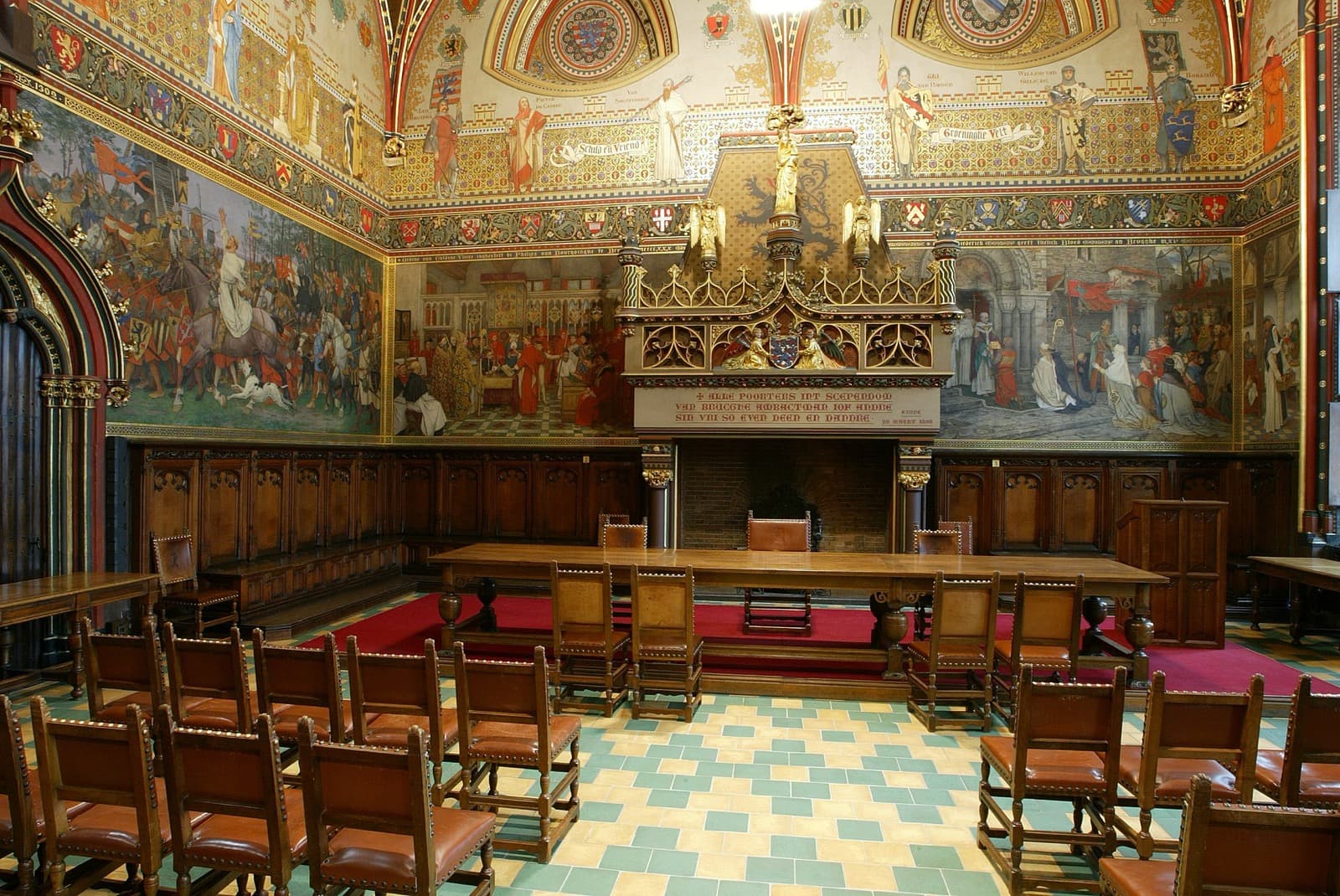
Thematic
Why Bruges Is Europe's Best-Preserved Medieval City
7 min
Companion
The Silent Beguinage: How an Emptied Harbour Preserved Bruges
6 min
Deep dive
Minnewater in Bruges: The Lake of Love That Was Once a Harbor
6 min
Read
What to Eat in Bruges: The Local Dishes and How to Order Them
6 min
Read the walk
The full story of The Canals: Venice of the North and the Silent Beguinage, in words. Prefer to listen? Play it narrated, from home or on location.
Introduction
Bruges, in Belgium, is often called the Venice of the North, and this route reads the city the way it was built to be read: through its water. The town grew where a tidal inlet reached inland, and a web of canals, the reien, once carried the ships and barges that made Bruges one of the busiest ports of northern Europe. When the sea route silted and the golden age ended, the harbour emptied, and that emptiness is the quiet reason the medieval city was never torn down. So the calm you will feel is not decoration. It is survival, a working harbour that history switched off, and you get to move through it at your own clock, no group at your back, no boat queue you must join. This is a continuous walk on foot of about seven stops, roughly ninety minutes at an easy pace, and close to three kilometres of quays, bridges, and green ramparts. It begins at the Minnewater, the Lake of Love, the old inner harbour, then enters the walled silence of the Begijnhof, the Beguinage. From there the leafiest, least crowded canals, the Dijver and the Groenerei, lead past hump-backed stone bridges to the Spiegelrei, the Hanseatic waterfront where foreign merchants once moored, and finally out to the green wall where the windmills still stand. Linger on any bridge as long as you like. When you arrive at the Minnewater, the Lake of Love, begin with stop one.
1. The Minnewater: The Lake Where the Ships Once Waited
You are standing at the Minnewater, a broad, still basin of water at the southern edge of the old town. Today people call it the Lake of Love, and Visit Bruges markets it, fairly, as a romantic corner: a lock house on the bank, a low bridge, willows leaning over green water. Sit here as long as you please. Nobody is going to move you along. But before it was a place for lovers, this was working water. In the medieval golden age the Minnewater and its canals were transport corridors, an inner harbour where barges moored, tying the city through the Reie to the North Sea. The lake where the ships once waited is now the calmest water in Bruges. The name carries a legend, and it is worth marking clearly as legend. One story links Minnewater to minnen, to water nymphs said to live here, and the name plays gently on the Dutch word for love. Another legend belongs to the swans. In fourteen eighty-eight the townspeople of Bruges executed an official of Maximilian of Austria named Pieter Lanchals, whose family name suggested long neck, and whose coat of arms bore a swan. Maximilian, held captive in the city and forced to watch, is said in folklore to have ordered Bruges to keep swans, the long-necks, on its waters forever. Some retellings even count fifty-two swans. None of that is documented fact; it is the story the water tells about itself. What is true is quieter. The harbour emptied when the trade left, and the emptiness is why this all survived. Watch the reflection settle, and walk on when you are ready.
2. The Beguinage: The Silent Walled Court of White Houses
Cross the bridge, pass through the gate, and the noise of the city drops away. This is the Begijnhof, the Princely Beguinage Ten Wijngaerde, the only surviving beguinage in Bruges, and the deepest quiet on this whole walk. About thirty whitewashed houses stand around a central green planted with tall poplars, with a Gothic church at one side. In spring the grass fills with daffodils; in any season the loudest sound is usually the wind in the trees. Stand in the middle of the court with no group at your back and simply let it be silent. The place was founded about twelve forty-four by Margaret of Constantinople, Countess Margaret the Second of Flanders, and recognized as an independent parish in twelve forty-five, then placed under royal protection as a Princely Beguinage in twelve ninety-nine. The women who lived here were beguines: single or widowed laywomen who led a religious, celibate, near-silent life without taking permanent monastic vows. They could keep their own property. They could, in principle, leave. It was a distinctly medieval, northern European way for women to live a spiritual life on their own terms, inside a wall but not behind a cloister's locked door. UNESCO records the beguines as women who dedicated their lives to God without retiring from the world, and inscribed this court in nineteen ninety-eight as part of the Flemish Beguinages, thirteen sites across Flanders. Since nineteen twenty-seven the houses have sheltered a community of Benedictine nuns, so the quiet is still kept, still real. The courtyard, garden, and church are free to enter. Only the small Beguine's House museum charges a couple of euros, if you want to see how one of these lives was arranged. Otherwise, the whole gift here is free: the hush, the poplars, and the white walls.
3. Wijngaardplein and the Bonifacius Bridge: The Corner That Looks Older Than It Is
Just outside the Beguinage gate is the Wijngaardplein, a small square, plein meaning square, with a canal running past and an old stone horse trough set into the ground. A short step away, tucked between the Church of Our Lady, the Onze-Lieve-Vrouwekerk, and the mansion called the Gruuthuse, is one of the most photographed corners in all of Bruges: the Bonifacius bridge, brug meaning bridge, a tiny arched stone footbridge over a narrow, still canal. It looks impossibly old. Ivy trails down the walls, the water sits dark and green, the towers rise behind it. And here is the honest surprise, which is really the point of stopping here. This bridge is one of the youngest in the city. It was built in nineteen ten, to help residents and the growing number of visitors cross the water, and it was deliberately designed to blend into its ancient surroundings. It worked. It is named for Saint Boniface, an English Benedictine monk, and it has picked up the nickname the Kissing Bridge, because it is small enough that two people meeting on it stand very close. There is a quiet lesson in that. In a city this perfectly preserved, the beautiful is not always the ancient, and it does not have to be. Some of what you will love in Bruges is genuinely medieval, and some was made a hundred years ago by people who understood exactly what the old city looked like and chose to honour it. Linger for the reflection as long as you like. There is no queue on the bridge, and no schedule pulling you off it. Then follow the canal onward toward the leafy central quays.
4. The Dijver: The Leafy Central Canal Where the City Meets Its Reflection
You have reached the Dijver, a tree-lined canal quay in the very heart of the old town. Kaai, or kai, means quay, and that is what the Dijver is, a broad walkway along the water shaded by big trees. Behind you rise the backs of the Gruuthuse, a fifteenth-century nobleman's…
Full narration for this stop unlocks with the tour.
5. The Groenerei: The Greenest, Stillest Canal and Its Medieval Bridges
This is the Groenerei, the Green Canal, and rei simply means canal. Of all the central waterways it is the greenest and the stillest, hung with trees and creepers, ivy spilling down the old brick, seventeenth-century mansions and almshouses standing shoulder to shoulder along…
Full narration for this stop unlocks with the tour.
6. The Spiegelrei and the Hanseatic Quays: The Vanished Golden-Age Port
You have come to the Spiegelrei, and with its neighbour the Spinolarei it runs through Jan van Eyck Square, Jan van Eyckplein, plein meaning square, rei meaning canal. This is the old waterfront of the Hanseatic quarter, and it is the reason Bruges existed at all. In the golden…
Full narration for this stop unlocks with the tour.
7. The Ramparts and the Windmills: The Green Wall on the Edge of the Water City
Your last stop is the Kruisvest, the green eastern rampart of Bruges. Vest means rampart, and that is what this is: the raised earthwork of the old city wall, now a long park path open to the sky and the wind. After the closed courts and the tree-shaded canals, the space up here…
Full narration for this stop unlocks with the tour.