Markt: The Two Squares That Ran a Medieval City
50 min · 0.7 km · easy
Bruges rewards a slow, on-foot visit: give it two days if you can, get around the compact old town by walking, aim for spring or early autumn mornings, keep an ordinary eye on your bag in crowds, and plan on roughly 80 to 120 euros a day if you travel modestly. The historic center is small, pedestrian-friendly, and paved in cobbles, so almost everything a first-time visitor wants sits within a fifteen-minute walk of the Markt. This guide answers the practical questions travelers actually ask, with prices and times checked against 2026 sources, then points you to the self-guided audio walks that read the city stop by stop.
How many days do you need in Bruges?
One full day covers the headline sights, two days is the comfortable answer, and three days lets you slow down and add a day trip. Most first-time visitors are happy with two days: one for the two central squares and the canals, one for the museums and churches. The center is so compact that a single well-planned day can still take in the Markt, the Burg, the Rozenhoedkaai canal corner, and the Beguinage, but you will be moving briskly and skipping the interiors.
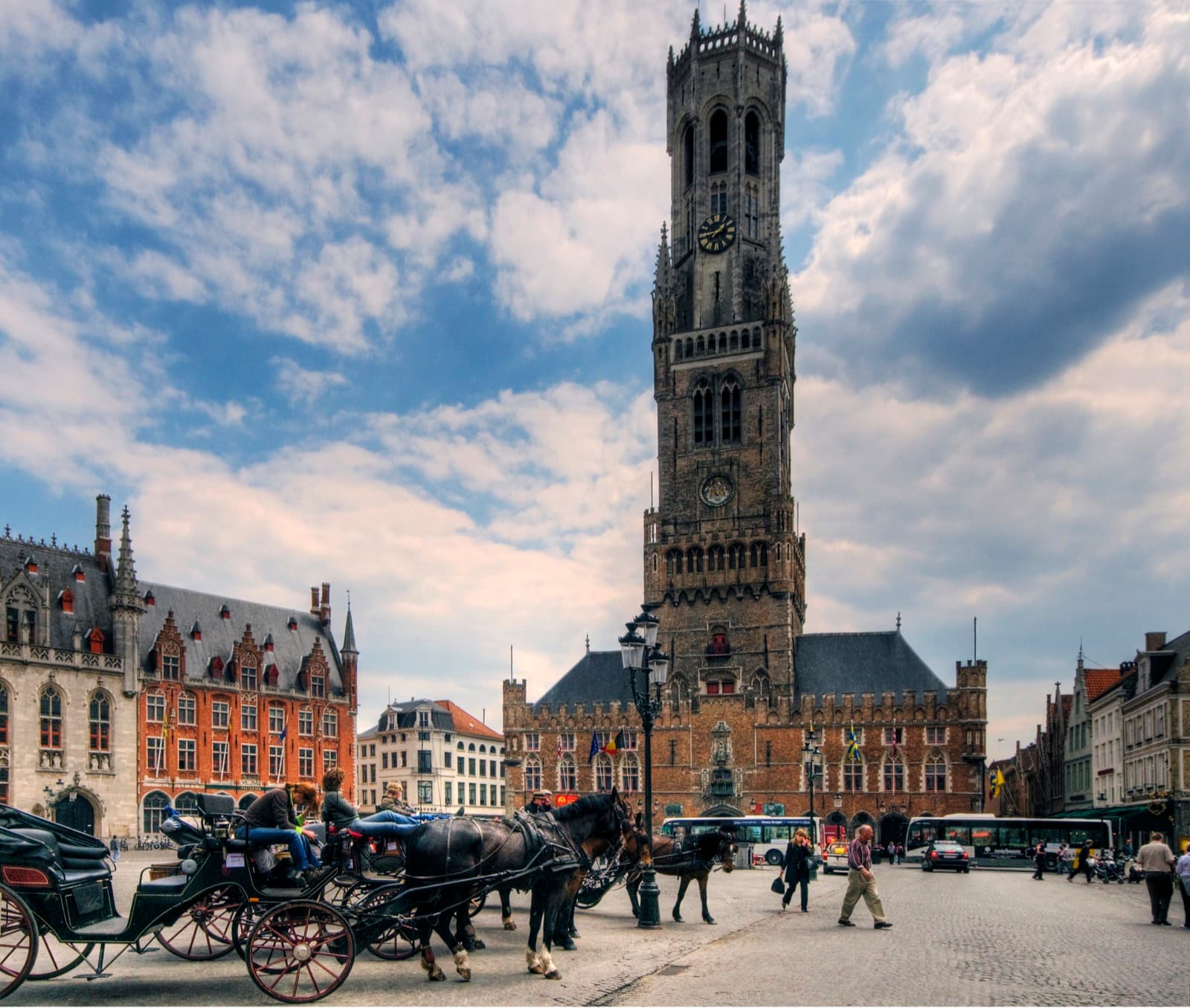
If you only have a day, walk it. The three Roamer routes are built to layer cleanly: Markt: The Two Squares That Ran a Medieval City covers the commercial and civic core in about 50 minutes over roughly three-quarters of a kilometer, the canals-and-Beguinage walk handles the water and the quiet walled court, and the golden-age-art walk takes in the Church of Our Lady, the Groeningemuseum, and Saint John's Hospital. You can chain two of them in a full day on foot.
How do you get to Bruges?
Hear a stop from this walk
The Burg and the Town Hall: The Square of Power
Most visitors arrive by train, and it is the easy option. Direct trains run from Brussels to Bruges roughly every half hour, with the journey taking about 53 to 57 minutes and no change required. Trains from Brussels Airport and Ghent also connect frequently. Bruges station sits about 1.5 kilometers south of the Markt, which is a walk of around 20 minutes through the edge of the old town, or a short local bus ride into the center. A single De Lijn bus ticket is about 3 euros and gives you an hour of travel; a taxi from the station runs around 10 euros.
Driving into the historic center is discouraged. The old town is a low-emission, tightly regulated zone with limited parking, so most drivers use a park-and-ride on the ring road and continue in on foot or by bus.
How do you get around Bruges?
On foot. The historic center is compact and largely pedestrian-friendly, and nearly every sight a visitor comes for is inside a small ring of canals you can cross in fifteen or twenty minutes. Walking is not just the cheapest way around, it is the way the city is meant to be seen, which is exactly why a self-guided audio walk fits here: you set the pace, pause on a bridge as long as you like, and let the route do the navigating.
The canal boat is the one add-on worth planning for. A standard canal cruise lasts about 30 minutes and costs about 15 euros for an adult in 2026, a fixed price set by the city and the same at all five operators. You cannot reserve as an individual; you buy at the boarding jetties, and there can be a wait in high season. Bikes are common and locals ride fast through the old town, so treat cycling as an option for the ramparts and outskirts rather than the crowded core.
When is the best time to visit?
April, May, September, and October are the sweet spot: mild air, softer light, and smaller crowds than high summer. December has its own draw with the Christmas market, though it is busy and cold. June through August brings the warmest canal-side afternoons and the largest crowds, so if you come then, do the squares and the Rozenhoedkaai early in the morning or in the last hour of daylight when the day-trippers have gone. The quietest and cheapest stretch is January to early March, setting aside the Valentine's rush.
One date to know: each spring, on Ascension Day, the Basilica of the Holy Blood's relic is carried through the streets in the Procession of the Holy Blood, one of the city's great civic-religious events. It is remarkable to witness, but the center is packed that day.
What does it cost, and what are the entry fees?
Budget travelers can plan on roughly 80 to 100 euros a day, and a comfortable mid-range day runs higher once you add sit-down meals and a nicer room. The squares themselves are free to stand in, and much of the pleasure of Bruges is free: the canal views, the Beguinage green, the Markt and the Burg.
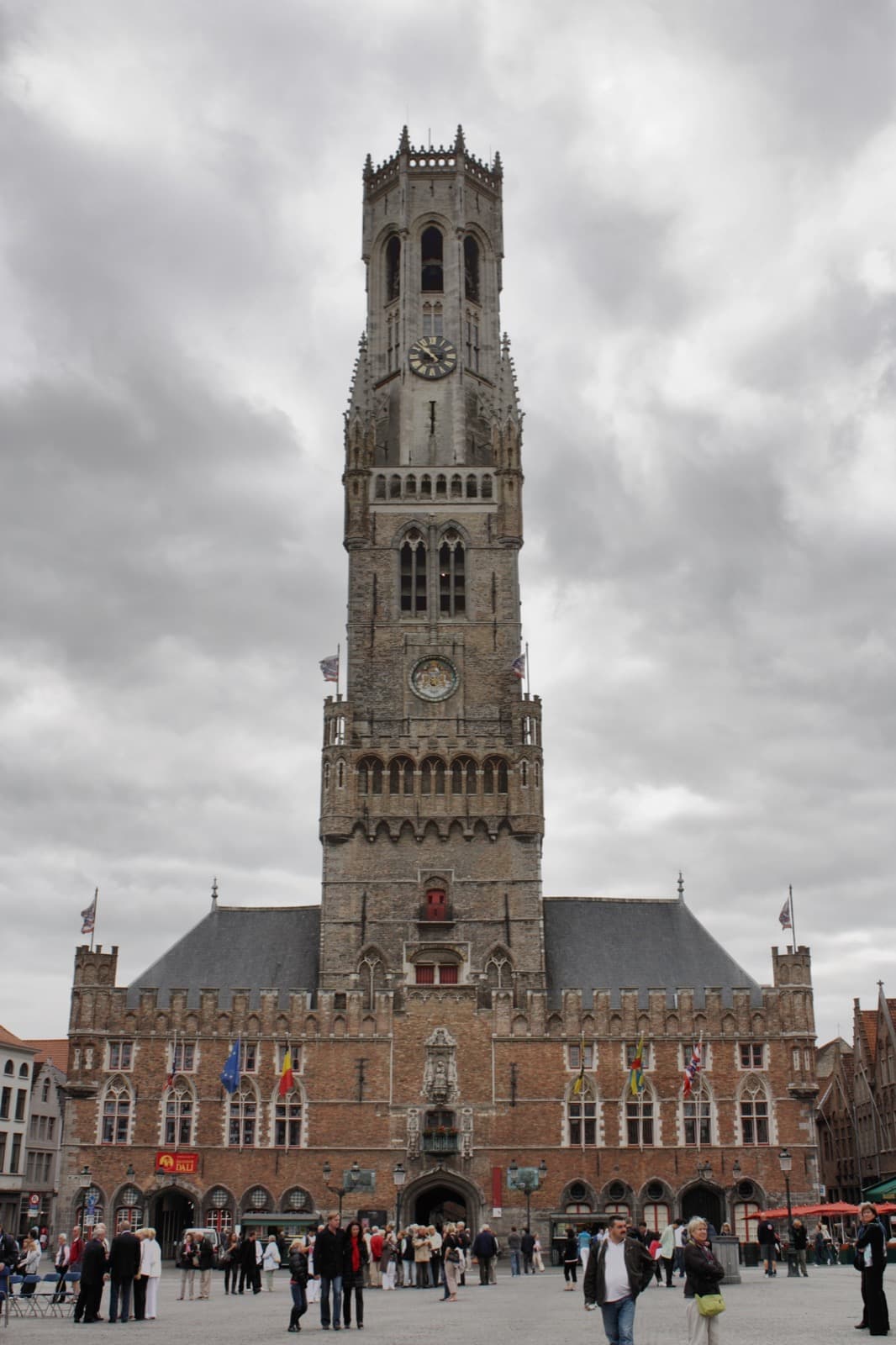
For the ticketed sights, check current prices on the official Musea Brugge site before you go, but as a 2026 guide: the Belfry climb is about 15 euros for an adult, with timed entry you should book ahead, open daily around 9:30 in the morning to 6 in the evening, and 366 narrow steps to the top. The Town Hall's painted Gothic Hall and the major museums each carry their own modest entry fee, while the church of the Basilica of the Holy Blood is free to enter (its small treasury museum charges a few euros). If a specific figure matters to your budget, the museum's own site is the source to trust.
Carry a little cash in euros for tower and church admissions and small purchases, though cards are widely accepted.
Is Bruges safe?
Yes, Bruges is a low-risk destination, and violent crime against visitors is rare. The honest, non-alarming version: your real hazards here are ordinary ones. Pickpockets work crowds, so keep your bag zipped and in front of you on busy days at the Markt, at the boat jetties, on the shopping streets, and around the station. Watch for cyclists, who move quietly and often have priority, before you step off a curb or drift into a lane while looking up at the Belfry.
The most common way to get hurt is underfoot. The old town is paved in uneven cobbles that catch heels and wheels, and many canal quays, including the Rozenhoedkaai and the Dijver, have low or no railings at the water's edge. Wear flat, comfortable shoes, mind children near the water, and take the wet lanes and the Fish Market slabs slowly. Northern weather turns quickly, so carry a waterproof; boat tours run to the weather and season and the tower climb can close in high wind.
Turning the plan into a walk
Once you are in the center, the city reads best as a set of short, connected routes rather than a checklist. Start with the two squares to understand how a merchant city ran itself, then follow the water to the Beguinage, then give a morning to the art. The Roamer audio walks are structured exactly this way, GPS-triggered and self-paced, so you never look at a map when you could be looking at the reflection in the canal. See the full set on the Bruges walking tours hub, or open the city page at /belgium/bruges to pick your first route.
Sources
Frequently asked questions
- How many days do you need in Bruges?
- One full day covers the main sights, but two days is the comfortable answer, and three days lets you slow down and add a day trip. The historic center is compact enough to walk the two central squares, the canals, and the Beguinage in a single busy day, with a second day for the museums and churches.
- How do you get from Brussels to Bruges?
- Direct trains run from Brussels to Bruges roughly every half hour and take about 53 to 57 minutes with no change. Bruges station is around 1.5 kilometers from the central Markt, about a 20-minute walk, or a short local bus ride for roughly 3 euros.
- What is the best time of year to visit Bruges?
- April, May, September, and October offer mild weather and smaller crowds. June through August is warmest but busiest, and December is festive but cold and crowded. January to early March is the quietest and cheapest stretch, aside from Valentine's Day.
- Is Bruges safe for tourists?
- Bruges is a low-risk destination and violent crime against visitors is rare. The real hazards are ordinary: pickpockets in crowds at the Markt, boat jetties, and station, fast cyclists who often have priority, uneven cobblestones, and canal quays with low or no railings.
- How much does a canal boat tour in Bruges cost?
- A standard canal cruise lasts about 30 minutes and costs about 15 euros for an adult in 2026, a fixed price set by the city and identical at all five operators. Individual visitors cannot reserve in advance; tickets are bought at the boarding jetties, and there can be a wait during busy periods.
- How much does it cost to climb the Belfry in Bruges?
- The Belfry climb costs about 15 euros for an adult in 2026, with timed entry you should book ahead. It is open daily from around 9:30 in the morning to 6 in the evening, and the climb is 366 narrow steps. Confirm current prices on the official Musea Brugge site.
Ready to experience it?
Markt: The Two Squares That Ran a Medieval City
50 min · 0.7 km · easy
More from Bruges
Explore more at your own pace.
The Church of Our Lady in Bruges: A Michelangelo Madonna and the Frozen Golden Age
The Markt and the Belfry: How Two Squares Ran Medieval Bruges
The Silent Beguinage: How an Emptied Harbour Preserved Bruges
Minnewater in Bruges: The Lake of Love That Was Once a Harbor
The Basilica of the Holy Blood in Bruges: One Church, Two Chapels, One Relic