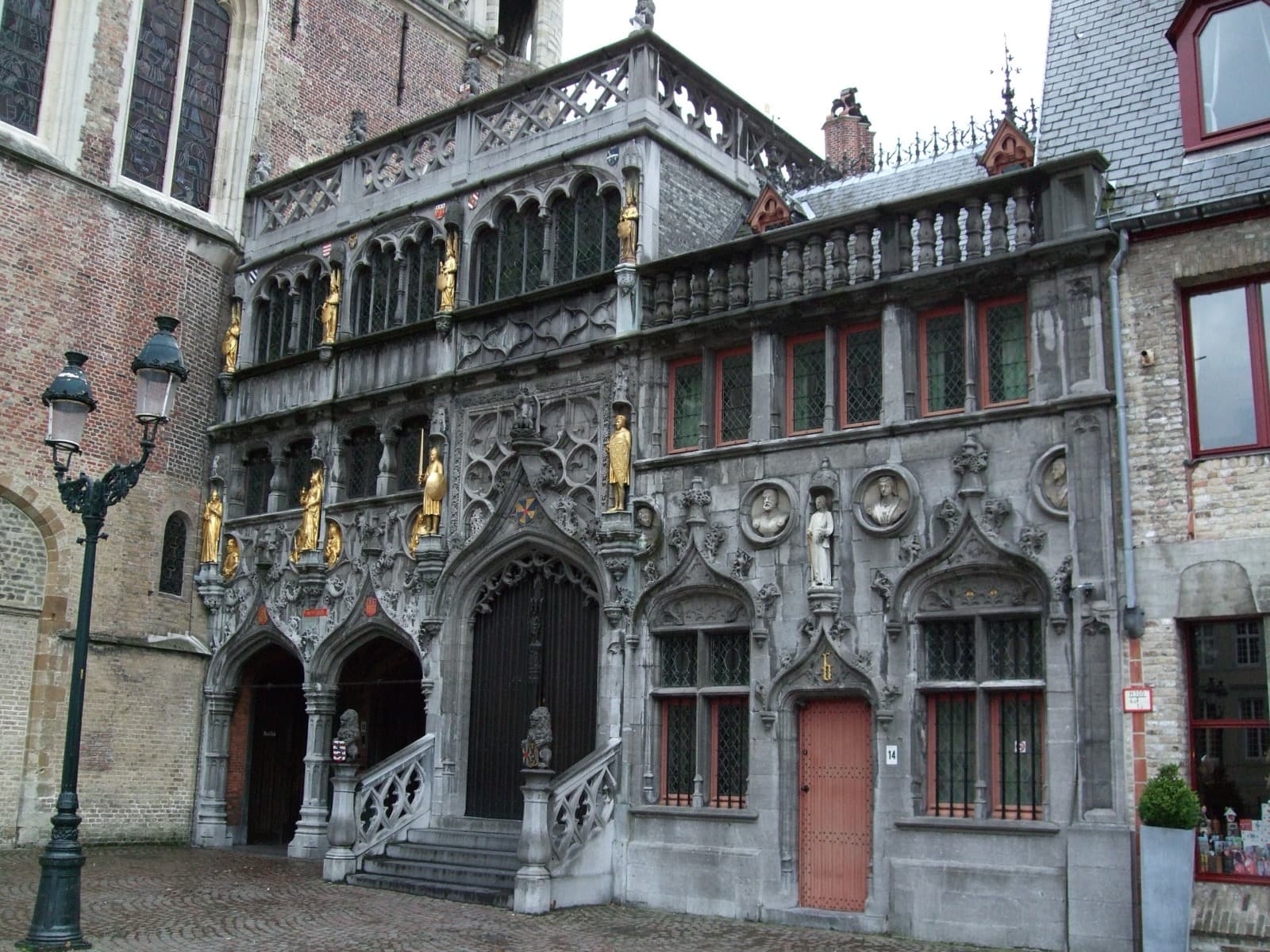
On the Burg square in Bruges stands the Basilica of the Holy Blood, and the first thing to understand is that it is not one church but two, stacked one directly on the other, holding a single venerated relic between them. Below is a plain, heavy Romanesque chapel dedicated to Saint Basil. Above it, reached by a stair, is an ornate Gothic upper chapel where the city keeps a phial said to hold a cloth stained with the blood of Christ. The object is real and old. The origin story attached to it is a tradition. The most rewarding thing you can do standing in front of this building is to hold those two facts apart in your mind, because the church itself does exactly that.
Two chapels, two centuries, two moods
Start at the bottom. The lower chapel, dedicated to Saint Basil, was built between 1134 and 1149 as a private double chapel for the count of Flanders. It is Romanesque: thick pillars, low stone rib-vaulting, sober and almost fortress-like. In a coastal region where so much medieval building was later reworked or lost, this survives as an unusual piece of undisturbed twelfth-century stone. There is very little decoration to distract you. The chapel was built to feel solid, and it still does.
Then you climb. The upper chapel could not be more different. It was rebuilt in the Gothic style during the late fifteenth and sixteenth centuries and reworked again in the nineteenth, and it comes at you as color: painted walls, gilding, stained glass, a room designed to hold and honor an object rather than to shelter a congregation. The contrast between the two levels is the whole experience of the building. You move in a few steps from the bare stone of a fighting count's private chapel to the decorated theatre of a relic that drew pilgrims for centuries. One building, two temperaments, roughly four hundred years apart.
The relic, and the honest version of its story
Hear a stop from this walk
The Burg and the Town Hall: The Square of Power
The relic in the upper chapel is a small rock-crystal phial. Inside is a cloth said to be stained with the blood of Christ, and this is where a careful visitor separates what is documented from what is believed.
By long tradition, Count Thierry of Alsace carried the relic back from Jerusalem around 1150, after the Second Crusade. It is a clean, heroic story: a crusading count brings the holiest of relics home to his city. Modern scholarship more often tells a messier version. It tends to connect the relic instead to the sack of Constantinople in 1204 during the Fourth Crusade, when Western armies looted the Byzantine capital and its churches of countless treasures. The phial itself supports the messier version: the rock-crystal vessel is thought to be an eleventh or twelfth century Byzantine perfume bottle, an everyday luxury object from the Constantinople region that was later repurposed to hold something sacred.
So the object in front of you is genuinely old, older in fact than many of the tales told about it. What is uncertain is not the phial but the route it took to Bruges and the meaning first assigned to it. That gap between artifact and legend is not a flaw in the story. It is the story, and it is more interesting than either version alone.
Why a private chapel became a basilica
For a long time this was simply the count's chapel with a famous relic inside. Its formal status came late. The church was raised to the rank of minor basilica in 1923, a papal designation that marks a church of particular importance. The ornate reliquary that carries the phial dates to 1617, a piece of goldsmith's work made to display the relic on the one day of the year it leaves the building.
That day is Ascension Day, in spring, when the relic is carried through the streets in the Procession of the Holy Blood. It is one of the great civic and religious events of Bruges, a pageant that has run for centuries and pulls the whole city into the streets. If you time your visit for it, understand that the historic center will be packed and the calm you get on an ordinary morning will be gone. For most visitors, the quieter reward is the daily ritual: the relic is brought out for veneration in the upper chapel each afternoon, when it can be seen up close rather than kept in its side tabernacle. Because the exact hours shift from year to year, check the basilica's own schedule before you go.
Standing in front of it
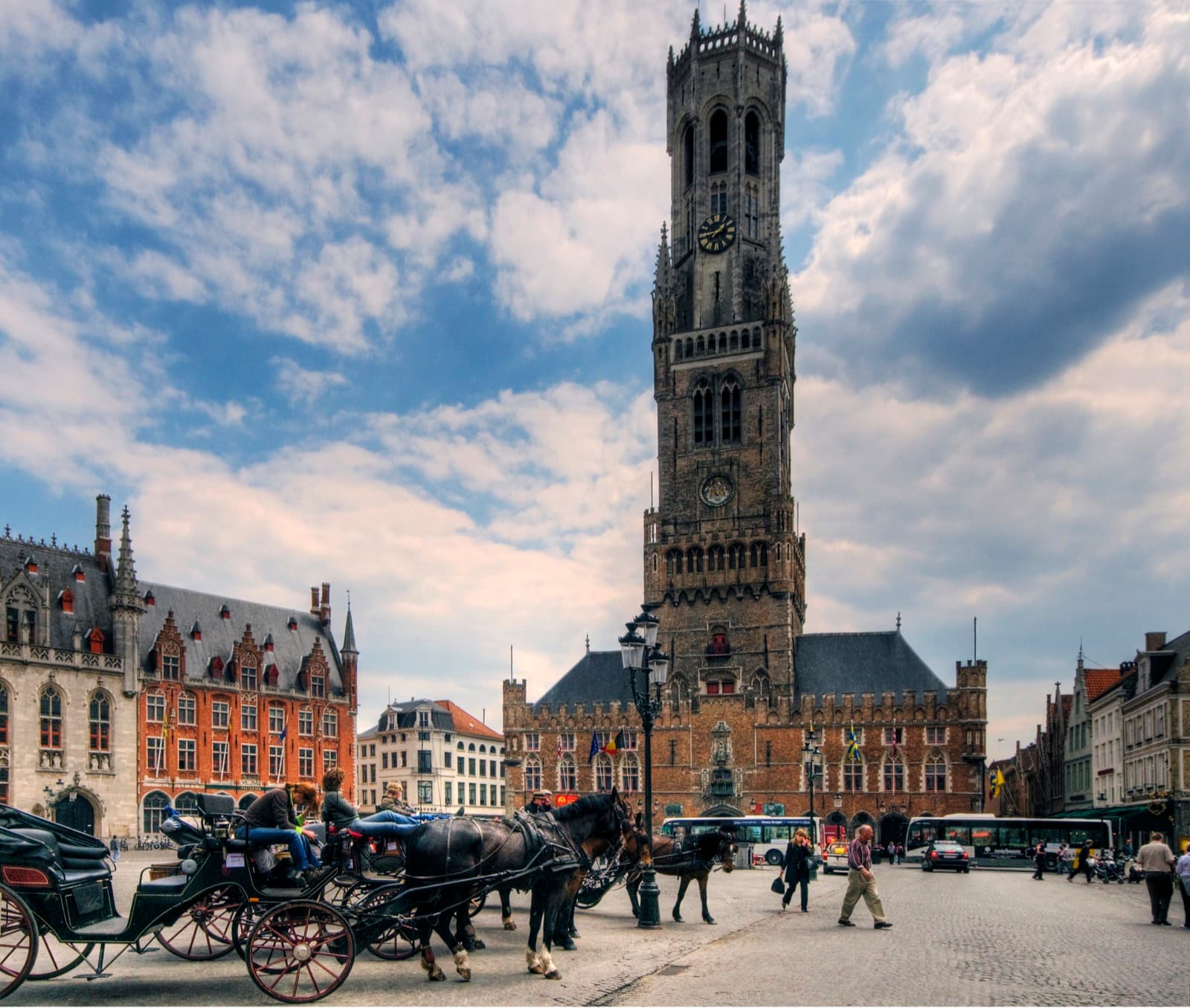
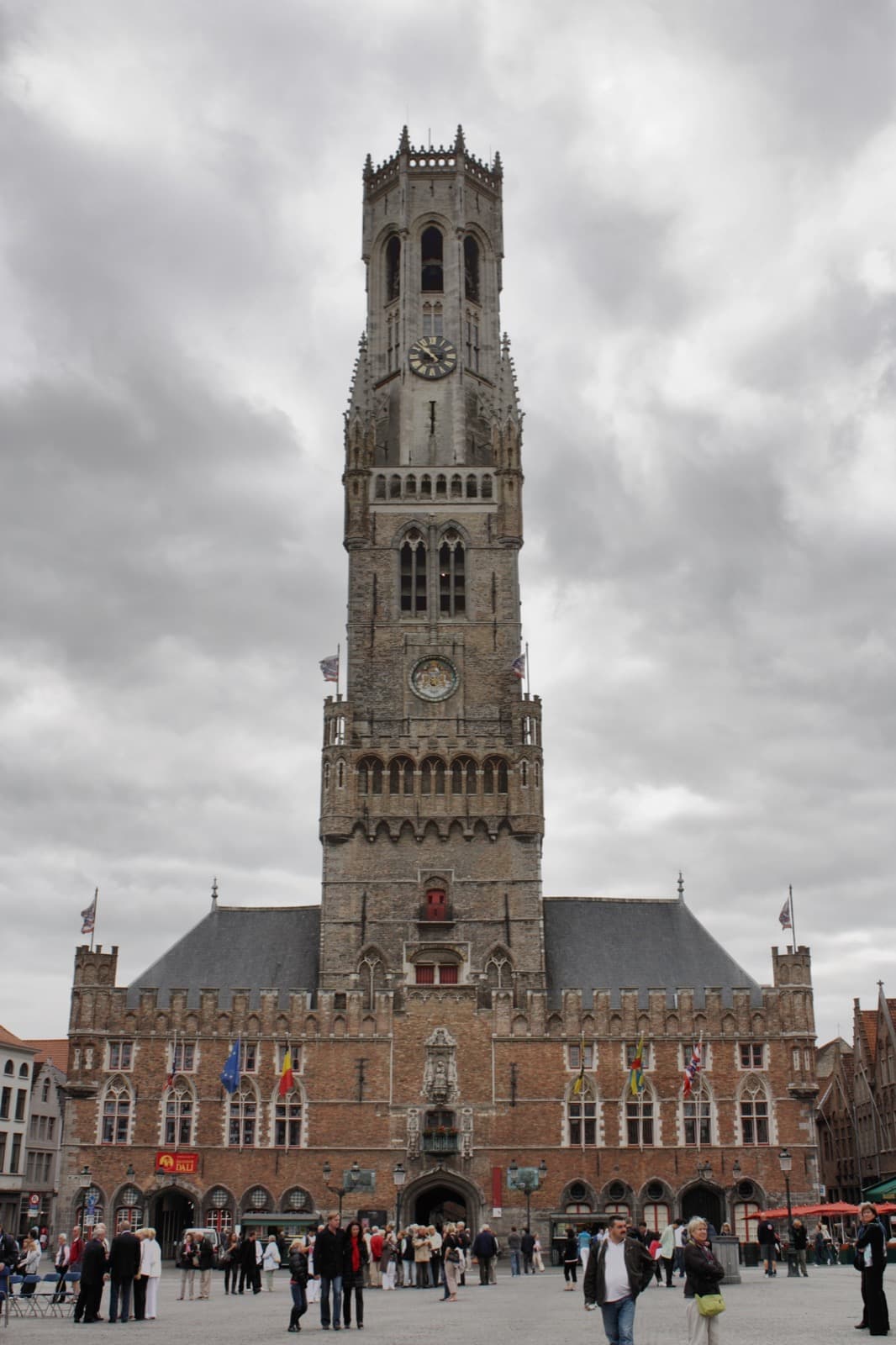
The Basilica sits in a corner of the Burg, the square of power in medieval Bruges, the old fortress ground of the counts of Flanders and the seat of the Town Hall begun in 1376. That placement is not an accident. The count's private chapel belonged with the count's administrative heart. A few hundred meters away lies the Markt, the square of commerce under the leaning Belfry, where the city's cloth wealth was weighed and stored. The Basilica is the point where the merchant city's faith attached itself to its government, all within one small square.
A few practical notes for the visit. This is a working church, not a museum set piece, so keep your voice low and dress modestly. The church itself is free to enter; the small treasury museum, which holds the reliquary and related pieces, charges a modest admission. Take the lower chapel slowly before you climb. The whole point of the building is the change you feel between the two levels, and it is worth arriving quietly enough to notice it.
The Basilica is one of the stops on a short self-guided walk through the medieval core of the city, a route that reads Bruges through its two great squares: the Markt of commerce and the Burg of power. On the bruges-markt-historic-center walk you reach the Basilica after crossing from the Belfry over the cloth trade to the painted Town Hall over the law, and you leave it toward the canal. Doing it on foot at your own pace lets you give the double chapel the few unhurried minutes it needs, with no group at your back and no schedule telling you when to climb the stair. For the wider route and the other stops around it, see our guide to Bruges walking tours, and read more about the city itself at Bruges.
What you take away is not a settled answer about a phial of blood. It is the discipline the church quietly teaches: an object can be old and real, its story can be a tradition, and the most honest way to stand before something venerated is to hold both truths at once.
Sources
- Basilica of the Holy Blood, Wikipedia. Overview of the double chapel, the Saint Basil lower church built 1134 to 1149, the rock-crystal Byzantine phial dated to the eleventh or twelfth century, the competing origin traditions, the 1617 shrine by goldsmith Jan Crabbe, and the 1923 basilica elevation.
- Basilica of the Holy Blood official site (holyblood.com). Institutional history of the church, the lower Saint Basil chapel built by Thierry of Alsace, and the Gothic upper chapel raised at the end of the fifteenth century.
- Visit Bruges (visitbruges.be), Basilica of the Holy Blood. City tourism board page on the church's structure, the relic, and the Procession of the Holy Blood on Ascension Day.
- Bruges City Hall, Wikipedia. The Stadhuis on the Burg, begun in 1376 under the counts of Flanders and completed by 1421, anchoring the square's role as the seat of government.
- National Catholic Register, "Precious Blood of Belgium." Feature on the relic, its veneration, and the annual procession through the city.
Ready to experience it?
Markt: The Two Squares That Ran a Medieval City
50 min · 0.7 km · easy
More from Bruges
Explore more at your own pace.
Bruges Travel Guide 2026: Days, Transport, Timing, Safety, Budget
The Church of Our Lady in Bruges: A Michelangelo Madonna and the Frozen Golden Age
The Markt and the Belfry: How Two Squares Ran Medieval Bruges
The Silent Beguinage: How an Emptied Harbour Preserved Bruges
Minnewater in Bruges: The Lake of Love That Was Once a Harbor