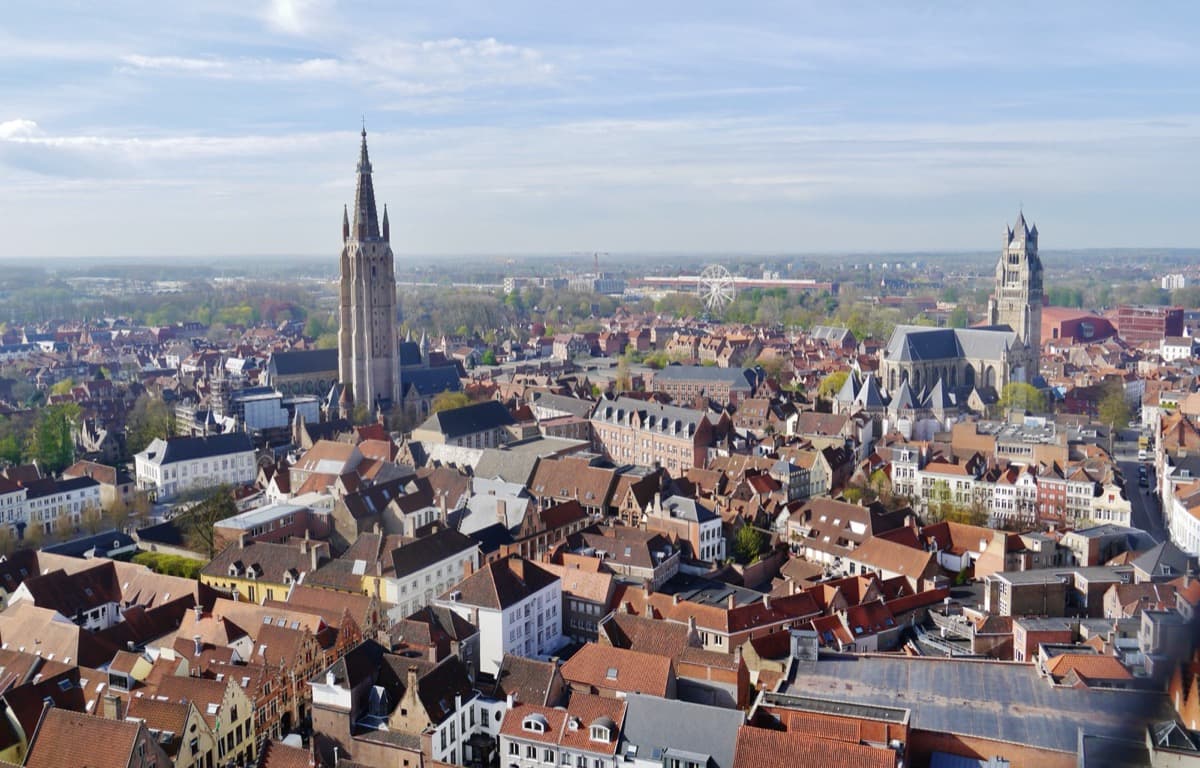
Read Bruges through the two squares that once ran the whole city: the Markt of commerce under the leaning Belfry, and the Burg of power with its painted Town Hall and the Basilica of the Holy Blood, ending on the canal corner where the medieval city gathers into one reflection.
Start · The Markt and the Belfry: The Tower That Ruled the Cloth Trade
DirectionsStops
- 1
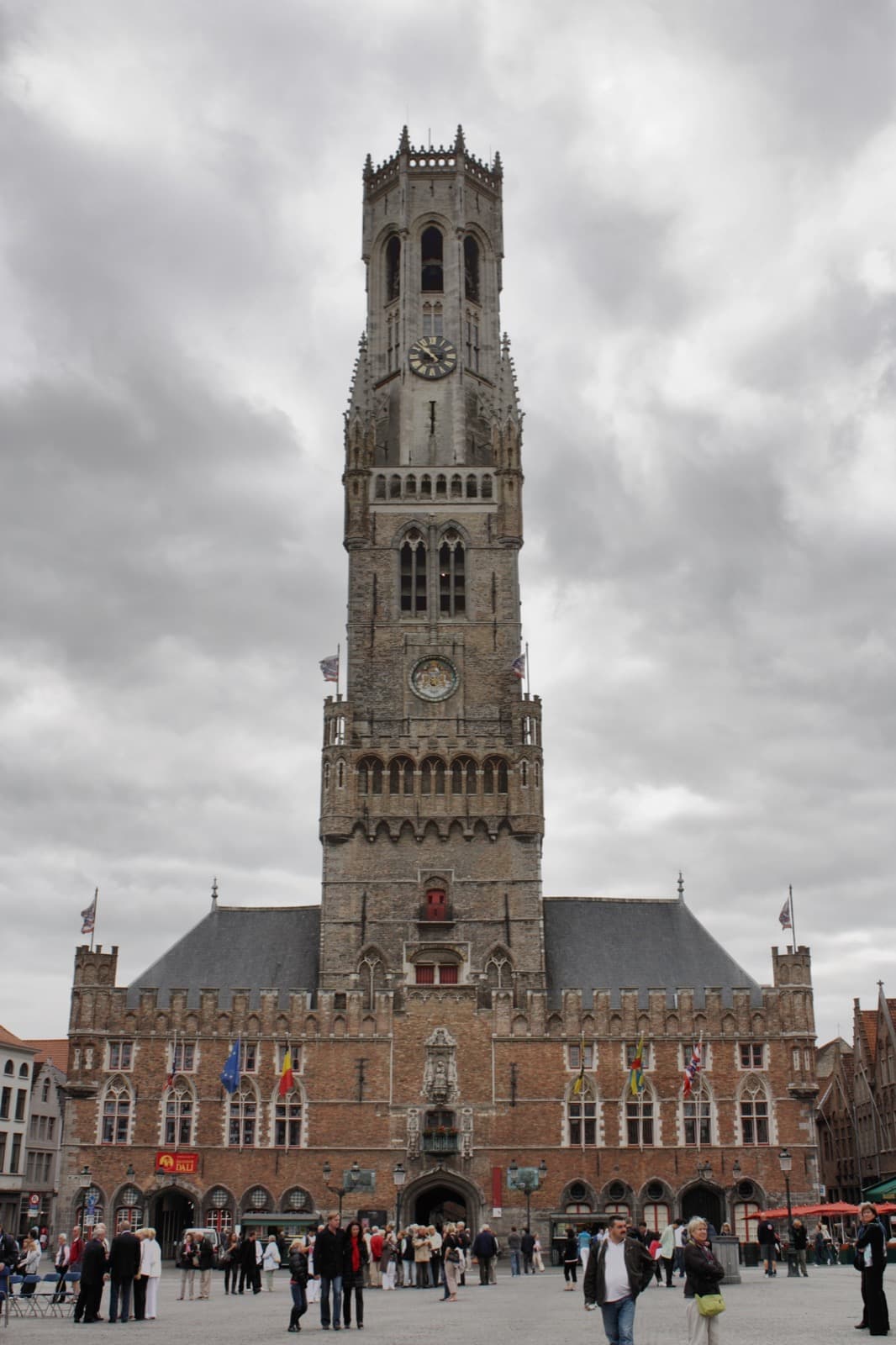
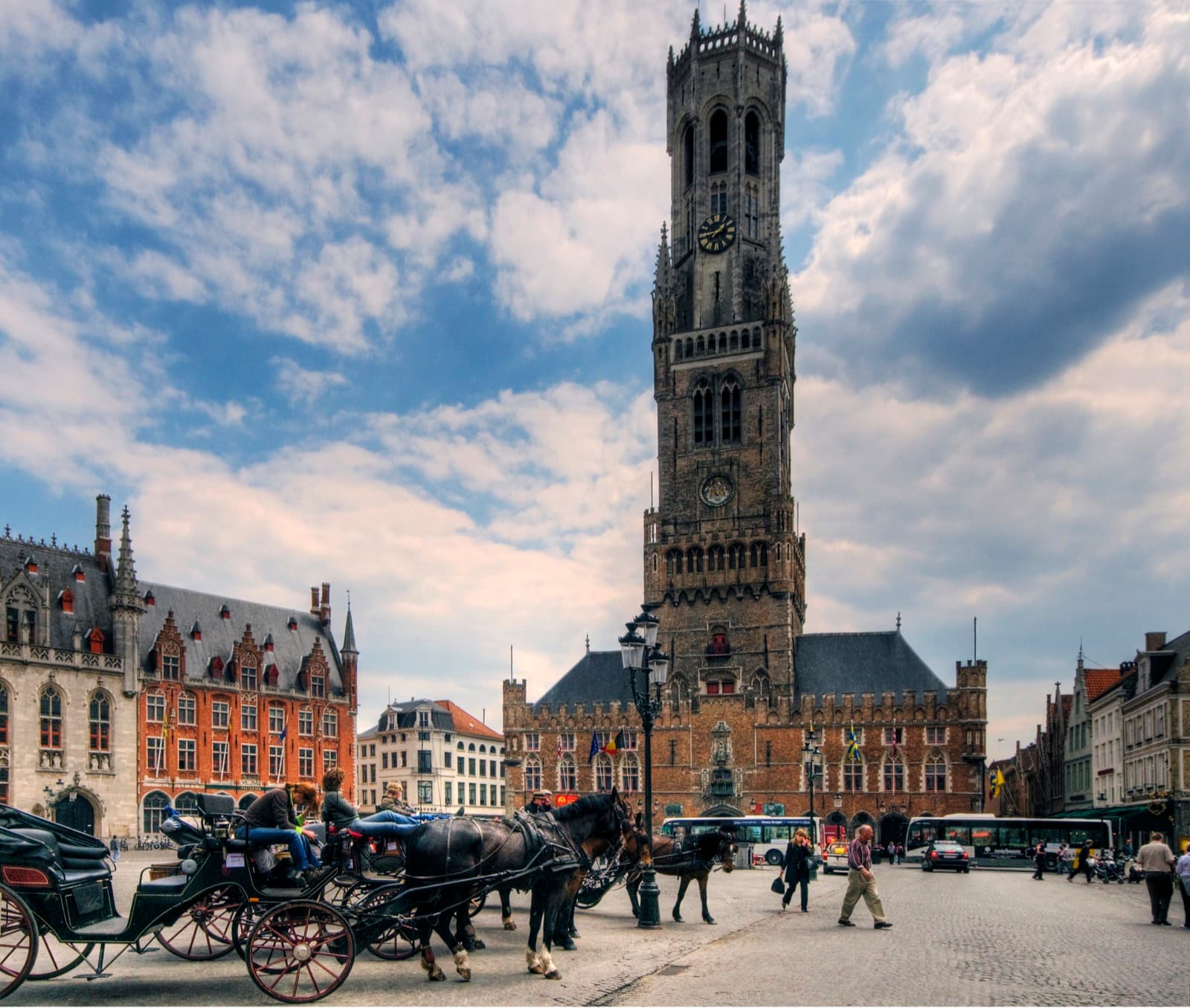
The Markt and the Belfry: The Tower That Ruled the Cloth Trade
The great central market square of Bruges under the leaning brick Belfry that once ruled the cloth trade and guarded the city treasury.
- 2
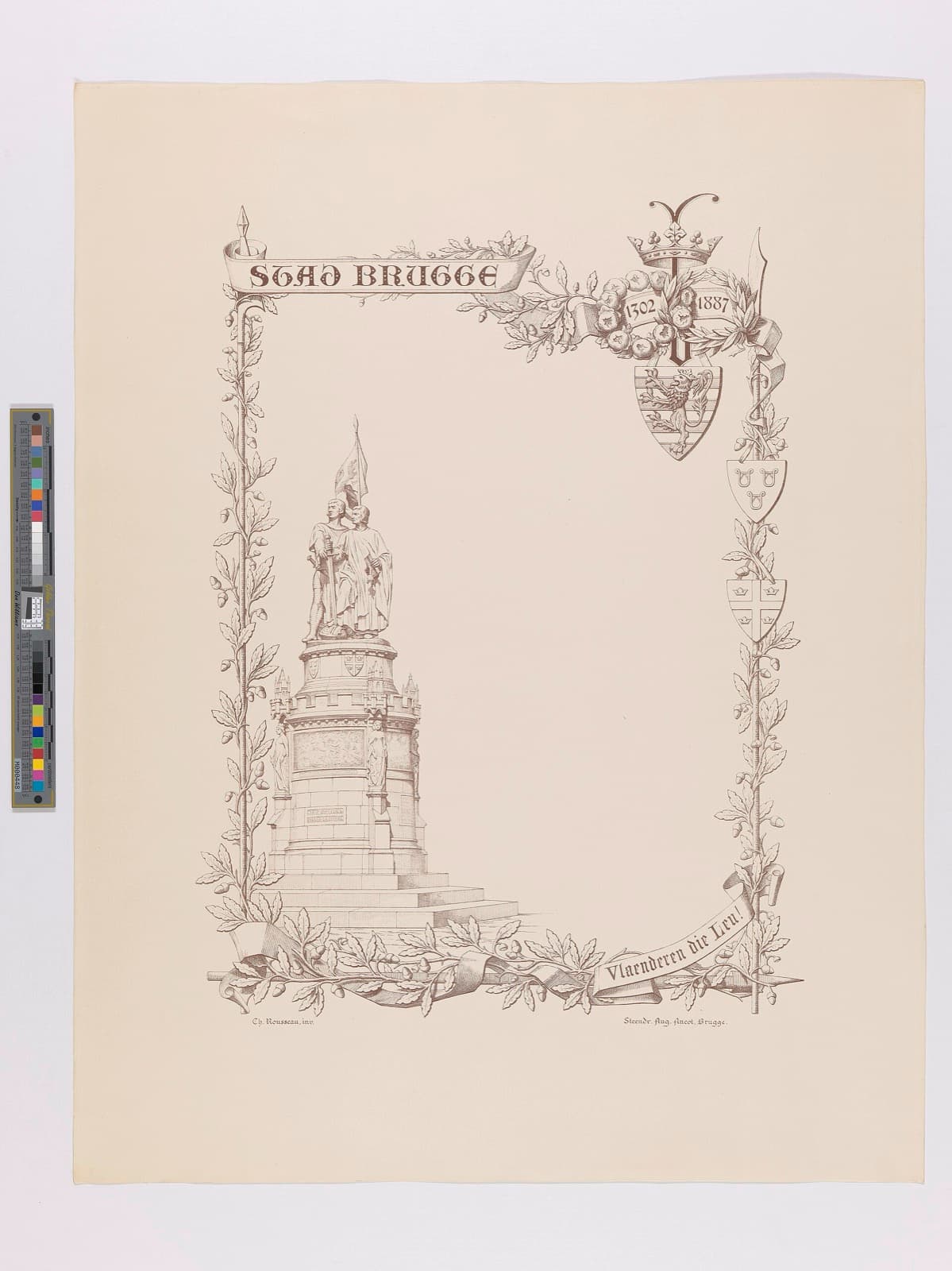
Jan Breydel and Pieter de Coninck: The Guildsmen Who Faced a King
The bronze statue at the centre of the Markt of the two guild leaders the city remembers for the revolt of thirteen oh two.
- 3
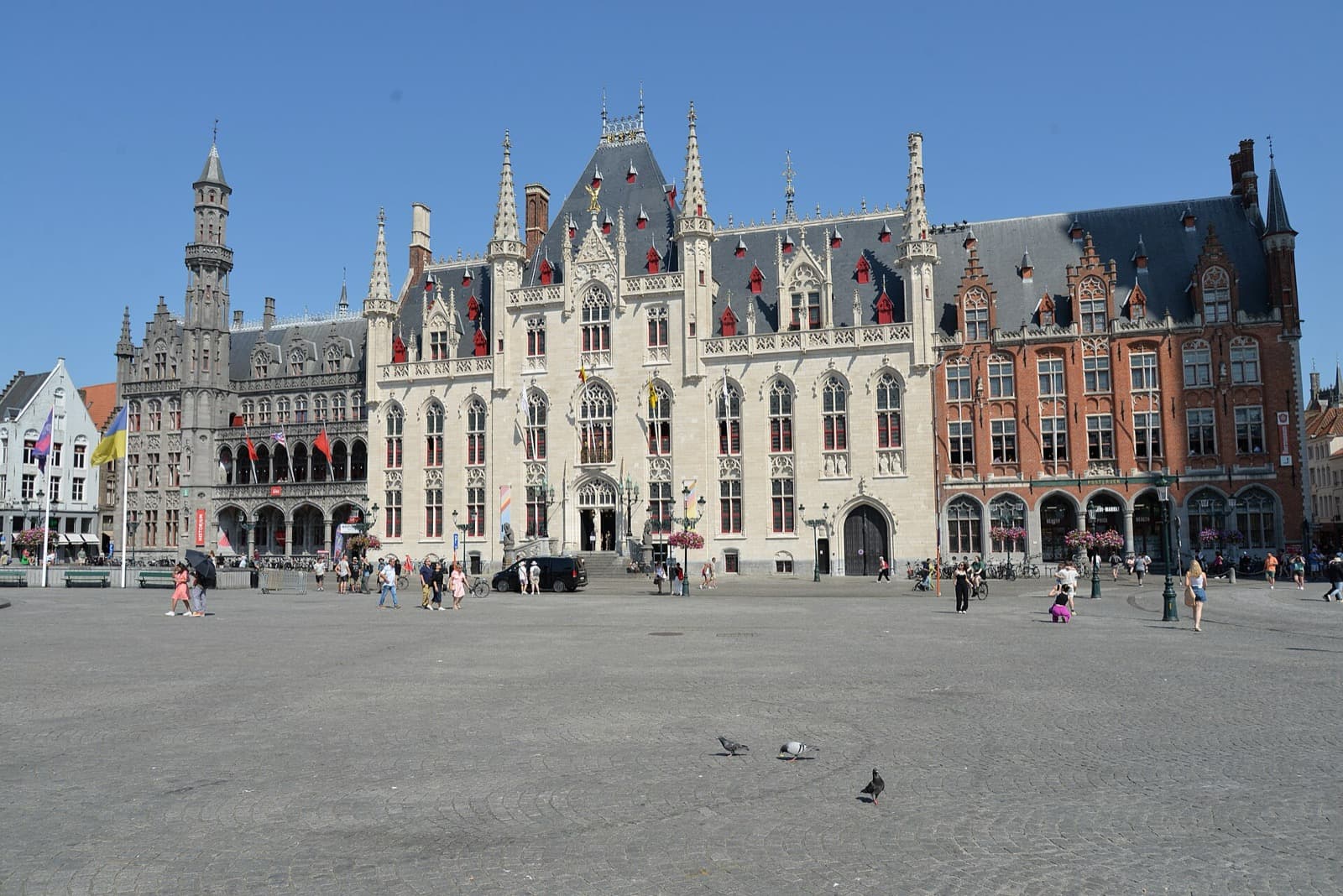
The Provincial Court and the Cranenburg House: Where a City Jailed Its Prince
The neo-Gothic court front on the east side of the Markt and the house where Bruges once held its own Habsburg prince captive.
- 4
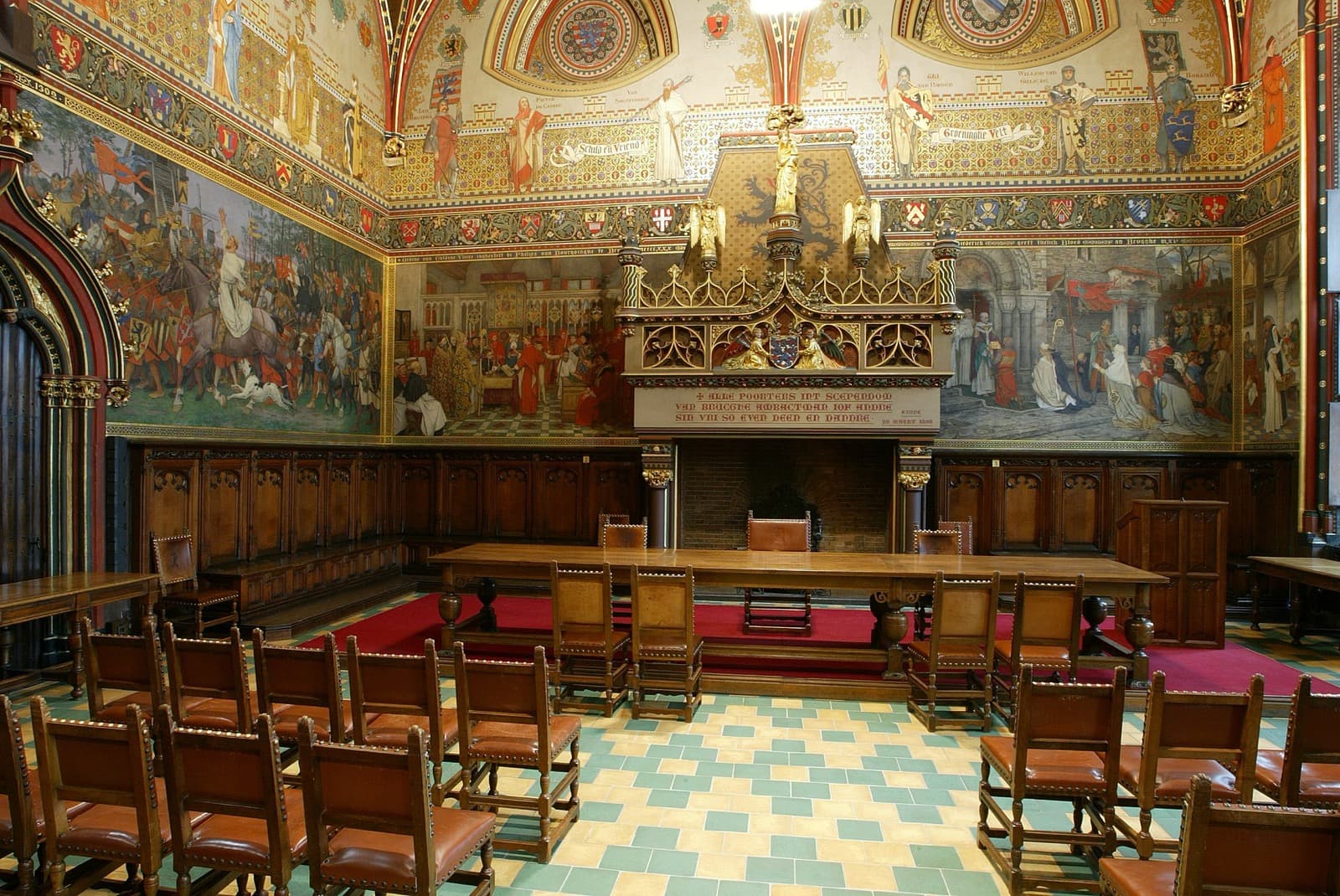
The Burg and the Town Hall: The Square of Power
The second great square, old fortress of the counts of Flanders, dominated by the late-Gothic Town Hall begun in thirteen seventy-six.
- 5
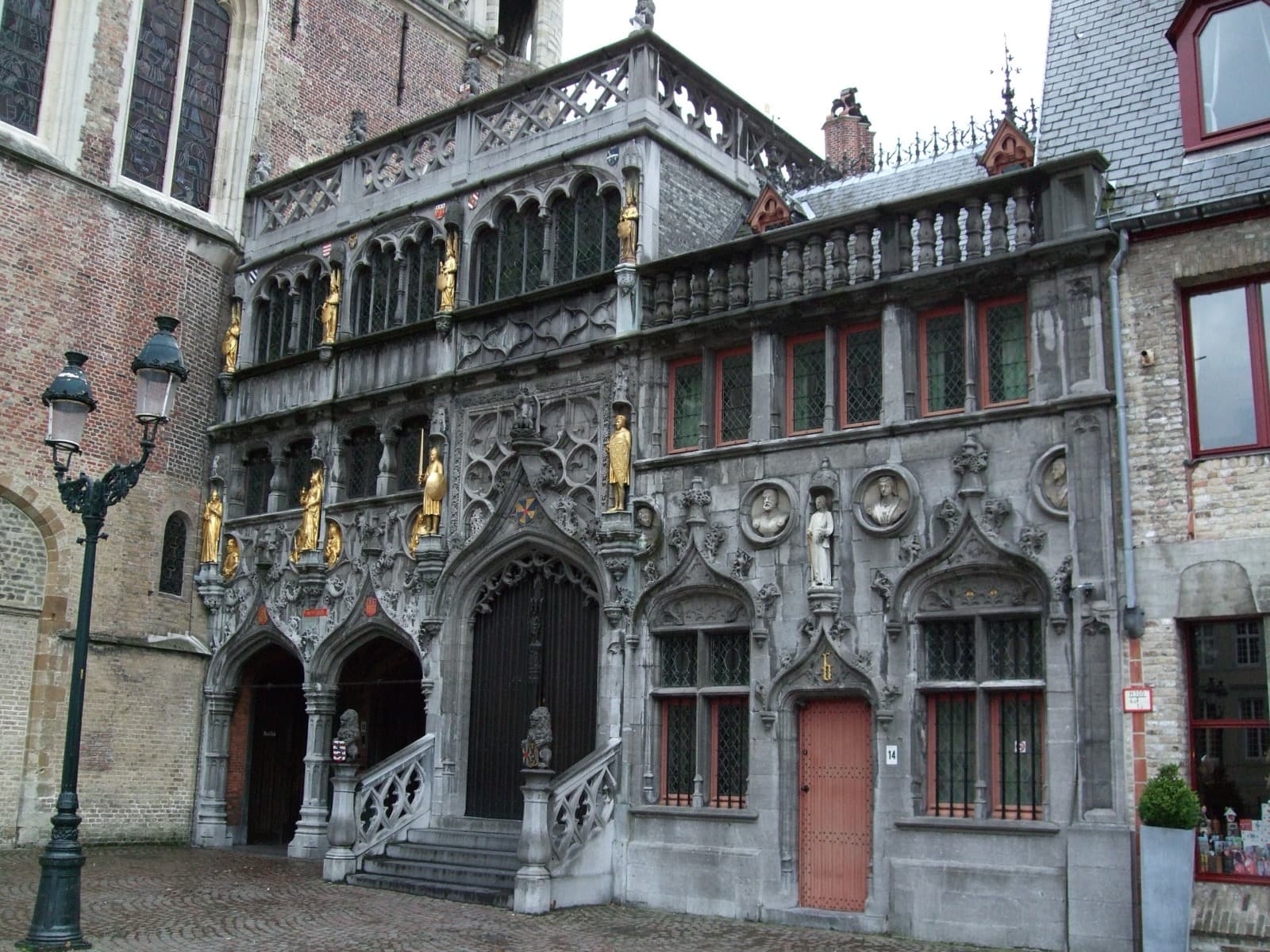
The Basilica of the Holy Blood: The Double Chapel and Its Relic
The two-level church on the Burg, a plain Romanesque lower chapel beneath an ornate Gothic upper chapel that keeps the city's venerated relic.
- 6
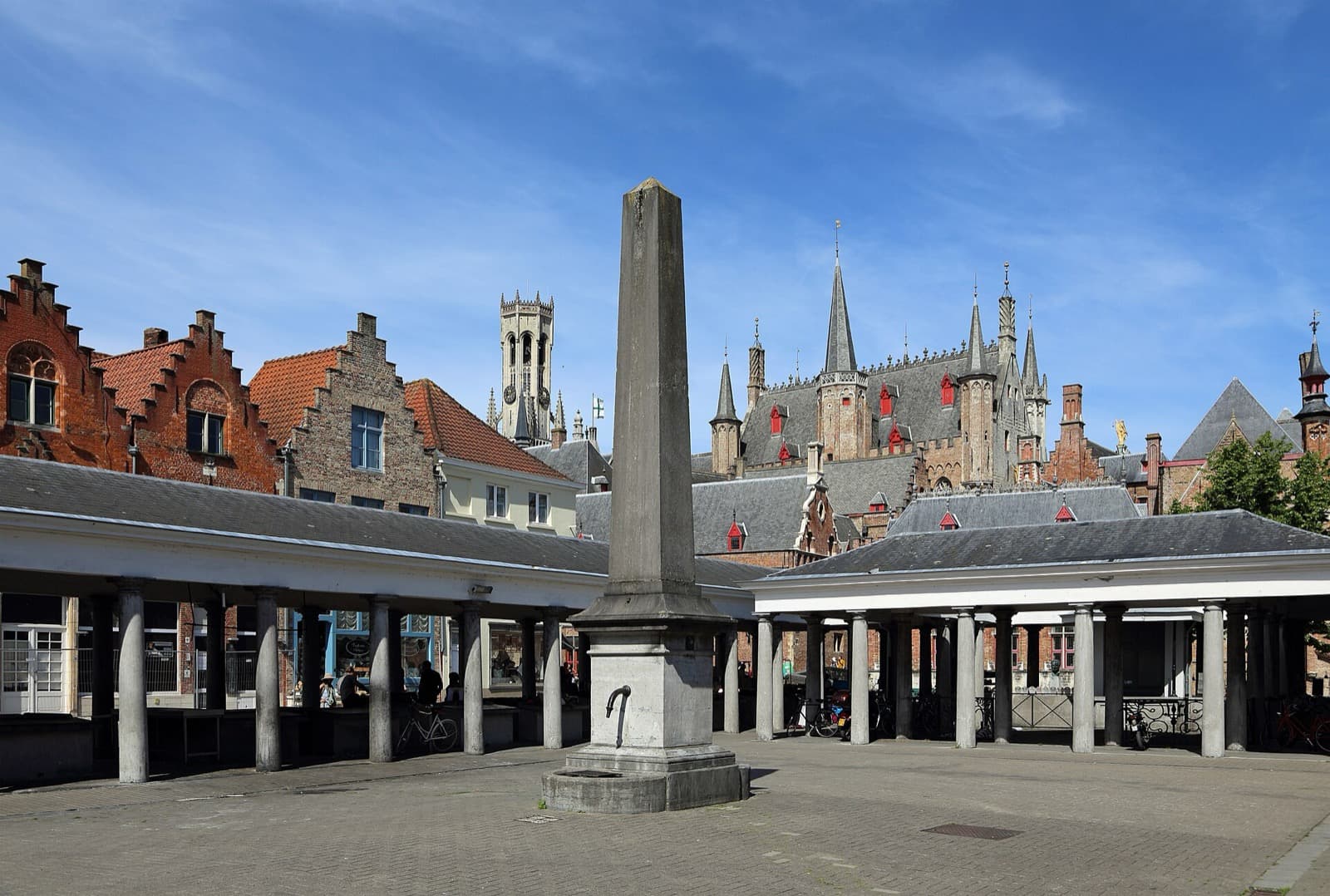
Blinde-Ezelstraat and the Fish Market: The Arched Lane to the Water
The arched lane leaving the Burg toward the canal, and the colonnaded stone Vismarkt where fish is still sold on the slabs.
- 7
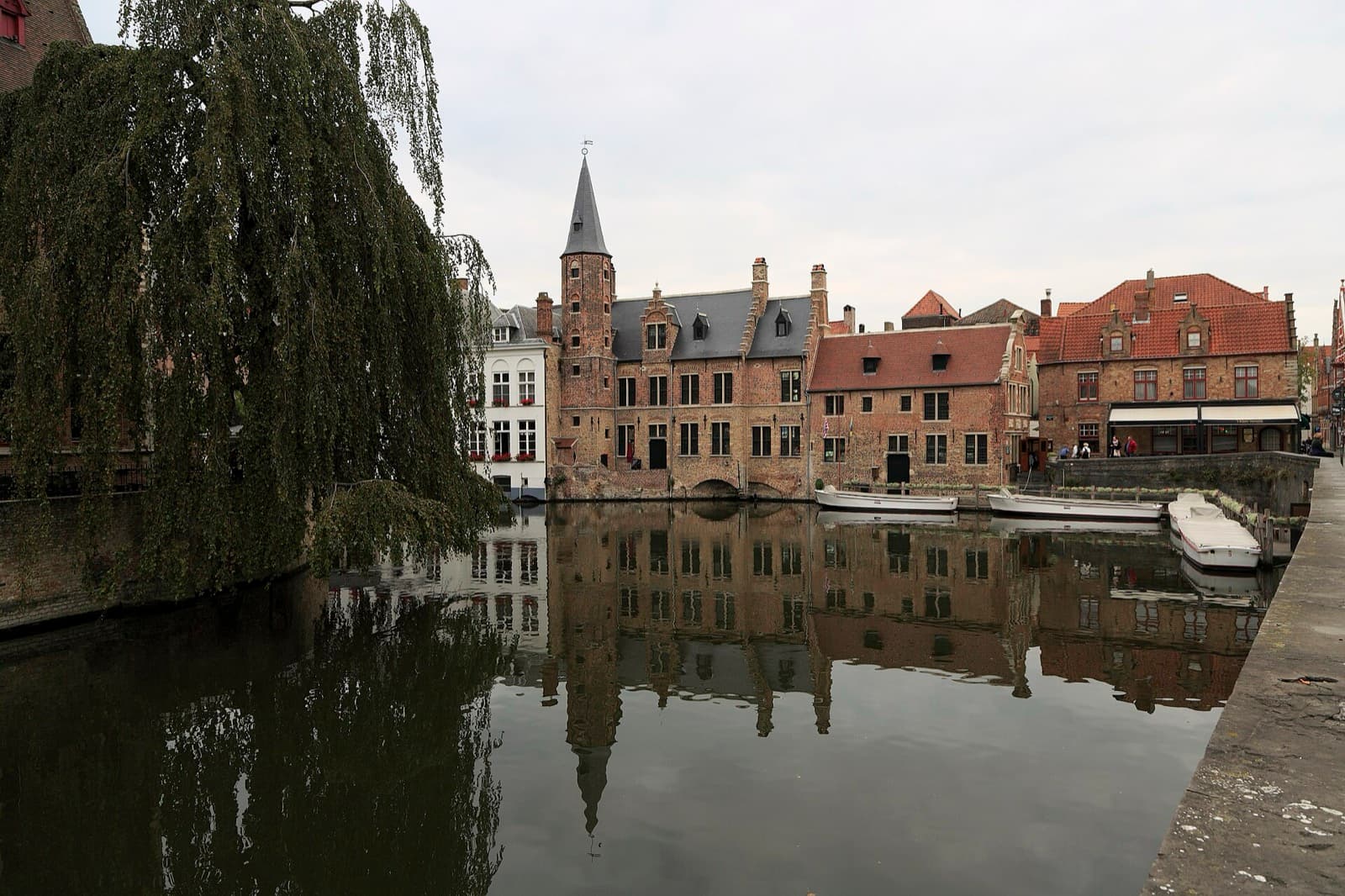
The Rozenhoedkaai: The Canal Corner Where the City Gathers
The canal corner on the Dijver, often called the most photographed spot in Bruges, where the Belfry rises over step-gabled houses reflected in the water.
Details
Best Time to Visit
Early morning, roughly the first hour after the sites open, is the calmest time to have the Markt and the Burg mostly to yourself, and the light on the Belfry is soft. Late afternoon into the blue hour is the other reward, when the crowds thin and the Rozenhoedkaai glows at golden hour or under lamplight. Spring and autumn are gentler than high summer, when the squares and the canal corner grow busy by mid-morning. The Procession of the Holy Blood fills the city on Ascension Day each spring, a remarkable civic-religious event if you time for it, though the centre is packed that day.
Pro Tips
- •Do the two squares first thing in the morning or in the last hour of the day: the Markt and the Burg are calmest then, and the light on the Belfry and at the Rozenhoedkaai is at its best.
- •The Belfry tower climb is a narrow, steep stair with a limited number of people allowed up at once, so queues build fast; go early or late and keep the tower ticket separate in your mind from the free square.
- •The whole route is barely more than a kilometre, so wear comfortable flat shoes and treat it as a slow wander with pauses, not a march; the reward is lingering, not covering ground.
- •Carry a little cash in euros for tower and church admissions and small purchases, since the Belfry and the Town Hall's Gothic Hall are ticketed, while the squares themselves and the Basilica's church are free to enter.
- •The Basilica of the Holy Blood is a working church: dress modestly, keep your voice low, and remember the venerated relic is an object of real devotion, not a display.
- •If you can time your visit for Ascension Day in spring, the Procession of the Holy Blood carries the relic through the city, though expect the centre to be very crowded that day.
Safety & Precautions
- •Bruges is paved with uneven cobbles that can catch a heel or a wheel; watch your footing, especially on the lanes like the Blinde-Ezelstraat and around the Fish Market slabs, which can be wet and slick.
- •Many canal quays, including the Rozenhoedkaai and the Dijver, have low or no railings at the water's edge, so keep back from the edge, mind children, and watch your step when you stop to photograph the reflection.
- •Bikes share the streets everywhere in Flanders and move quietly and fast through the old town; look both ways before crossing lanes and stepping off kerbs, and do not drift into the road while looking up at the Belfry.
- •Northern weather changes quickly, so carry a waterproof; boat tours on the canals run to the weather and the season and may not operate on a wet or off-season day, and the tower climbs can close in high wind.
Gallery
Related Reading
Go deeper on what you'll see, hear, and walk through.
Overview
Best Self-Guided Walking Tours in Bruges (2026)
4 min
Overview
Bruges Travel Guide 2026: Days, Transport, Timing, Safety, Budget
7 min
Overview
One Day in Bruges: A Walkable Itinerary from Morning to Dusk
8 min
Thematic
Why Bruges Is Europe's Best-Preserved Medieval City
7 min
Companion
The Markt and the Belfry: How Two Squares Ran Medieval Bruges
6 min
Deep dive
The Basilica of the Holy Blood in Bruges: One Church, Two Chapels, One Relic
7 min
Read
What to Eat in Bruges: The Local Dishes and How to Order Them
6 min
Read the walk
The full story of Markt: The Two Squares That Ran a Medieval City, in words. Prefer to listen? Play it narrated, from home or on location.
Introduction
Bruges, in Belgium, was in the fourteenth century one of the richest cities in Europe, and it kept its medieval fabric where wealthier cities lost theirs. UNESCO records the Historic Centre of Bruges as a World Heritage Site, inscribed in the year two thousand, an outstanding example of a medieval settlement that held onto its old stone. This walk reads that old town through the two great squares that once ran it. The Markt was the square of commerce, dominated by the Belfry over the cloth halls where the city's wealth was weighed, taxed, and stored. The Burg, a few hundred metres away, was the square of power, seat of the counts of Flanders, of the Town Hall begun in thirteen seventy-six, and of the Basilica of the Holy Blood with its venerated relic. Between commerce and government the narrow lanes carry the grammar of a merchant republic. This is a route of seven stops over roughly fifty minutes to an hour, a short and gentle walk of about three-quarters of a kilometre, entirely on foot. You will move from the Belfry over the market to the Town Hall over the law, then down to the canal that carried the trade. Everything runs at your own pace, no group, no schedule, no tip pressure, and every stop is short and skippable. Linger under the leaning tower or on a bridge as long as you please, and climb a tower when the queue is thin. When you arrive at the Markt beneath the Belfry, begin with stop one.
1. The Markt and the Belfry: The Tower That Ruled the Cloth Trade
You are standing in the commercial heart of Bruges, the Markt, a square of about one hectare that has been the city's market since the tenth century. The first international annual fair was held here around twelve hundred, wooden merchant halls went up in the twelve twenties, and after a fire in twelve eighty the halls were rebuilt in stone. Above them rises the Belfry, the Belfort, about eighty-three metres of brick that leans about eighty-seven centimetres to the south-east. Its octagonal upper stage was built between fourteen eighty-three and fourteen eighty-seven, so the crown you see is late fifteenth-century work. Beneath the tower stand the Hallen, the halls, a great rectangular market building around an inner courtyard where cloth was traded and where the city kept its charters and treasury in a strong-room. The tower carries a carillon, forty-seven bells today weighing around twenty-seven tonnes, and in the Middle Ages its bells rang the working day of the whole city, the hours of trade, of alarm, of curfew. UNESCO records the Belfry as part of the serial World Heritage site of the belfries of Belgium and France, and the square around it sits within the Historic Centre of Bruges. This is the square of commerce, the room of stone where wealth was weighed and stored, ruled by the clock in the tower. Take it at your own pace. You can circle the halls, watch the tower lean against the sky, and climb the narrow stair when the queue is thin, or simply stand under the brick and let the bells mark your own hour.
2. Jan Breydel and Pieter de Coninck: The Guildsmen Who Faced a King
At the centre of the Markt stands a bronze statue of two men, Jan Breydel and Pieter de Coninck, the guildsmen Bruges remembers for its great medieval revolt. In the early fourteenth century the county of Flanders was under French military occupation. On the eighteenth of May thirteen oh two, after two years of that garrison, the militia of Bruges rose in the night and killed many of the French soldiers in the city. The uprising is remembered as the Bruges Matins, the Brugse Metten. Later that year, on the eleventh of July thirteen oh two, Flemish militias met the mounted French knights on the field near Kortrijk, and defeated them. The clash is called the Battle of the Golden Spurs, because roughly five hundred pairs of golden spurs were stripped from the fallen French knights and hung as trophies. It was a real and bloody day, with over a thousand French men-at-arms killed against a few hundred Flemish. A word of honesty about these two figures. Pieter de Coninck, a weaver, is the well-documented leader of the Bruges faction. Jan Breydel, a butcher, is traditionally paired with him in the city's memory, though he is less firmly recorded as a battle commander. So the statue holds not two proven generals but the two guildsmen the city chose to remember. The monument itself is modern, unveiled in eighteen eighty-seven and formally opened that August by King Leopold the Second, a nineteenth-century symbol of Flemish civic pride raised over a fourteenth-century fight. Stand with it as long as you like.
3. The Provincial Court and the Cranenburg House: Where a City Jailed Its Prince
The east side of the Markt is filled by a tall neo-Gothic facade, the Provinciaal Hof, the Provincial Court. It stands on the site of the old Waterhall, the Waterhalle, where river boats once slid in under cover to unload their cargo in the heart of the market. The Waterhall was pulled down after seventeen eighty-seven, a neoclassical building followed, and after a fire in eighteen seventy-eight the present neo-Gothic court was rebuilt in eighteen eighty-seven. So this grand front, medieval in style, is really a nineteenth-century building over a much older working quay. Now look along the square to the Cranenburg House. In February fourteen eighty-eight the citizens of Bruges rose against Archduke Maximilian of Austria, the future Holy Roman Emperor, in a revolt against his heavy taxes and his rule. The guilds shut the city, installed their own officials, and held Maximilian himself prisoner in the Cranenburg House on this square for weeks. It was not a bloodless standoff. Officials loyal to him were executed while he was confined, and by tradition he was made to watch from a window. The affair ended with the Peace of Bruges of fourteen eighty-eight. It is a strange and telling scene: the same merchant city that traded cloth under the Belfry could jail its own prince a few steps away. These were real deaths and real fear, not a pageant. Take a moment with the square, then carry the story with you toward the second square, the seat of power itself.
4. The Burg and the Town Hall: The Square of Power
You have crossed from the square of commerce to the square of power. This is the Burg, the second great square of Bruges, the old fortress of the counts of Flanders. Count Arnulf the First, who lived from eight eighty-nine to nine sixty-five, developed it into an administrative…
Full narration for this stop unlocks with the tour.
5. The Basilica of the Holy Blood: The Double Chapel and Its Relic
In a corner of the Burg stands the Basilica of the Holy Blood, the Heilig-Bloedbasiliek, and it is really two churches stacked one on the other. Below is a plain, heavy Romanesque chapel dedicated to Saint Basil, built between eleven thirty-four and eleven forty-nine as a…
Full narration for this stop unlocks with the tour.
6. Blinde-Ezelstraat and the Fish Market: The Arched Lane to the Water
Leave the Burg through the Blinde-Ezelstraat, the Blind Donkey Street, a narrow lane that slips beneath an arched gallery strung between the Town Hall and the Old Civil Registry. The little bridge and arch carry you out of the square of power and down toward the water. Ahead is…
Full narration for this stop unlocks with the tour.
7. The Rozenhoedkaai: The Canal Corner Where the City Gathers
This is where the walk comes to rest. The Rozenhoedkaai, the Rosary Quay, is the corner where the Dijver canal meets the Groenerei, and it is often called the most photographed spot in all of Bruges. From here the Belfry, the tower you began beneath, rises over step-gabled brick…
Full narration for this stop unlocks with the tour.