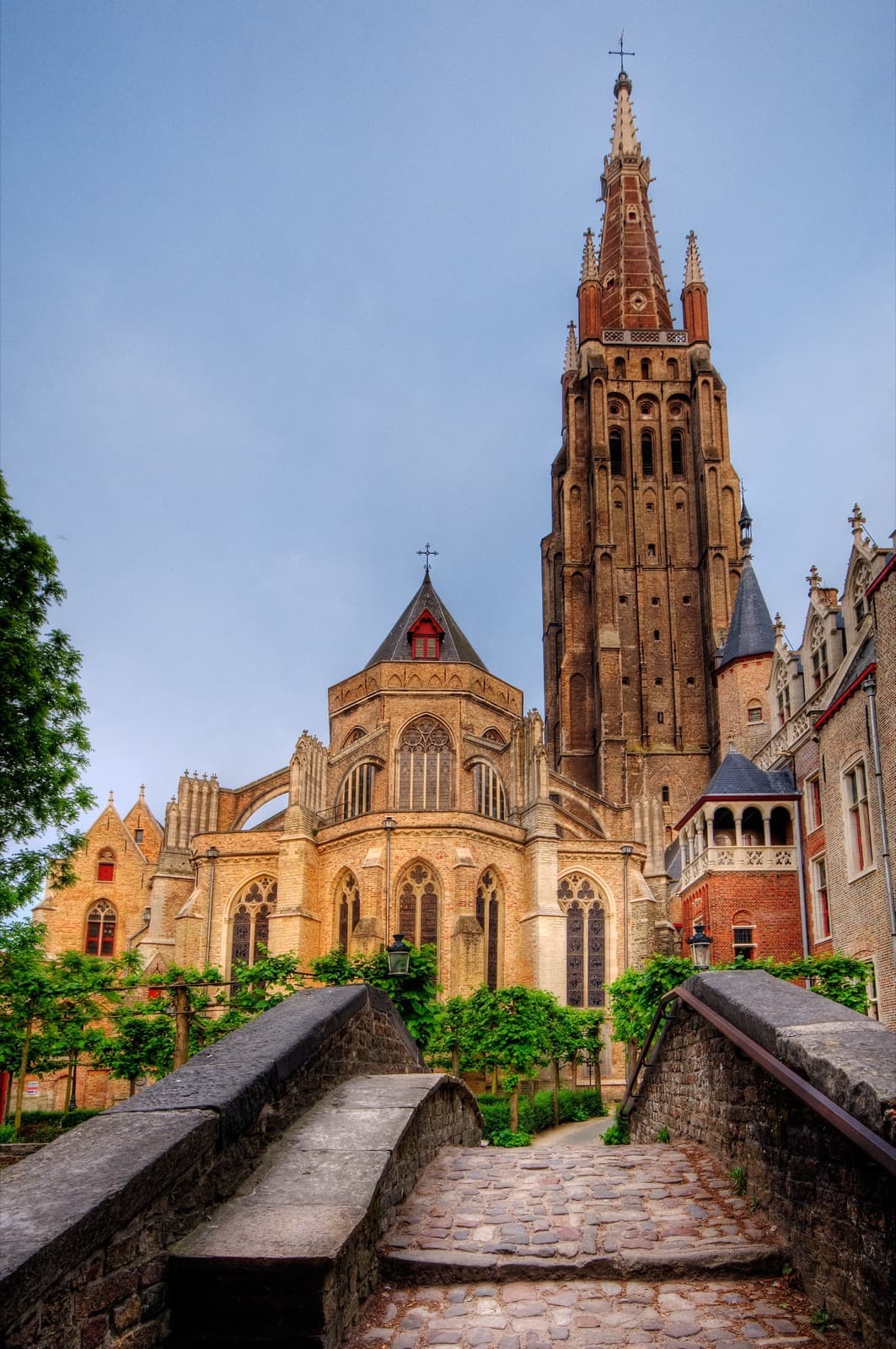
A slow walk through the golden age of Bruges and the strange reason it survives, from a Michelangelo Madonna to the silted harbour whose long sleep froze the medieval city intact.
Start · The Church of Our Lady: The Madonna and the Tower Over the Merchant City
DirectionsStops
- 1
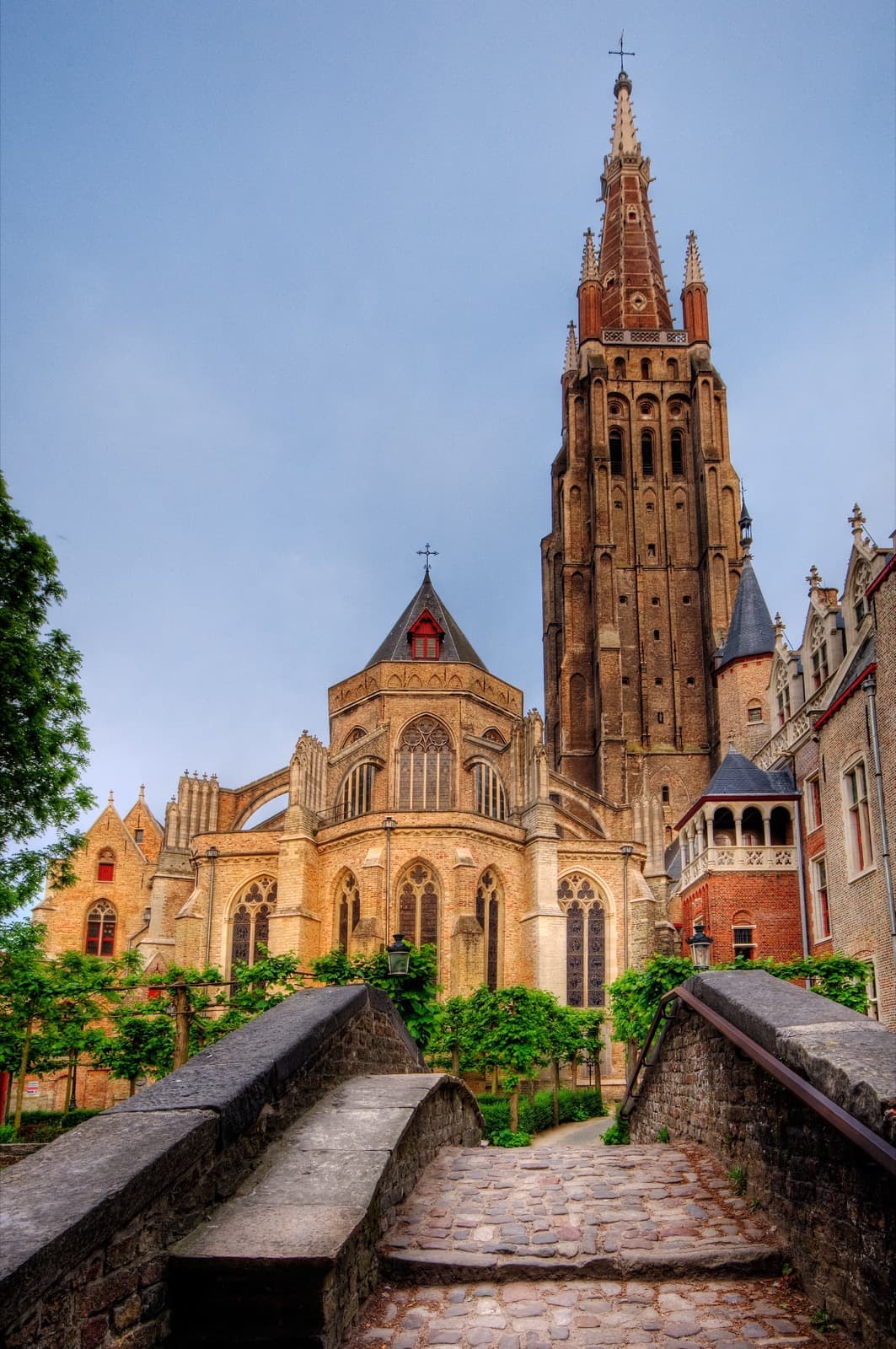
The Church of Our Lady: The Madonna and the Tower Over the Merchant City
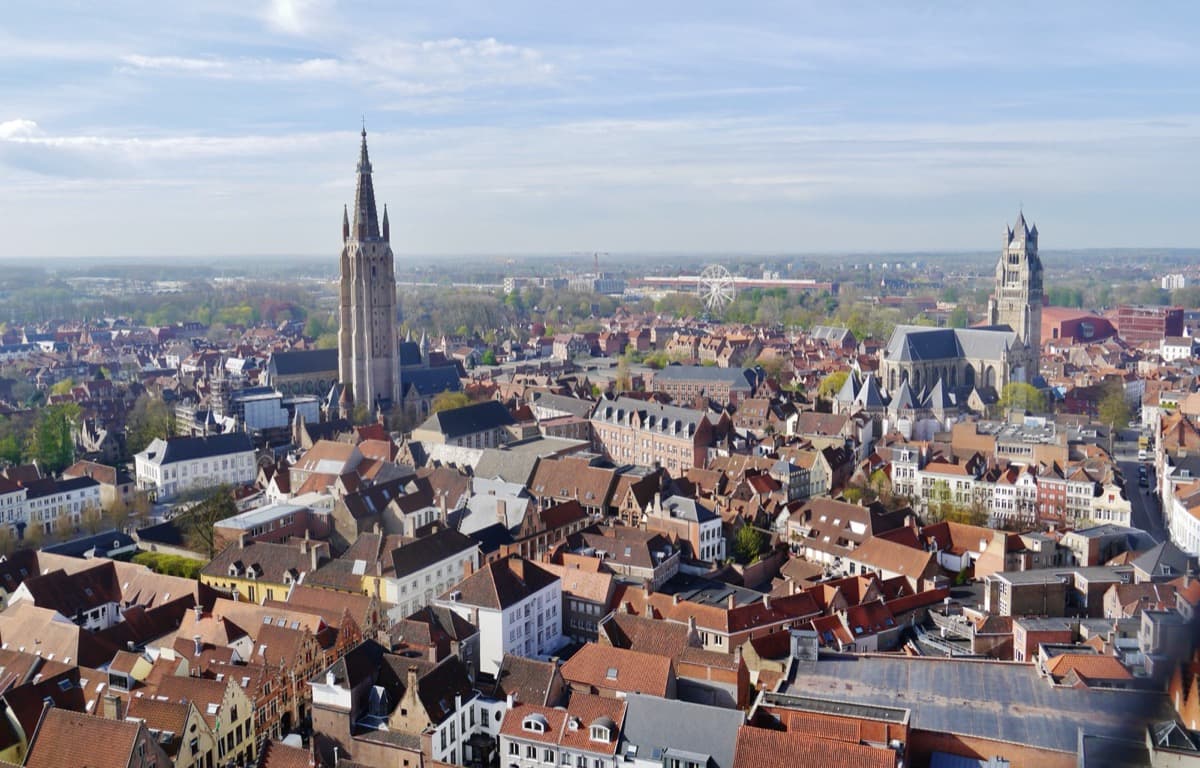
The tallest structure in Bruges, its brick tower rising over the medieval town, sheltering a marble Madonna carved by the young Michelangelo and the tombs of the last Dukes of Burgundy.
- 2
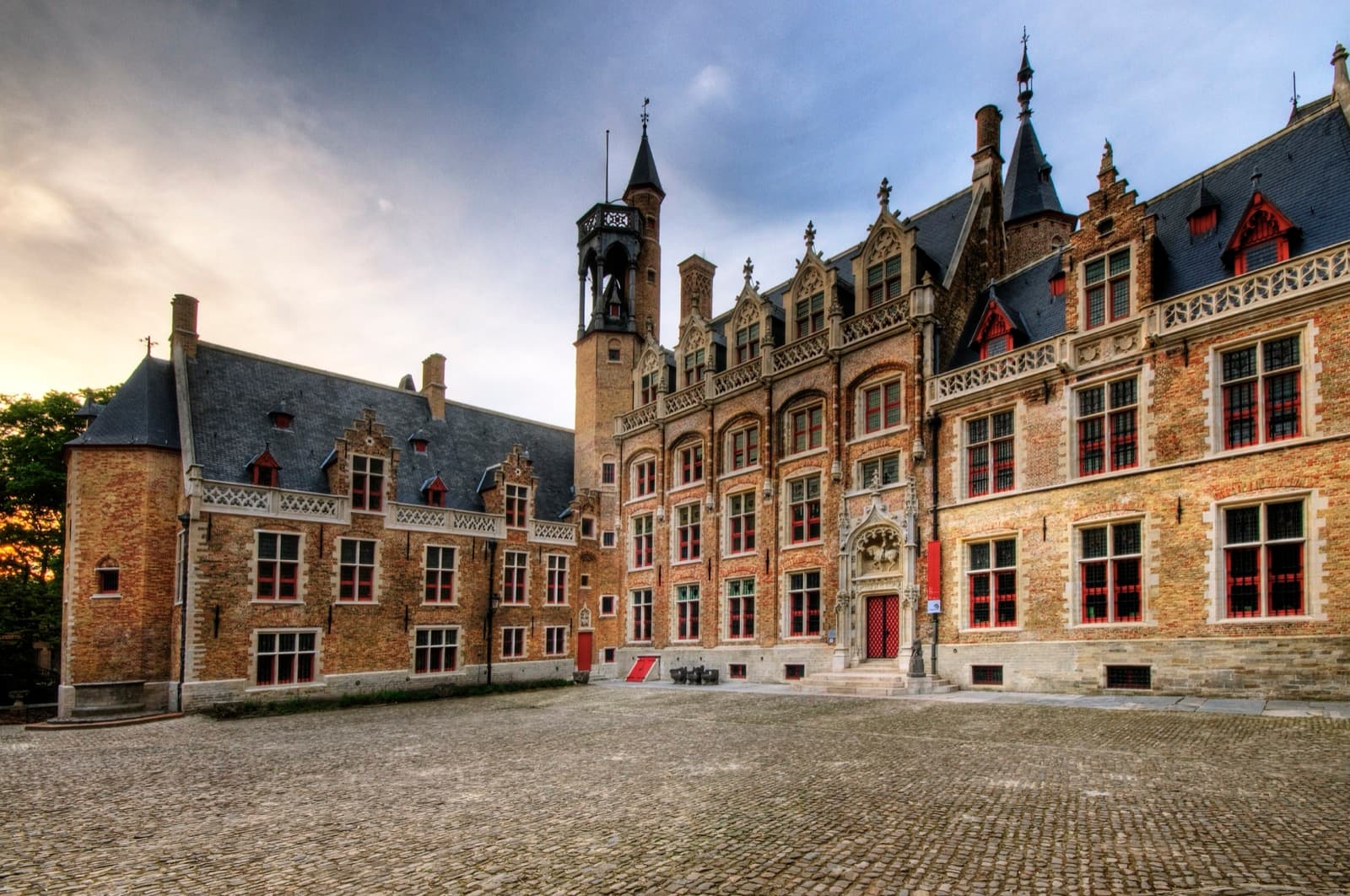
The Gruuthuse: The Palace Built on Beer Herbs
The mansion of the lords of Gruuthuse, who grew rich on the monopoly over the dried herbs that flavoured and preserved beer before hops, with a private window into the church next door.
- 3
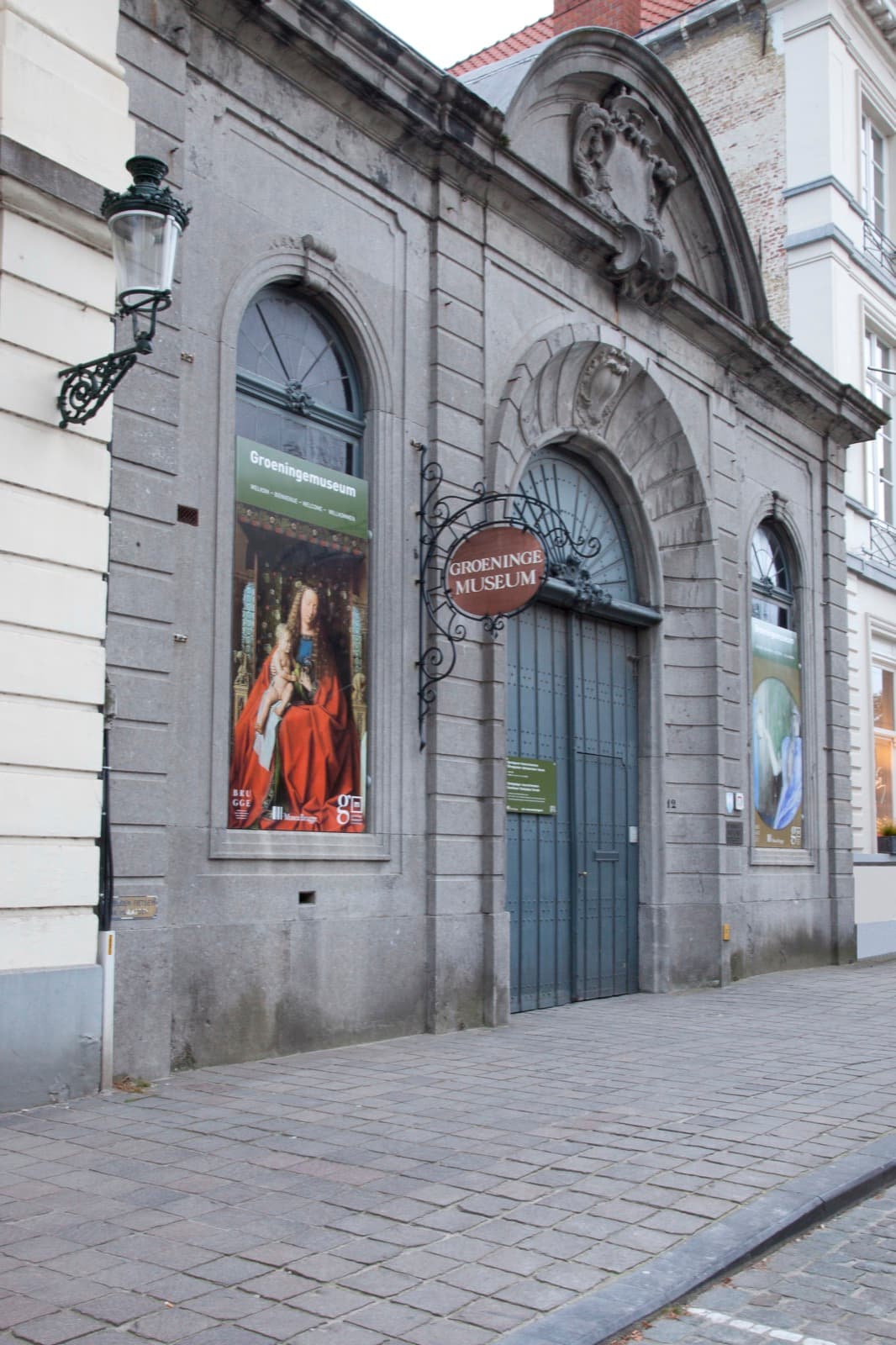
The Groeningemuseum: Where Oil Painting Came of Age
The city's museum of Flemish and Belgian painting across six centuries, home to Jan van Eyck's jewelled Virgin and Child with Canon van der Paele and the room where the oil-painting revolution can be seen where it was made.
- 4
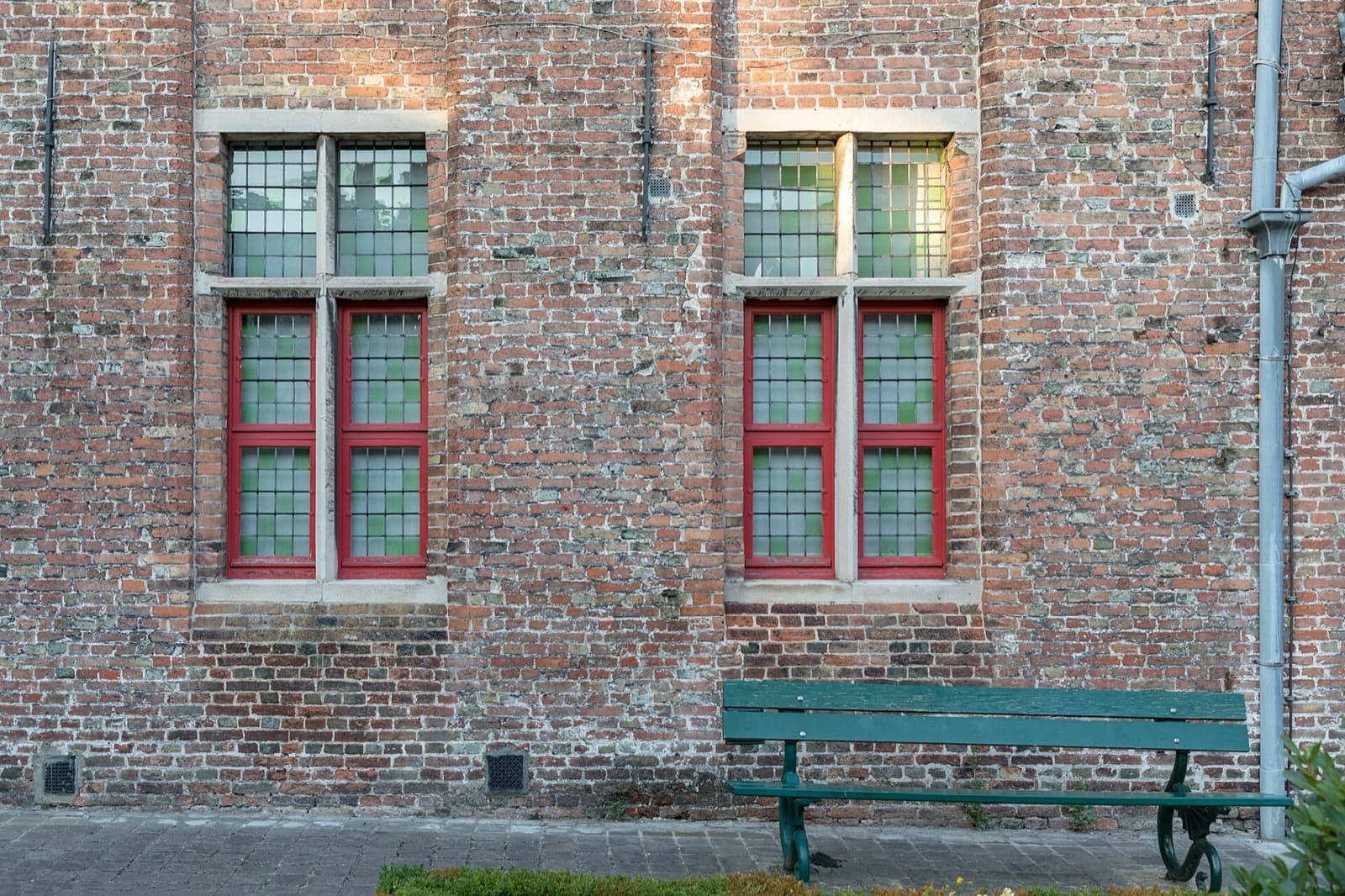
The Old Saint John's Hospital: A Medieval Ward Full of Memling
One of Europe's oldest surviving hospital complexes, its medieval wards now a museum holding six masterpieces by Hans Memling, among them the Shrine of Saint Ursula painted for the hospital.
- 5
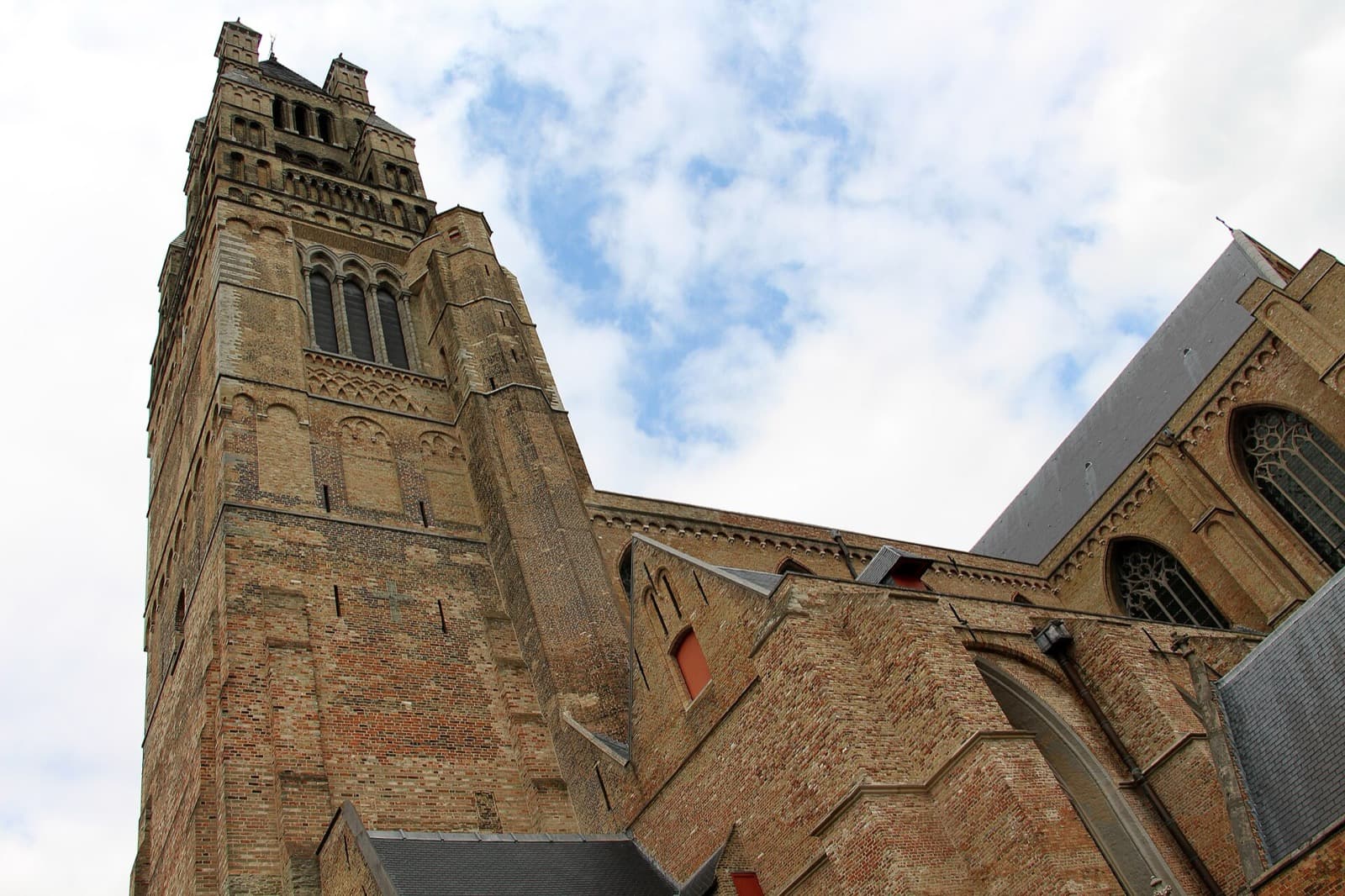
Saint Saviour's Cathedral: The Parish Church That Became a Cathedral
The oldest parish church in Bruges, Gothic brick of the thirteenth and fourteenth centuries, which became the city's cathedral only in the early nineteenth century after revolution swept away the first cathedral.
- 6
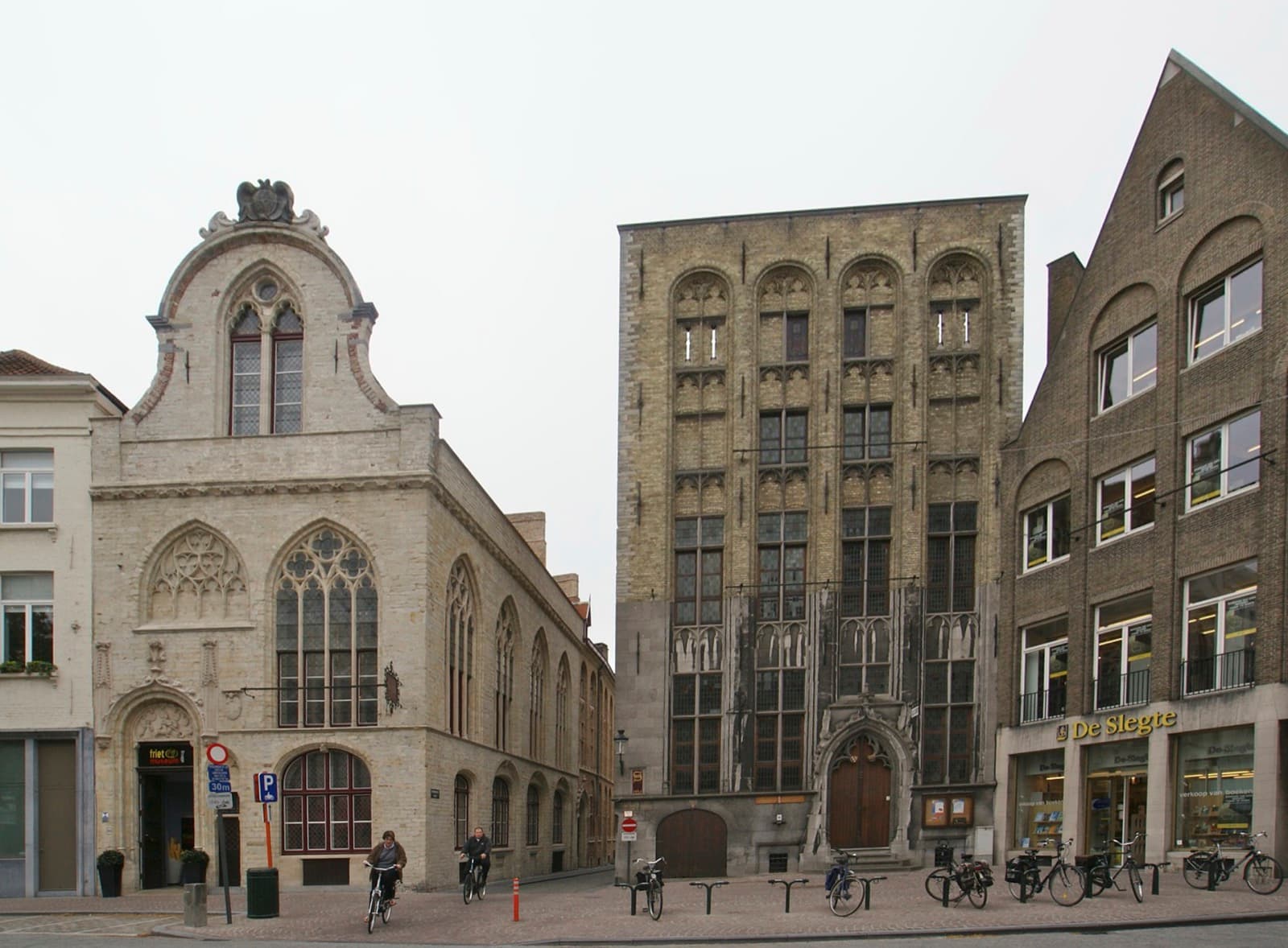
The Exchange Square: The Birth of the Bourse
The modest square where medieval merchants gathered before the inn of the Van der Beurze family to trade, giving Europe its very word for a money exchange.
- 7
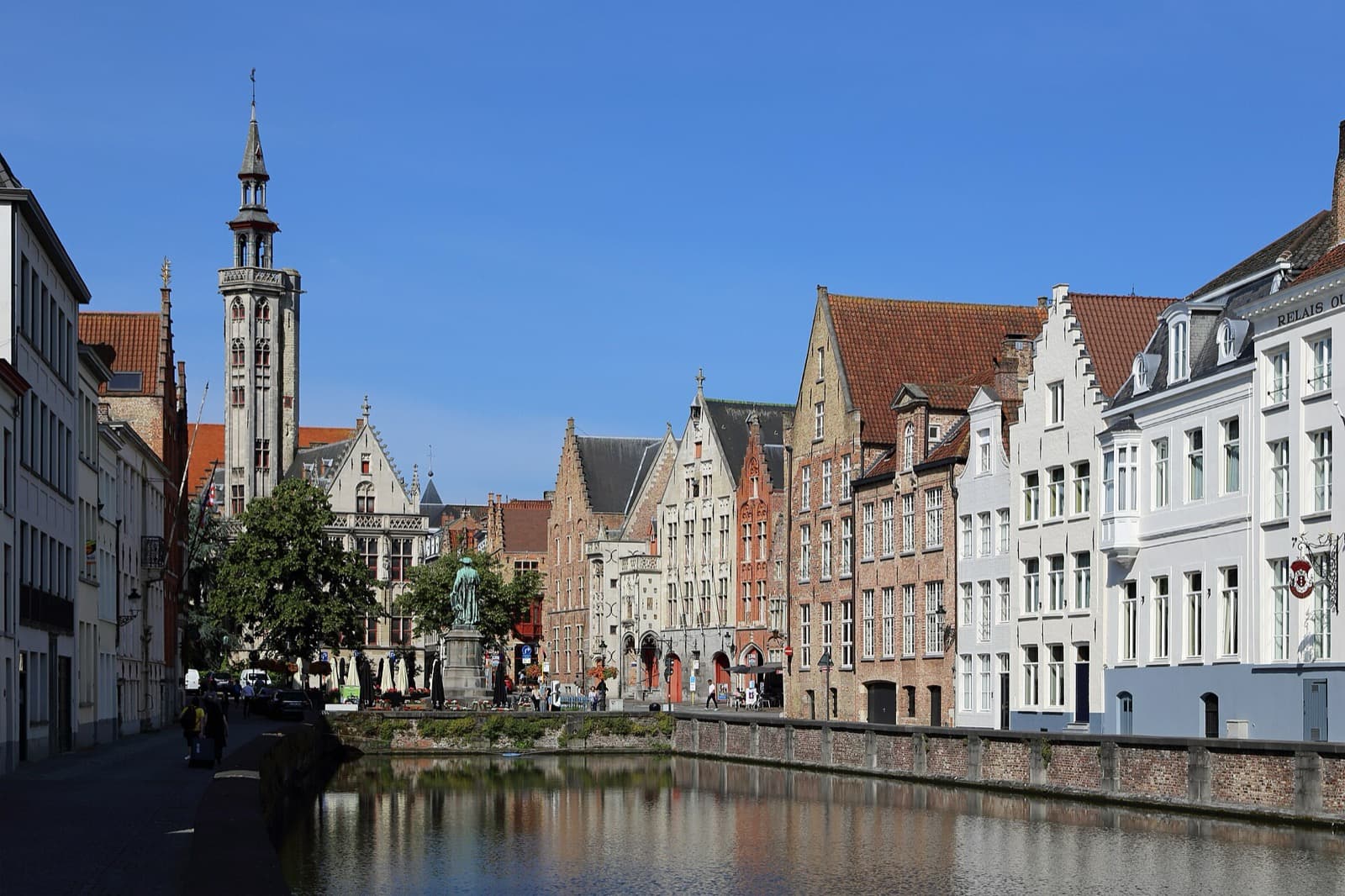
Jan van Eyck Square: The Hanseatic Quay and the Dead Harbour
The Hanseatic commercial heart of golden-age Bruges, ringed by the Burghers' Lodge and the old toll house, from which the story of the silted harbour that froze the whole city can be told.
Details
Best Time to Visit
Spring and early autumn on a weekday morning are ideal, when the light is soft on the brick and the museums and churches open quietly before the day trips arrive. Bruges keeps a northern climate, so mornings are calmest and the low season, from late autumn to early spring, gives you the frozen medieval city almost to yourself.
Pro Tips
- •Buy a Musea Brugge combination ticket if you plan to enter more than one museum on this walk. The Church of Our Lady museum section, the Gruuthuse, the Groeningemuseum and the Old Saint John's Hospital are all part of the same city museum group, and a combined pass saves money over separate admissions.
- •Go early. The Michelangelo Madonna, the Van Eyck room and the Memling shrine are all small spaces that reward being there before the groups arrive, and the whole point of this walk is standing before them without a crowd.
- •Check current opening days and prices on museabrugge.be before you set out. City museums in Bruges often close one day a week and adjust hours by season, and the Church of Our Lady museum section keeps different hours from the free nave.
- •Carry a few euros in coin. Working churches on this route, including Saint Saviour's Cathedral, may charge a small fee for the treasury or ask for a candle offering, and some doors run on coin.
- •Keep the order but linger where you feel it. The stops build an argument, from the wealth to the painters to the boom to the dead harbour, yet nothing is timed. If the Van Eyck holds you, stay with it and let the rest wait.
- •Bring a waterproof layer whatever the forecast says. Bruges weather turns quickly, and much of this route is open square and canal quay with little shelter between doorways.
Safety & Precautions
- •The old centre is paved in uneven cobbles that can be slick after rain, and many canal quays and bridges have low edges or no railings at all. Watch your footing near the water, especially with a camera to your eye.
- •Tower climbs are steep and narrow. The Church of Our Lady tower and the nearby Belfry involve tight winding stairs and can carry queues in season. If you climb, take it slowly and mind the descent.
- •These are working churches and a cathedral. Dress modestly, keep your voice low, and be aware that Mass or a service may close parts of the building without notice; boat tours on the canals run to the weather and the season and may not sail in poor conditions.
- •Bikes share the streets everywhere in Flanders and move faster than you expect through the lanes. Look both ways before stepping off a kerb or crossing a bridge, and keep to the pedestrian side where one is marked.
Gallery
Related Reading
Go deeper on what you'll see, hear, and walk through.
Overview
Best Self-Guided Walking Tours in Bruges (2026)
4 min
Overview
Bruges Travel Guide 2026: Days, Transport, Timing, Safety, Budget
7 min
Overview
One Day in Bruges: A Walkable Itinerary from Morning to Dusk
8 min
Thematic
Best Culture Walking Tours in Bruges (2026)
2 min
Thematic
Why Bruges Is Europe's Best-Preserved Medieval City
7 min
Companion
The Church of Our Lady in Bruges: A Michelangelo Madonna and the Frozen Golden Age
7 min
Deep dive
The Groeningemuseum: Where Oil Painting Came of Age
6 min
Read
What to Eat in Bruges: The Local Dishes and How to Order Them
6 min
Read the walk
The full story of Church of Our Lady: Van Eyck, Michelangelo and the Frozen Golden Age, in words. Prefer to listen? Play it narrated, from home or on location.
Introduction
In the fifteenth century Bruges, here in Belgium, was the richest and most sophisticated market city of northern Europe, the northern seat of the Dukes of Burgundy, where the wool of England, the wine of France and the spices of the East changed hands. That wealth drew painters and sculptors, and this walk reads their golden age and the strange reason it survives. The tidal inlet that linked Bruges to the sea silted up around fifteen hundred, trade moved to Antwerp, and the city fell poor and quiet for centuries. That long sleep is exactly why the golden age is frozen here, unspoiled. The boom and the ruin are the same story told from two ends. This is a continuous walk on foot of about two kilometres, roughly sixty-five minutes at an unhurried pace, across seven stops, and it is yours alone. No group at your back, no schedule, no boat queue, no tip pressure. You can stand before a Van Eyck or a marble Madonna as long as you like, then move on when you please. You will begin at the tallest thing in the city and end at a dead harbour, and in between you will pass a palace built on beer herbs, the room where oil painting came of age, a medieval hospital full of one painter's work, a parish church that became a cathedral, and the modest square that gave the world a word for the money markets. Bruges rewards the slow. When you arrive at the Church of Our Lady, the Onze-Lieve-Vrouwekerk, begin with stop one.
1. The Church of Our Lady: The Madonna and the Tower Over the Merchant City
Begin with the thing you can see from half the city. The Church of Our Lady, the Onze-Lieve-Vrouwekerk, carries a brick tower that rises about one hundred fifteen metres, the tallest structure in Bruges and one of the tallest brick church towers in the world. It was the great vertical statement of a merchant city, a spire of fired clay over a town that had no natural stone to boast with. But the tower is not why you came. Inside, in a chapel of its own, stands the Madonna of Bruges, a marble Virgin and Child carved by Michelangelo around fifteen oh four and finished by about fifteen oh six. It is the only sculpture Michelangelo let leave Italy during his lifetime. It did not come as a gift or a commission from the church. Two Bruges merchant brothers, Jan and Alexander Mouscron, bought it in Italy with trading money and installed it here about fifteen fourteen. That single fact holds the whole tour. A young genius in Florence, and enough wealth in a Flemish market town to reach across a continent and buy his work. Behind the high altar lie the tombs of Charles the Bold, the last Valois Duke of Burgundy, and his daughter Mary of Burgundy, their gilded bronze effigies resting where the dukes ruled the north. The heart of Philip the Handsome is interred here too. Take your time with the Madonna. There is no group hurrying you past her, no timed slot. Stand as close as the rope allows, for as long as she holds you, and let the merchant city that could summon a Michelangelo settle around you.
2. The Gruuthuse: The Palace Built on Beer Herbs
From the church tower, the palace beside it. This is the Gruuthuse, the mansion of the lords of Gruuthuse, and its fortune is one of the odder ways a family got rich. Before hops became the standard bittering and preserving agent in beer, brewers used gruut, a mixture of dried herbs. The Gruuthuse family held the monopoly on it. The building began, back in the thirteenth century, as a plain storehouse for that herb mixture, a gruut warehouse. Money did the rest. In the early fourteen hundreds Jan the Fourth van der Aa transformed the warehouse into a luxury residence, and his son, Louis de Gruuthuse, a great collector of books and a courtier of the Dukes of Burgundy, expanded it further. Around fourteen seventy-two Louis added a private oratory, a small chapel window that connects the house directly to the choir of the Church of Our Lady next door, so the family could hear Mass without leaving home. That little window is the whole golden age in miniature. Wealth built from something as humble as beer herbs, reaching directly into the sacred heart of the city. Today the Gruuthuse is a Musea Brugge museum of the applied and decorative arts, furniture and lace, gold and silver, weapons, ceramics and musical instruments, the fine things a rich merchant household surrounded itself with. Move through it at your own pace. There is no guide counting heads, only the rooms of a family that turned a monopoly on flavouring into a palace with a private window on God.
3. The Groeningemuseum: Where Oil Painting Came of Age
Now the room the whole city was building toward. The Groeningemuseum, on the Dijver canal, opened in nineteen thirty and holds the painting that Bruges is measured by. Jan van Eyck's Virgin and Child with Canon van der Paele was made about fourteen thirty-four to thirty-six for a collegiate church in Bruges. Stand in front of it and the argument for oil paint makes itself. The velvet has weight, the Persian carpet has pile, the old canon's stubbled chin and the reflections in the armour are rendered with a precision that had simply not existed before. Van Eyck did not invent oil painting, but here you can see him carry it to a height no one had reached. The wealth of Bruges is what paid for surfaces like this, and the merchants and clergy who commissioned them wanted their world shown in full, glittering detail. The Groeningemuseum, part of Musea Brugge, gathers the Flemish Primitives in these rooms, works by Hans Memling and Gerard David, whose stark Judgment of Cambyses dates from fourteen ninety-eight, and Flemish and Belgian painting reaching across six centuries after them. This is the true luxury of walking Bruges alone. In most of the world you meet a Van Eyck of this rank through a crowd, over shoulders, on a moving line. Here you can stand before the jewelled surface with no group at your back, lean in until the brushwork resolves into thread and metal and skin, and stay until you have actually seen it. Give this stop the time the paintings ask for.
4. The Old Saint John's Hospital: A Medieval Ward Full of Memling
Cross to the Old Saint John's Hospital, the Sint-Janshospitaal, and the golden age turns from wealth to care. Founded in the middle of the twelfth century to tend pilgrims and the sick, this is one of the oldest surviving hospital complexes in Europe. Nuns and brothers nursed…
Full narration for this stop unlocks with the tour.
5. Saint Saviour's Cathedral: The Parish Church That Became a Cathedral
A short walk brings you to Saint Saviour's, the Sint-Salvatorskathedraal, and a quieter turn in the story. This is the oldest parish church in Bruges. Work on it began early, and the main Gothic brick fabric you see rises from the thirteenth and fourteenth centuries, a tall…
Full narration for this stop unlocks with the tour.
6. The Exchange Square: The Birth of the Bourse
Now the machinery of the boom, in a square so modest you could miss it. This is the Beursplein, and the plain building on it is the Huis ter Beurze, the house of the Van der Beurze family. In the late medieval period foreign merchants gathered here to trade bills, currencies and…
Full narration for this stop unlocks with the tour.
7. Jan van Eyck Square: The Hanseatic Quay and the Dead Harbour
End where the money came in and where it stopped. Jan van Eyck Square, the Jan van Eyckplein, was the Hanseatic commercial heart of golden-age Bruges, the corner where the great trading nations of the north kept house. The Poortersloge, the Burghers' Lodge, built about fourteen…
Full narration for this stop unlocks with the tour.