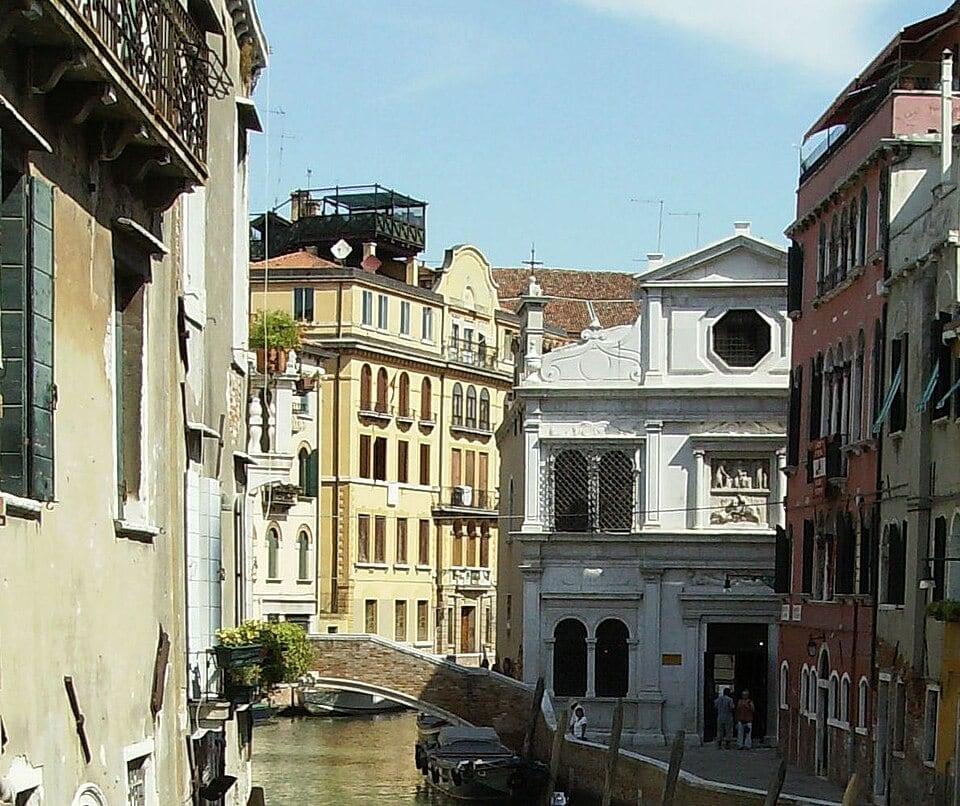
The Scuola di San Giorgio degli Schiavoni was a nation's clubhouse in a foreign city, founded for Venice's Dalmatians in 1451, and its paintings still hang in the building they were made for. From the canal path opposite, it is a small Istrian stone front with Saint George fighting the dragon over the door. Behind that door is Vittore Carpaccio's cycle, painted for this room more than five hundred years ago.
What a scuola was
A scuola in Venice was not a school. It was a lay confraternity: a membership society with an altar, a meeting room and a duty to look after its own. The Scuola itself counts more than two hundred of them by the early sixteenth century, and sorts them three ways. Some were for trades. Some were for devotion. And some were for nations, communities of foreigners living in the city, such as the Greeks, the Albanians, and people from Lucca and Milan.
This one belonged to the Dalmatians, from the eastern Adriatic coast, whom Venetians called Schiavoni. The Council of Ten founded it by decree on 24 March 1451, at the request of Dalmatians living in Venice: sailors, workers, craftsmen, merchants and shipowners. Its full name honors two patrons, Saint George and Saint Tryphon.
Look at where it stands: in Castello, a short walk from the Arsenale, the Republic's shipyard, which fits a confraternity whose members included sailors and shipowners.
The front
Hear a stop from this walk
Partisan Woman, Giardini: At the Waterline
The front you see is younger than the confraternity. The Italian heritage trust FAI says it was renewed in 1551 in the manner of Jacopo Sansovino, and that the high relief of Saint George and the dragon was set over the door then. From the fondamenta across the canal you can take it in whole: a narrow, two-story stone front squeezed between neighbors, the relief at its center.
Then look at the plainer side wall facing the bridge. A smaller Saint George is set into it, with an inscription about goods left to the Scuola and the year 1574. A plate below says it was brought from another house in 1913.
Carpaccio inside
The reason most people come is inside. Between 1502 and 1510, by the Scuola's own dates, the members commissioned a cycle of canvases from Vittore Carpaccio. FAI notes that the cycle is still intact and still in the building it was conceived for, which is rare in Venice, where so much confraternity art was dispersed.
Save Venice, which funded the cycle's conservation from 2019, lists nine canvases on three walls: two from the life of Christ, three of Saint Jerome, three of Saint George and one of Saint Tryphon. One of the Jerome scenes is the famous one of Saint Augustine in his study, at the moment he learns in a vision of Jerome's death. The Saint George paintings tell the dragon story the relief outside sums up in one image: the patron saint of a seafaring community, painted at length for the men who met under him.
How it survived
In 1806 Napoleon's government closed the convents and the Venetian scuole and seized their property and art. The Scuola says two were spared: San Rocco across the city, and this one. That is why the paintings never left.
Visiting
Inside is ticketed and closed on Tuesdays, and only twenty-five people may be in the hall at once, so you may wait a few minutes. The front, the relief and the side wall all work from the canal path, which is where the walk stops.
The Scuola is stop 6 of Castello and the Arsenale: Where the Republic Built Its Fleet, between Palladio's San Francesco della Vigna and Vivaldi's baptismal church, a walk you can take at your own pace. See all routes on the Venice page.
Sources
- Scuola Dalmata dei SS. Giorgio e Trifone, history of the Scuola and the church: founding on 24 March 1451 by the Council of Ten, the members, more than two hundred scuole by the early 1500s and their kinds, Carpaccio between 1502 and 1510, the 1806 suppression that spared this Scuola and San Rocco.
- FAI, Scuola Dalmata dei Santi Giorgio e Trifone: the front renewed in 1551 with the relief of Saint George and the dragon, the Carpaccio cycle intact in its building.
- Save Venice, conservation of the Carpaccio cycle in the Scuola Dalmata: nine canvases, their subjects, the Augustine vision scene, the 2019 conservation campaign.
Ready to experience it?
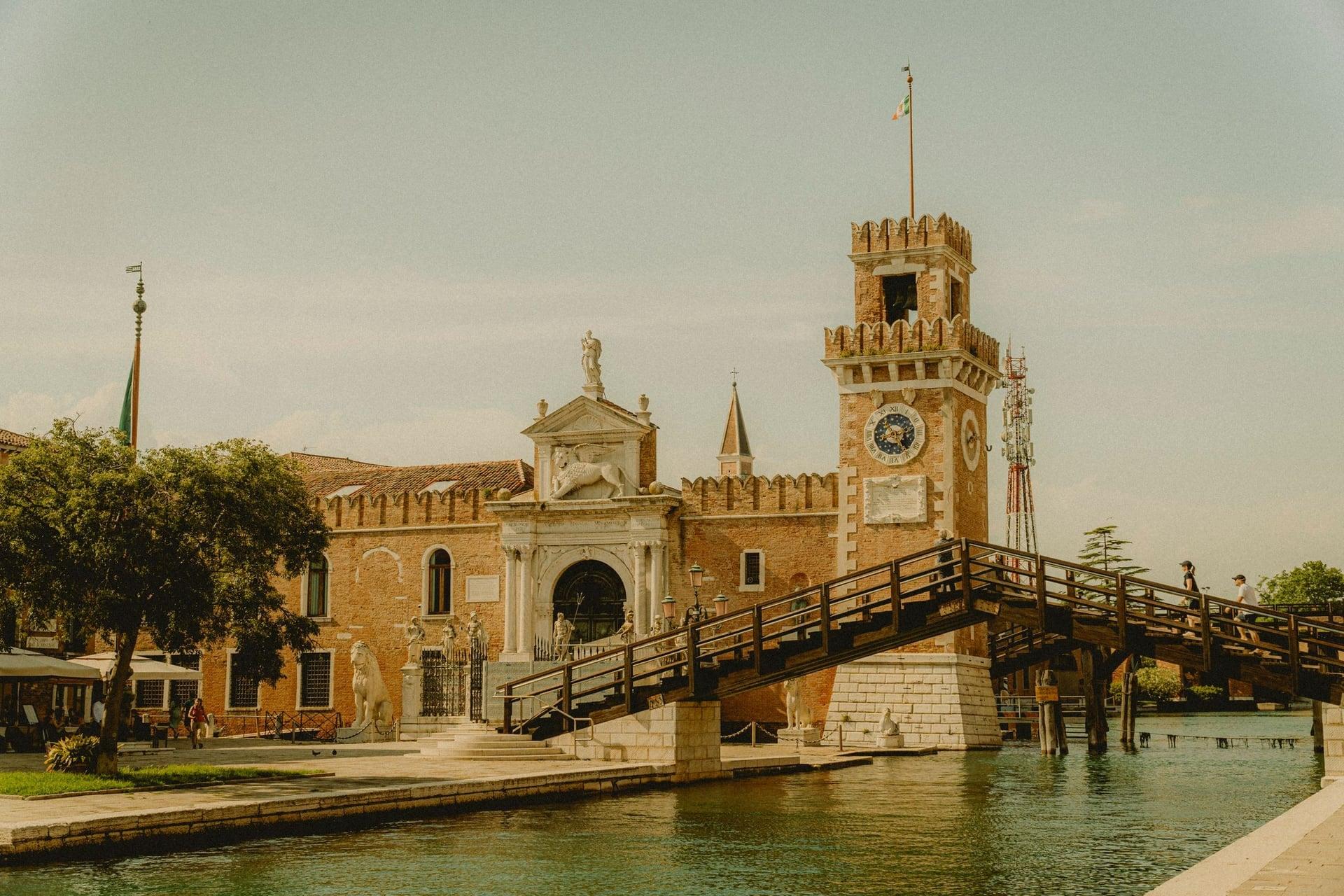
Castello and the Arsenale: Where the Republic Built Its Fleet
90 min · 3.1 km · easy
More from Venice
Explore more at your own pace.
Castello and the Arsenale: Walking the Doge's Calendar Through Venice's Quiet East
La Fenice and Campo Santo Stefano: A Walk Through Venice's Fronts Built to Be Seen
St Mark's Square and the Doge's Palace: Reading a Square That Was Borrowed and Rebuilt
La Fenice and San Maurizio: Giannantonio Selva's Two Fronts on One Venice Walk
San Francesco della Vigna: How Palladio Put Two Temples on One Church Front