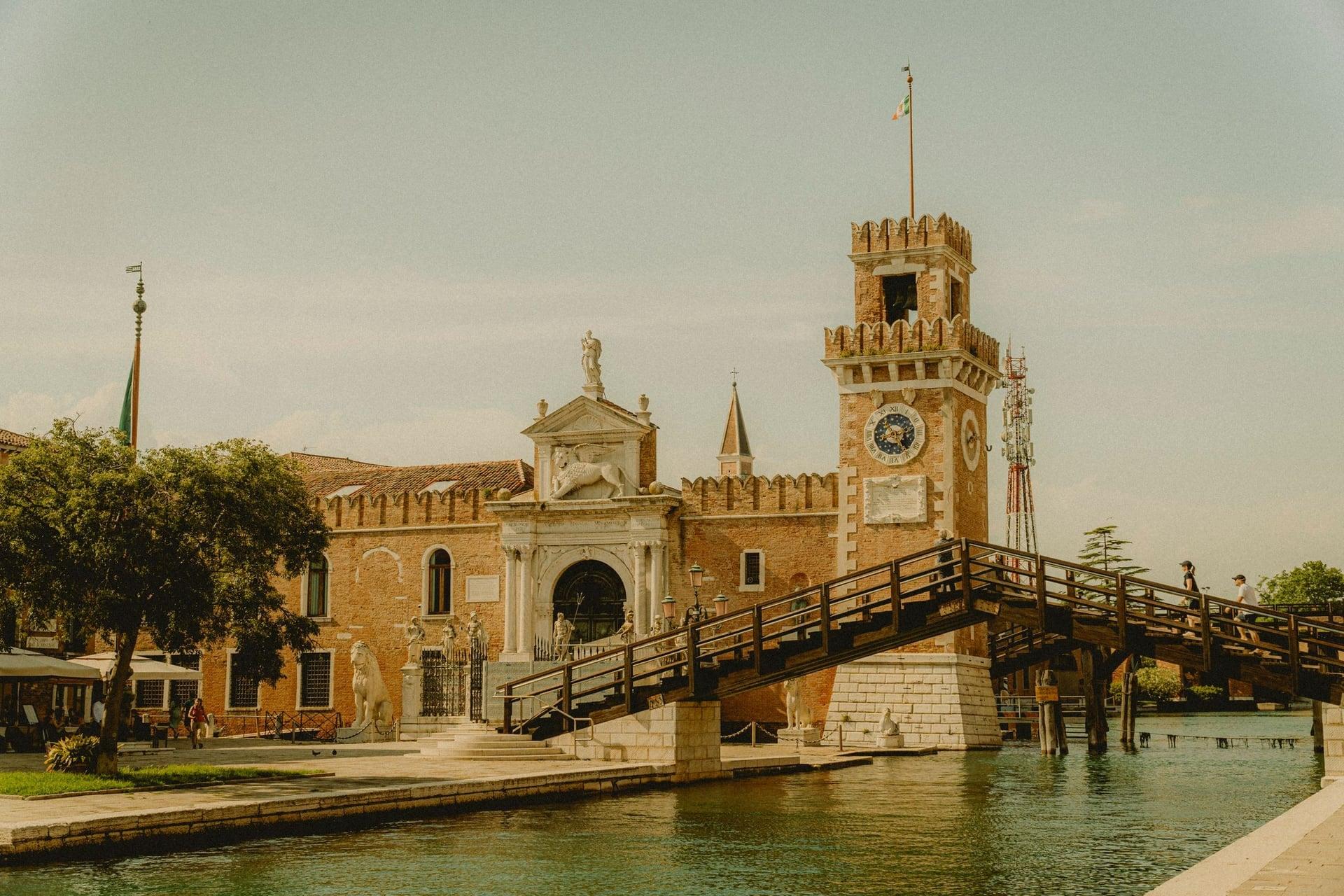
A walk through Venice's quiet eastern half, from San Zaccaria past Zanipolo, Santa Giustina and Palladio's San Francesco della Vigna to the Arsenale's lion gate, Via Garibaldi and the Partisan Woman at the Giardini.
Start · San Zaccaria: The Doge's Easter Visit
DirectionsStops
- 1
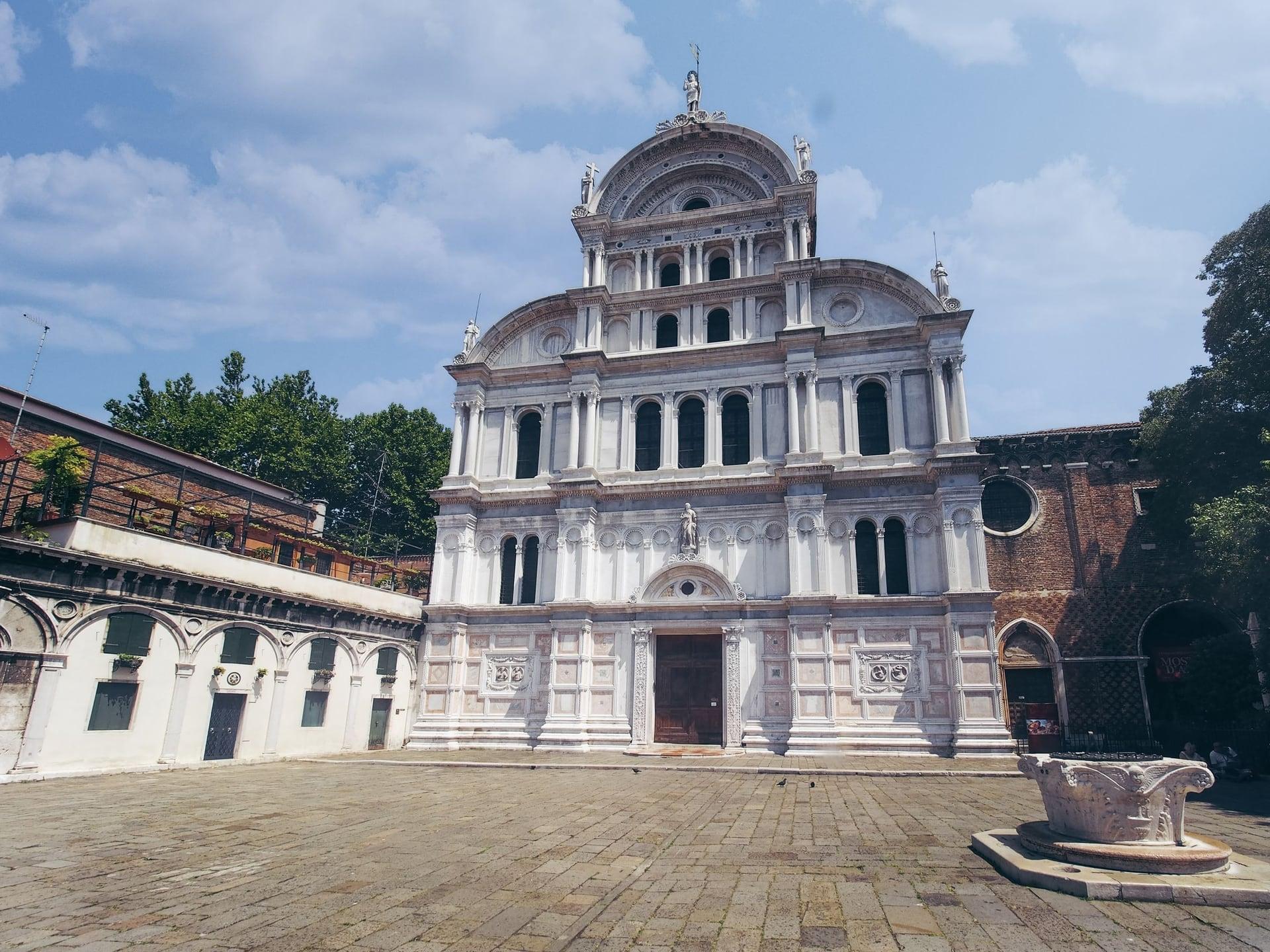
San Zaccaria: The Doge's Easter Visit
The church of the doge's Easter visit, in a quiet campo behind the waterfront. The church is free to enter; the crypt and chapels are a small paid extra.
- 2
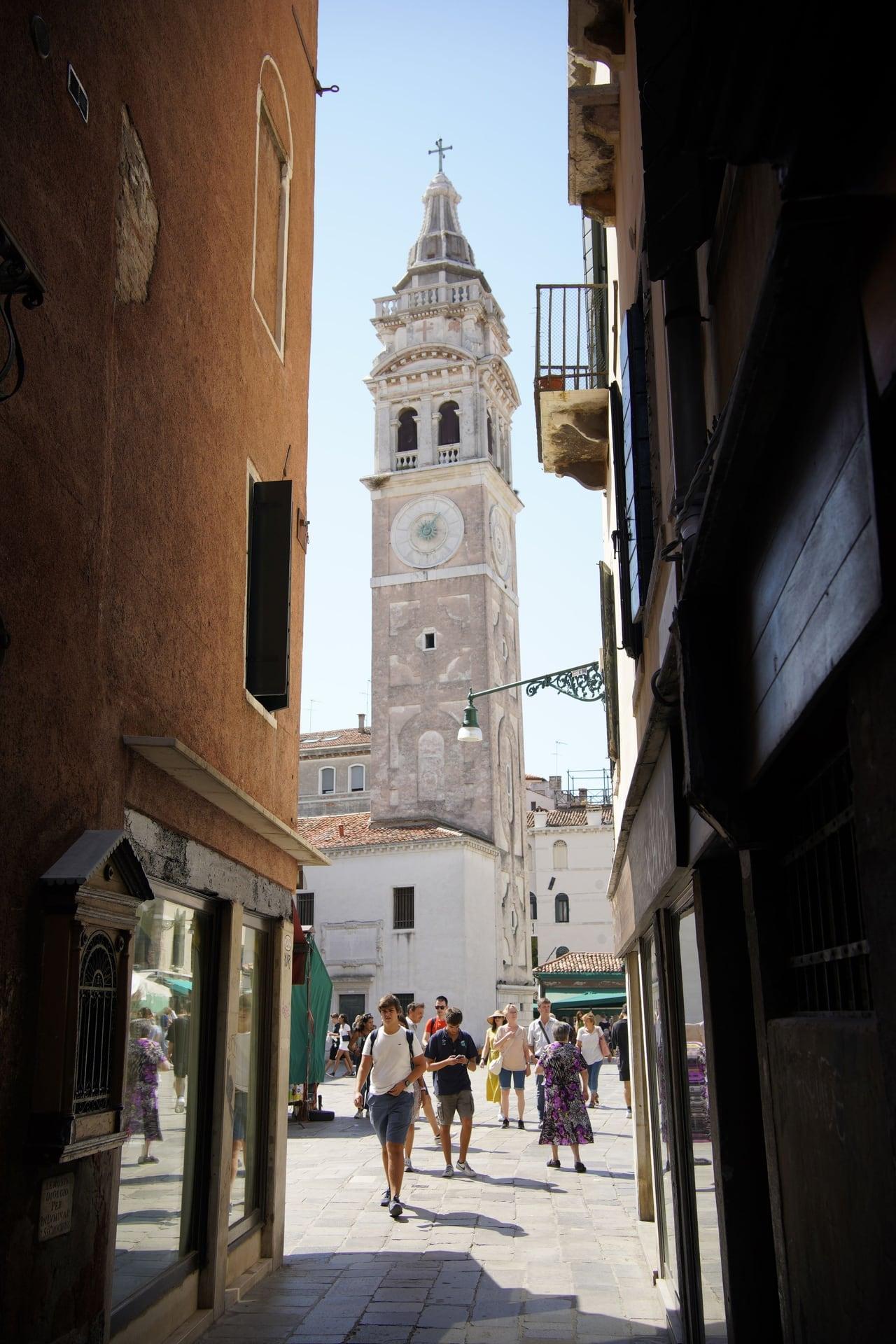
Campo Santa Maria Formosa: The February Visit
The doge came every February, the story says because of stolen brides. The legend is told as legend; the yearly visit is on record.
- 3
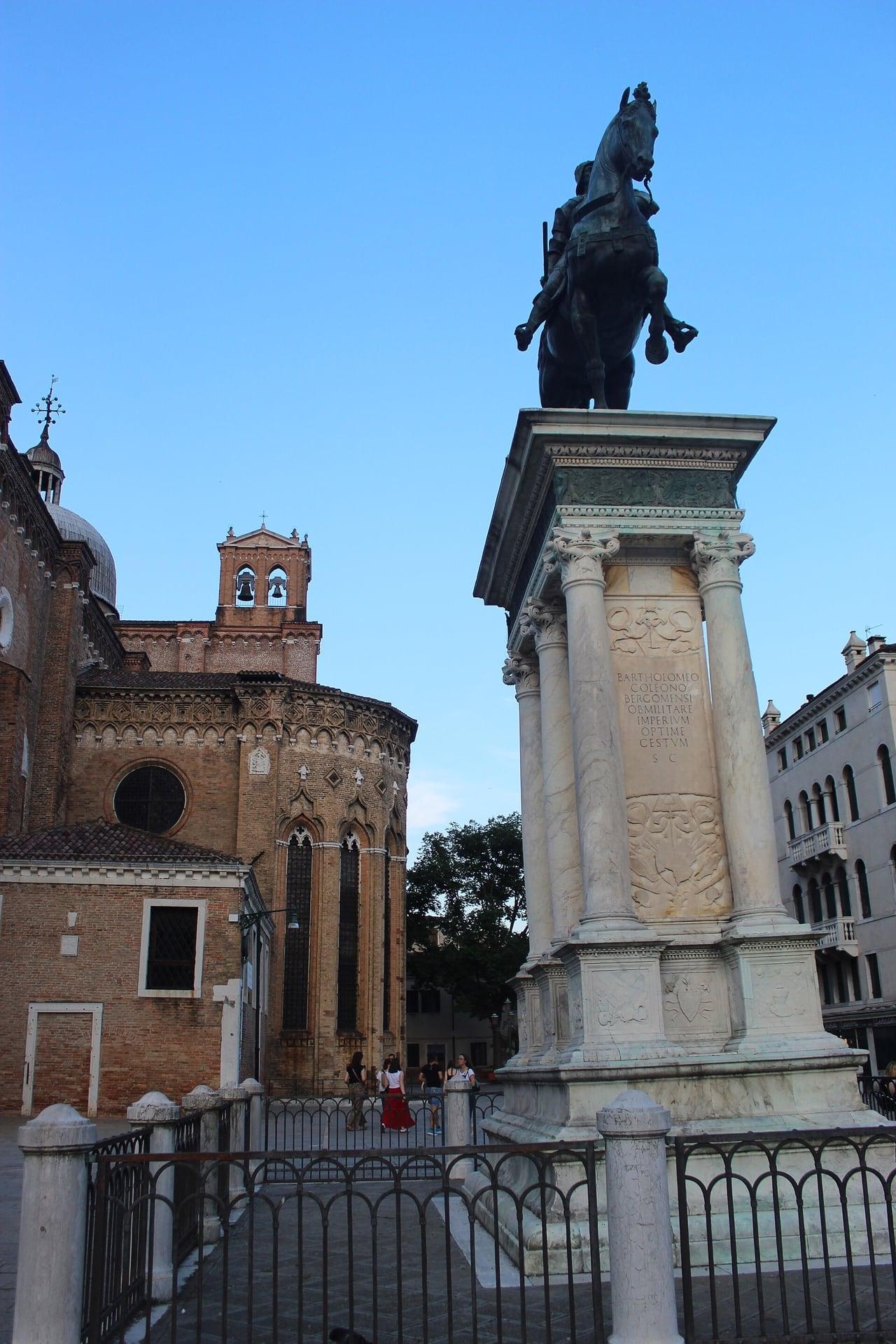
Campo Santi Giovanni e Paolo: Depth Carved Flat
A great church and a carved trick front, with a bronze rider. The basilica charges a small entry fee; the campo is free.
- 4
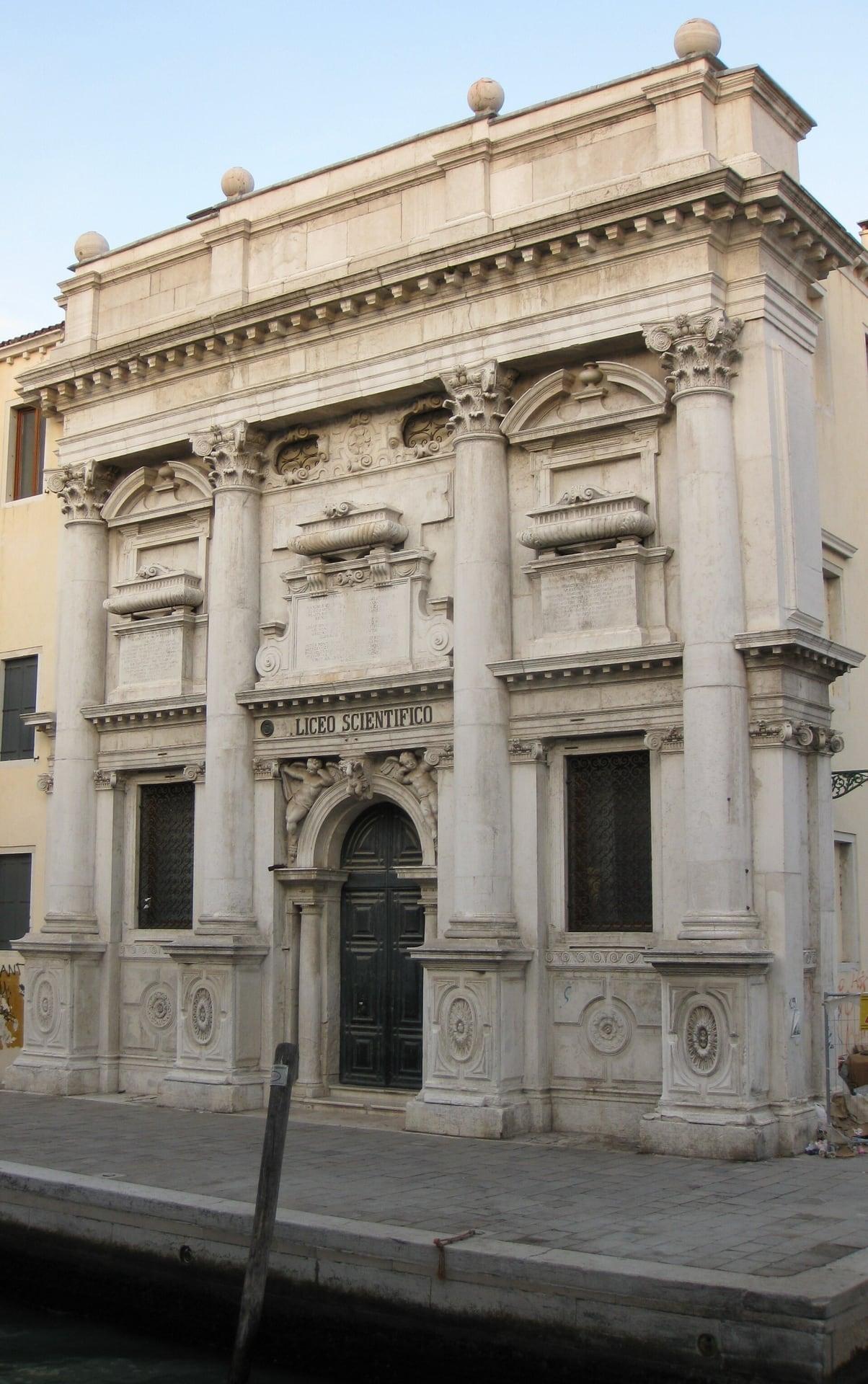
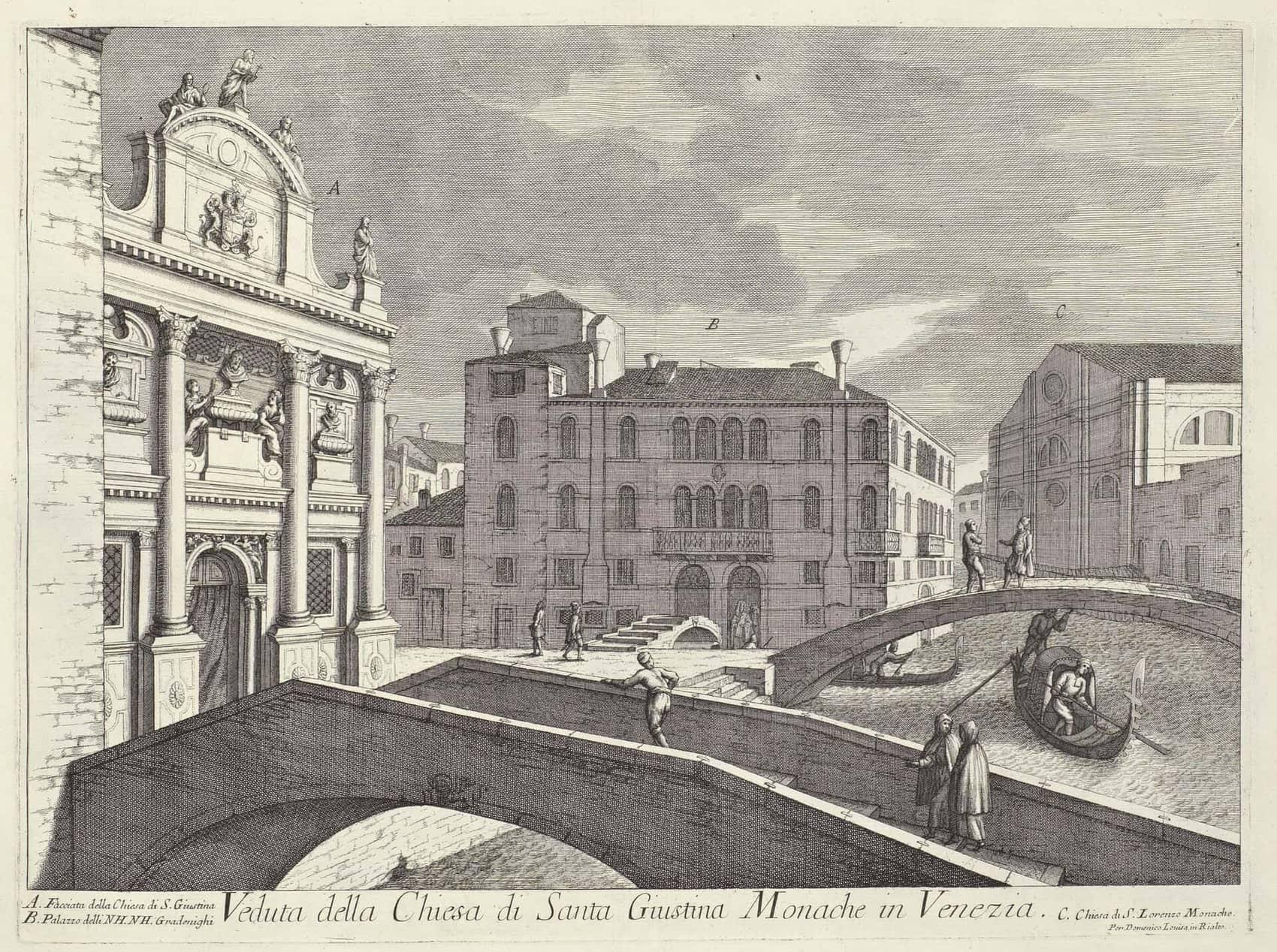
Santa Giustina: The Lepanto Procession
A white stone front on a canal, where the doge came by boat every October. It is now a school, so this stop is from outside.
- 5
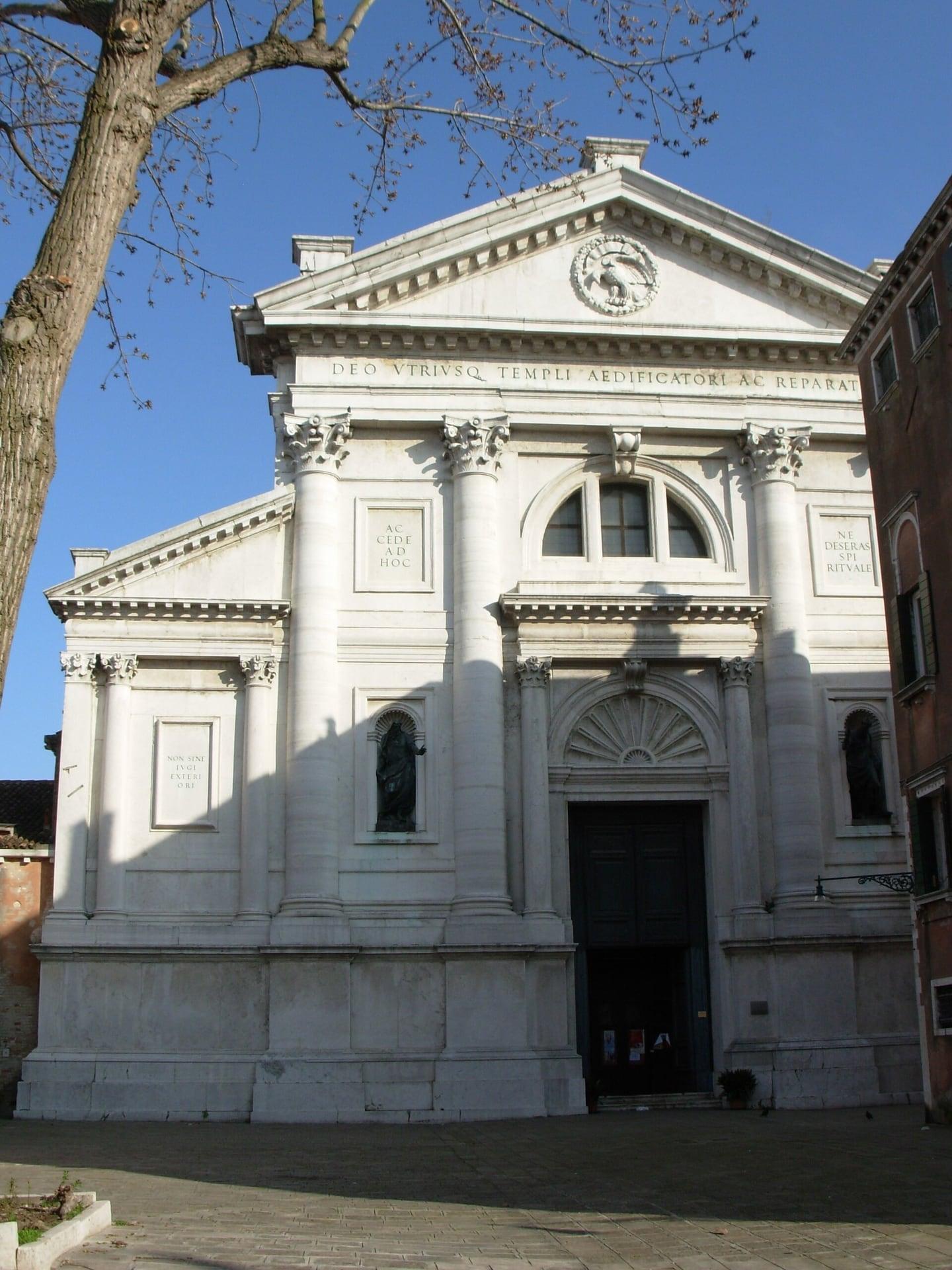
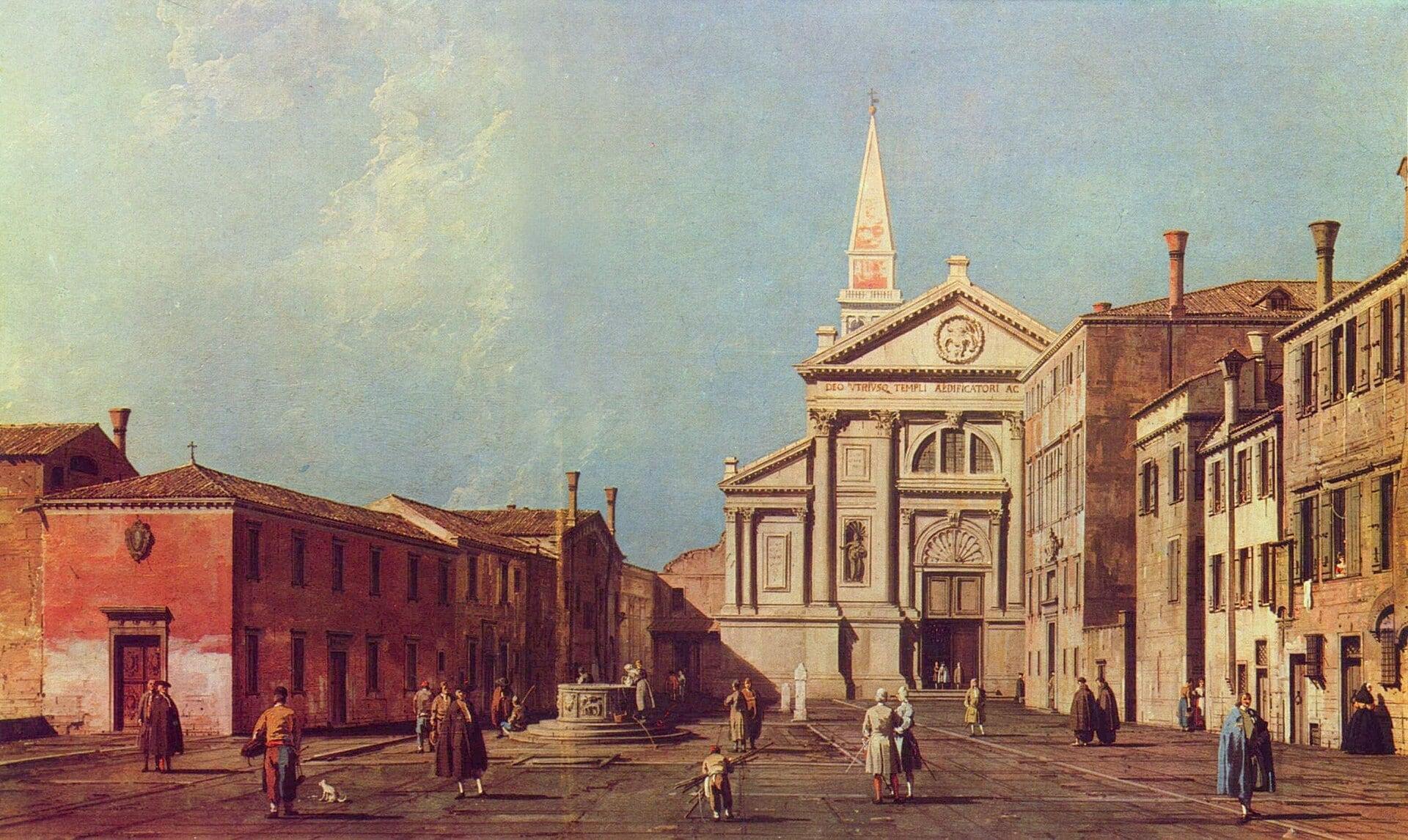
San Francesco della Vigna: Palladio's First Church Front
Two temple fronts locked in one wall, Palladio's first church front. It stands at the end of a quiet campo that few visitors reach.
- 6
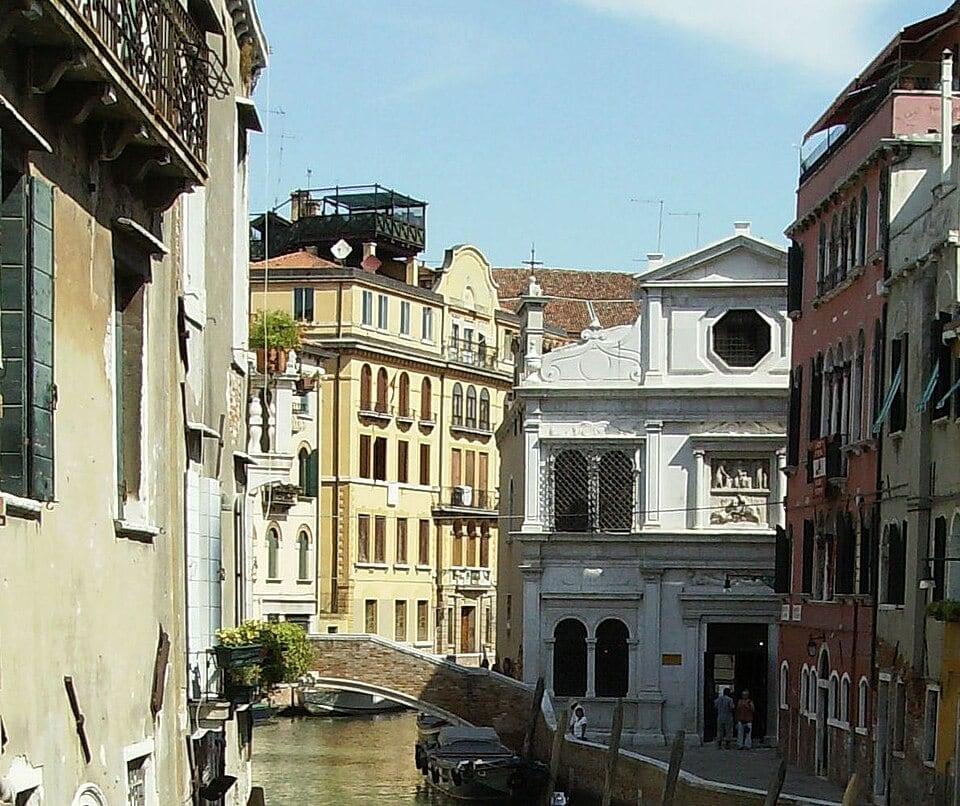
Scuola di San Giorgio degli Schiavoni: The Dalmatians' House
Saint George over the Dalmatians' door, at their meeting house. Inside is ticketed and closed on Tuesdays; the front is free from the canal.
- 7
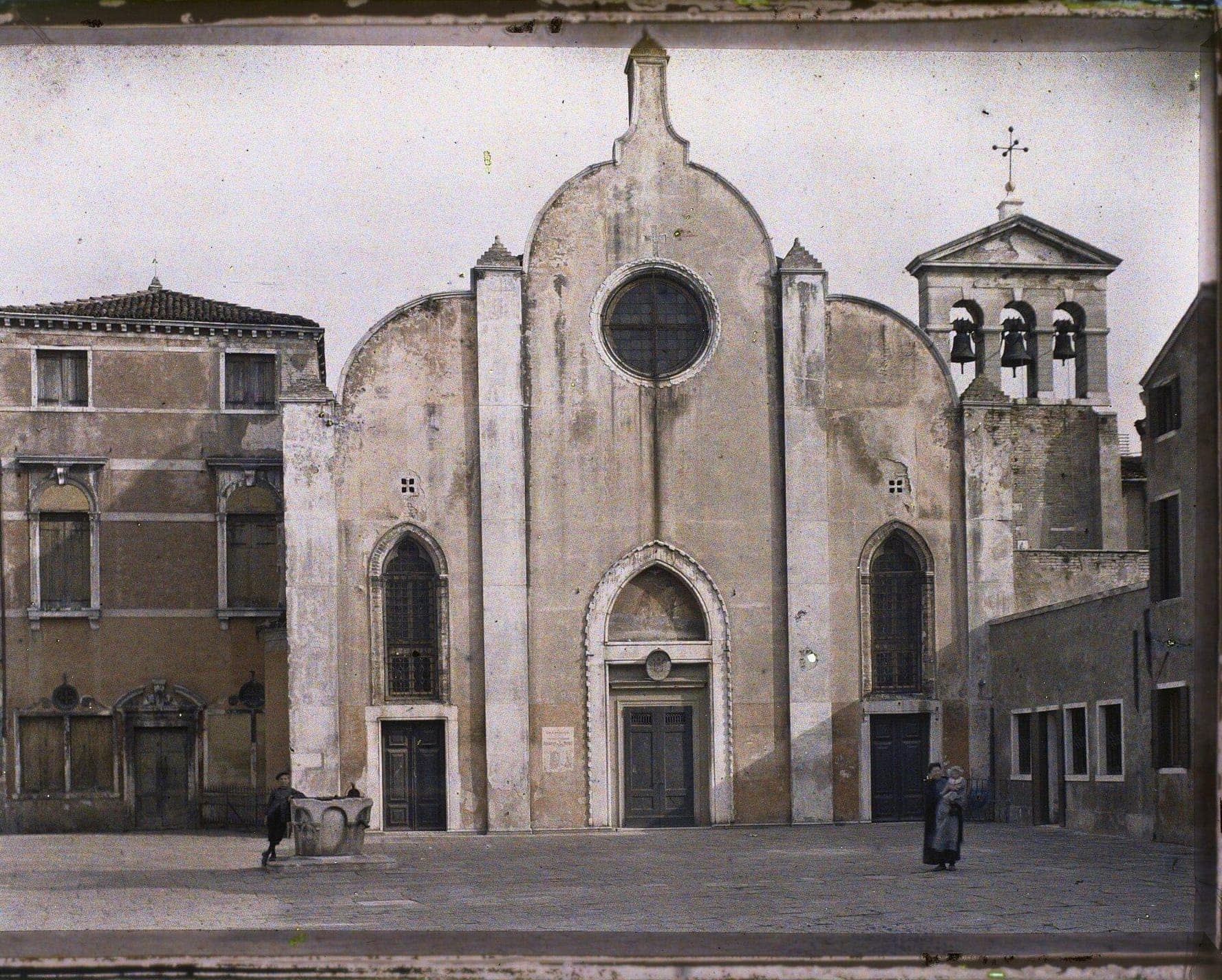
Campo Bandiera e Moro: Vivaldi's Baptism
The church where Vivaldi was baptized, on a tree-lined campo. The campo's name honors three men shot in 1844.
- 8
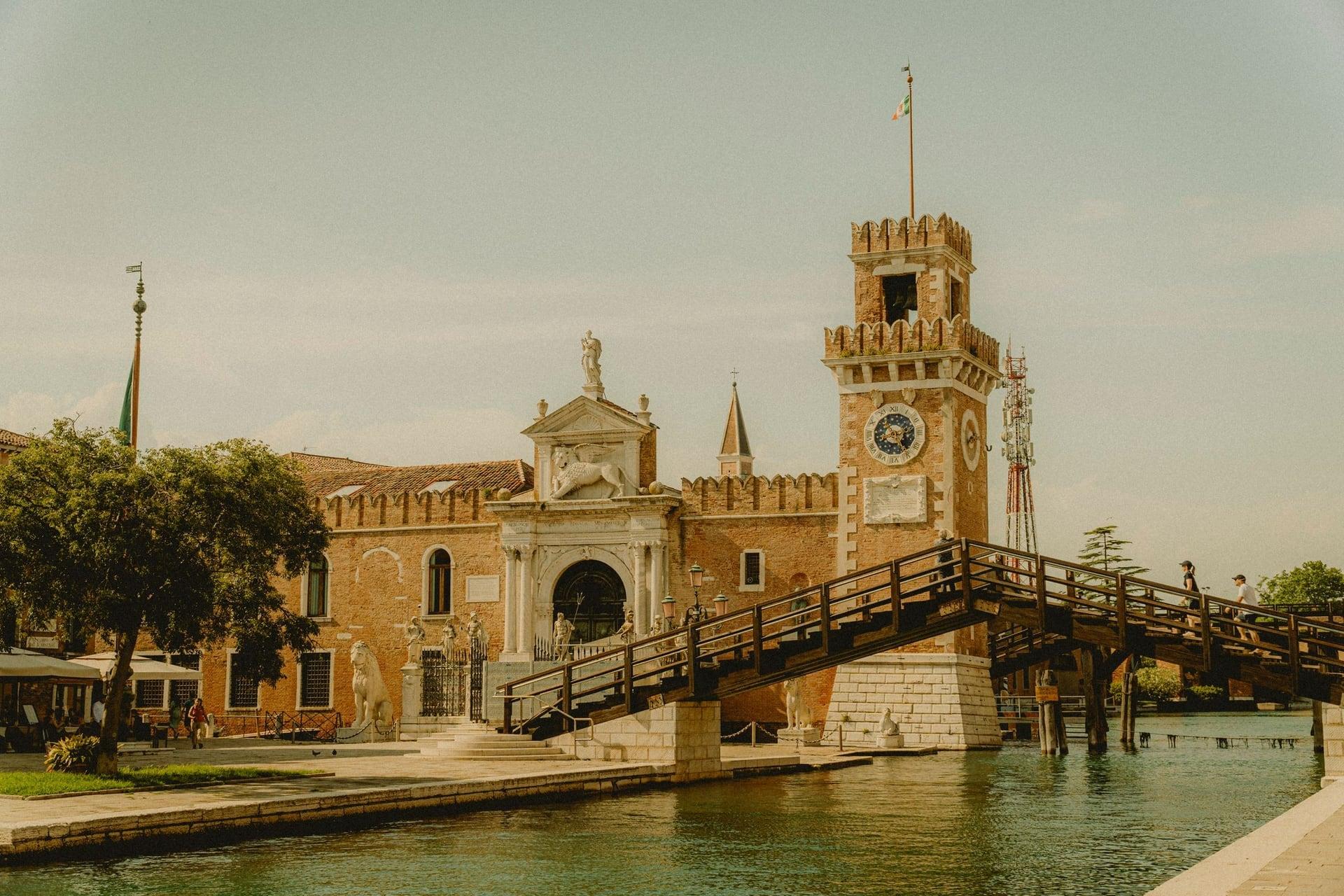
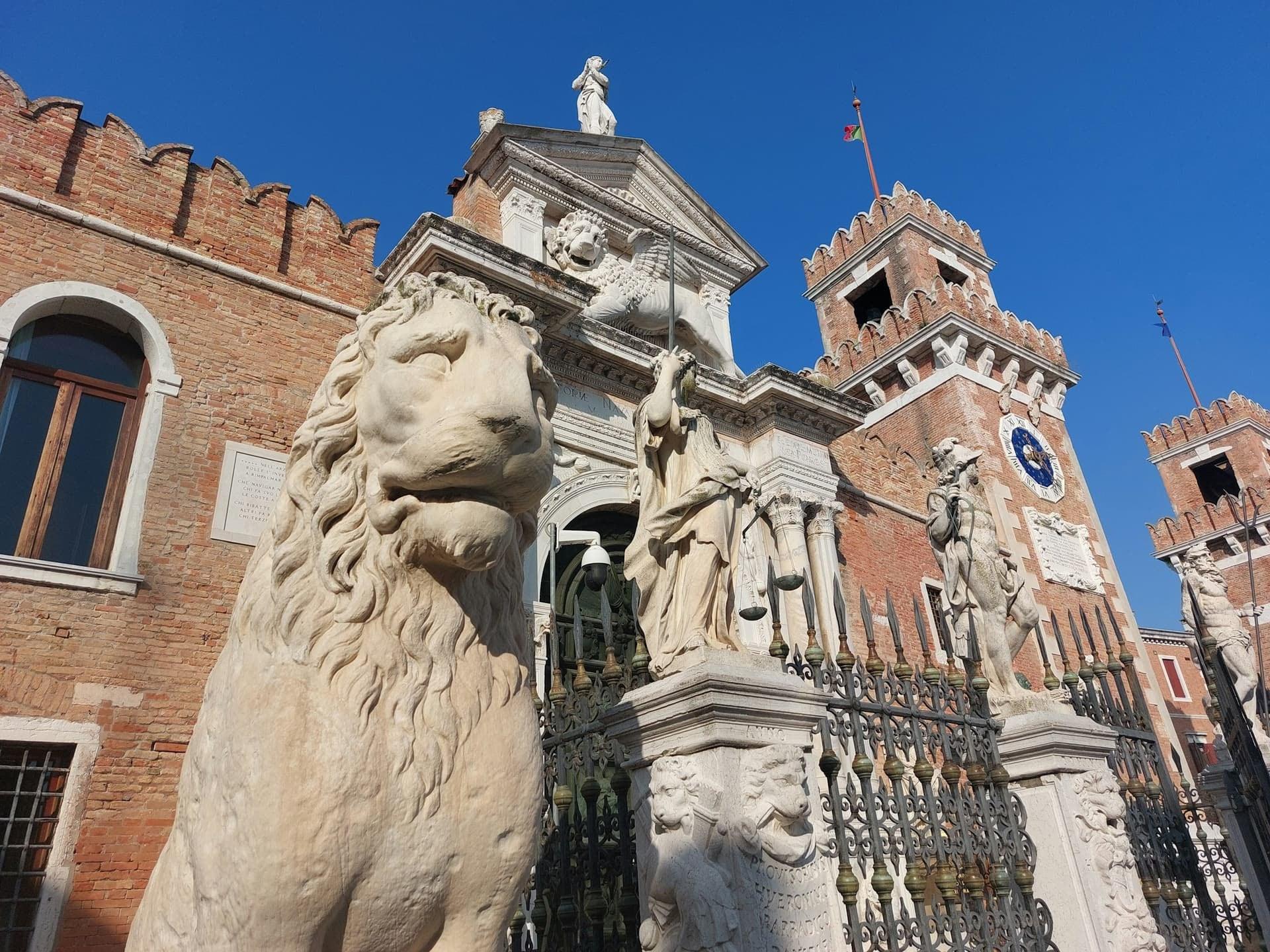
Arsenale Land Gate: Lions from Greece
Four Greek lions guard the gate: the shipyard's stone entrance. The Arsenale is Navy ground, so this stop is from the campo.
- 9
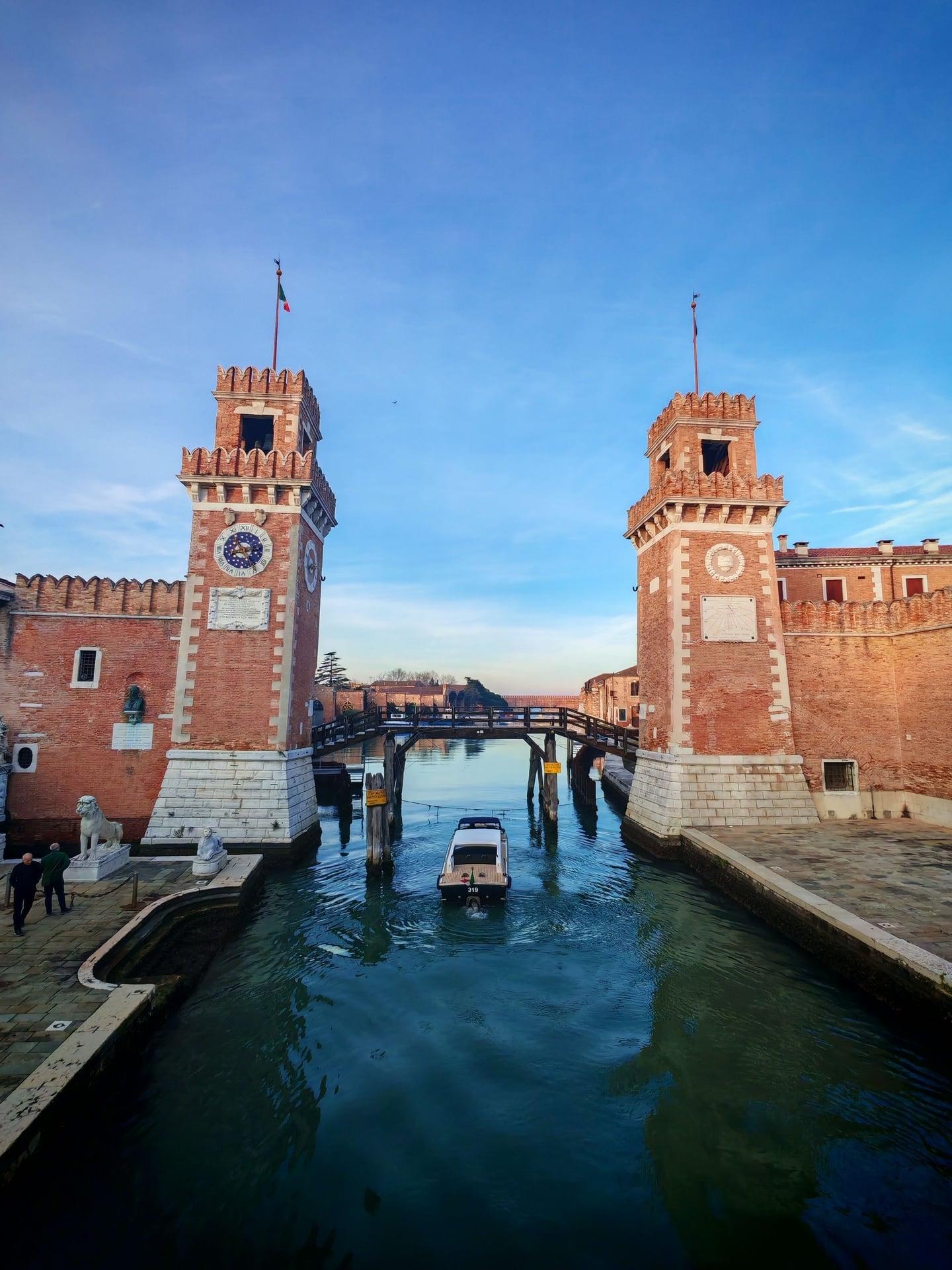
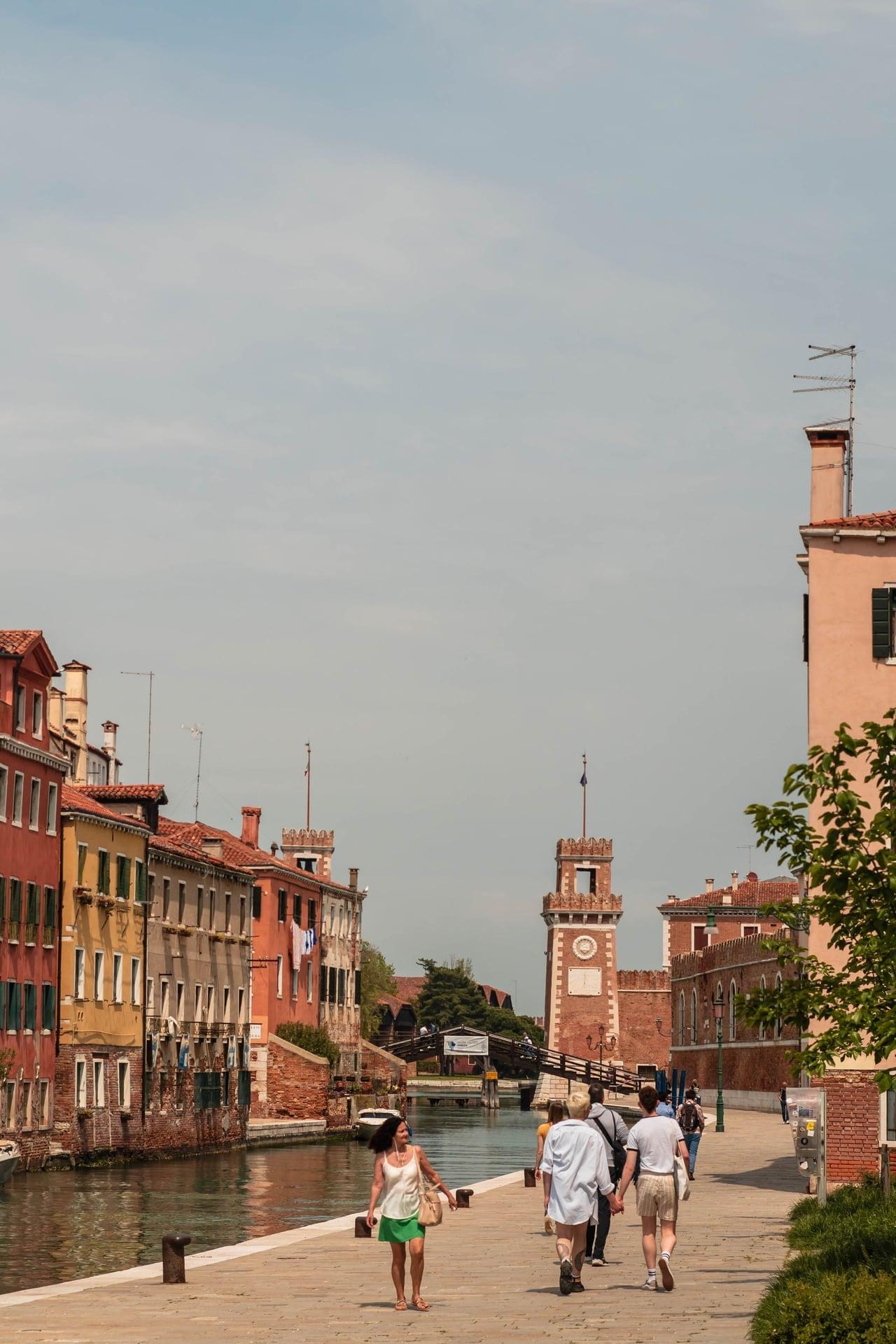
Rio dell'Arsenale and the Tana: Ropes and Galleys
The canal the galleys came out on, beside the yard's rope walk. The Tana opens only during Biennale exhibitions.
- 10
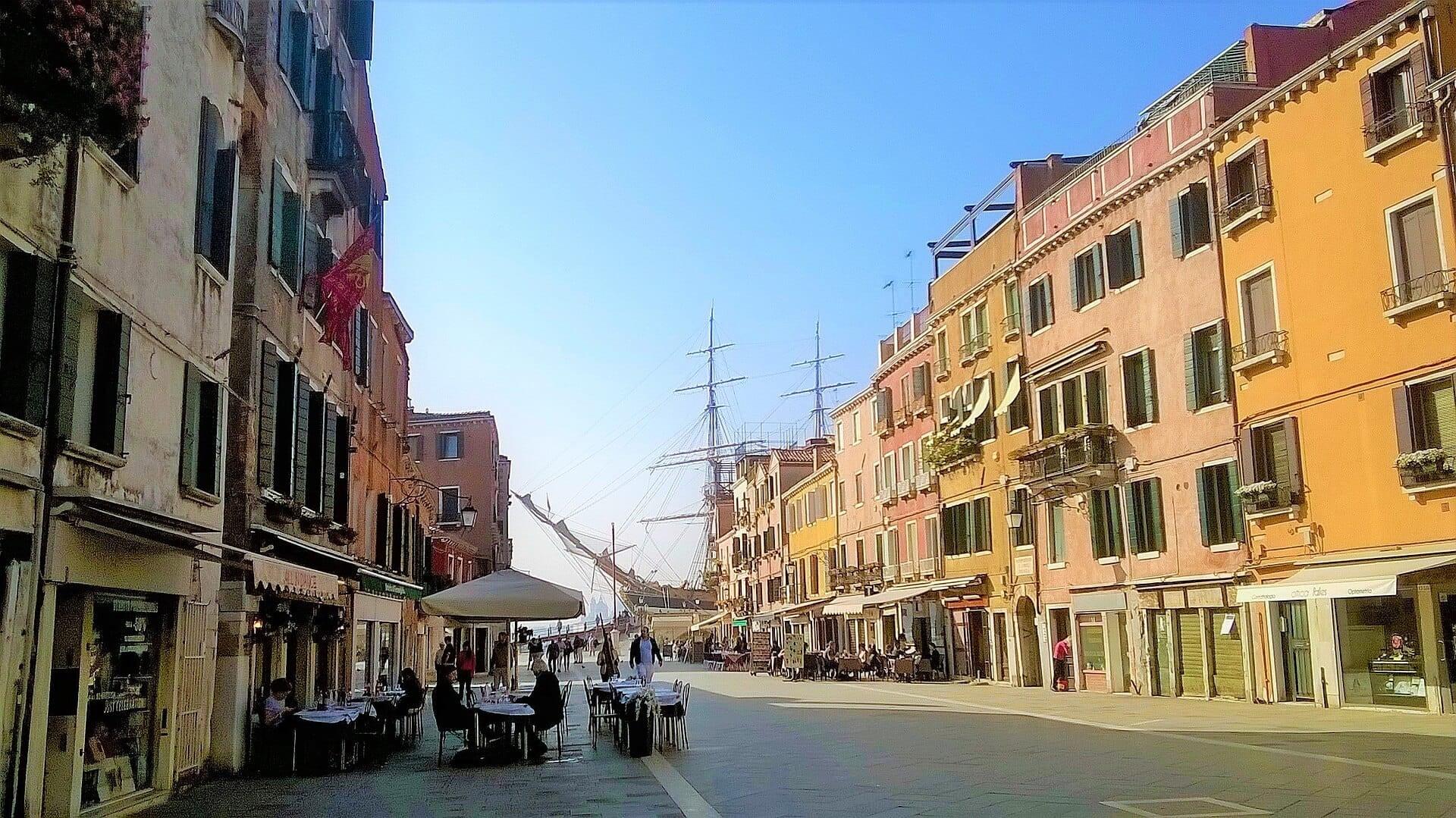
Via Garibaldi: A Canal Turned Street
A canal filled in to make a street, under Napoleon. A plaque here honors the navigator Giovanni Caboto.
- 11
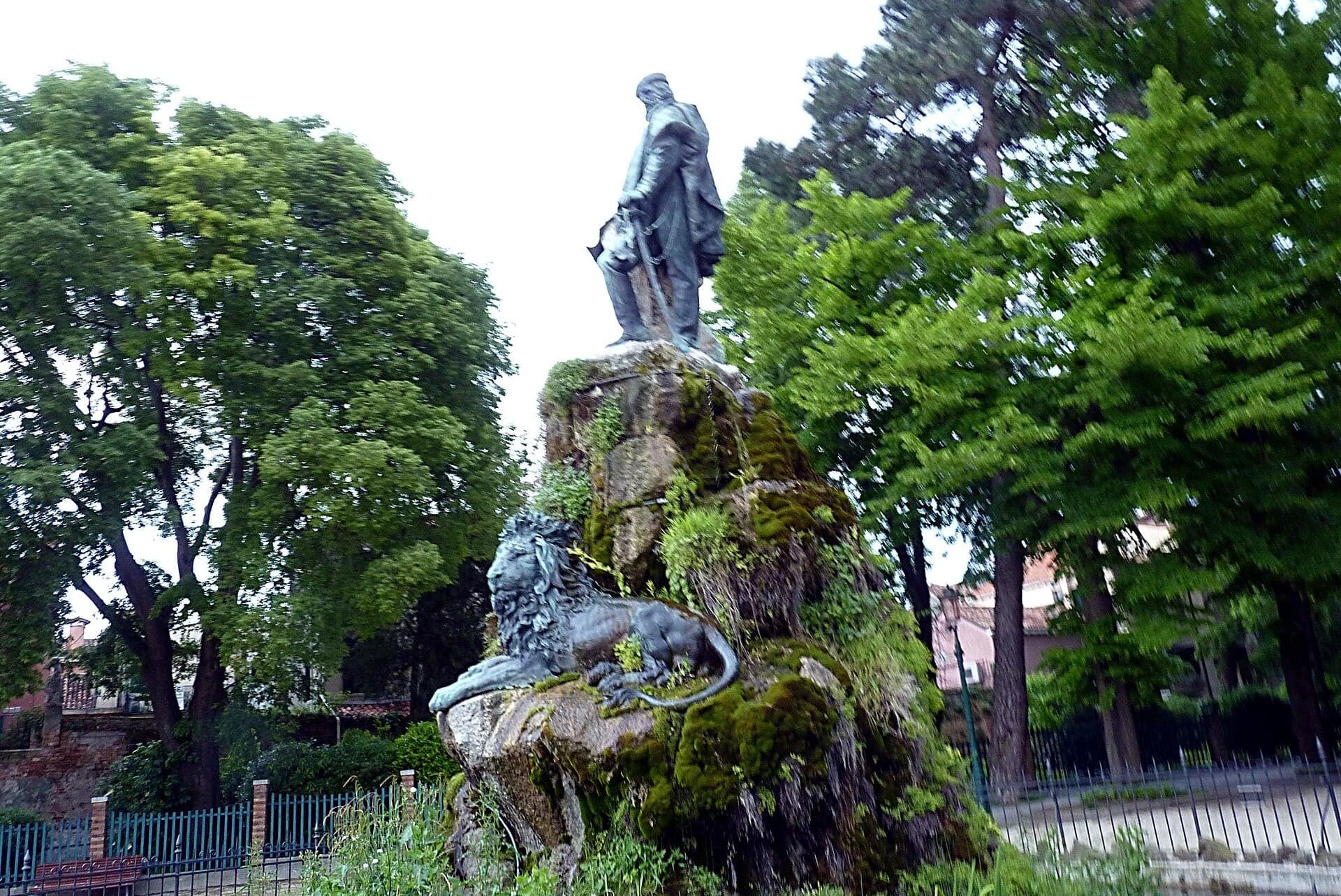
Viale Garibaldi: Napoleon's Gardens
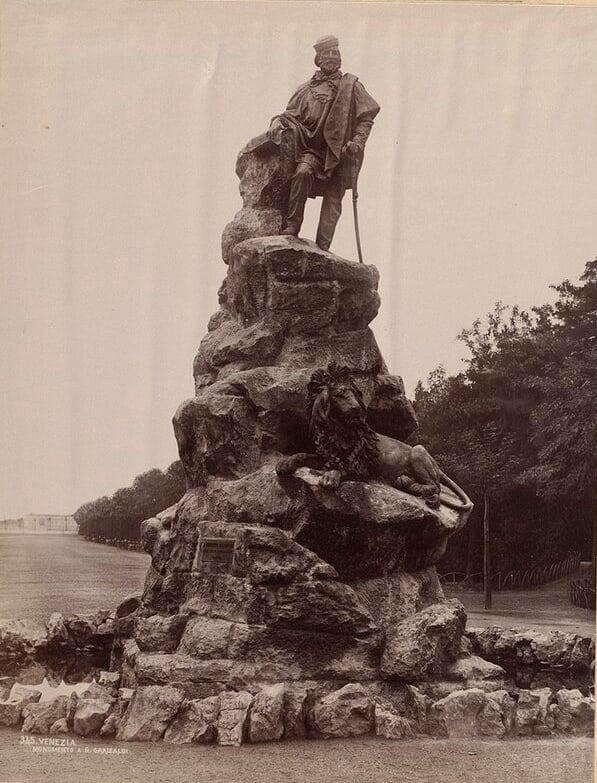
An avenue into Napoleon's gardens, past Garibaldi on his rock. Most of the gardens now belong to the Biennale.
- 12
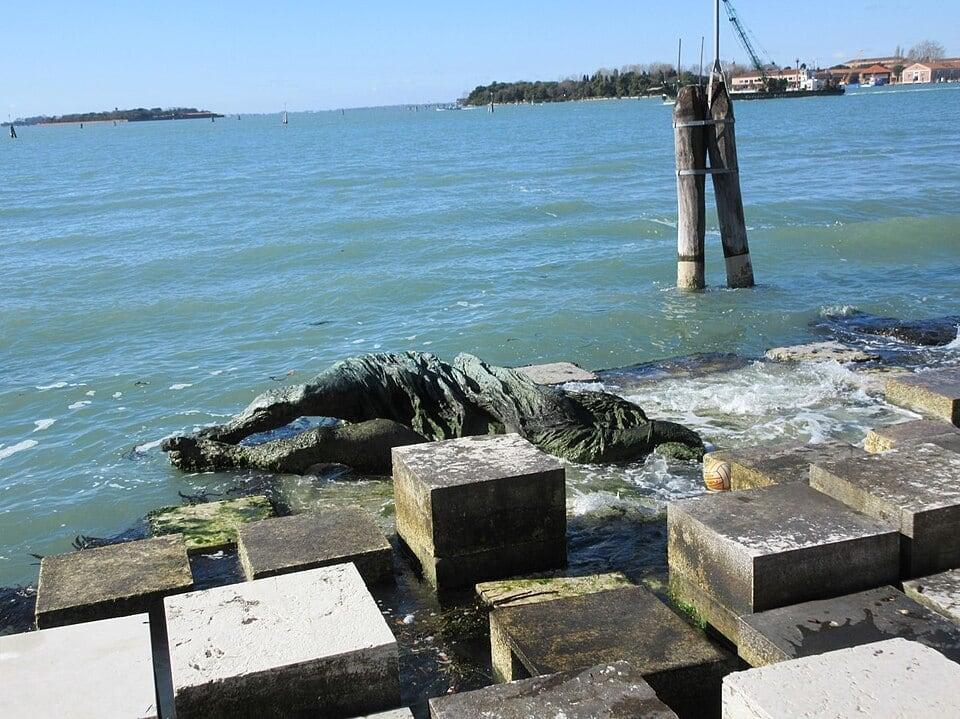
Partisan Woman, Giardini: At the Waterline
A bronze partisan lies at the lagoon's edge, set so the tide reaches her. Monument to the Partisan Woman: bronze by Augusto Murer (1922-1985), setting by Carlo Scarpa (1906-1978), 1969.
Details
Best Time to Visit
A weekday morning or early afternoon, in daylight. Chorus churches such as San Zaccaria open Monday to Saturday 10:30 to 17:00 and close on Sundays; Santi Giovanni e Paolo opens 9:00 to 17:45 (Sundays from 12:00); the Scuola Dalmata is closed on Tuesdays. Biennale Arte runs until Sunday 22 November 2026, 10:00 to 18:00, closed Mondays except 16 November. On days with a high-water forecast, start once the tide has dropped. Checked 7 November 2026.
Pro Tips
- •Getting to the start: the vaporetto stop is "S. Marco S. Zaccaria", a row of pontoons lettered on the Riva degli Schiavoni, about two minutes from Campo San Zaccaria. Lines 1, 2, 4.1, 4.2, 5.1 and 5.2 call there, plus line 14 and the night line N. On foot, walk east from St Mark's Square along the Riva over the Ponte de la Paglia and turn in through the Sotoportego San Zaccaria; our St Mark's Square and the Doge's Palace walk ends on the Riva just outside it. Checked 7 November 2026 (ACTV timetables).
- •Getting away from the end: two pontoon groups are a minute from stop 12. Giardini is on line 1 (toward San Marco, the Rialto and Piazzale Roma) and the night line N; Giardini Biennale is on lines 4.1, 4.2, 5.1, 5.2 and 6. Read the sign on the pontoon. Services change in fog and on tides above 85 cm. Checked 7 November 2026 (ACTV timetables).
- •Biennale Arte 2026 ('In Minor Keys') is on until 22 November 2026. One ticket gives one entry to each venue: the Arsenale entrance is at Campo della Tana (stop 9) and the Giardini pavilions are beside stops 11 and 12. 30 EUR full, 20 EUR over-65 and residents, 16 EUR students and under-26. Checked 7 November 2026.
- •If you want to go inside one place, choose the Scuola Dalmata at stop 6 for its Carpaccio paintings: open daily except Tuesday, 10:00 to 17:30, last entry 17:00, at most 25 people at once. Checked 7 November 2026.
- •Santi Giovanni e Paolo charges an entry fee of 3.50 EUR (students 1.50 EUR), free for prayer, Mass and residents. San Zaccaria's church is free and its crypt is 3.50 EUR (January 2026 price). Checked 7 November 2026.
Safety & Precautions
- •This walk is not step-free. It crosses eleven bridges, almost all with steps, and no ramps or lifts were found on them; the Ponte dei Giardini before stop 12 is mapped without steps but not yet checked on the ground. There are also five covered steps in Corte Nova, between stops 5 and 6. The longest flights, by map data, are the Ponte de Santa Giustina into stop 4 (about 34 steps up and down), the Ponte de l'Arsenal into stop 9 (about 32) and the Ponte de la Veneta Marina after it (about 30).
- •High water: check the Comune's tide forecast before you start. Campo San Zaccaria (stop 1) is a low spot where the city lays raised walkways from a tide of about a meter, and Barbaria de le Tole, between stops 3 and 4, has walkways from about 1.05 meters. With the MOSE barriers working, the tide in the city is kept below about 1.10 meters. Areas without walkways can still flood. Loudspeakers across the historic center sound a tide alarm when a high tide is forecast.
- •Venice's urban rules forbid sitting or lying on bridges, steps, monuments and wellheads, and eating sitting on the ground, with fines (city rules page as archived in 2020).
- •Pickpockets work the crowds on the Riva degli Schiavoni by the start and the narrow shopping street (Ruga Giuffa) before stop 2. Keep bags closed and in front of you.
- •Castello is a lived-in district. Keep voices down in the campi and calli, use headphones, and do not enter courtyards or doorways. Santa Giustina (stop 4) is a working school, and the churches hold services: do not visit during Mass.
- •The Arsenale is Navy ground and is never entered on this walk. The Corderie (the Tana) and the Giardini pavilions open only during the Biennale, which ends on 22 November 2026. Checked 7 November 2026.
- •GPS weakens in narrow calli. If the map and the street disagree, follow the street signs (the nizioleti) toward the next campo.
- •No official opening hours for the Giardini public gardens were found. If the garden paths are shut, the Riva dei Partigiani along the water reaches the same end point.
- •Monument to the Partisan Woman: bronze by Augusto Murer (1922-1985), setting by Carlo Scarpa (1906-1978), 1969. It is a memorial: please do not climb on the blocks or the figure.
Travel advisory: Exercise Increased Caution (Level 2).
Gallery
Related Reading
Go deeper on what you'll see, hear, and walk through.
Read the walk
The full story of Castello and the Arsenale: Where the Republic Built Its Fleet, in words. Prefer to listen? Play it narrated, from home or on location.
Introduction
Venice, in the north-east of Italy, has a quiet half that most visitors never reach. This walk crosses it, through Castello, the district at the city's eastern end, from the church of San Zaccaria to the public gardens at the edge of the lagoon.
The thread is the Republic's working year. Every year the doge, the head of the Venetian state, came out in procession to three churches on this route: Santa Maria Formosa in February, San Zaccaria at Easter, and Santa Giustina every seventh of October, for a sea battle. Between them stands the shipyard that built the fleet, the Arsenale, with the same saint on its gate.
Three people shape what you will see. Andrea Palladio designed a church front of two temples locked together. Francesco Morosini, a doge, is the name behind the Greek lions at the shipyard's gate. And Carlo Scarpa placed a bronze woman where the tide reaches her.
The walk is twelve stops over about three kilometers, just under two miles, and takes about ninety minutes. Venice is flat, but there are eleven bridges, almost all with steps, and no step-free way round. The campi, the small squares, are lived in, so keep voices down. The walk ends at the Giardini, the public gardens, beside the vaporetto stops for the city's water buses. When you arrive at Campo San Zaccaria, begin with stop one.
1. San Zaccaria: The Doge's Easter Visit
Welcome to Campo San Zaccaria, a quiet square a minute from the crowds on the waterfront. The church is free to enter. Its crypt and chapels are a small paid extra, and the details are on this stop's card. The waterfront is busy by day, so keep bags closed there and on the shopping street ahead.
The church's tall front stands at an angle to you here. Take a few steps back across the campo until the whole of it fits in view.
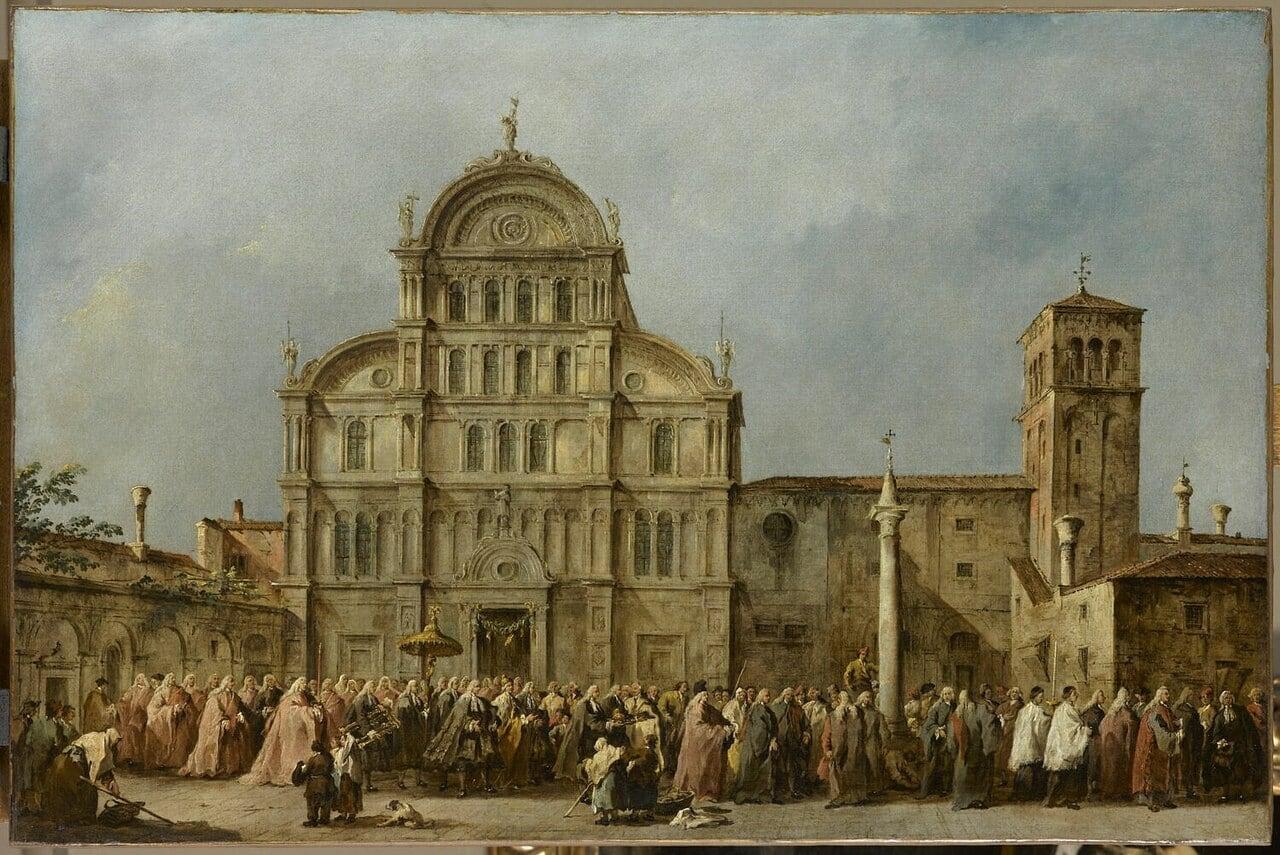
This church kept an appointment with the state. Every Easter Day, after the sermon in Saint Mark's, the doge came here in procession with his council, in triumph, as an old guide to the city puts it. The nuns and their abbess received him, and Vespers were sung. It was the second of the doge's yearly processions. The first is at the next stop.
Why here? Even in the fifteen hundreds, Venetians gave three different reasons, and the guide that records them admits it is hard to judge which is true. One says a pope sent relics after visiting the nuns. One says a doge founded the church. The third, taken from a doge's own chronicle, is the most practical. The nuns' land was taken to enlarge Saint Mark's Square. In exchange they were given land on the mainland, and the doge bound himself to visit every year. A square, paid for with farmland and a promise.
This campo is also one of the low spots on the walk. On high-water days, check the city's tide forecast before you start. The city lays raised walkways across this campo when the tide passes a meter. With the barriers working, the tide is kept below about a meter ten.
Follow the route through a covered passage and over two bridges. Next is a big open campo and the doge's first visit of the year.
2. Campo Santa Maria Formosa: The February Visit
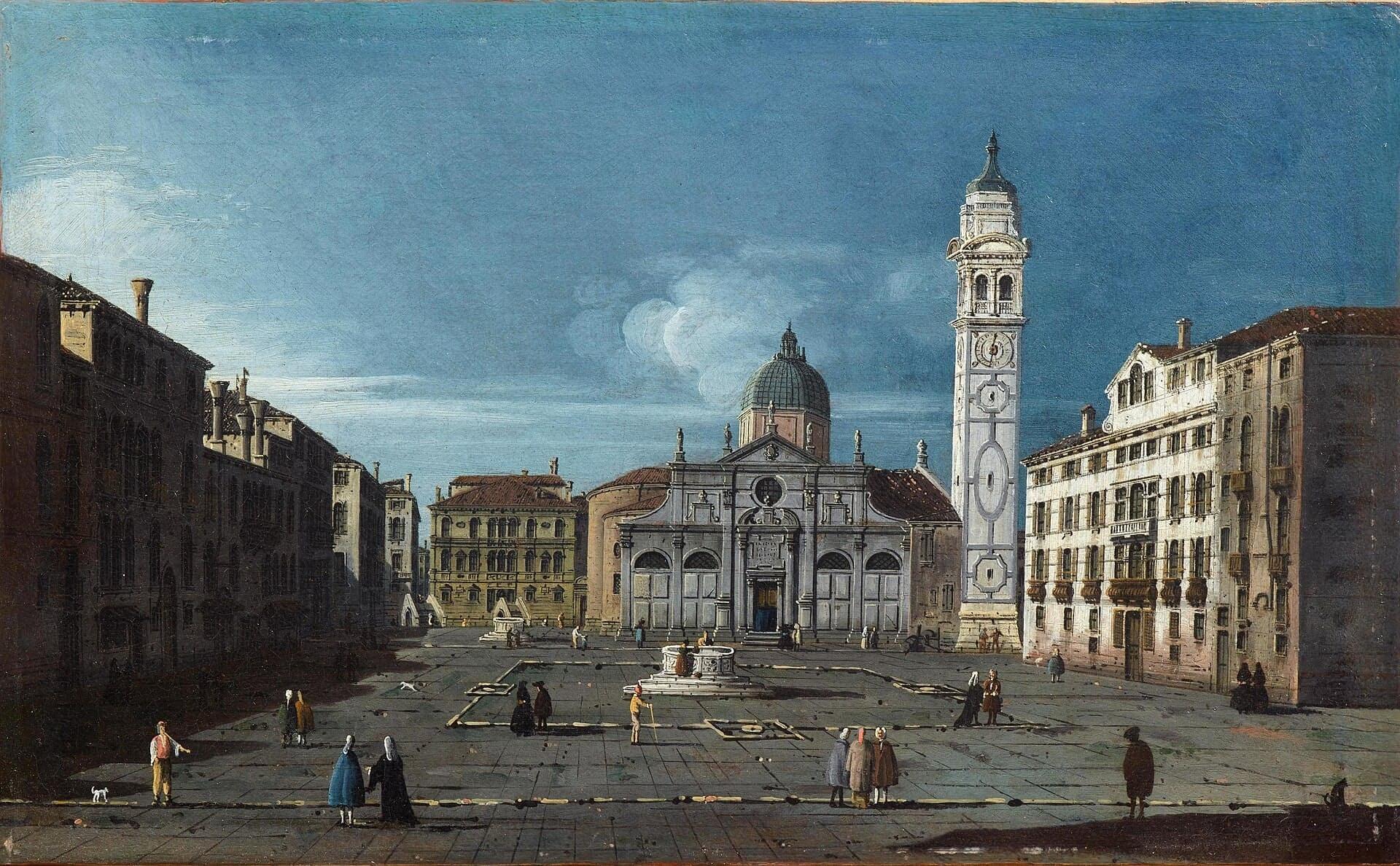
Walk on into Campo Santa Maria Formosa and stop where the paths cross the open square. After the narrow shopping street and the bridge, the city opens up.
Turn back toward the church with the dome, the way you came in; its bell tower rises at the corner.
This was the doge's first stop of the year. On the eve of the Purification, the second of February, he came here in procession. The reason Venetians gave is a story, and the sixteenth-century writer who repeated it called it common report. So take what follows as legend.
In the year nine hundred and forty-three, the story goes, Venetian brides were married together on the thirty-first of January at San Pietro di Castello, at the far end of this district. Pirates from Trieste broke in, seized the brides and their dowries, and fled. The men who chased them were mostly chest-makers from this parish. They caught the pirates at Caorle, along the coast, and brought the brides and the dowries home. Asked what reward they wanted, they asked for one thing: that the doge come to their church every year.
Whether or not any raid happened, the visit did. Every February the head of the Republic crossed the city to this campo, because a parish of craftsmen had asked him to.
At San Zaccaria the visit repaid a piece of land. Here it repaid a rescue. At a canal ahead, it will remember a battle.
Follow the route over one more bridge. Next is another great open square, with a bronze horseman in it.
3. Campo Santi Giovanni e Paolo: Depth Carved Flat
Walk on into Campo Santi Giovanni e Paolo and stop where you can see the bronze horseman on his tall pedestal. Venetians run the two saints' names together and call this place San Zanipolo. The basilica charges a small entry fee, free for prayer and Mass, and the details are on this stop's card.
Three things share this campo: the rider, the great church, and a richly carved front beside it that looks like a church but is the entrance of the city hospital.
Start with the church. The Dominican friars who run it say it is still the largest church in the city. It grew because people wanted to be buried in it. The friars say the enlargement was finished in thirteen sixty-eight because many doges and leading Venetians chose it for their tombs, and it was consecrated in fourteen thirty.
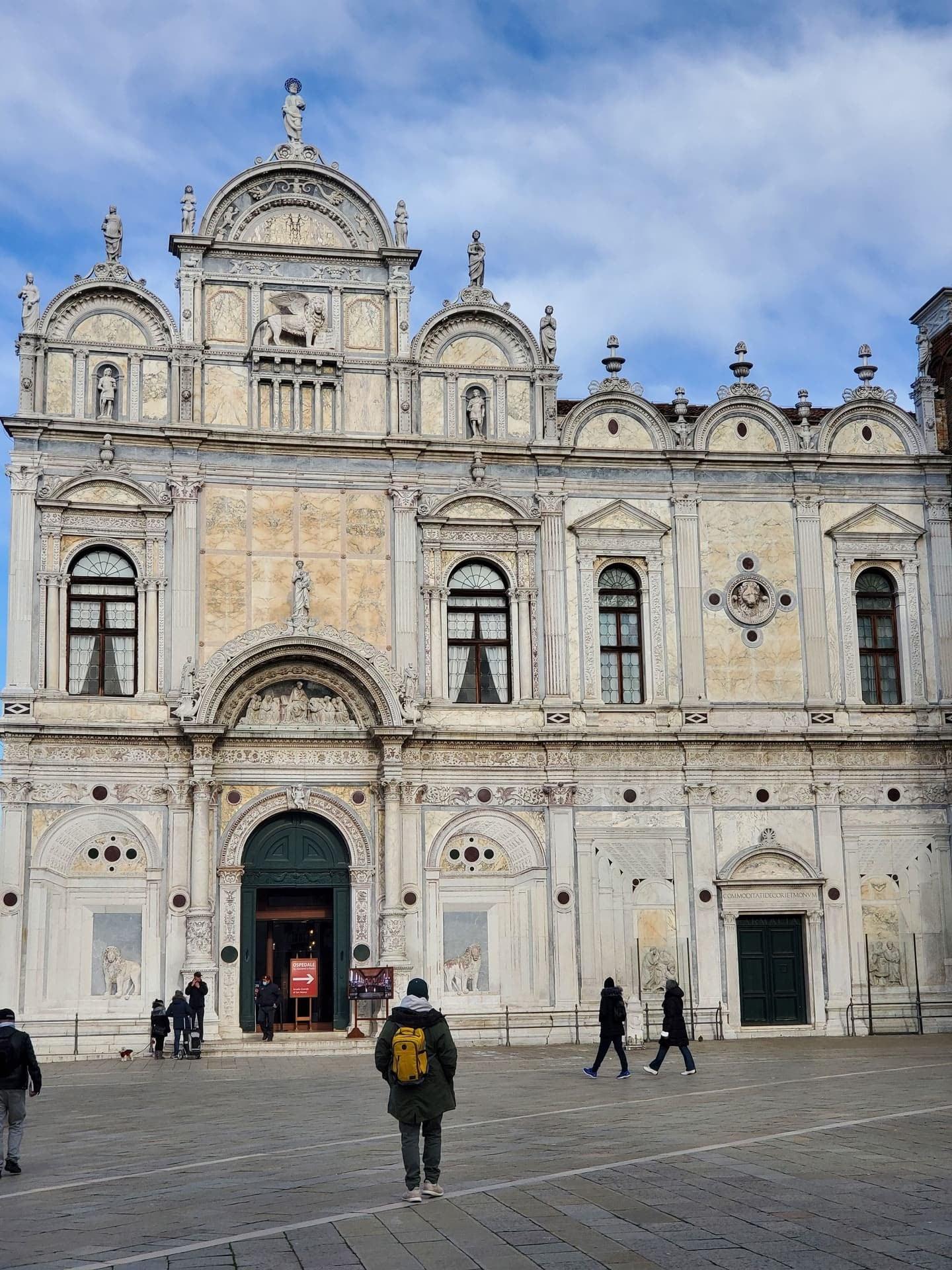
Now turn to the carved front. It belonged to a scuola, a lay confraternity, the Scuola Grande di San Marco. Its old building burned on Holy Thursday, fourteen eighty-five, and the brothers built a new front. A Ca' Foscari University study reads it as their version of Saint Mark's Basilica.
Walk over to it and look low, beside the main door. Two lions stand in arches that seem to run deep into the building. They do not. The depth is carved into a flat wall, a trick of perspective, and the lions were made, most likely, by fourteen ninety. Their manes were once gilded.
In eighteen oh six the friars were sent away and their convent became a hospital, first military, then civil. The hospital still uses the confraternity's building, and its old pharmacy survives inside.
Follow the route into the quiet street ahead. Next is a church front that faces a canal, not a square.
4. Santa Giustina: The Lepanto Procession
As you come down the steps of the bridge, look at the white stone church front facing the water ahead of you, then stop on the canal path at its foot. These are some of the longest bridge steps on the walk, so take them steadily.
Look at the front: tall columns on high bases, three stone tablets carved with inscriptions, and a flat top lined with stone balls. It is credited to Baldassare Longhena, the architect of the Salute. Over the door it now says Liceo Scientifico. The church was closed in Napoleon's time, and today it is a working school, so there is no visit inside.
This was the third date in the doge's year, and the reason is a battle. On the seventh of October, fifteen seventy-one, Venice's fleet, with the Pope's and King Philip's, broke the Turkish fleet at Lepanto. The Republic ordered a yearly procession to Santa Giustina, in memory, says the old guide, of the deliverance not only of this state but of all Christendom.
From fifteen seventy-two, every seventh of October, the doge and his council came here by water, in the flat state boats. Mass was sung with the musicians of Saint Mark's, and then the doge went home. The front faces the canal, and the doge arrived by canal.
The Republic also struck new coins to remember the victory, with a line in Latin on one side: memor ero tui, Iustina virgo. I will remember you, virgin Justina.
So the yearly calendar now holds land, a rescue and a victory. Keep this saint in mind. When you reach the shipyard's gate, look up: she stands on top of it.
Follow the route along the canal and into the street. Next is a church front with two temples on it.
5. San Francesco della Vigna: Palladio's First Church Front
Walk on to where the street opens into Campo San Francesco, and stop with the church front straight ahead. Stay back at this end of the campo: the front is tall, and it reads best from here. This is San Francesco della Vigna, and the front is Andrea Palladio's first church…
Full narration for this stop unlocks with the tour.
6. Scuola di San Giorgio degli Schiavoni: The Dalmatians' House
Walk on along the canal path and stop opposite the small stone front across the water, with a bridge beside it. This is the Scuola di San Giorgio degli Schiavoni. Inside is ticketed and closed on Tuesdays, and the details are on this stop's card. Over the door, carved in stone,…
Full narration for this stop unlocks with the tour.
7. Campo Bandiera e Moro: Vivaldi's Baptism
Walk on into Campo Bandiera e Moro and stop under the trees. Turn round to the church front at the end of the campo: San Giovanni in Bragora. On its front is a plaque to Antonio Vivaldi. It marks his baptism in this church; he was born in the parish in sixteen seventy-eight.…
Full narration for this stop unlocks with the tour.
8. Arsenale Land Gate: Lions from Greece
Walk on into Campo de l'Arsenal and stop by the canal. Turn to face the great stone gateway with the lions in front of it: the land gate of the Arsenale, the Republic's shipyard. It is Navy ground and closed to the public, so this stop is all from outside. On the very top…
Full narration for this stop unlocks with the tour.
9. Rio dell'Arsenale and the Tana: Ropes and Galleys
Walk on down the canal path and stop where Campo de la Tana opens. Look back up the straight canal to the two towers of the water gate. This is the Rio dell'Arsenale, the way the ships came out. The long wall along the campo is the Tana. Inside opens only during the Biennale's…
Full narration for this stop unlocks with the tour.
10. Via Garibaldi: A Canal Turned Street
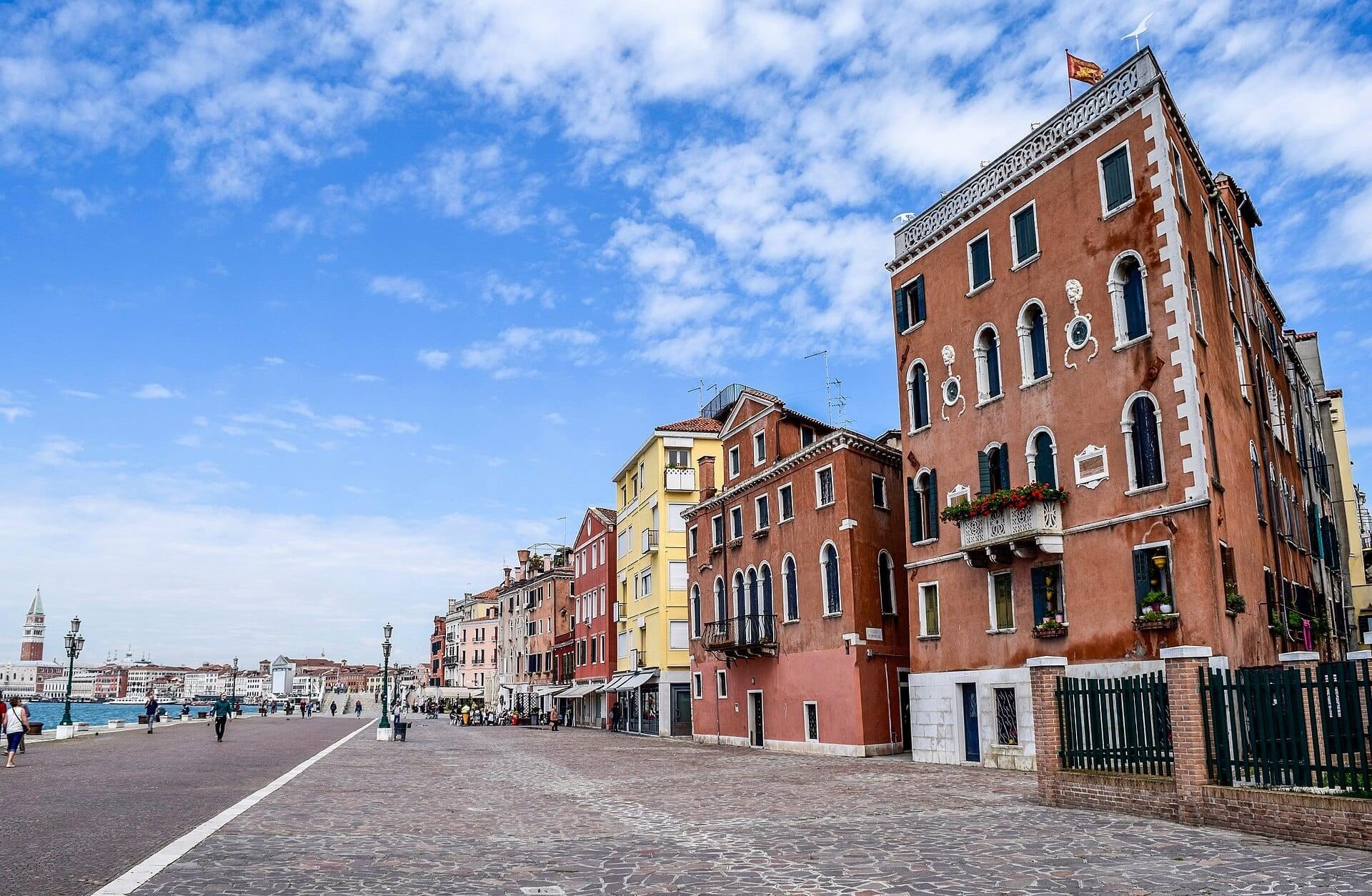
Walk on into Via Garibaldi and stop where the street opens out wide ahead of you. The regional tourist board calls it the widest street in Venice, and there is a reason it is so straight and broad. It used to be water. This was a canal, the Castello canal. Under Napoleon, in…
Full narration for this stop unlocks with the tour.
11. Viale Garibaldi: Napoleon's Gardens
Walk on down the avenue under the trees and stop near the monument in its pond. That is Garibaldi, standing on a high rock with a lion in front of him. Behind the rock, a young soldier is hidden among the stones. A historian of these gardens counts it as the first monument set…
Full narration for this stop unlocks with the tour.
12. Partisan Woman, Giardini: At the Waterline
Walk on to the edge of the lagoon and stop near the water. Look down at the waterline, among the stepped blocks with pale stone tops. A bronze woman lies there, lower than you are. This is the Monument to the Partisan Woman, a memorial to the women of the Resistance in the…
Full narration for this stop unlocks with the tour.
- La Venezia autentica! — Doge e Patriarca, CC BY-SA 4.0 · source
Images may be cropped or resized. Other photos via Unsplash and Pexels.