Show and rebuild: in the inner San Marco quarter, private money built fronts to be seen, and when they burned, leaned or fell, Venice put them back. Between the Rialto and the Accademia bridge you meet a staircase made only to dress up a palace, a bank of concrete and glass among Gothic windows, a church front with hardly a saint on it, and an opera house that burned twice and came back, the second time as it was, where it was. Roamer's walk through this quarter is eleven stops over about 1.6 kilometers, roughly an hour, with eight bridges, all with steps. It works entirely from outside, so you can do it at your own pace and step into the paid interiors only if you want to.
Merchants first
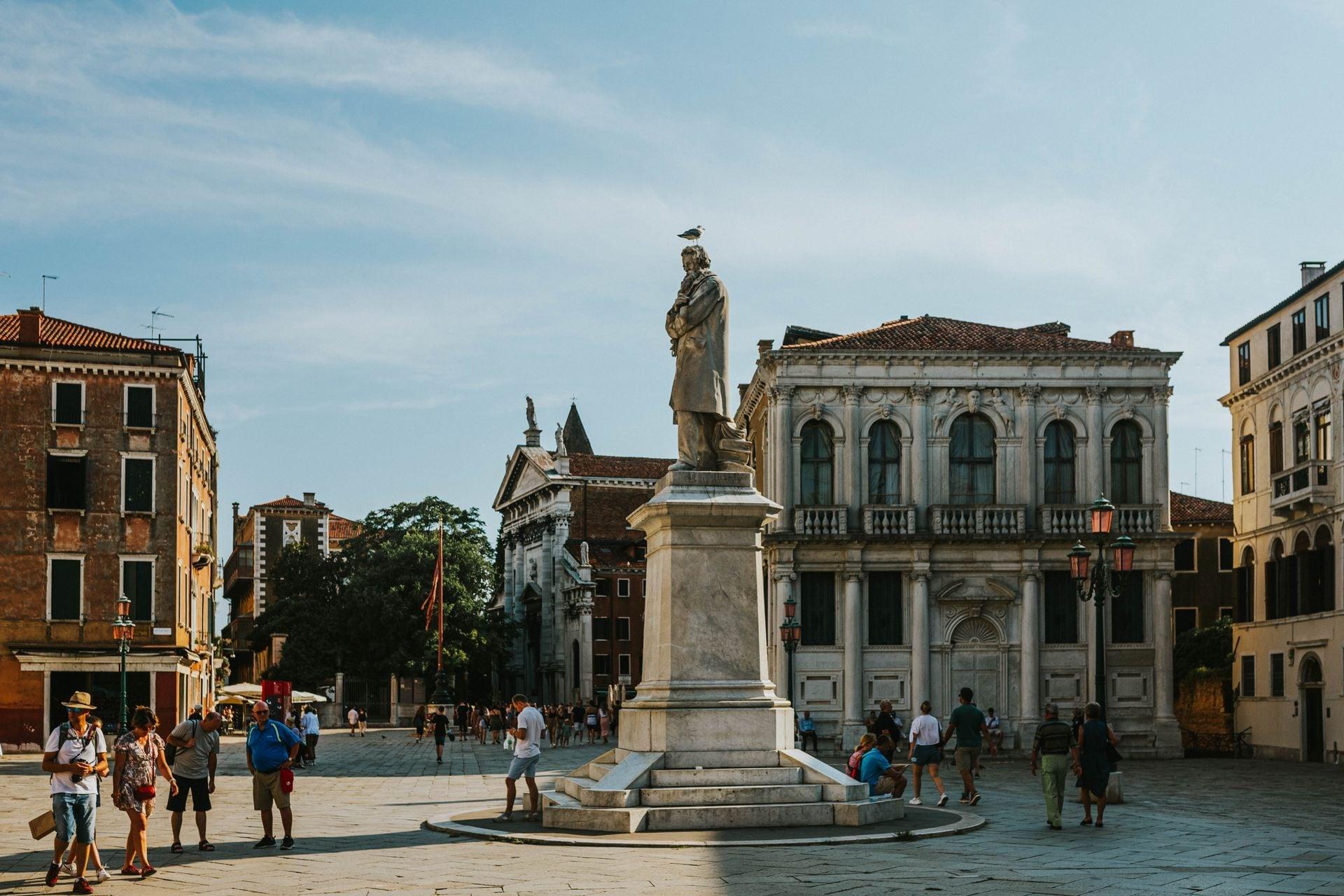
The walk opens in Campo San Bartolomeo, at the land foot of the Rialto, beside Antonio Dal Zotto's bronze of Carlo Goldoni, put up in 1883. The placement is the point. Goldoni, born in Venice in 1707, turned the old masked comedy's stock merchant, Pantalone, into the honest and honored Venetian merchant of his later plays, and the city stood him in the middle of a crowd of people buying and selling.
A few steps on, along the Grand Canal, two palaces show what a merchant's house was for. Ca' Loredan and Ca' Farsetti, which the city dates to around 1200, were house-warehouses: arcades at the water where goods came straight off the boats, a loggia and the family's rooms above. Ca' Loredan belonged to the Corner Piscopia family, whose daughter Elena took a philosophy degree at Padua in 1678, and whom Venice calls the first woman in the world to earn a university degree. The city bought the two houses in 1826 and 1868, and together they are its town hall today.
A staircase as a front
Hear a stop from this walk
Campo San Vidal: At the Foot of the Bridge
Down a narrow dead-end lane stands the clearest case of building for show. In 1499 Pietro Contarini added a spiral staircase to his palace, a round tower of white Istrian stone and brick about 26 meters high, its arches winding up in a spiral. The Venetian word for a snail is bovolo, which gives the Scala Contarini del Bovolo its name. Nobody is sure who built it: some historians name Giovanni Candi, others Giorgio Spavento. Look at how it faces the court rather than the street. It is a facade you have to seek out, and then it ends in charity: the last owner gave the palace to the poor relief of San Luca's parish in 1849, and from 1880 it housed the city's charity board.
Campo Manin answers with something new. The savings bank there, designed by the engineer Pier Luigi Nervi and the architect Angelo Scattolin, opened in 1972 after nine years of work. Its own explanation is that the rhythm of concrete and glass recalls the solids and voids of Venetian Gothic windows. Stand where you can see both and judge for yourself.
Leaning, burning, rebuilding
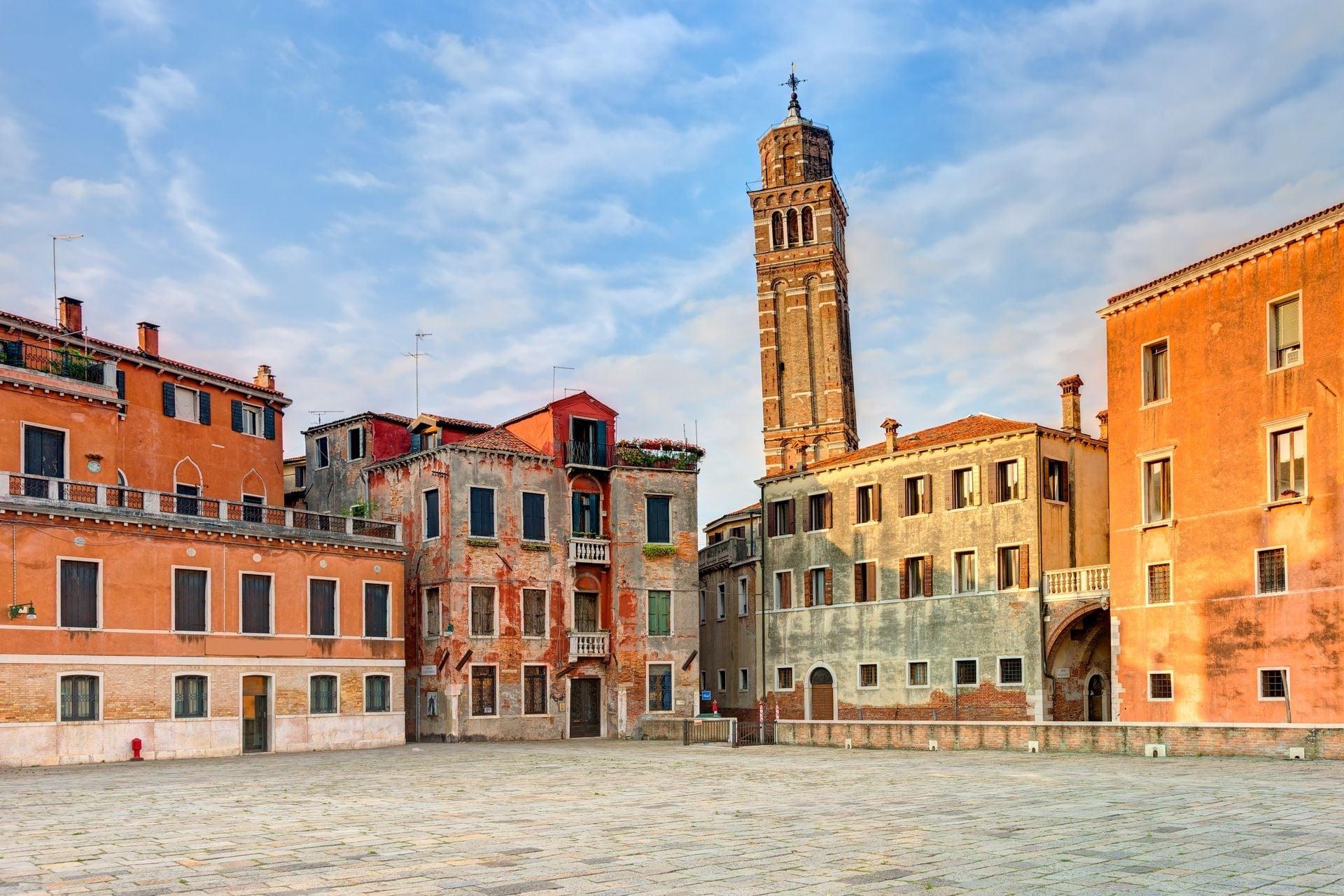
From Campo Sant'Anzolo the brick bell tower of Santo Stefano shows over the roofs, about two meters out of plumb at the top. Engineers who studied it in 2008 found no firm clay under it and piles too short to reach the sand. Venice keeps holding it up: repairs after 1902, and recently a project the diocese's paper put at nearly eight million euros, reaching its foundations.
Then La Fenice. A company of nobles called a competition in November 1789, and Giannantonio Selva's design was built; the theater opened on 16 May 1792, during the Ascension festival. Fire took it in December 1836 and it reopened a year later. On 29 January 1996, closed for maintenance, it burned again in a fire the theater calls arson. The rebuilders borrowed their motto from St Mark's bell tower, com'era, dov'era, and reopened the house in December 2003. Selva wrote that he wanted the front to look like neither a temple nor a house, but to show what the building was for.
Santa Maria del Giglio, a few bridges on, makes the family version of the argument. Its Baroque front, paid for by the sea commander Antonio Barbaro, carries his funeral monument and statues of his brothers where you would expect saints, and stone plans of six cities on the column bases. San Maurizio, rebuilt from 1795 to 1806 with Selva among its designers, shows the opera house's architect putting a church back up in a new shape.
The walk opens out in Campo Santo Stefano, the biggest square on the route, with the friars' brick church at one end and its keel-shaped wooden ceiling inside, and ends at Campo San Vidal below the Accademia bridge. Every front you passed was either built to be admired or rebuilt so it could be admired again.
This is La Fenice and Campo Santo Stefano: The Show Goes On, eleven stops from Goldoni's statue to the foot of the Accademia bridge. See all routes on the Venice page.
Sources
- Teatro La Fenice, history: the 1789 competition, Selva, the opening of 16 May 1792, the fires of 1836 and 1996, com'era dov'era, the 2003 reopening, Selva's words on the front.
- Gioielli Nascosti di Venezia, Scala Contarini del Bovolo: 1499, Pietro Contarini, 26 meters, the Candi or Spavento attribution, the gifts of 1849 and 1880.
- Museo della Musica, the church of San Maurizio: the rebuilding of 1795 to 1806 by Zaguri, Selva and Diedo.
- Roamer's audited tour transcript and fact dossier for this walk: Goldoni and the town hall palaces (Treccani and Comune di Venezia), the Nervi and Scattolin bank (Intesa Sanpaolo), the bell tower studies (Università di Bologna, Gente Veneta).
Ready to experience it?
La Fenice and Campo Santo Stefano: The Show Goes On
60 min · 1.6 km · easy
More from Venice
Explore more at your own pace.
Castello and the Arsenale: Walking the Doge's Calendar Through Venice's Quiet East
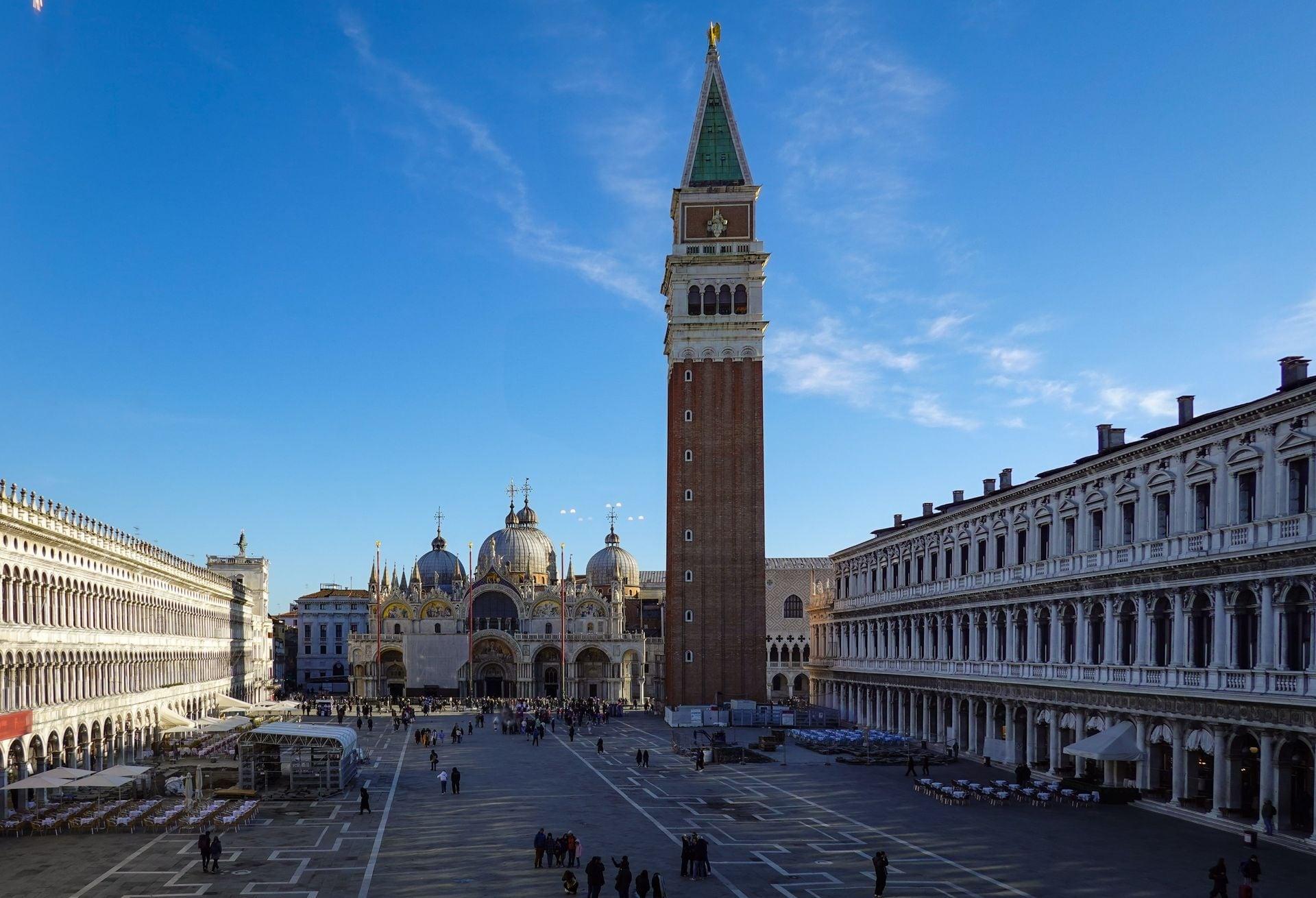
St Mark's Square and the Doge's Palace: Reading a Square That Was Borrowed and Rebuilt
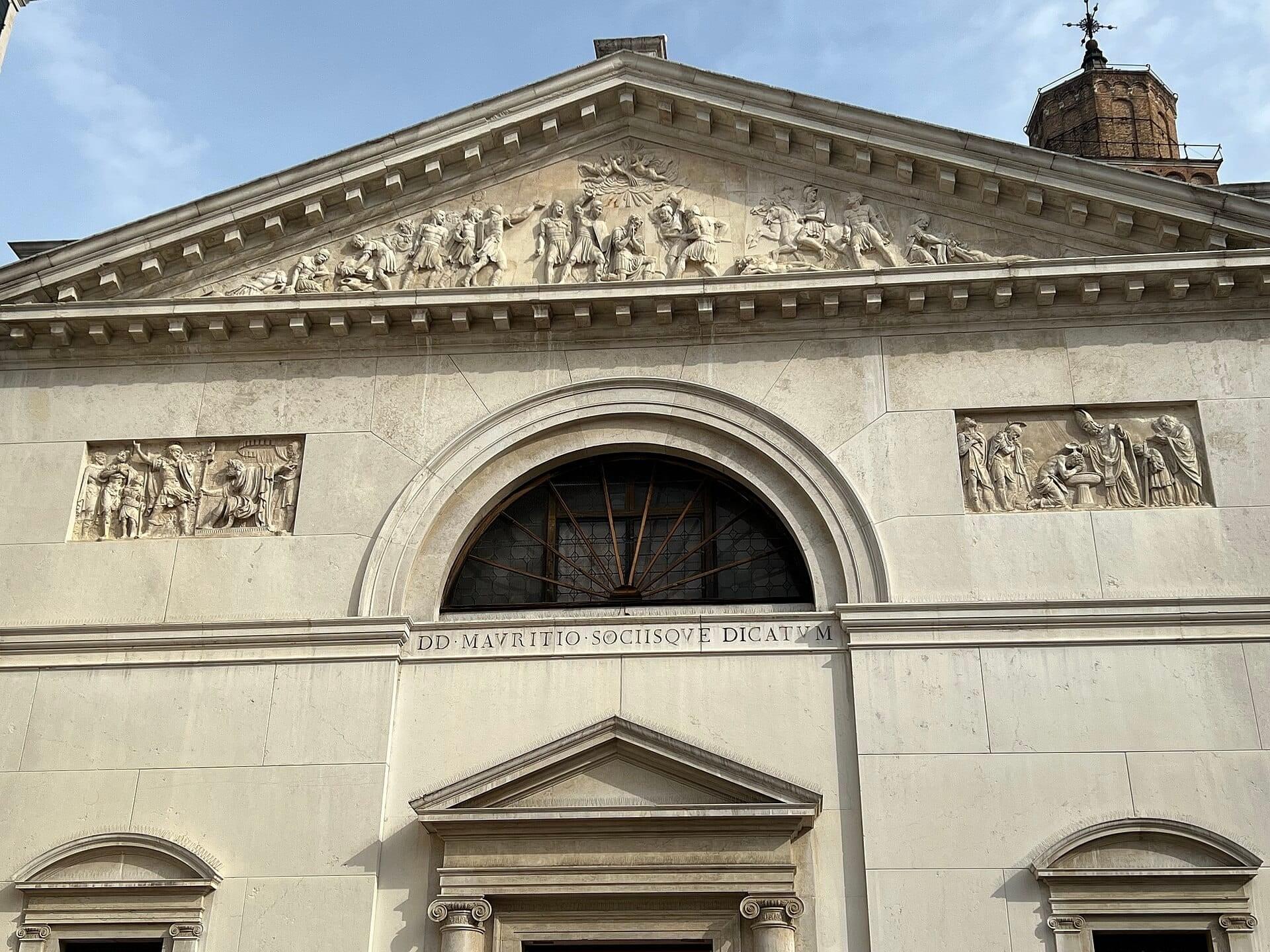
La Fenice and San Maurizio: Giannantonio Selva's Two Fronts on One Venice Walk
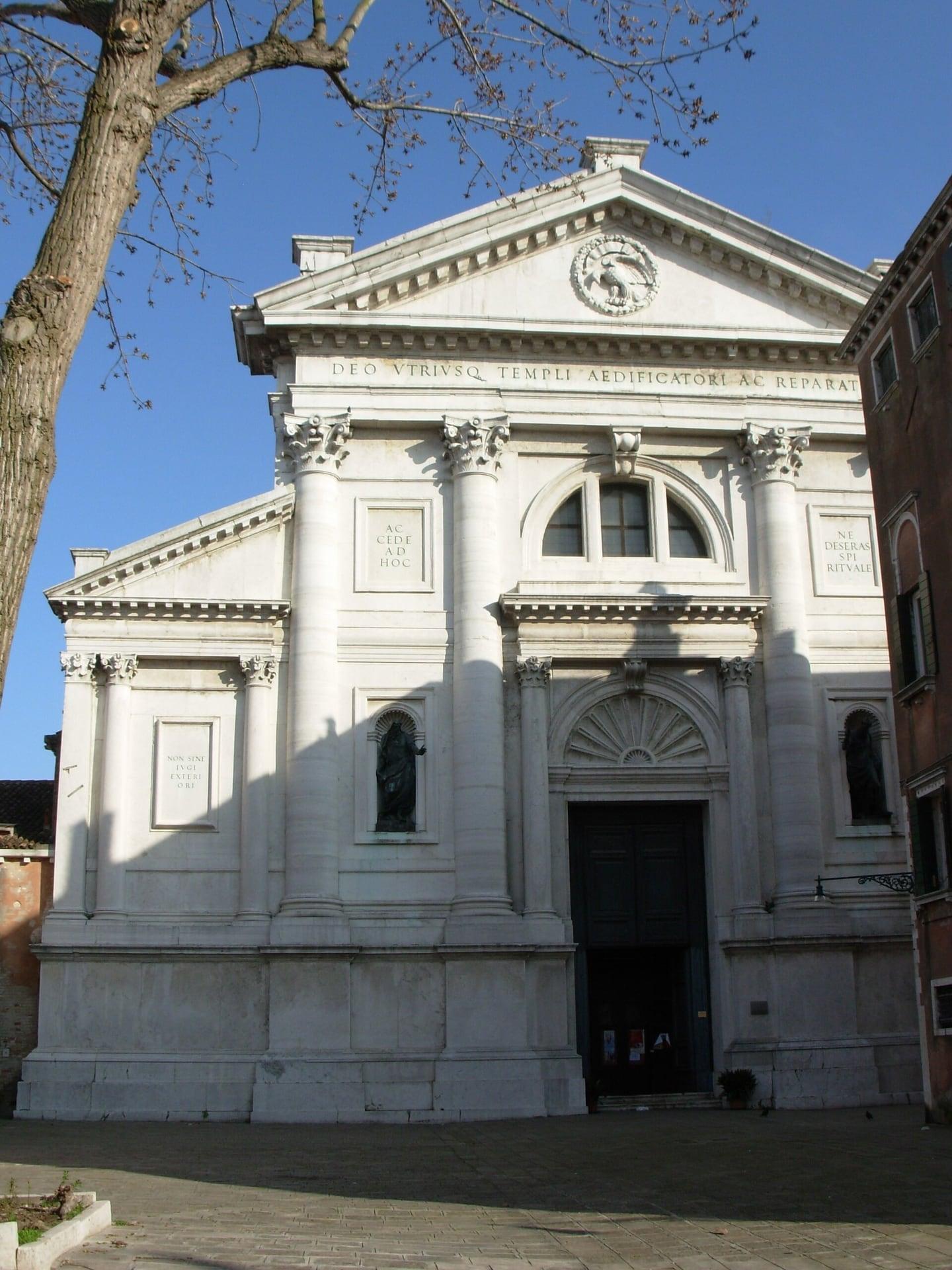
San Francesco della Vigna: How Palladio Put Two Temples on One Church Front
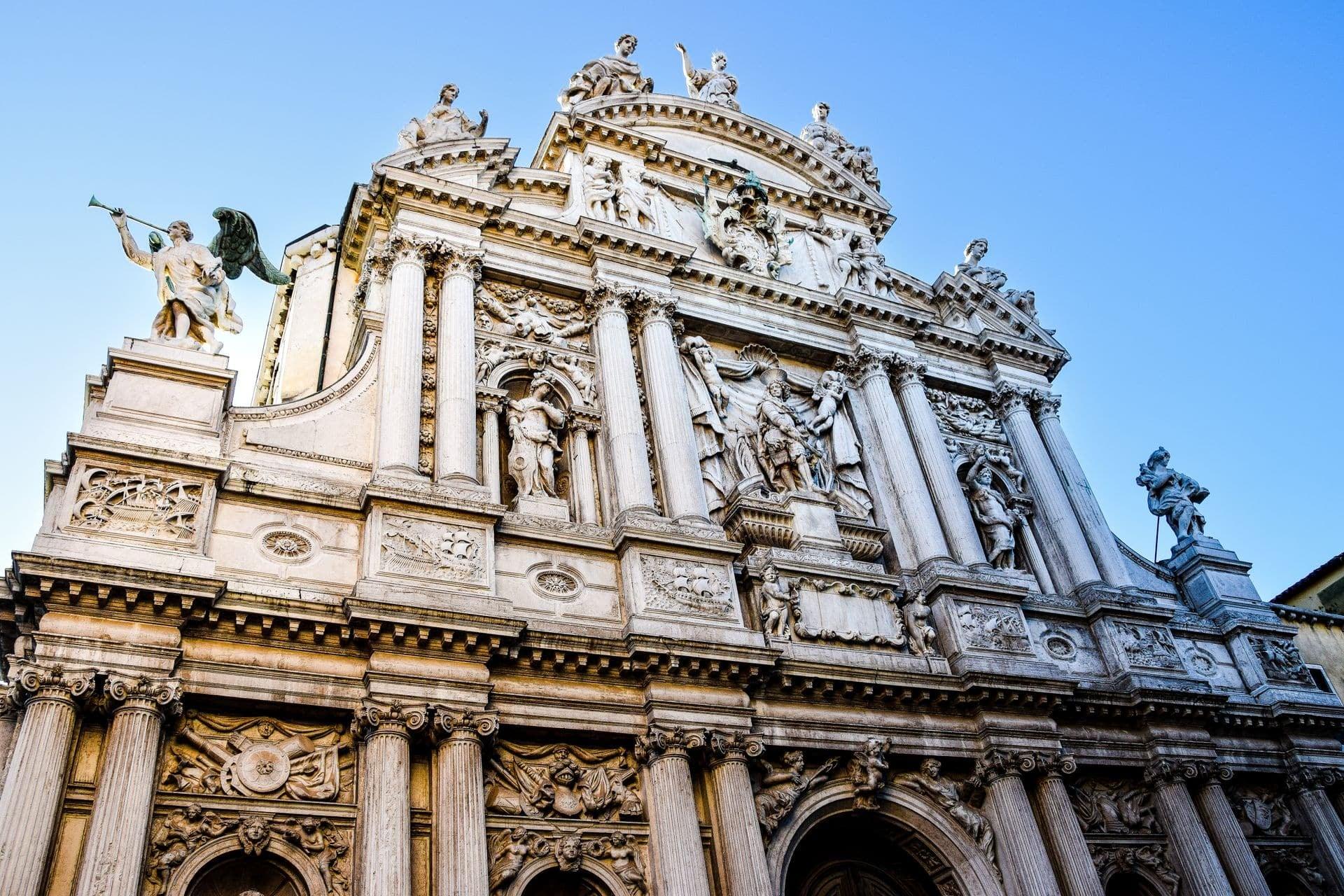
Santa Maria del Giglio: The Venice Church Front Built for One Family