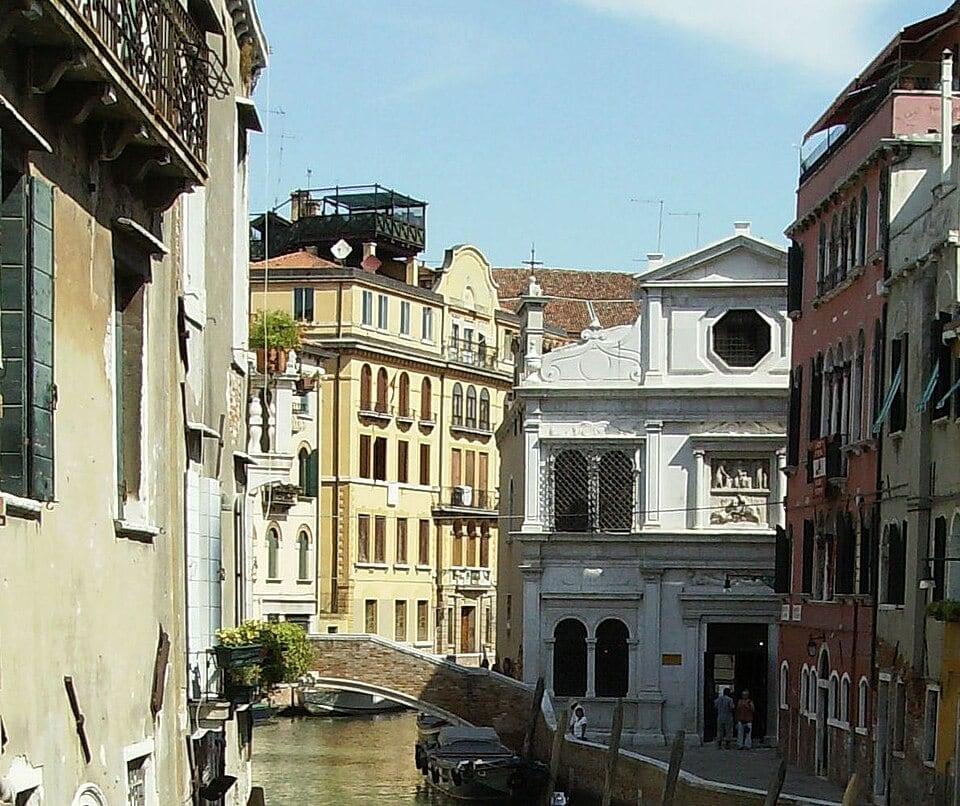
Giannantonio Selva gave Venice two neoclassical fronts a few minutes apart, an opera house meant to show what it was for and a church rebuilt in a new shape, and La Fenice's two fires turned his theater into the city's lesson in rebuilding. Stand on Campo San Fantin and then on Campo San Maurizio and you see the same architect at work twice, once building something new and once putting something back.
A theater built in two years
The story starts with a competition. On 1 November 1789 a company of Venetian nobles published a call for designs for a new opera house; the theater's own history counts 28 projects submitted, and says the verdict for Selva was disputed. His design was built. Demolition on the site began in 1790, and the theater opened on 16 May 1792, during the Sensa, Venice's Ascension festival, with I Giuochi d'Agrigento by Count Alessandro Pepoli. The plot had been bought in two parishes, Sant'Angelo and Santa Maria Zobenigo, and the house took the name of the Phoenix.
The brief asked for two ways in: one by land on Campo San Fantin, one by water from the canal behind. The theater presents that pairing as a balance between the aristocratic entrance by water and the democratic, republican entrance by land. The land front is the one you face from the campo, and it is close: step back against the small church opposite to take it in.
Selva left a sentence about that front. He wrote that he had tried to avoid making it look like a temple or a house, and had instead symbolized the building by its use. Look at it with that in mind. It is restrained, a theater front rather than a palace or a church, and it announces a public building with a public purpose.
Burned twice
Hear a stop from this walk
Campo San Vidal: At the Foot of the Bridge
Fire took La Fenice on the night of 13 December 1836. The front block survived, the engineer brothers Tommaso and Giambattista Meduna rebuilt the rest, and the theater reopened on 26 December 1837, a little over a year later.
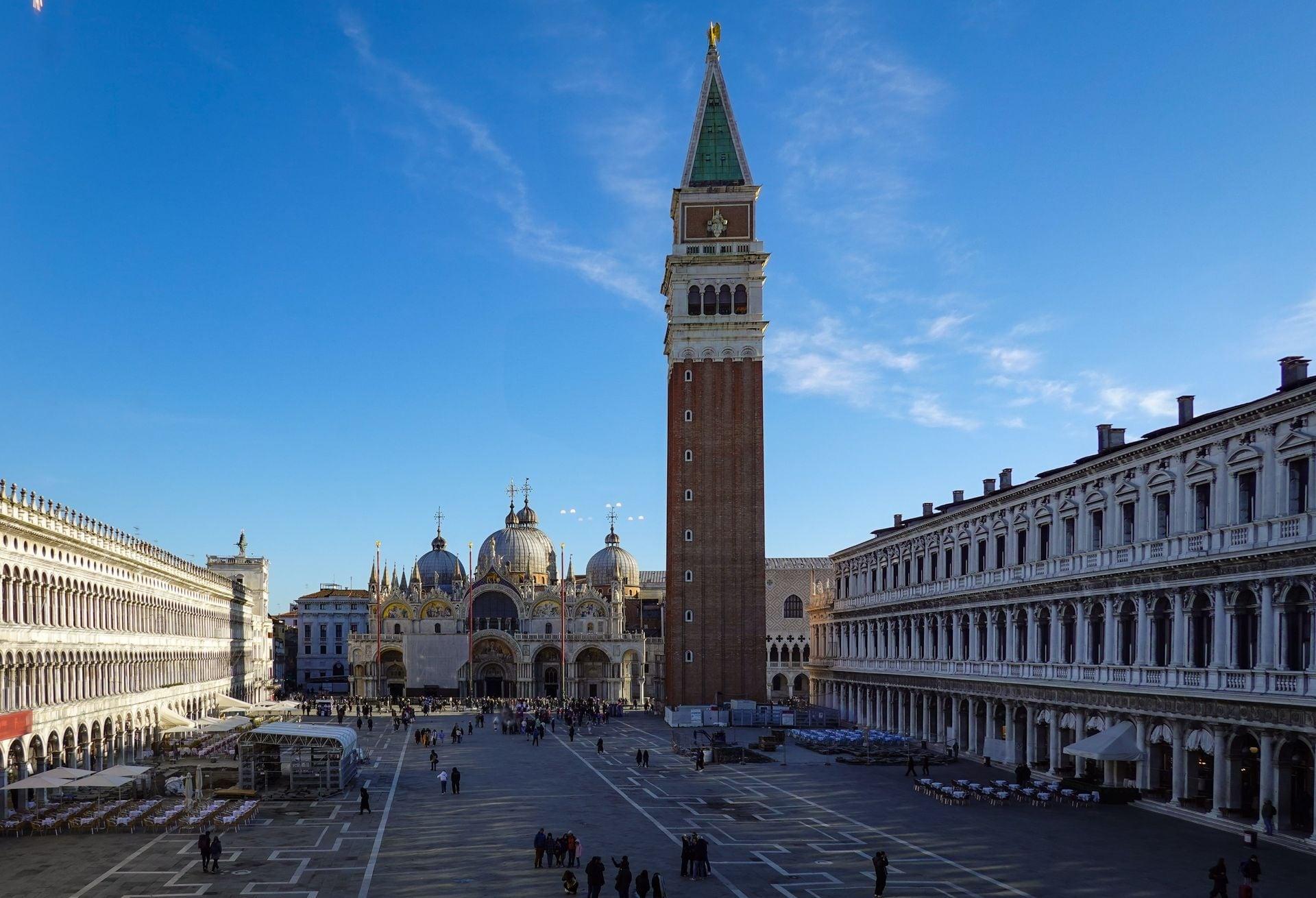
The second fire came on 29 January 1996, while the theater was closed for maintenance. The theater calls it arson. This time the rooms behind the front were rebuilt around the fragments that were left. The rebuilders took their motto from the rebuilding of St Mark's bell tower, which fell in 1902 and was put back exactly: com'era, dov'era, as it was, where it was. Aldo Rossi designed the reconstruction and did not live to see it; the theater notes he died in 1997. The house reopened with an inaugural week from 14 to 21 December 2003, and in November 2004 the opera season returned with La traviata, the Verdi opera that, the theater says, had its premiere in this house. Rossi's rebuild also restored the water entrance.
So the phoenix name, chosen in the eighteenth century, came true twice. And the slogan it borrowed now belongs to two buildings on two walks: the bell tower in the Piazza and the opera house in its campo.
Selva again, at San Maurizio
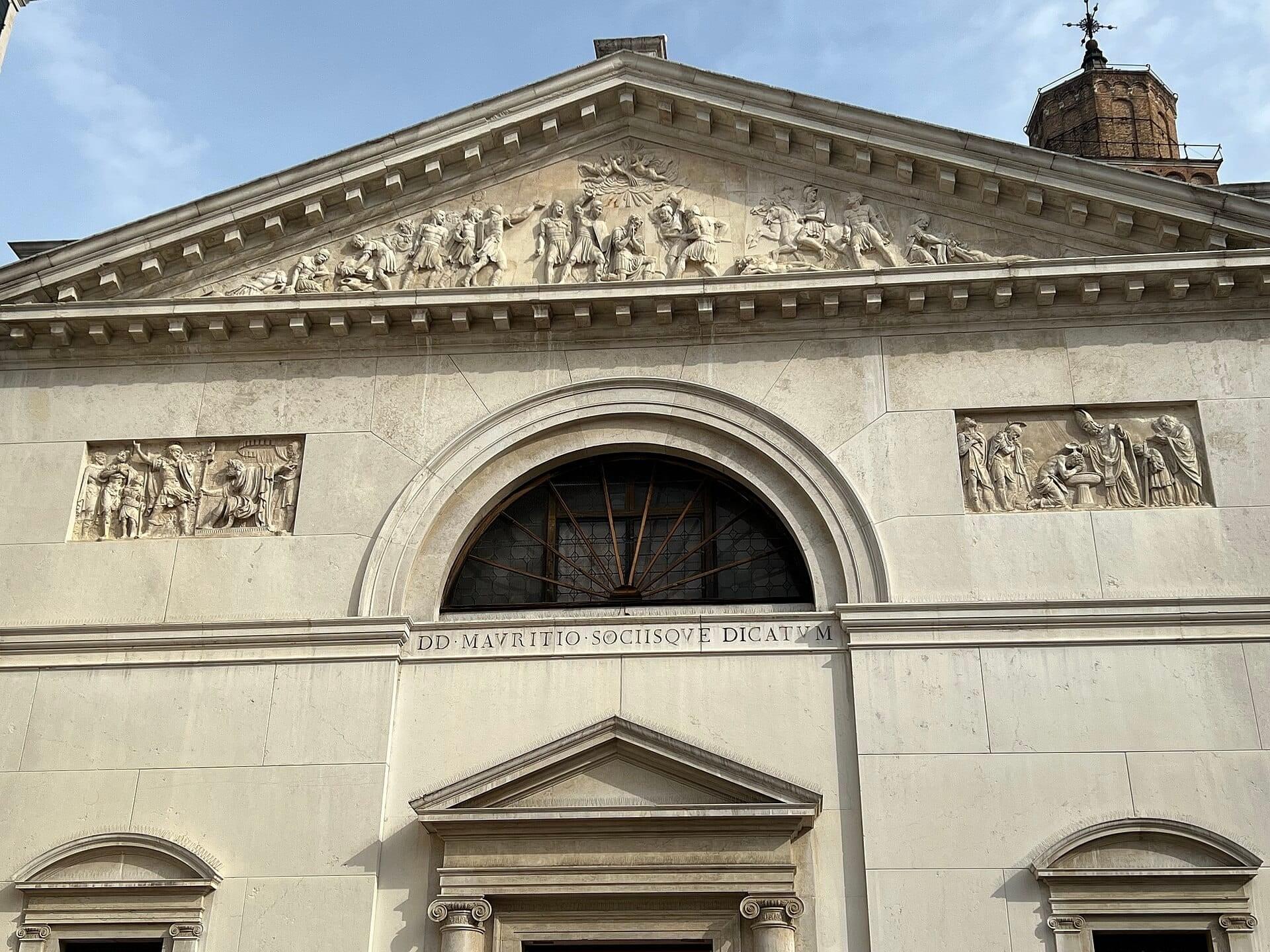
Two bridges on, Campo San Maurizio opens around a pale church with a classical front. According to the Museo della Musica, which now fills the building, San Maurizio was pulled down and rebuilt between 1795 and 1806 to a design by Count Pietro Zaguri, Giannantonio Selva and Antonio Diedo. They modeled it on San Geminiano, Jacopo Sansovino's church at the end of St Mark's Square, which Napoleon later had demolished. The reliefs on the new front are by Luigi Zandomeneghi and Bartolomeo Ferrari.
That is a neat reversal. Selva began his famous building by clearing a site for something new. A few years later he helped rebuild a church on a borrowed plan, and the church it copied was the one that disappeared. Today San Maurizio holds a music museum, so the architect of the opera house ended up with a second building about music.
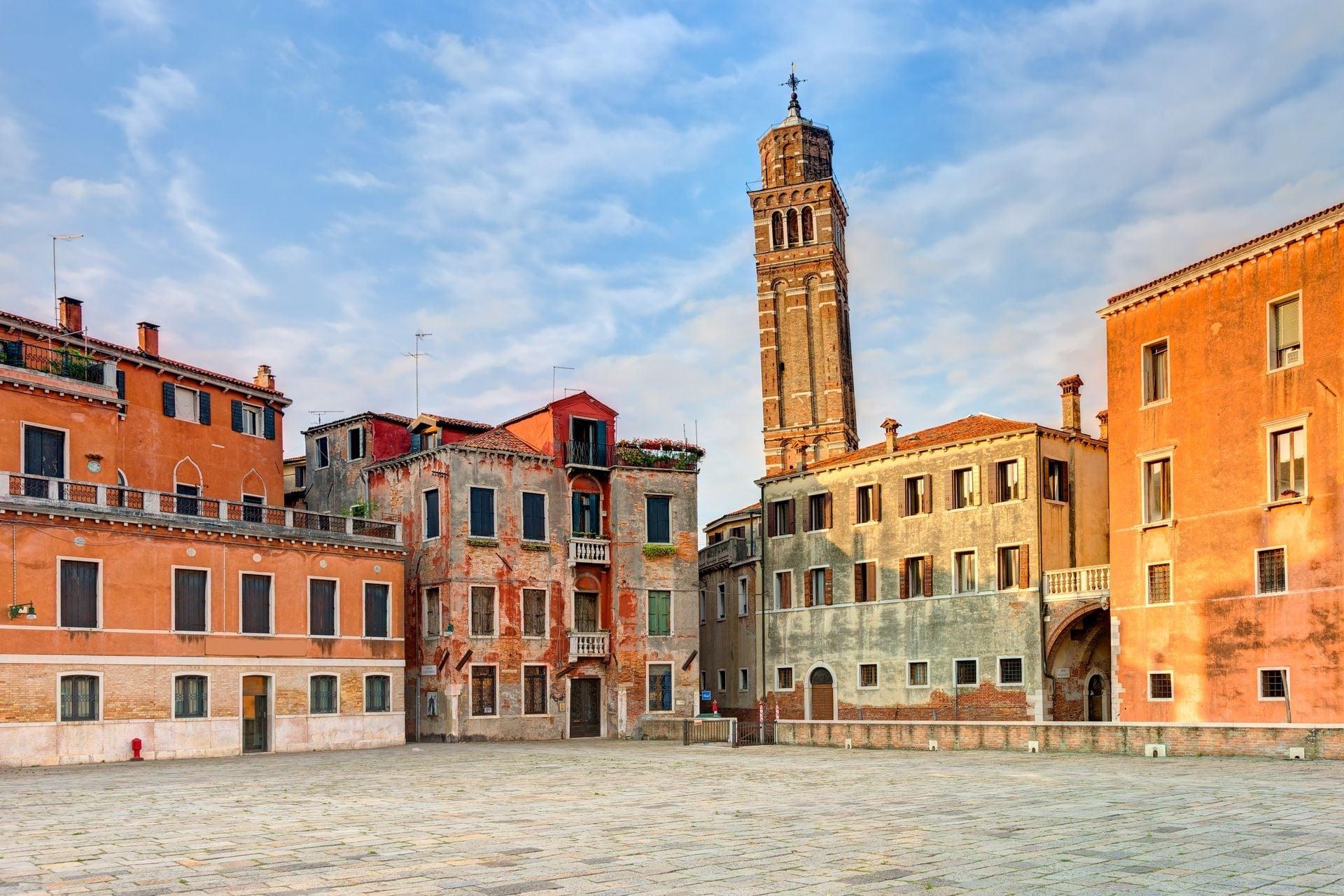
The campo has an older trace of show money too. In the sixteenth century the merchant Dionisio Bellavite paid the church a yearly sum for leave to pull down its old bell tower, built his palace on the freed ground, and, the museum says, had its front frescoed by Paolo Veronese. Look up from here and the leaning tower of Santo Stefano shows over the roofs from a second side.
Seeing both
La Fenice is ticketed inside, with hours set day by day, and every point above works from the campo. San Maurizio's front, with its dedication across the top, reads best from the open middle of the square. Walk from one to the other and the pairing is plain: one front built to say what a building was for, one rebuilt to stand in for a church that was lost.
La Fenice is stop 7 and San Maurizio stop 9 of La Fenice and Campo Santo Stefano: The Show Goes On, which runs from Goldoni's statue by the Rialto to the foot of the Accademia bridge. See all routes on the Venice page.
Sources
- Teatro La Fenice, "La Fenice and the Teatro Malibran: the history": the competition of 1 November 1789 and its 28 projects, Selva, the opening of 16 May 1792 with Pepoli's work, the two entrances, Selva's words on the front, the fire of 13 December 1836 and the Meduna reopening of 26 December 1837, the arson of 29 January 1996, com'era dov'era, Aldo Rossi and his death in 1997, December 2003, La traviata in 2004.
- Museo della Musica, the museum and church: San Maurizio rebuilt 1795 to 1806 by Zaguri, Selva and Diedo on the model of San Geminiano, Napoleon's demolition, the facade reliefs, Bellavite and Veronese.
- Basilica di San Marco, the Campanile: the bell tower's fall on 14 July 1902 and its rebuilding "com'era e dov'era".
Ready to experience it?
La Fenice and Campo Santo Stefano: The Show Goes On
60 min · 1.6 km · easy
More from Venice
Explore more at your own pace.
Castello and the Arsenale: Walking the Doge's Calendar Through Venice's Quiet East
La Fenice and Campo Santo Stefano: A Walk Through Venice's Fronts Built to Be Seen
St Mark's Square and the Doge's Palace: Reading a Square That Was Borrowed and Rebuilt
San Francesco della Vigna: How Palladio Put Two Temples on One Church Front
Santa Maria del Giglio: The Venice Church Front Built for One Family