Jewish Ghetto of Cannaregio: The First Ghetto
90 min · 2 km · easy
Venice is a city engineered on water for trade, and once you read it that way, the romance stops being decoration and starts being infrastructure. Every campo, bridge, warehouse, and even the white dome that catches the light was a commercial or defensive decision. The Republic built a machine for moving goods, housing foreign money, and protecting the wealth that trade produced, and the postcard we inherit floats on top of that machine. Three Roamer walks let you read the ledger directly: the Rialto as the engine that made the fortune, the Ghetto as an experiment in confined coexistence, and Dorsoduro as the place where all that water and light were finally studied slowly. Together they show a lagoon city where beauty was almost always the byproduct of a hard-nosed calculation.
The engine: where the money was actually made
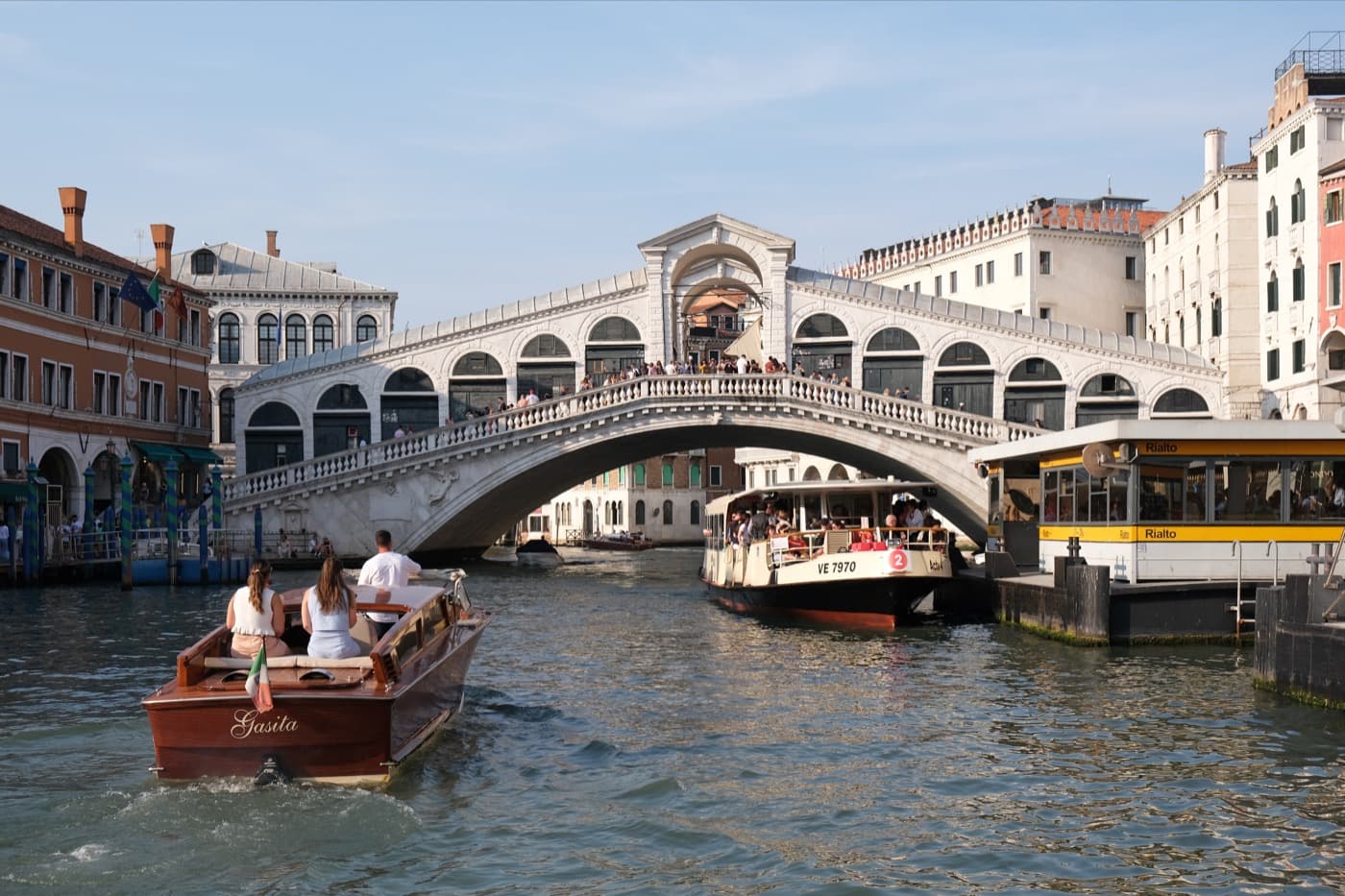
Start with the Engine Room walk through San Polo, because it reframes everything else. Venice made its fortune not at the Doge's Palace but at the Rialto, the market, money, and shipping district where the Republic ran its business. The market moved here in the year ten ninety-seven, which makes this the commercial origin point of the whole state, nearly five centuries before the stone bridge arrived. The Ponte di Rialto, the oldest of the four bridges over the Grand Canal, was built in stone between fifteen eighty-eight and fifteen ninety-one to the design of Antonio da Ponte, after earlier wooden crossings burned in thirteen ten and collapsed in fourteen forty-four under a wedding crowd. Look at the two rows of shops built into the bridge's flanks in the fifteenth century: their rents helped fund the upkeep of the Republic's treasury. That is the whole Venetian logic in one object. The infrastructure was designed to pay for itself.
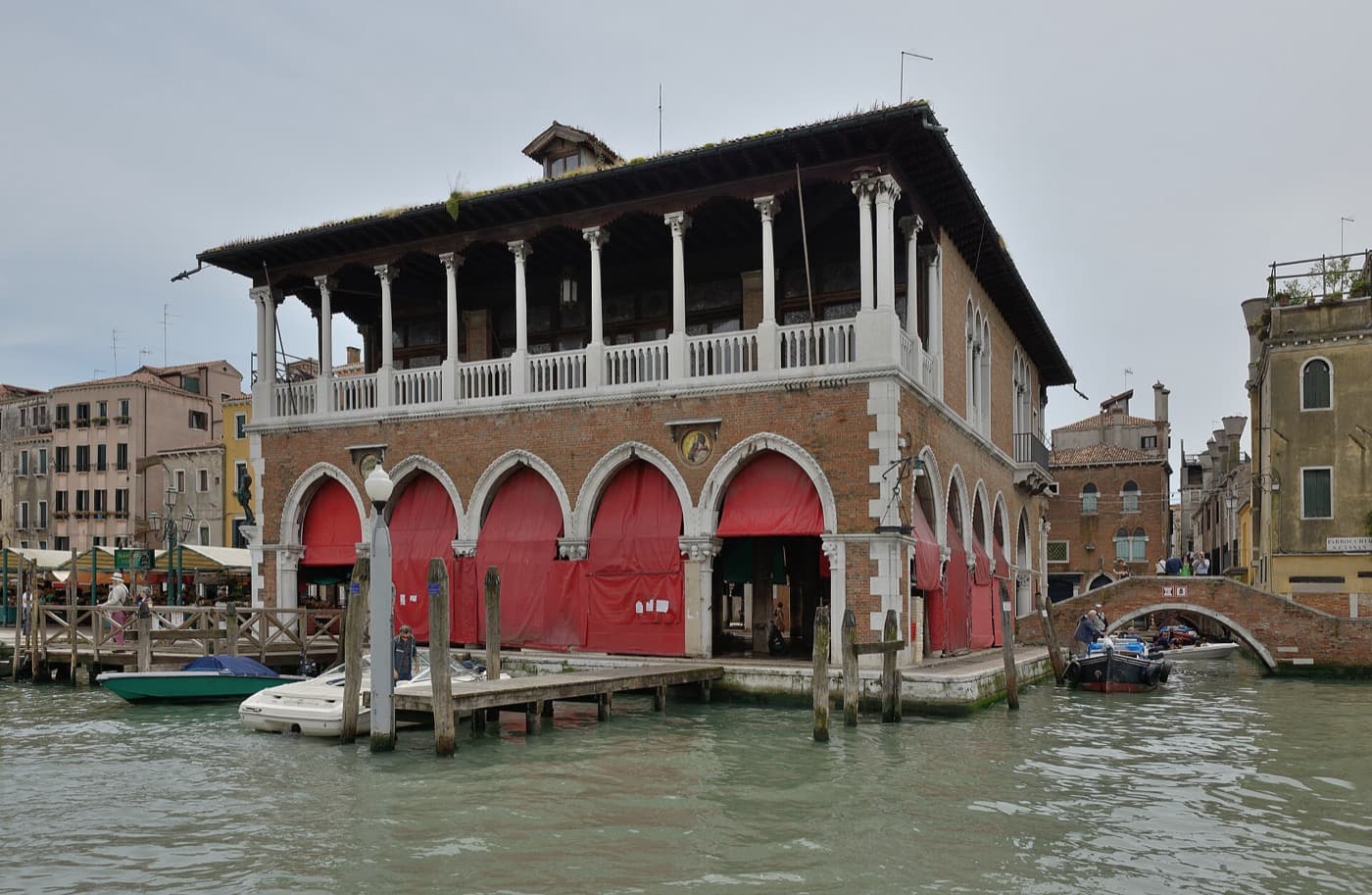
The rest of the walk traces the full life-cycle of that capital. At the Rialto Market, the open-air Erberia and the Pescaria fish hall (the medieval-looking hall is actually a nineteen oh seven neo-Gothic imitation by Domenico Rupolo) sit where warehouses, banks, and tax offices once clustered. Commerce met law at San Giacomo di Rialto and the crouching marble hunchback, Il Gobbo, unveiled in fifteen forty-one, from whose steps officials read out the Republic's edicts. Foreign money was housed and taxed under one roof at the Fondaco dei Tedeschi, a word that comes from the Arabic funduk, meaning a combined warehouse, shop, and lodging. Venice welcomed foreign merchants and kept them on a short leash. The walk ends at the Scuola Grande di San Rocco, founded in fourteen seventy-eight, where merchant profit was converted into charity and into Tintoretto's vast painting cycle, worked on across roughly twenty-three years from fifteen sixty-four to fifteen eighty-seven. Goods became money, money became law and beauty. San Polo is where you can still see it happen.
The coexistence experiment: confinement turned to invention
Hear a stop from this walk
Campo di Ghetto Nuovo: Ground Zero of a Word
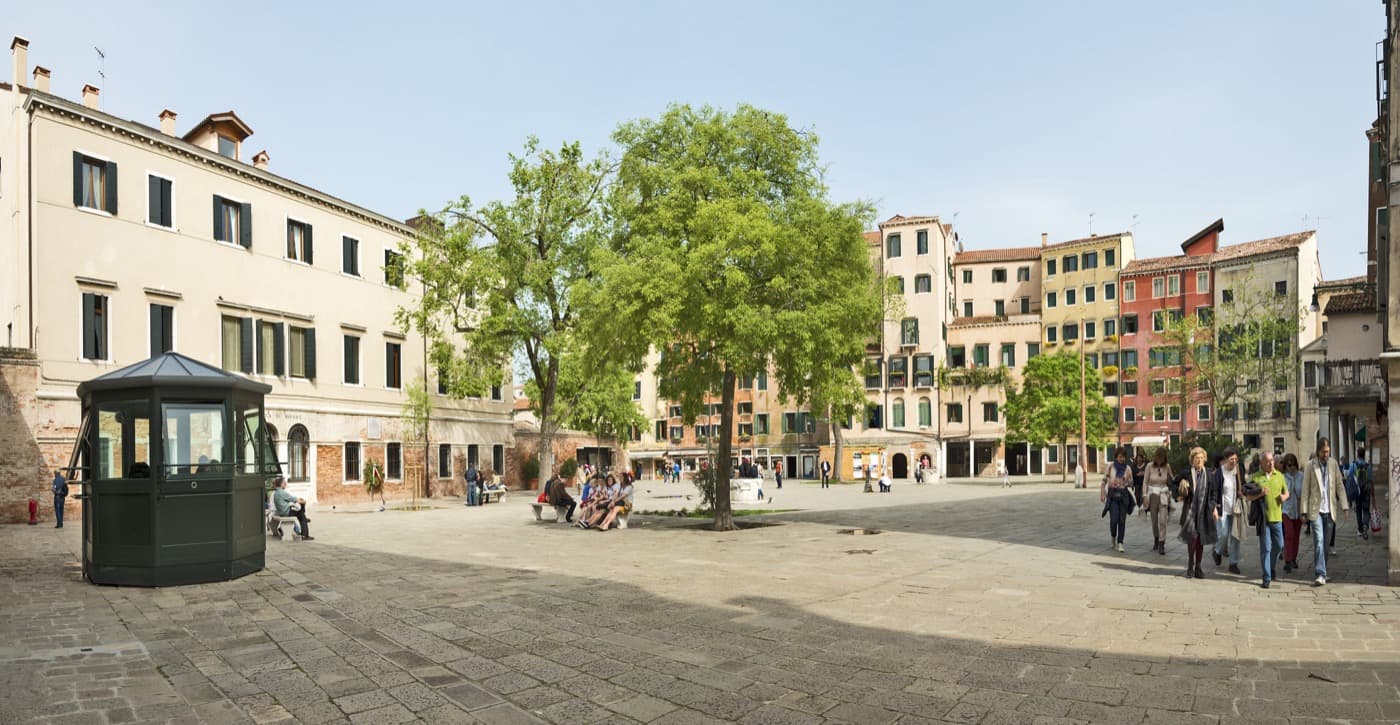
If the Rialto shows how Venice made money, The First Ghetto walk through Cannaregio shows how the Republic managed the people that trade brought together, and it does so with a word the whole world now uses. On March twenty-ninth, in the year fifteen sixteen, the Venetian Senate under Doge Leonardo Loredan ordered the city's Jewish residents onto one walled island in Cannaregio. The word ghetto did not begin as a word for people. It was the local name for a foundry, geto, a place where bronze and cannonballs were cast, a defensive and commercial function that predated the enclosure entirely. That industrial past is baked into the name of the very place where a community was later confined.
The Venetian Ghetto is generally described as the first ghetto legally established in the world, and the confinement produced a striking piece of engineering. Forbidden to expand outward, residents built upward, raising tenements of six, seven, and even eight stories, among the tallest residential buildings in Venice, while grand palazzi elsewhere rose only three or four. The community's five synagogues, or scole, hid in the top floors of ordinary buildings; the oldest, the Scola Grande Tedesca, was completed in fifteen twenty-eight and now sits above the Jewish Museum of Venice. The walk holds the full arc of what the word later came to mean at the Holocaust memorial by Arbit Blatas, installed in nineteen eighty, whose companion piece The Last Train names two hundred forty-six Venetian Jews deported during the Second World War, of whom only about seven returned. Then the route opens outward along the Fondamenta della Misericordia into working Cannaregio, past Tintoretto's own parish church of Madonna dell'Orto, and finishes across the water from the Ca' d'Oro, the Gothic palace that once wore gold leaf and ultramarine and blended Byzantine and Islamic ornament, evidence of a city that traded with everyone. It is a transect from enclosure to open water.
The light: the byproduct that became the art
The third walk explains why the world remembers Venice as beautiful at all. The Long Light through Dorsoduro reads the quiet southern sestiere (its name means hard back) as the place where the Venetian way of painting light on water was learned and kept. Even here, the beauty grew out of trade and fear. The Basilica di Santa Maria della Salute, the great white octagon at the mouth of the Grand Canal, was a votive church vowed by the Senate on the twenty-second of October, sixteen thirty, during a plague that killed roughly forty-six thousand people. Baldassare Longhena, chosen at around twenty-six, made it white and round so it throws the water's light back at you. Beside it, the customs house at the Punta della Dogana, built between sixteen seventy-seven and sixteen eighty-two, is crowned by a gilded statue of Fortune that turns as a weathervane. A merchant Republic that lived by the wind put luck herself up there, spinning to show the breeze, which may be the most honest self-portrait any trading city ever carved.
The walk then makes the commercial roots of the light explicit. Le Zattere, the long south-facing quay whose stone was completed around fifteen sixteen, is named for the rafts of timber floated down from the Dolomites and landed here alongside salt and coal. The mountains, in effect, arrived by water. Inland, the Gallerie dell'Accademia holds the painters (Bellini, Giorgione, Titian, Veronese, Tintoretto, Carpaccio, Canaletto) who caught that lagoon light on canvas, and the wooden Ponte dell'Accademia frames the most painted view in the city. The Squero di San Trovaso, a seventeenth-century boatyard built in the Alpine style of Cadore because its carpenters and timber came from there, still shapes gondolas from about eight kinds of wood, roughly ten new boats a year. The walk ends at Campo Santa Margherita, around eight thousand square metres of ordinary life, where the same light simply falls on people living inside it.
Read together, the three tours make one argument. Venice was never a fantasy first. It was a business, a system of control, and a study of the sea, and the beauty came after. To follow the whole through-line on foot, browse all the Venice walking tours and pick the thread you want to pull.
Sources
- The First Ghetto tour transcript and historical notes, Roamer (data/tours/venice-jewish-ghetto).
- The Engine Room tour transcript and historical notes, Roamer (data/tours/venice-rialto).
- The Long Light tour transcript and historical notes, Roamer (data/tours/venice-dorsoduro).
- Jewish Museum of Venice (Museo Ebraico di Venezia), on the Ghetto and its synagogues.
- Gallerie dell'Accademia, Venice, on the collection of Venetian painting.
Frequently asked questions
- Why is the Rialto, not St Mark's, called the real heart of Venice?
- The Rialto was the market, money, and shipping district where the Republic actually made its fortune. The market moved there in the year ten ninety-seven, and the district held warehouses, banks, and tax offices. The shops built into the Ponte di Rialto even helped fund the Republic's treasury through their rents.
- Where did the word ghetto come from?
- It began as the local Venetian word geto, meaning a foundry where bronze and cannonballs were cast. In fifteen sixteen the Venetian Senate confined the city's Jewish residents to that former foundry island in Cannaregio, and the place name became the word for every enclosure like it. The Venetian Ghetto is generally described as the first ghetto legally established in the world.
- Why are the houses in the Venetian Ghetto so tall?
- The confined community was forbidden to expand outward, so it built upward instead. Tenements rose to six, seven, and even eight stories, among the tallest residential buildings in Venice, while grand palazzi elsewhere in the city typically rose only three or four floors.
- What makes Dorsoduro different from San Marco and the Rialto?
- Dorsoduro is the quieter southern sestiere where the Venetian way of painting light on water was learned and kept. It holds the white votive church of Santa Maria della Salute, the sun-facing Zattere quay, the Gallerie dell'Accademia, and a working gondola boatyard, with far smaller crowds than the ceremonial center.
- Do you need tickets to do these three Venice walks?
- The routes themselves are self-guided and read mostly from the street, so the walking is free. Some interiors are ticketed, including the Gallerie dell'Accademia, the Scuola Grande di San Rocco, Madonna dell'Orto, and the synagogue visits through the Jewish Museum of Venice. The Salute basilica interior is free.
Ready to experience it?
Jewish Ghetto of Cannaregio: The First Ghetto
90 min · 2 km · easy
More from Venice
Explore more at your own pace.
One Day in Venice: A Walkable Morning-to-Evening Itinerary
Venice's Rialto Market: The Engine Room That Paid for the Palaces
Where the Word Ghetto Was Born: A Walk Through Venice's Cannaregio
St Mark's Basilica: The Church of Gold and Stolen Horses
The Doge's Palace: Seat of an Elected Empire