The Rialto Market is where you can read Venice as a business, not a museum. Before the palaces and the honeymoon light, there was buying and selling, and the produce halls of the Erberia and the fish stalls of the Pescaria have anchored that commerce since the year ten ninety-seven. Start at the market and the whole postcard city rearranges itself in front of you: the gondolas, the domes, and the marble facades all trace back to ledgers that were balanced here at dawn. This is the argument behind The Engine Room, a self-guided walk through the San Polo district that reads the market, the money, and the merchant halls that paid for everything else.
The market that came before the bridge
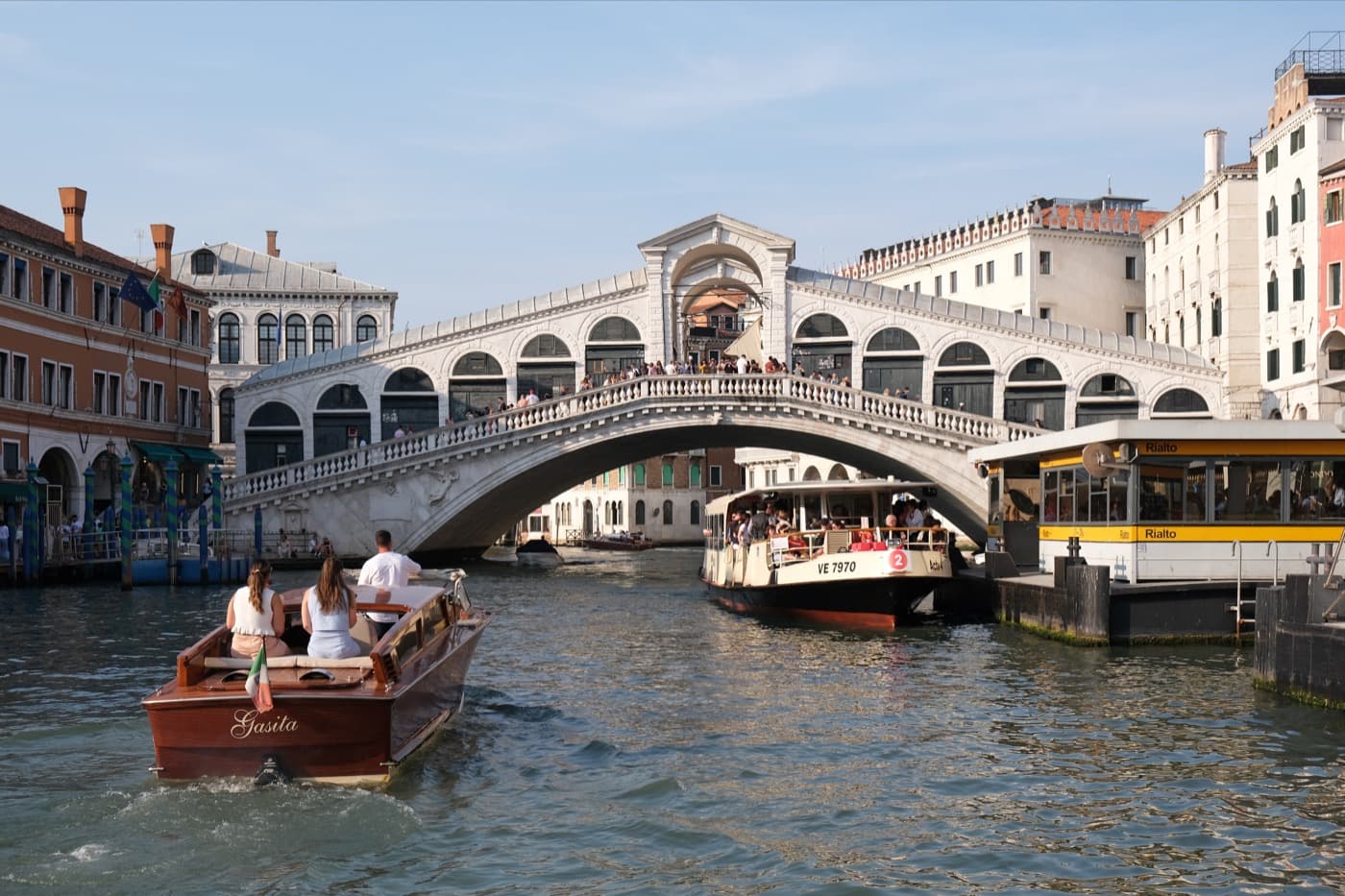
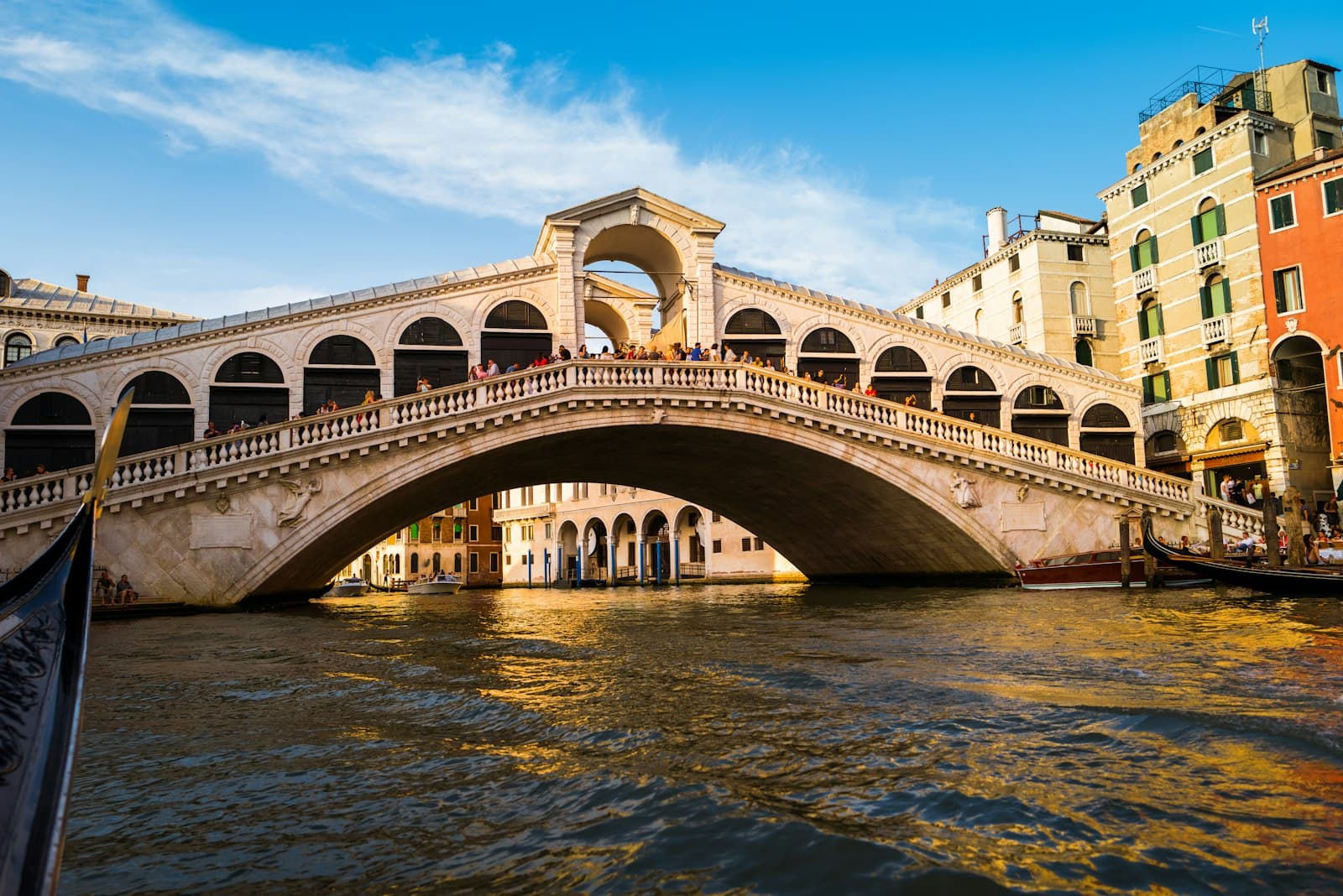
Most visitors cross the Ponte di Rialto and assume the bridge is the main event. Walk down onto the far bank and the logic flips. The market moved to the Rialto in ten ninety-seven, nearly five centuries before the stone bridge was finished in fifteen ninety-one. The bridge exists to serve the market, not the other way around. That single fact reorders the tour: you begin on the bridge, then descend into the reason it was built.
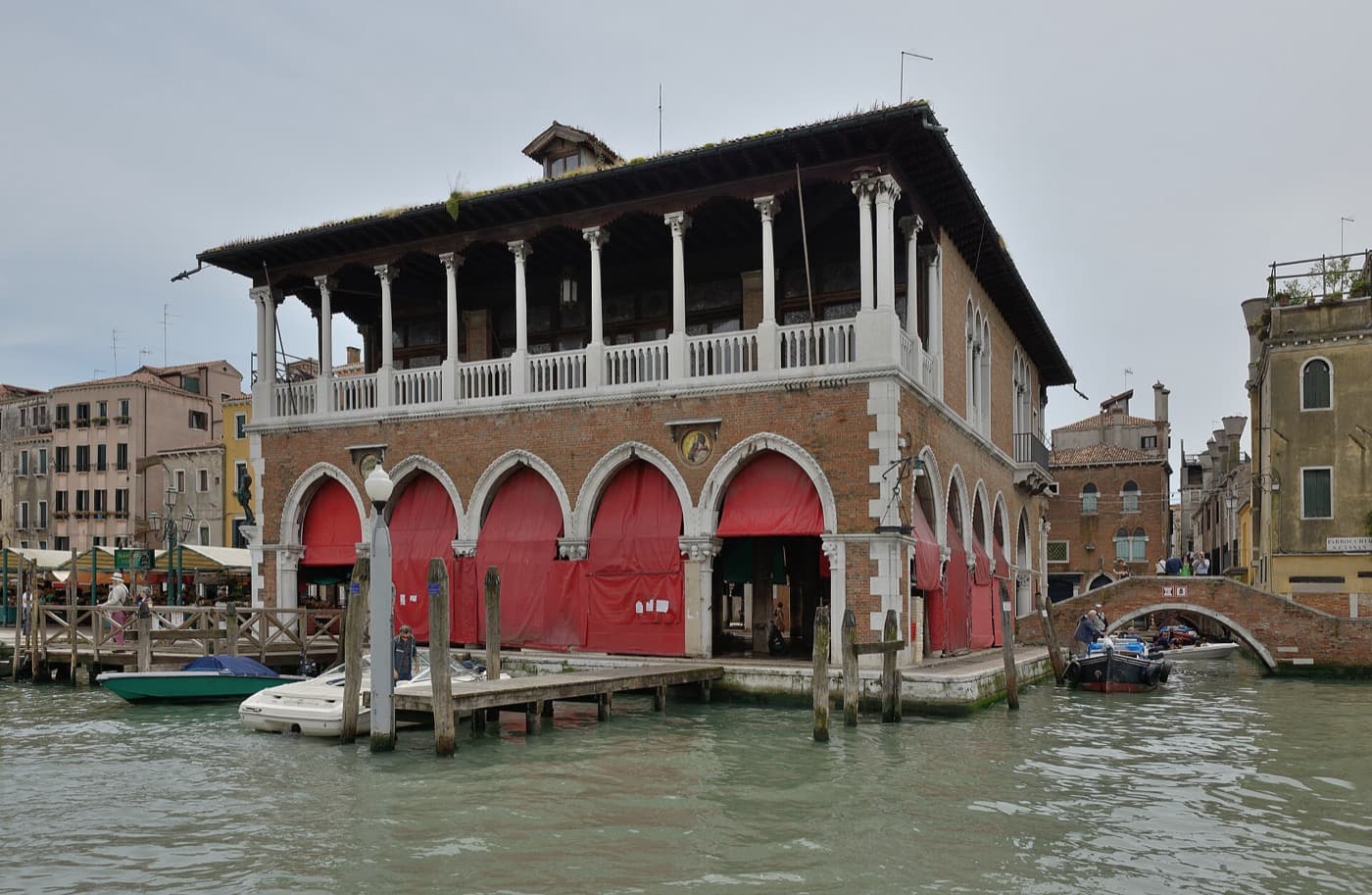
There are two markets, and both still work. The Erberia is the open-air produce and greengrocer market, spread out under the sky. The Pescaria is the fish market, and its hall plays a quiet trick on the eye. It looks medieval, all pointed arches and Gothic tracery, but it was built in nineteen oh seven. The architect Domenico Rupolo designed it in a pseudo-Venetian-Gothic style so a modern structure would feel a thousand years old, and the painter Cesare Laurenti added the artistic detailing, including a sculpture of Saint Peter at the corner overlooking the Grand Canal. Look up at the capitals on the columns and you find the entire lagoon carved in stone: fish, scallops, crabs, lobsters, seaweed, seahorses, even the woven baskets the fishermen carried. It is a building that advertises what it sells.
This district was never only about dinner. Warehouses, banks, insurance agencies, and tax offices clustered here, which made the Rialto the financial heart of the Republic. The poet Pietro Aretino lived just opposite, and in fifteen fifty he wrote that from his window he enjoyed the liveliest view in the world. A catastrophic fire in fifteen fourteen destroyed most of the Rialto's buildings, so much of what surrounds the market now is later reconstruction, layered over an origin point that never moved.
How to read the market on foot
Hear a stop from this walk
Ponte di Rialto: The Bridge That Sold Space
Treat the Pescaria as living heritage, not a photo stop. Arrive early, ideally before nine, because that is when the stalls are fully alive and the light on the canal is soft. The fish market is typically closed on Sunday and Monday, so a weekday morning gives you the fullest experience. Stand in the morning noise for a few minutes and Aretino's line stops sounding like poetry and starts sounding like a report. The oldest working part of the machine is still running, and you can watch it run.
That habit of looking, of asking what a place sold or what it paid for, is the spine of the whole route. The market is where you learn to read the ledger, and every stop that follows adds a column to it.
Following the money through San Polo
From the fish hall the walk moves a few steps to San Giacomo di Rialto, by tradition the oldest church in Venice. The founding date of four twenty-one is legend rather than documentation; the earliest solid written reference comes only in eleven fifty-two. Its fifteenth-century clock has a twenty-four-hour face and is locally famous for being wrong, a joke Venetians have kept alive for centuries. Facing it crouches Il Gobbo di Rialto, a marble hunchback carved by Pietro da Salo and unveiled on the sixteenth of November, fifteen forty-one. From the little steps he holds up, officials read out the Republic's laws and the names of convicted offenders. This is where commerce met law, a podium bolted to the edge of the marketplace.
Back toward the Grand Canal stands the Fondaco dei Tedeschi, the trading house of the German merchants. The word fondaco comes from the Arabic funduk, a building that was warehouse, shop, and lodging all at once. Foreign merchants from cities like Nuremberg and Augsburg lived and traded here under one roof, which made them convenient to watch and to tax. Venice welcomed foreign money and kept it on a short leash. First built in twelve twenty-eight and rebuilt between fifteen oh five and fifteen oh eight after a fire, its outer walls once carried frescoes by Giorgione and Titian, painted in fifteen oh eight and now almost entirely worn away by the salt air. The building later held a department store with a rooftop terrace, which closed in twenty twenty-five, so this one you read from the street.
The route then pushes deeper into the neighborhood to Campo San Polo, the largest campo in Venice and the second largest public square after Piazza San Marco. It was used for grazing and farming until it was paved in fourteen ninety-three, then became a stage for bull-baiting, open-air sermons, masked balls, and, after the seventeenth century, the market for the poor relocated from San Marco. Lorenzino de' Medici was assassinated here in fifteen forty-eight. The palaces ringing the square were paid for by the commerce you have been tracing.
Where profit becomes beauty
The walk closes at the Scuola Grande di San Rocco, and this is where the argument lands. A scuola grande was a lay confraternity, a brotherhood of wealthy citizens who pooled their money for charity and, honestly, for standing. Founded in fourteen seventy-eight and named for the plague saint San Rocco, its interior holds a vast cycle of paintings by Tintoretto, who worked at it across roughly twenty-three years, from fifteen sixty-four to fifteen eighty-seven. Merchant profit earned at the market, gathered by a charitable brotherhood, converted into some of the most ambitious paintings in Europe. Goods became money, money became law and foreign trade and community, and here money became beauty. The postcard city floats on all of it.
That is why the market is the right door into Venice. Read the Pescaria first and the palaces stop being scenery. If this way of seeing the city appeals to you, browse more Venice walking tours or start planning a visit to Venice. The walk is about two kilometres over six stops, roughly ninety minutes at a standing pace, and it begins where the whole engine did.
Sources
- Rialto (Wikipedia): history of the Rialto district, the fish market, and the nineteen oh seven Pescaria by Rupolo and Laurenti.
- Rialto Bridge (Wikipedia): the fifteen eighty-eight to fifteen ninety-one stone span by Antonio da Ponte and the shops built into its flanks.
- San Giacomo di Rialto and Il Gobbo di Rialto (Wikipedia): the traditional oldest church and the proclamation statue by Pietro da Salo.
- Fondaco dei Tedeschi (Wikipedia): the German merchants' trading house, the fondaco system, and the lost Giorgione and Titian frescoes.
- Scuola Grande di San Rocco (Wikipedia): the confraternity founded in fourteen seventy-eight and Tintoretto's painting cycle.
Ready to experience it?
Rialto: The Engine Room
90 min · 1.9 km · easy
More from Venice
Explore more at your own pace.
One Day in Venice: A Walkable Morning-to-Evening Itinerary
Venice: The City Engineered on Water for Trade
Where the Word Ghetto Was Born: A Walk Through Venice's Cannaregio
St Mark's Basilica: The Church of Gold and Stolen Horses
The Doge's Palace: Seat of an Elected Empire