Shinjuku: Backstreets, Kabukicho and Golden Gai
75 min · 2.6 km · easy
Shinjuku Gyoen is one lord's estate worn in layers. The walled garden of about fifty eight hectares began as land granted to a retainer of the Tokugawa, grew an Edo pond garden fed by an aqueduct's spare water, became a Meiji farm laboratory, and was then remade for an emperor as a French and an English garden. Along the way, the post town at its edge gave the whole district of Shinjuku its name. Roamer's park walk tells it in fourteen stories: twelve around a ring of about 2.7 kilometres that takes about ninety minutes, and two more inside the big glass greenhouse.
The ring is a suggestion
This is not a line from A to B. The ring passes all three gates, Shinjuku, Okido and Sendagaya, so you start wherever you came in. Each story plays when you reach its place, in whatever order you find them, and the map keeps the ones you have not heard. Cut across a lawn, sit by the water, take the long way. A garden made to be strolled deserves to be walked at your own pace, with no group setting it for you.
The name comes first
Hear a stop from this walk
Shinjuku Gyoen's Shinjuku Gate: The Planned Garden
Just inside Shinjuku Gate, the first story explains the word on every station sign. In 1590 Tokugawa Ieyasu granted this ground to his retainer Naito Kiyonari, and the garden's own history tells the legend that Naito could have as much land as he could ride around before his horse tired. About a century later the shogunate took back part of the estate for a new stopping place on the Koshu road, the highway west out of Edo. It opened in 1699 as Naito Shinjuku, the Naito family's new post town. The inns and stables are long gone. The name took over a district.
Layer one: water and an Edo pond
The oldest layer is in the north east. In 1653 the shogunate began the Tamagawa aqueduct, an open channel of about forty three kilometres that fell only about ninety two metres from the Tama River to Yotsuya Okido, where Okido Gate stands now. Surplus water spilled away into a stream that ran down through the Naito estate. That spare water is the reason the garden has ponds.
In 1772 the Naito family finished a garden on it, Tamagawa-en, named after the aqueduct. Tamamo Pond, stop 6, is what remains, and it still has the look of an Edo lord's garden: a curving shore, islands, a stone lantern, and views composed to be met one at a time as you walk.
Layer two: a farm laboratory
In 1872, four years after the shoguns fell, the new government turned the estate into the Naito Shinjuku Experimental Station for modern farming. It grew about three thousand kinds of fruit and vegetables and kept silkworms and cattle. Plants came from around the world to see what would grow in Japan. The tallest tree on the big lawn, a tulip tree from eastern North America, is a survivor of that experiment, and the Ministry of the Environment says tulip trees and London planes were first planted in Japan right here in the late 1800s.
Layer three: an imperial garden from France
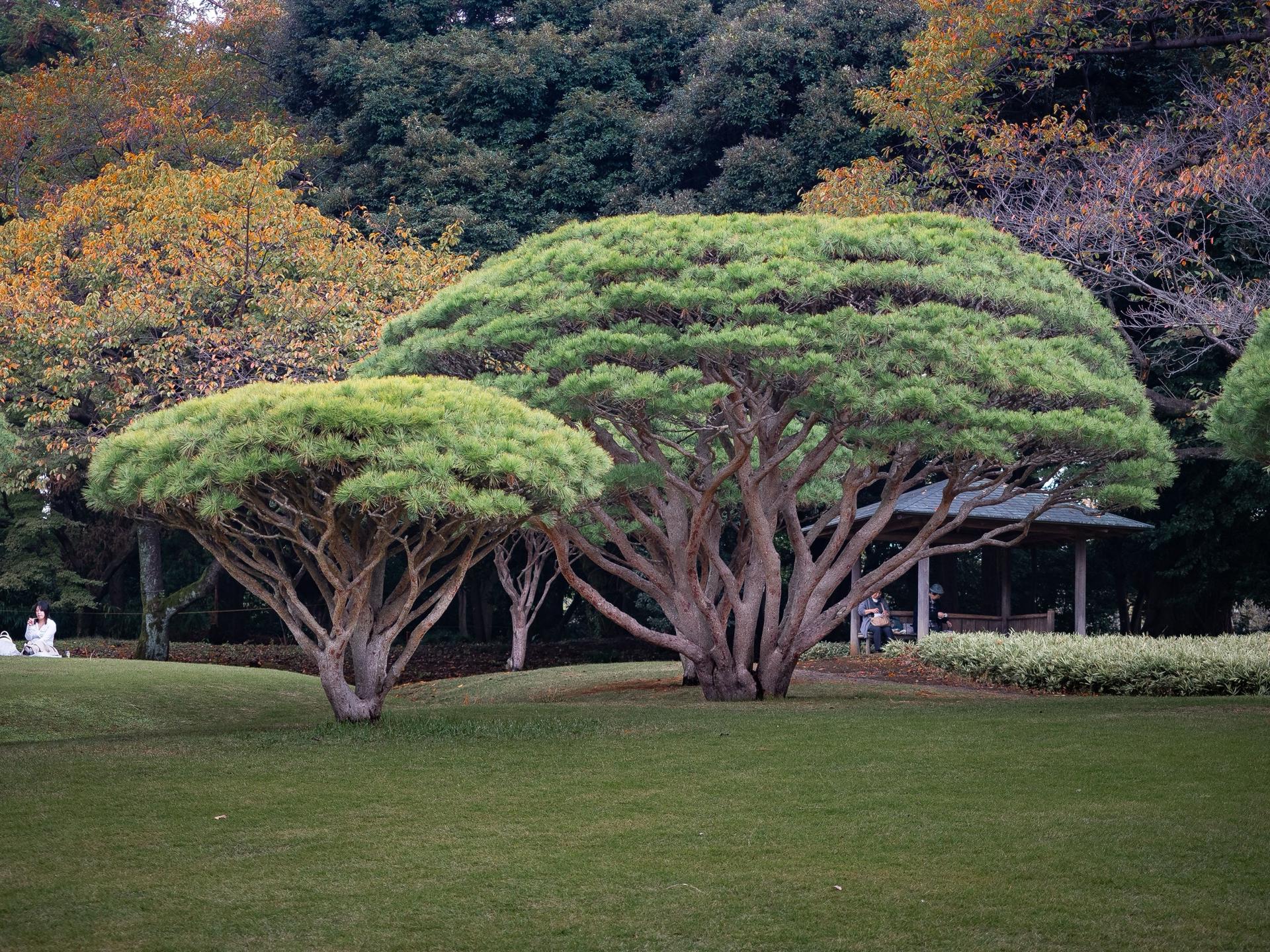
In 1879 the land passed to the Imperial Household. In 1898 Fukuba Hayato, who had studied in France and Germany, became head of the garden, and he asked Henri Martinet, a professor at the horticultural school at Versailles, for a new design. The work ran from 1902 to 1906. It produced the two Western gardens you walk today: a formal garden of straight rows of planes and rose beds, stop 7, and a landscape garden of open lawns and loose groups of trees that is meant to look unplanned. On the Lower Pond, stop 8, a bridge from 1905 has rails moulded in concrete to look like gnarled wood.
The ponds in the south and west, Lower, Middle and Upper, carry the Japanese garden, with three hundred cherries on the Middle Pond's bank and a tea house where a rest house once served imperial duck hunts.
What survived and when it opened
In 1945 air raids burned most of the garden. Only two buildings came through: the 1896 Western-style rest house by the greenhouse, stop 3, and the 1927 Taiwan Pavilion on the ponds, stop 10. After the war the garden became a national garden and opened to everyone on 21 May 1949. Entry cost twenty yen, and more than a million people came in the first ten months.
Walking it yourself
Any season works, because every stop is written for whatever the garden is wearing: cherries flowering in turn from January to late April, chrysanthemums from 1 to 15 November, planes and maples turning in late autumn. Mornings are quietest. The garden closes at half past four from October to mid March and is shut on most Mondays, so check the time before you set out.
Begin anywhere on Shinjuku Gyoen: The Estate That Named Shinjuku, and see every route on the Tokyo page. For two stops in depth, read about the Formal Garden's planes and its concrete bridge and the Taiwan Pavilion.
Sources
- Ministry of the Environment, Shinjuku Gyoen history: the 1590 grant to Naito Kiyonari, Tamagawa-en completed in 1772 with surplus aqueduct water, the 1872 experimental station, the 1879 Imperial Botanical Garden, Fukuba Hayato from 1898 and Henri Martinet of Versailles, the 1902 to 1906 renovation, the 1945 bombing and the 1949 opening.
- Ministry of the Environment, historic buildings: the 1896 rest house that withstood the 1945 raids, the 1927 Taiwan Pavilion, the 1905 imitation wooden bridge.
- Ministry of the Environment, the gardens: the formal, landscape and Japanese traditional gardens, about 160 planes in eight rows and 500 roses.
- Ministry of the Environment, notable trees: the first London planes and tulip trees in Japan planted here in the late 1800s.
- Roamer's audited park tour transcript for Shinjuku Gyoen and its research brief, built from the Ministry of the Environment's pages.
Ready to experience it?
Shinjuku: Backstreets, Kabukicho and Golden Gai
75 min · 2.6 km · easy
More from Tokyo
Explore more at your own pace.

Best Culture Walking Tours in Tokyo (2026)
Best History Walking Tours in Tokyo (2026)
Best Nature Walking Tours in Tokyo (2026)
Asakusa and Senso-ji: Why the Grand Buildings Are Young and the Survivors Are Small
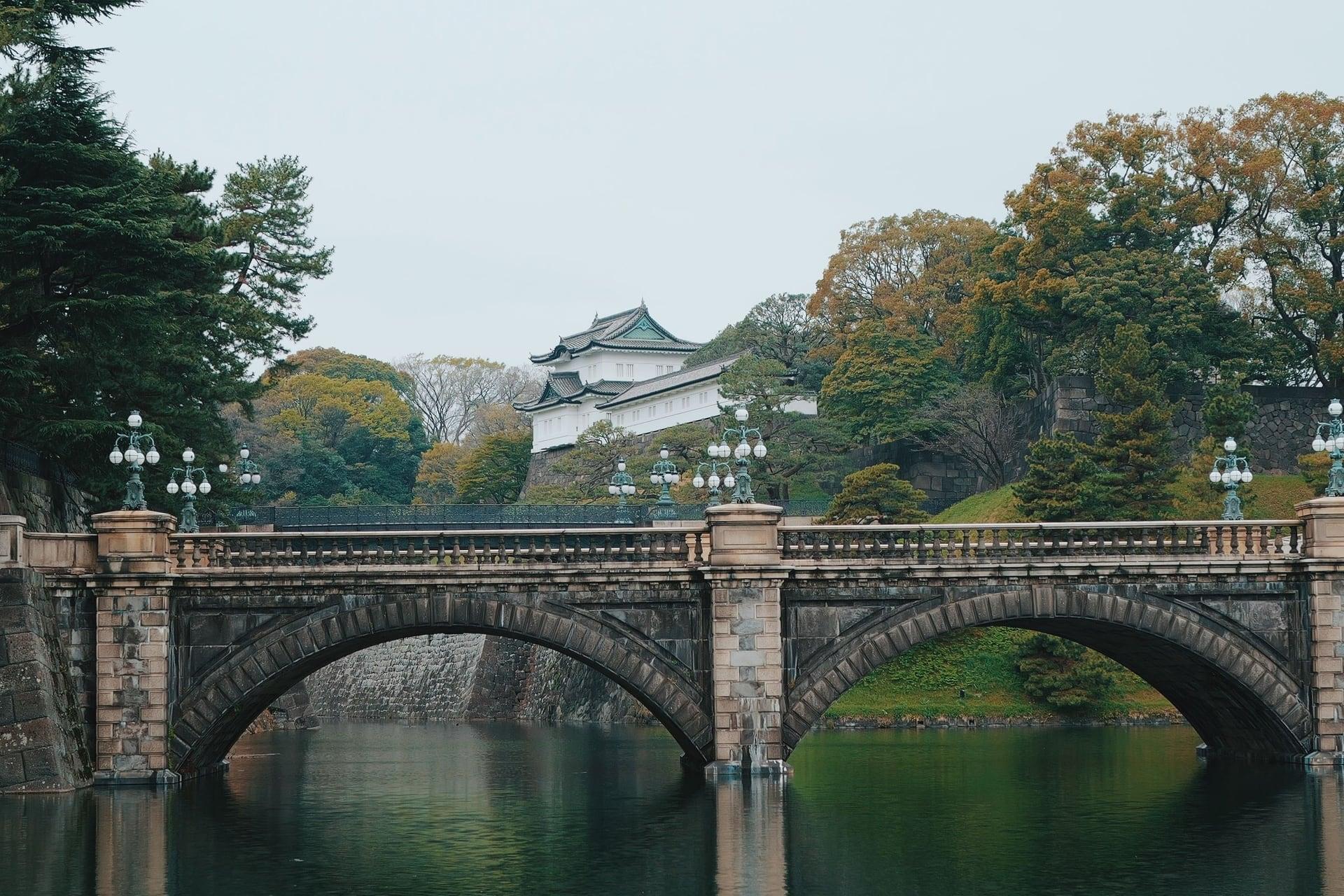
Edo Castle, Gate by Gate: How the Shogun's Fortress Became a Garden Anyone Can Walk Into