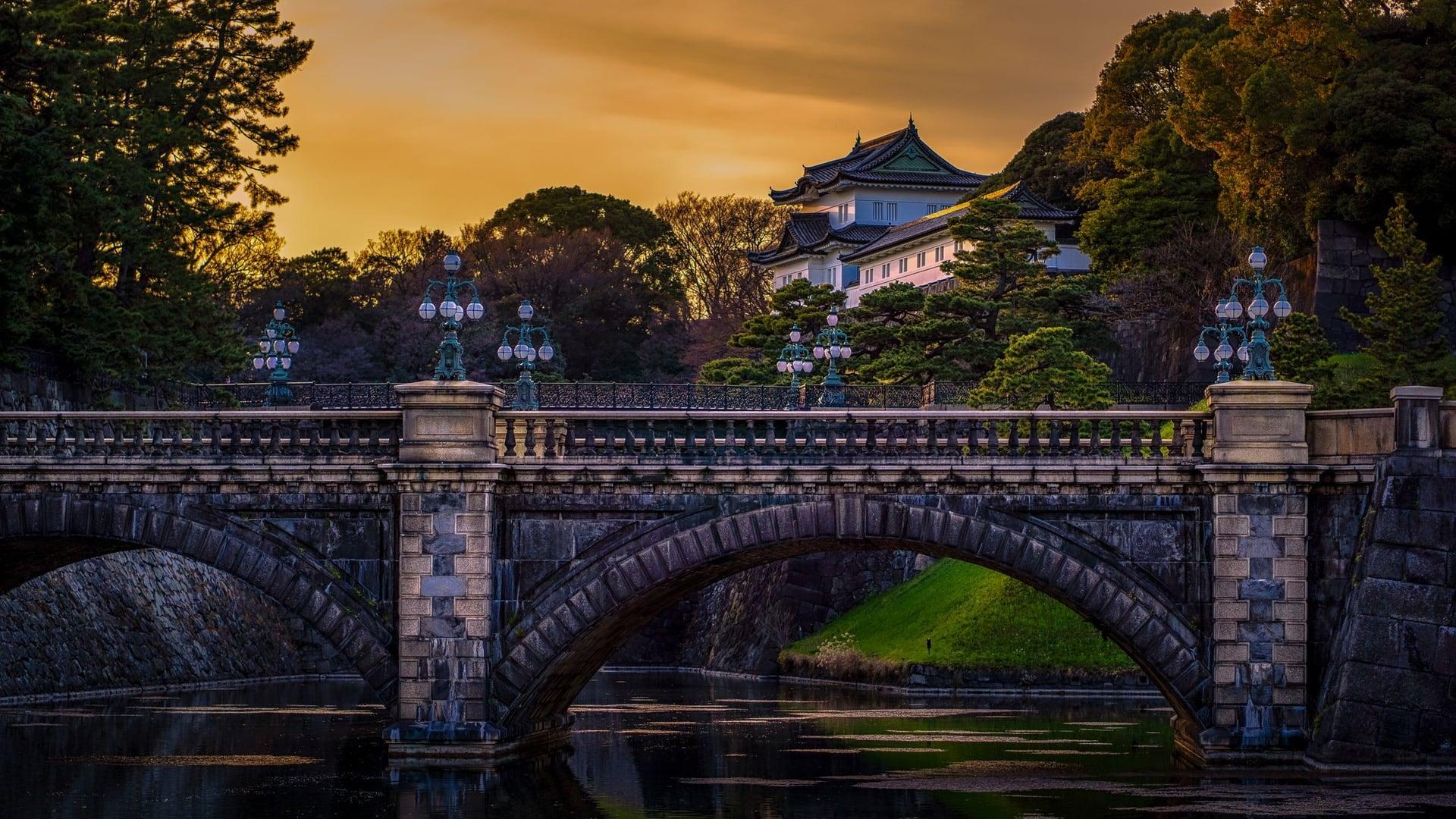
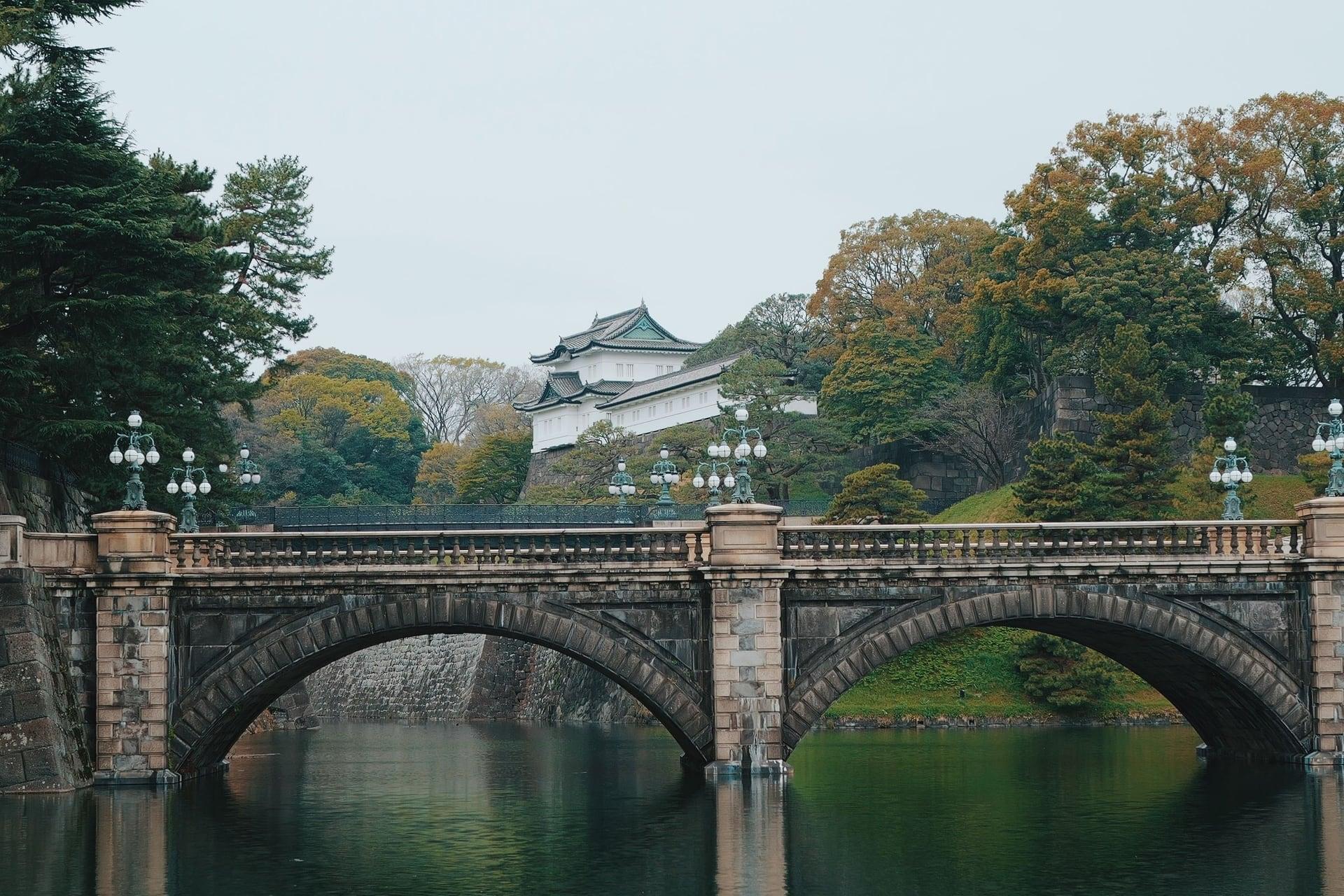
Imperial Palace: Edo Castle, Gate by Gate
80 min · 2.9 km · easy
You cannot see all of Tokyo in a day. What you can do is see three of its truest faces, and this route strings them together so the city reads as more than a blur of neon.
Tokyo is not one place. It is the old temple town of the low city, the temple town on the hill that came through the earthquake and the bombing comparatively lightly, and the polished avenue where famous architects took turns answering a row of trees. This itinerary walks one of each, in the order that makes sense, and names the self-guided Tokyo walking tour that anchors every block so the history walks with you. A note on pace first: this is three neighborhood routes of about 1.5 to 2.5 km each with short train rides between them, so wear real shoes and treat the food stops as part of the plan.
Morning: Asakusa, where Tokyo came to pray and play
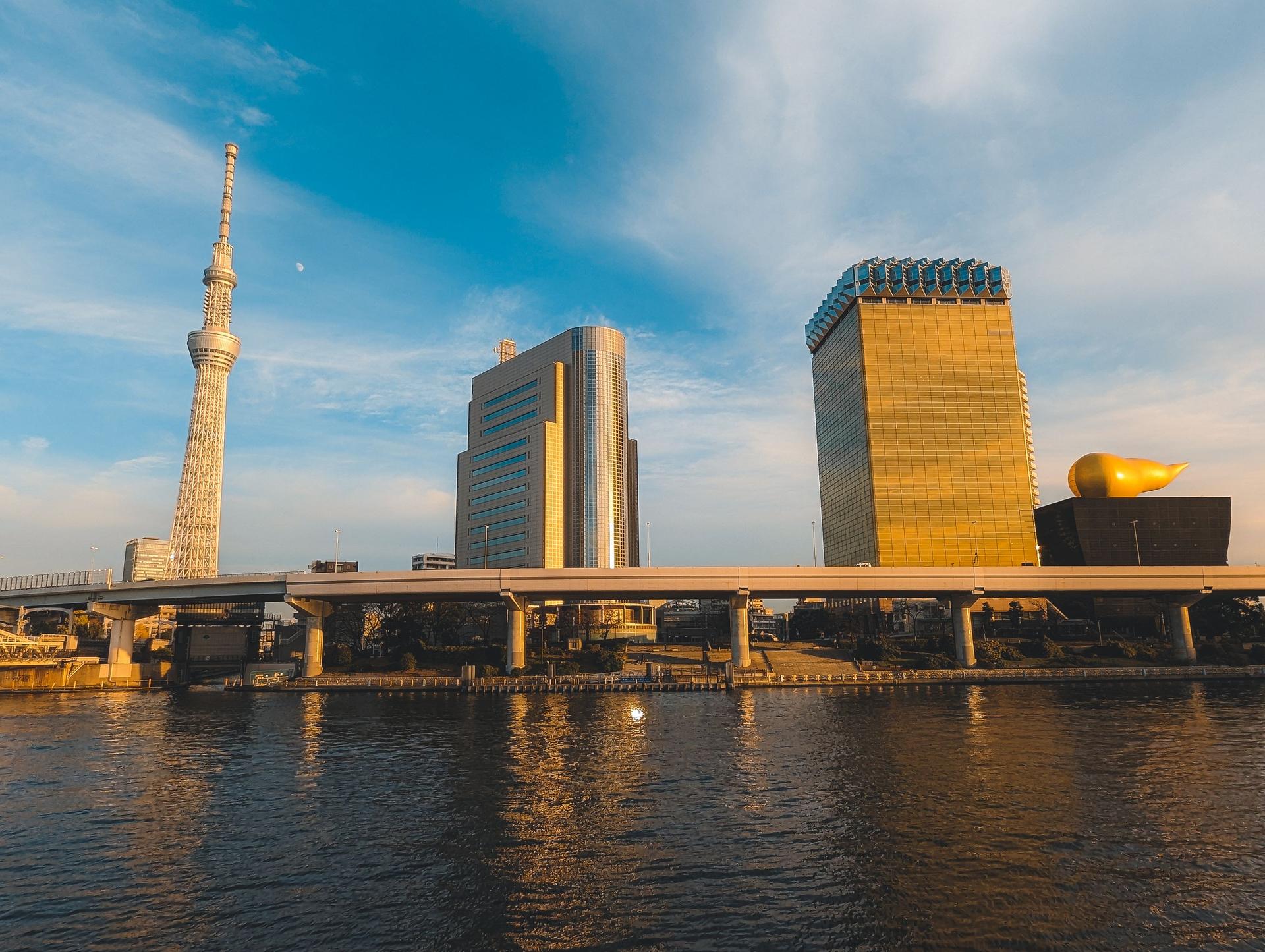
Start early in Asakusa, the loud, plebeian heart of the old low city. Begin on Azumabashi, the red bridge over the Sumida River, then walk to the Kaminarimon, the Thunder Gate with its giant red lantern, and up Nakamise-dori, the market street of snack and souvenir stalls that has fed pilgrims for centuries, to Senso-ji, Tokyo's oldest temple. The temple traces its founding to the year 628, and its incense-wreathed courtyard still draws millions of worshippers a year.
This is the block to walk with the Asakusa and Senso-ji: Where Tokyo Came to Pray and Play self-guided audio tour. It reads Asakusa as the place where Tokyo came to pray and play, where the city's oldest temple has always shared its street with street food, festivals, and the ghosts of the Twelve Storeys tower and Japan's first permanent cinema.
Asakusa is also where to have your first proper bite. The stalls of Nakamise and the streets around them are thick with senbei crackers, ningyo-yaki cakes, and tempura. See what to eat in Tokyo for the dishes worth ordering as you go.
Midday: Ueno and Yanaka, Edo's Kyoto and the town beside it
Hear a stop from this walk
Ninomaru Garden: An Edo Plan, Made in 1968
Take a short train to Ueno, and the register changes completely. Start at Saigo Takamori's statue at the top of Ueno Park. In 1625 the priest Tenkai founded the temple of Kan'ei-ji on this hill, and it was laid out as a copy of Kyoto, with its own Kiyomizu stage and a pond standing in for Lake Biwa. On 4 July 1868 a battle burned most of it, and in 1873 the hill became one of Japan's first public parks. Walk on past the golden Ueno Tosho-gu and its lanterns, then out of the park into Yanaka, the temple town beside it. The Tokyo Metropolitan Government says the 1923 earthquake and the war damaged Yanaka comparatively lightly, so many temples, alleys and wooden buildings remain. The walk ends at the top of the Yuyake Dandan, the "sunset steps", above the shopping street of Yanaka Ginza.
Walk it with the Ueno and Yanaka: Edo's Kyoto and the Battle of 1868 self-guided tour: eleven stops over about 2.5 km, reading what survived the battle and what is only a trace, from a Buddha that is now only a face to a temple gate still marked by bullet holes. Ueno Tosho-gu's gates close at 16:30 from October to February, so do this block by early afternoon. Yanaka is also the day's best lunch: go down the steps into Yanaka Ginza, about sixty shops along about 170 meters, for croquettes, grilled skewers, and old-style sweets to eat as you stroll.
Afternoon: Omotesando and Harajuku, the architects' catwalk
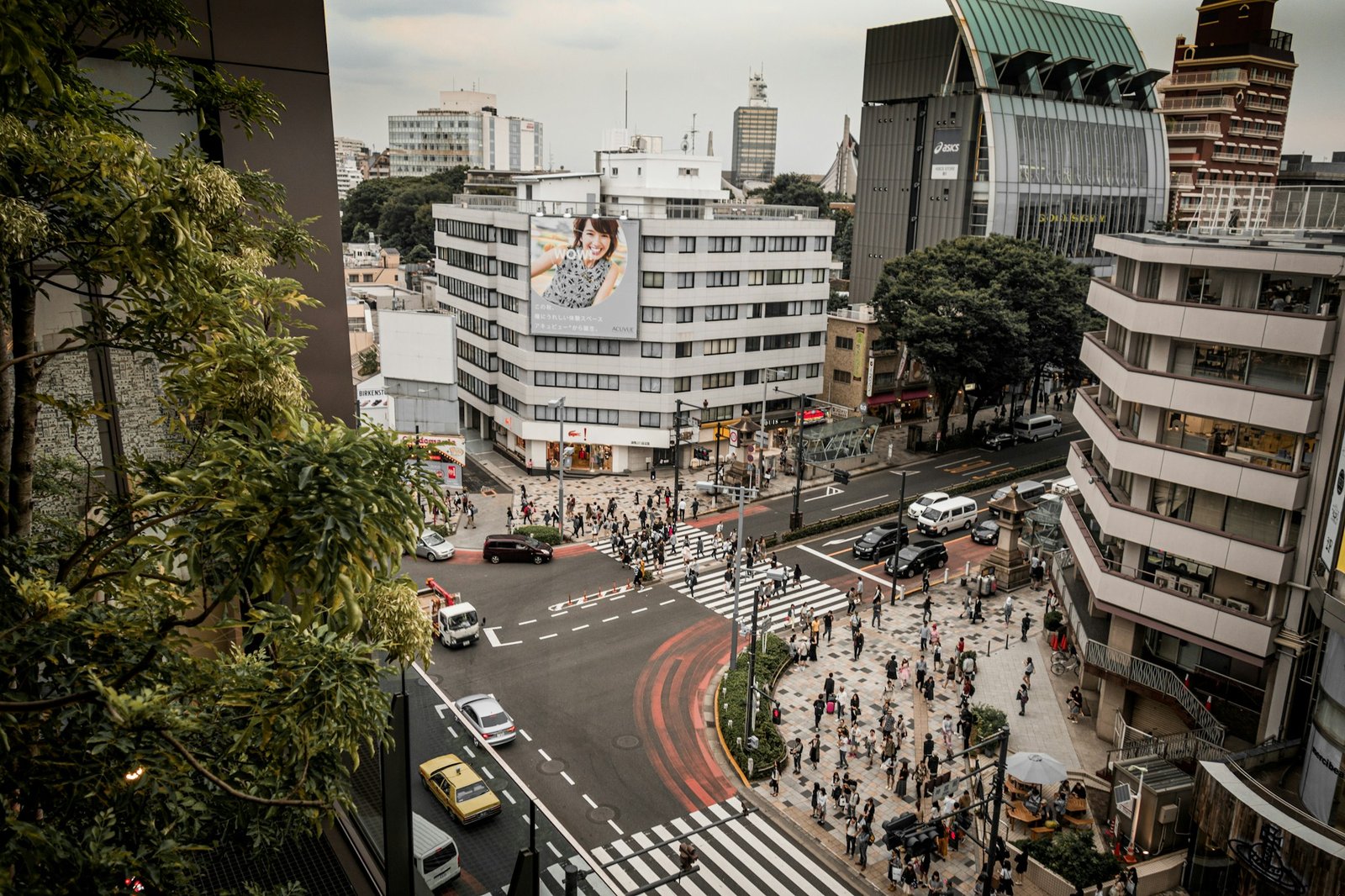
Ride the loop line around to Harajuku for a final face of the city that could not be more different. Start at Tange Kenzo's Yoyogi National Gymnasium, built for the 1964 Olympics with its roof hung on cables, cross Jingu-bashi and go down Takeshita Street, the crammed lane of teen street fashion and crepes, then turn onto the wide, zelkova-lined avenue of Omotesando. Laid out as the approach to the Meiji Jingu shrine, it dips to an old river, then climbs gently to Aoyama, past Ando Tadao's Omotesando Hills, Ito Toyo's Tod's with its concrete trees, and the Prada Aoyama crystal, whose glass grid helps hold up its floors, to the bamboo front of the Nezu Museum.
Walk it with the Omotesando and Harajuku: Buildings That Answer the Trees tour, eleven stops over about 2.4 km, which teaches you to read the flagship stores as architecture rather than shopfronts. If you reach Harajuku with time to spare, walk Meiji Jingu: A Forest Built to Outlive Its Builders first: the shrine was founded in 1920 and set in a planted forest, and that walk ends at the Harajuku entrance, a couple of minutes from the gymnasium. Go early: the shrine's gates open at sunrise and close at sunset, at 16:10 in November and 16:00 in December, so it does not work as an evening stop. After the walk, the famous Shibuya Crossing, one of the busiest intersections in the world, is one stop away and a natural place to end the day near dinner.
The one-day route at a glance
| Block | Where | Anchor tour |
|---|---|---|
| Morning | Azumabashi, Kaminarimon, Nakamise, Senso-ji, Rokku | Asakusa and Senso-ji: Where Tokyo Came to Pray and Play |
| Midday | Saigo's statue, Ueno Tosho-gu, Yanaka's old corner, Yuyake Dandan, lunch on Yanaka Ginza | Ueno and Yanaka: Edo's Kyoto and the Battle of 1868 |
| Afternoon | (Meiji Jingu before sunset, optional), Yoyogi National Gymnasium, Takeshita Street, Omotesando, Prada Aoyama, Nezu Museum | Omotesando and Harajuku: Buildings That Answer the Trees |
| Evening | Shibuya Crossing, dinner | (walk continues) |
Plan the rest of your trip
One day shows you three faces. With a second day, walk Imperial Palace: Edo Castle, Gate by Gate and Tsukiji and Ginza: Built Land, Rebuilt City, which starts best on a market morning, and spend an afternoon into dusk on Shinjuku: Backstreets, Kabukicho and Golden Gai. For how many days Tokyo really deserves, how to get around on the JR and metro with a Suica card, and when to go, read the Tokyo travel guide. For where the city's food culture lives, see what to eat in Tokyo. For every route in the city, see the best self-guided walking tours in Tokyo, or browse all Tokyo tours. Every tour is free to start: the introduction and first stop play in full, and every later stop plays a short preview before an optional purchase.
Frequently asked questions
- Can you see Tokyo in one day?
- You cannot see all of Tokyo in a day, but you can see several of its neighborhoods well. Tokyo is enormous, so the winning move is to pick two or three connected districts and walk them slowly rather than racing between far-flung sights. A focused day covers old Asakusa and its ancient temple, Ueno Park and the old streets of Yanaka, and the architecture of Omotesando and Harajuku, three very different faces of the city, each reachable on foot once you take a short train between them.
- What is the best area to stay for a one-day Tokyo trip?
- Stay somewhere central and well-connected to the JR Yamanote loop line or the Ginza and Hibiya subway lines, such as around Tokyo, Ueno, Shibuya, or Shinjuku stations. Tokyo sights are spread out, so proximity to a major hub matters more than being next to any one attraction. From a central base you can reach Asakusa, Yanaka, and Harajuku each in well under 30 minutes.
- How much walking is a one-day Tokyo itinerary?
- Expect roughly 6 to 10 km on foot across the day, broken into three walkable neighborhood routes of about 1.5 to 2.5 km each, with short train rides between them. The terrain is mostly flat, though Yanaka has a few gentle slopes and stairs. Wear comfortable shoes and build in food and coffee stops, which in Tokyo are part of the experience, not interruptions.
- Do I need to book anything in advance for one day in Tokyo?
- Almost nothing on this route needs a reservation. Senso-ji temple, the Yanaka streets, Omotesando, and Harajuku are all free public spaces open to walk-ups. The exceptions worth booking ahead are a specific sushi or kaiseki dinner, and the free Toyosu tuna-auction viewing if you want to add an early-morning market visit. The self-guided audio tours that anchor each block are free to start, and in the iPhone app a tour you have unlocked can be downloaded in advance for offline listening.
Ready to experience it?
Imperial Palace: Edo Castle, Gate by Gate
80 min · 2.9 km · easy
More from Tokyo
Explore more at your own pace.
Best Culture Walking Tours in Tokyo (2026)
Best History Walking Tours in Tokyo (2026)
Best Nature Walking Tours in Tokyo (2026)
Asakusa and Senso-ji: Why the Grand Buildings Are Young and the Survivors Are Small
Edo Castle, Gate by Gate: How the Shogun's Fortress Became a Garden Anyone Can Walk Into