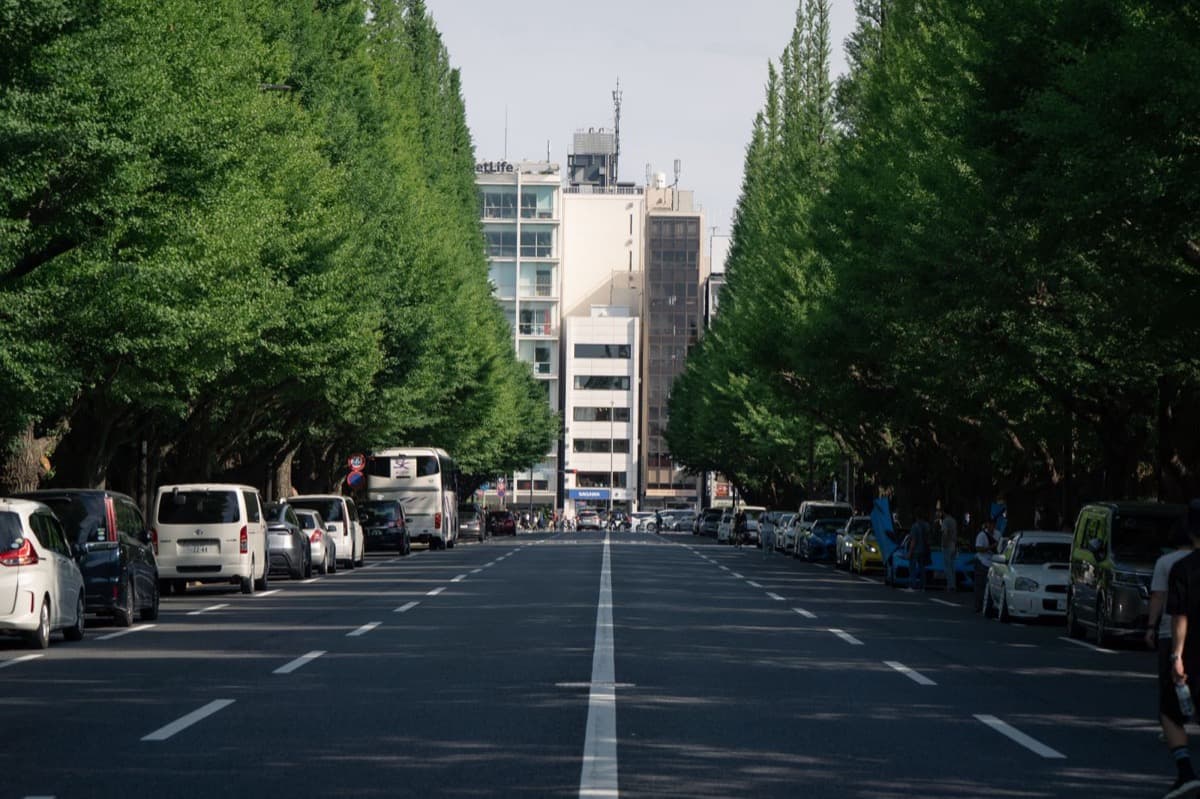
A downhill walk along one zelkova-lined slope where the world's luxury houses hired the planet's greatest living architects to out-build one another, until the buildings themselves became the branding. It begins in handmade teen street style and ends at a glass crystal whose skin is its structure.
Start · Takeshita Street: The Handmade Register
DirectionsStops
- 1
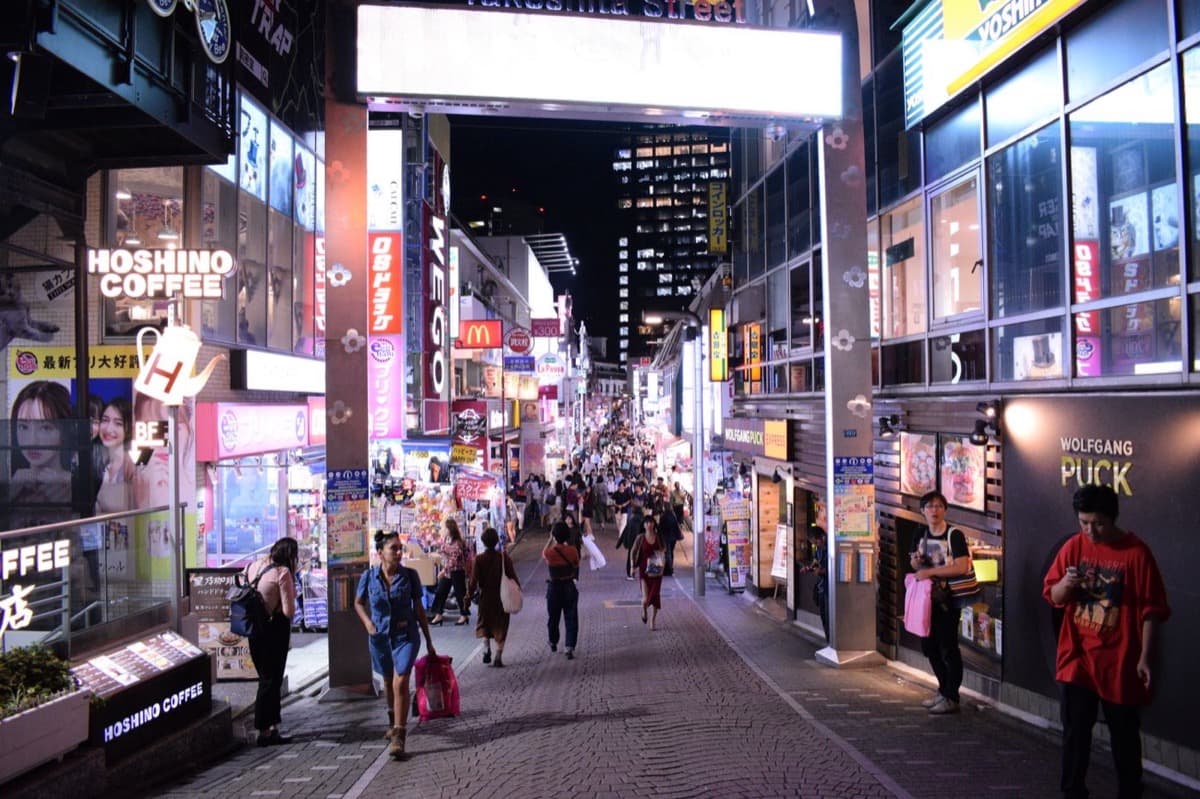
Takeshita Street: The Handmade Register
A narrow lane opposite Harajuku Station that has been the bottom-up engine of Japanese teen street fashion since the nineteen seventies.
- 2
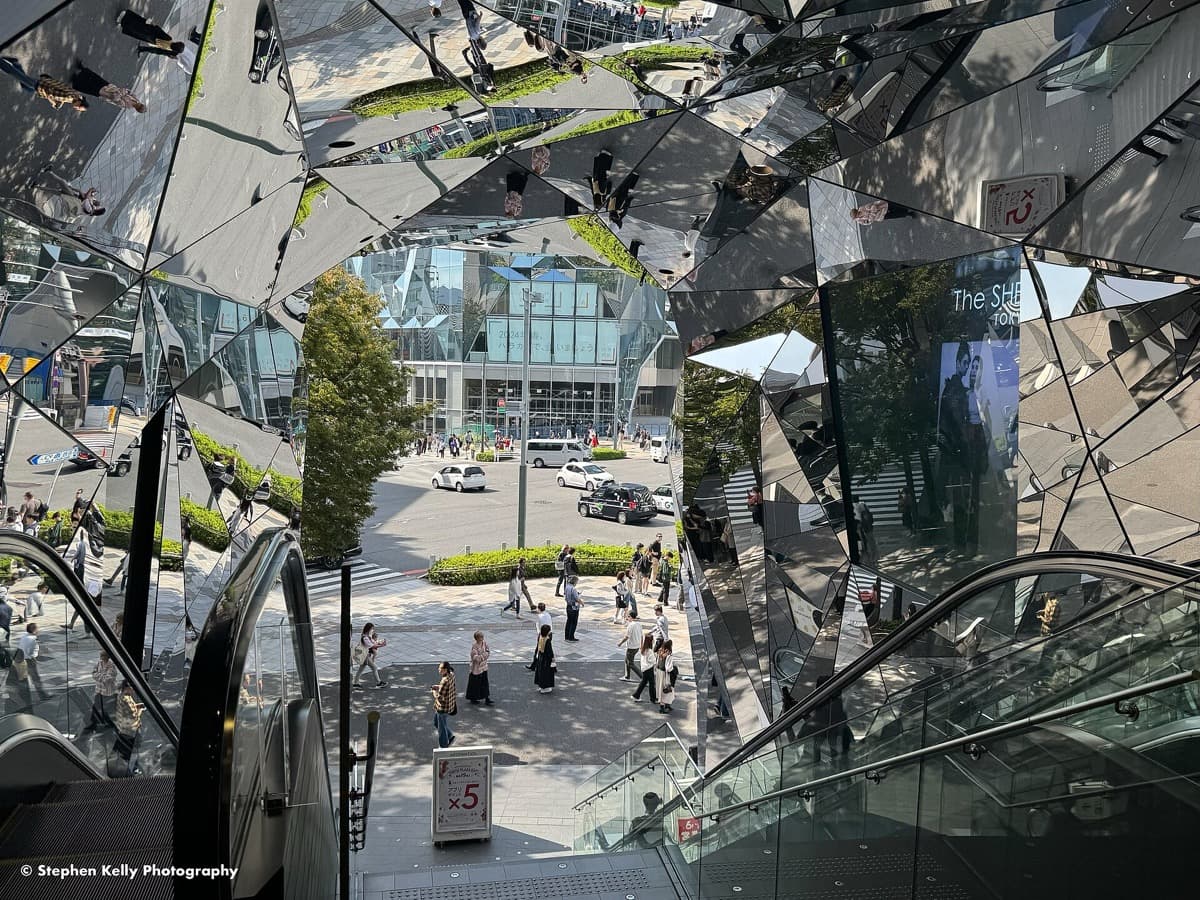
Tokyu Plaza Omotesando Harajuku: The Kaleidoscope Mouth
A retail building at the head of Omotesando whose mirrored entrance funnel is the literal threshold between low Harajuku and high Omotesando.
- 3
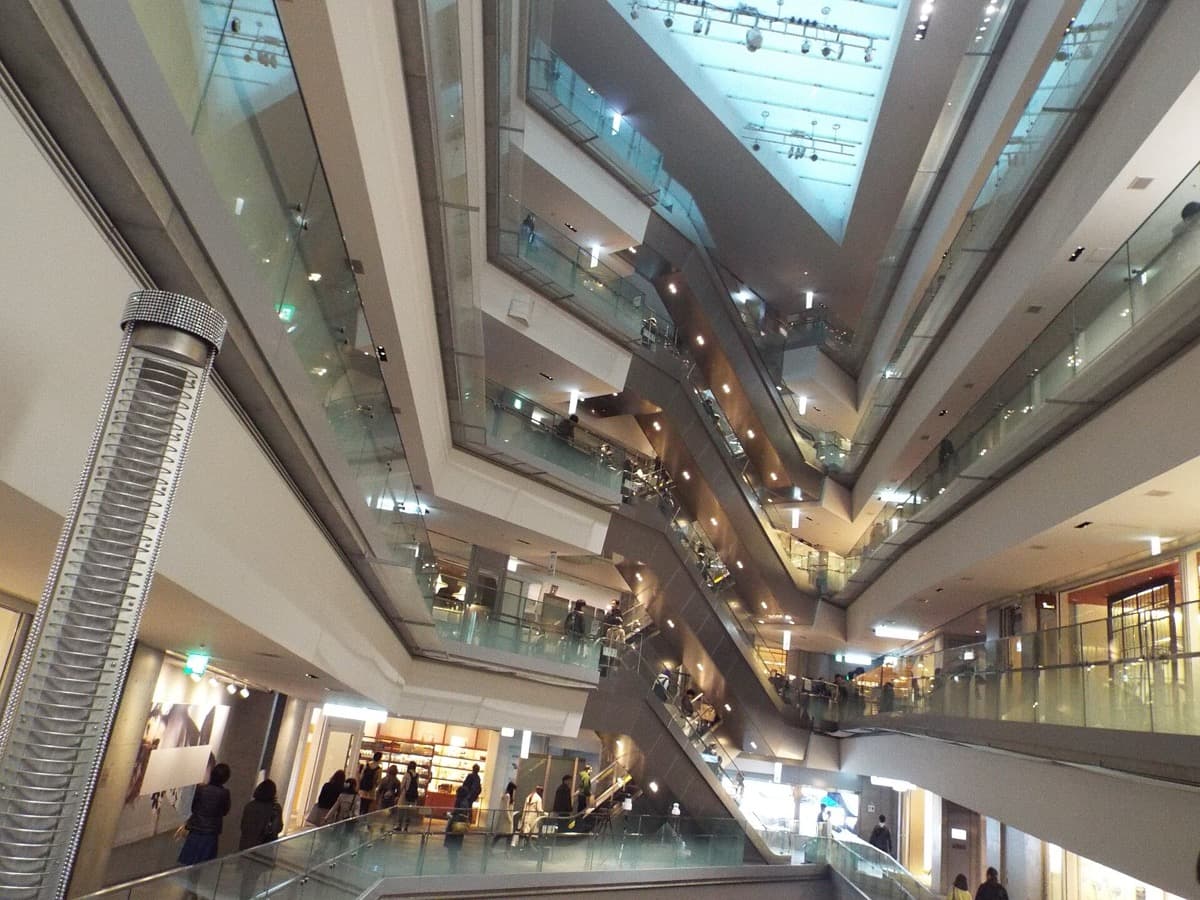
Omotesando Hills: The Building That Hid to Save the Trees
Tadao Ando's mixed-use complex that buries most of its volume underground so it never rises above the zelkova canopy, with an interior ramp that copies the street's slope.
- 4
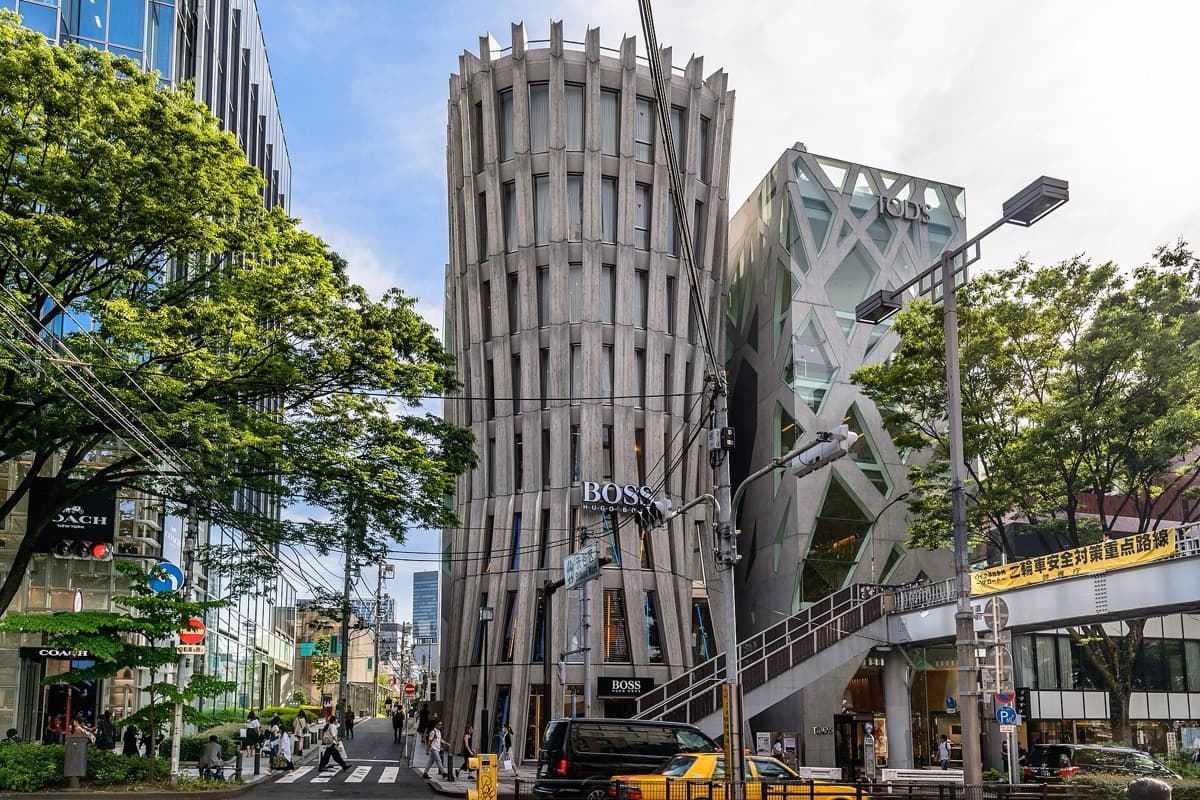
Tod's Omotesando: The Trees That Hold the Floors
Toyo Ito's flagship where a concrete pattern of overlapping zelkova-tree silhouettes is not decoration but the actual load-bearing structure.
- 5
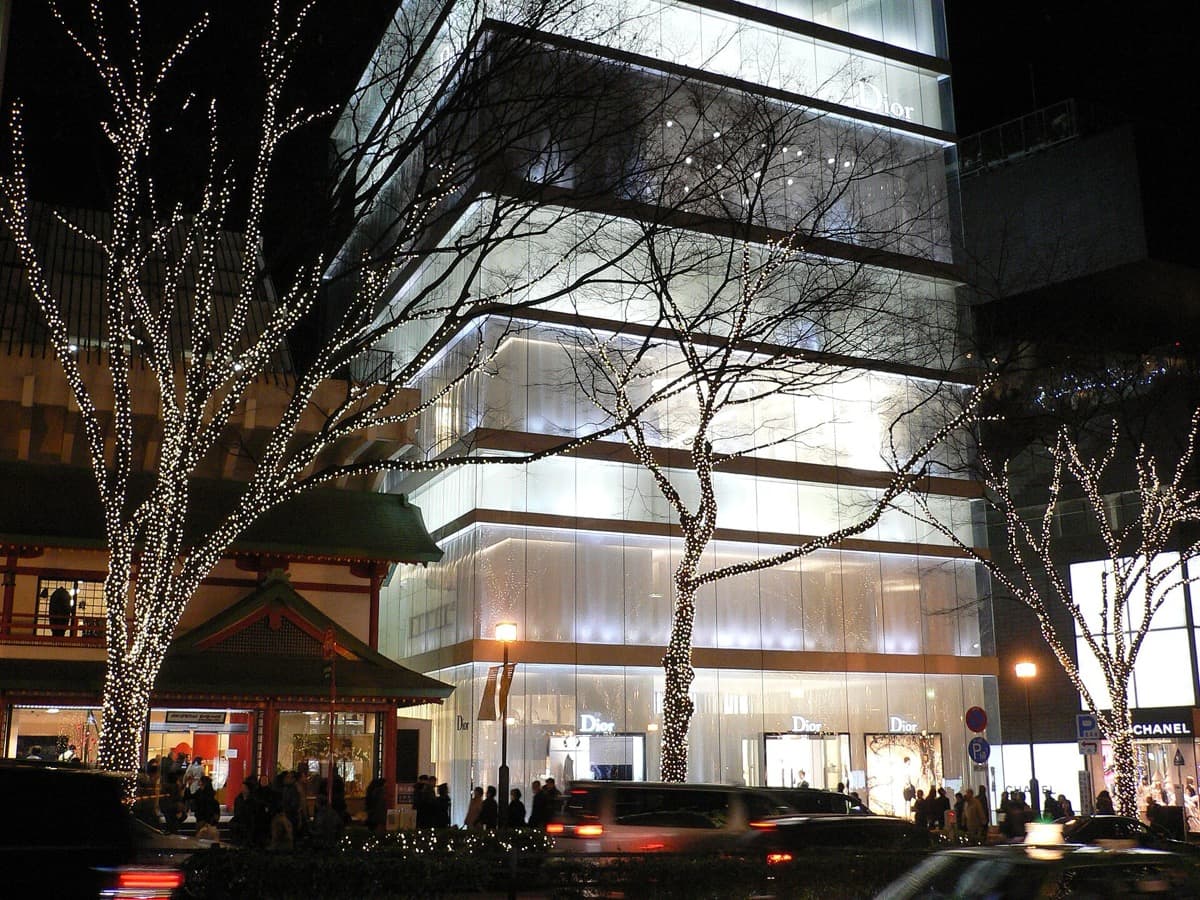
Dior Omotesando: The Veil Over the Box
A near-cubic glass building by SANAA whose translucent white inner panels read like fabric draped inside a glass case, hiding the true structure and even the number of floors.
- 6
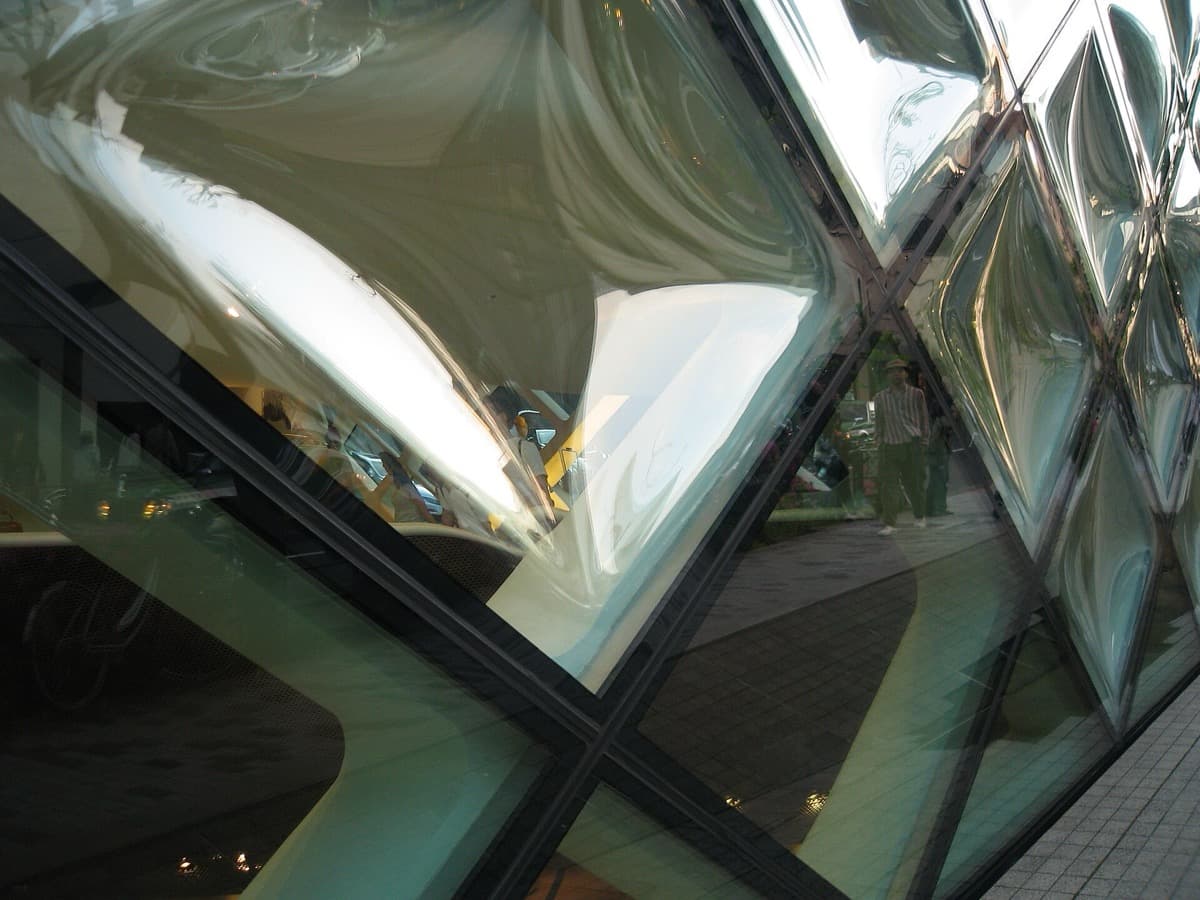
Prada Aoyama: The Crystal Where Skin Is Structure
Herzog and de Meuron's diamond-grid glass tower where the rhomboid facade is not cladding but the load-bearing structure itself, the purest statement of the whole avenue.
Details
Best Time to Visit
Late morning to mid afternoon on a weekday, when the light rakes across the glass facades and the avenue is lively but not overwhelmed. Sundays bring the biggest street-fashion crowds to Harajuku if you want that energy, though Takeshita Street becomes very dense. For the Dior and Prada facades, dusk is a bonus: the glass and the inner veils begin to glow as the light drops.
Pro Tips
- •Walk it downhill from Harajuku toward Aoyama, the way this tour is ordered. Gravity does the work and the buildings unfold in their intended sequence.
- •Step inside the flagships. They are free to enter, and Omotesando Hills in particular hides its best idea, the seven-hundred-meter spiral ramp, on the interior.
- •Ride to the rooftop terrace at Tokyu Plaza for a free overhead view of the zelkova canopy you are about to walk beneath.
- •Look up constantly. The whole point of this street lives above eye level, in the facades, so resist staring into shop windows.
- •Carry a crepe from Takeshita Street to eat as you climb to the avenue, tying the low and high registers together in one walk.
- •Load an IC card such as Suica or Pasmo before you start so you can hop the train at either Harajuku or Omotesando Station without fumbling for tickets.
Safety & Precautions
- •In summer Tokyo is hot and very humid. Carry water, use the shade of the zelkova trees, and duck into the air-conditioned flagships to cool down between stops.
- •Takeshita Street gets extremely crowded, especially on weekends. Keep bags close, move with the flow, and step out of the lane if you want to stop and look.
- •These are working luxury flagships. Photograph the exteriors freely, but be discreet and ask before shooting interiors, and keep entrances clear for shoppers.
- •On trains and platforms follow local etiquette: keep phone calls silent, queue at the marked lines, and stand to one side to let others pass.
Travel advisory: Exercise Normal Precautions (Level 1).
Gallery
Related Reading
Go deeper on what you'll see, hear, and walk through.
Overview
Best Self-Guided Walking Tours in Tokyo (2026)
4 min
Overview
One Day in Tokyo: A Walkable Itinerary Across Three Faces (2026)
5 min
Overview
Tokyo Travel Guide: How Many Days, Getting Around, When to Go (2026)
4 min
Deep dive
Prada Aoyama: The Tokyo Glass Tower Where the Skin Is the Structure
5 min
Deep dive
Tod's Omotesando: The Tokyo Facade Where the Trees Hold Up the Floors
6 min
Read the walk
The full story of Omotesando and Harajuku: The Architects' Catwalk, in words. Prefer to listen? Play it narrated, from home or on location.
Introduction
There is a street in Tokyo, in Japan, that you can read the way you read a sentence. It slopes gently downhill, lined with zelkova trees, and along it the biggest fashion houses on earth did something strange. Instead of competing on handbags, they competed on buildings, hiring the greatest living architects to out-design one another until the architecture itself became the advertising. This walk has six stops and runs for about ninety minutes across roughly one and a half kilometres, mostly downhill, so gravity is on your side. Here is the idea I want you to carry the whole way. Usually fashion is the surface and the building is just the frame. On this avenue that flips. The structure becomes the product, and the load path becomes the logo. You will keep a question in your pocket: is this facade just a pretty skin, or is that pattern actually holding the floors up? We start low, in Harajuku, where teenagers invented a bottom-up street style by hand. Then we climb to the top of the avenue and walk the sentence clause by clause: a building buried to save the trees, a facade of concrete trees that carry the floors, a glass box wearing a fabric veil, and finally a crystal where the ornament and the structure are the exact same thing. Take it at your own pace. Skip anything that does not pull you in. When you arrive at Takeshita Street, opposite Harajuku Station, begin with stop one.
1. Takeshita Street: The Handmade Register
You are standing at the mouth of Takeshita Street, a narrow pedestrian lane running west from directly opposite Harajuku Station. Notice first how small it is. No grand facade, no architect's signature, just a tight corridor packed shoulder to shoulder with tiny independent shops. This is the low register of our whole walk, and I mean that as a compliment. Fashion here is bottom-up. From the mid nineteen seventies, small independent shops opened along this lane, and it became the gathering ground for teenagers building their own style by hand. By the nineteen eighties, young people were coming on Sundays in elaborate homemade outfits, and street dancing groups performed nearby. The word kawaii, that whole vocabulary of cute, spread among Japanese youth across the nineteen seventies and eighties, and a lot of it was worked out right on this pavement. Reach for a crepe while you are here. Marion Crepes, serving in Harajuku since the mid nineteen seventies, is credited as one of the originators of the Harajuku-style crepe, that folded cone of thin pancake, cream, and fruit that became the street's signature snack. Just around the district, Laforet Harajuku opened in nineteen seventy-eight and helped anchor the area as a fashion center. Keep the contrast in mind as you climb. Everything you see on Takeshita Street is improvised, cheap, fast, and invented by the people wearing it. In a few minutes you will stand above it on Omotesando, where the same idea, identity you can wear, is sold by billion-dollar houses through buildings designed by Pritzker winners. Both poles sell the same thing. They just do it fifty meters and one whole social class apart. Let the noise and the sugar sink in, then head back out toward the main avenue.
2. Tokyu Plaza Omotesando Harajuku: The Kaleidoscope Mouth
You have arrived at the Jingumae crossing, where Meiji-dori meets the head of Omotesando, and in front of you is Tokyu Plaza Omotesando Harajuku, designed by the architect Hiroshi Nakamura and opened in twenty twelve. Look straight into the entrance. Instead of a normal door, there is a funnel of escalators lined with dozens of tilted mirrors, a kaleidoscope you walk into. As you rise, the mirrors multiply everyone around you and slice the sky and the street into fragments, and the effect keeps changing with the season, the time of day, and the weather. According to the architect's own studio, that mirror cladding is a deliberate memory. A mirror-walled building, the Harajuku Central Apartments, once stood on this very site and was a symbol of nineteen sixties and seventies youth culture, so the new building quotes the old one's surface. I want you to notice what kind of building this is, because it sets up everything downhill. Its whole idea lives in its skin. The surface is the concept. That makes it the perfect threshold for our walk. Physically and metaphorically, you are standing in the mouth between two worlds. Behind and below you is Harajuku, handmade and loud. Ahead and downhill is Omotesando, the couture avenue where architecture became the branding. Ride up if you like, and find the rooftop terrace, a green garden called Omohara Forest, where you can look down the zelkova slope you are about to walk. From up there the tree canopy reads almost like a river running downhill. Then come back to street level, because the avenue itself is the sentence, and the next four buildings are its clauses. Turn and start down the slope of Omotesando.
3. Omotesando Hills: The Building That Hid to Save the Trees
On the north side of the avenue you are looking at Omotesando Hills, designed by the architect Tadao Ando and opened in two thousand six. Here is the first clue that this street plays by unusual rules. For a prime commercial site, the building looks almost shy. It stays low and…
Full narration for this stop unlocks with the tour.
4. Tod's Omotesando: The Trees That Hold the Floors
Now look up at the Tod's building, designed by the architect Toyo Ito and completed in two thousand four. At first it reads as a facade printed with a picture of bare trees, branches crossing over glass. Here is the trick, and it is the clearest one on the whole avenue. That…
Full narration for this stop unlocks with the tour.
5. Dior Omotesando: The Veil Over the Box
In front of you is the Dior flagship, designed by the architecture studio SANAA, the partnership of Kazuyo Sejima and Ryue Nishizawa, and completed in two thousand three. After the exposed concrete trees of Tod's, this one is the opposite gesture. Where Ito showed you the bones,…
Full narration for this stop unlocks with the tour.
6. Prada Aoyama: The Crystal Where Skin Is Structure
You have reached the end of the sentence. This is the Prada Aoyama building, the Epicenter, designed by the architects Herzog and de Meuron, Jacques Herzog and Pierre de Meuron, and opened on June seventh, two thousand three. Stand back and take in the shape. A compact…
Full narration for this stop unlocks with the tour.