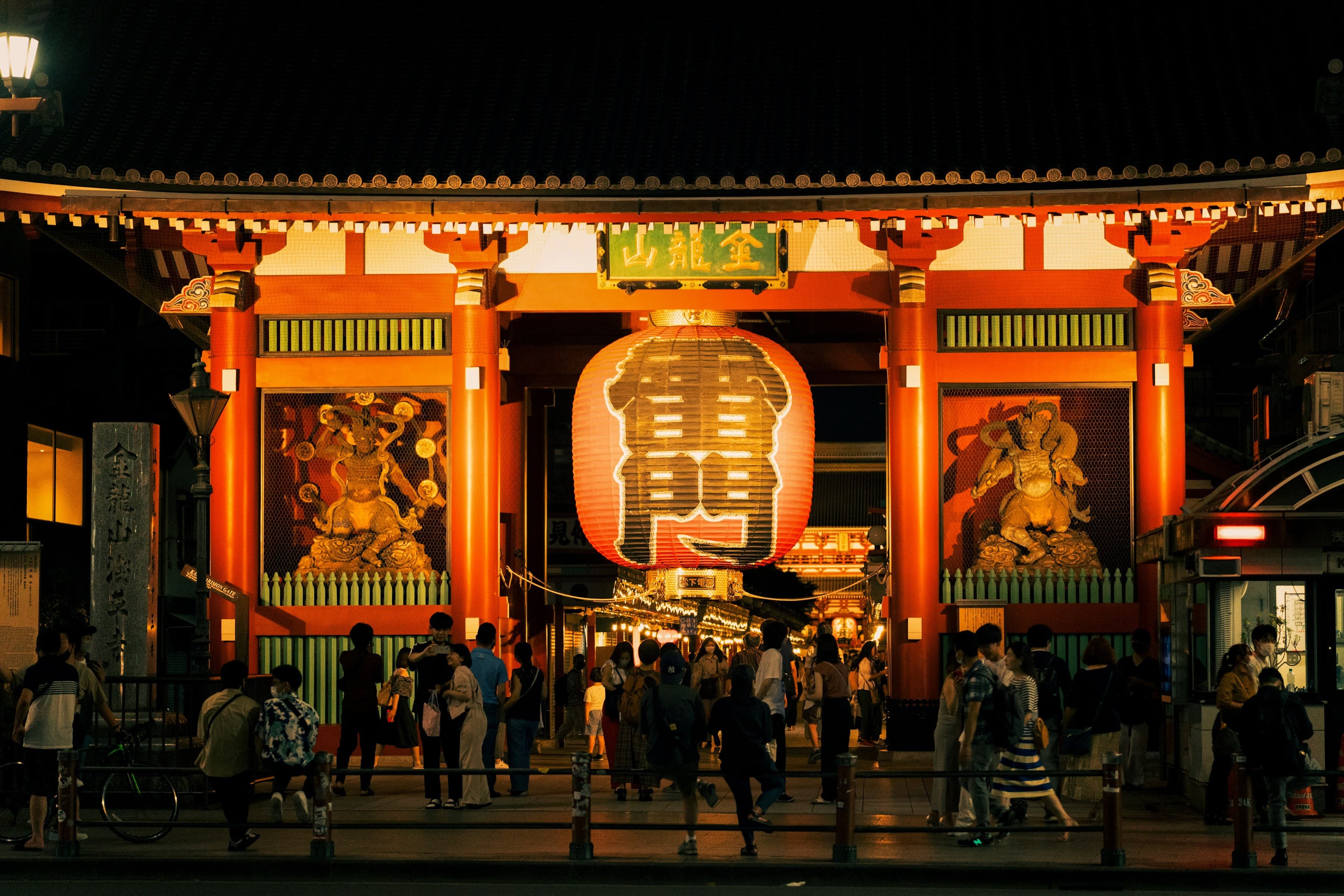
Tokyo's oldest temple drew the city's loudest pleasure district in around it, and when the 1945 air raid burned both, worshippers, industrialists and the pleasure district itself helped pay to put the temple back. Nine stops from the Sumida River through the Thunder Gate, Nakamise and Senso-ji to Asakusa Shrine, Hanayashiki, the old theatre street of Rokku and a shrine to the tanuki. Your pace, your order, no group and no schedule.
Start · Azumabashi and the Sumida River: Where the Story Was Netted
DirectionsStops
- 1
Azumabashi and the Sumida River: Where the Story Was Netted
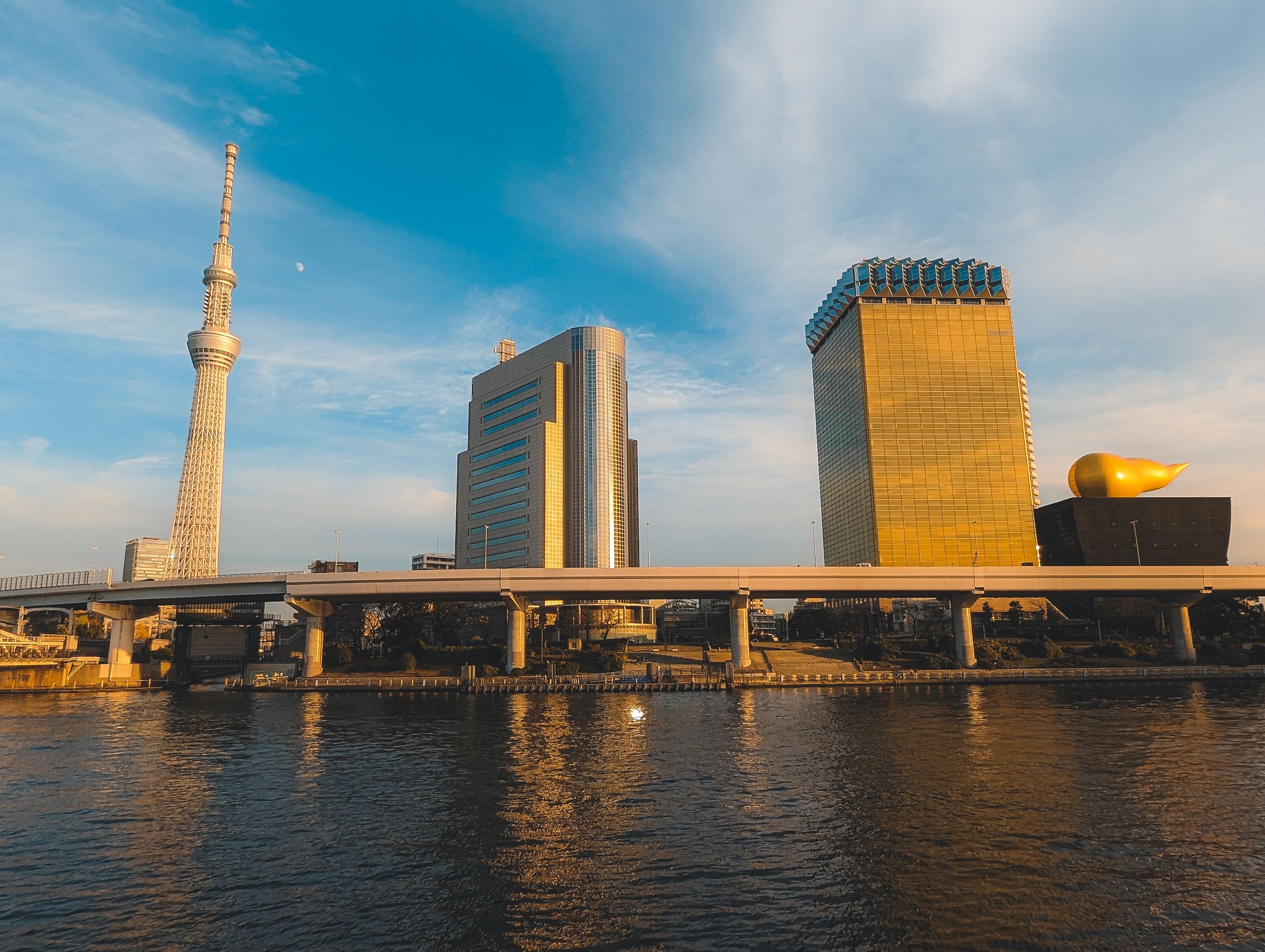
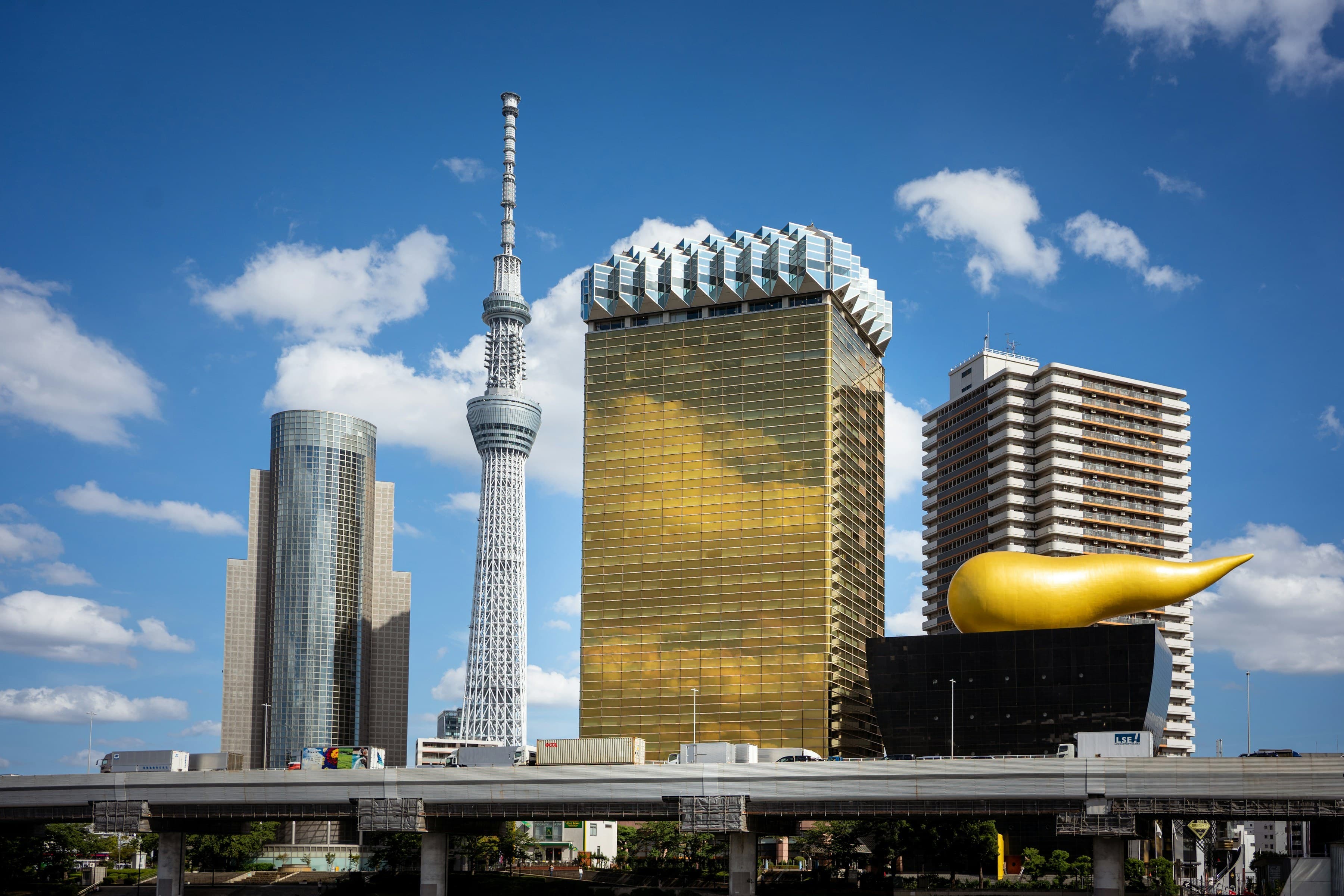
The red bridge looks across the Sumida to the golden Asahi flame and Tokyo Skytree. The temple says its story began on this river in 628, when two brothers netted a statue.
- 2
Kaminarimon: The Thunder Gate That Came Back
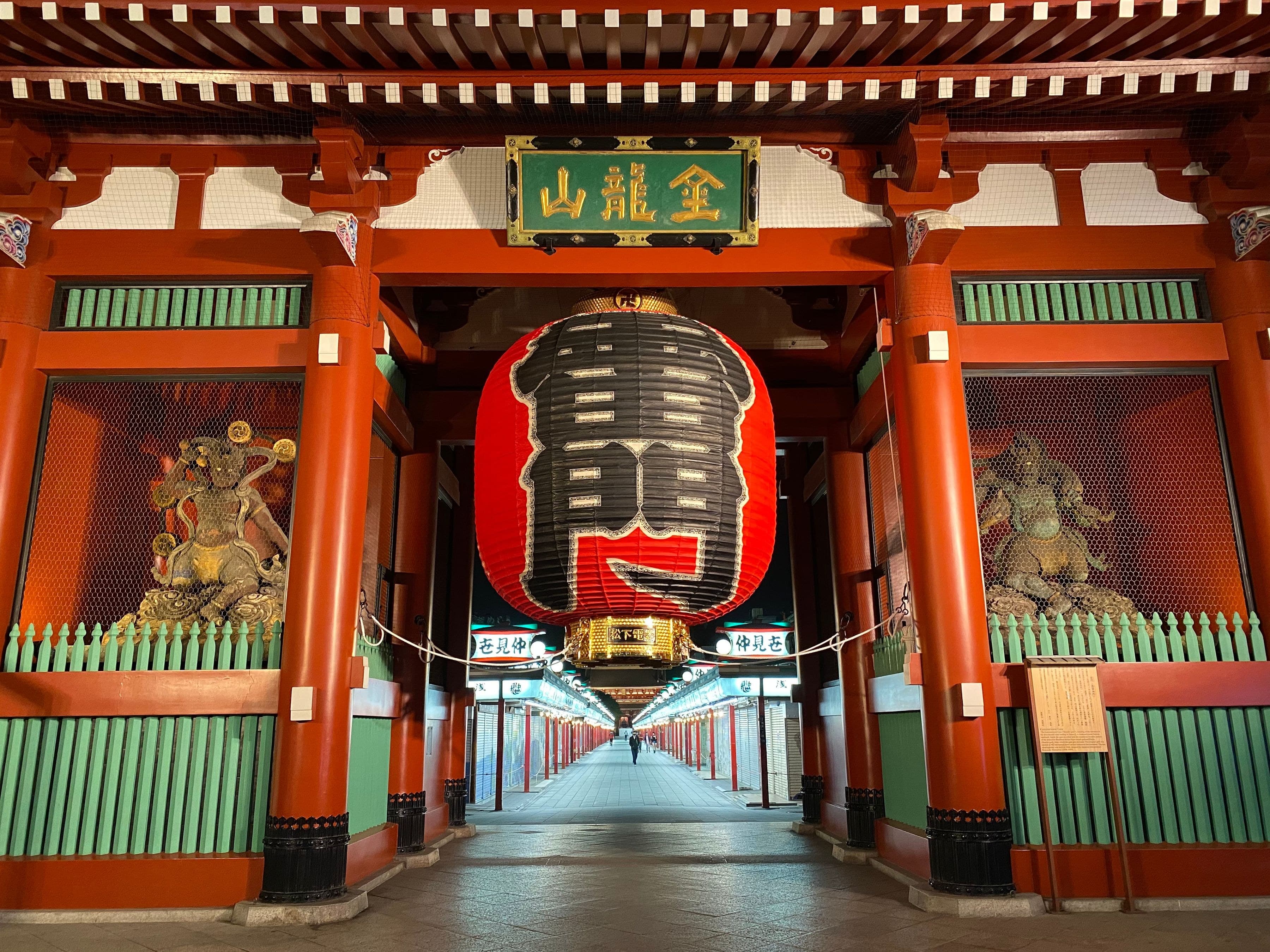
Kaminarimon is the Thunder Gate of Senso-ji, guarded by the gods of wind and thunder. It was rebuilt in 1960 after ninety five years, paid for by the founder of Panasonic.
- 3
Nakamise-dori: Rent Paid in Sweeping
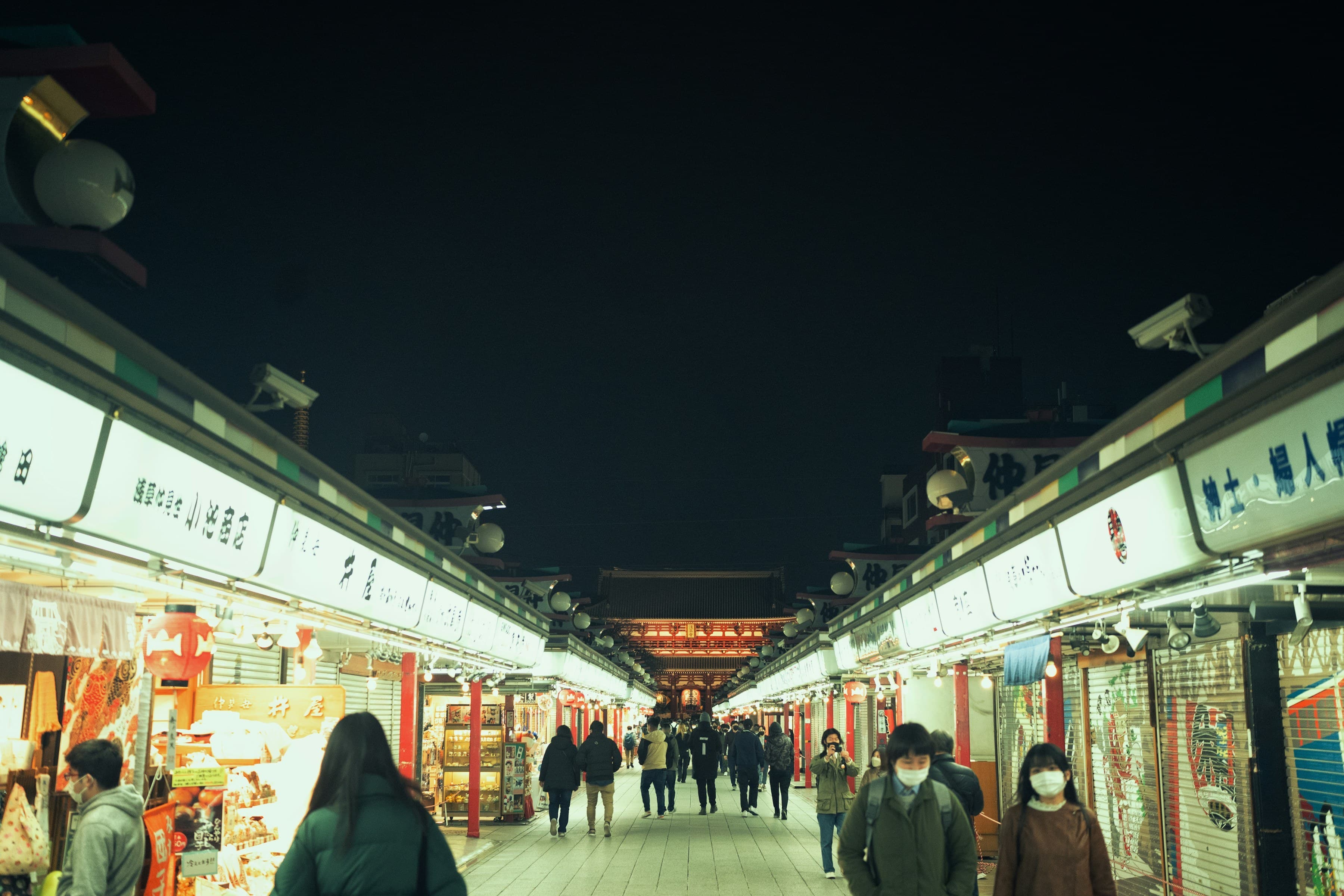
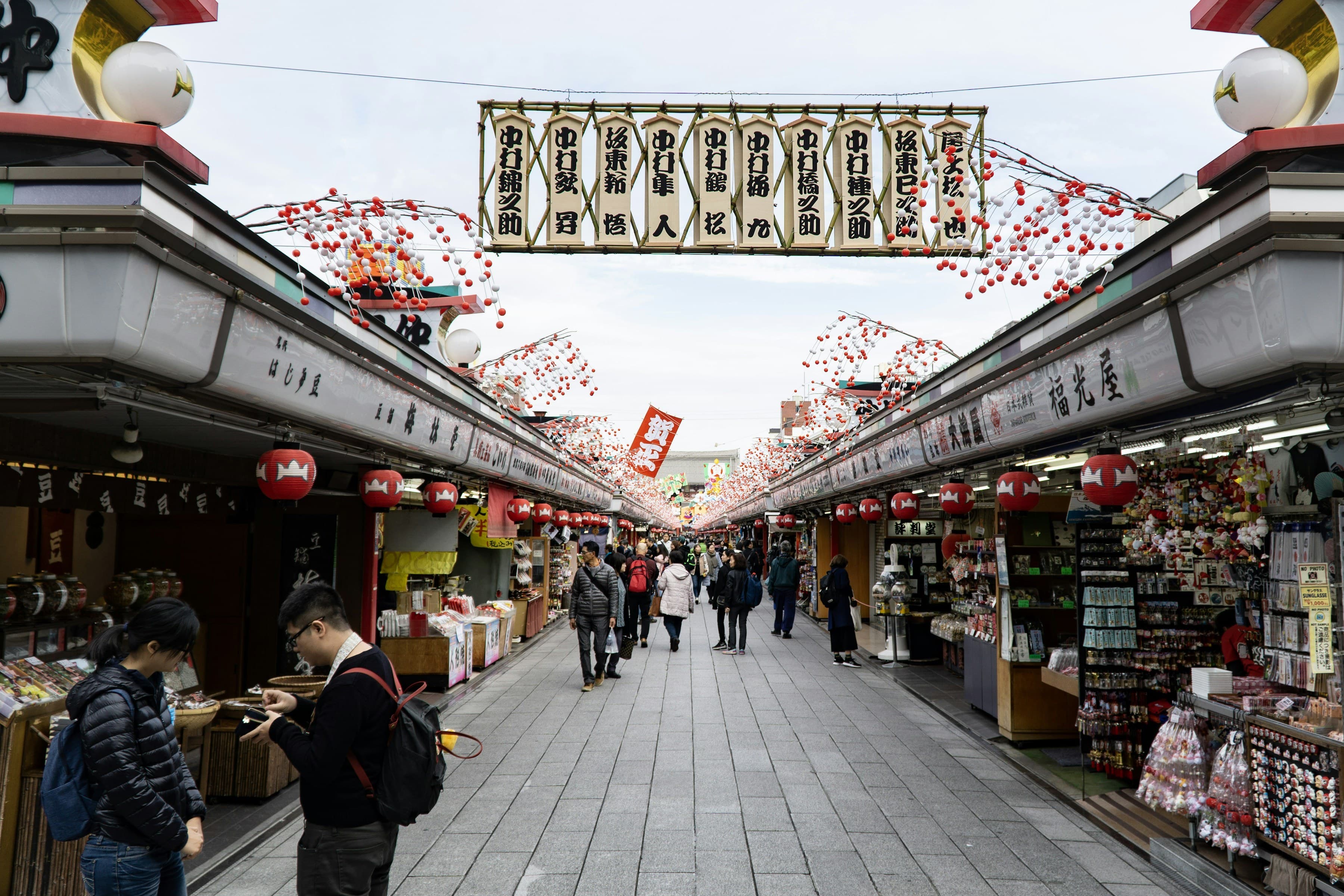
Nakamise-dori runs about 250 metres from the Thunder Gate to the temple. Its stalls began in the late 1600s, paid for in sweeping, and its 1925 shop rows are older than the gates.
- 4
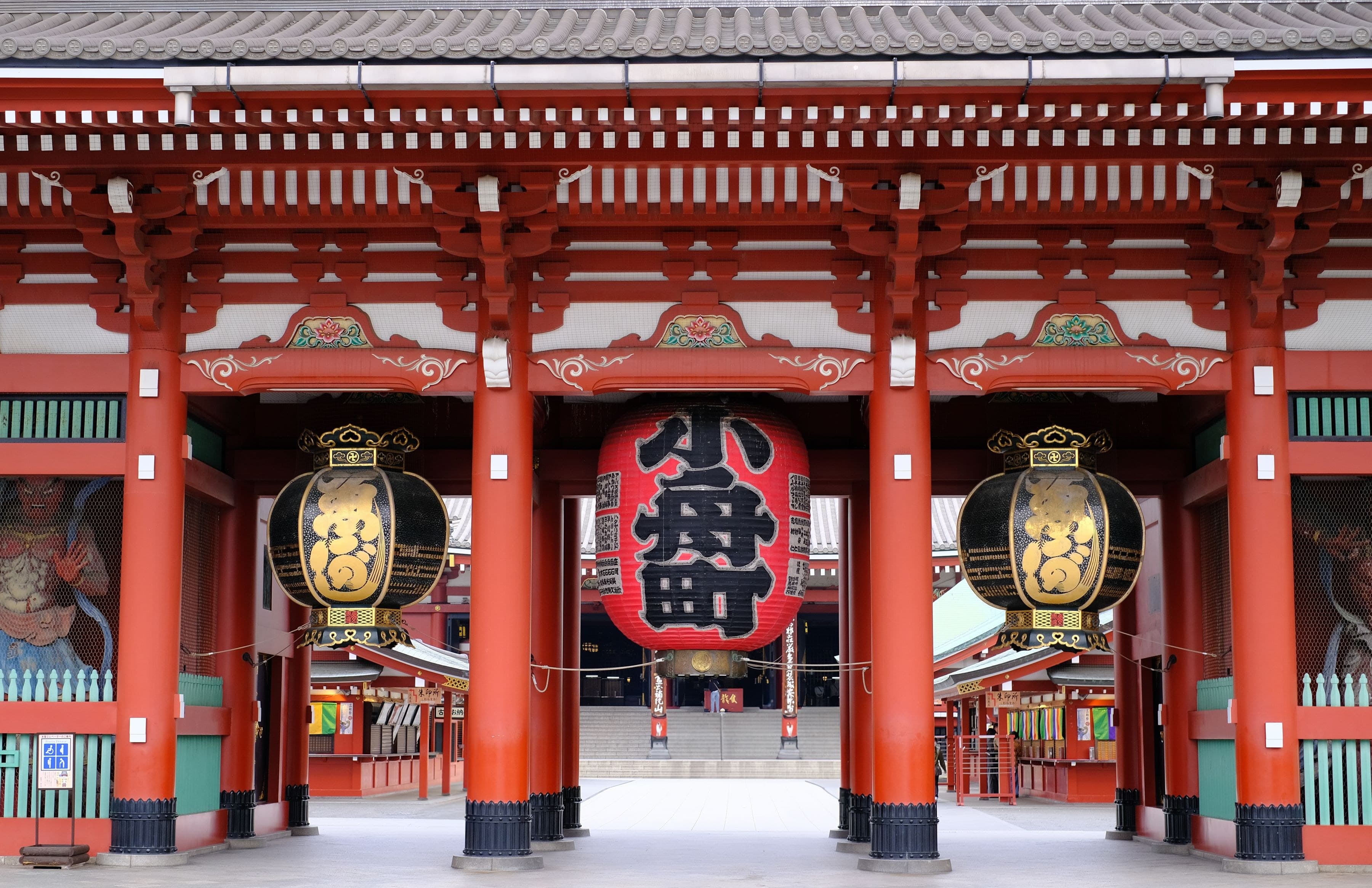
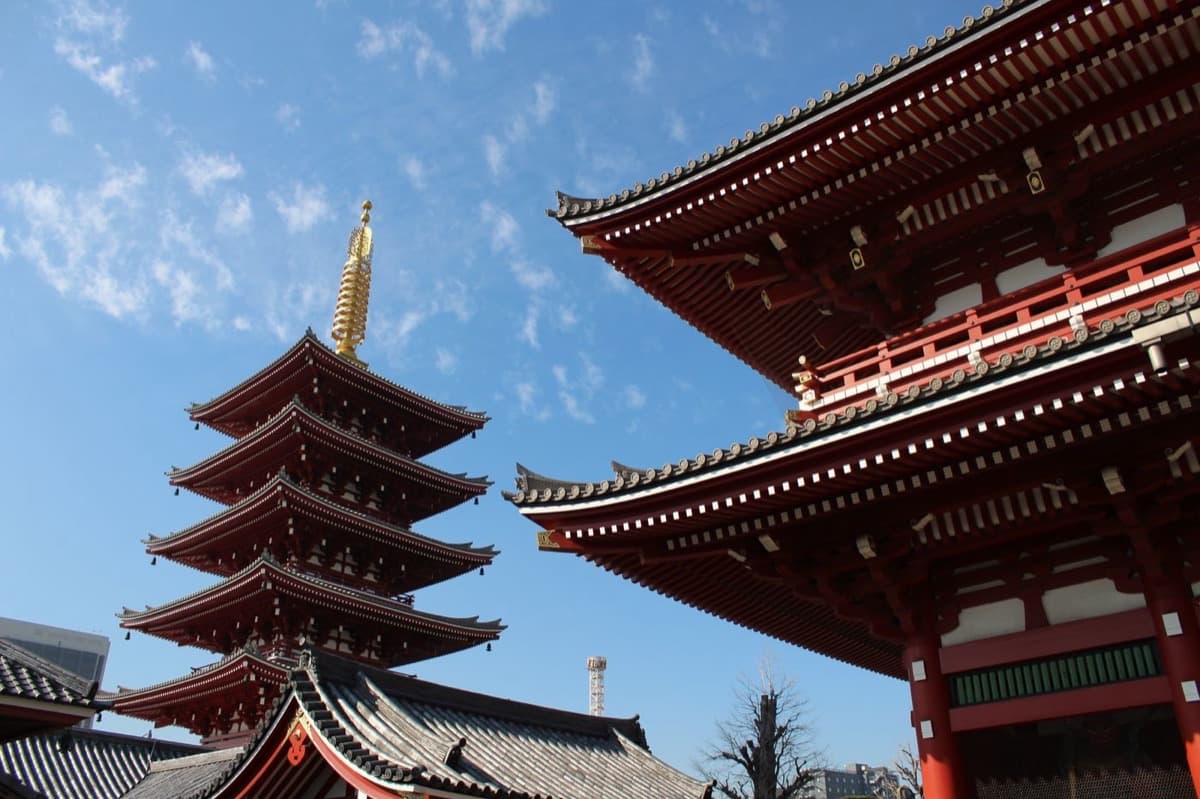
Hozomon and the Five-Storey Pagoda: Sandals for Demons
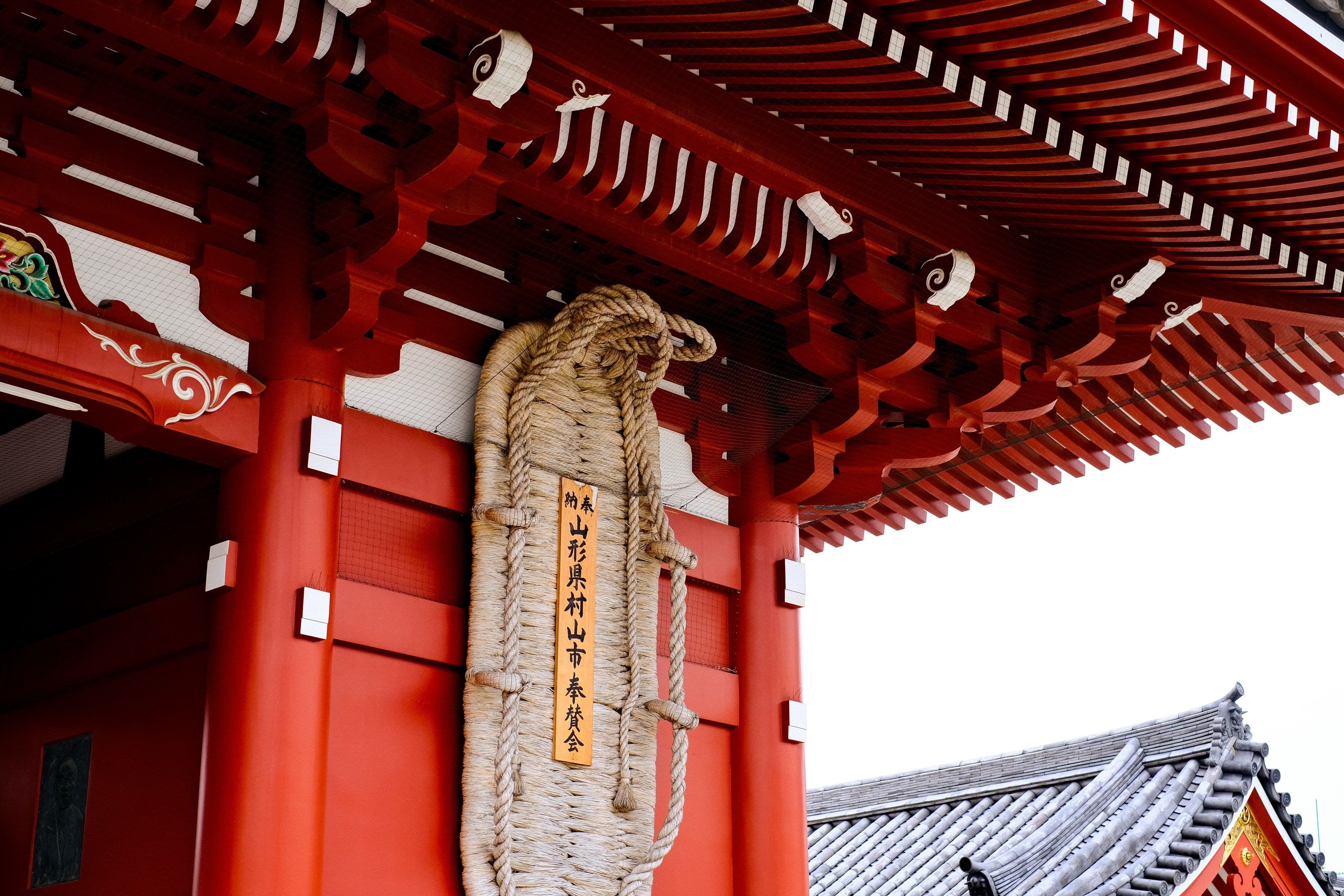
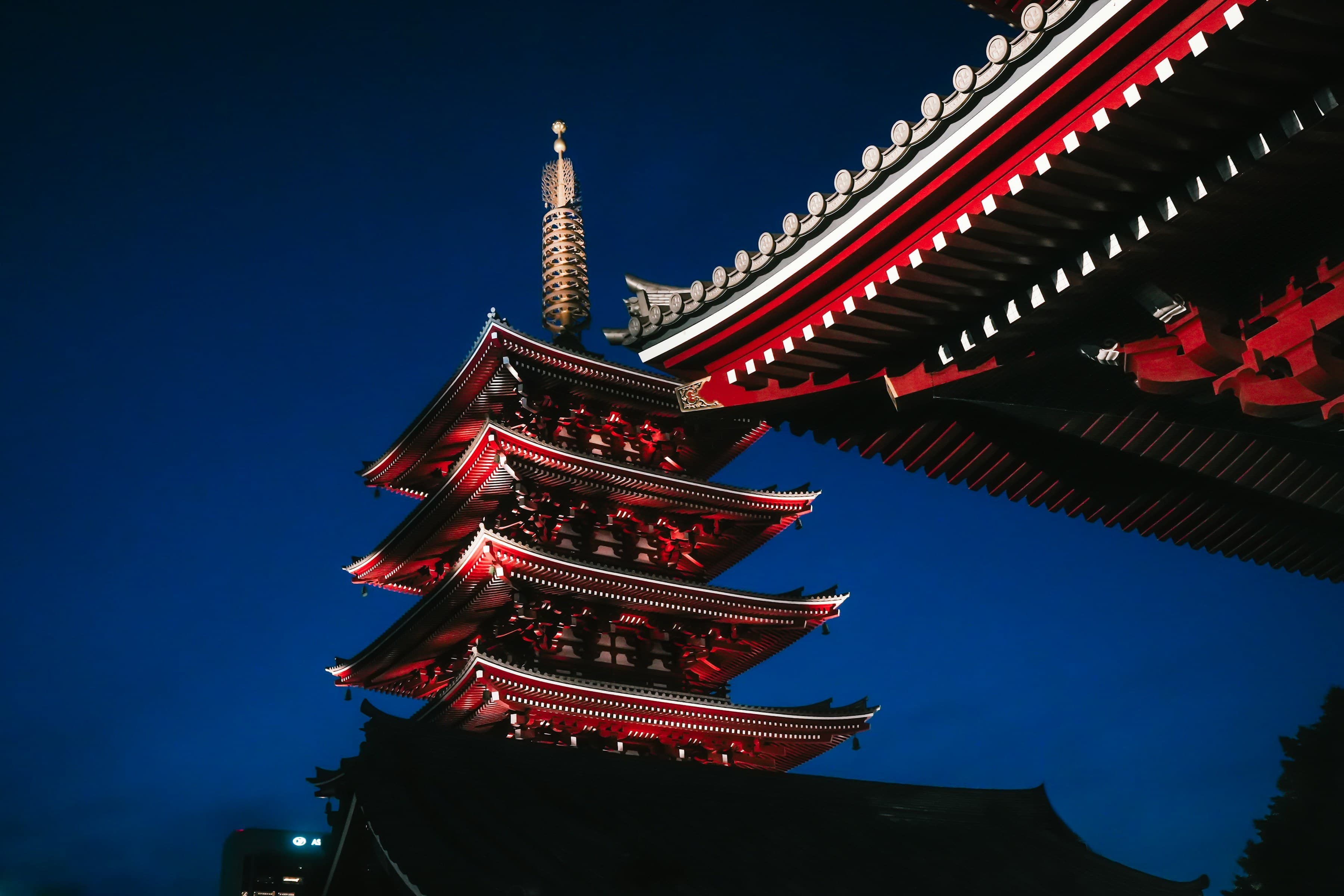
Hozomon is the temple's inner gate, with giant straw sandals from Yamagata on its back. The five-storey pagoda beside it dates from 1973 and holds relics from Sri Lanka.
- 5
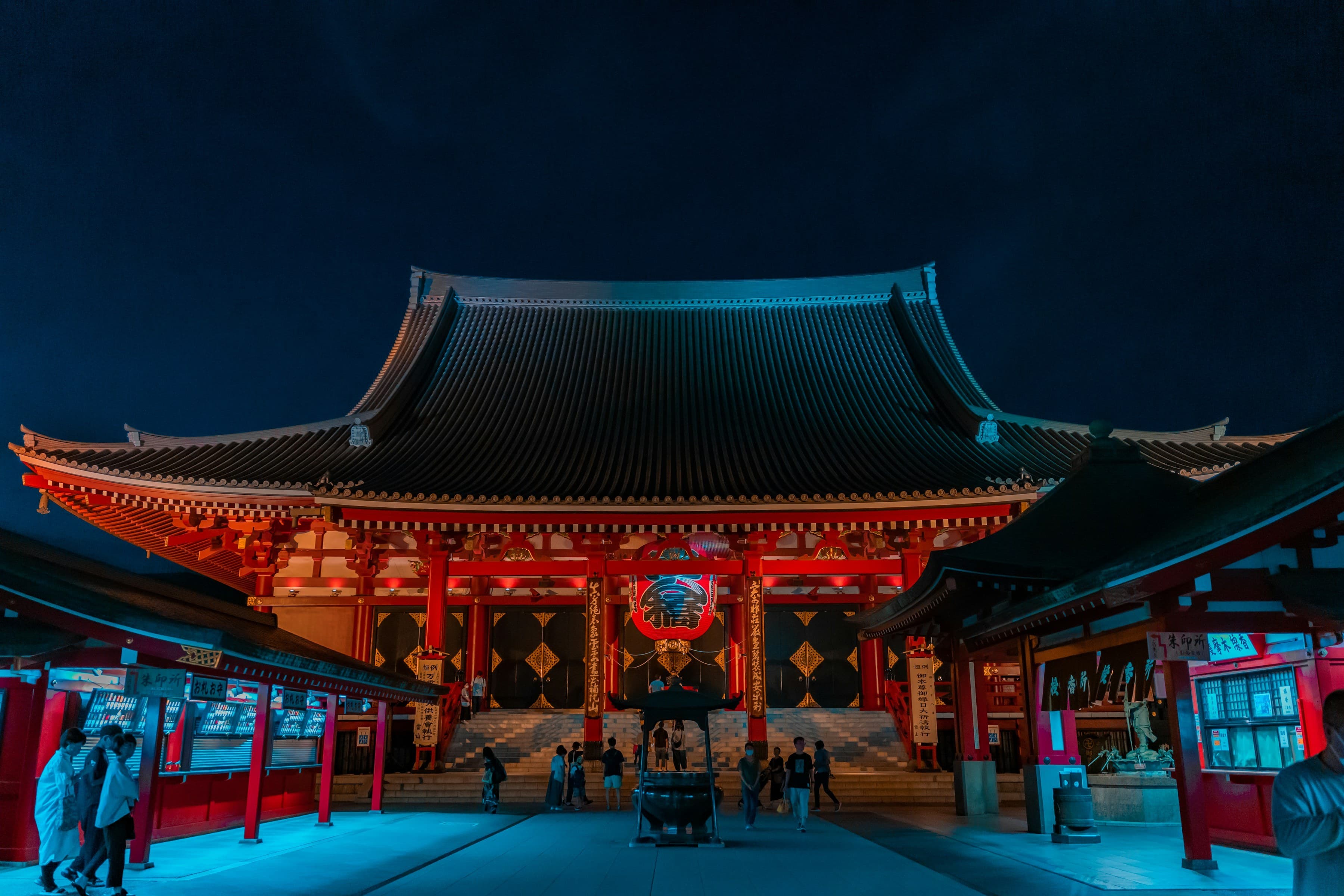
Senso-ji Main Hall: The Kannon Nobody Sees
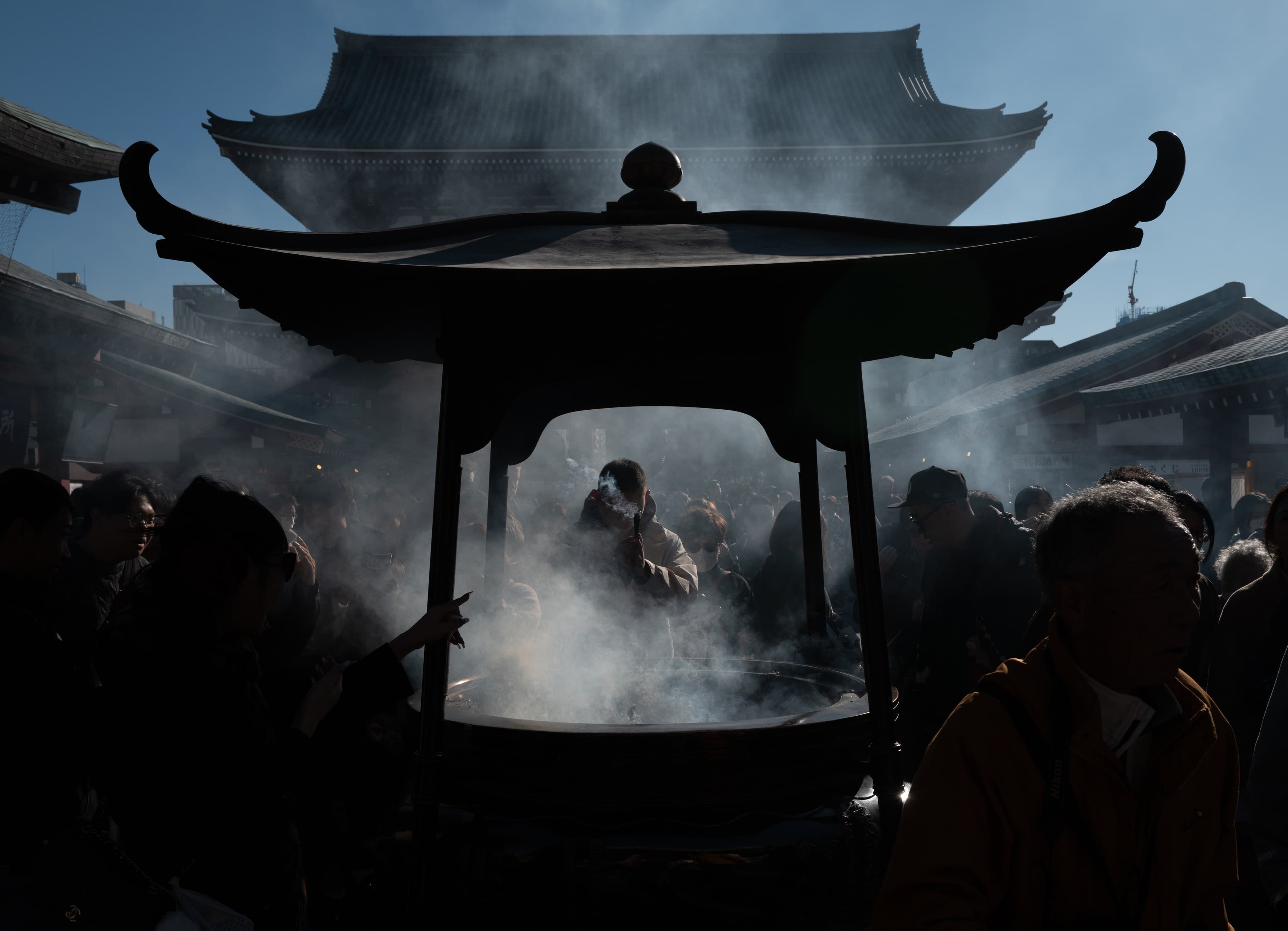
The Senso-ji Main Hall houses a Kannon statue that is never shown, even to the head priest. The hall burned in 1945; the statue survived, buried in a bronze basin.
- 6
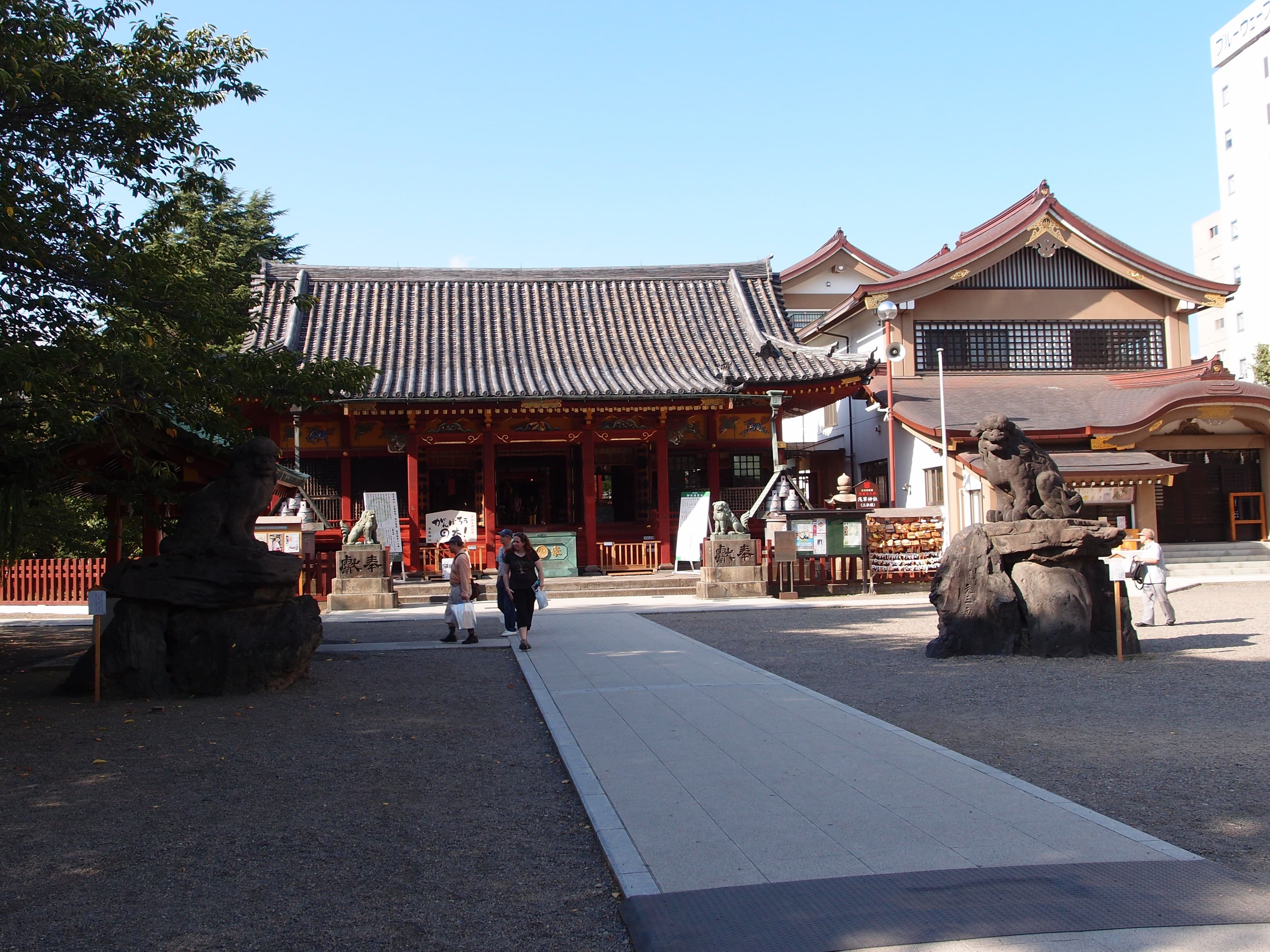
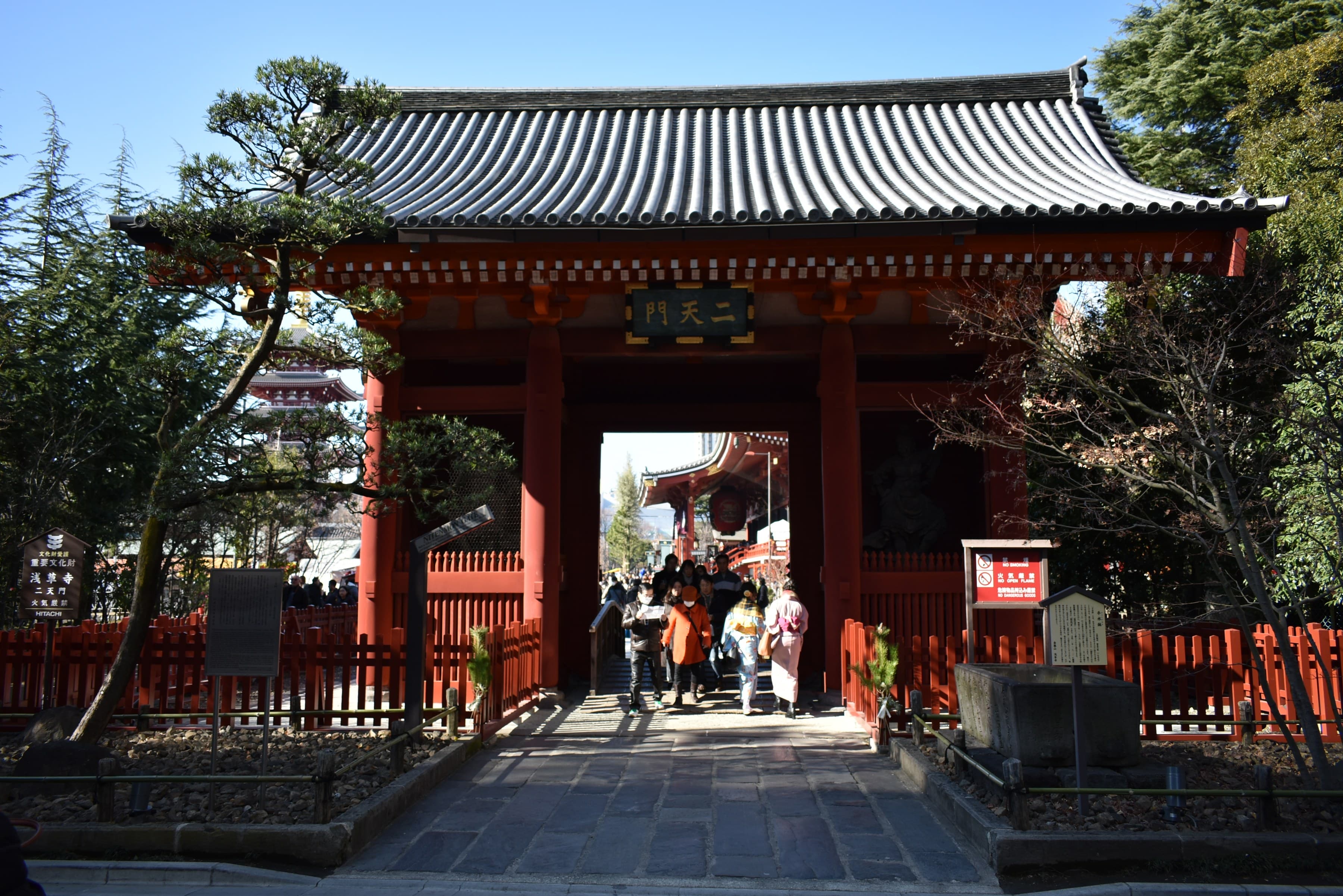
Asakusa Shrine and Nitenmon: The Survivors of 1649
Asakusa Shrine honours the fishermen and headman of the founding story. Its 1649 hall and the Nitenmon gate beside it both survived the 1945 air raid.
- 7
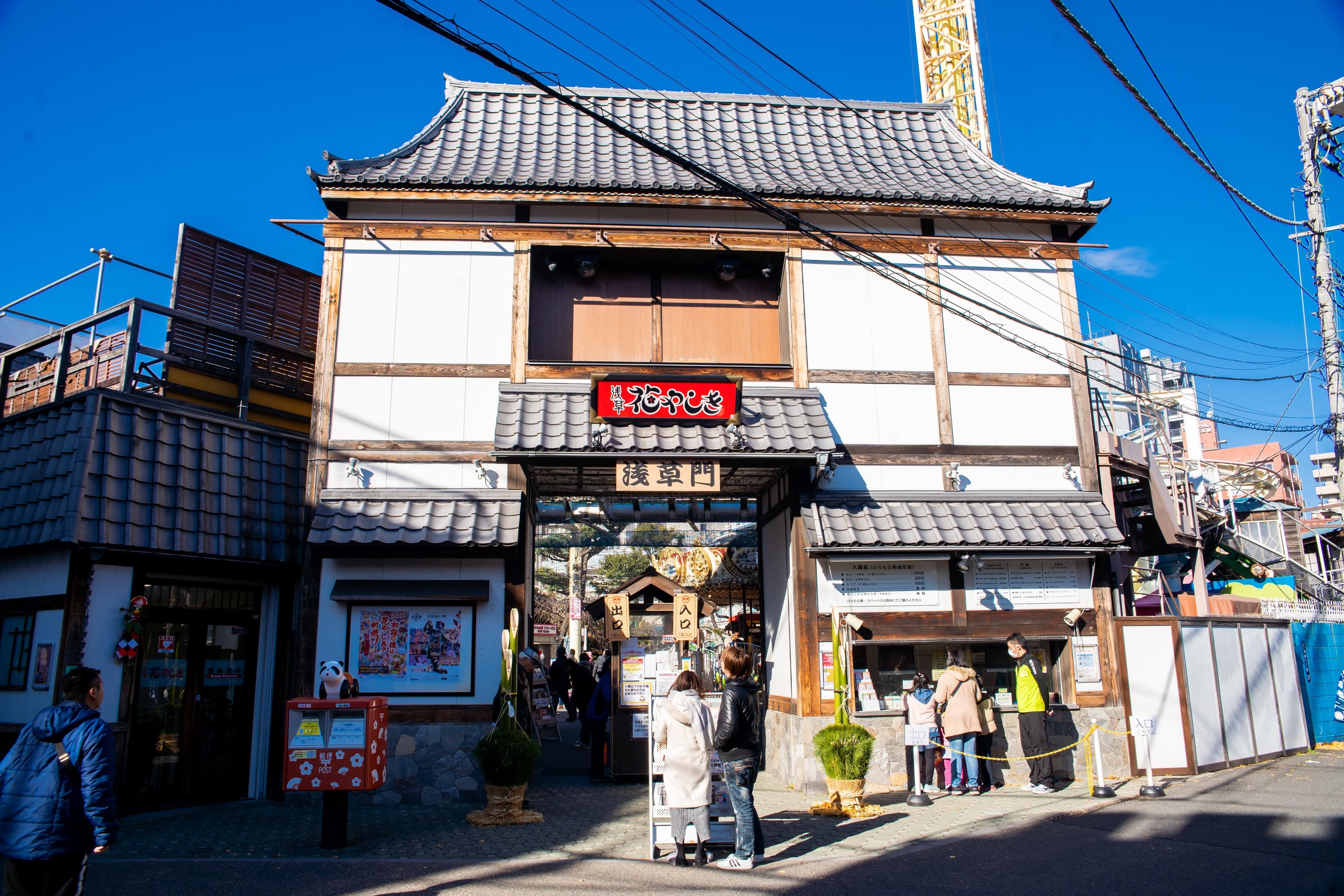
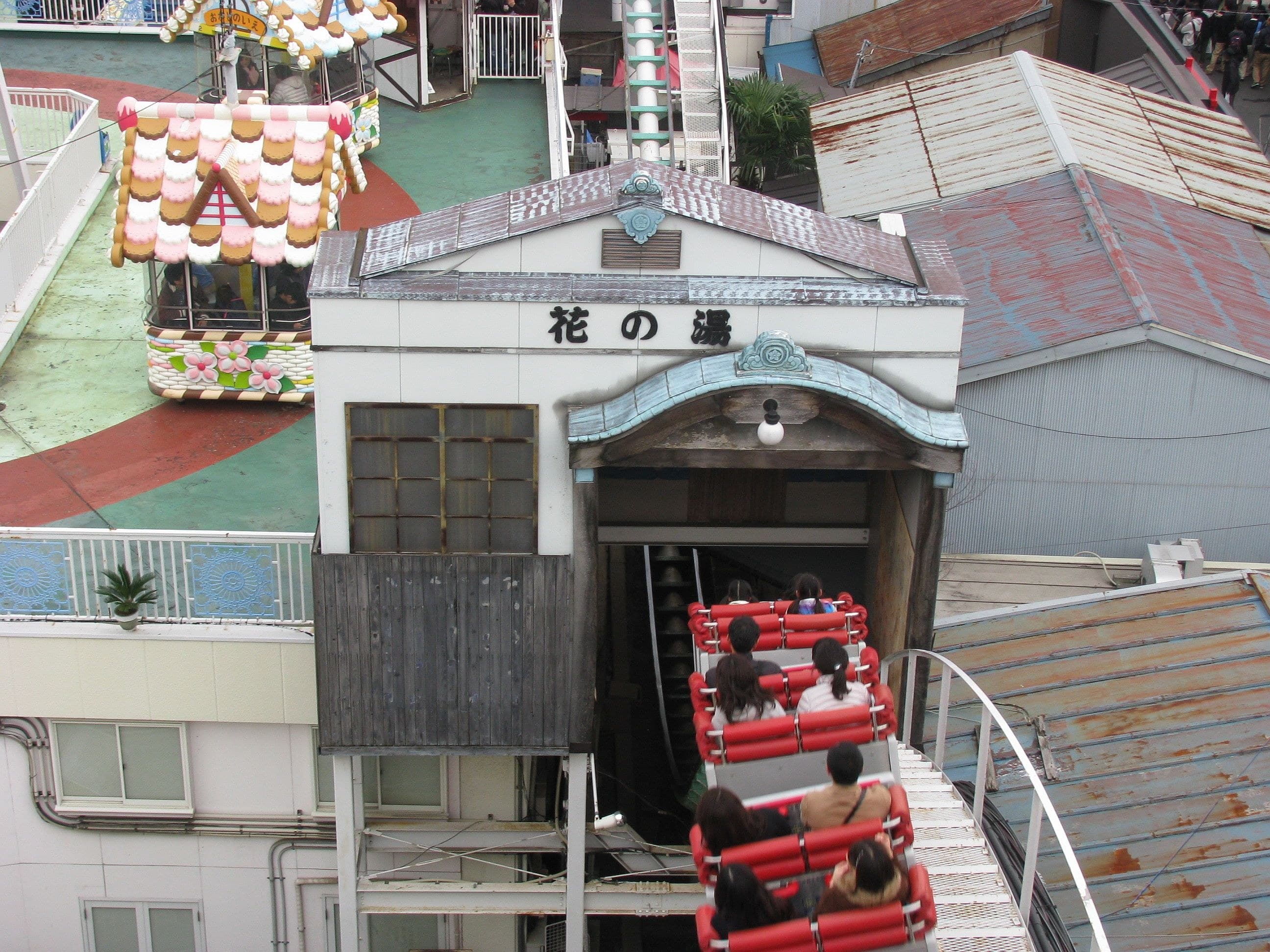
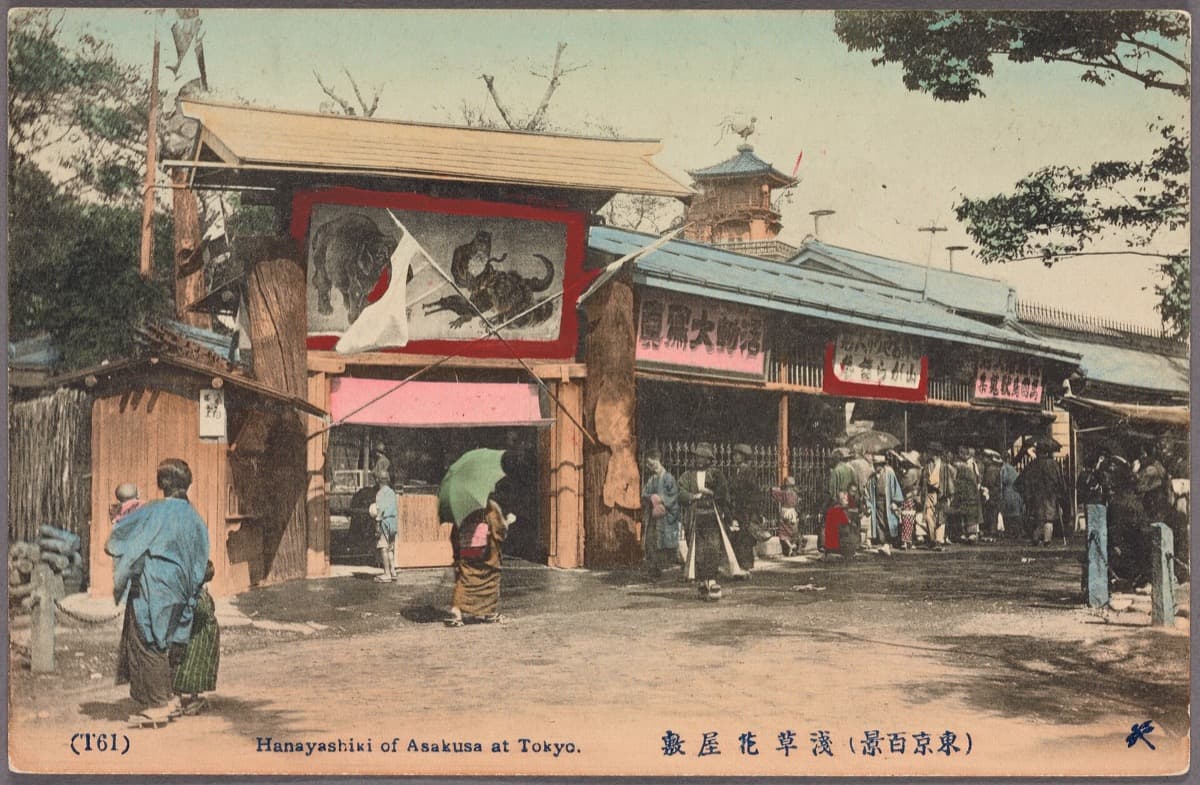
Hanayashiki and Okuyama: Edo's Pleasure Ground Behind the Temple
Hanayashiki began in 1853 as a flower garden on land from the temple. It stands beside Okuyama, the back of the temple grounds and Edo's great pleasure ground of teahouses, acrobats and sideshows.
- 8
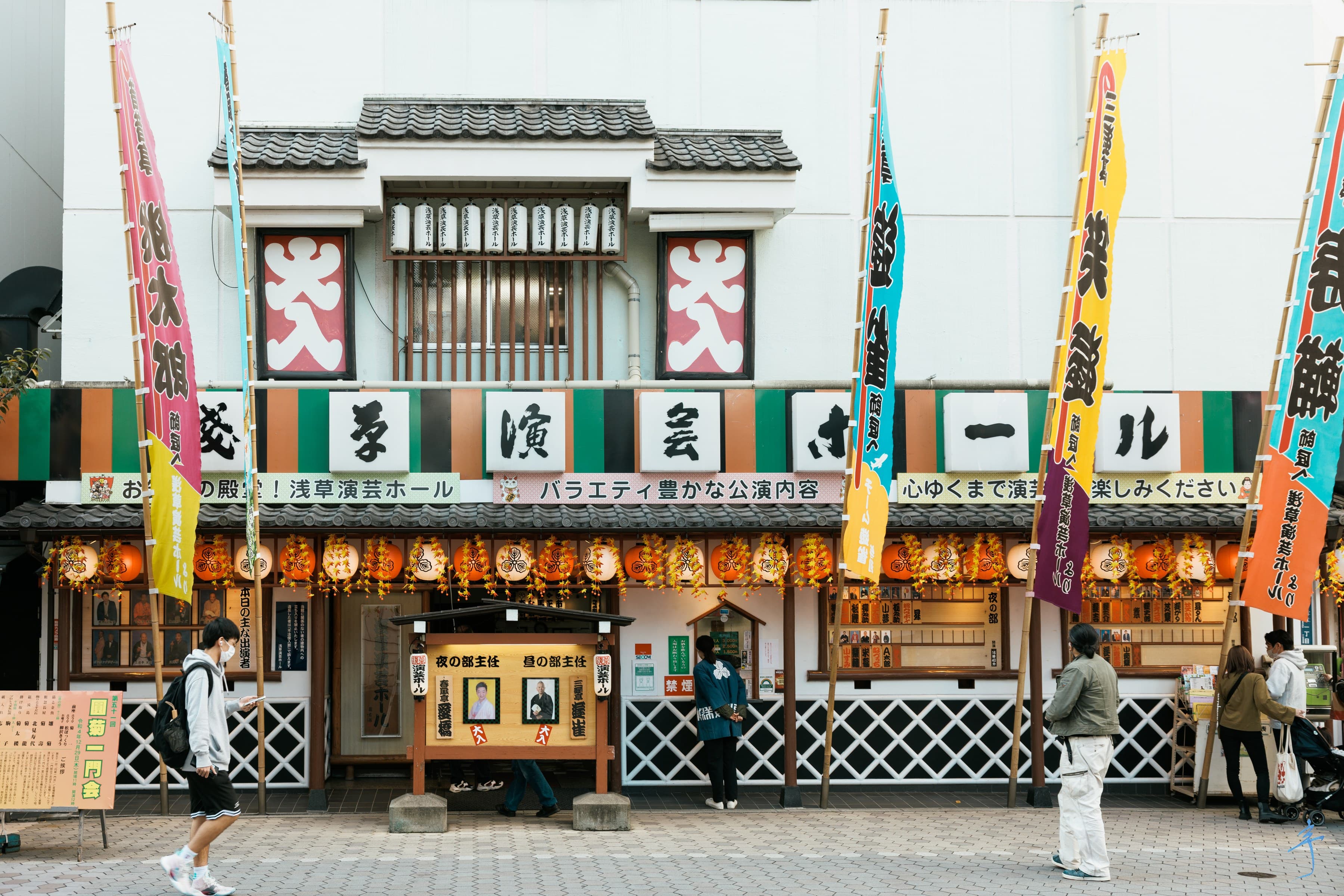
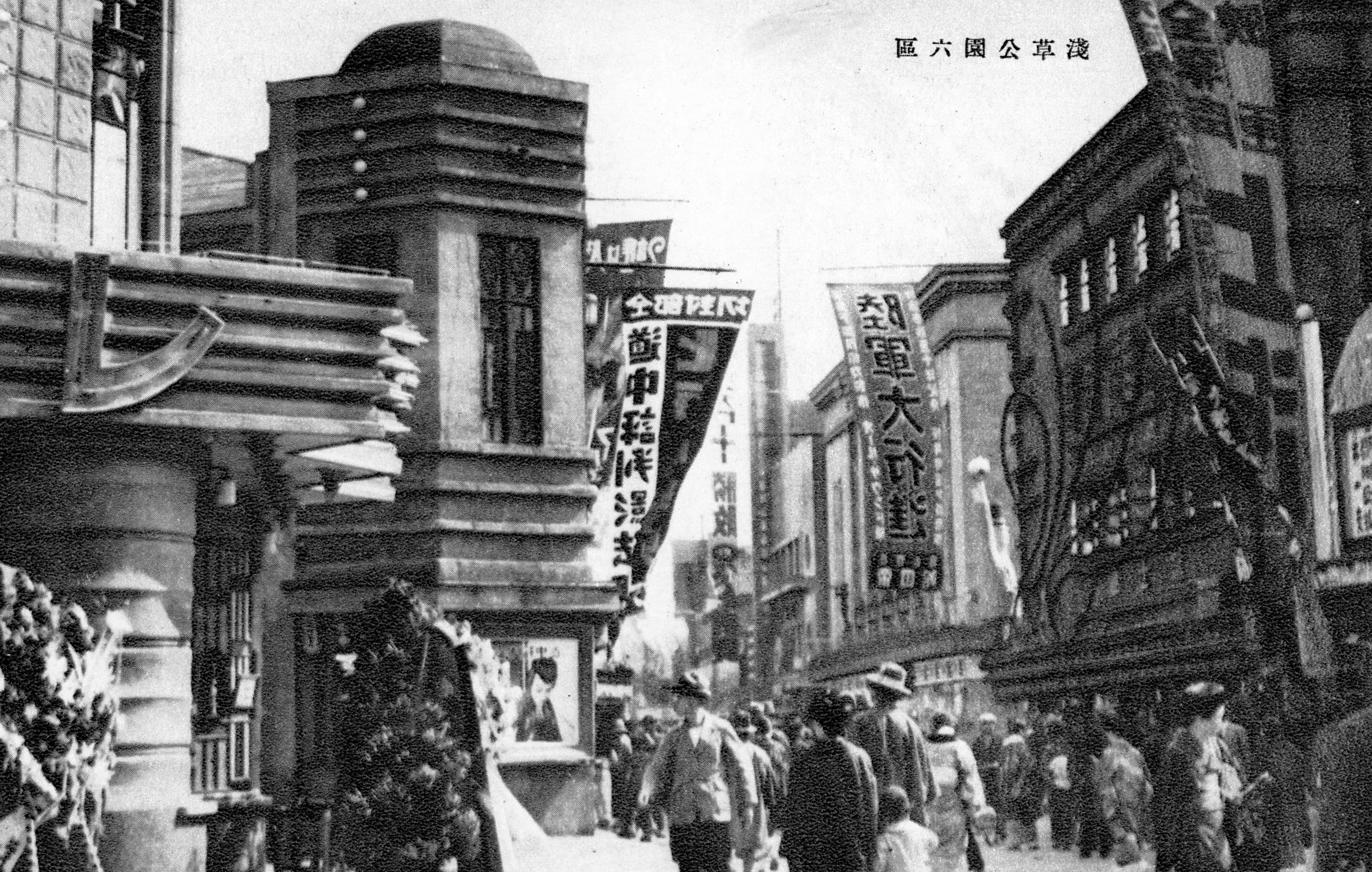
Rokku: The Sixth District, Where the Show Moved
Rokku is the sixth district of Meiji's Asakusa Park, laid out for the shows. It gave Japan its first permanent cinema, stood in the shadow of the Twelve Storeys tower, and its rakugo hall plays every day.
- 9
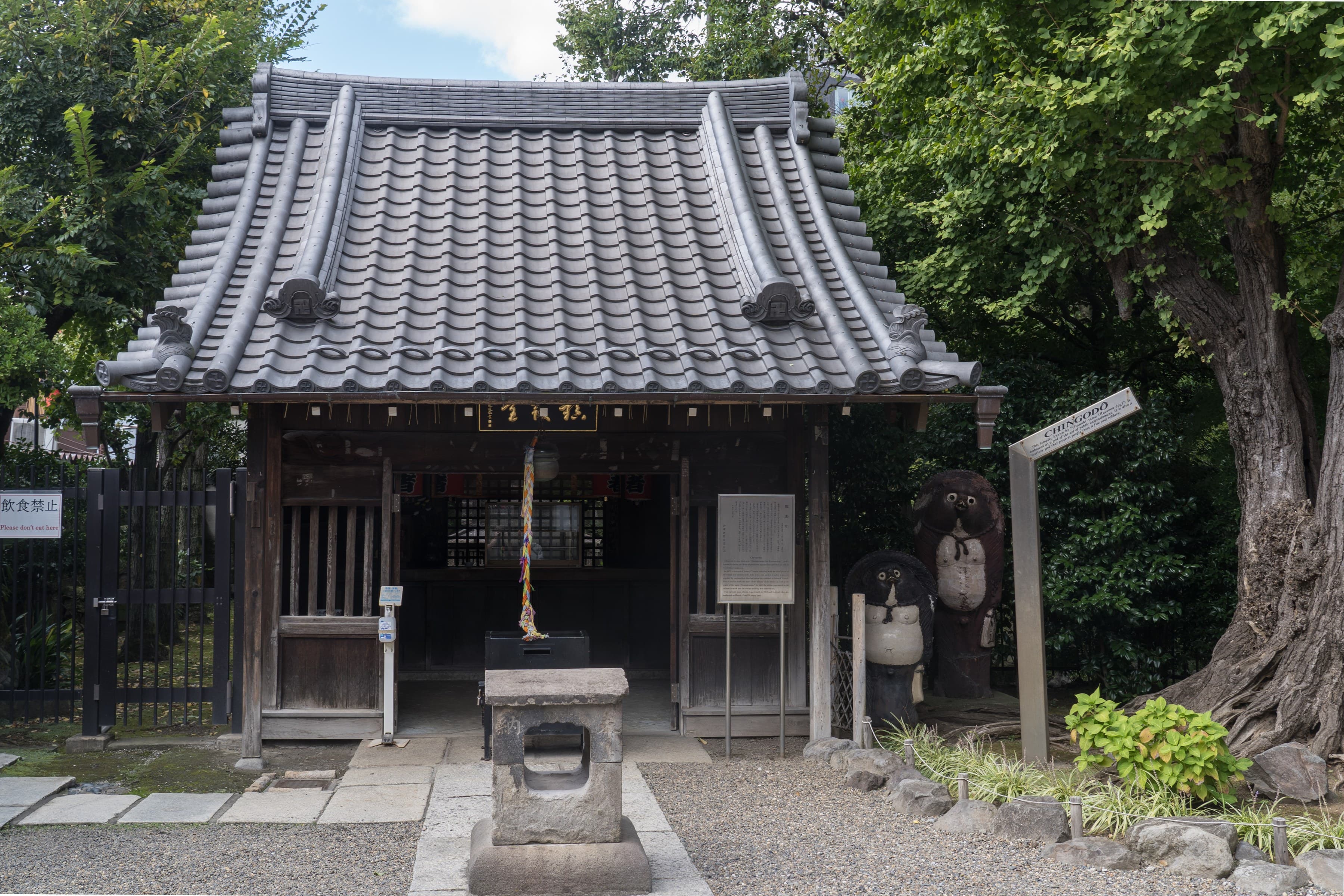
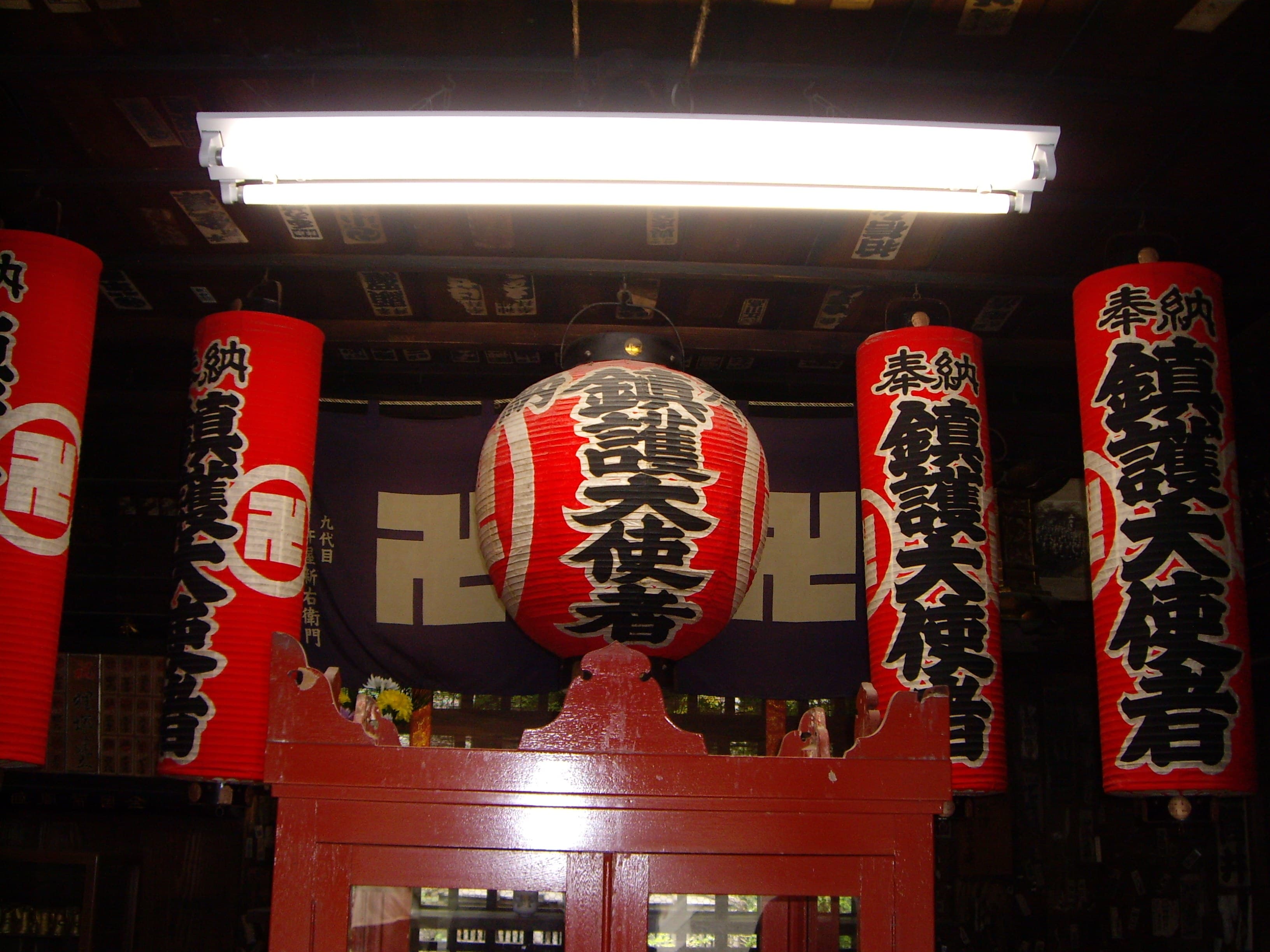
Chingodo: The Tanuki Who Guard Against Fire
Chingodo is Senso-ji's small shrine to the tanuki, who by legend guard the abbot's residence against fire. Performers pray here too, and it came through both 1923 and 1945.
Details
Best Time to Visit
Early morning is the best window, from about seven to nine, when Nakamise is still mostly shuttered and the temple grounds are quiet; you will also see the painted shutters before the shops open. Late afternoon into dusk is the other good time: the Thunder Gate, Hozomon, the pagoda and the main hall are lit every evening from sunset until about eleven. The main hall itself opens at six (six thirty from October to March) and closes at five. Hanayashiki and Engei Hall open late in the morning, so a late start suits the second half of the walk. The Sanja Matsuri, over the third weekend of May, is spectacular and very crowded.
Pro Tips
- •The main hall of Senso-ji is open from 6:00 to 17:00 (from 6:30 between October and March), and the Main Hall, the two big gates and the pagoda are lit every evening from sunset until about 23:00. Entry is free. Checked 18 September 2026 on senso-ji.jp.
- •For the best view of Tokyo Skytree beside the golden Asahi flame, stand on the north (upstream) pavement at the Asakusa end of Azumabashi; from the middle of the bridge the Asahi tower hides the foot of the Skytree.
- •Hozomon's big central lantern was taken down on 21 May 2026 for its regular renewal and was due to be rehung on 25 October 2026, so some photographs show a lantern you may not see. Checked 18 September 2026 (Tokyo Shimbun).
- •The Asakusa Culture Tourist Information Center opposite the Thunder Gate, designed by Kengo Kuma, has an eighth-floor terrace open to visitors from 9:00 to 22:00, looking over Nakamise and toward Skytree. Checked 18 September 2026 on the Taito City site.
- •Asakusa Engei Hall stages rakugo every day of the year, with a day show from 11:40 and a night show from 16:40; tickets are bought at the door, adults 3,500 yen, with cheaper late entry after 18:00. Checked 18 September 2026 on asakusaengei.com.
- •Hanayashiki is usually open from 10:00 to 18:00; entry is 1,600 yen for adults, with rides extra. Its only entrance is the Asakusa Gate, at the east end of the park's frontage on Hanayashiki-dori, the end nearer Senso-ji. Checked 18 September 2026 on hanayashiki.net.
- •A short detour: the Toki-no-Kane bell of 1692, which survived the 1945 raid, hangs on the little Bentenyama mound just east of Nakamise, off Umamichi-dori.
- •Kamiya Bar, on the corner as you leave Azumabashi, is open 11:00 to 20:00; it closes on Tuesdays and on two Mondays a month, so check the calendar on its site. Its house drink, Denki Bran, is a strong brandy-based liqueur. Checked 18 September 2026 on kamiya-bar.com.
- •Most Nakamise stalls prefer you to eat what you buy at the stall rather than while walking, and public bins are scarce, so carry a small bag for wrappers.
- •The Denboin garden behind Chingodo is closed to the public except for occasional special viewings; one was announced for 30 October to 3 November 2026. Checked 18 September 2026.
Safety & Precautions
- •Nakamise and the temple grounds are very crowded from mid-morning to late afternoon, especially at weekends. Keep bags closed and phones in hand, and stand aside from the stalls when you stop to listen.
- •Leaving Azumabashi you cross Edo-dori, a busy main road. Use the signalled crossing and wait for the green.
- •Senso-ji and Asakusa Shrine are working places of worship. Keep your voice down in the halls, do not block people praying, and check signs before taking photographs inside.
- •The stretch of Denboin-dori around Chingodo changed in 2026, when a row of shops on its north side was demolished and the road was due to be widened. If works or hoardings block the Chingodo gate, carry on east to Nakamise. Checked 18 September 2026.
- •Tokyo summers are hot and humid from June to September. Carry water and use the shade of the halls; in the rainy season the stone paving of the temple courtyard gets slippery.
Travel advisory: Exercise Normal Precautions (Level 1).
Gallery
Related Reading
Go deeper on what you'll see, hear, and walk through.
Overview
Best Self-Guided Walking Tours in Tokyo (2026)
4 min
Overview
One Day in Tokyo: A Walkable Itinerary Across Three Faces (2026)
5 min
Overview
Tokyo Travel Guide: How Many Days, Getting Around, When to Go (2026)
4 min
Thematic
What to Eat in Tokyo: A Food Guide (2026)
4 min
Deep dive
Rokku: Where Japan Built Its First Skyscraper and First Cinema
8 min
Deep dive
Sensoji: The Tokyo Temple That Began With a Statue Pulled From a River in 628
5 min

Read
Kyoto vs Tokyo: Which Should You Visit?
4 min
Read the walk
The full story of Asakusa and Senso-ji: Where Tokyo Came to Pray and Play, in words. Prefer to listen? Play it narrated, from home or on location.
Introduction
In the year six twenty eight, the temple says, two brothers fishing the river at Asakusa pulled up something in their net that was not a fish. Out of that catch grew Senso-ji, the oldest temple in Tokyo, Japan, by its own account.
And around the temple grew everything a crowd wants. Market stalls, teahouses, acrobats and sideshows, then theatres, a brick tower with Japan's first electric elevator, and Japan's first permanent cinema. For centuries Asakusa was where this city came to pray and to play, often on the same afternoon.
Fire, earthquake and war flattened it again and again, and after the last of them, worshippers, businessmen and the pleasure district itself paid to put the temple back. So almost everything that looks ancient here is younger than you would think, and the few real survivors are hiding in plain sight.
Nine stops, about one and a half kilometres, around seventy five minutes, from the Sumida River through the Thunder Gate and the temple to the old theatre street, finishing a short stroll from where you start. No group, no schedule, and every stop can be seen for free.
When you arrive at the Asakusa end of Azumabashi bridge, begin with stop one.
1. Azumabashi and the Sumida River: Where the Story Was Netted
Welcome to Azumabashi, the red bridge at the edge of Asakusa. Stay at this end of the bridge, on the upstream pavement, the one on your left as you face across the water, and look out across the river.
This is the Sumida, and Asakusa's story begins in it. According to the temple's own tradition, early one morning in the year six twenty eight, two brothers were fishing this river with a net. When they pulled it in, it held a statue. They did not know what it was, so they threw it back, moved, and cast again. Each time the statue came up, and not a single fish. So they took it home. Tradition says it came ashore a little way downstream, where a small hall called Komagatado still marks the place. In sixteen ninety three a stone went up at that spot recording a ban on fishing along this whole stretch of river, because this was the water where the statue had been found.
Now look straight across the bridge. The two buildings at its far end were put up in nineteen eighty nine by the brewer Asahi, for its hundredth anniversary. The tall one, amber glass with a white crown, is meant to be a mug of beer with a head of foam. The black one beside it, by the French designer Philippe Starck, carries a golden flame forty four metres long, three hundred and sixty tonnes of steel, meant as the company's burning heart.
From this pavement, just to the left of the tower, rises Tokyo Skytree, six hundred and thirty four metres tall.
Much of what surrounds you dates from nineteen thirty one: this bridge, the railway bridge upstream on your left, and the riverside park, all built after the earthquake and fire of nineteen twenty three burned almost all of old Asakusa except the temple grounds. Asakusa burns, and rebuilds, and keeps going.
Walk back off the bridge and cross the big road at the lights. Kamiya Bar is on the corner on your right, trading since eighteen eighty and calling itself Japan's first bar. Carry straight on along this side of the street for about two hundred metres. The Thunder Gate is on your right.
2. Kaminarimon: The Thunder Gate That Came Back
Welcome to Kaminarimon, the Thunder Gate. Turn to face it, on your right. This is the front door of Senso-ji.
Its full name is the Gate of the Wind and Thunder Gods, and both of them are here, behind the wire mesh. On the right stands Fujin, the god of wind. On the left, inside his ring of drums, is Raijin, the god of thunder. Look at their faces. In a great fire in January eighteen sixty six, in the last years of the shoguns, the gate burned down, and only the gods' heads were saved. New bodies were carved for them in eighteen seventy four.
The gate itself did not come back. For ninety five years, the temple counts, there was no permanent gate here, only temporary ones for celebrations. It came back because of one man's recovery. In the nineteen fifties Konosuke Matsushita, founder of the company now called Panasonic, was suffering from pain that neither Western nor Eastern medicine could ease. The abbot of Senso-ji prayed for him, and he recovered. He thanked the temple with a television. When the abbot came to ask him about the gate in nineteen fifty eight, Matsushita thought for about ten seconds, said yes, and asked the temple not to make much of his name. The abbot was so pleased that he told everyone. The new gate opened in May nineteen sixty.
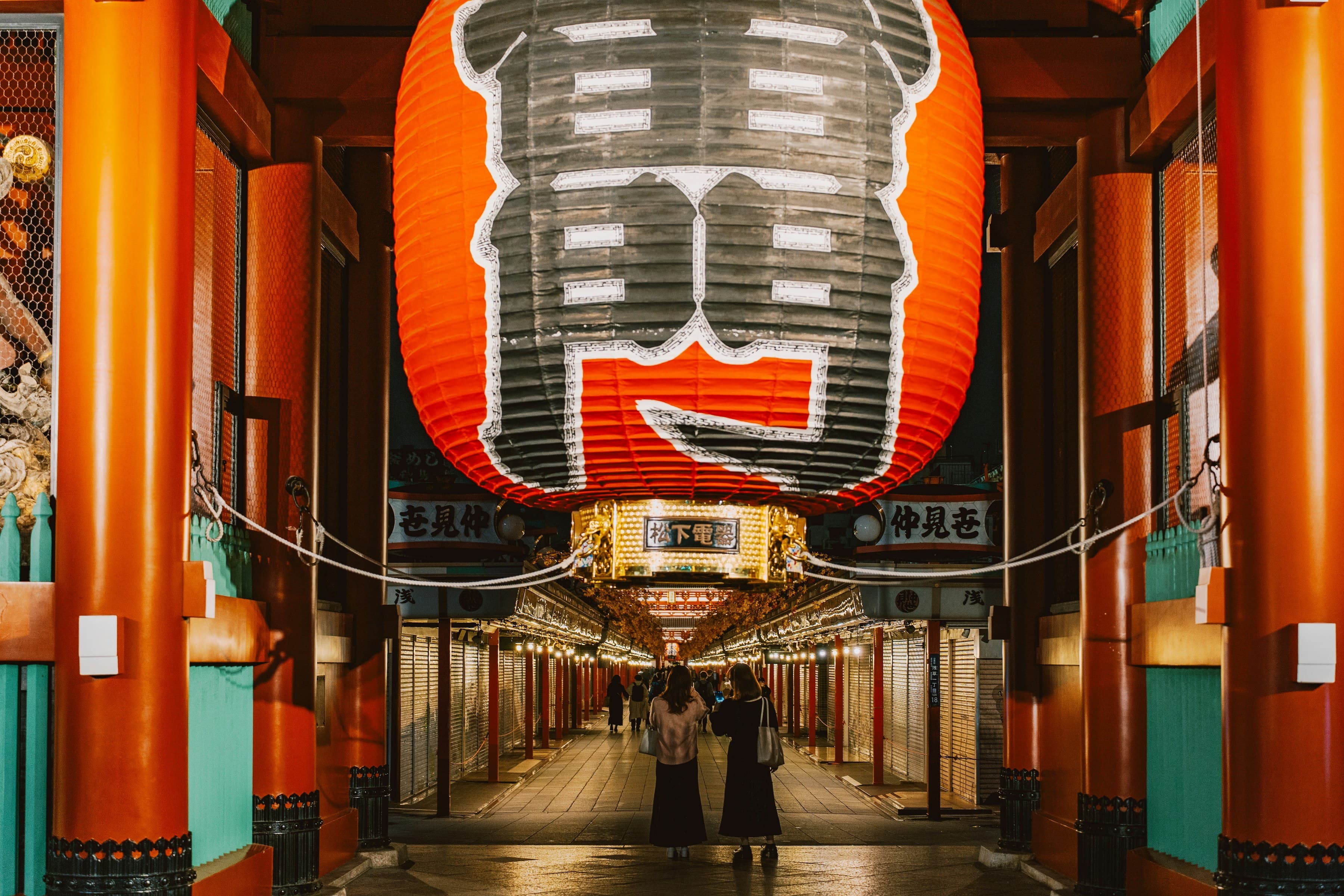
The giant lantern is a gift from his company. It is about three point nine metres tall and weighs seven hundred kilograms, and Panasonic has had it renewed about every ten years, since nineteen seventy one by the same lantern maker in Kyoto.
So the first thing you meet at Tokyo's oldest temple is much newer than it looks. Only those two heads are older than that fire.
Walk through the gate, and as you pass under the lantern, look up at the carved dragon on its underside. Then carry straight on up the shopping street ahead.
3. Nakamise-dori: Rent Paid in Sweeping
This is Nakamise, the shopping street that leads up to the temple: about two hundred and fifty metres between the two gates, lined on both sides with little shops selling rice crackers, sweets, fans and souvenirs.
It looks like a tourist bazaar laid on for visitors, but it was part of the deal from the start. In the late sixteen hundreds, as the crowds of worshippers grew, the temple let the people who lived nearby set up little stalls along this approach. The rent was paid in labour: in return, they swept the temple grounds. Prayer and trade have shared this path ever since.
The shops you are walking past have their own story. In eighteen eighty five, after the new government took over the temple's land, the Tokyo authorities ordered every shop off the street at once. The shopkeepers, their association says, left in tears, and rows of brick shops went up instead. The great earthquake of nineteen twenty three destroyed those. In nineteen twenty five they were rebuilt in reinforced concrete and painted vermilion. Then, on the night of the ninth to the tenth of March nineteen forty five, the great air raid on Tokyo burned Asakusa. These shops burned inside, but their concrete shells stood, and after the war they were patched up and reopened.
Which means something odd. The gate behind you, the gate ahead, the temple hall and the pagoda were all built after nineteen fifty. On this approach, the oldest buildings are the shops.
Come back after closing time if you can. When the shutters come down, each one turns out to be painted with a scene from Asakusa's history and festivals.
The street that crosses Nakamise near its middle is Denboin-dori, and the walk comes back along it at the very end. For now, carry straight on to the end of the stalls, where the second, taller gate stands.
4. Hozomon and the Five-Storey Pagoda: Sandals for Demons
Walk on to the end of the stalls and stop in front of the gate. This is Hozomon, the Treasure House Gate. Its upper floor stores the temple's treasures, among them a set of Buddhist scriptures printed in China some seven hundred years ago. Look into its front bays at the two…
Full narration for this stop unlocks with the tour.
5. Senso-ji Main Hall: The Kannon Nobody Sees
Walk on to the big incense burner and stop beside it, facing the main hall. People draw the smoke over themselves here, for good health. Now back to the statue from the river. The temple says it was a Kannon, the bodhisattva of compassion. The village headman recognised it and…
Full narration for this stop unlocks with the tour.
6. Asakusa Shrine and Nitenmon: The Survivors of 1649
Walk on along the front of the hall toward the red gate, and stop where a stone torii gateway on your left leads up to a smaller shrine. This is Asakusa Shrine, and the red gate ahead is Nitenmon. The shrine building up that path is the oldest building you have seen so far. It…
Full narration for this stop unlocks with the tour.
7. Hanayashiki and Okuyama: Edo's Pleasure Ground Behind the Temple
Walk on to the entrance of the amusement park, on your right, and stop there. This is Hanayashiki. You have just walked through what Edo called Okuyama, the back of the temple grounds. In the Edo period it was the city's great popular pleasure ground: teahouses, sideshows, top…
Full narration for this stop unlocks with the tour.
8. Rokku: The Sixth District, Where the Show Moved
Stop outside the theatre on your right, the one hung with banners and boards of performers' names. This is Asakusa Engei Hall, and this street is Rokku, the sixth district. It was built for the show, laid out in the eighteen eighties for the booths moved from behind the temple,…
Full narration for this stop unlocks with the tour.
9. Chingodo: The Tanuki Who Guard Against Fire
Stop at the small gate on your left. Through it is Chingodo, the temple's shrine to the tanuki, the raccoon dogs of Japanese folklore, tricksters and shape-shifters. The temple tells it like this. Early in the Meiji years, tanuki driven out of Ueno by the battle there in…
Full narration for this stop unlocks with the tour.
- Asakusa Shrine worship hall — Guilhem Vellut, CC BY 2.0 · source
- Nitenmon, Senso-ji — 江戸村のとくぞう, CC BY-SA 4.0 · source
- Asakusa Hanayashiki — Dick Thomas Johnson, CC BY 2.0 · source
- Hanayashiki roller coaster — Aimaimyi, CC BY-SA 3.0 · source
- Asakusa Engei Hall — 迷惘的人生, CC BY-SA 2.0 · source
- Chingodo, Asakusa — Alexkom000, CC BY 4.0 · source
- Chingodo altar lanterns — すけ, CC BY-SA 3.0 · source
Images may be cropped or resized. Other photos via Unsplash and Pexels.