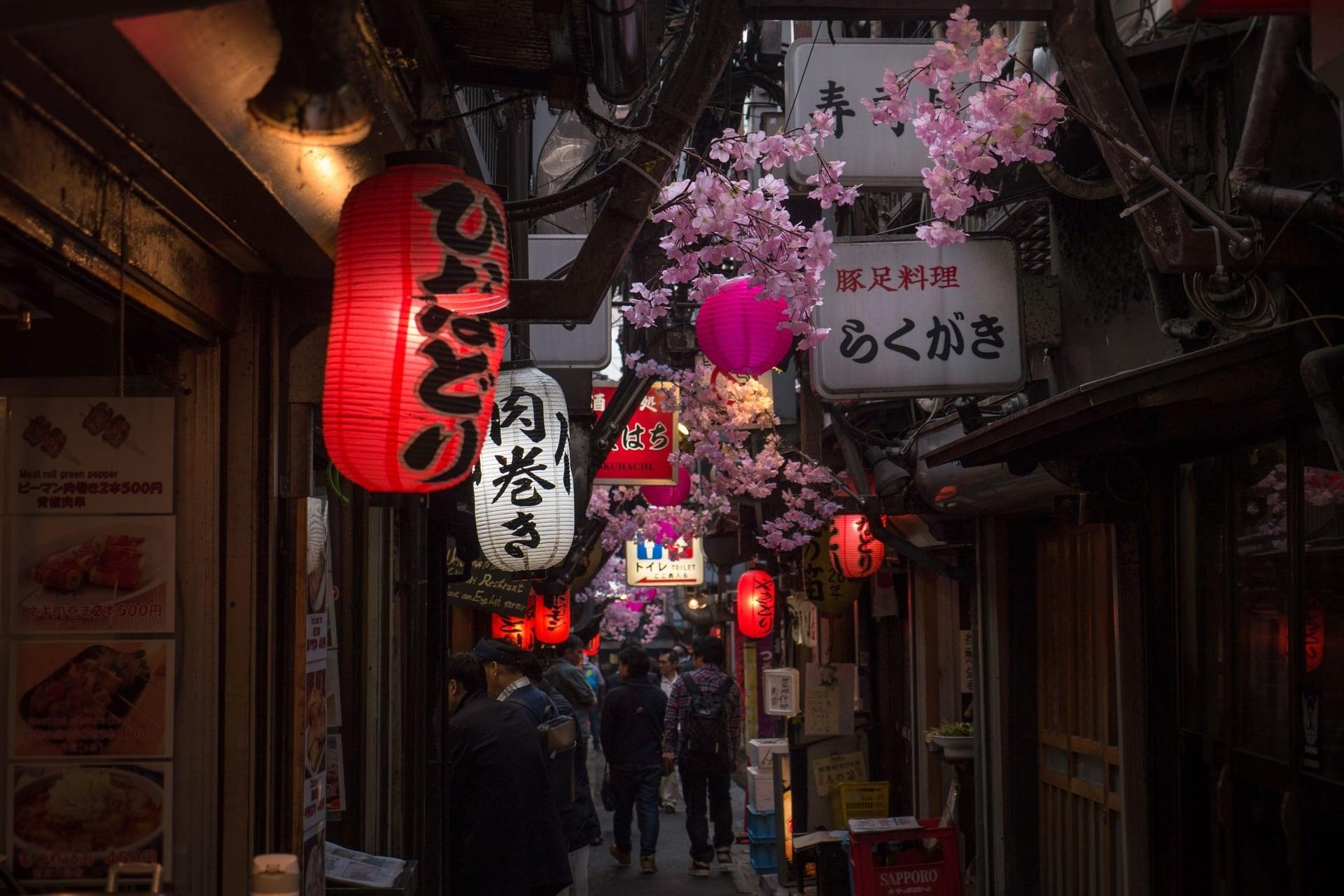
From the West Exit through Omoide Yokocho's grills, Kabukicho's gate and square, a water goddess's shrine, Golden Gai's tiny bars, Hanazono Shrine, a wooden rakugo hall and Isetan, ending at Shinjuku Gyoen's gate.
Start · West Exit: Where the Water Was
DirectionsStops
- 1
West Exit: Where the Water Was
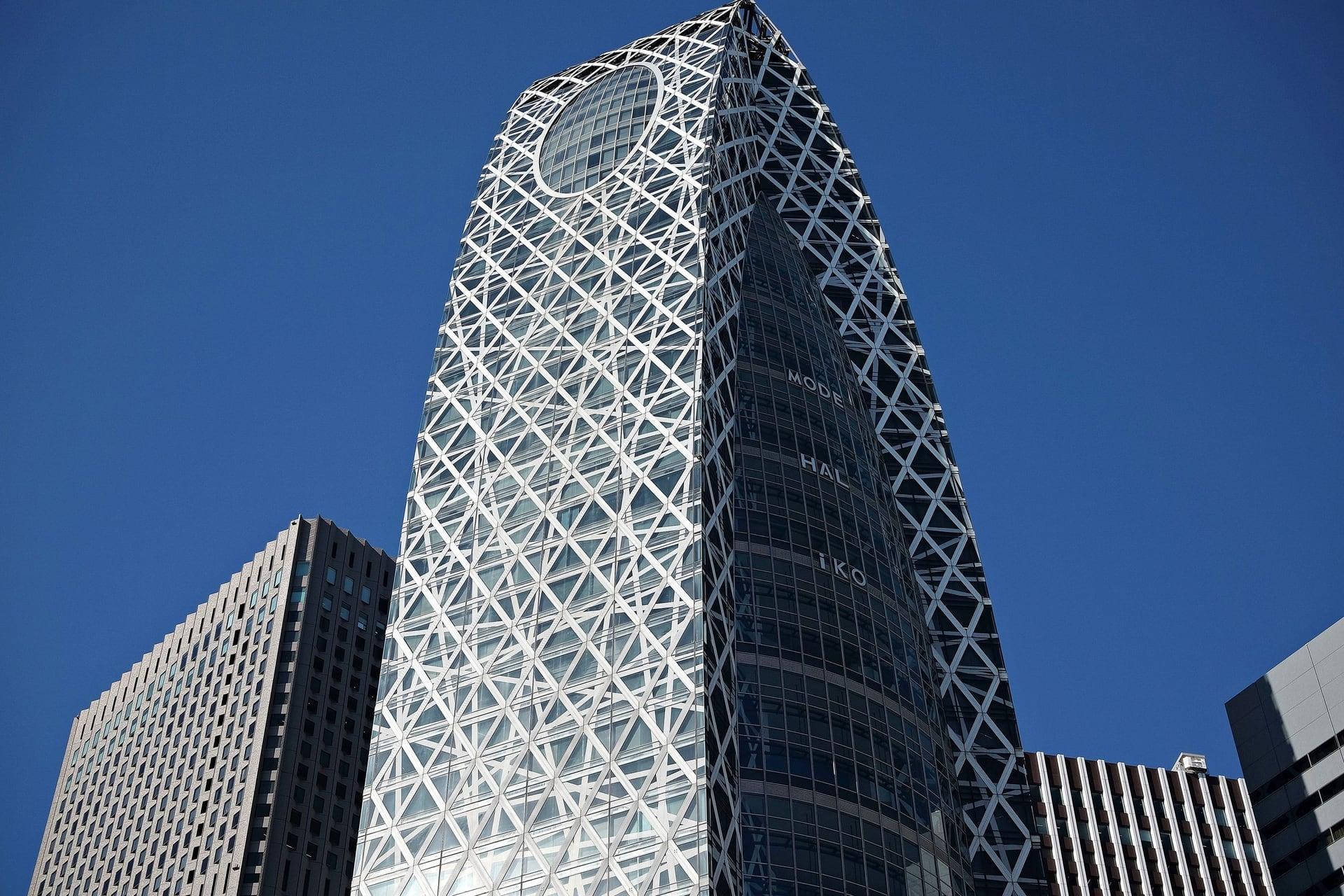
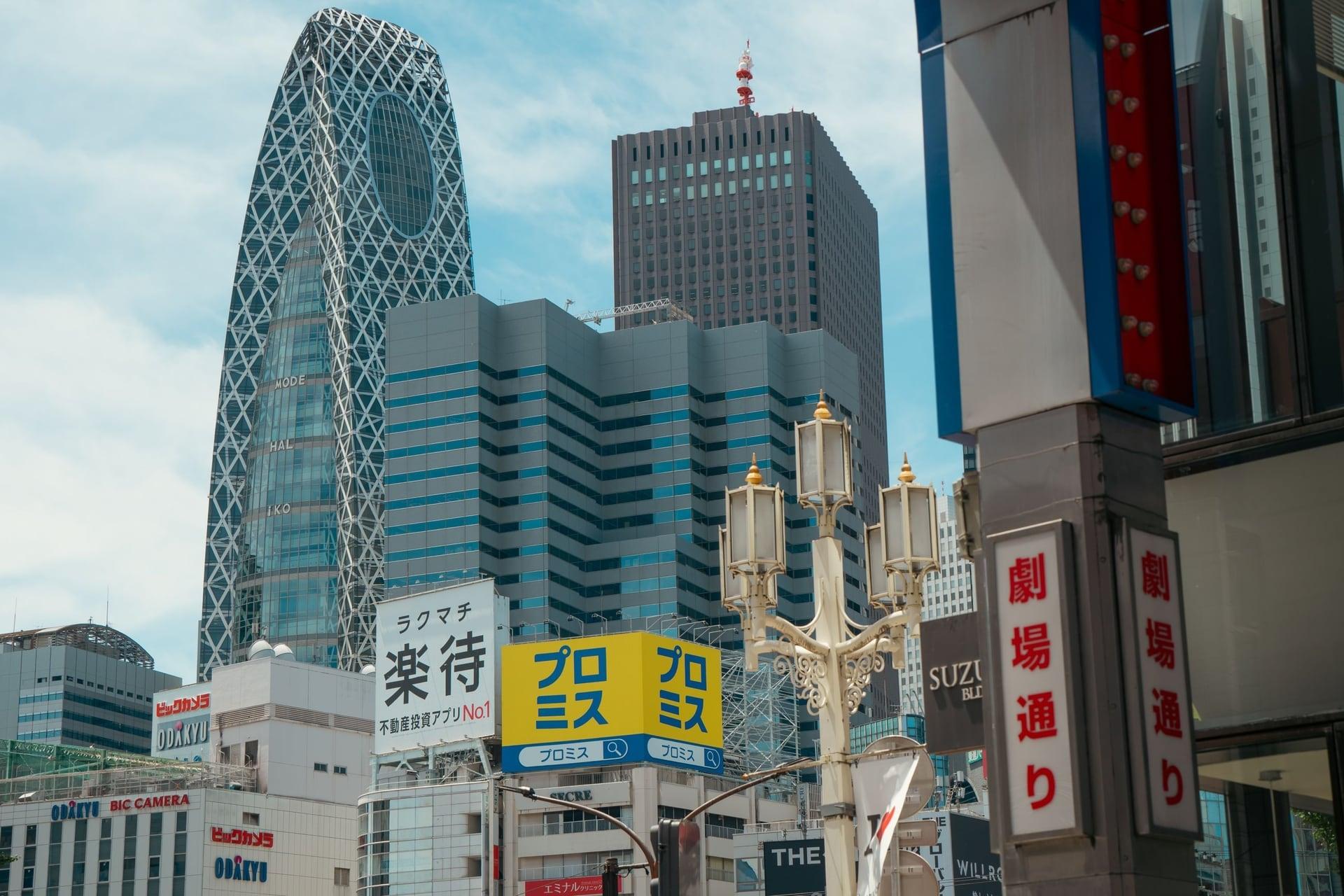
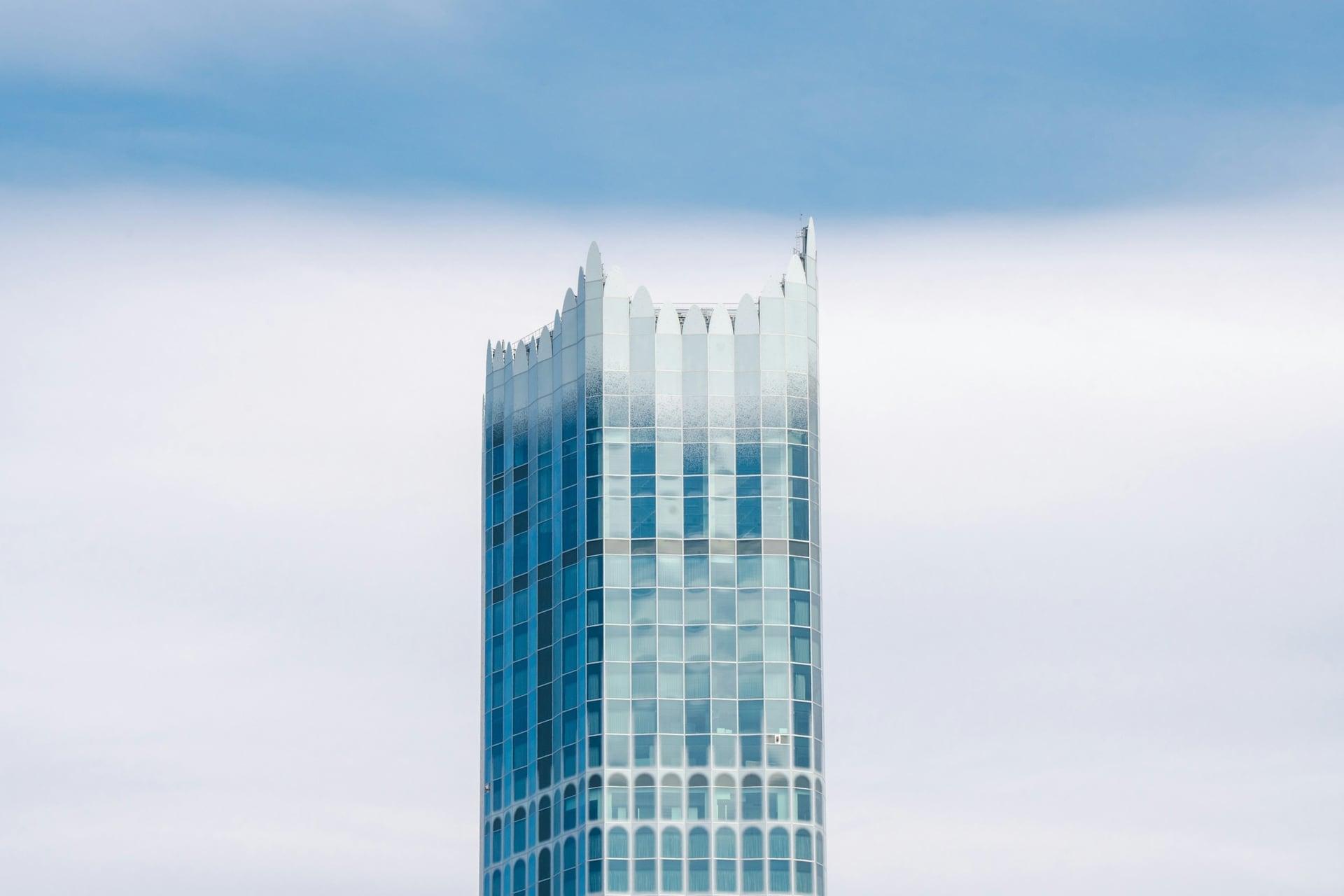
Towers rise where Tokyo's water was filtered. The West Exit of Shinjuku station, on the ground of the Yodobashi filtration plant (1898 to 1965), with the Cocoon Tower and a station being rebuilt.
- 2
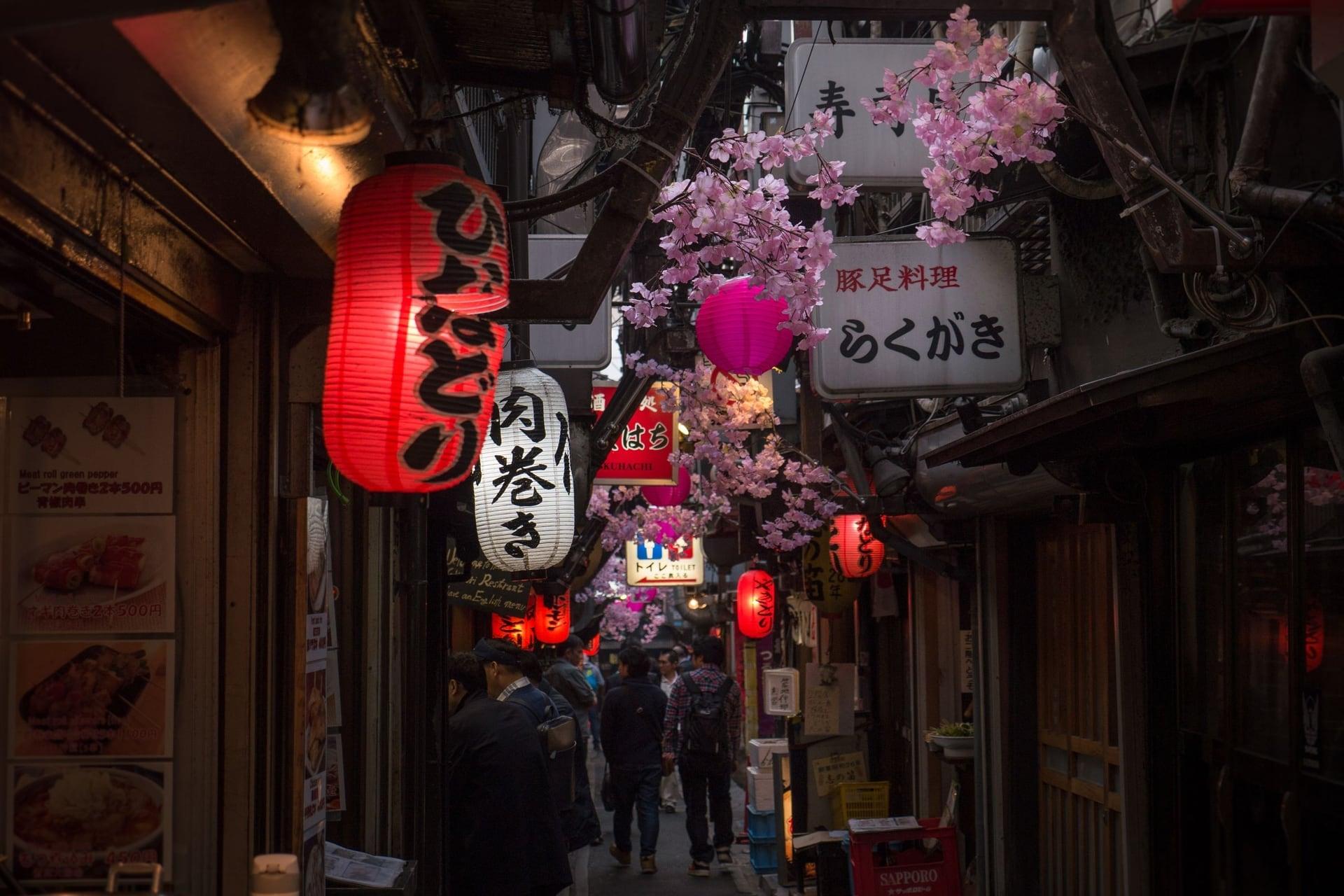
Omoide Yokocho: The Black Market's Grills
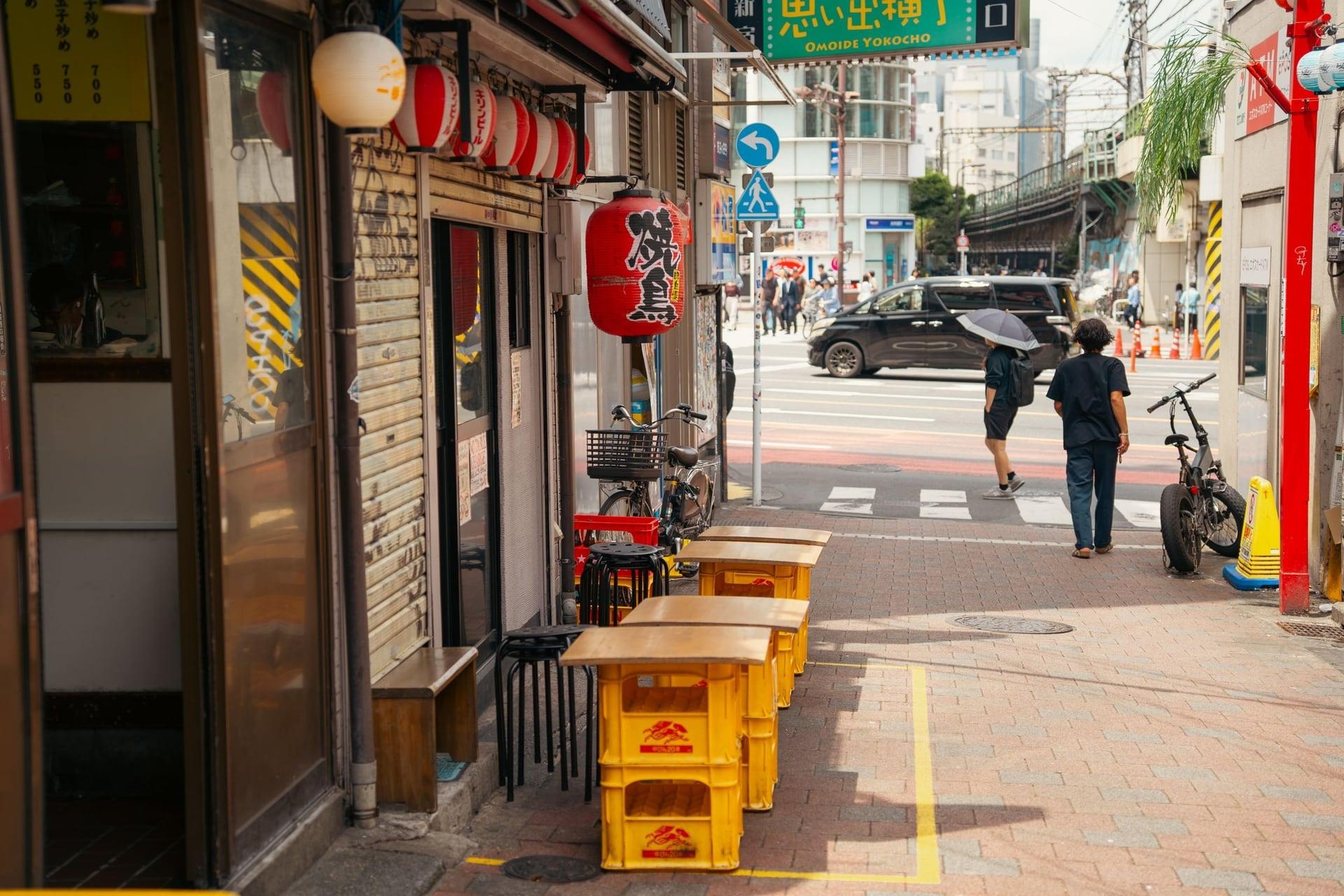
A postwar black market became an alley of grills. Omoide Yokocho grew from the Lucky Street stalls of about 1946, and rationing put offal on its menu.
- 3
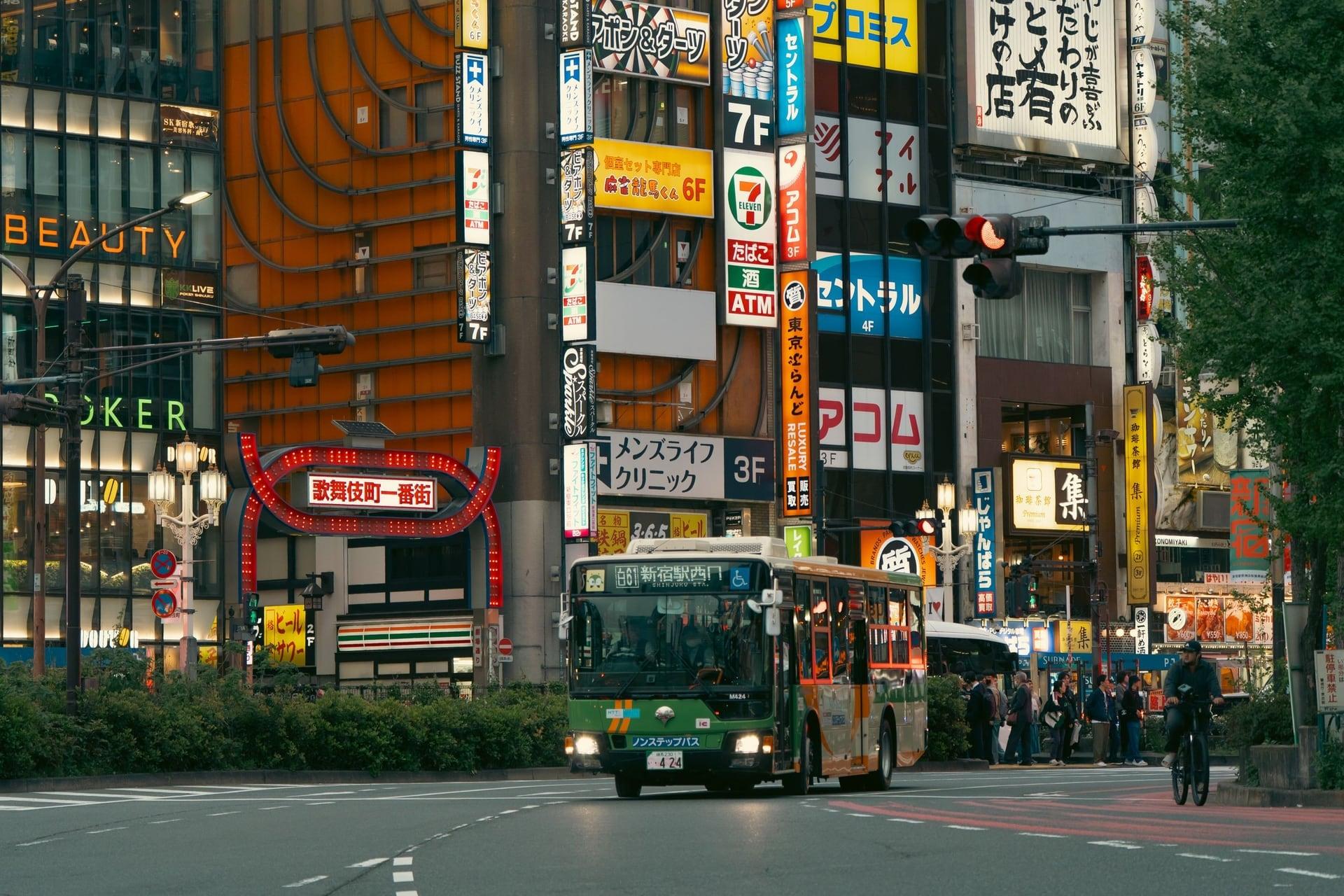
Kabukicho Gate: A Theater That Never Came
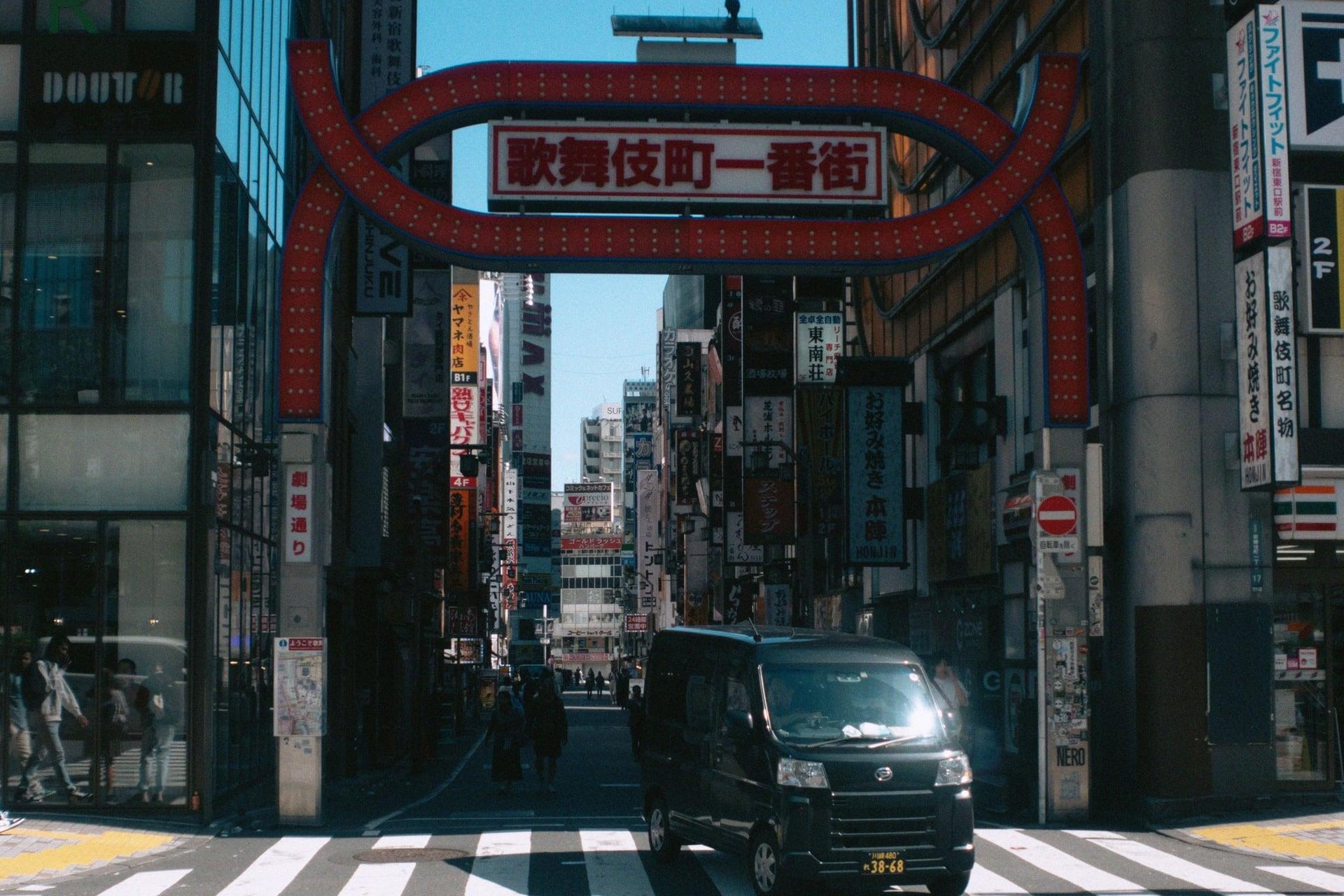
Kabukicho is named for an unbuilt theater. The red arch of Ichibangai, where a local leader and a city planner laid out a postwar quarter round a kabuki house that never came.
- 4
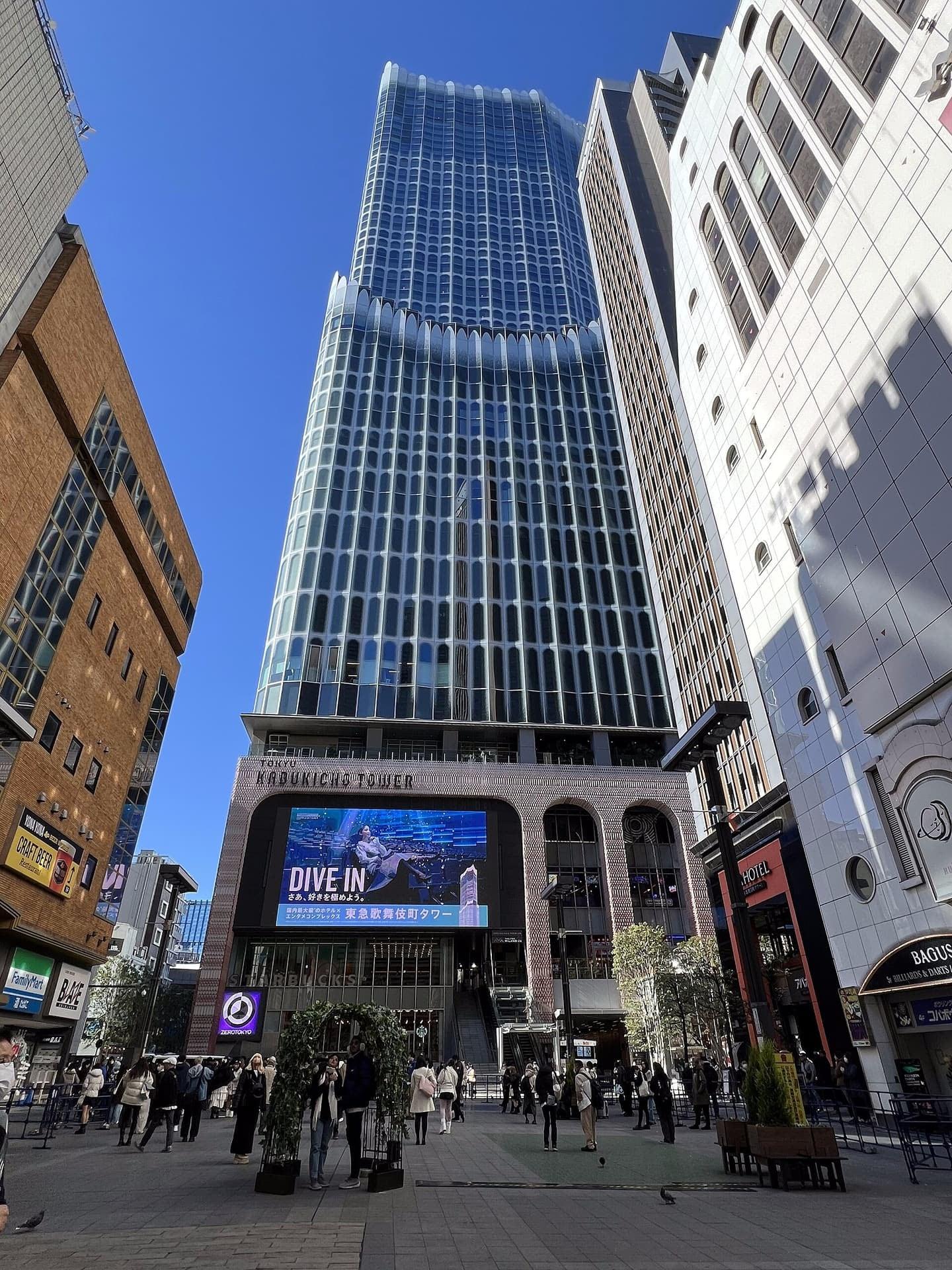
Cinecity Plaza: The Square That Got Its Theaters
A square planned for theaters finally got them. Cinecity Plaza, one of Japan's early planned squares, with Tokyu Kabukicho Tower (2023) and the Godzilla head on the Koma Theater's old site.
- 5
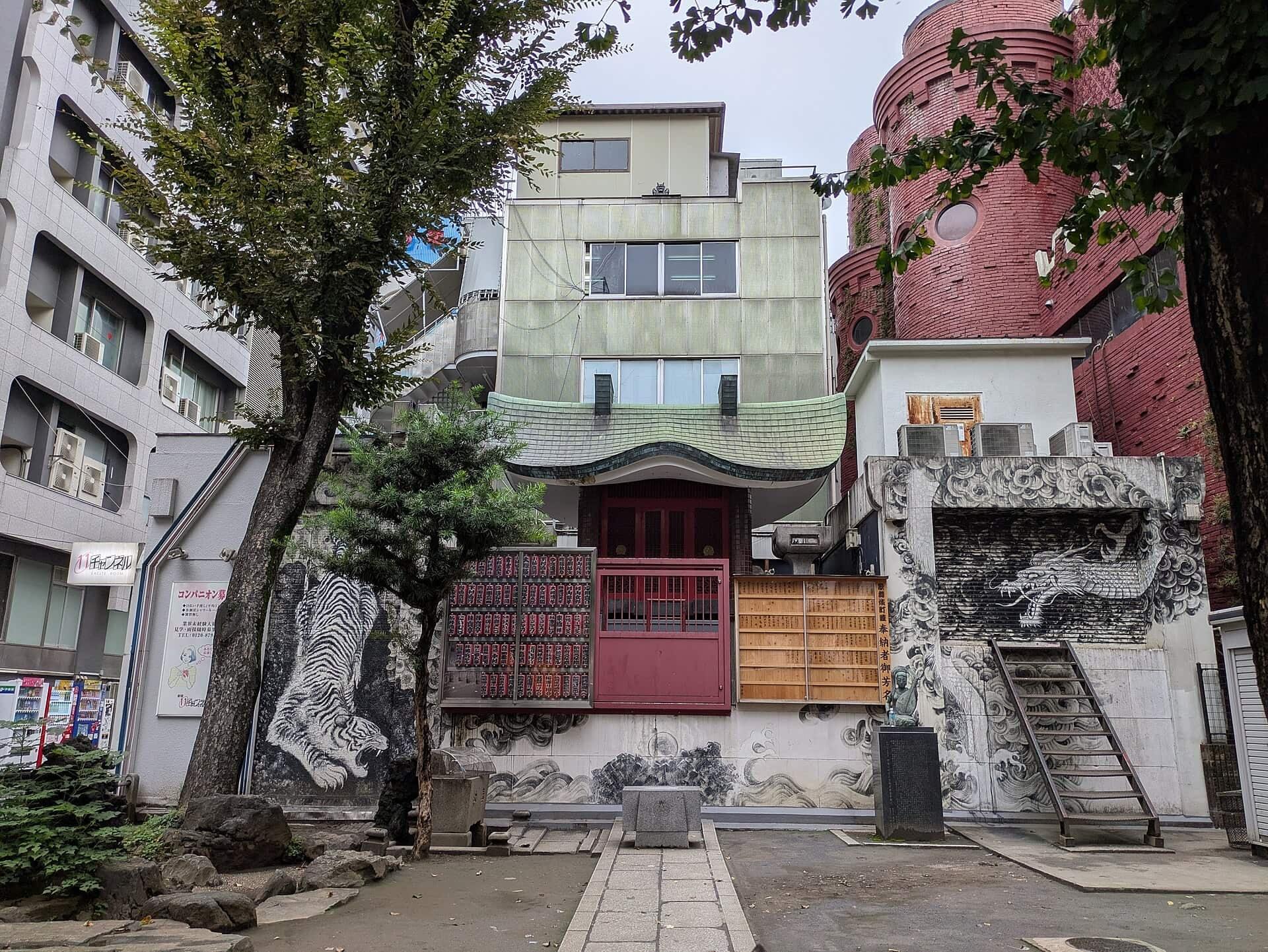
Kabukicho Benzaiten: The Pond's Goddess
A water goddess kept from a filled pond. The small Benzaiten shrine, said to have come from a count's garden pond that the Owariya house filled from 1911.
- 6
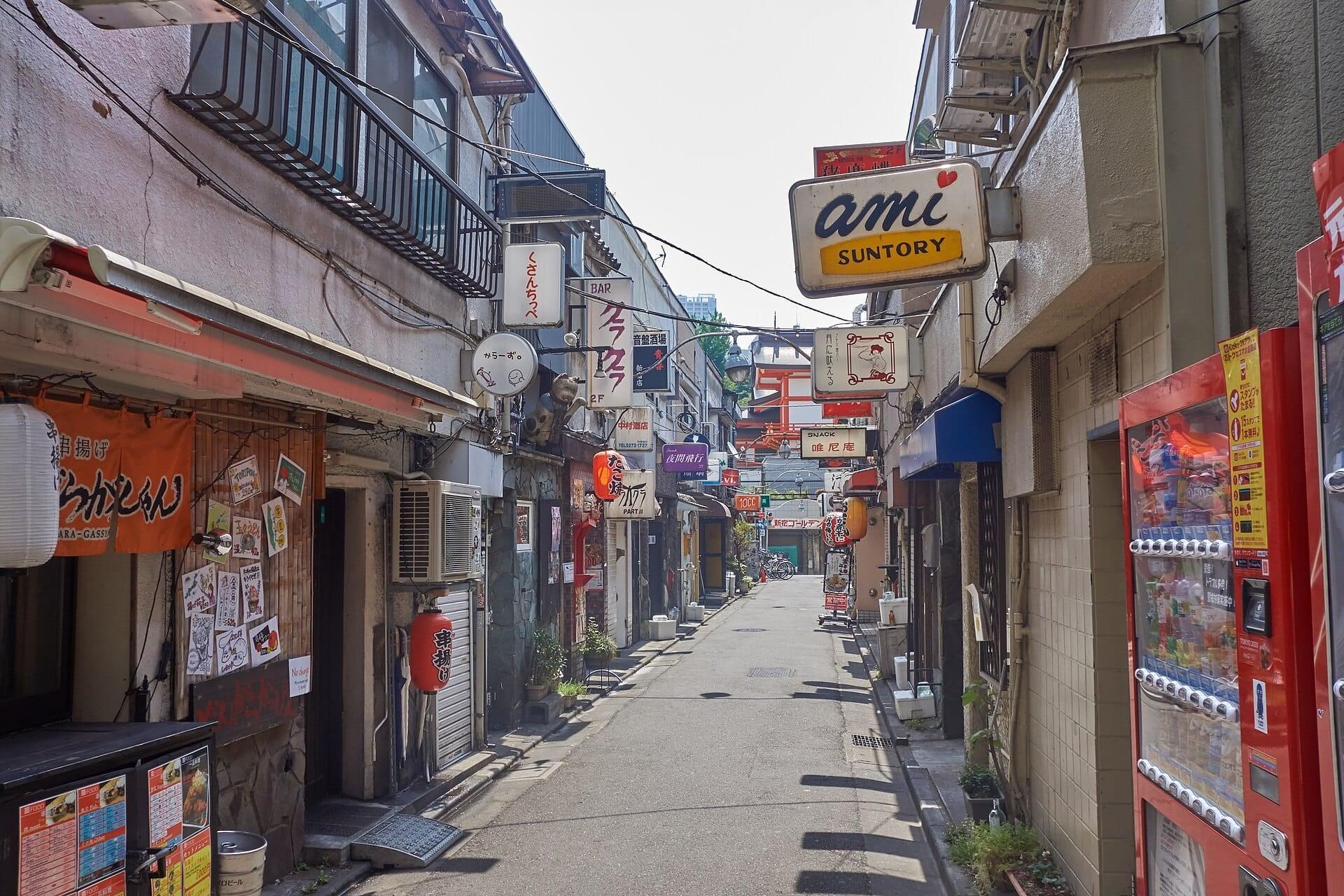
Golden Gai: Bars the Size of a Room
Tiny two-story bars fill lanes behind a shrine. Golden Gai, settled by stallholders cleared from the station around 1950, on a promenade laid on an old streetcar track.
- 7
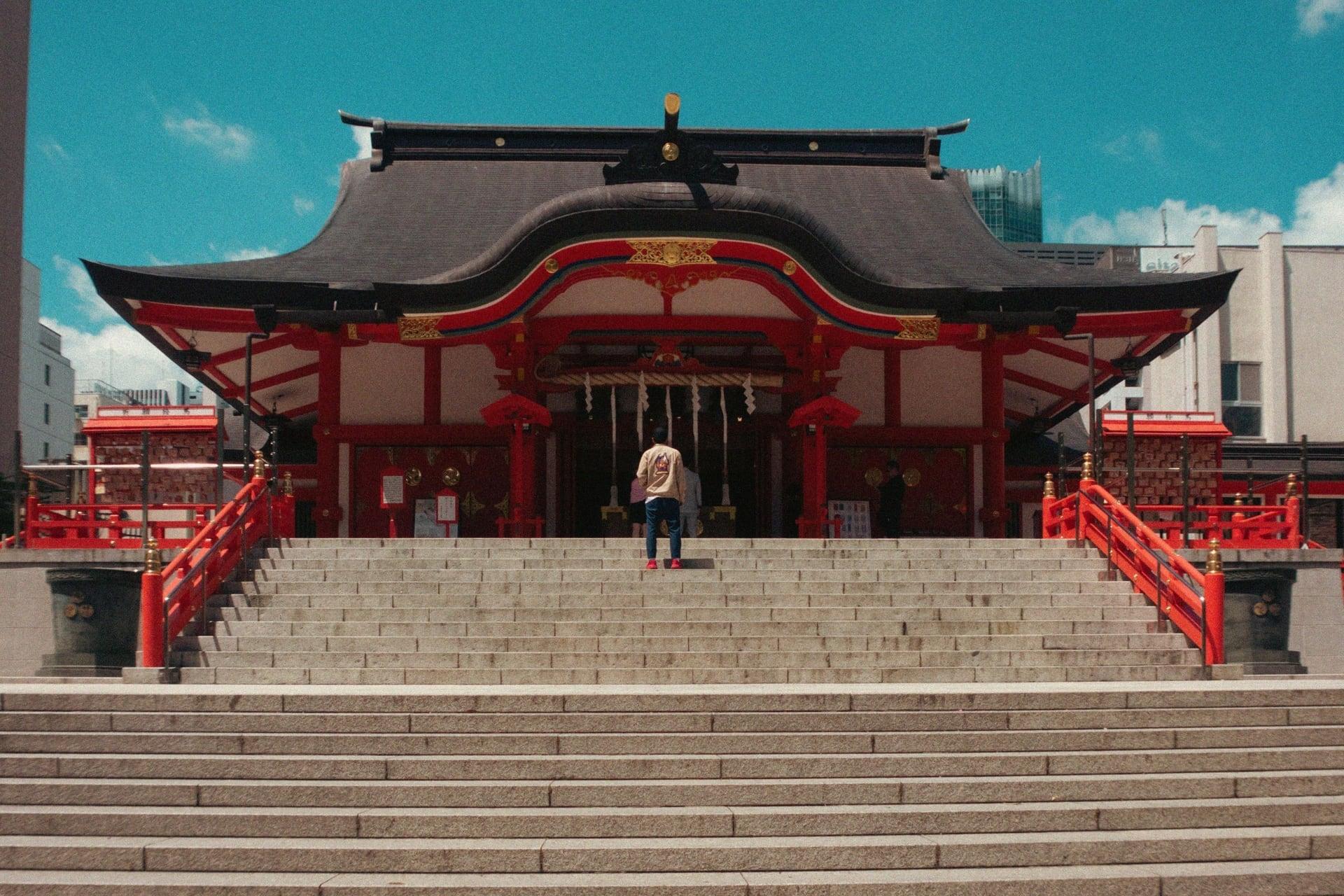
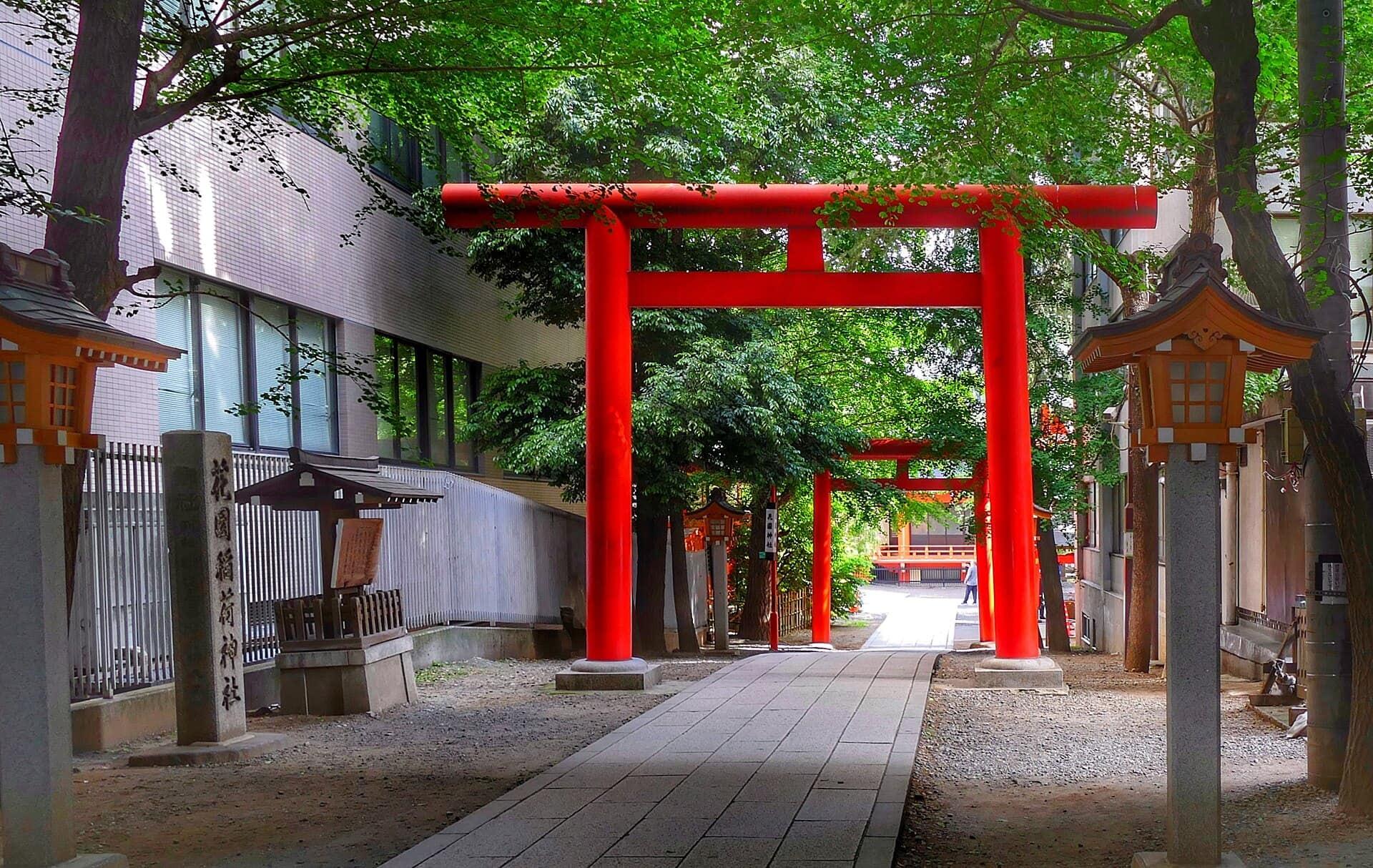
Hanazono Shrine: The Shrine That Put On Shows
Shinjuku's guardian shrine paid its way with plays. Hanazono Shrine, which says it moved here in the 1600s, staged shows to fund its rebuilding in 1780 and 1811.
- 8
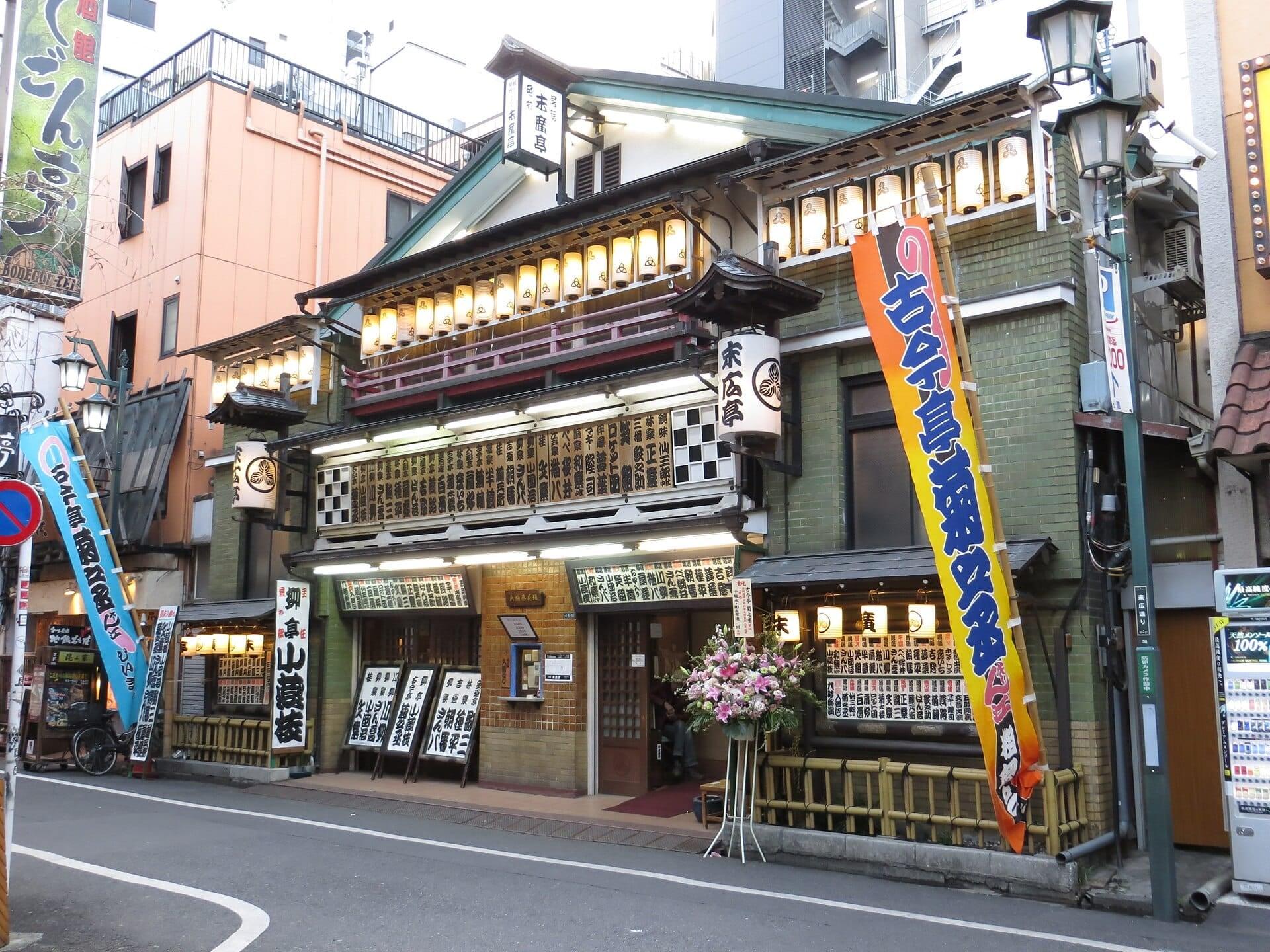
Suehirotei: A Wooden Storytelling Hall
Tokyo's only wooden daily rakugo hall. Suehirotei, opened in March 1946 on a war-burned plot by a builder, with 313 seats and comic storytellers every day.
- 9
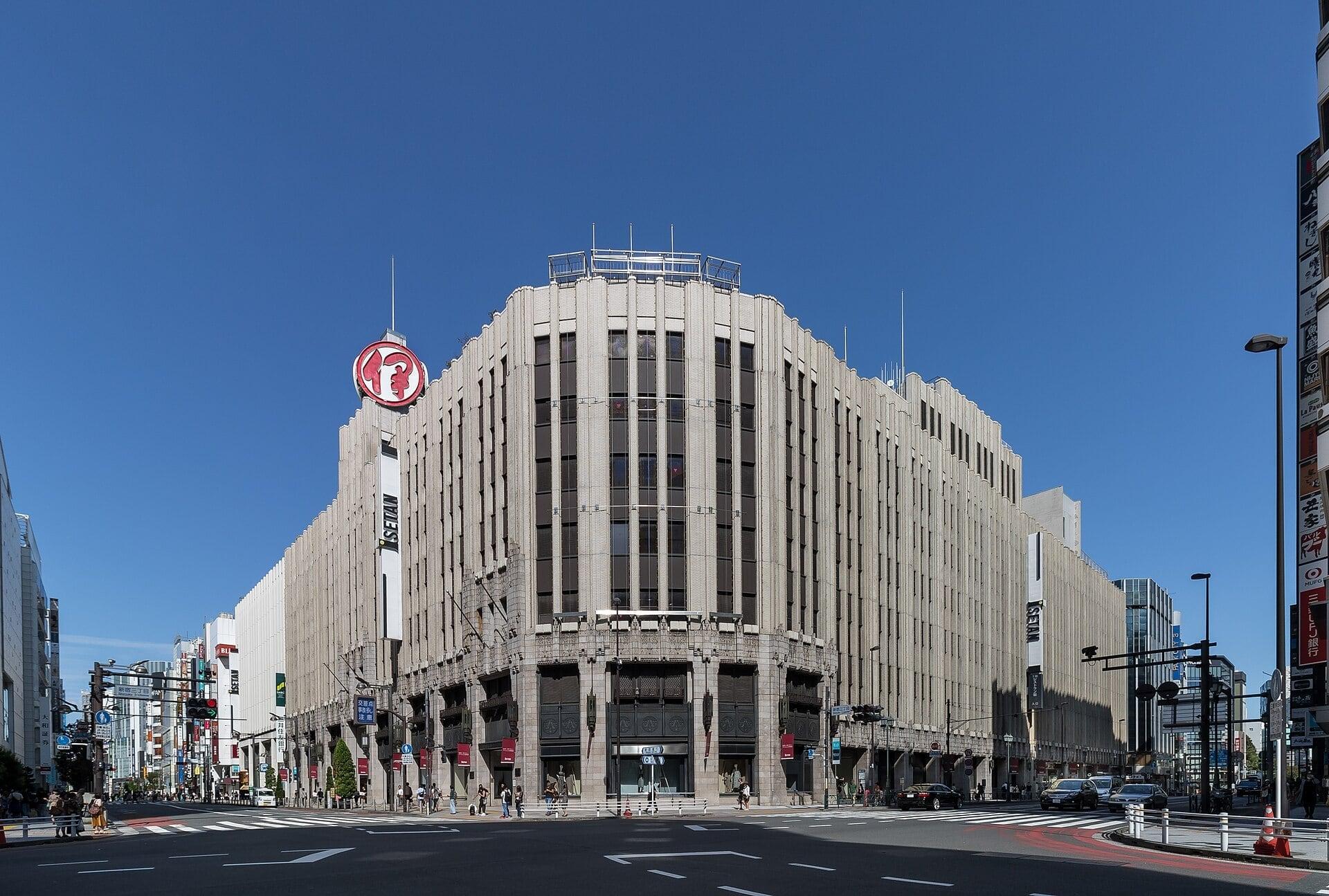
Isetan and Shinjuku 3-chome: Two Stores and a Fork
Two rival stores were joined into one. Isetan's Art Deco main store, Hoteiya of 1926 and Isetan of 1933 joined in 1935, at the old fork of two highways.
- 10
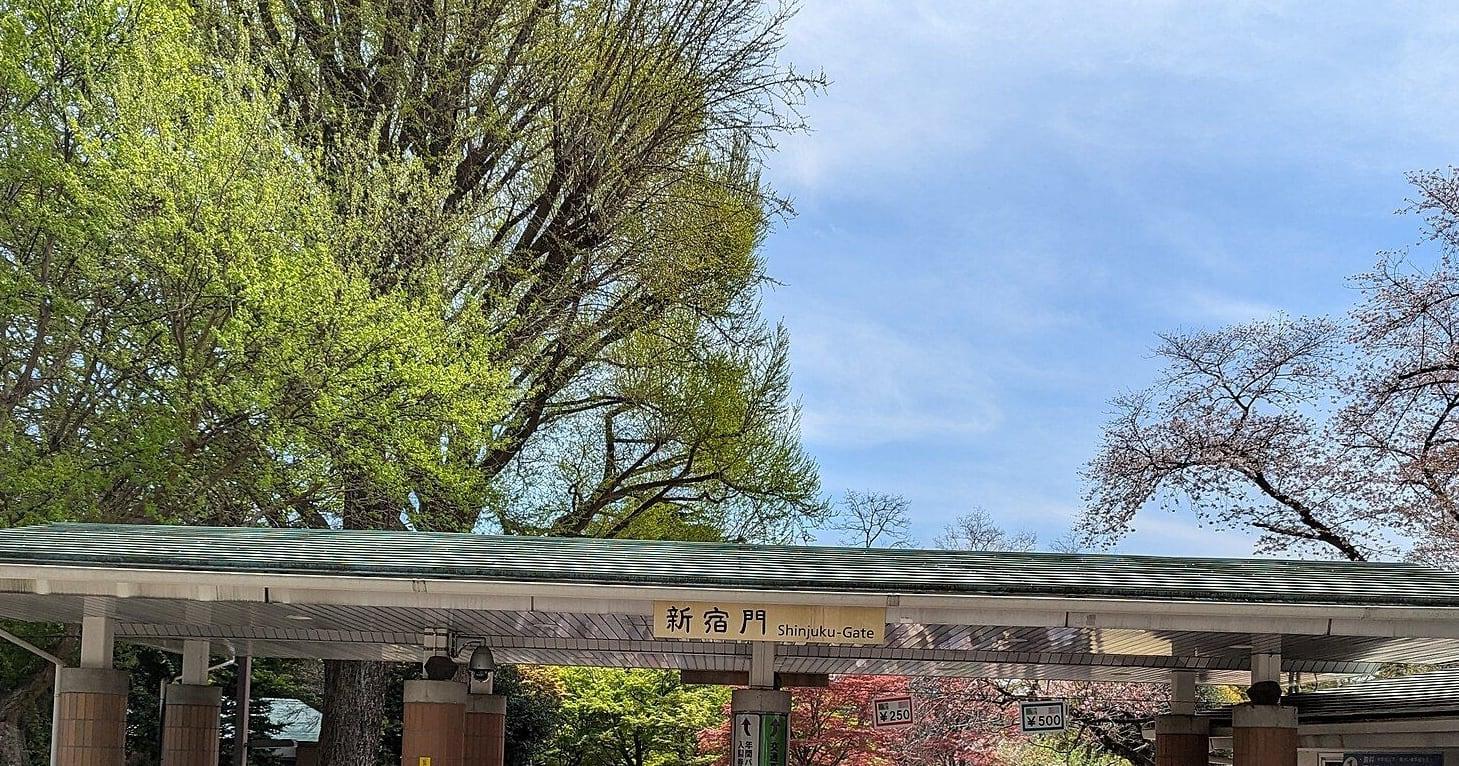
Shinjuku Gyoen's Shinjuku Gate: The Planned Garden
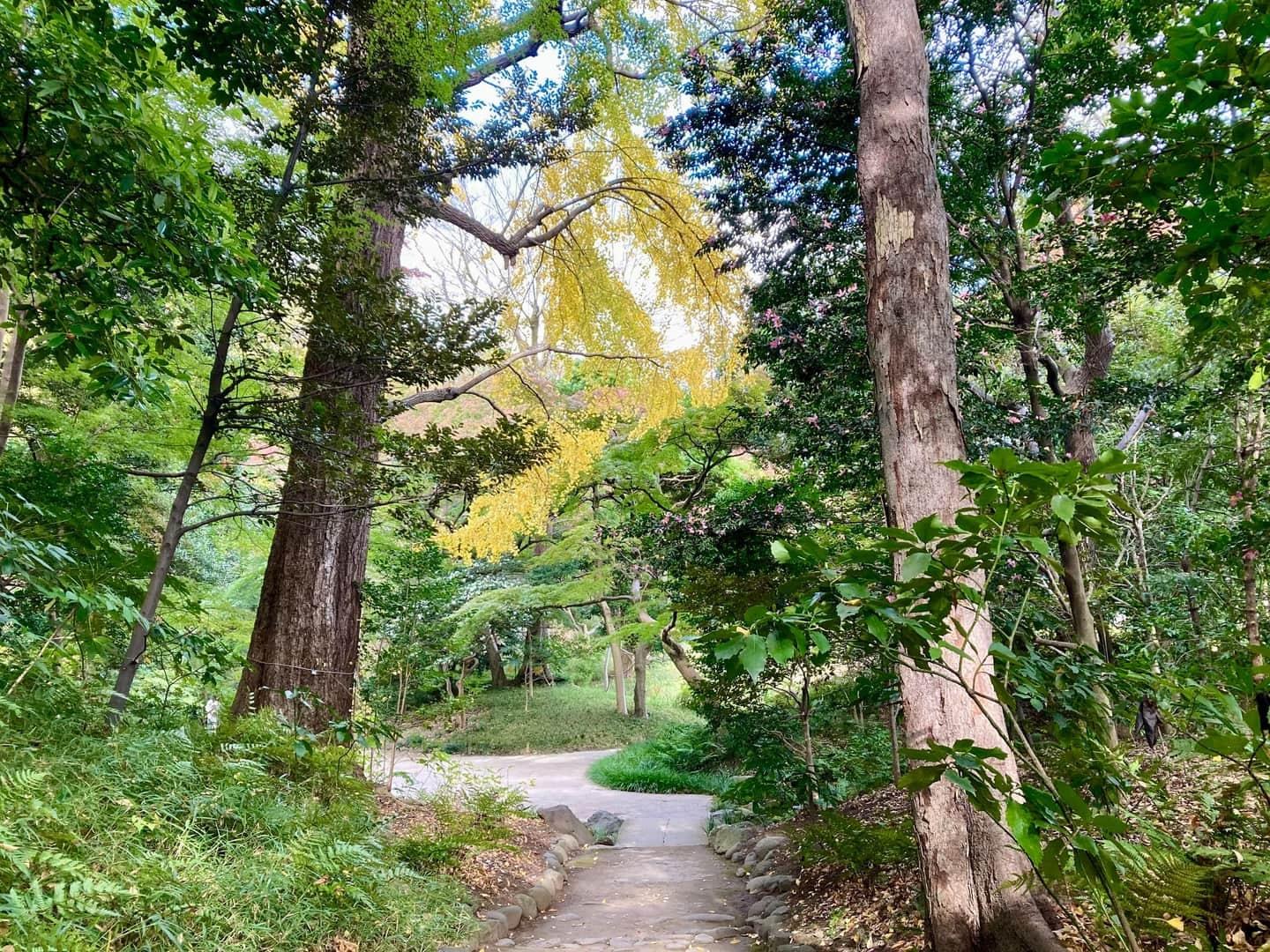
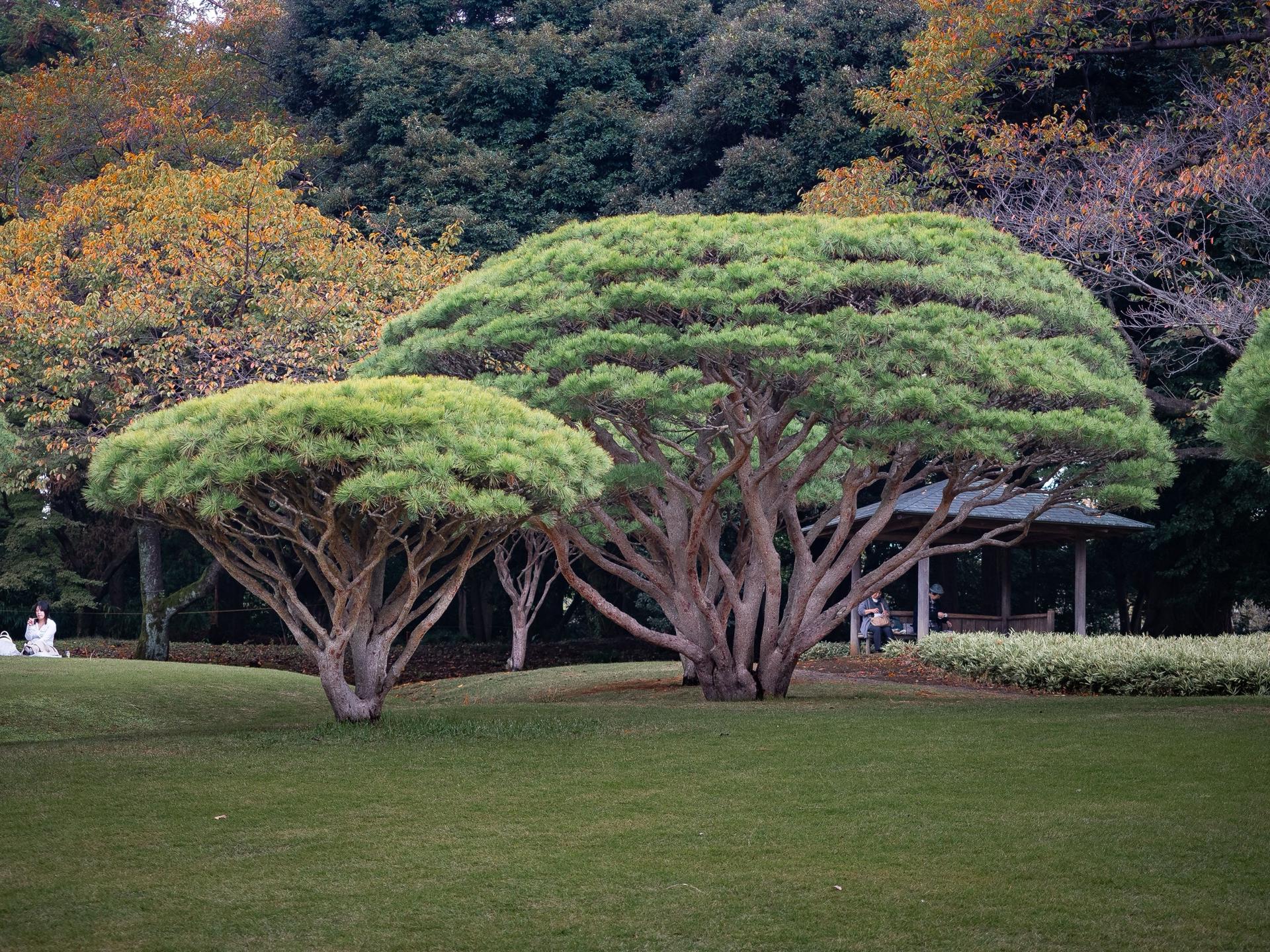
The walk ends at the garden's Shinjuku Gate. The forecourt of Shinjuku Gyoen, a ticketed national garden, where our Shinjuku Gyoen walk begins inside the gate.
Details
Best Time to Visit
Early afternoon into dusk. Omoide Yokocho and Golden Gai come alive from late afternoon; by day they are quiet and easy to see. From October to mid-March start by about 14:30 to reach Shinjuku Gyoen before its 16:00 last entry (17:30 from mid-March to September). The garden is closed on most Mondays. On Sunday and holiday afternoons Shinjuku-dori is a pedestrian street. Kabukicho is crowded and touted after dark: this is a day-and-dusk walk. Checked 8 November 2026.
Pro Tips
- •Getting to the start: JR, Odakyu, Keio, Tokyo Metro Marunouchi and Toei lines all serve Shinjuku. Take the West Exit to the ground-level bus terminal plaza; the walk starts at its corner.
- •Getting home from the end: Shinjuku-gyoemmae station (Tokyo Metro Marunouchi line) exit 1 or Shinjuku-sanchome exit E5, each about 5 minutes on foot; JR Shinjuku South Exit about 10 minutes (Ministry of the Environment). Checked 8 November 2026.
- •Before or after the walk: the Tokyo Metropolitan Government Building's observatories, 202 m up, are free and about ten minutes west of the start. South observatory 9:30 to 22:00, closed 1st and 3rd Tuesdays; North 9:30 to 17:30, closed 2nd and 4th Mondays; both closed 29 to 31 December, 2 and 3 January and on inspection days; last entry 30 minutes before closing. Checked 8 November 2026.
- •Suehirotei (stop 8): rakugo shows 12:00 to 16:15 and 16:45 to 20:30, 3,500 yen general (3,200 over 65, 3,000 students), pay at the window, no booking; bills change on the 1st, 11th and 21st; in Japanese. Checked 8 November 2026.
- •Shinjuku Gyoen (end): adults 500 yen; 9:00 to 16:30 (last entry 16:00) 1 October to 14 March, to 18:00 (17:30) 15 March to 30 September, to 19:00 (18:30) 11 June to 31 July; closed Mondays except 25 March to 24 April and 1 to 15 November, and 29 December to 3 January. Checked 8 November 2026.
- •Shinjuku-dori is a pedestrian street on Sundays and holidays, noon to 17:00 October to March and noon to 18:00 April to September (Metropolitan Police Department, page updated 12 December 2025). Checked 8 November 2026.
Safety & Precautions
- •Street touting is banned in Shinjuku City (the police and Shinjuku City), and the police warn that following a tout to a bar risks a huge bill: never follow one.
- •Kabukicho's inner streets (Ichibangai, Sakura-dori and the lane by the Benzaiten, about 470 m of the walk) have no pavements and are shared with cars and delivery vans by day; walk to the side. Along Hanamichi-dori, between stops 4 and 5, four side streets are crossed with no signal: look both ways.
- •Steps: three steps down just past the Great Guard (handrail), and at Hanazono Shrine 22 steps up the back stair (handrail) and 22 down from the hall (no handrail).
- •Step-free way round Hanazono Shrine (about 150 m longer): from Golden Gai, follow the lane along the shrine's west wall down to Yasukuni-dori, along its pavement to the shrine's south path, and in to the approach, leaving by the main torii on Meiji-dori. Use it too if the stair or the grounds are closed: the shrine publishes no grounds hours.
- •The Great Guard is about 60 m of narrow pavement under the railway: GPS drops there, so keep walking straight through. It is crowded at the evening rush.
- •Omoide Yokocho's lane is under 3 m wide and Golden Gai's lanes 2 to 3 m: single file, do not stop in them, and keep quiet. Ask before photographing inside a bar or the cooks; Omoide Yokocho bans tripods and flash, and commercial filming needs the association's permission. Many Golden Gai bars charge a seating fee.
- •Smoking on the street is banned across all of Shinjuku City, cigarettes and heated tobacco, except at marked smoking spots.
- •The West Exit is a building site: pavements and stairs there change month by month; follow the temporary signs (as of 8 November 2026).
- •Cinecity Plaza is busy late into the night; after dark, keep moving.
- •Hanazono Shrine and the Benzaiten are places of worship: keep voices low and take no photos inside the halls.
Travel advisory: Exercise Normal Precautions (Level 1).
Gallery
Related Reading
Go deeper on what you'll see, hear, and walk through.
Overview
One Day in Tokyo: A Walkable Itinerary Across Three Faces (2026)
6 min
Overview
Tokyo Travel Guide: How Many Days, Getting Around, When to Go (2026)
5 min
Thematic
Best Culture Walking Tours in Tokyo (2026)
2 min
Companion
Shinjuku Gyoen: The Lord's Estate That Named Shinjuku
6 min
Companion
Shinjuku: The District That Rebuilt Itself From the Street Up
6 min
Deep dive
Omoide Yokocho: How Rationing Wrote the Menu of Shinjuku's Alley of Grills
4 min
Read the walk
The full story of Shinjuku: Backstreets, Kabukicho and Golden Gai, in words. Prefer to listen? Play it narrated, from home or on location.
Introduction
Tokyo, Japan's capital, has, by most counts, its busiest station at Shinjuku, and the streets around it were rebuilt by the people who lived and traded there. In April nineteen forty-five an air raid burned this district flat. What came back was a string of local plans: a black market that became an alley of grills, a quarter named for a theater that was never built, tiny bars behind a shrine, and a wooden hall for comic storytelling.
Three people shape what you will see. Suzuki Kihei, the local leader who dreamed up Kabukicho. Ishikawa Hideaki, the city planner who drew its streets. And Mineshima Kiyo, whose pawnbroking house filled a count's pond and, it is said, kept its goddess.
The walk is ten stops over about two point six kilometers, a mile and a half, about seventy-five minutes. It is flat, with three steps near the start and a stair of twenty-two steps up and down at Hanazono Shrine. Kabukicho's inner streets have no pavements and carry delivery vans by day, so keep to the side. It ends at the Shinjuku Gate of Shinjuku Gyoen, a walled garden that from October to mid-March takes its last visitors at four and closes on most Mondays, so in winter start by about half past two. It begins at the West Exit of Shinjuku station.
When you arrive at the West Exit, begin with stop one.
1. West Exit: Where the Water Was
Welcome to the West Exit of Shinjuku station, by most counts Japan's busiest, where this walk begins. Stop on the open pavement at the corner of the bus terminal, and turn so the station building is at your back.
Ahead rise the towers of west Shinjuku. From eighteen ninety-two the city built the Yodobashi filtration plant here, and on the first of December, eighteen ninety-eight, it sent its first clean water to Kanda and Nihonbashi. Tokyo's water bureau counts that day as the start of the city's modern water supply. In nineteen sixty the metropolitan assembly decided to make Shinjuku a new city center, and to move the plant away to free the land. It closed on the thirty-first of March, nineteen sixty-five. The towers stand on its ground.
Among them, find the white tower wrapped in a curving lattice of crossing lines. That is the Mode Gakuen Cocoon Tower, by the firm Tange Associates. A cocoon, the architects say, wraps itself around a living creature for protection before it goes out into the world.
The plaza around this bus terminal was laid out in nineteen sixty-six, and in nineteen sixty-seven it won the top award of Japan's city planners' institute, the prize named for Ishikawa Hideaki. Keep his name in mind: two stops from here you walk the streets he drew. Today the plaza is a building site. The old department store over the exit has gone, and a new tower of forty-eight stories, about two hundred and sixty meters tall, is due at the end of the decade.
Around nineteen forty-six, all of this was burned ground. What came back first was not towers, but stalls.
Smoking on the street is banned across Shinjuku; use the marked smoking spots.
Follow the route along the station side. Next is Omoide Yokocho, an alley of tiny grills by the tracks.
2. Omoide Yokocho: The Black Market's Grills
Walk on along the pavement and stop at the crossing where a narrow lane of low stalls opens across the little street, toward the railway tracks. That lane is Omoide Yokocho, the alley of memories.
Its shopkeepers tell its story themselves. Around nineteen forty-six, on the burned ground of the West Exit, thirty or forty stalls of reed screens went up, and burned. Then came a market of stalls, each divided from the next by a single wooden board, a black market of the rationing years called Lucky Street.
Then the menu. Around nineteen forty-seven, flour was rationed and controlled. Offal from the cattle and pigs of the occupation forces was not. So stall after stall turned to grilled offal, motsu-yaki. More than half of the alley's sixty or so restaurants still grill offal or chicken skewers, yakitori. The smoke drifting out of the lane is a leftover of rationing.
Look at the shopfronts as you go. The single-board partitions live on: many shops still share a wall with the next.
The alley was once far longer. Around nineteen fifty-nine, plans for the subway and a station building cleared about three hundred stalls as illegal occupation of the ground. Only this stretch survived. Today about eighty shops share about two thousand square meters.
The lane is under three meters wide, so walk it in single file when it is busy, and ask before you photograph inside a bar or of the cooks.
At the lane's far end the route passes under the railway through the Great Guard, about sixty meters beneath the tracks, where your phone may lose its place. Keep walking straight through and out the other side, where three steps go down, with a handrail.
Follow the route across the little street at the signal, up the whole lane, under the tracks and across Yasukuni-dori; wait for the signal. Next is the gate of Kabukicho.
3. Kabukicho Gate: A Theater That Never Came
This is Kabukicho. Once you are across Yasukuni-dori, walk on to the corner where a red arch spans the mouth of a street, and stop on the pavement beside it.
Kabukicho means kabuki town, and there has never been a kabuki theater here.
In the air raid on the night of the thirteenth of April, nineteen forty-five, this neighborhood, then called Tsunohazu, burned to the ground. Its local leader was Suzuki Kihei, a cook who in nineteen twenty-two had opened a restaurant by the Great Guard you just came through. Within days of the war's end he was back with a plan, and the Mineshima family, who owned about a third of the ground, agreed.
He took the plan to Ishikawa Hideaki, head of Tokyo's city-planning section. Together, Shinjuku City records, they planned a quarter round a kabuki theater, to be, in their words, new Tokyo's most wholesome family center. They named it Kabukicho, and the name took effect in nineteen forty-eight. The theater was to have four stories of concrete and eighteen hundred and fifty seats. Frozen bank deposits, a property tax and a ban on large buildings killed it. The name stayed.
Ishikawa also gave Kabukicho something you can walk. Following a British planner of garden cities, he used T-junctions again and again, so a street ends in a building, the eye never escapes, and the city calls the result a labyrinth.
Street touts are illegal here, and the police warn: never follow one into a bar. And Kabukicho's inner streets have no pavements; cars and delivery vans share them by day, so walk to the side.
Follow the route along this pavement and up the next street. Look up ahead: on a terrace of the tall building that closes the top of the street sits a monster's head. A street that ends in a building is Ishikawa's T-junction at work. Next is the square just beyond it.
4. Cinecity Plaza: The Square That Got Its Theaters
Walk on into the open square and stop on its near side, with the tall glass tower rising over the far side. This is Cinecity Plaza. Shinjuku City's guideline calls it one of the early squares born of modern city planning in Japan. It was the heart of the plan: gather the…
Full narration for this stop unlocks with the tour.
5. Kabukicho Benzaiten: The Pond's Goddess
Walk on along the lane and stop at the mouth of a short paved approach that leads up two steps to a small shrine hall. This is Kabukicho Benzaiten, a shrine to Benzaiten, a goddess of water. Shinjuku City says springs once rose under the square you just came from. And this…
Full narration for this stop unlocks with the tour.
6. Golden Gai: Bars the Size of a Room
Walk on along the tree-lined promenade and stop where narrow lanes open off it, packed with tiny two-story bars. This is Golden Gai. First, the path under your feet. It is called Shiki-no-michi, the path of the four seasons, and it runs on the private track of a streetcar line,…
Full narration for this stop unlocks with the tour.
7. Hanazono Shrine: The Shrine That Put On Shows
Come out of the lane and stop at the foot of a stone stair rising into the trees. This is the back way into Hanazono Shrine. The shrine traces itself to before fifteen ninety, and calls itself Shinjuku's chief guardian shrine since before the shoguns set up their government in…
Full narration for this stop unlocks with the tour.
8. Suehirotei: A Wooden Storytelling Hall
Walk on down the lane and stop by the wooden theater front, hung with lanterns and name boards. This is Suehirotei, a hall for rakugo, Japan's art of comic storytelling. It is ticketed, and the details are on this stop's card, but the front alone is worth the stop. Within a…
Full narration for this stop unlocks with the tour.
9. Isetan and Shinjuku 3-chome: Two Stores and a Fork
As you come over the wide crossing, look for a big Art Deco department store on the far corner with two towers on its roof. Once across, stop on the corner and look across the junction, over both roads, at it. That is Isetan. Stay on this side: the route does not cross…
Full narration for this stop unlocks with the tour.
10. Shinjuku Gyoen's Shinjuku Gate: The Planned Garden
Walk on into the paved forecourt and stop near the gate with its ticket windows, the garden's trees rising over the wall. This is the Shinjuku Gate of Shinjuku Gyoen, and the end of this walk. Everything you have walked through was rebuilt from the street up. A filtration plant…
Full narration for this stop unlocks with the tour.
- 歌舞伎町公園と歌舞伎町弁財天(新宿区新宿)(2026年9月) — Mikagekawase, CC BY 4.0 · source
- Golden Gai, Shinjuku, May 2017 — Celuici, CC BY-SA 3.0 · source
- "Shinjuku Suehirotei", Vaudeville Theatre from Shinjuku, Tokyo. — Ogiyoshisan, CC BY-SA 3.0 · source
- Isetan Shinjuku. 伊勢丹新宿本店(東京都歴史的建造物) — Kakidai, CC BY-SA 4.0 · source
Images may be cropped or resized. Other photos via Unsplash and Pexels.