Shinjuku: Backstreets, Kabukicho and Golden Gai
75 min · 2.6 km · easy
The district that rebuilt itself is the best way to read Shinjuku's backstreets. In April 1945 an air raid burned this part of Tokyo flat, and what came back was not one master plan but a string of local ones: a black market that became an alley of grills, a quarter named for a theater that was never built, tiny bars behind a shrine, and a wooden hall for comic storytelling. Roamer's walk strings them together over ten stops, about 2.6 kilometres and seventy five minutes, and ends at the gate of the one piece of Shinjuku that was laid out from above.
Towers on a waterworks, stalls on the ashes
The walk starts at the West Exit, facing the towers, and the first surprise is what lies under them. From 1892 the city built the Yodobashi filtration plant here, and Tokyo's water bureau counts its first clean water, sent out on 1 December 1898, as the start of the city's modern supply. In 1960 the metropolitan assembly decided to make Shinjuku a new city centre and move the plant away. It closed on 31 March 1965, and the towers stand on its ground.
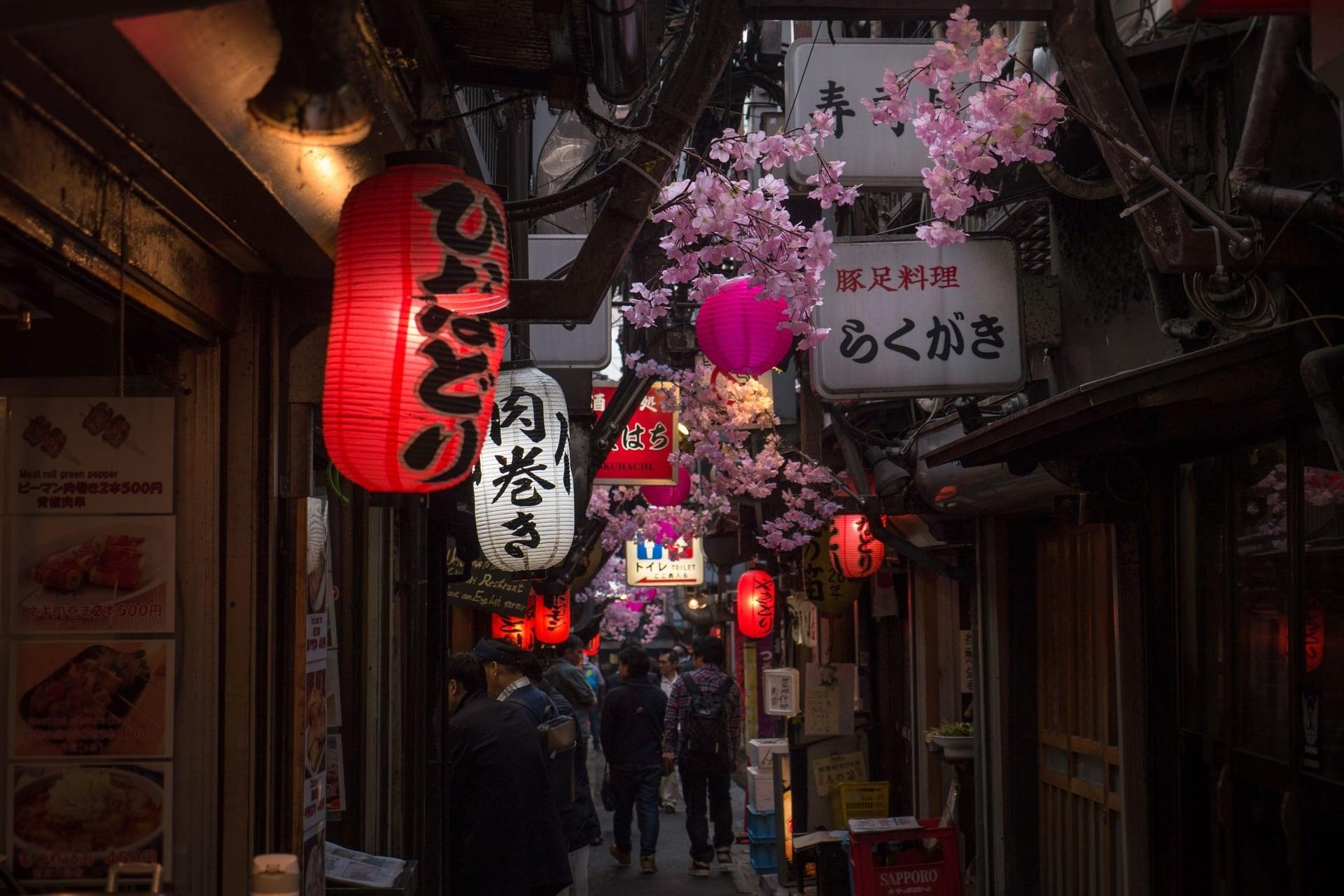
That was the state's Shinjuku. The rest of the walk is the other kind. Around 1946, the West Exit was burned ground, and the shopkeepers of Omoide Yokocho, stop 2, tell how stalls of reed screens went up there, burned, and gave way to a black market divided stall from stall by single wooden boards. The menu of offal skewers is a leftover of rationing, and many shops still share a wall with the next. The lane is under three metres wide: walk it in single file.
A theater town with no theater
Hear a stop from this walk
Shinjuku Gyoen's Shinjuku Gate: The Planned Garden
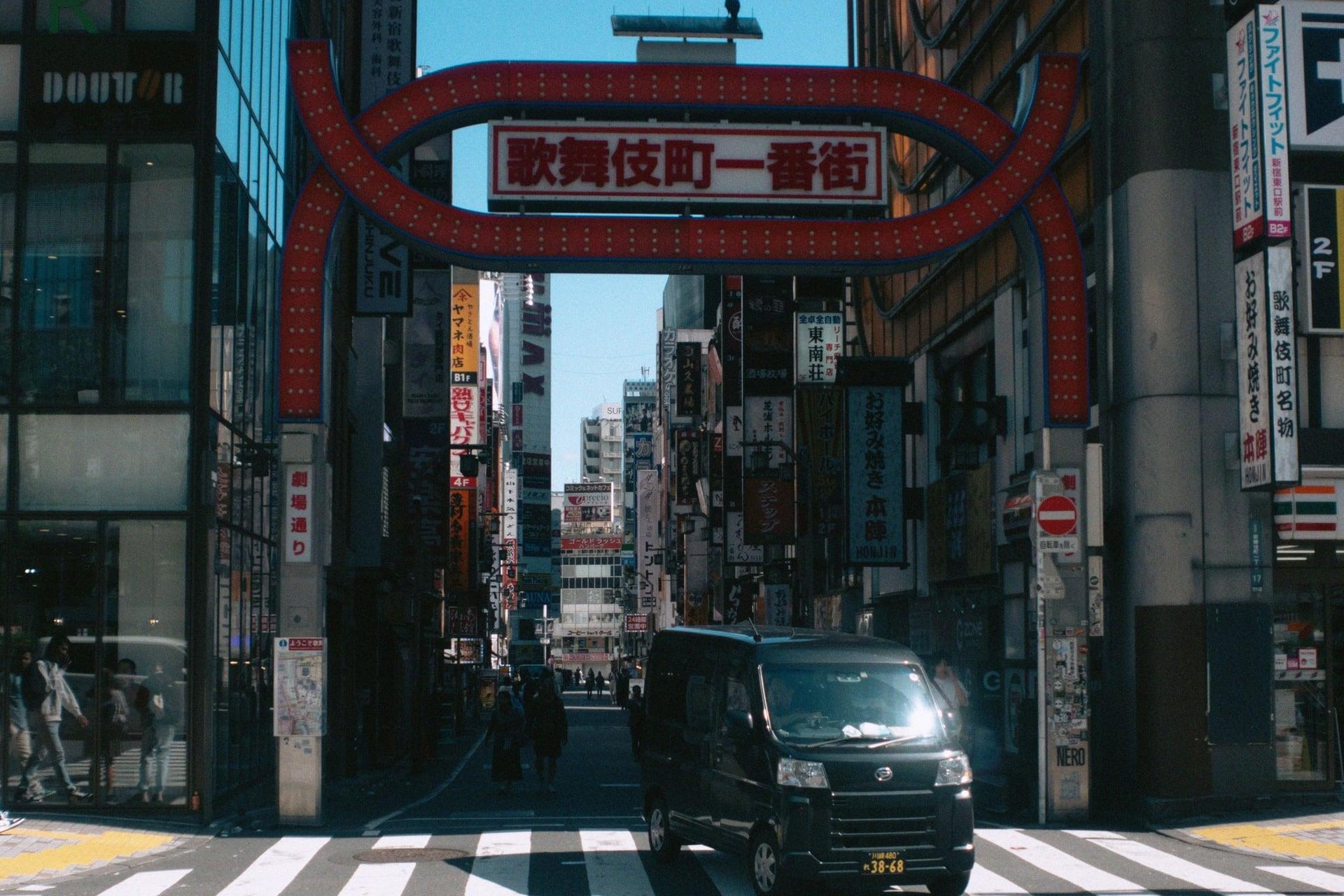
Cross under the tracks and Yasukuni-dori, and you reach the strangest name in Tokyo. Kabukicho means kabuki town, and there has never been a kabuki theater here. Shinjuku City records how a local leader, Suzuki Kihei, and the head of Tokyo's city planning section, Ishikawa Hideaki, planned the burned neighbourhood round a kabuki house as a wholesome family centre. The name took effect in 1948. Frozen bank deposits, a property tax and a ban on large buildings killed the theater. The name stayed.
What Ishikawa did build, you can walk. He used T-junctions again and again, so a street ends in a building and the eye never escapes, and the city calls the result a labyrinth. At Cinecity Plaza, stop 4, the square he planned as the heart of the quarter finally got theaters of another kind: the Koma Theater from 1956, and since 2023 the 225 metre Tokyu Kabukicho Tower, whose skin, Tokyu says, takes its motif from the fountain that once played in the square.
One stop on, the small Benzaiten shrine is said to have been moved from the pond of a count's garden that a pawnbroking house, Owariya, filled in for house plots after 1911. The story of the snakes buried in the fill is a legend. The pond and its filling are not.
Bars behind a shrine
Golden Gai, stop 6, is the clearest case of locals shaping the city. After the occupation authorities ordered the station stalls cleared in 1949, many stallholders moved here, behind Hanazono Shrine, into a dense quarter of wooden bars. Many sit on plots of about ten square metres. The lanes are the design: so narrow that rebuilding under ordinary rules would force them wider and eat the bars, which is why the city and the bar associations have been working to have them designated a special class of road that can stay narrow.
Hanazono Shrine itself, stop 7, fits the pattern. After fires in 1780 and 1811, the shrine says, it built a stage and put on plays and shows to pay for its rebuilding.
A builder's wooden hall
Suehirotei, stop 8, may be the walk's best single building. In March 1946, Shinjuku City records, a building contractor bought the hall's own burned plot and opened it again. It is a rakugo hall, for Japan's art of comic storytelling, with 313 seats, and as Tokyo's other halls moved into modern buildings it became the only wooden one among them. It is not an Edo building. It is a postwar builder's version of one, and the city now counts it among its cultural assets.
The walk then crosses to Isetan's Art Deco corner, two department stores of 1926 and 1933 joined in 1935, standing at the fork where the Ome highway once left the Koshu highway, and ends at the Shinjuku Gate of Shinjuku Gyoen. Behind that wall is the district's opposite: a garden laid out first by a lord and then by the state.
Walking it yourself
This is a day-and-dusk walk. The alleys wake up from late afternoon, and in winter the garden gate takes its last visitors at four, so start by about half past two. Kabukicho is touted after dark: never follow a tout into a bar. Going on your own means you can stop for a skewer, linger in Golden Gai's lanes or skip a stop entirely, at your own pace and with no group.
Start at stop 1 of Shinjuku: Backstreets, Kabukicho and Golden Gai, and see every route on the Tokyo page. For one stop in depth, read about Omoide Yokocho's black market grills.
Sources
- Shinjuku City, Kabukicho townscape design guideline (2013, PDF): Suzuki Kihei and Ishikawa Hideaki, the kabuki theater plan, the T-junctions and the labyrinth, Cinecity Plaza as one of Japan's early planned squares.
- Shinjuku City, list of local cultural assets (PDF): Suehirotei reopened in March 1946 by a building contractor, 313 seats, the only wooden building among Tokyo's halls.
- Shinjuku Nishiguchi shopping street association, Omoide Yokocho history: the 1946 stalls, the Lucky Street black market, the single-board partitions, rationing and offal.
- Suehirotei, guide page: the daily shows and the ten-day bills.
- Tokyo Metropolitan Government, selected historic buildings: Isetan's 1926 and 1933 buildings joined in 1935, Art Deco ornament and rooftop towers.
- Roamer's audited tour transcript for Shinjuku and its fact dossier (opened 8 November 2026), including the Bureau of Waterworks history of the Yodobashi plant, Tokyu's tower page and Hanazono Shrine's own history.
Ready to experience it?
Shinjuku: Backstreets, Kabukicho and Golden Gai
75 min · 2.6 km · easy
More from Tokyo
Explore more at your own pace.
Best Culture Walking Tours in Tokyo (2026)
Best History Walking Tours in Tokyo (2026)
Best Nature Walking Tours in Tokyo (2026)
Asakusa and Senso-ji: Why the Grand Buildings Are Young and the Survivors Are Small
Edo Castle, Gate by Gate: How the Shogun's Fortress Became a Garden Anyone Can Walk Into