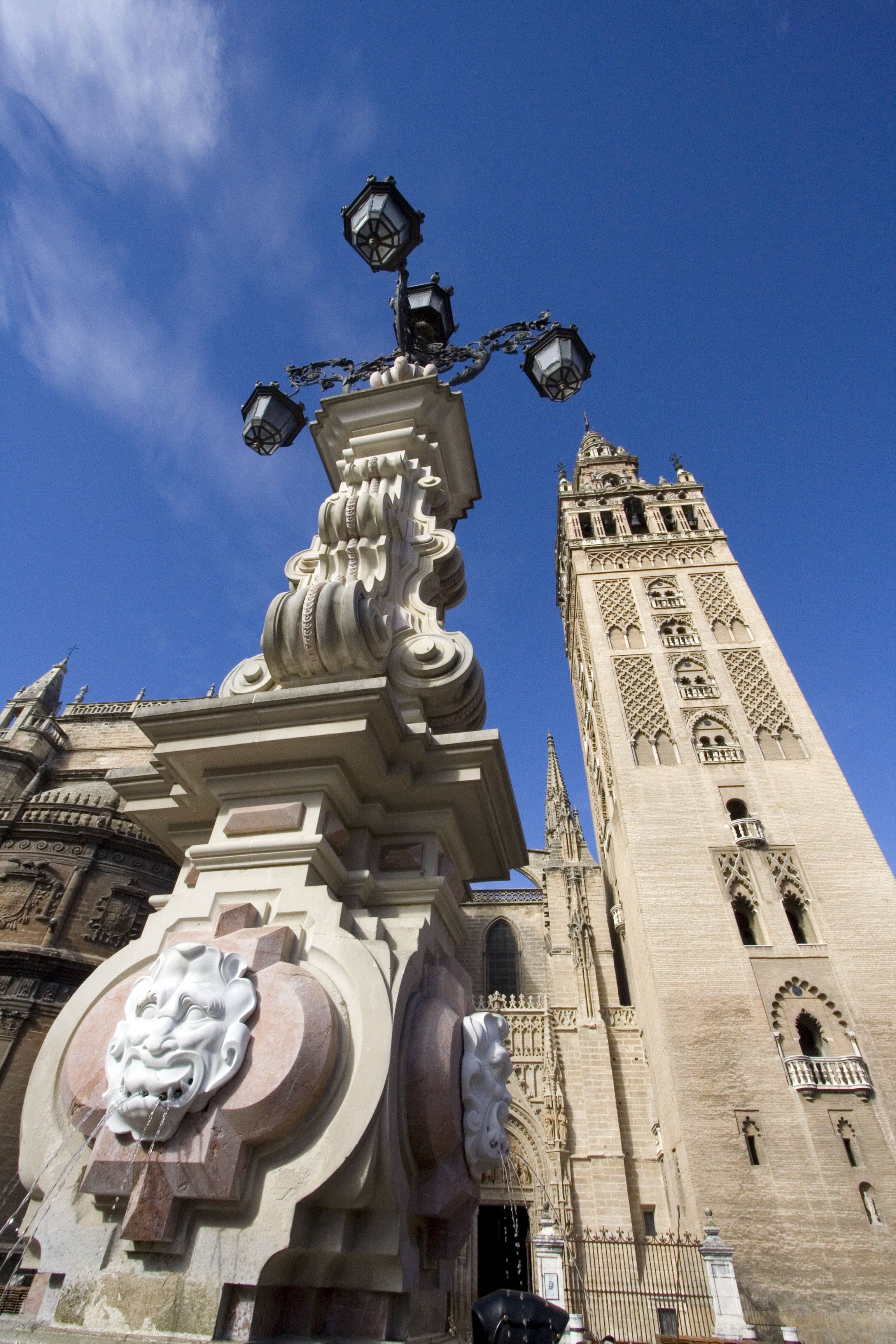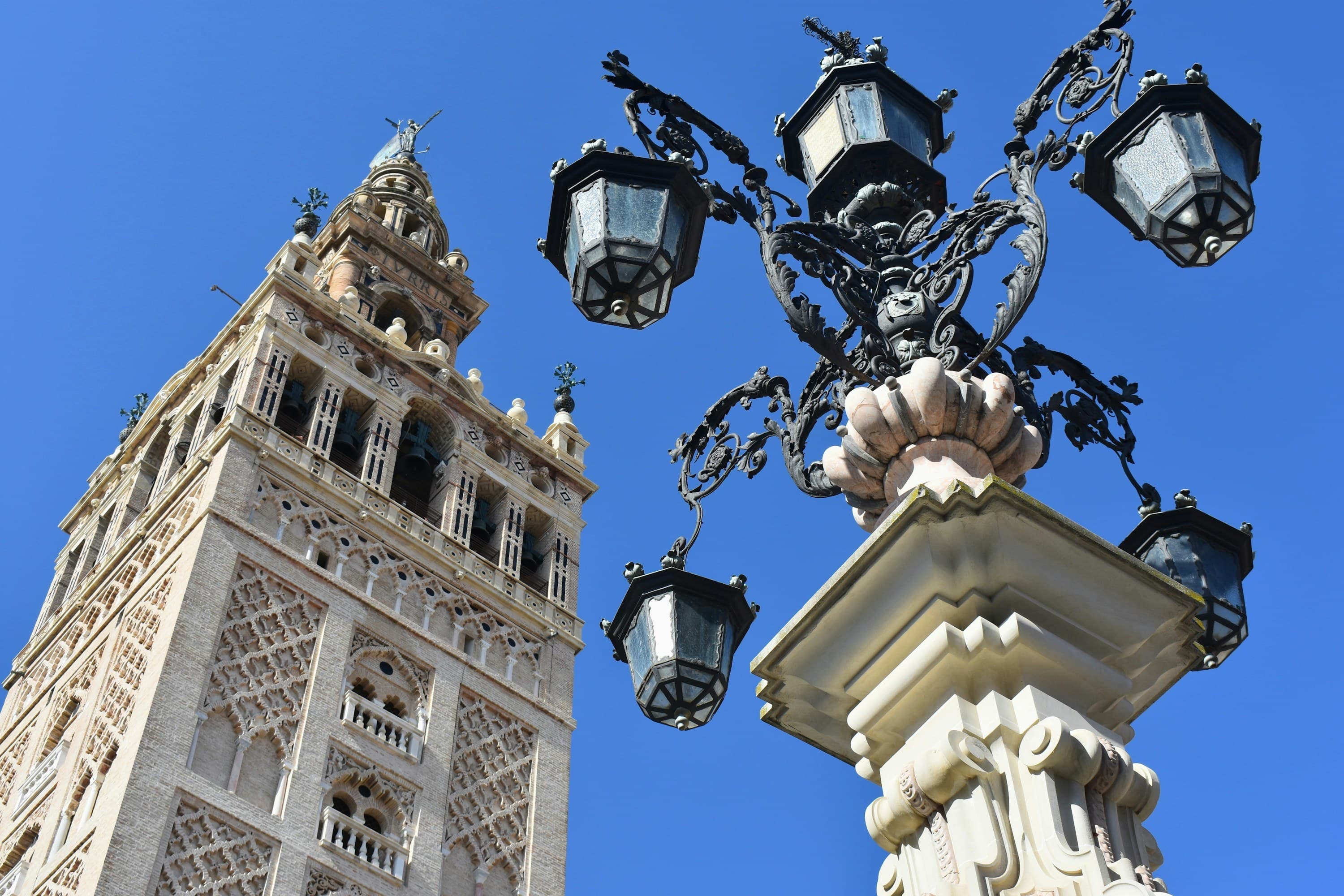
Cathedral, Giralda and Alcazar: Nobody Here Started From Nothing
90 min · 1.6 km · easy
Seville is usually sold as a city of orange courtyards, flamenco, and a cathedral the size of a small town. All of that is true. But it undersells the single fact that made the city what it is. For 214 years, Seville was the only place on Earth where you could legally trade with the Spanish Americas. Not the main place. The only place.
On the twentieth of January, 1503, Fernando the Second of Aragon and Isabel the First of Castile signed a royal decree founding the Casa de Contratación de las Indias, the House of Trade of the Indies. By law, every ship travelling to or from the New World had to sail to Seville and clear the Casa's officials. The institution operated from that date until 1717, when Felipe the Fifth moved it to Cádiz. Two centuries and fourteen years, without interruption. Everything you walk past in the old city is the physical residue of that one legal monopoly.
An inland port on purpose
The first thing to understand is why the gateway to an ocean empire is a city you cannot see the sea from. Seville sits about eighty kilometres up the Guadalquivir, the only major navigable river in Spain. The crown did not choose it by accident. It chose it for institutional reasons: inland enough to defend from the corsair raids that plagued the Mediterranean and Atlantic coasts, on a river deep enough for seagoing ships, and with port infrastructure the Almohads had already built four centuries earlier.
That inheritance is visible on the riverbank. The Torre del Oro, the dodecagonal tower on the Paseo de Cristóbal Colón, was built between 1220 and 1221 by order of the Almohad governor Abu l-Ulà. A chain once ran across the river from this tower to a twin on the far bank, the lost Torre de la Plata, controlling who could bring a ship upstream. By the time the Casa de Contratación was founded in 1503, that tower had been policing river access for 283 years. The empire simply took over machinery Muslim Seville had already installed. How far that continuity actually goes, and where it stops, is the argument of our Cathedral, Giralda and Alcazar: Nobody Here Started From Nothing walk, which tests the same claim against the tower, the city wall and the cathedral doors.
The office that ran an ocean
Hear a stop from this walk
Puerta del Perdon: Arabic on a Cathedral Door
The Casa was founded inside the Real Alcázar itself, in the rooms known as the Cuarto del Almirante, the Admiral's Quarter, and it worked there for its whole Seville life. It never occupied the archive building people now point at, which is a confusion worth clearing up before you visit either. Its first organizer was Juan Rodríguez de Fonseca, Isabel's chaplain and the crown's overseer of Columbus's expeditions. From those rooms the institution did four things at once, and each one is a founding act of modern administration.
It registered every ship sailing to or from the Spanish Americas. It collected the customs duties and the quinto real, the royal fifth on all silver and gold coming back across the Atlantic. It examined and certified the pilots and ship-masters of the Carrera de Indias, the annual fleet system, so that navigation itself became a licensed profession. And it built a documentary record of all of it. Merchants could not simply trade; they had to be logged, taxed, and filed.
That fourth function is the one that outlasted the empire. The paperwork the Casa generated over two centuries is still here, and it is staggering in scale.
Eighty million pages
Two hundred metres from where the institution actually worked stands a sober Renaissance block beside the Plaza del Triunfo. It reads, at first glance, as a slightly overscaled town palace. It is in fact the Archivo General de Indias, the largest single archive of colonial Spanish administration on Earth: roughly 43,000 volumes, about 80 million pages, on some nine kilometres of shelving.
Juan de Herrera, the architect of the Escorial, drew it as a merchants' exchange, the Casa Lonja de Mercaderes, built so that traders would stop conducting business on the cathedral steps and inside the church itself two hundred metres away. Herrera never ran the works. Building began in 1583 and finished in 1654 under six successive directors of the site, a date worth getting right because it is widely misprinted: the city's own catalogue sheet states the completion as 1654 and not 1598 as many sources cite.
Then comes the gap the tidy version skips. The trade left for Cádiz in 1717 and the exchange emptied; families moved into the rooms and lived there. What Carlos the Third turned into an archive in 1785 was, by then, a tenement, and the institution whose paperwork it was about to store had been gone from the city for sixty-eight years. UNESCO inscribed the building, together with the cathedral and the Alcázar, in 1987.
If you want that sequence on the ground, our Cathedral, Giralda and Alcazar: Nobody Here Started From Nothing walk opens at the Archivo and ends at the cathedral door the merchants were thrown out of, which is the reason the exchange was built at all. The full correction lives in our companion on the Casa de Contratación and the building that never housed it.
The city the monopoly built, and the people it moved
A monopoly on half the planet's trade does not stay contained in an office. It reshapes the city that holds it. The wealth funded the completion of a cathedral whose bell tower is a kept Almohad minaret and whose transept holds the tomb of Columbus. The demand for ships, tiles, and export goods turned the west bank of the river, Triana, into the industrial engine of the boom.
And it moved people. The same crown apparatus that registered silver also surveilled populations. Triana held an Inquisition tribunal from 1481, channelled moriscos after the expulsions of 1568 and 1609, and became home to a Romani community that in 1753 organised the first Romani religious brotherhood in the world. Out of that pressure cooker of displaced peoples on the industrial west bank came flamenco. Our Triana: Where Flamenco Was Born tour follows that human ledger, the one the archive across the river never fully recorded.
Why the thesis matters when you walk
Seville rewards a walker who knows the throughline. The cathedral, the Giralda, the Alcázar, the Torre del Oro, and the Archivo are not five unrelated monuments. They are five outputs of one fact: for 214 years, this river bend was the only legal door to the New World. Walk the city with that in mind and the buildings stop being a checklist and start reading as a single machine, still standing, that once ran an empire on paper.
Frequently asked questions
- Why was Seville so important to the Spanish Empire?
- From 1503 to 1717 Seville held a legal monopoly on trade with the Spanish Americas. Every ship sailing to or from the New World had, by law, to clear the Casa de Contratación in Seville. That single decree turned an inland river port into the administrative capital of an ocean empire and the collection point for the crown's royal fifth on all American silver and gold.
- Why is Seville inland and not on the coast if it was a great port?
- Seville sits about 80 km up the navigable Guadalquivir. The crown chose it precisely because it was inland enough to defend from corsair raids while still reachable by seagoing ships, with port infrastructure inherited from the Almohad period. The Torre del Oro had already been controlling river access since 1220.
- What was the Casa de Contratación?
- The Casa de Contratación de las Indias was the royal agency founded in 1503 that registered every ship, collected customs and the royal fifth, certified the pilots of the Carrera de Indias, and built the documentary archive of the empire. It operated without interruption for 214 years before moving to Cádiz in 1717.
- Where can I see this history in Seville today?
- The Real Alcázar (where the Casa was founded and worked), the Archivo General de Indias (which holds 80 million pages of the resulting records), the Torre del Oro on the river, and the Cathedral and Giralda all sit within a few hundred metres of each other. Roamer's Cathedral, Giralda and Alcazar walk starts at the Archivo and covers that monumental core in about 90 minutes, entirely on free public ground.
Ready to experience it?
Cathedral, Giralda and Alcazar: Nobody Here Started From Nothing
90 min · 1.6 km · easy
More from Seville
Explore more at your own pace.
One Day in Seville: A Walkable Old-Town and Triana Itinerary (2026)
Seville Travel Guide: How Many Days, Getting Around, When to Go (2026)
Nobody Here Started From Nothing: A Companion to Seville's Cathedral, Giralda and Alcázar
The Casa de Contratación Was Never in This Building
El Zurraque: The Pottery Quarter Where the Soleá Was Born