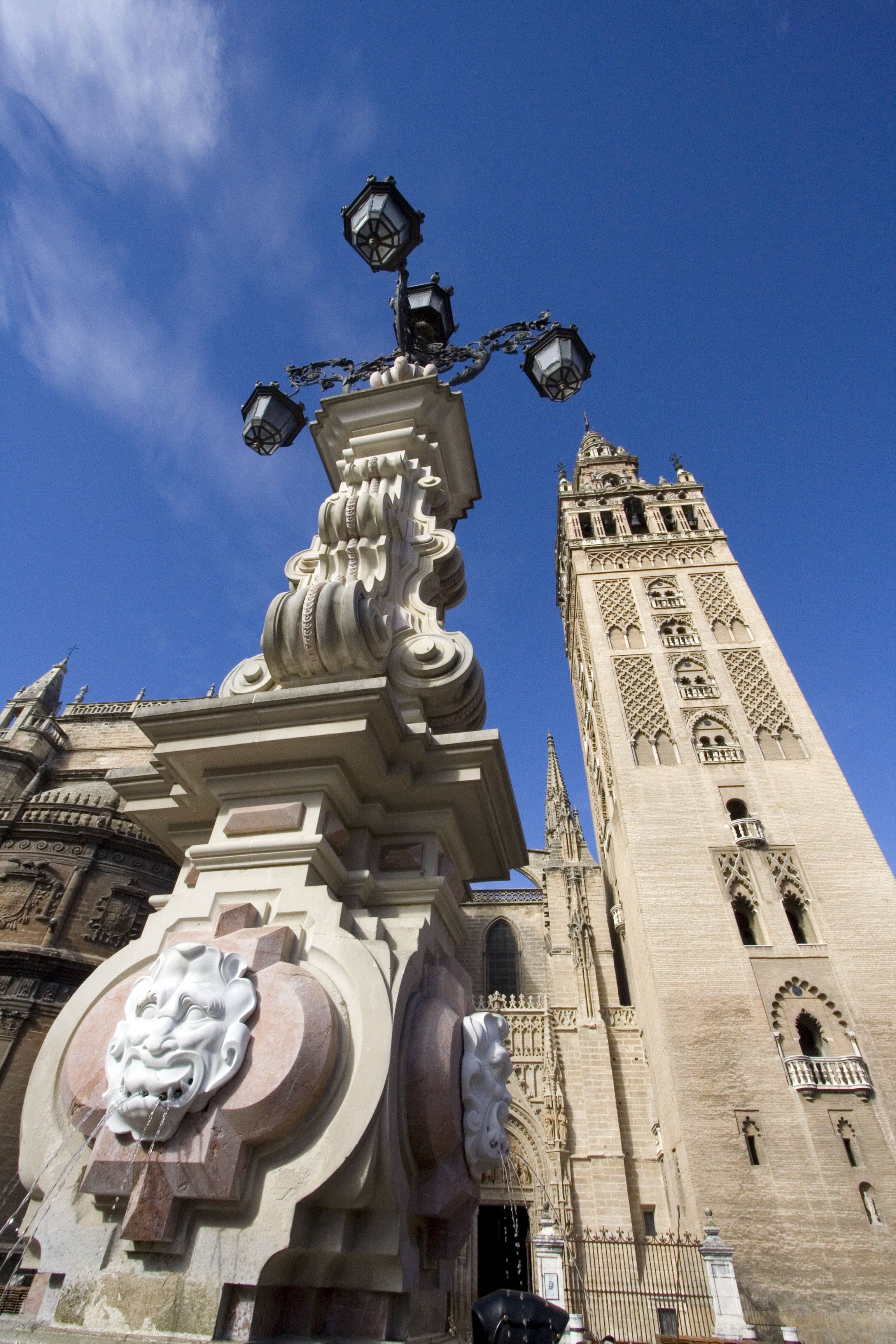
Cathedral, Giralda and Alcazar is a history walk of ten stops, about 1.6 km, roughly 90 minutes at your own pace. Every stop is a public street or a public square, so no part of the route needs a ticket. Its subject is the monumental core and the lanes immediately east of it, and its argument is a test rather than a tour of highlights. Seville tells a story about itself: that its conquerors moved into the city they took instead of clearing it and starting again. The walk checks that claim against the objects, finds it half true, and finds the other half stranger than the story.
Where the claim holds
The bell tower is the strongest evidence. The brick shaft under the bells is an Almohad minaret finished in 1198, and Castile kept it standing after 1248 rather than pulling it down. Three centuries later it got a Renaissance crown, and it has rung for a cathedral ever since. The full architectural story is in our piece on the Giralda's two stacked civilizations.
The second piece of evidence is a door you can stand in front of for free. The bronze-faced leaves of the Puerta del Perdón were made in the eleven nineties. Each leaf carries over two hundred pieces of flowered Kufic reading that power belongs to God and eternity is God's, and the knockers carry verses of the Qur'an. Nobody translated the inscriptions out. Nobody unscrewed them. They have been the front door of a Christian cathedral since 1248. Turn your back on that gate and look north, and you are standing on an axis the Almohads laid out in 1196 as the spine of their silk market, which ran through this arch and down the middle of the prayer hall to the mihrab.
Even the plumbing was inherited and then promoted. The wall that runs along the Callejón del Agua is not the palace wall, as most people are told. It is the wall of the medina, raised in rammed earth before 1171 to keep people out. In February 1172, after roughly seven centuries without running water, an engineer the chronicle names as al-Hajj Yaish traced the abandoned Roman line and brought water nineteen kilometres from the springs at Alcalá de Guadaíra. Rather than build anything new for the last stretch, they laid ceramic pipe against the inner face of the defensive wall and raised the parapet to carry it.
Where the claim breaks
Hear a stop from this walk
Puerta del Perdon: Arabic on a Cathedral Door
It breaks on the two buildings the claim is usually told about.
The mosque was not left standing. It was converted for Christian worship in 1248, and that lasted, but demolition of the prayer hall began in 1433. What the Gothic cathedral inherited from it was the outline and part of the foundations, not the building. The minaret, the courtyard of orange trees, and the gate survived the clearance around them.
The palace rooms people queue for break the claim harder. Pedro the First's fourteenth-century build was not a conversion of an Almohad palace. The city's own heritage catalogue describes that clearance as limpia y drástica, and it reused no Almohad structure at all except one rammed-earth wall that ended up buried. The continuity at the Alcázar is real, but it lives in the site and the enclosure, not in the rooms. A related correction sits under the Patio de Banderas, where thirty years of common knowledge held that Seville's first cathedral, the Visigothic basilica of San Vicente, lay beneath the paving. Between 2009 and 2014 archaeologists opened more than two thousand square metres of that ground and found no church, no baptistery, and nothing suggesting a bishop's complex. They found a large secular courtyard building from around the year 500, and six metres down, a Roman warehouse quarter that worked a port.
The third Seville, which is a hundred years old
The half of the story nobody sells is that the picturesque quarter east of the cathedral, the one that reads as untouched, is substantially a twentieth-century creation.
Plaza del Triunfo, the square where three World Heritage buildings answer to three different landlords, was not laid out as a square until 1918. The iron cross in Plaza de Santa Cruz, the single most photographed object in the quarter, was forged in 1692 for a different square the best part of a kilometre away, travelled for a century and a half, sat in a museum, and was planted where it stands now in 1918. The Jardines de Murillo were sliced off the palace orchard, and the street beside them was driven straight through the twelfth-century wall in 1911, which is the only reason the twelfth-century water pipe is visible as an object anywhere on the route. Plaza de la Alianza got its view of the medieval wall at the start of the 1960s, when the city expropriated the houses off the monument under the doctrine that a great building should be seen standing free. Plaza Virgen de los Reyes, where you finally see the whole tower at once, was a knot of buildings called the Corral de los Olmos until a demolition finished in 1791, and it got its present paving and its lamp-fountain for the 1929 exposition.
None of that makes the quarter fake. It makes it authored. The walk is learning to tell which is which.
The route, in order
- Archivo General de Indias. The one building on the walk that was not inherited, paid for by a tax of one third of one per cent on every item loaded or unloaded in the port. Its full story is in our companion on the Casa de Contratación and the building that never housed it.
- Plaza del Triunfo. Three World Heritage buildings, three owners, and a monument the city council made the cathedral chapter build shorter.
- Patio de Banderas. Free ground inside the Alcázar walls, and the best framed view of the Giralda on the route.
- Callejón del Agua. A defensive wall promoted to an aqueduct in 1172.
- Jardines de Murillo. The palace orchard, taken by the city in slices, with the wall sliced open beside it.
- Plaza de Santa Cruz. The cross that arrived in 1918, in a square named for a church the French pulled down in 1810.
- Hospital de los Venerables. A baroque retirement home for priests, and three great paintings that no longer hang in it.
- Plaza de la Alianza. A medieval wall with a 1960s view, in a square named in 1868 after a textile works.
- Plaza Virgen de los Reyes. The whole Giralda at once, on ground that was solid buildings until 1791.
- Puerta del Perdón. Arabic scripture on the bronze of a cathedral door, in use since 1248.
How to walk it
The route is flat, compact, and free from end to end, so the only real planning question is heat. From June to September the open squares are punishing between noon and five, so start early or take the last two hours of daylight. Two of the buildings you look at from outside are worth going into afterwards, and both the cathedral and the Real Alcázar sell out in high season, so book those online rather than queueing.
The tour is free to start in the Roamer app: the introduction and first stop play in full, and every later stop plays a short preview. For the wider reason this river bend accumulated so much, read our thesis on the port that monopolized the New World, and compare this route against the others on our best walking tours in Seville guide.
Ready to experience it?
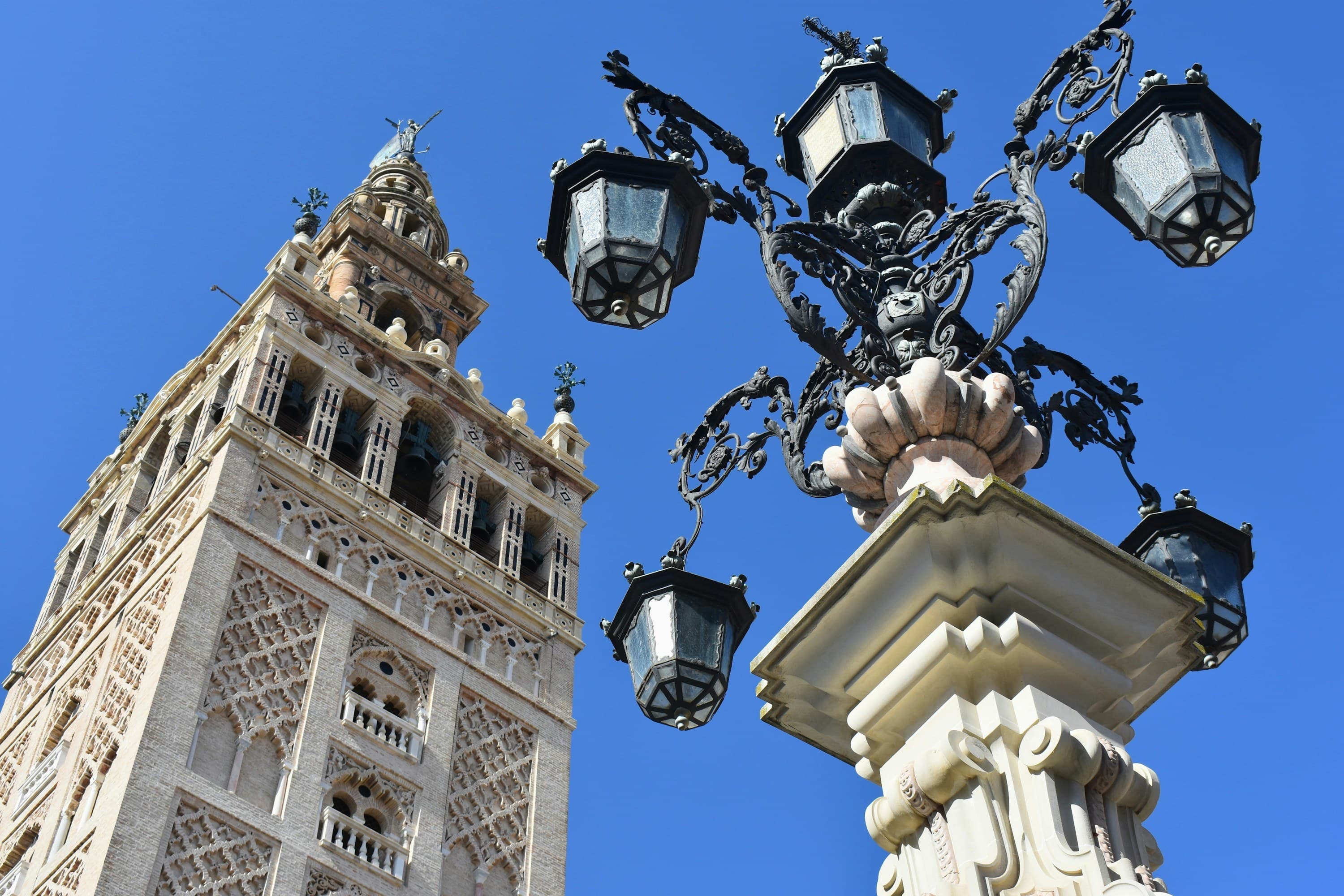
Cathedral, Giralda and Alcazar: Nobody Here Started From Nothing
90 min · 1.6 km · easy
More from Seville
Explore more at your own pace.
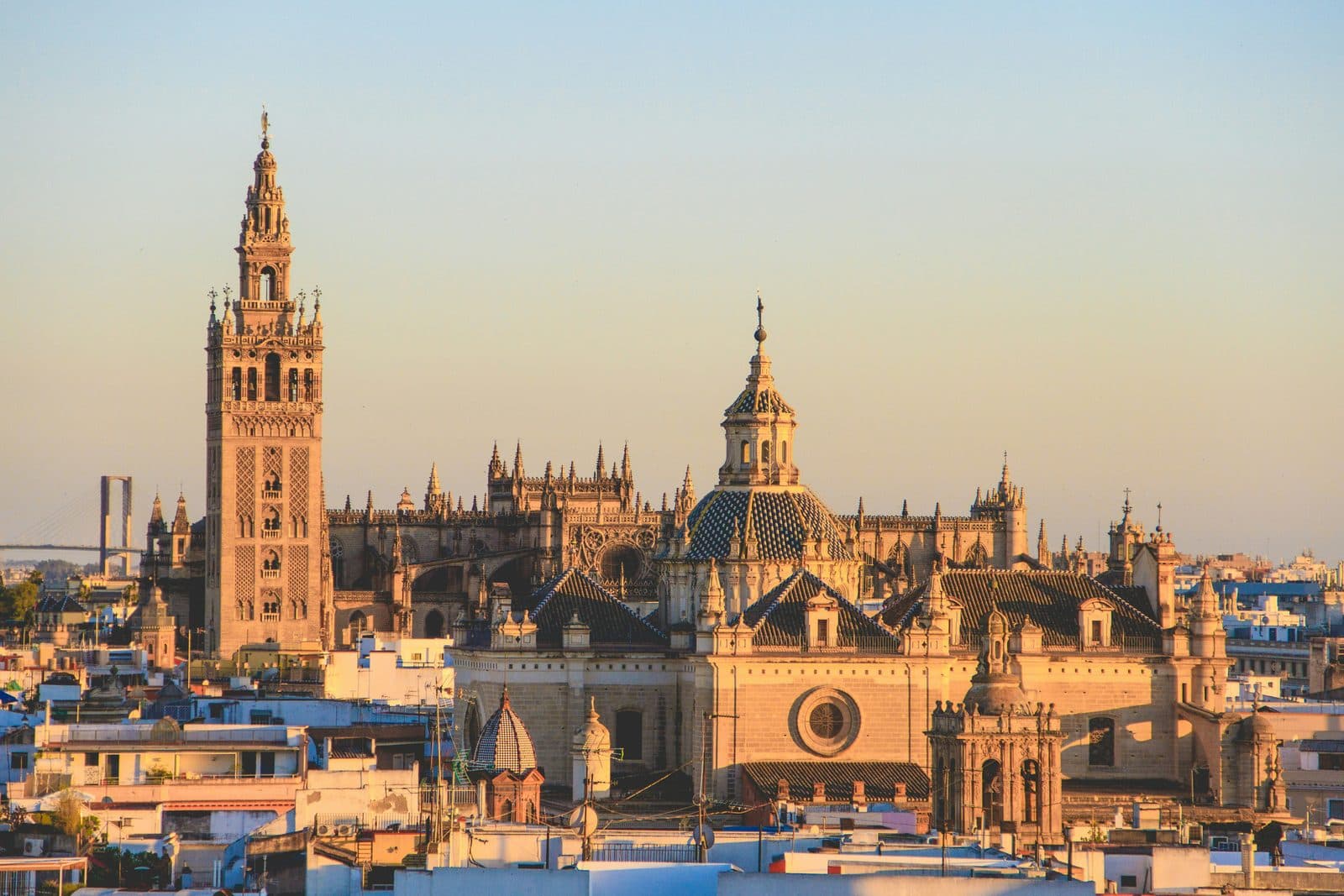
One Day in Seville: A Walkable Old-Town and Triana Itinerary (2026)
Seville Travel Guide: How Many Days, Getting Around, When to Go (2026)
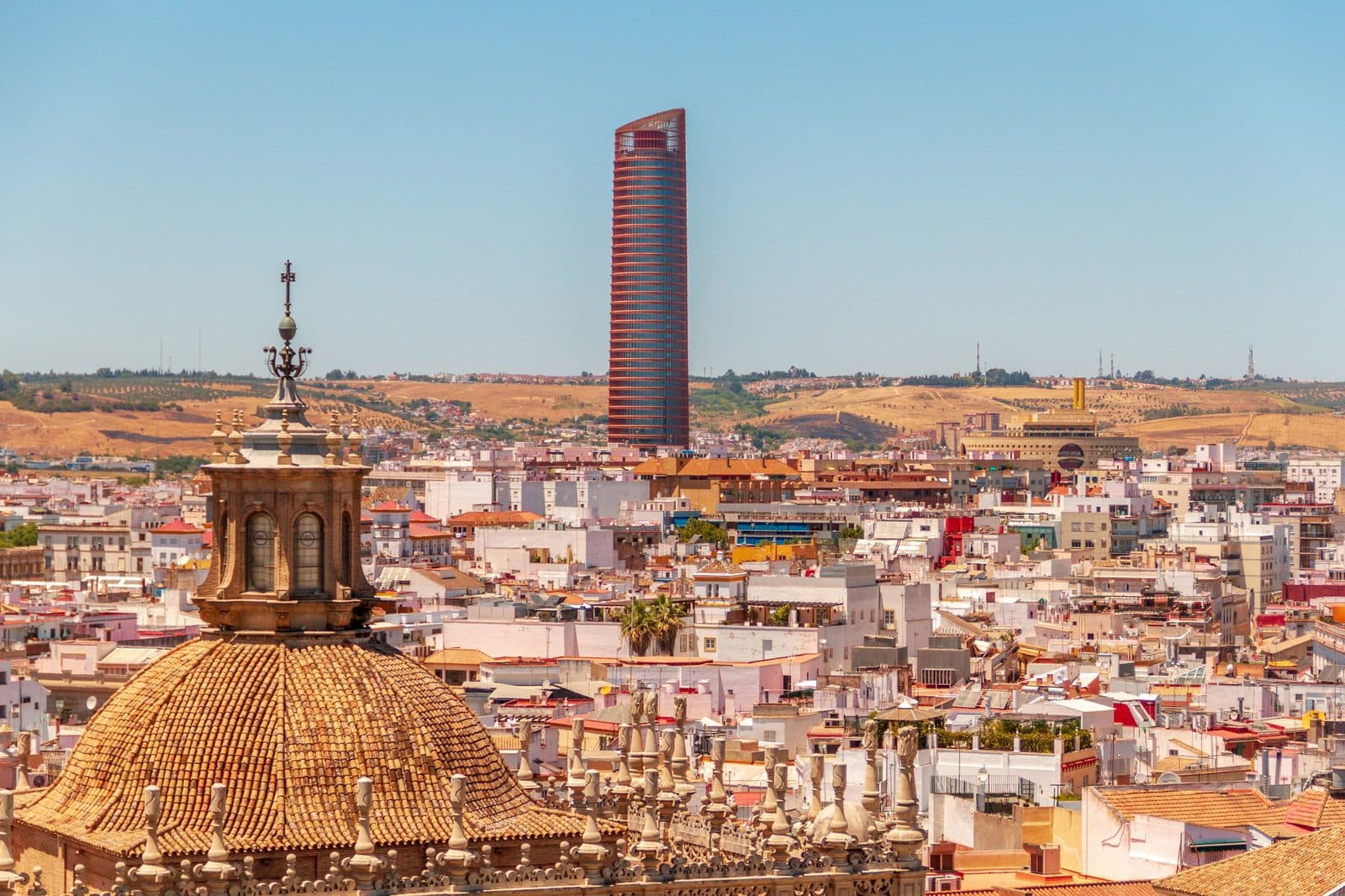
The Port That Monopolized the New World: How Seville Ran an Empire From One River Bend
The Casa de Contratación Was Never in This Building
El Zurraque: The Pottery Quarter Where the Soleá Was Born