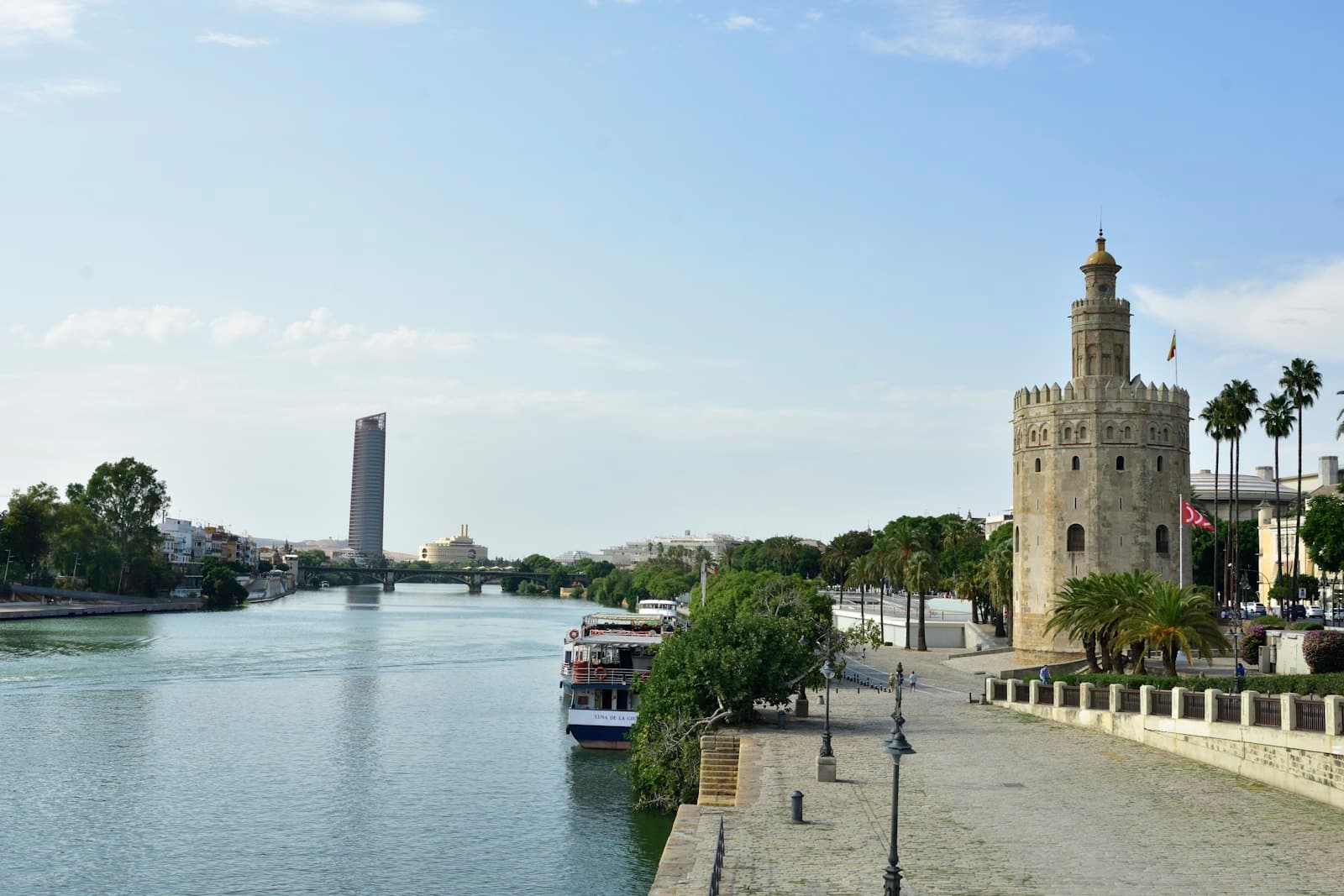
The Engine Room of the Spanish Americas
One royal decree in fifteen oh three, one Renaissance exchange building between fifteen eighty-four and sixteen forty-six, one Almohad river tower from twelve twenty, and the documentary record of two centuries of Spanish American empire compressed into eighty million pages on nine kilometres of shelving, two hundred metres from where the institution was founded.
4.28|100 minutes|2.1 km|7 Stops
Start
Patio de la Montería and Cuarto del Almirante: The Founding Site
1
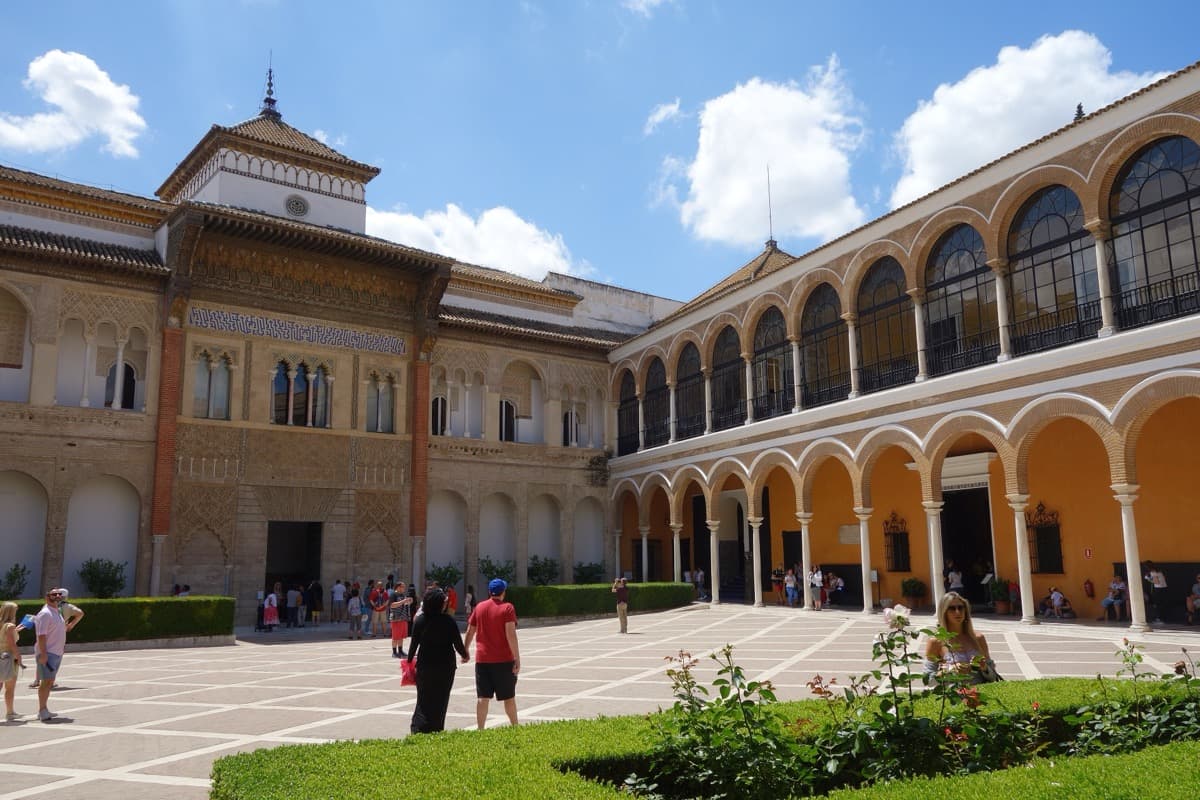
Patio de la Montería and Cuarto del Almirante: The Founding Site
Casa de Contratación founded by royal decree of Fernando the Second of Aragon and Isabel the First of Castile on twentieth of January, fifteen oh three. First headquarters in the Cuarto del Almirante of the Pedro the First palace wing. Organized initially by Juan Rodríguez de Fonseca.
2
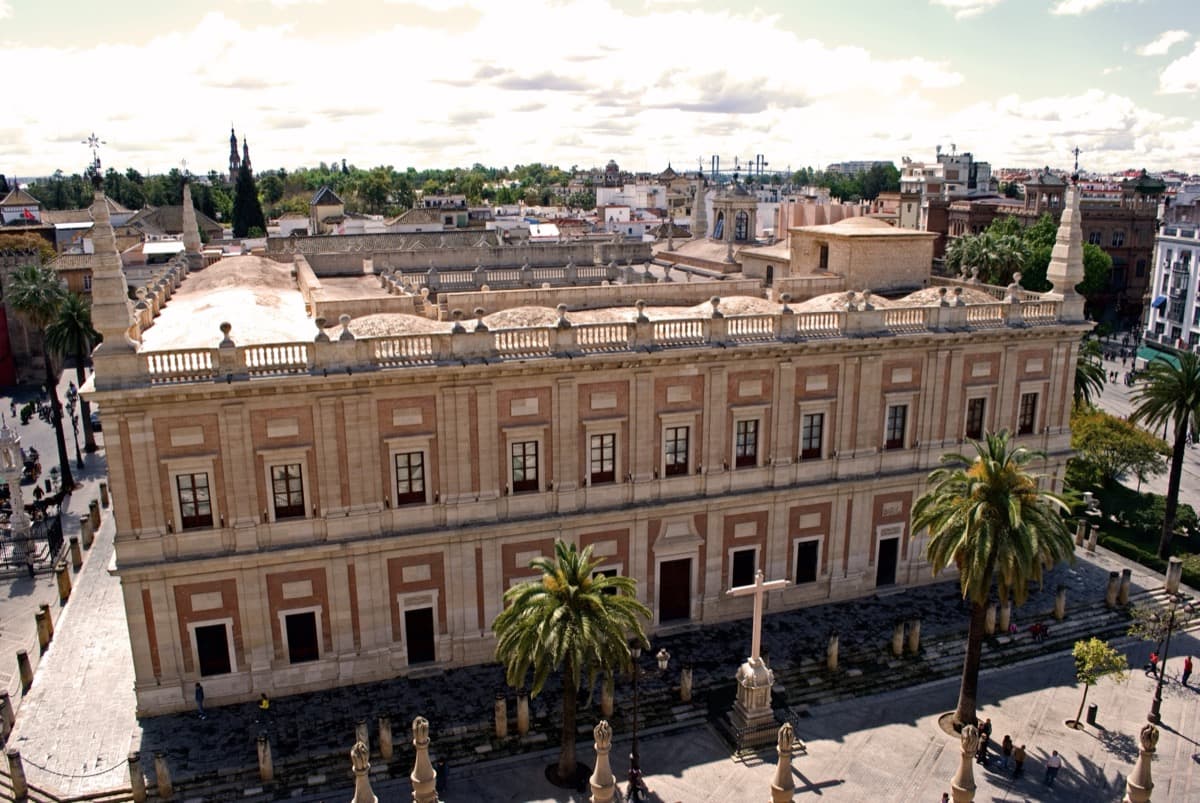
Archivo General de Indias: The Documentary Spine of Empire
Lonja de Mercaderes designed fifteen seventy-two by Juan de Herrera, the architect of the Escorial. Construction fifteen eighty-four under Juan de Mijares, continued by Alonso de Vandelvira, directed from sixteen oh nine by Miguel de Zumárraga, completed sixteen thirty-four to sixteen forty-six by Pedro Sánchez Falconete. Carlos the Third's decree February seventeen eighty-five; first documents October seventeen eighty-five. Roughly forty-three thousand volumes, eighty million pages, nine kilometres of shelving. UNESCO inscription three eighty-three, nineteen eighty-seven.
3
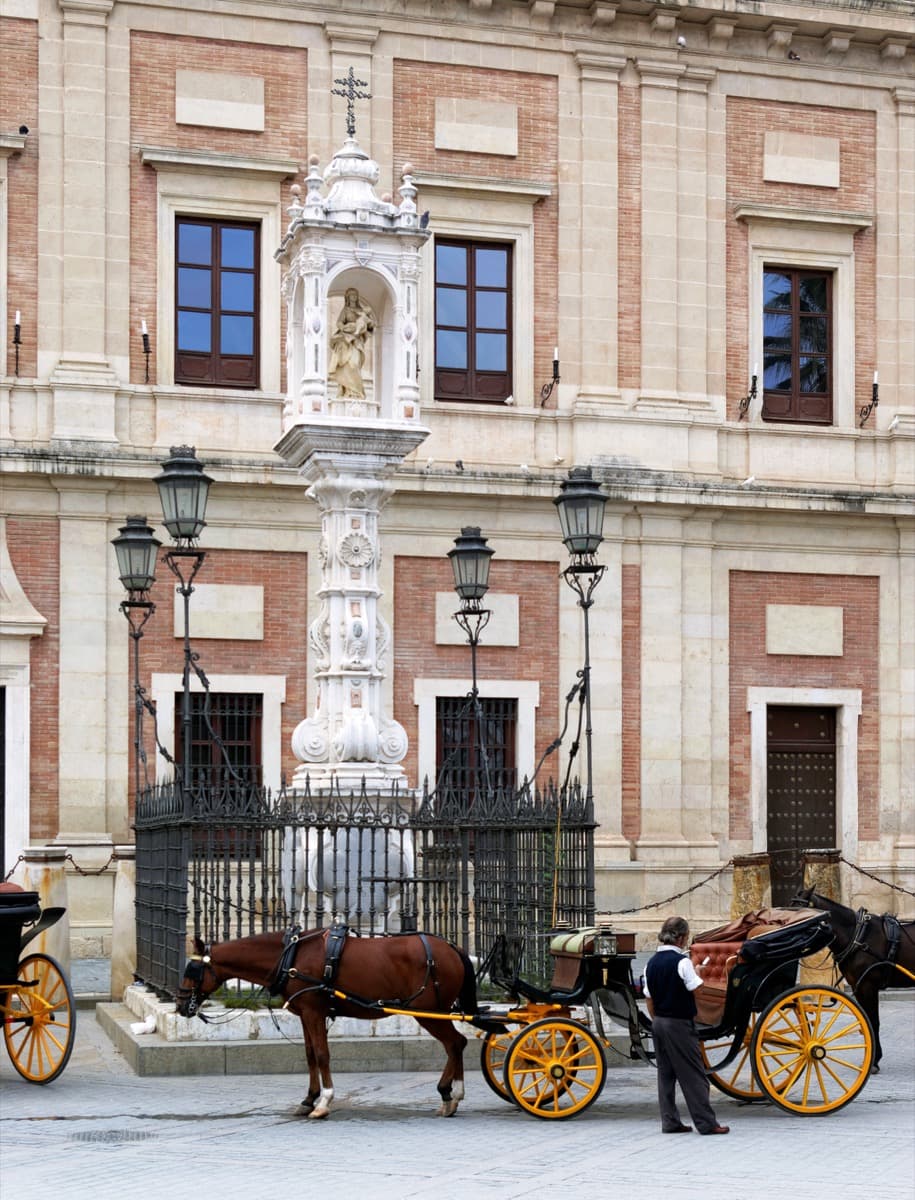
Plaza del Triunfo: The Three-Building Block
The plaza between the Real Alcázar to the east, the Archivo de Indias to the west, and the Seville Cathedral to the north. The three buildings of the UNESCO inscription three eighty-three, joint listing nineteen eighty-seven.
4
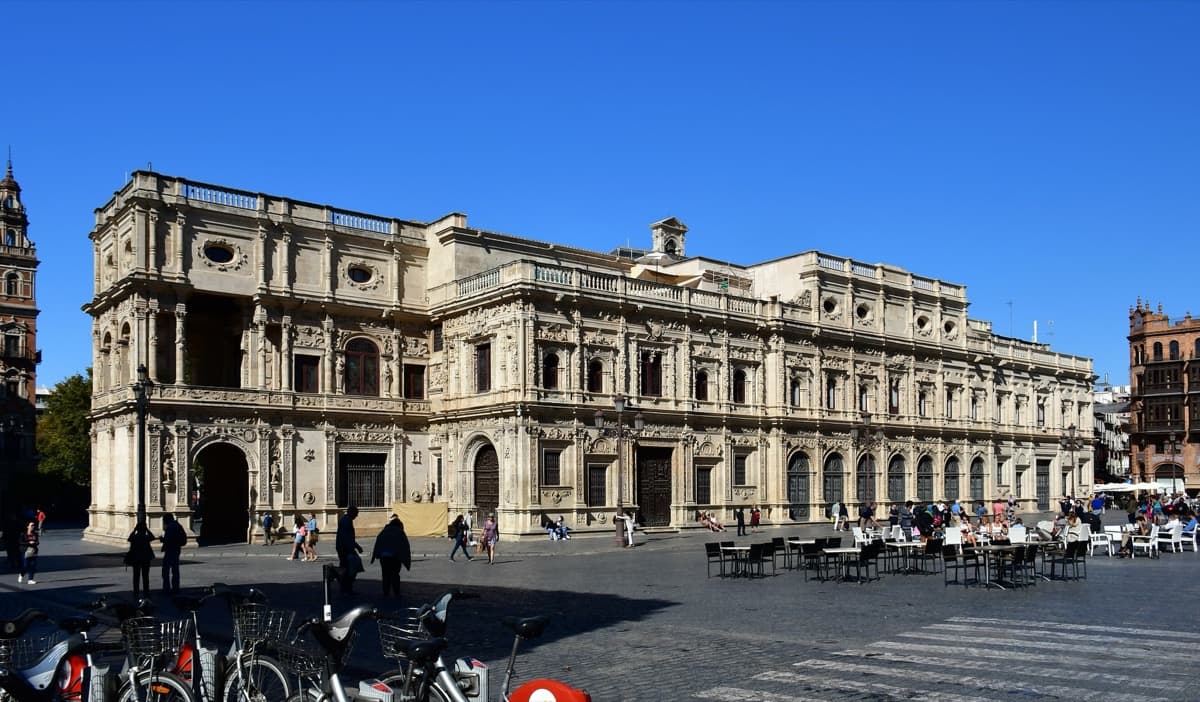
Plaza de San Francisco and the Ayuntamiento: The Civic-Judicial Spine
Ayuntamiento construction began fifteen twenty-seven under Diego de Riaño, who directed the work until his death in fifteen thirty-four. Plateresque facade on Plaza de San Francisco. Real Audiencia of Seville created in fifteen twenty-five by Carlos the First; ordinances issued fifteen fifty-six and fifteen sixty-six. First Iberian auto-da-fé held on this plaza in fourteen eighty-one, twenty-two years before the Casa was founded.
5
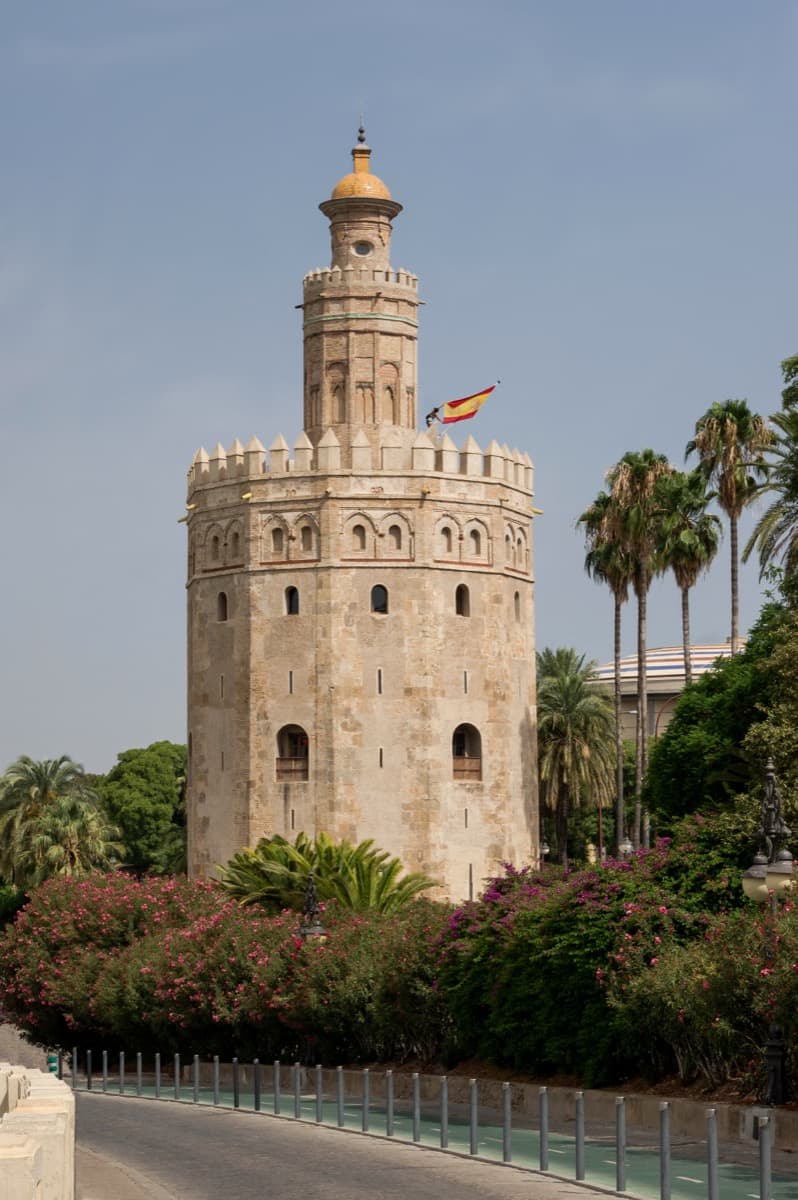
Torre del Oro: The Inherited Almohad Infrastructure
Built twelve twenty to twelve twenty-one by order of the Almohad governor Abu l-Ulà. Dodecagonal first level anchored a chain across the Guadalquivir, with the lost Torre de la Plata as the opposite anchor. Second level added by Pedro the First of Castile in the fourteenth century. Third level rebuilt seventeen sixty by Sebastian Van der Borcht after the seventeen fifty-five Lisbon earthquake. By fifteen oh three the tower had been controlling river access for two hundred and eighty-three years.
6
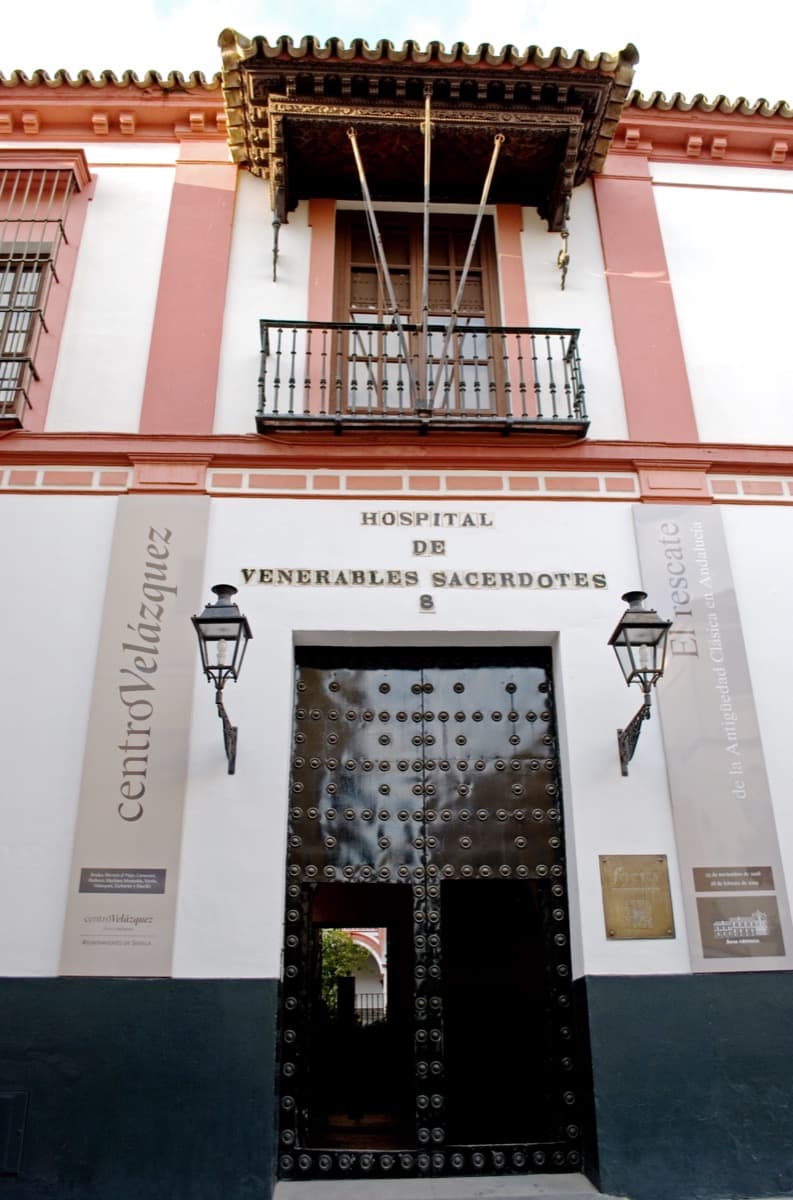
Hospital de los Venerables: Where the Silver Wealth Visibly Went
Founded sixteen seventy-five by Justino de Neve, canon of Seville Cathedral, as a hospital and retirement home for elderly priests. Juan Domínguez directed initial construction. Leonardo de Figueroa took over in sixteen eighty-seven and completed the building in sixteen ninety-seven. Interior holds works by Bartolomé Esteban Murillo and Juan de Valdés Leal. Stewarded by the Focus-Abengoa Foundation since nineteen ninety-one.
7
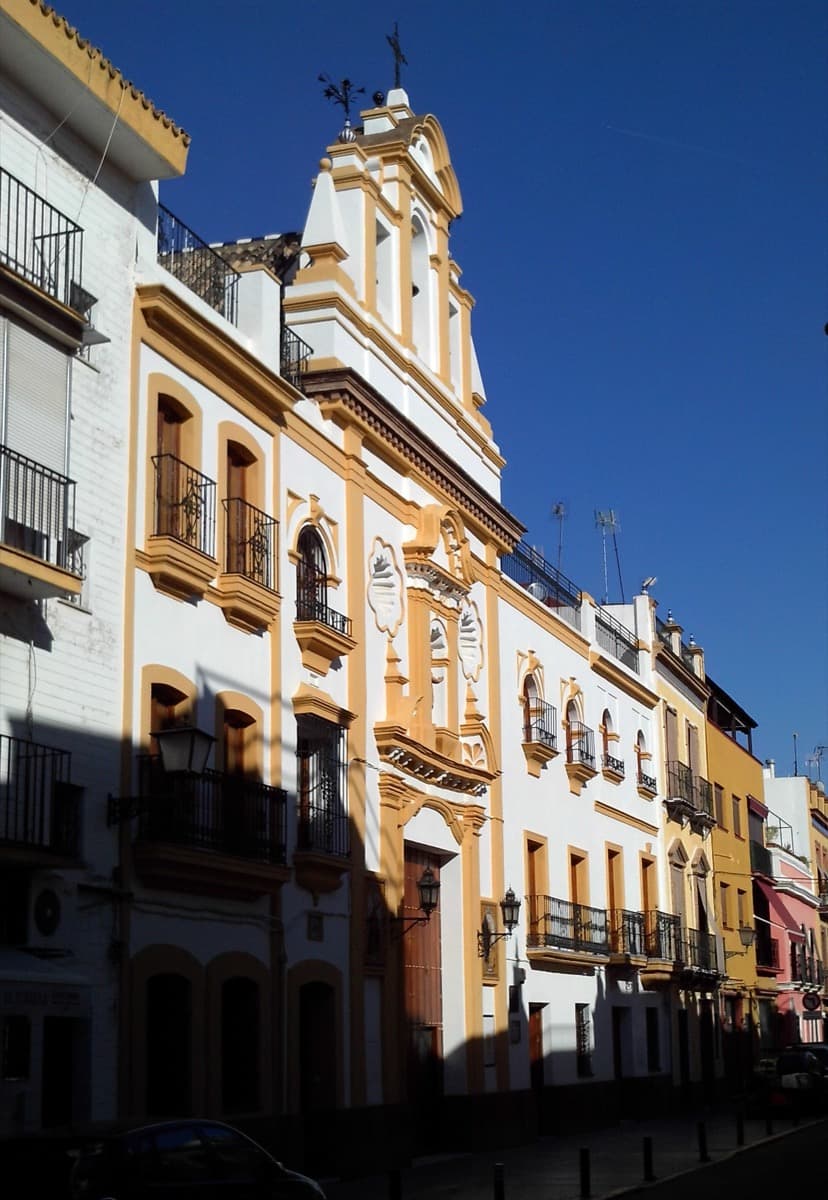
Capilla de los Marineros: The Human End of the Supply Chain
Current chapel structure seventeen fifty-nine. Institutional site of the Universidad de Mareantes, the navigation guild founded by Felipe the Second in fifteen fifty-six to examine and certify pilots and ship-masters for the Carrera de Indias. The guild and the chapel are two hundred and three years apart. Aurelio Gómez Millán reconstruction project nineteen fifty-eight, blessing nineteen sixty-two.
Best Time to Visit
Tuesday through Sunday, late morning into early afternoon. The Real Alcázar at Stop one opens at nine thirty in the morning and requires a timed-entry ticket, so a ten o'clock entry lets you reach the Archivo de Indias at Stop two during its public-access hours. The Archivo's public exhibition rooms generally open mid-morning and close mid-afternoon; verify current hours at the Ministerio de Cultura's Archivo General de Indias portal before you go. The Plaza del Triunfo, the Plaza de San Francisco, the Torre del Oro exterior, and the Capilla de los Marineros facade on Calle Pureza are open-air and accessible at any hour. The Hospital de los Venerables at Stop six is operated by Fundación Focus on ticketed admission; current hours are posted at fundacionfocus.com. Avoid the high summer afternoons. Seville's July and August midday temperatures regularly exceed forty degrees Celsius, and the Plaza del Triunfo and the Paseo de Cristóbal Colón are largely without shade.
Pro Tips
- •Stop one anchors at the Patio de la Montería inside the Real Alcázar. The Alcázar requires a timed-entry ticket; book online in advance at realalcazarsevilla.org to avoid the queue at the Puerta del León. The audio anchors at the patio itself, which is part of the standard visit, so you do not need to navigate to the Cuarto del Almirante interior to follow the stop.
- •Stop two, the Archivo General de Indias, has free public-access exhibition rooms on a published schedule; the research reading room is for scholars. The audio anchors on the south facade in the Plaza del Triunfo, so the stop works without entry. If you do enter, the central courtyard and the patio are the architectural payoff, and the rotating exhibitions draw directly from the eighty-million-page collection.
- •Stop five is the Torre del Oro on the Paseo de Cristóbal Colón. The audio anchors at the base of the tower on the riverbank. The tower interior houses a small naval museum with a modest admission fee. Worth twenty minutes if you want to see the tower from inside; the audio works without entry.
- •Stop six, the Hospital de los Venerables, is ticketed admission under Fundación Focus. The audio anchors on the small Plaza de los Venerables outside the entrance. Inside, the central patio and the church holding the Valdés Leal cycle are the payoffs. Murillo's Inmaculada de Soult, painted for this building, is no longer here; it is at the Prado in Madrid after Marshal Soult removed it during the Napoleonic occupation.
- •Stop seven, the Capilla de los Marineros on Calle Pureza in Triana, is an active religious site of the Esperanza de Triana hermandad. Visit during posted hours; respect ongoing services. The audio anchors on the street outside the chapel, so the stop works at any hour. If you want to see the Esperanza de Triana image inside, check the hermandad's published opening times before you cross the river.
- •The walk from the Hospital de los Venerables in Barrio Santa Cruz to the Capilla de los Marineros in Triana crosses the Guadalquivir on the Puente de Isabel the Second, also called the Puente de Triana. About eight hundred metres, ten minutes. The bridge has separate pedestrian lanes; stay on the pavement and watch for cyclists.
- •Chetham's-style note on what is not on this tour. The Cathedral, the Giralda, and the Real Alcázar palace interiors belong to a different Seville tour focused on the three-civilizations architectural paradox. Triana's neighborhood character, the ceramic district, Calle Betis, and the flamenco history belong to a third Seville tour focused on Triana as a place. This tour holds the institutional thesis only. If you want the full Seville, plan all three walks across two or three days.
Safety & Precautions
- The walking route is approximately two point one kilometres across uneven surfaces. Cobblestone in Barrio Santa Cruz, stone paving on the Plaza del Triunfo and the Plaza de San Francisco, the Paseo de Cristóbal Colón along the riverbank, and the Puente de Isabel the Second crossing into Triana. Wear flat closed shoes. Listeners with mobility constraints should know that the Barrio Santa Cruz approach to the Hospital de los Venerables involves narrow lanes and stepped surfaces in places.
- Seville summer heat is significant. July and August midday temperatures regularly exceed forty degrees Celsius. The Plaza del Triunfo, the Paseo de Cristóbal Colón, and the Puente de Isabel the Second crossing are largely without shade. Bring water, a hat, and plan the walk for the morning or for the late afternoon outside the high summer.
- The Real Alcázar at Stop one requires a timed-entry ticket booked in advance. Without a ticket the Puerta del León queue can extend to one or two hours in high season. The audio anchors at the Patio de la Montería which is inside the ticketed perimeter, so the stop requires a valid ticket to follow on site.
- The Hospital de los Venerables at Stop six is ticketed admission under Fundación Focus. The audio anchors on the small Plaza de los Venerables outside the entrance, so the stop works without entry. If you want to see the patio and the church interior, verify current hours before you arrive.
- The Capilla de los Marineros at Stop seven is an active religious site. Respect ongoing services and dress modestly if entering. The audio anchors on Calle Pureza outside the chapel facade, so the stop works at any hour without entry.
- The Puente de Isabel the Second crossing between the Hospital de los Venerables and the Capilla de los Marineros is a working road bridge with separate pedestrian lanes. Cyclists use the bridge; stay on the pedestrian side. The Guadalquivir below is fast-flowing in winter and spring; do not climb on the bridge parapet.
- Seville is a busy tourist city with corresponding pickpocket risk in the Plaza del Triunfo, the Plaza de San Francisco, and Barrio Santa Cruz. Keep wallets and phones in front pockets or zipped bags. The Triana side is calmer but the riverbank stretches near the Torre del Oro see heavy pedestrian traffic in afternoon hours.
Gallery
Related Reading
Go deeper on what you'll see, hear, and walk through.
Overview
Best Self-Guided Walking Tours in Seville (2026)
4 min
Overview
One Day in Seville: A Walkable Old-Town and Triana Itinerary (2026)
5 min
Overview
Seville Travel Guide: How Many Days, Getting Around, When to Go (2026)
5 min
Thematic
Best History Walking Tours in Seville (2026)
2 min
Thematic
The Port That Monopolized the New World: How Seville Ran an Empire From One River Bend
6 min
Companion
The Engine Room Tour: What You Are Actually Walking in Seville
4 min