Ribeira: The City of the River
95 min · 2.9 km · moderate
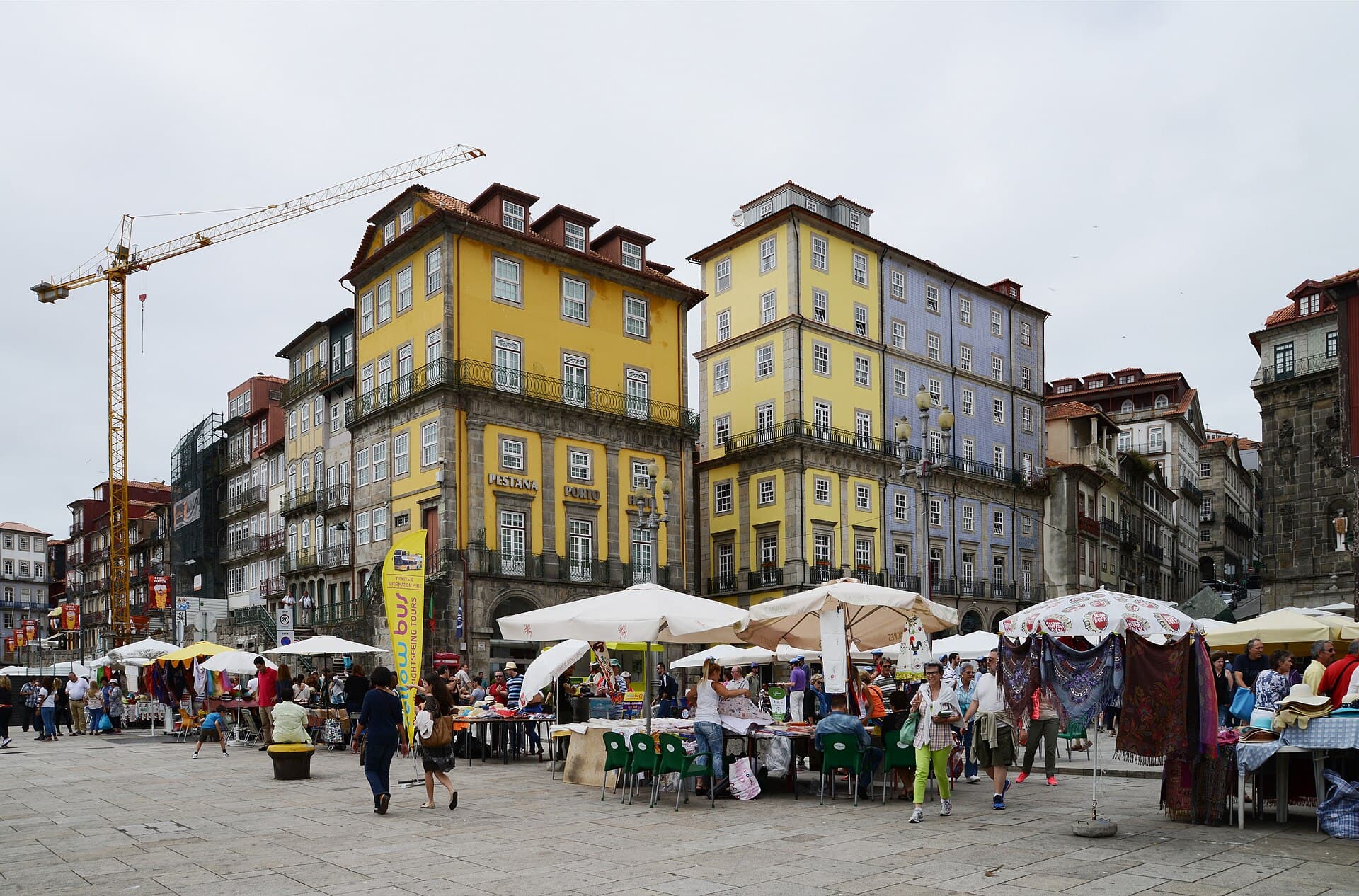
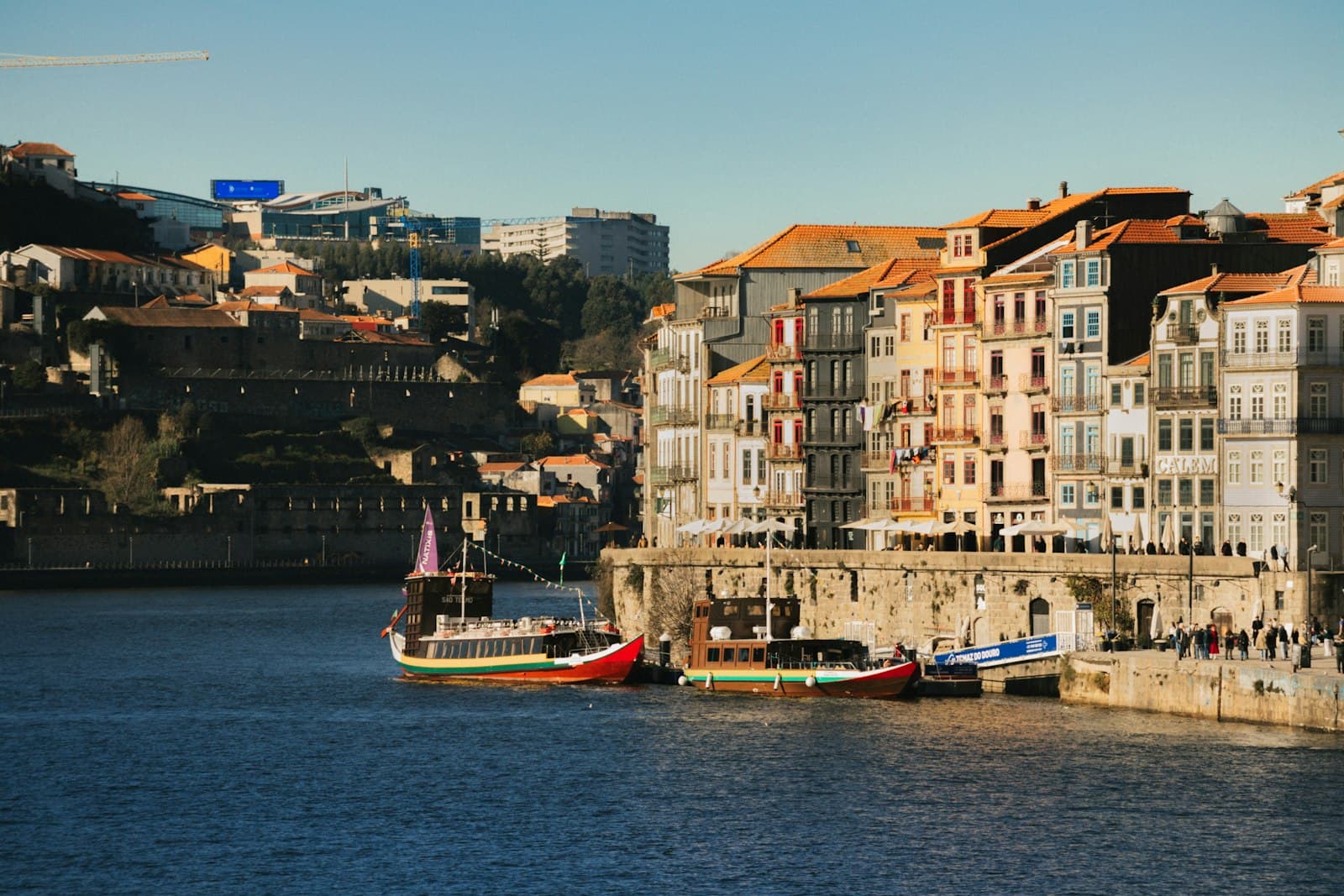
Porto faces its river. Everything the city became was built along the Douro, the mountain river that carried wine and cork and cargo down from the interior and sent wealth back up. Read across Porto's three walking tours and one through-line holds: this is a granite city of the Douro, austere in its grey stone yet exuberant on its surfaces, in gilded baroque and glazed blue-and-white tile, whose port wine and iron bridges carried the city's name, and the country's name, around the world. The stone does the standing. The gold, the tile, the wine, and the bridges do the talking.
Start with the granite itself, because it is the fact under everything else. Porto is quarried grey stone stacked into churches, houses, and civic halls that carry a certain reserve. The city's river-descent tour begins at the Sé, the Romanesque cathedral on Penaventosa, the windy rock that is the highest point of the old city. Begun around the year eleven ten, the Sé was cut to be a fortress as much as a church, thick-walled and defensive, one of the first buildings in Portugal to use flying buttresses. Its founding ties to the parents of the country, Count Henry of Burgundy and Dona Teresa, whose son Afonso Henriques became Portugal's first king. From that hilltop the whole city falls away toward the water. That descent, from crown to commerce to crossing, is the spine of Porto.
The river built the city, and the city taxed the river
Follow the water downhill and you reach the working heart of the old port. The Casa do Infante, built by royal decree in the year thirteen twenty-five, was the customs house where every cask of wine and load of cork moving on the Douro was weighed and taxed. It sits on a Roman villa, its mosaics still beneath the floor, a reminder that this riverbank has been a commercial site since antiquity. By tradition, though not by documented fact, it is the birthplace of Henry the Navigator, a story the chronicler Fernão Lopes seeded and the city has cherished ever since.
The clearest statement of where Porto's power came from is the Palácio da Bolsa, the stock-exchange palace. The key fact is who built it: not a king, not the church, but the Commercial Association of Porto, the city's merchants and traders. They raised it on the ruins of a Franciscan convent burned during the eighteen thirty-two siege, on ground Queen Mary the Second gave them in eighteen forty-one, and they built themselves a home for trade grander than any royal seat. Its Salão Árabe, the Moorish-revival Arab Room, took nearly two decades to finish, from eighteen sixty-two to eighteen eighty. The single most magnificent room on the descent was built by traders, to honour trade. In Porto, wealth came not from a crown but from the river.
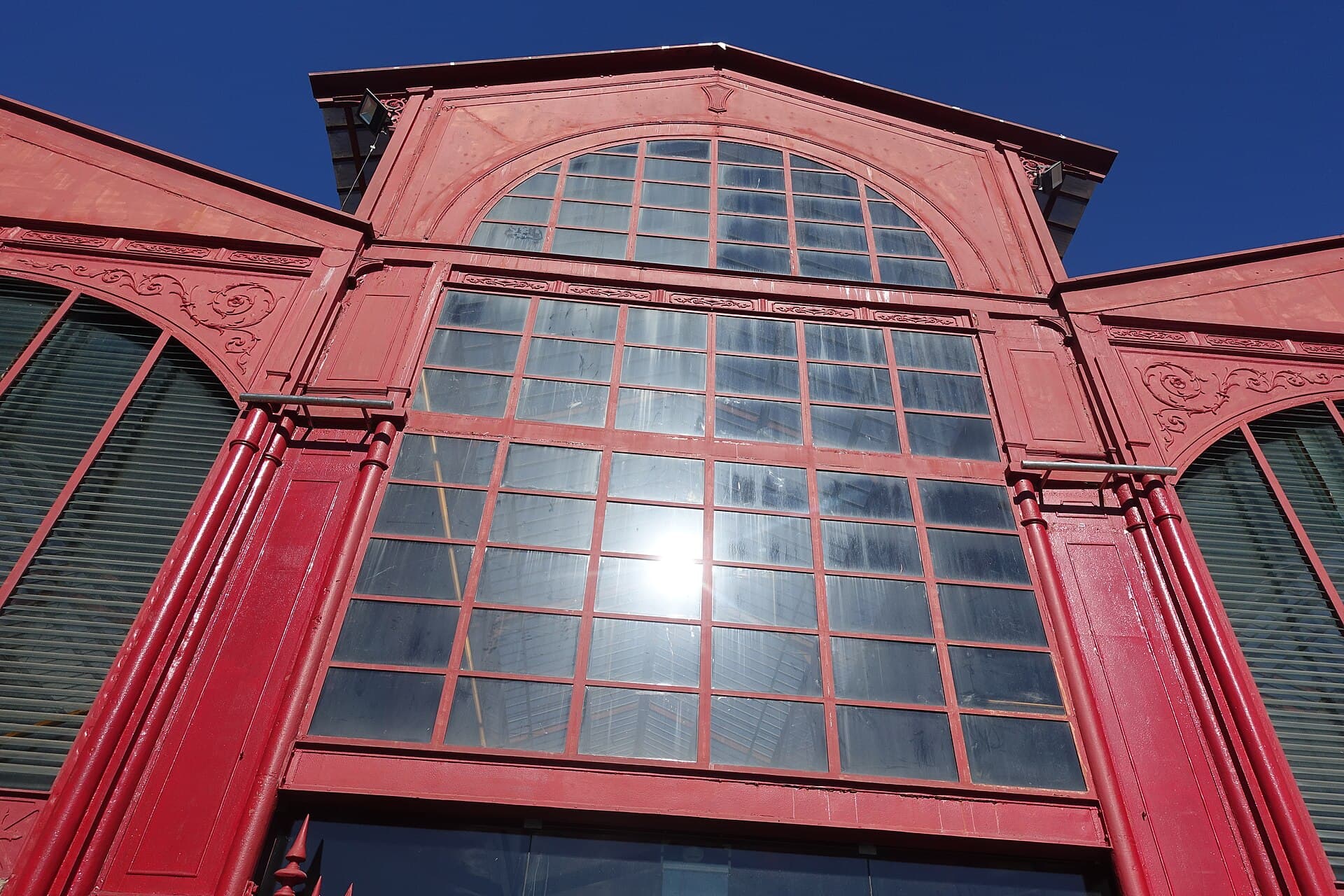
The industrial age wrote the same lesson in iron. The Mercado Ferreira Borges, a cast-iron and brick market hall built between eighteen eighty-five and eighteen eighty-eight, was meant to replace the older riverside Mercado da Ribeira. It never sold a thing. The old traders simply refused to leave their spots, and the gleaming new hall stood purpose-built and unwanted. You can build the finest hall in the city and still not move people from the market they love.
Austere stone, exuberant surface
Hear a stop from this walk
Ponte Dom Luís I: The Marriage of the Two Banks
Here is the paradox the baroque and tile tour reads directly. The granite bones stand quietly; everything applied to them does the talking. The clearest case on the river walk is the Igreja de São Francisco, begun in thirteen eighty-three under King Ferdinand the First with a plain, honest Gothic face. Step inside and the century flips: in the first half of the seventeen hundreds nearly every surface was smothered in talha dourada, gilded carved woodwork, until the architecture nearly vanishes beneath it. The sources genuinely disagree on how much gold, with estimates running from close to one hundred kilograms to around four hundred, so the truthful figure is hundreds of kilograms, uncertain. Beneath the gold lies its counterweight: an ossuary of thousands of bones, visible through a glass panel in the floor. Gold above, bone below, the whole baroque bargain in one building.
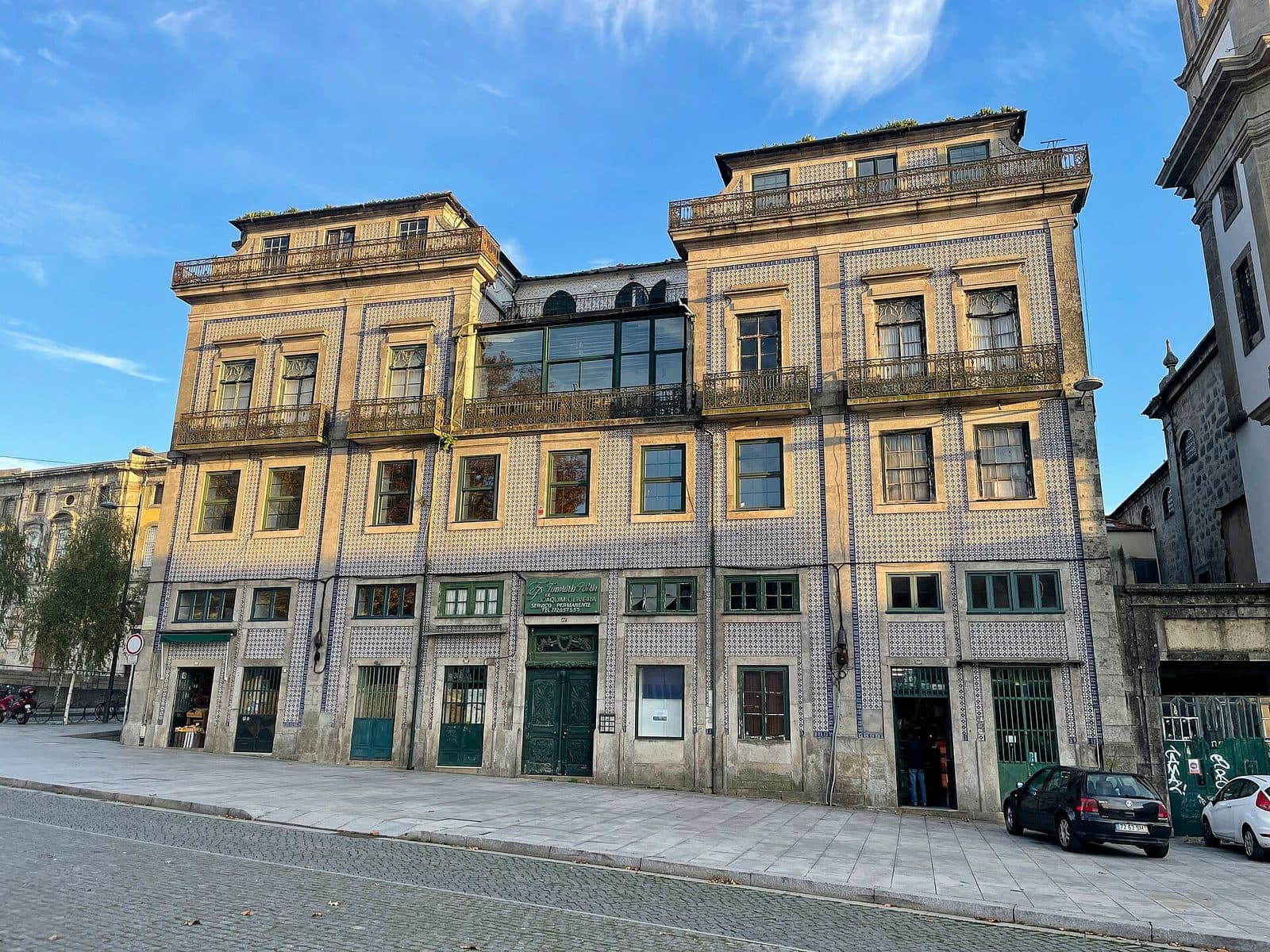
The tile tour makes the surface its subject. It opens at the Torre dos Clerigos, the baroque bell tower that climbs seventy-five point six metres of grey granite carved into theatrical curves, designed by the Italian architect Nicolau Nasoni, who came to northern Portugal in the eighteenth century and never left. From there the walk tracks skin after skin. The great azulejo wall of the Igreja do Carmo looks centuries old but was added in nineteen twelve. The Capela das Almas wears fifteen thousand nine hundred forty-seven blue-and-white tiles applied in nineteen twenty-nine, over a chapel whose walls were once plain white plaster. The tour is honest about this: most of Porto's famous tiled skins are not baroque at all, but early twentieth-century revival dressing older stone in an older style.
That revival reaches its climax at the Estação de São Bento, a working railway station whose entrance hall holds about twenty thousand tiles across five hundred fifty-one square metres, painted by Jorge Colaço across roughly eleven years, from about nineteen oh five to nineteen sixteen. The panels carry great moments of Portuguese history and everyday rural life, so an ordinary commuter station became a public narrative of the nation. And then, at the Avenida dos Aliados, the surfaces fall away entirely: bare monumental granite, the stone that did all the standing finally doing the talking.
The wine and the bridge carried the name across the world
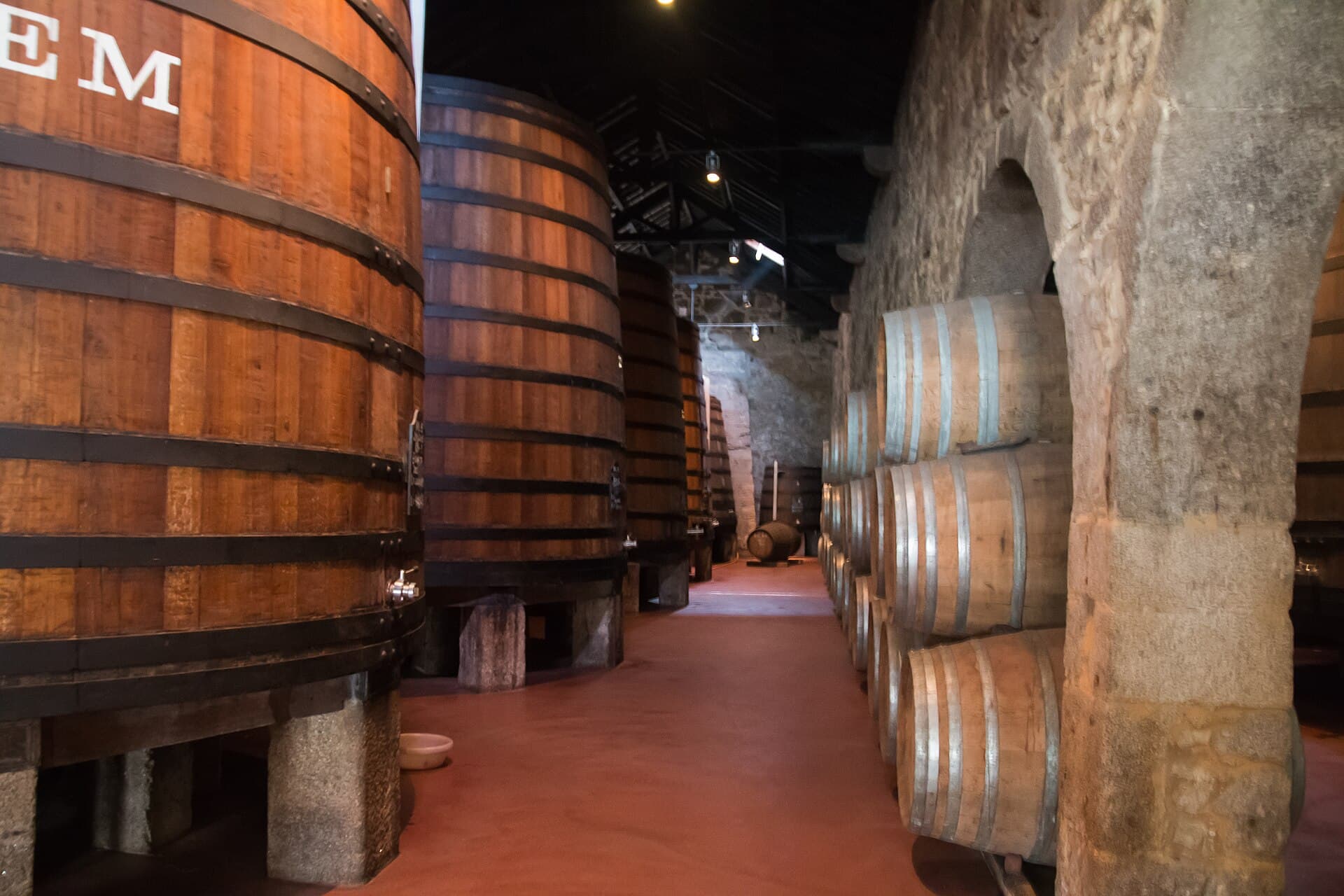
The port wine tour resolves the last piece of the through-line and, with it, the paradox of the city's name. The wine called port is not grown in Porto and not made there. The grapes ripen on terraced slopes about eighty kilometres upstream, in the valley formally demarcated by royal charter on the tenth of September, seventeen fifty-six, under the Marquis of Pombal, described as the world's first formally demarcated wine region. The barrels sleep across the river at Vila Nova de Gaia, made the official storage bank for all exporters by a rule of seventeen seventy-seven. And the wine's sweet, sea-durable character was engineered for a foreign market: fortified with brandy to survive the voyage north after the Methuen Treaty of seventeen oh three tied Portuguese wine to English demand. The name Porto is a shipping label the world learned to read.
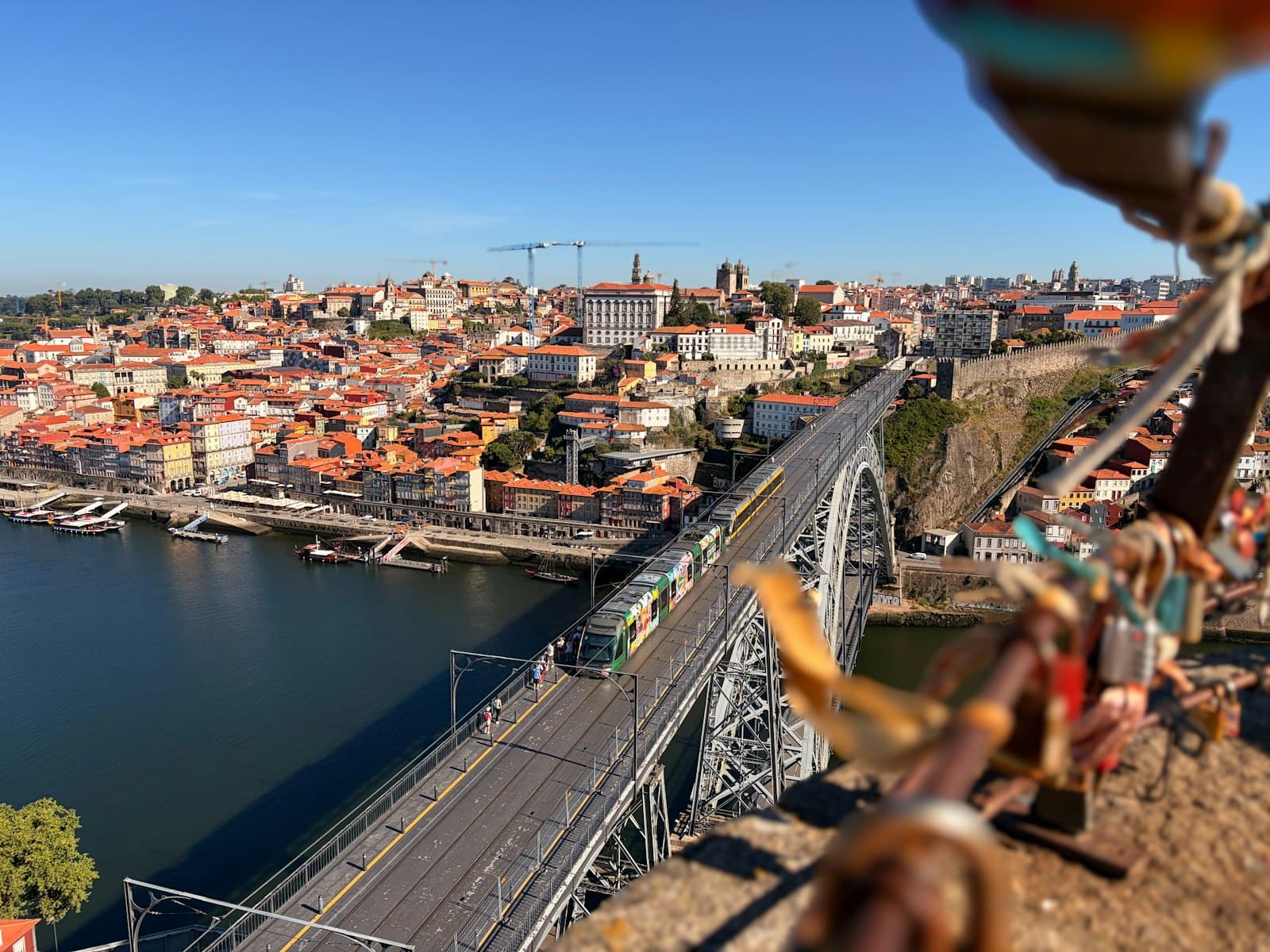
For a thousand years the river both made the city and divided it, its two banks staring across water no one could easily cross. The Ponte Dom Luís the First, the double-deck iron arch inaugurated on the thirty-first of October, eighteen eighty-six, finally married them. Its central arch spans about one hundred seventy-two metres. And it corrects a beautiful lie: Gustave Eiffel did not design it. The designer was Théophile Seyrig, Eiffel's former partner, whose design won a competition in eighteen eighty. The confusion comes from the nearby Maria Pia railway bridge, which Eiffel's company built to another Seyrig design.
That is the whole city in one arc. It begins on a windy granite hilltop looking down at water it cannot cross, drops through a merchant quarter of gold and iron, and ends out over the middle of the river, on the crossing that joined the two banks. The granite held. The gold and tile spoke. The wine and the iron carried the name of a river-mouth port, Portus Cale, across a whole country and out to the world. To walk all three routes, start at the Porto walking tours hub.
Sources
- Sé do Porto, Palácio da Bolsa, São Francisco, Ribeira, and Ponte Dom Luís I details: Roamer tour "The City of the River" (/portugal/porto/tours/porto-ribeira)
- Torre dos Clerigos, Igreja do Carmo, Capela das Almas, Santo Ildefonso, and São Bento tile details: Roamer tour "Granite Dressed in Gold and Tile" (/portugal/porto/tours/porto-clerigos-azulejos)
- Methuen Treaty, Douro demarcation, Vila Nova de Gaia lodges, and rabelo boats: Roamer tour "The Wine That Named a Country" (/portugal/porto/tours/porto-gaia-port-wine)
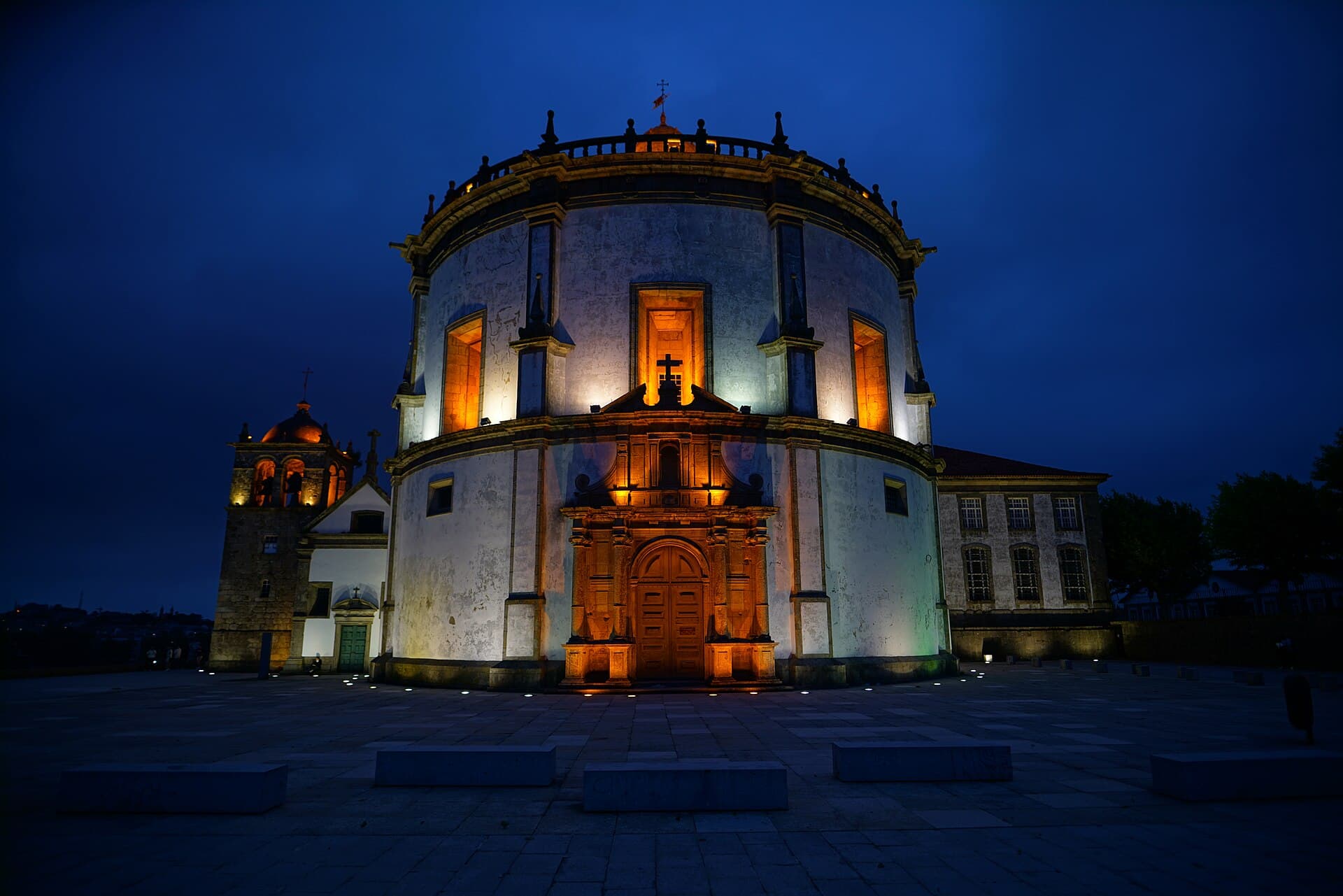
- UNESCO World Heritage Centre, Historic Centre of Porto, Luiz I Bridge and Monastery of Serra do Pilar (inscribed 1996): https://whc.unesco.org/en/list/755
- UNESCO World Heritage Centre, Alto Douro Wine Region (inscribed 2001): https://whc.unesco.org/en/list/1046
Frequently asked questions
- Why is the wine called port when it isn't made in Porto?
- The name is a shipping label, not a birthplace. The grapes grow on terraced slopes in the Douro valley about eighty kilometres upstream, and the barrels are aged across the river at Vila Nova de Gaia, made the official storage bank for exporters by a rule of seventeen seventy-seven. Port was shipped out from the city of Porto, so it took the city's name.
- Did Gustave Eiffel design the Dom Luis I bridge in Porto?
- No. The double-deck iron arch bridge, inaugurated on the thirty-first of October, eighteen eighty-six, was designed by Theophile Seyrig, a former partner of Eiffel, whose design won a competition in eighteen eighty. The confusion comes from the nearby Maria Pia railway bridge, which Eiffel's company built to another Seyrig design.
- Are Porto's famous azulejo tiled buildings actually old?
- Many of the most photographed tiled walls are early twentieth-century revival, not original baroque. The Igreja do Carmo's great side panel was added in nineteen twelve, and the Capela das Almas was clad in nineteen twenty-nine over walls that were previously plain white plaster. They were made deliberately in an older style, dressing older stone.
- How is Porto connected to the name Portugal?
- In Roman times there was a port at the mouth of the Douro called Portus Cale. Portus is Latin for port or harbour, and Cale was an older pre-Roman settlement whose meaning is genuinely lost. From that river-mouth port came the name that spread across the whole country.
- What are Porto's main self-guided walking tours about?
- Roamer offers three Porto tours that share one through-line. One descends the Douro from the fortress cathedral to the iron bridge, one reads the city's baroque gold and blue-tile surfaces, and one crosses the river to trace how port wine got its name. Each is roughly two hours with short, skippable stops.
Ready to experience it?
Ribeira: The City of the River
95 min · 2.9 km · moderate
More from Porto
Explore more at your own pace.
One Day in Porto: A Walkable Itinerary From Cathedral to River
The Porto Market Hall That Never Sold a Thing
Why Port Wine Ages Across the River in Gaia, Not in Porto
Livraria Lello: How Porto Built a Bookshop Like a Cathedral
Mosteiro da Serra do Pilar: The Round Church That Watches Porto