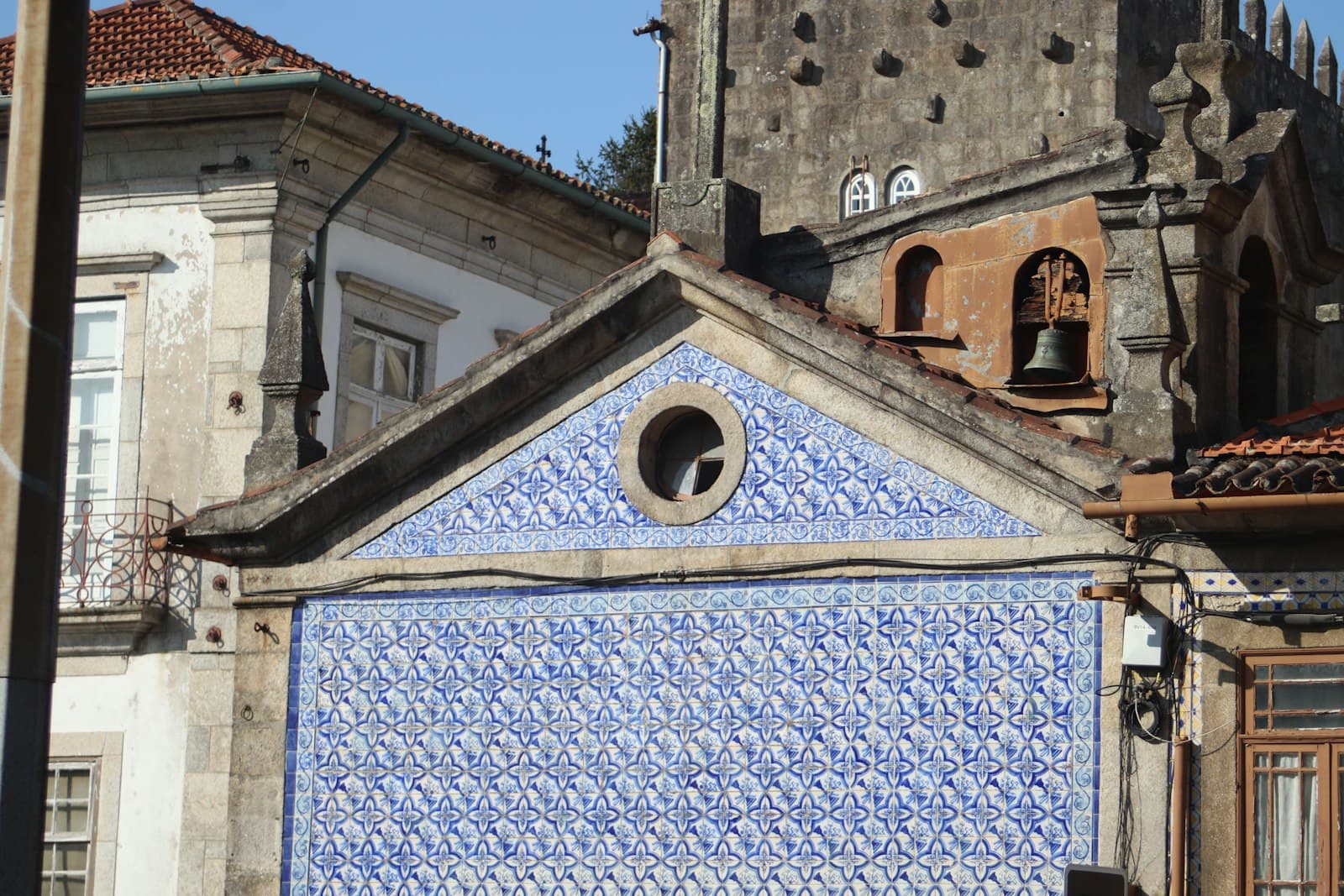
Granite Dressed in Gold and Tile
A walk through a reserved granite city that told its grandest stories not in its bones but on its surfaces, in baroque gold and glazed blue-and-white azulejo. Read Porto like a set of decorated pages, and meet the makers whose hands recur across it.
4.35|100 minutes|3.6 km|7 Stops
Start
Torre dos Clerigos: The Baroque Overture
1
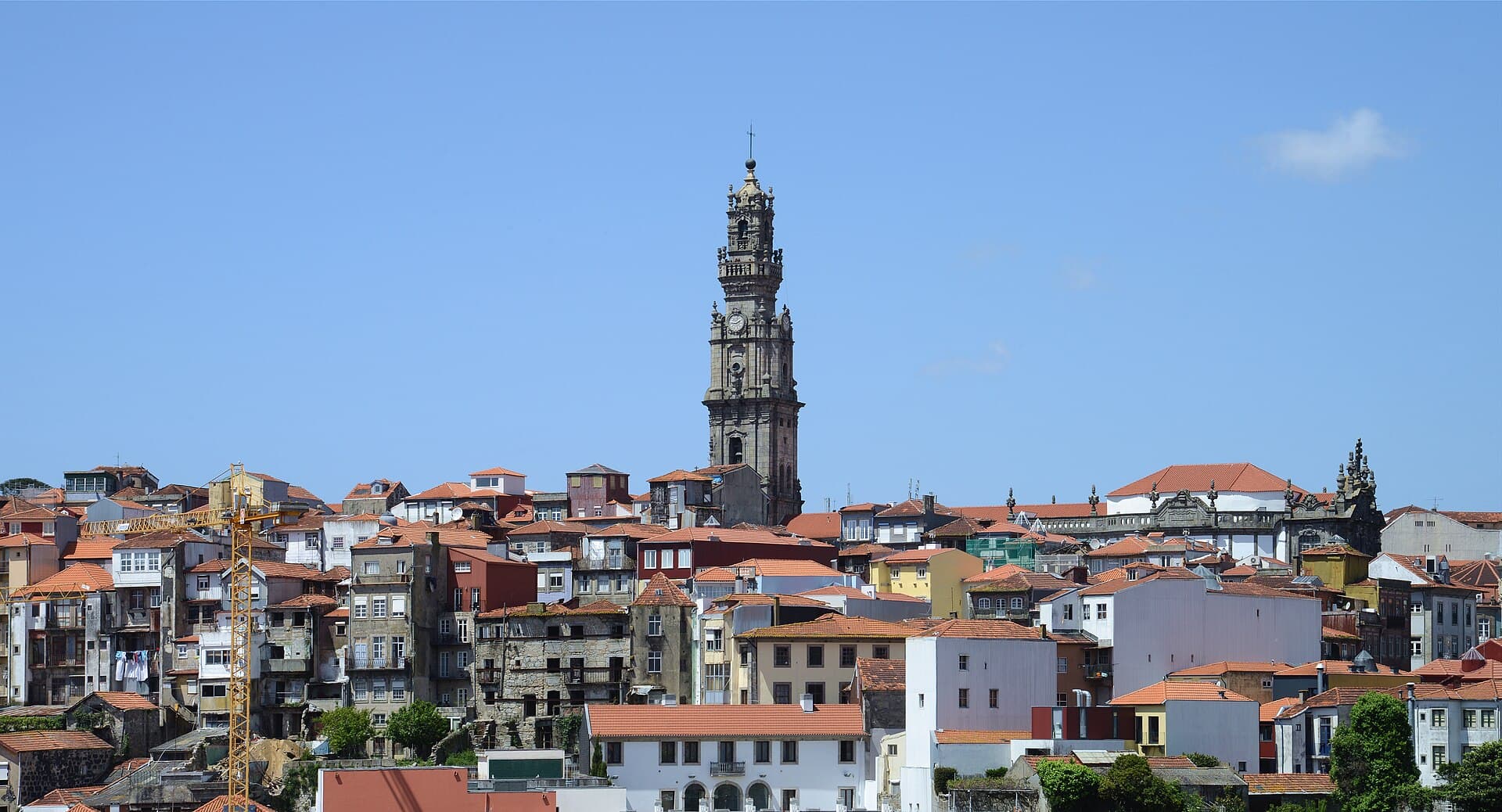
Torre dos Clerigos: The Baroque Overture
The soaring baroque bell tower that opens Porto's story of grey stone learning to speak in curves.
2
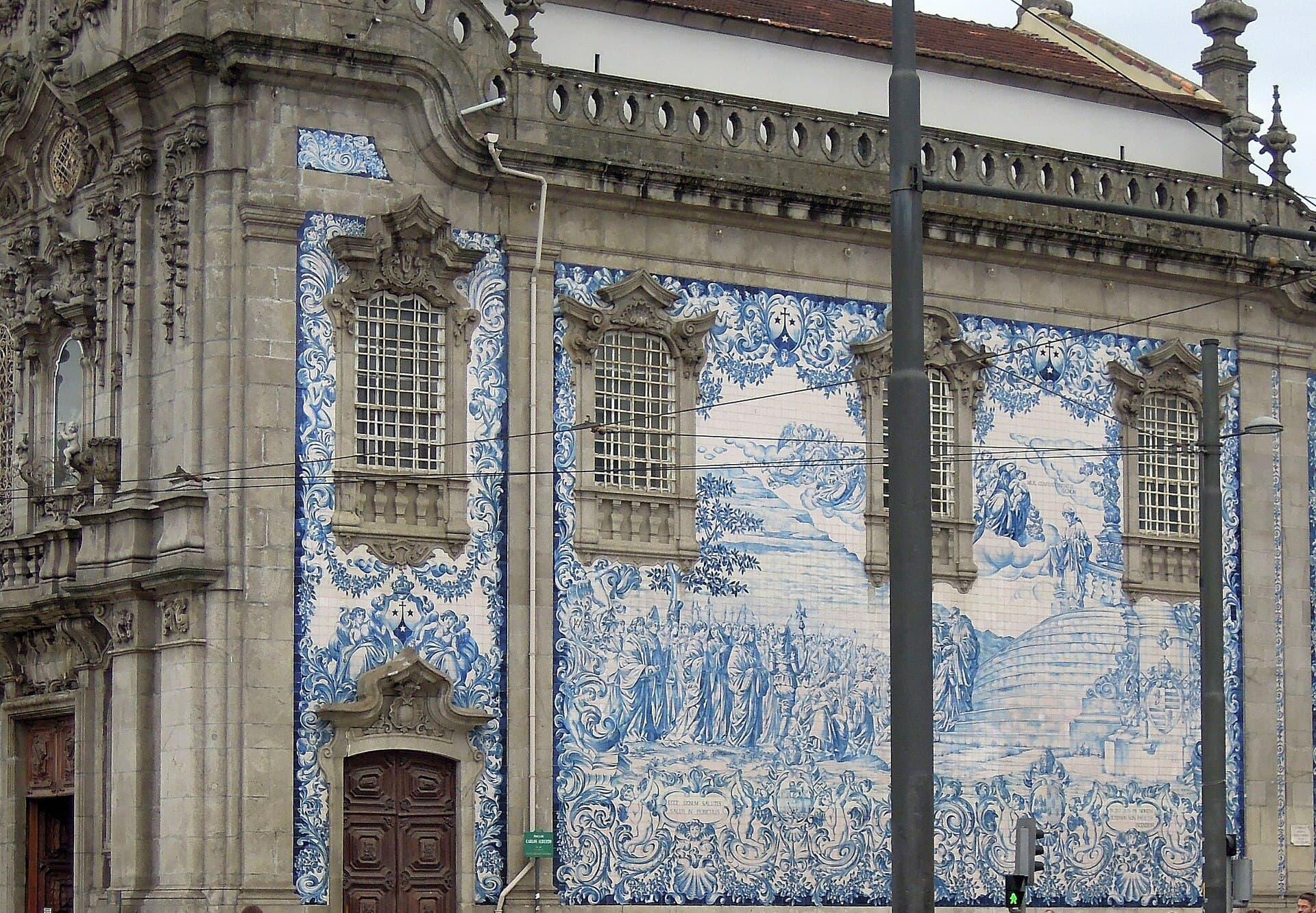
Igreja do Carmo: The First Great Tiled Wall
A baroque church whose entire side wall became a canvas of blue-and-white tile, though not when you might expect.
3
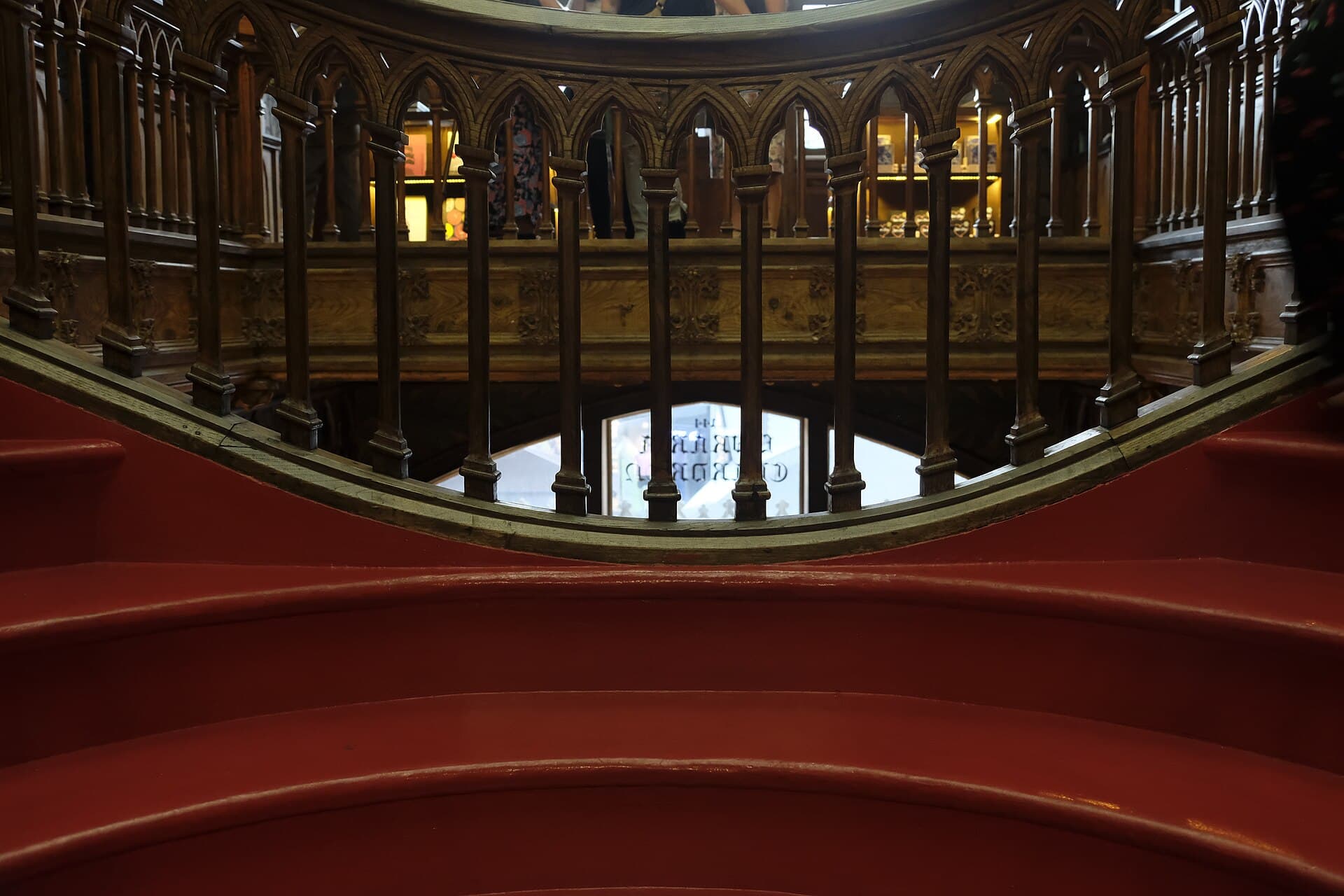
Livraria Lello: A Temple to the Printed Page
A bookshop conceived as heritage architecture, all carved wood, curving staircase, and stained glass.
4
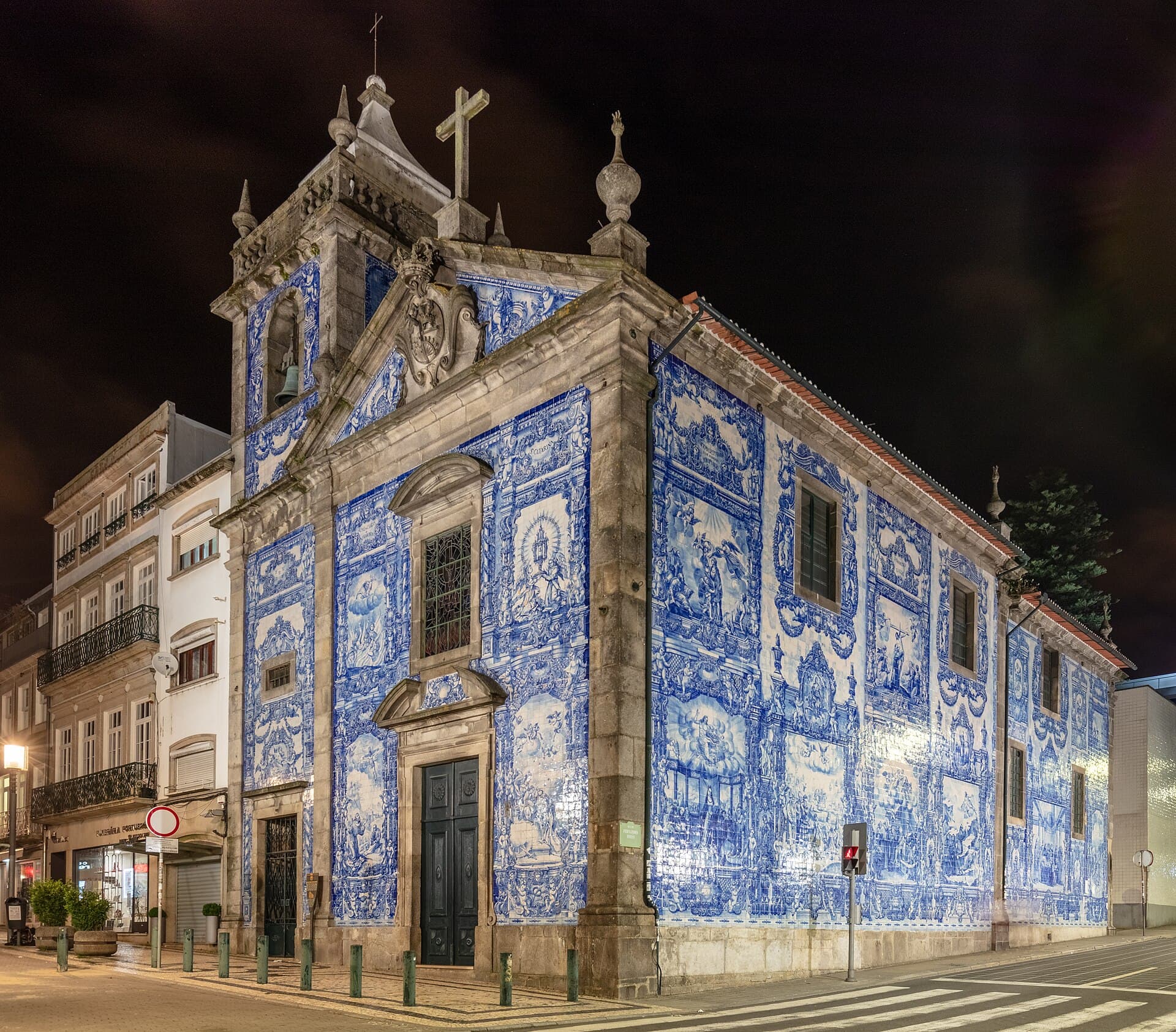
Capela das Almas: Faith Worn on the Outside
A chapel whose plain white walls were later wrapped in nearly sixteen thousand blue-and-white tiles.
5
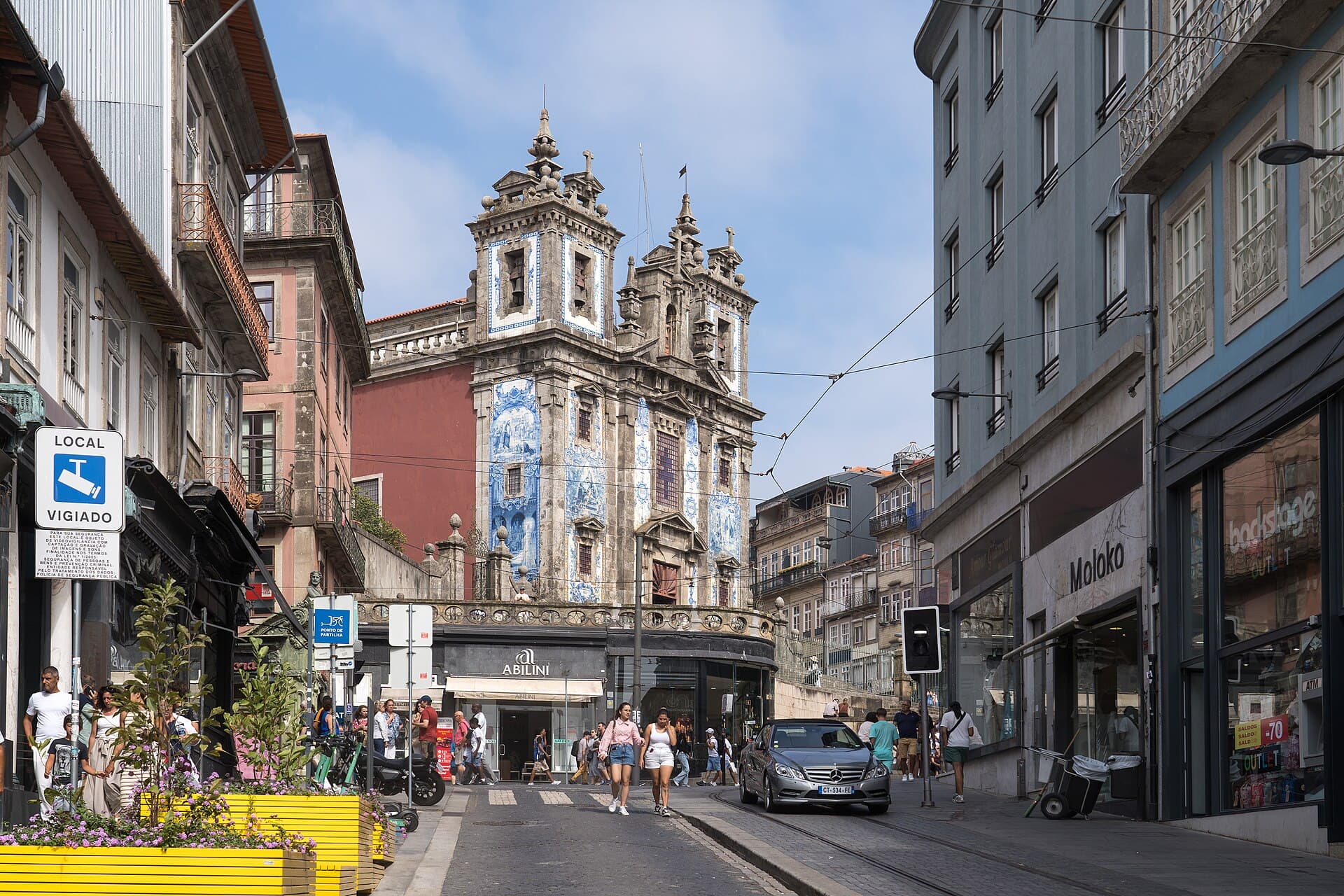
Igreja de Santo Ildefonso: The Painter Who Points Ahead
A proto-baroque church with a Nasoni altarpiece inside and an eleven-thousand-tile facade added centuries later.
6
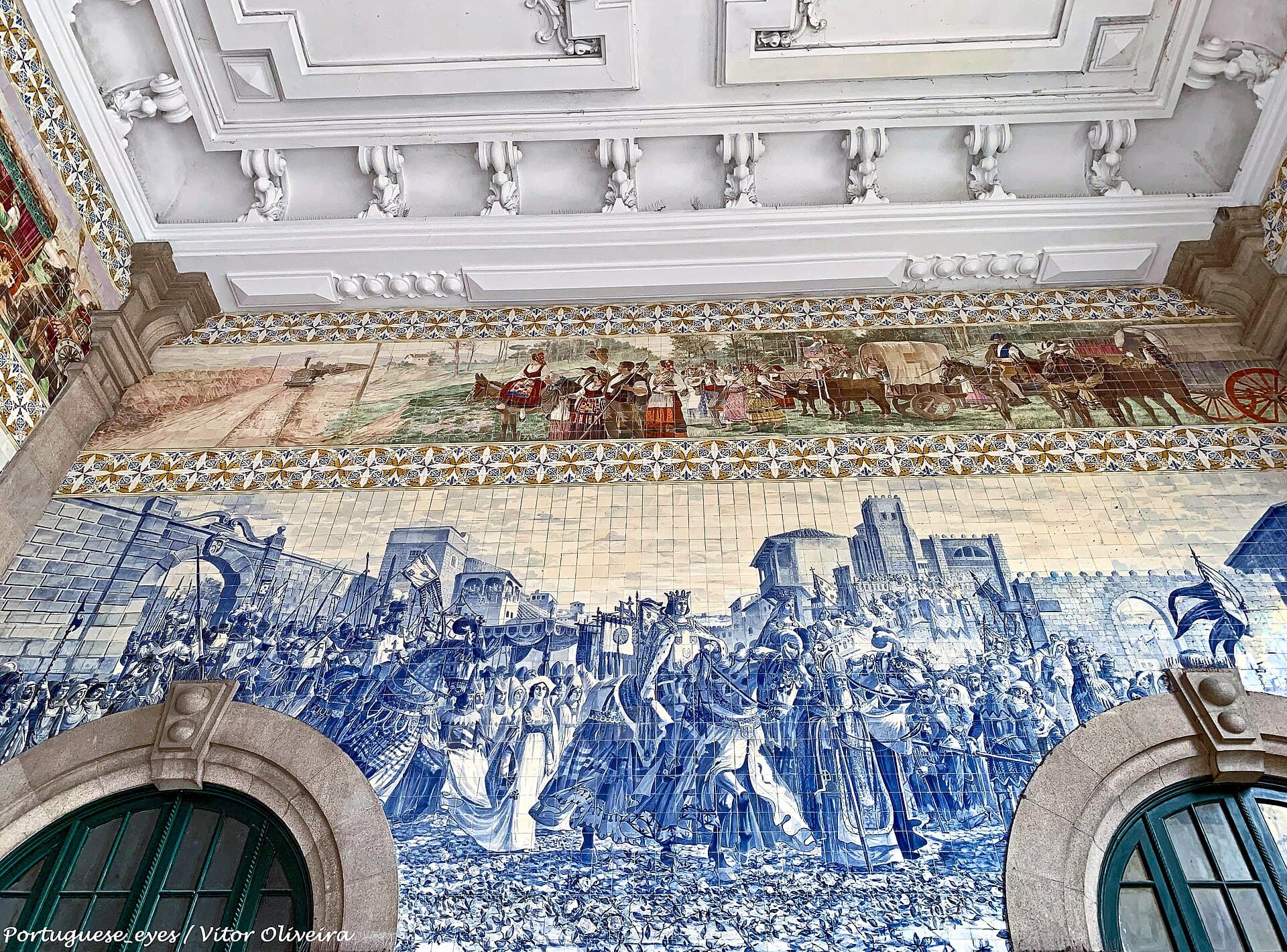
Estacao de Sao Bento: Tile as National Narrative
A working railway station whose entrance hall is a painted history of Portugal in twenty thousand tiles.
7
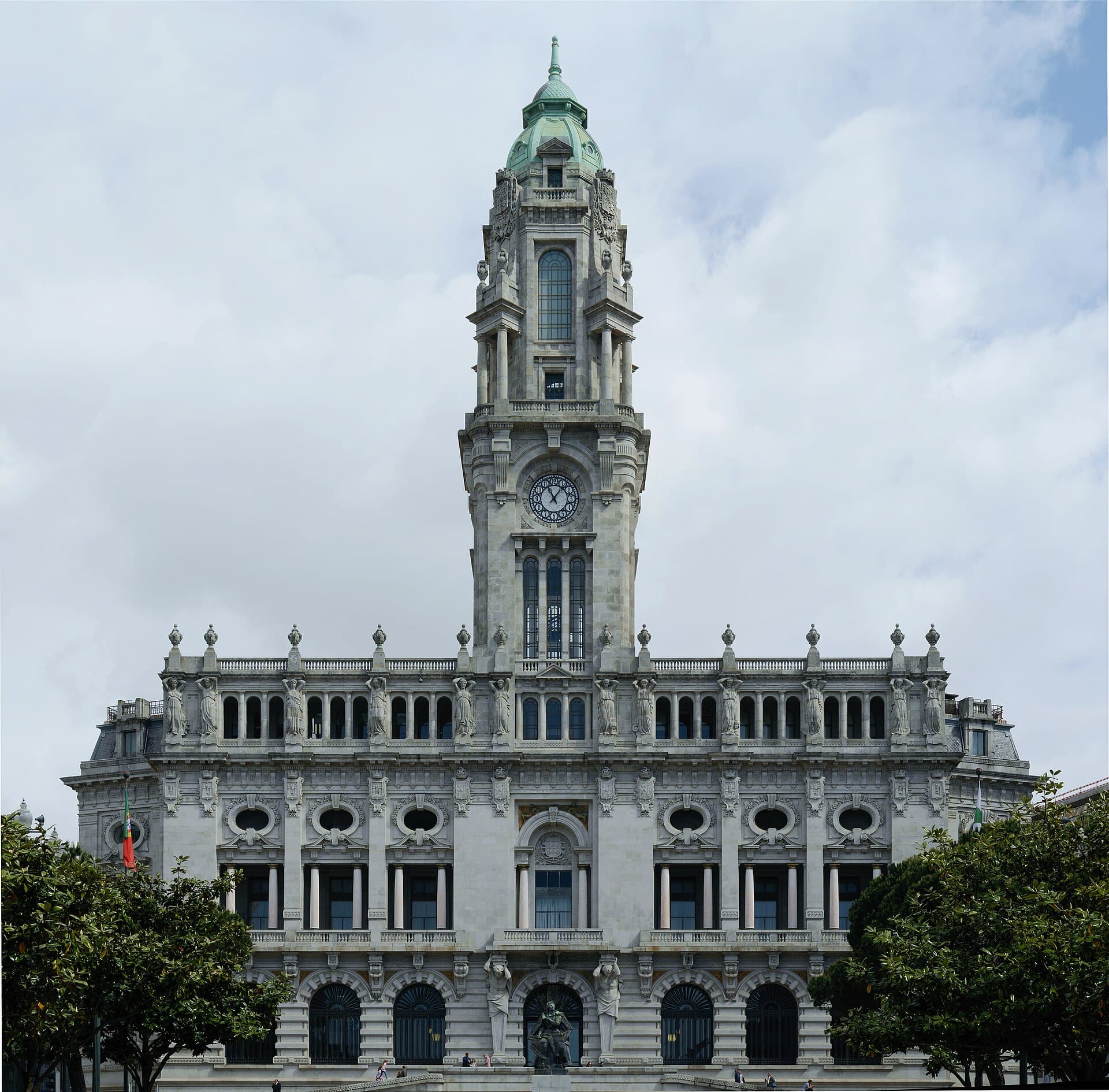
Avenida dos Aliados and the Camara Municipal: The Granite Speaks for Itself
The grand civic boulevard where the tiled and gilded skins fall away to reveal bare monumental stone.
Best Time to Visit
Mid-morning on a weekday is ideal. The Clerigos tower and the Livraria Lello draw long lines by late morning, so an early start lets you climb and read the interiors before the crowds thicken. Overcast Porto light actually flatters the blue-and-white azulejo, deepening the contrast, while low morning or late-afternoon sun rakes across the tiled walls of the Capela das Almas and Santo Ildefonso and makes them glow. Avoid the middle of a summer afternoon, when heat and cruise-day crowds peak around Sao Bento and the shopping streets.
Pro Tips
- •Climb the Clerigos tower first thing if you plan to. The roughly two hundred forty steps get busy and the queue only grows through the day, so early gives you both the view and the calm.
- •Both the Clerigos tower climb and the Livraria Lello charge admission, while every church and the Sao Bento atrium on this walk are free to enter. Budget for the two ticketed stops and enjoy the rest at no cost.
- •Read the tiled walls twice: once for the overall picture, once up close. Stand back to see the whole panel of the Carmo or Capela das Almas, then step in to catch the brushwork and the individual scenes.
- •At Sao Bento, step aside from the ticket-buying flow and give the atrium a slow lap. It is a working station, so let commuters pass and take your time reading the history panels above head height.
- •Keep a mental note of two names as you walk: Nicolau Nasoni, whose hand shaped the Clerigos tower and the Santo Ildefonso altarpiece, and Jorge Colaco, who tiled both Santo Ildefonso's facade and the Sao Bento atrium. Spotting the repeats is half the pleasure.
- •Wear comfortable shoes with grip. The route links steep granite streets and worn cobbles, and Porto rewards wandering off the direct line into side lanes between stops.
Safety & Precautions
- Porto is steep and paved in calcada, the traditional cut-stone cobbles, which turn slick when wet or worn smooth. Take the hills slowly and watch your footing, especially after rain.
- The churches and chapels on this walk are active places of worship. Dress modestly, keep your voice low, and avoid photographing services in progress.
- The two ticketed stops, the Clerigos tower and the Livraria Lello, can build long queues at peak times. Arrive early or later in the day, and consider booking ahead where possible to avoid waiting in the sun.
- Rua de Santa Catarina and the streets around Sao Bento get crowded, and lanes here carry pedestrians, traffic, and the occasional tram together. Stay aware at crossings and step fully out of the roadway when you stop to look up at a facade.
Gallery
Related Reading
Go deeper on what you'll see, hear, and walk through.
Overview
Best Self-Guided Walking Tours in Porto (2026)
3 min
Overview
One Day in Porto: A Walkable Itinerary From Cathedral to River
7 min
Overview
Porto Travel Guide: How Many Days, Getting Around, Best Time, Safety and Budget
6 min
Thematic
Porto: The Granite City That Faces Its River
7 min
Companion
São Bento Station: How Porto Made a Train Hall Tell a Nation's Story in Tile
6 min
Deep dive
Livraria Lello: How Porto Built a Bookshop Like a Cathedral
6 min
Read
What to Eat in Porto: The Dishes, Their Origins, and How to Order
7 min