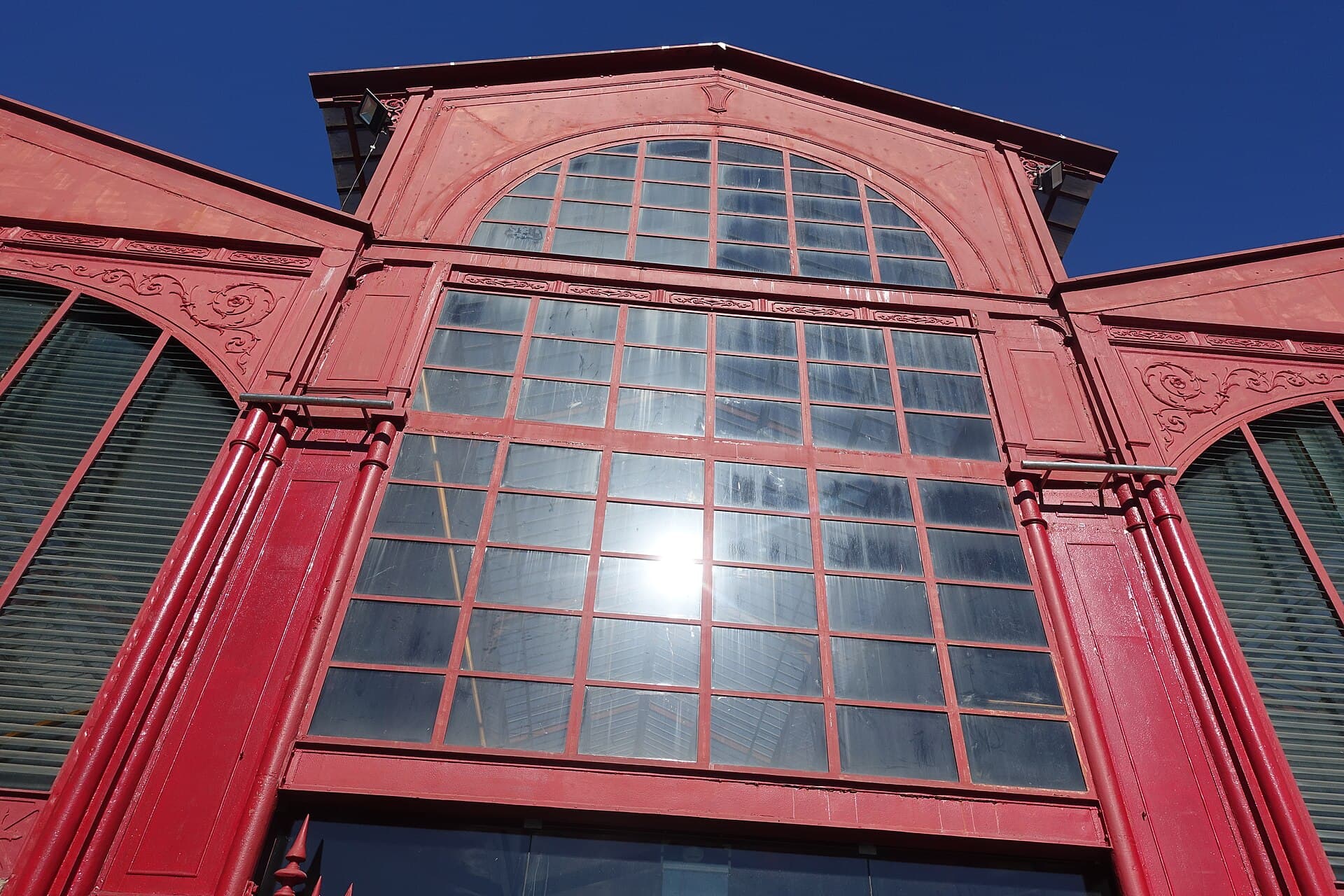
Porto built one of the finest iron market halls in the city, set it down on the industrial waterfront in red brick and cast-iron columns, named it for a statesman, and then watched it never sell a single thing. The Mercado Ferreira Borges was raised between 1885 and 1888 to replace the old riverside market, and the traders it was built for simply refused to move. That empty hall is the sharpest lesson in Porto's history: this is a city built by its river and by the will of its merchants, not by kings, and the whole descent from the hilltop cathedral to the iron bridge is really the story of how commerce, not a crown, made this place.
A market that no one wanted
Stand in front of the Mercado Ferreira Borges and you are looking at ambition frozen in cast iron. The architect João Carlos Machado designed it in the confident, industrial spirit of the late nineteenth century, and it was named in honour of José Ferreira Borges, a Porto jurist and liberal statesman. Its cast-iron columns were poured in local foundries, and the makers' names are still cast into the metal, small signatures of the factories that were remaking Porto in iron and glass. Everything about it says progress: a modern, hygienic hall meant to replace the older Mercado da Ribeira crowded down by the water.
And then nothing happened. The traders of the old Ribeira market would not leave. They had their spots, their regular customers, and generations of habit tying them to the quay. No gleaming new building was going to move them, so the finest market hall in the neighbourhood stood there, purpose-built and unwanted. Over time it became a cultural and events venue, which is what it remains. It is beautiful, proud, and gloriously beside the point. You can build the grandest hall in the city and still not make people abandon the market they love.
That failure is more revealing than any success. It tells you where real power sat in Porto. Not with the planners and not with the state, but with the working traders who controlled the waterfront by simply staying put.
The city that commerce built
Hear a stop from this walk
Ponte Dom Luís I: The Marriage of the Two Banks
The market hall belongs to a bigger argument, and the walk that runs past it makes that argument stop by stop. This route reads Porto like a manuscript laid down in order, starting high and dropping toward the river. It begins at the Sé, the fortress cathedral begun around 1110 on Penaventosa, the windy rock that is the highest point of the old city. Up there the story is still about crown and church: this is where King John the First married the English princess Philippa of Lancaster in 1387, a wedding that bound Portugal and England together for centuries and, downriver, would eventually shape the port-wine trade.
Then you descend, and the story changes hands. The Casa do Infante, built by royal decree in 1325, was the customs house where every cask of wine and load of cork moving on the Douro was weighed and taxed. It sits on a Roman villa, with Roman mosaics beneath it, proof that this riverbank has been a commercial site since antiquity. A little further on, the Igreja de São Francisco keeps a plain Gothic shell begun in 1383, then floods its interior with talha dourada, gilded carved woodwork, in the baroque century that followed. Sources disagree wildly on how much gold lines it, with credible estimates running from close to one hundred kilograms to around four hundred, so the honest figure is simply hundreds of kilograms. Beneath all that gold lies an ossuary, the stacked bones of thousands of people, visible through a glass panel in the floor. Gold above, bone below: the whole baroque bargain in one building.
The pivot of the entire walk is the Palácio da Bolsa, the stock-exchange palace. The key fact is who built it. Not a king, not the church, but the Commercial Association of Porto, the city's own merchants and traders. It rose on the ruins of a Franciscan convent whose cloisters burned during the 1832 siege of the city. Queen Mary the Second gave those ruins to the merchants in 1841, and they began building the next year. Its showpiece, the Moorish-revival Arab Room, took nearly two decades to complete, from 1862 to 1880, and the whole palace was declared a national monument in 1982. The single most magnificent room on the walk was built by traders to honour trade. In Porto, wealth came from the river, not from a throne.
By the time you reach the Mercado Ferreira Borges, you understand why the traders won. Their power was the point. The iron hall is the exception that proves the rule of the whole tour.
Where a country got its name
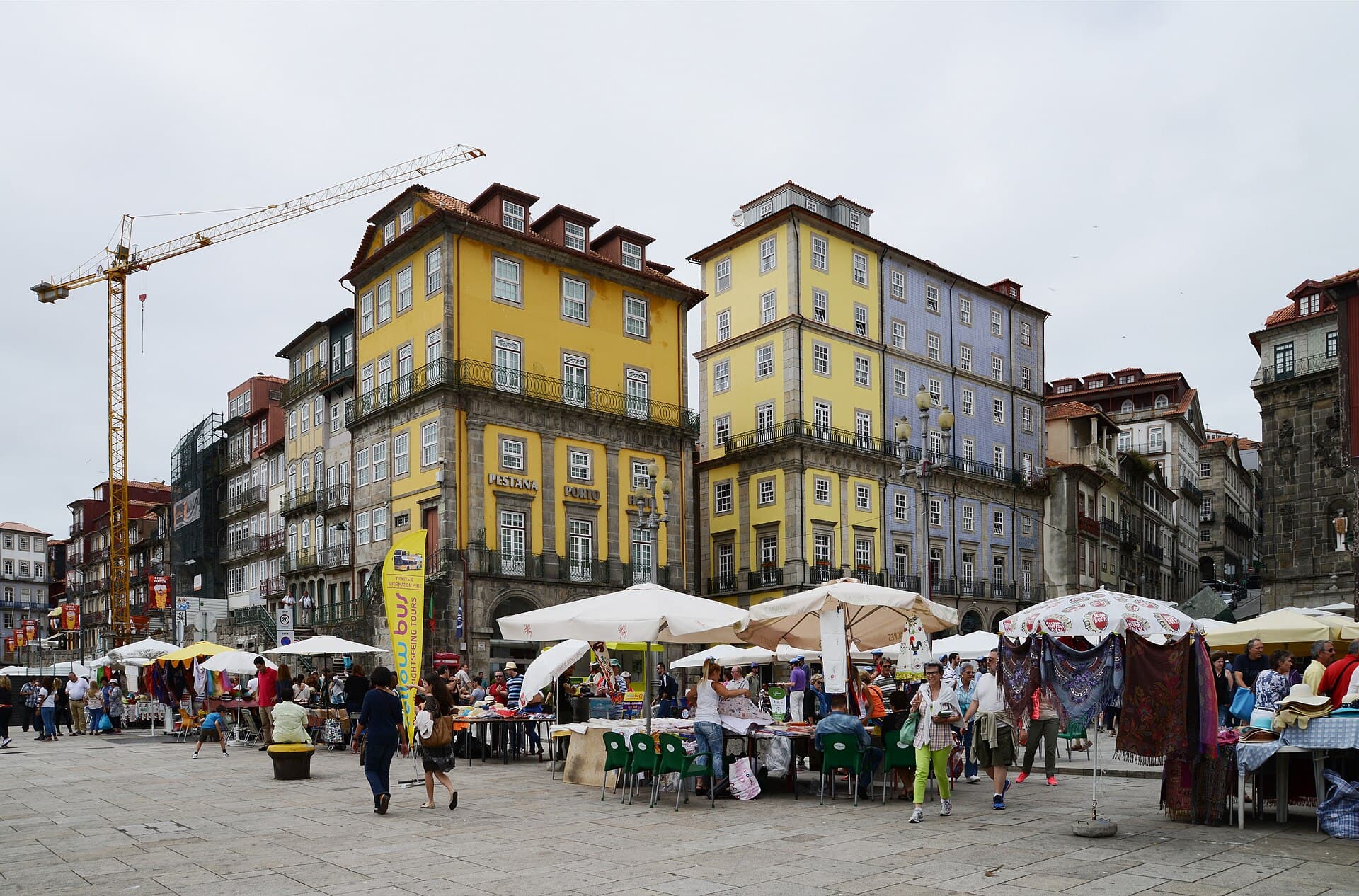
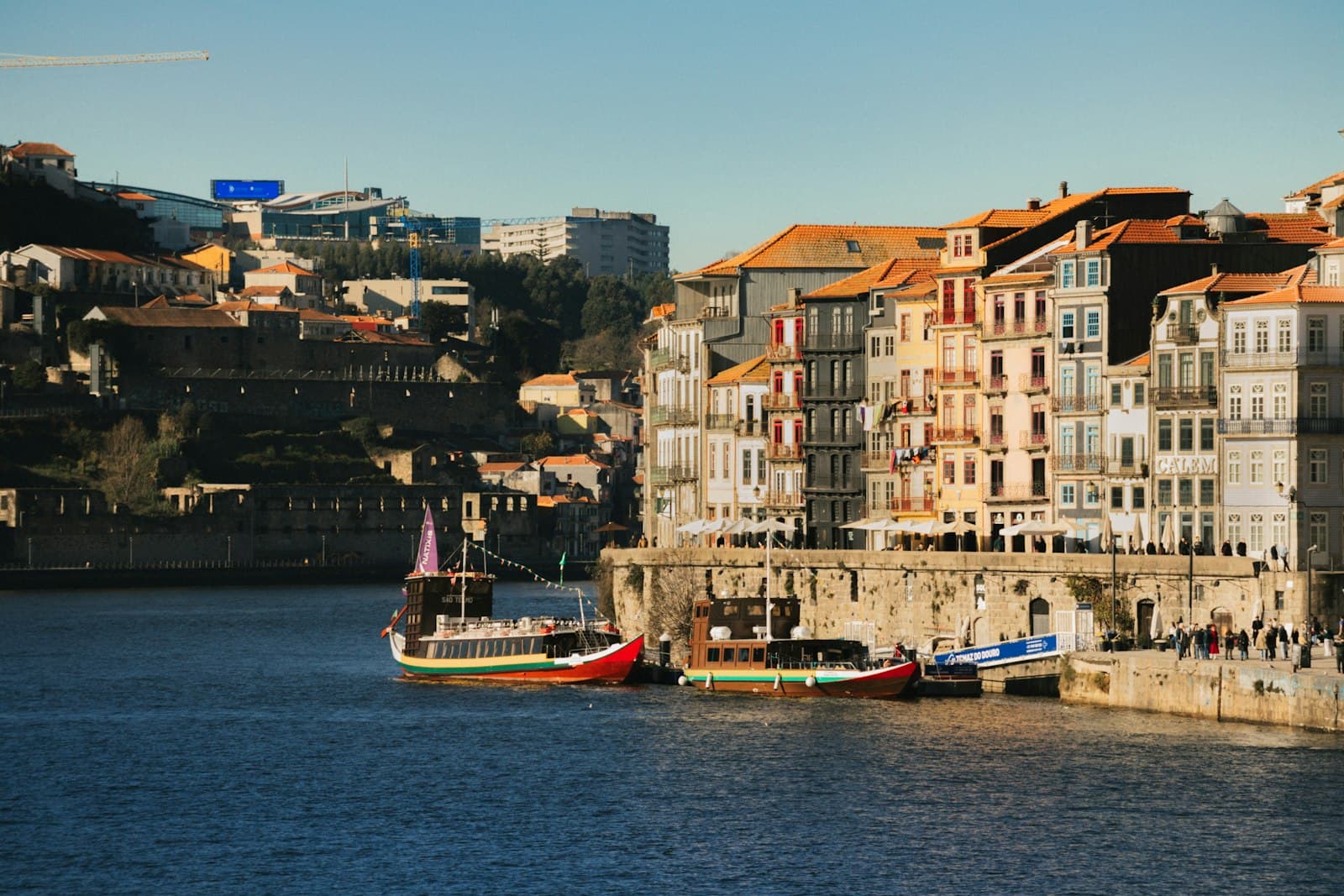
Below the market the walk reaches the water at the Praça da Ribeira, the medieval merchant square and the oldest face the city ever turned toward the Douro. Its tall, narrow houses were given ground-floor arcades when they were rebuilt after a great fire in 1491, and a medieval Fernandine wall once sealed this side of the city from the river until it was pulled down in 1821. UNESCO inscribed the historic centre as World Heritage in 1996. Here is the quiet payoff: the name Portugal grew from this very quay. In Roman times a port at the mouth of the Douro was called Portus Cale, and from that river-mouth port came the name that spread across a whole country.
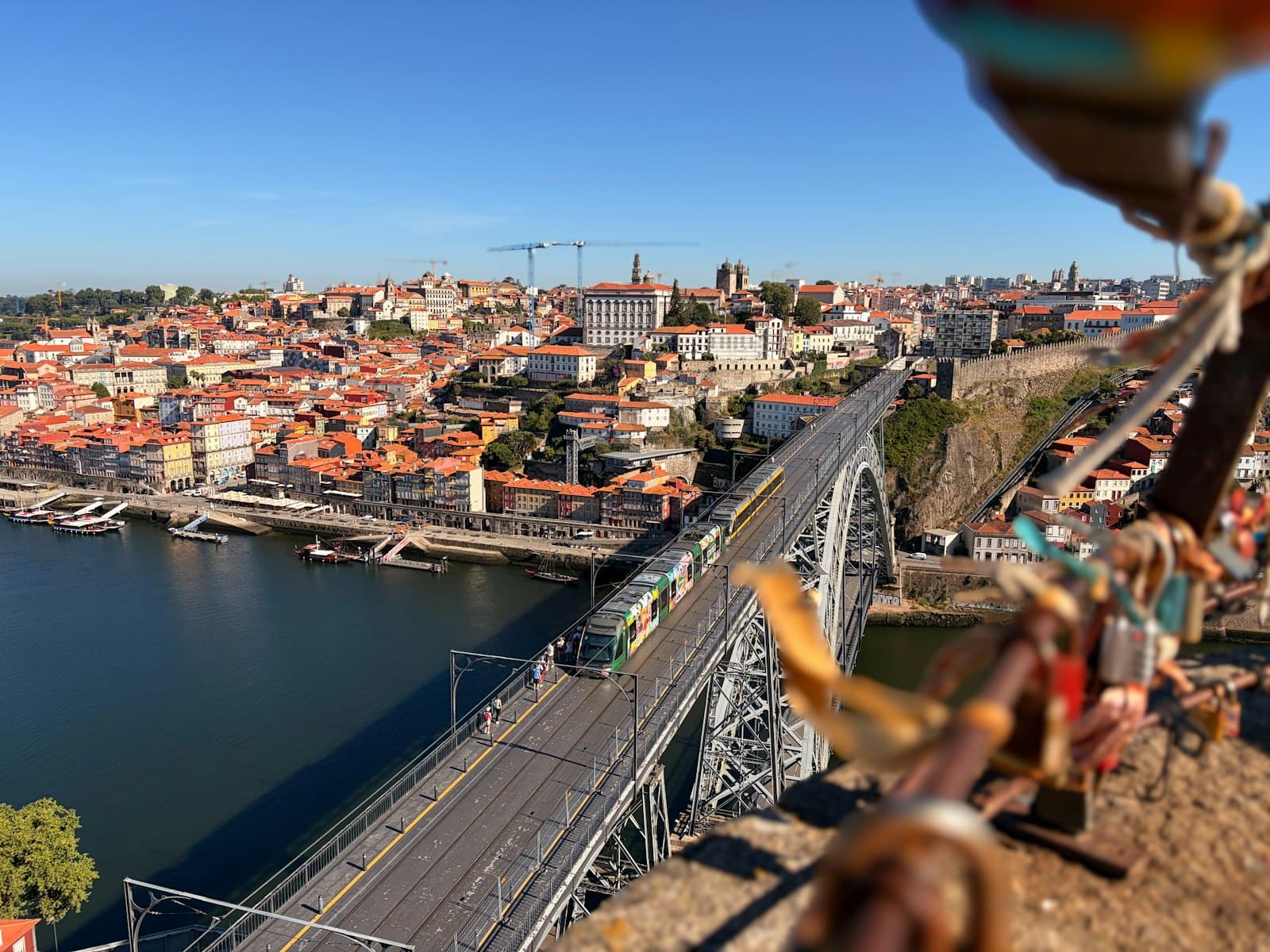
The walk ends at the Ponte Dom Luís I, the double-deck iron arch inaugurated on the thirty-first of October in 1886, whose central span reaches about one hundred seventy-two metres across the water. For a thousand years the two banks stared at each other with no easy way across, and this bridge finally married them. One correction the walk insists on: Gustave Eiffel did not design it. The designer was Théophile Seyrig, a former partner of Eiffel, whose plan won a competition in 1880 after Eiffel's own proposal was rejected. The confusion comes from the nearby Maria Pia railway bridge, which Eiffel's company built to another Seyrig design.
The Mercado Ferreira Borges is where all of this comes into focus. An empty market is not a footnote. It is the clearest evidence that Porto answered to its river and its traders, and that is the thread you can follow the whole way down. If you want the rest of the argument in your ears while you walk, browse the full set of Porto walking tours or start planning your visit to Porto.
Sources
- Mercado Ferreira Borges (Portuguese Wikipedia): construction dates, architect João Carlos Machado, naming, and its history as an events venue.
- Church of São Francisco, Porto (Wikipedia): Gothic origins, baroque gilding, and the disputed weight of gold leaf.
- Palácio da Bolsa (Wikipedia): the Commercial Association's role, the 1832 siege, and the Arab Room's construction dates.
- Ribeira Square and Portus Cale (Wikipedia): the 1491 fire, the Fernandine wall, and the etymological root of Portugal's name.
- Dom Luís I Bridge (Wikipedia): the 1886 inauguration and the Seyrig versus Eiffel attribution.
Ready to experience it?
Ribeira: The City of the River
95 min · 2.9 km · moderate
More from Porto
Explore more at your own pace.
One Day in Porto: A Walkable Itinerary From Cathedral to River
Porto: The Granite City That Faces Its River
Why Port Wine Ages Across the River in Gaia, Not in Porto
Livraria Lello: How Porto Built a Bookshop Like a Cathedral
Mosteiro da Serra do Pilar: The Round Church That Watches Porto