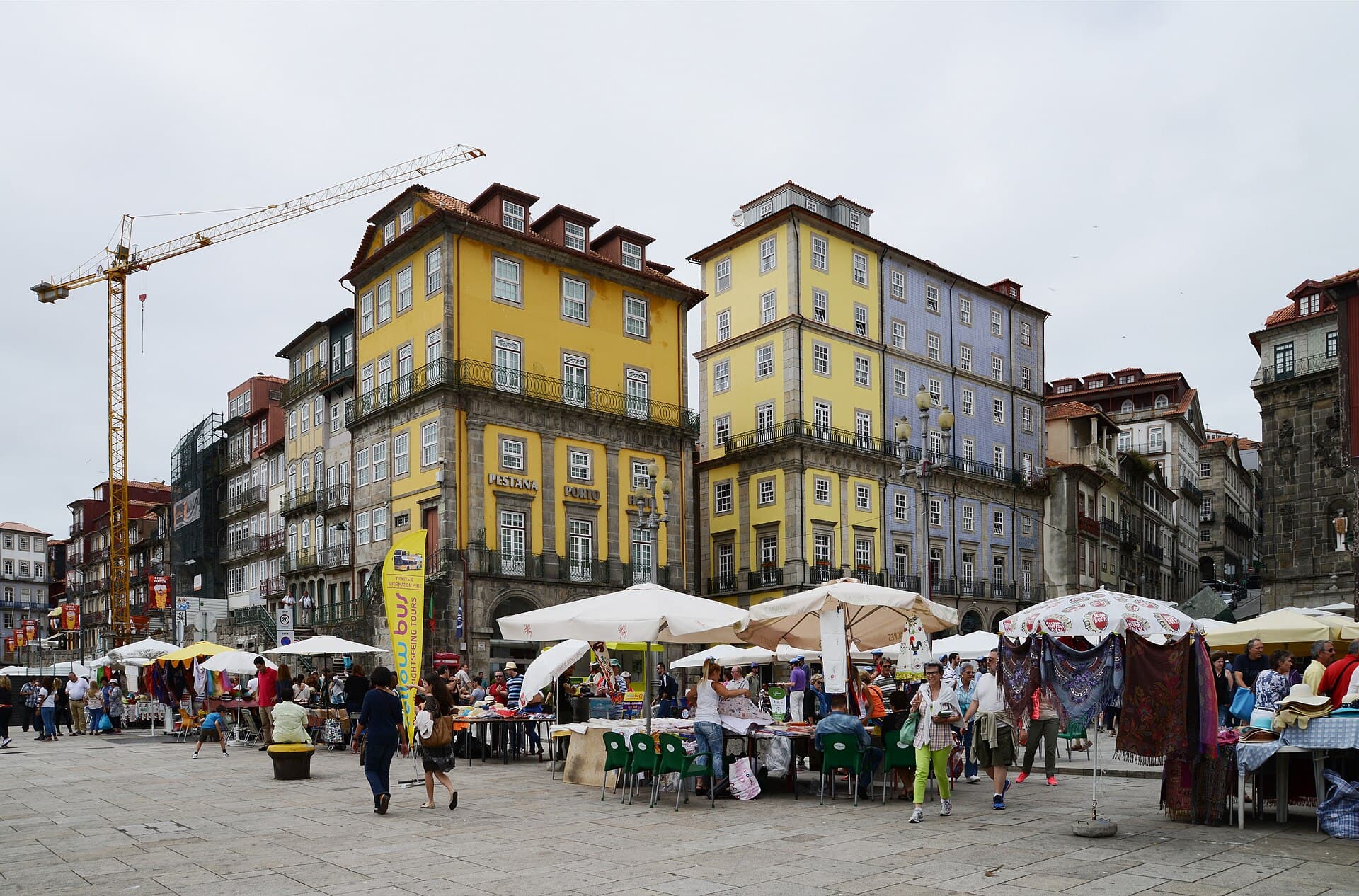
Praça da Ribeira is the arcaded square on the Douro quay where Porto sold its river cargo for a thousand years, and it is also the place where a whole country got its name. Stand here with the water at your back and the tall houses stacking up the slope in front of you, and you are looking at the oldest face the city ever turned toward its river. This was the commercial and manufacturing heart of medieval Porto, the point where boats came ashore and money changed hands. It is also the point where the Roman port at the mouth of the Douro, called Portus Cale, passed its name down the centuries to the nation of Portugal. Understand that one thing, and you understand why this modest square carries more weight than any palace on the walk.
The square that faced the water
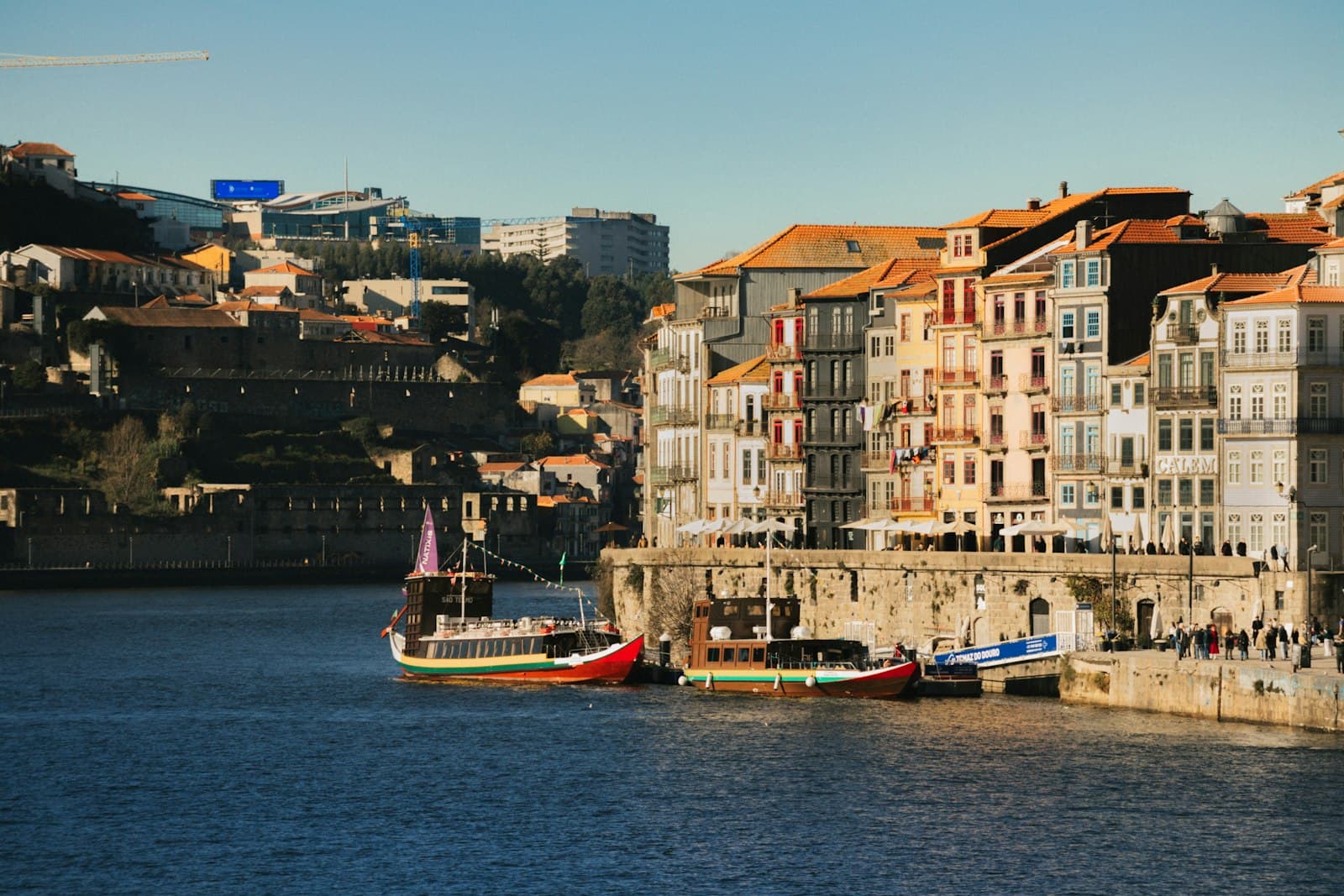
For most of its history, a European river city sat with its back to its waterfront. The river was a working thing: dangerous, dirty, loud with commerce. Porto is different because the Ribeira was never hidden. Praça da Ribeira means, plainly, the riverside square, and Cais da Ribeira is the quay that runs beside it. Since the Middle Ages this was where merchants sold fish and bread and meat, where cargo from the interior came off the boats, and where the coin generated by all that trade circulated through the town. Everything Porto was, it was because of the Douro, and the Ribeira is where the city and the river actually touched.
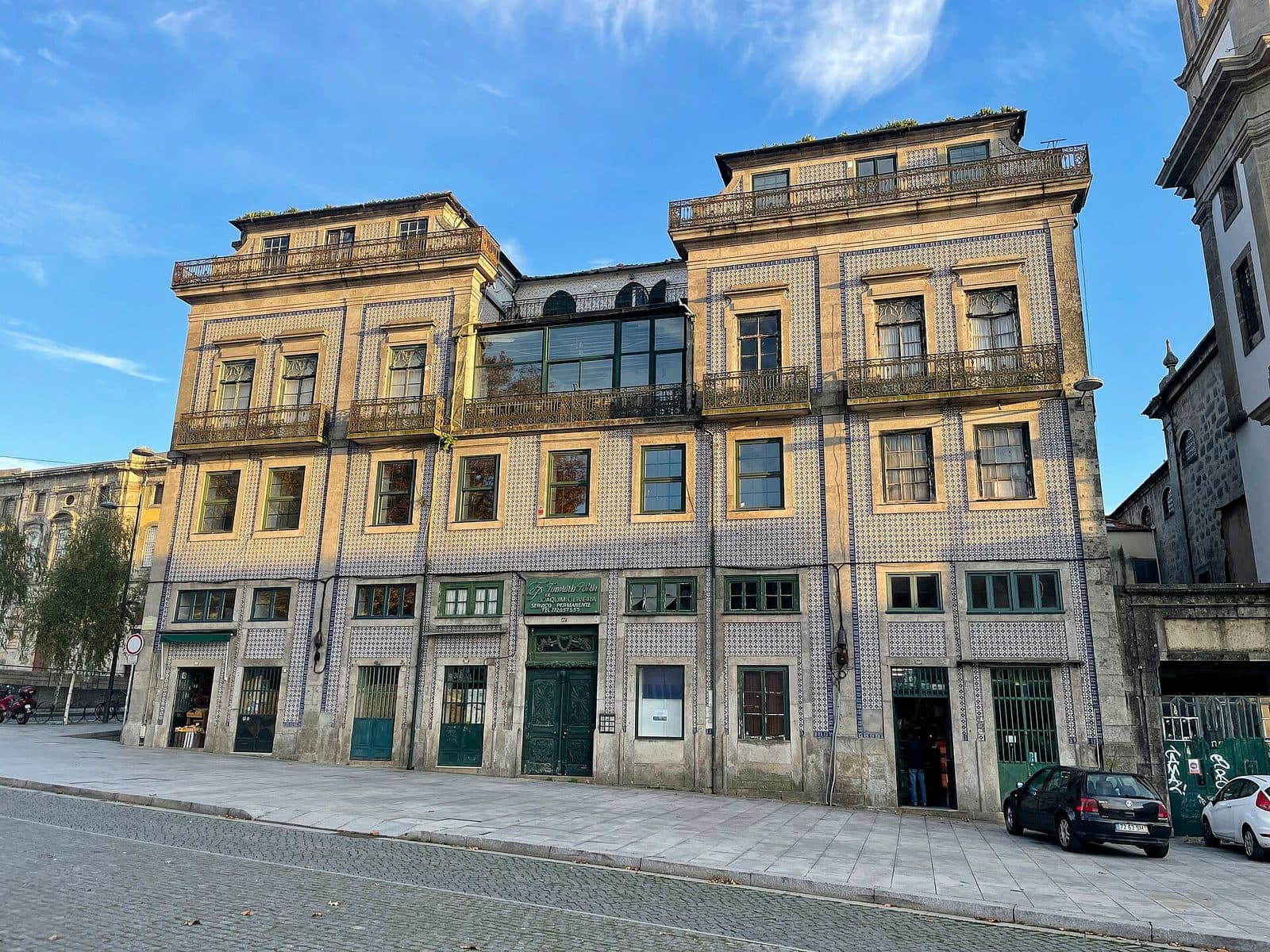
Look at the houses climbing the hillside behind the square and you will notice something at their feet: a run of arcades, ground-floor arches that shelter the pavement. Those arcades have a specific cause. In 1491 a fire destroyed the buildings around the square. When they were rebuilt, they were given those ground-floor arcades, and that is the fabric you are standing under today. The tall, narrow proportions of the houses, squeezed onto a steep and valuable riverbank, tell you how tight the medieval town was and how much every meter of quay was worth.
A wall pulled down to see the river
Hear a stop from this walk
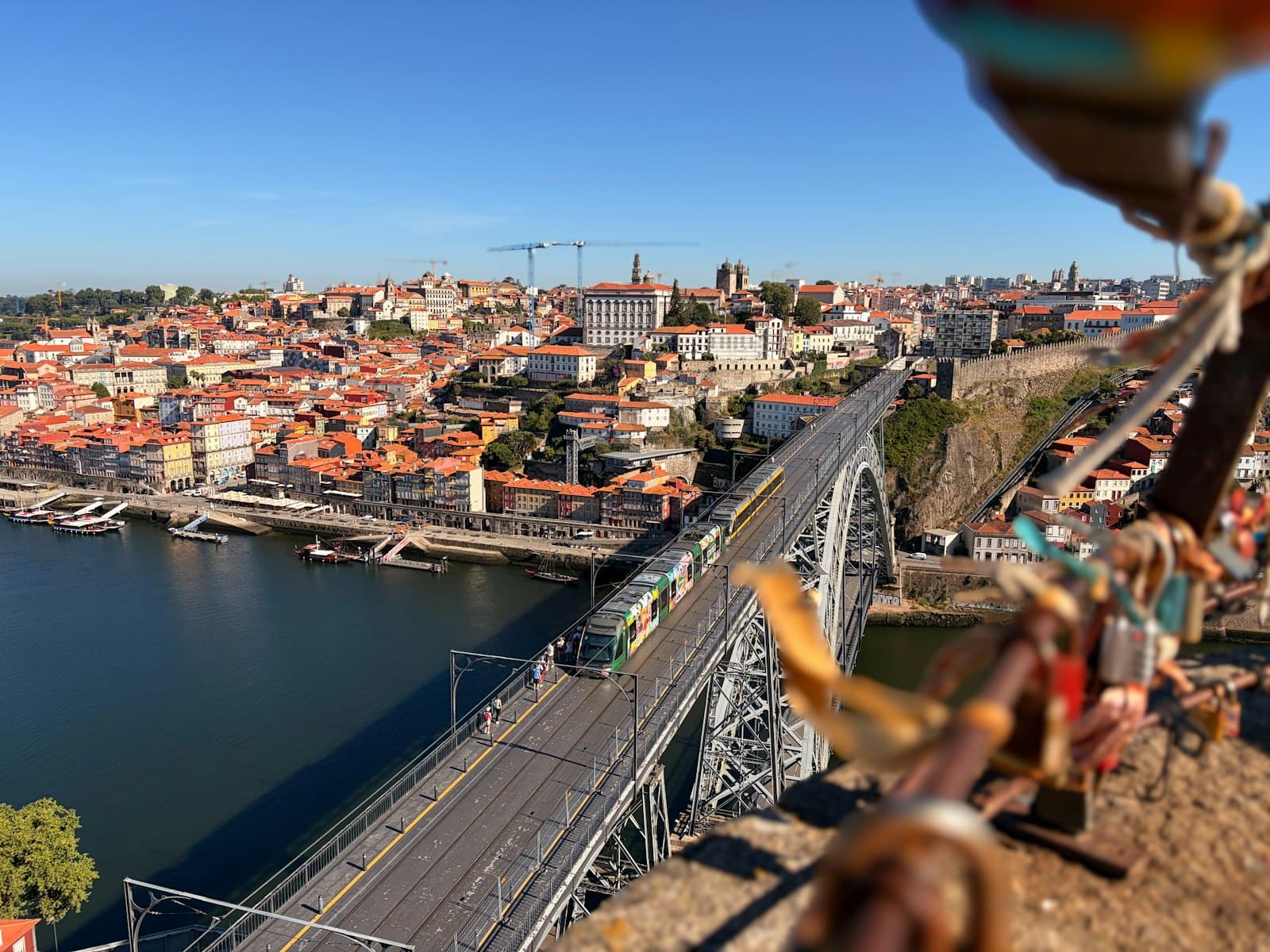
Ponte Dom Luís I: The Marriage of the Two Banks
There is a detail here that says a great deal about how the city's relationship with its water changed. For centuries a medieval wall, the Fernandine wall, closed off the south side of the square, the side facing the Douro. A defensive city keeps its riverfront guarded, because the river is the way an enemy arrives. Then, in 1821, that wall was torn down, deliberately opening the square to its own waterfront. The gesture matters. It marks the moment Porto stopped treating the Douro as a threat to be walled against and started treating it as the front door to be thrown open. The Ribeira you walk today, all quay and cafe tables and open water, is the city after it decided to look outward.
The monumental fountain in the northern part of the square, decorated with Portugal's coat of arms, dates from the seventeen-eighties, so it predates the wall's demolition by a generation. It is a reminder that this was ceremonial ground as well as commercial ground, a place worth marking with the arms of the crown even while it functioned as a marketplace.
Where a country's name begins
Now the reason the whole descent through Porto has been carrying its weight down to this quay. The name Portugal grew from this exact place. There was an early settlement called Cale at the mouth of the Douro, and the Romans developed the site as a port they knew as Portus Cale. Portus is simply the Latin word for port, for harbour. Cale was the older, pre-Roman name, and here honesty is required: its meaning is genuinely disputed. Scholars have proposed several origins, from a Celtic word for port to a Greek word for beautiful, and no single reading has won consensus. What is not in doubt is the outcome. From that river-mouth port, Portus Cale, came a name that spread first across a county, then a kingdom, then a country that would send ships to every ocean. You are standing at the source of the word Portugal, on the quay that gave it away.
That is a rare thing to be able to say about a single spot. Most place-names dissolve into vague etymology when you press them. This one resolves to a real harbour, a real river, a real square you can stand in, drink a coffee in, and watch the boats pass. The whole country's name traces back to the trade that happened right here, cask by cask, catch by catch.
Standing in the square today
The recognition is formal, too. UNESCO inscribed Porto's historic centre as World Heritage in 1996, and the Ribeira is the beating core of that designation, the medieval quarter that survived precisely because it stayed poor and unfashionable long enough to avoid demolition. The one thing to understand while you are here is that the square's importance is not its prettiness, real as that is. It is that this is a working origin: the commercial engine of the medieval city, the site of the fire that shaped its architecture, the front the city eventually opened to its river, and the etymological root of a nation. Read it that way and the postcard view becomes a document.
Praça da Ribeira sits sixth on a walk that starts high on the cathedral hill and ends out over the water on the great iron bridge, following the Douro downhill through the merchant quarter. Standing here, you are at the payoff: the place where the city met the river that made it. To walk the full descent, from the fortress cathedral through the gilded churches and the merchants' palace down to this quay and across the bridge, take the self-guided Porto Ribeira audio tour on Roamer. You can explore more Porto walking tours or browse everything in Porto to plan the rest of your time along the Douro.
Sources
- Ribeira Square, Wikipedia. Overview of the square's medieval commercial role, the 1491 fire and rebuilt arcades, and the demolition of the Fernandine wall in 1821.
- Portus Cale, Wikipedia. The Roman river-mouth port and the derivation of the name Portugal, including the disputed meaning of the element Cale.
- UNESCO World Heritage Centre, Historic Centre of Oporto. Documentation of the 1996 inscription covering the Ribeira district and the wider old town.
- Roamer, The City of the River (porto-ribeira) tour, fact-audited stop content for Praça da Ribeira. Primary source for the square's sequence within the medieval quarter and the eighteenth-century fountain bearing Portugal's coat of arms.
Ready to experience it?
Ribeira: The City of the River
95 min · 2.9 km · moderate
More from Porto
Explore more at your own pace.
One Day in Porto: A Walkable Itinerary From Cathedral to River
Porto: The Granite City That Faces Its River
The Porto Market Hall That Never Sold a Thing
Why Port Wine Ages Across the River in Gaia, Not in Porto
Livraria Lello: How Porto Built a Bookshop Like a Cathedral