9th Street: The Market That Outlasted Its Name
75 min · 1.8 km · easy
The Italian Market tour walks South 9th Street, one of the oldest and largest open-air markets in the country. The name is a fossil. What you are actually walking is three immigrations stacked on one street, and the tour's whole method is to read the storefronts as a record of who arrived when.
Why it is called Italian
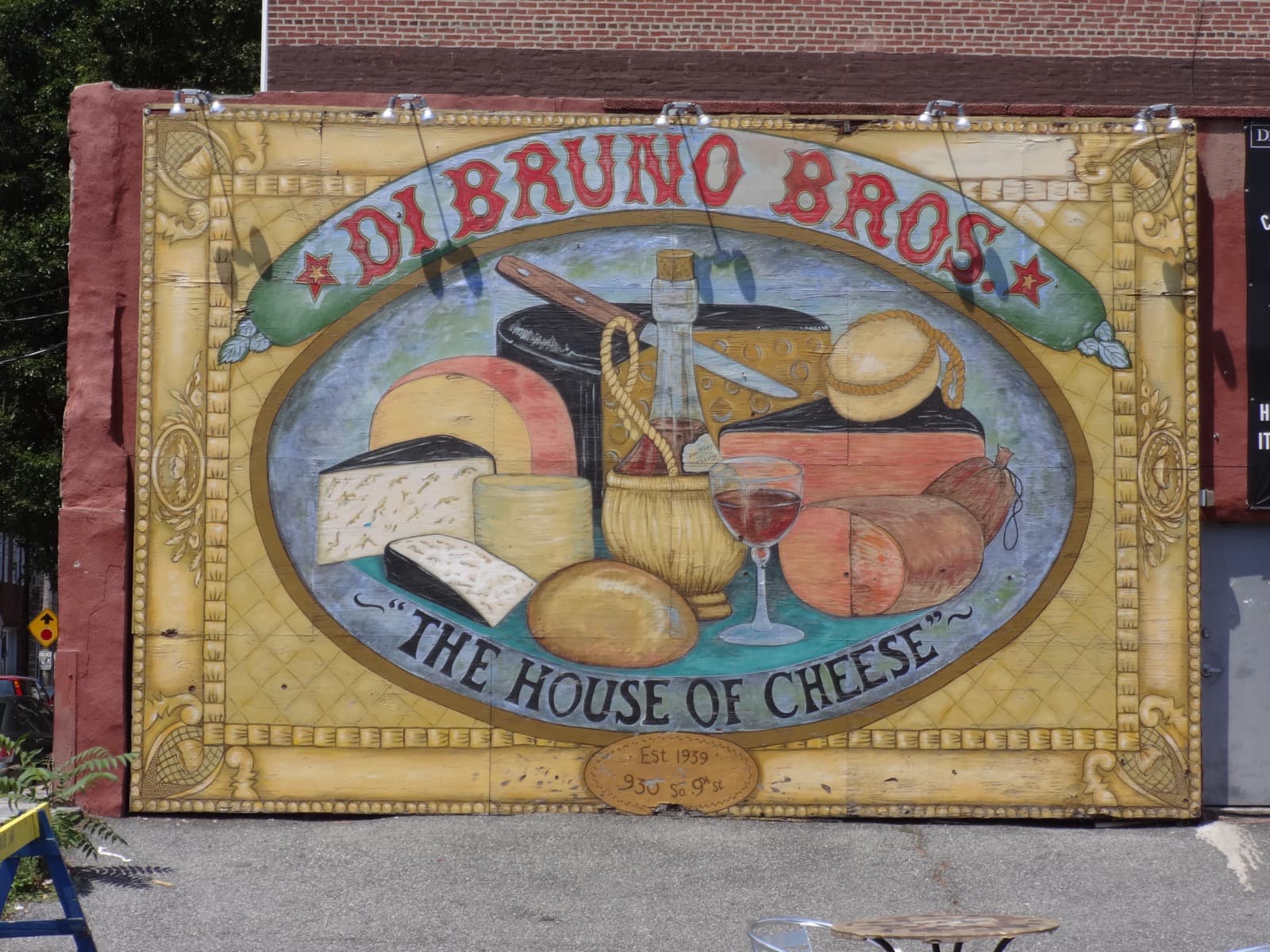
The market grew up around Italian immigrants who settled South Philadelphia in large numbers at the end of the nineteenth century. Vendors have sold produce, meat, fish, and cheese from open-air stalls on these blocks since the 1880s. The Italian core is still here, anchored by long-running family businesses like the housewares shop Fante's, which the tour visits, and by the cheesesteak corner where 9th, Wharton, and Passyunk meet.
That corner is its own institution. Pat's King of Steaks was founded there in 1930 by the Italian American brothers Pat and Harry Olivieri, who are credited with inventing the cheesesteak, first as a chopped-steak sandwich and then, in the 1940s, with cheese added. Geno's opened directly across the street in 1966. The two neon-lit rivals facing each other across Passyunk are the market's most famous frame, and they are both Italian immigrant businesses. The tour's stop there is the anchor of the Italian layer.
The second immigration
Hear a stop from this walk
9th and Federal: The Marker and the Three Names
Walk south and the awnings change. Over the last several decades an influx of immigrants from Latin America, largely from Mexico and especially the state of Puebla, reshaped the lower blocks of the market. The tour's stop on the Mexican blocks is not a detour from the Italian Market. It is the Italian Market continuing to do exactly what it always did: absorb the newest arrivals and let them sell food. Taquerias and Mexican grocers now sit a few doors from the century-old Italian butcher, and the produce stalls carry chiles alongside the tomatoes.
The third immigration
Keep going and a Vietnamese and Cambodian commercial extension appears, part of the Southeast Asian community that settled in South Philadelphia after 1975. Pho shops and Southeast Asian groceries occupy storefronts that once held something else, and the tour's stop there completes the pattern. One market, one name, three immigrations, all still trading.
How to read the street
The tour's method, and the reason it is worth taking rather than just wandering, is that it teaches you to read the physical record. The awning block stop is explicitly about this: awnings, signage, saints' murals on Catholic churches like St. Paul's, the language on the storefronts. These are not decoration. They are the dated strata of who ran which shop in which decade. Once you can read them, the whole street becomes legible as a history you can eat your way through.
Before you go
Read the Reading Terminal food piece to see how Philadelphia's other great market tells a parallel food story, and the founding-city thesis for how South Philadelphia fits the larger pattern of a planned grid filled by people the founders never imagined. Then walk 9th Street hungry.
Ready to experience it?
9th Street: The Market That Outlasted Its Name
75 min · 1.8 km · easy
More from Philadelphia
Explore more at your own pace.
One Day in Philadelphia: A Walkable Historic-Core Itinerary (2026)
The Founding City on Top of Erased Histories
From Crackdown to Canvas: A Mural Arts Companion
Penn's Green Country Town: A Center City Companion
The Room Where the Country Was Argued: An Old City Companion