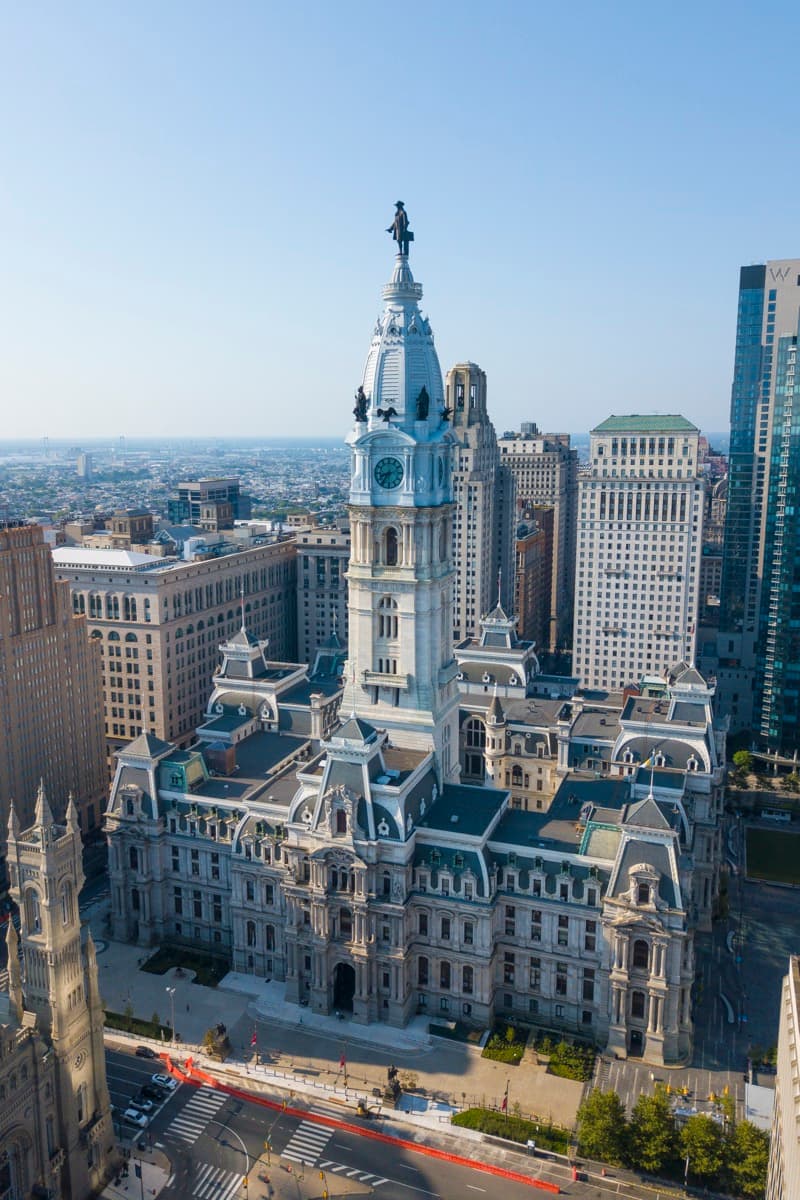
The Old City tour walks eight stops across the few blocks where the United States was argued into existence. It is easy to walk them as a shrine. This companion is here to make you walk them as an argument, because that is what actually happened on these streets, and it is more interesting.
The single room that did the work
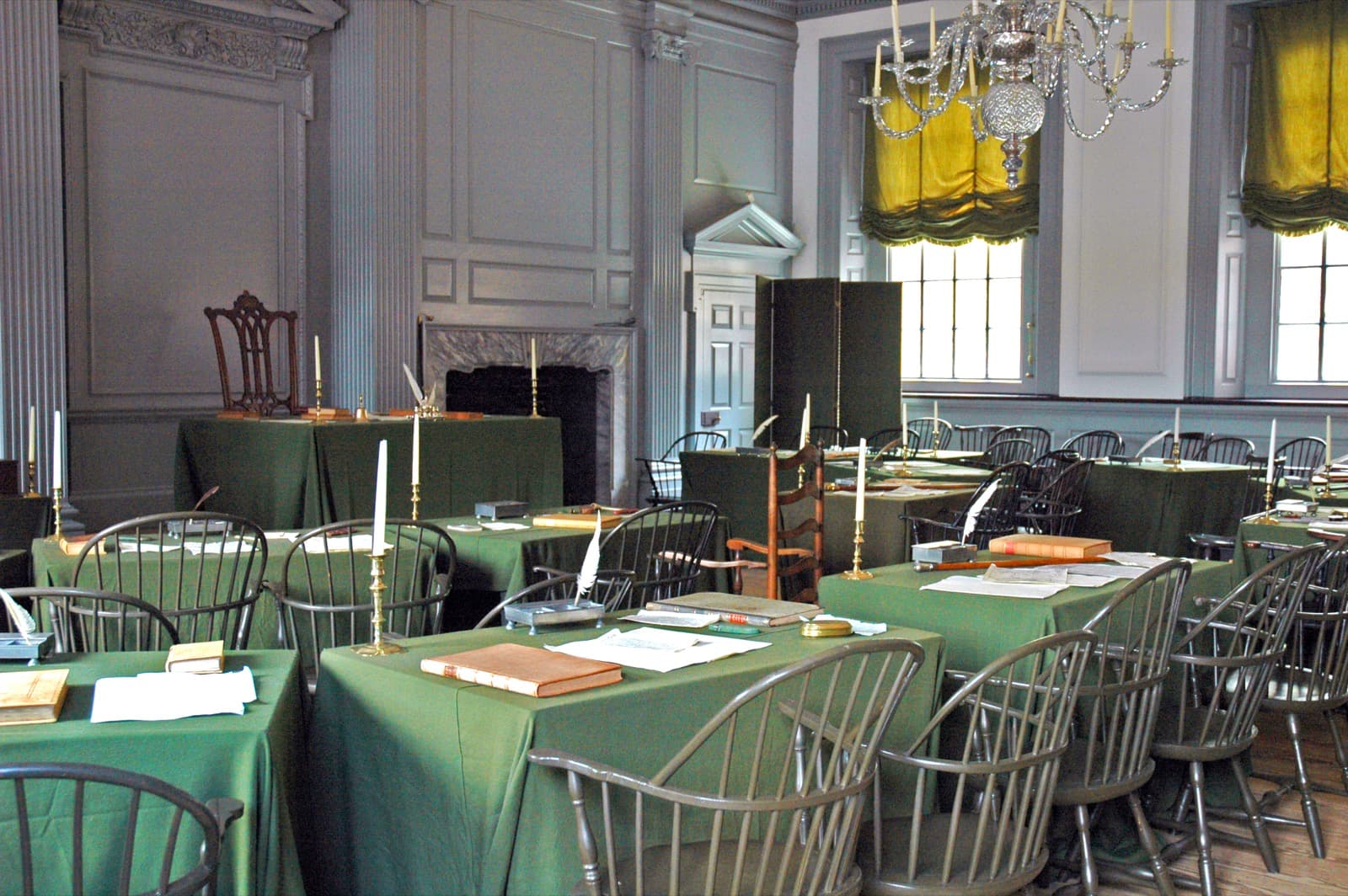
Two of the founding documents of the country were written in one room. Independence Hall was built between 1732 and 1753 as the Pennsylvania State House, designed by Andrew Hamilton with Edmund Woolley as master builder. Its Assembly Room, the tour's second stop, is where delegates adopted the Declaration of Independence on July 4, 1776, and where the Constitutional Convention sat from May to September 1787.
The chair the presiding officer used during the Convention is still there. Its back carries a carved half-sun. At the close of the Convention, Benjamin Franklin said he had spent the summer unable to tell whether the sun on that chair was rising or setting, and had finally concluded it was rising. That is a real quotation from a real man in that real room, and it is the kind of specific the tour audio anchors on so you are looking at the actual object, not a plaque about it.
The Bell tells a second story
Hear a stop from this walk
Old City Hall and the Second Bank: The Institutions the Room Built
The Liberty Bell, the tour's third stop, was not famous for the Revolution in its own century. It became an icon in the nineteenth century when abolitionists adopted its inscription, "proclaim liberty throughout all the land," as an anti-slavery text. The Bell you queue for is a founding-era object that a later movement reread against the founders. Hold that thought, because the next stop makes it physical.
Why the President's House is one block away
The tour's fourth stop is the site of the President's House, and it is the reason to take this walk seriously. From 1790 to 1800 Philadelphia was the national capital, and the executive mansion stood at 6th and Market, one block from the Bell. George Washington ran the government from here, and he staffed the house with nine enslaved Africans brought from Mount Vernon. He rotated them out of Pennsylvania every few months to dodge the state's 1780 gradual-abolition law, which would have freed anyone held for six continuous months. Two of them, Oney Judge and the cook Hercules Posey, freed themselves by escaping.
The memorial that names all nine opened here in 2010, in the sightline of the Liberty Bell. The President's House deep dive is the piece to read for the full household story; this is the stop that turns the whole tour from a shrine into an argument.
The rest of the walk
Carpenters' Hall, the fifth stop, is where the First Continental Congress met in 1774 in a building owned by a trade guild rather than the government, which is itself a story about who held power in colonial Philadelphia. Christ Church and its burial ground hold the graves of signers, including Benjamin Franklin. The Old City Hall and Second Bank stop closes the walk on the institutions the new country had to invent from scratch.
Before you go
Read the President's House and the enslaved household piece so you are ready for the fourth stop, and read the founding-city thesis for why Philadelphia's monuments and its erased histories share the same ground. Then walk it once as a shrine and once as an argument. The stones are the same; only the reading changes.
Ready to experience it?
Old City: The Room Where the Country Was Argued
85 min · 1.8 km · easy
More from Philadelphia
Explore more at your own pace.
One Day in Philadelphia: A Walkable Historic-Core Itinerary (2026)
The Founding City on Top of Erased Histories
From Crackdown to Canvas: A Mural Arts Companion
One Market, Three Immigrations: A South 9th Street Companion
Penn's Green Country Town: A Center City Companion