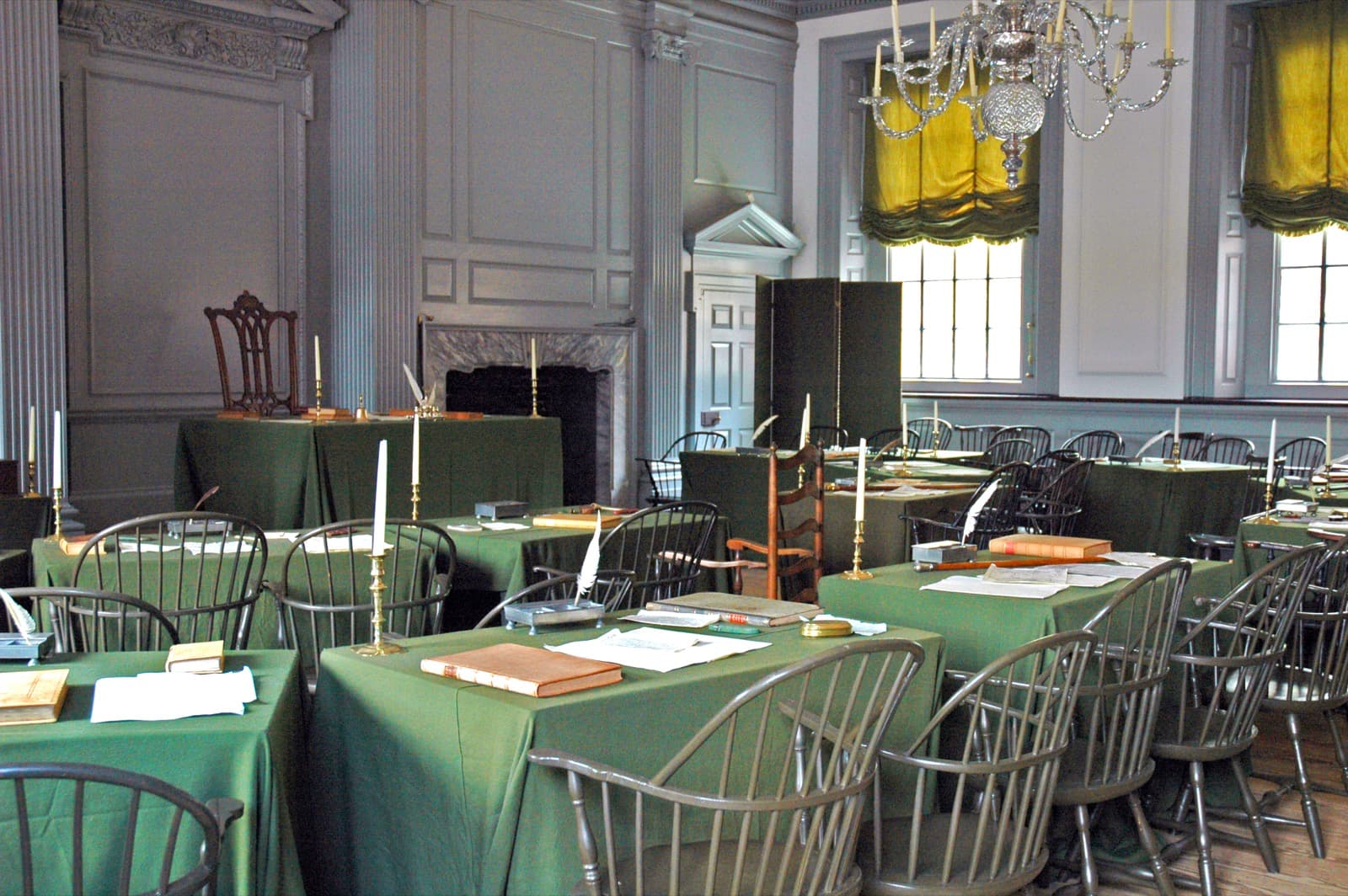
Eight stops across Old City Philadelphia, read as the sequels to one second-floor chamber. The country was argued into existence inside that room across two summers eleven years apart, and the gap between the universal language and the compromises is the paradox you walk for the next seventy-five minutes.
Start · Independence Hall: The Building Around the Room
DirectionsStops
- 1
Independence Hall: The Building Around the Room
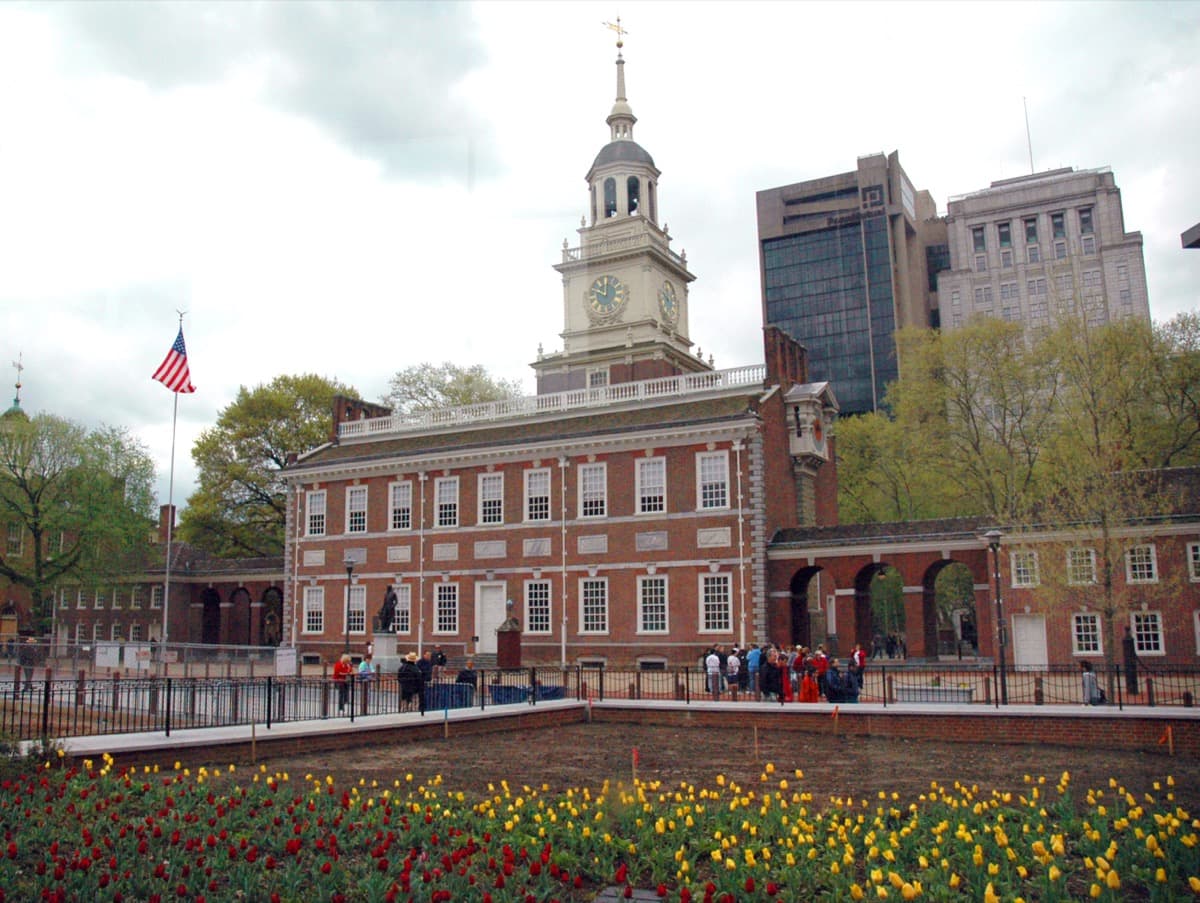
Chestnut Street between Fifth and Sixth. Brick Georgian, built 1732 to 1753 by Edmund Woolley and Andrew Hamilton as the Pennsylvania State House. Designated a UNESCO World Heritage Site in 1979. The building is scene-setting; the second-floor Assembly Room is the protagonist.
- 2
The Assembly Room: What Looks Like One Thing Is Two
Second floor of Independence Hall. The chamber that hosted the Second Continental Congress from May 10, 1775 through March 1, 1781, and the Constitutional Convention from May 25 to September 17, 1787. Restored to a documented 18th-century state in 1965, considered one of the most accurate historic renovations of any National Park Service interior.
- 3
Liberty Bell Center: The Name Came Later
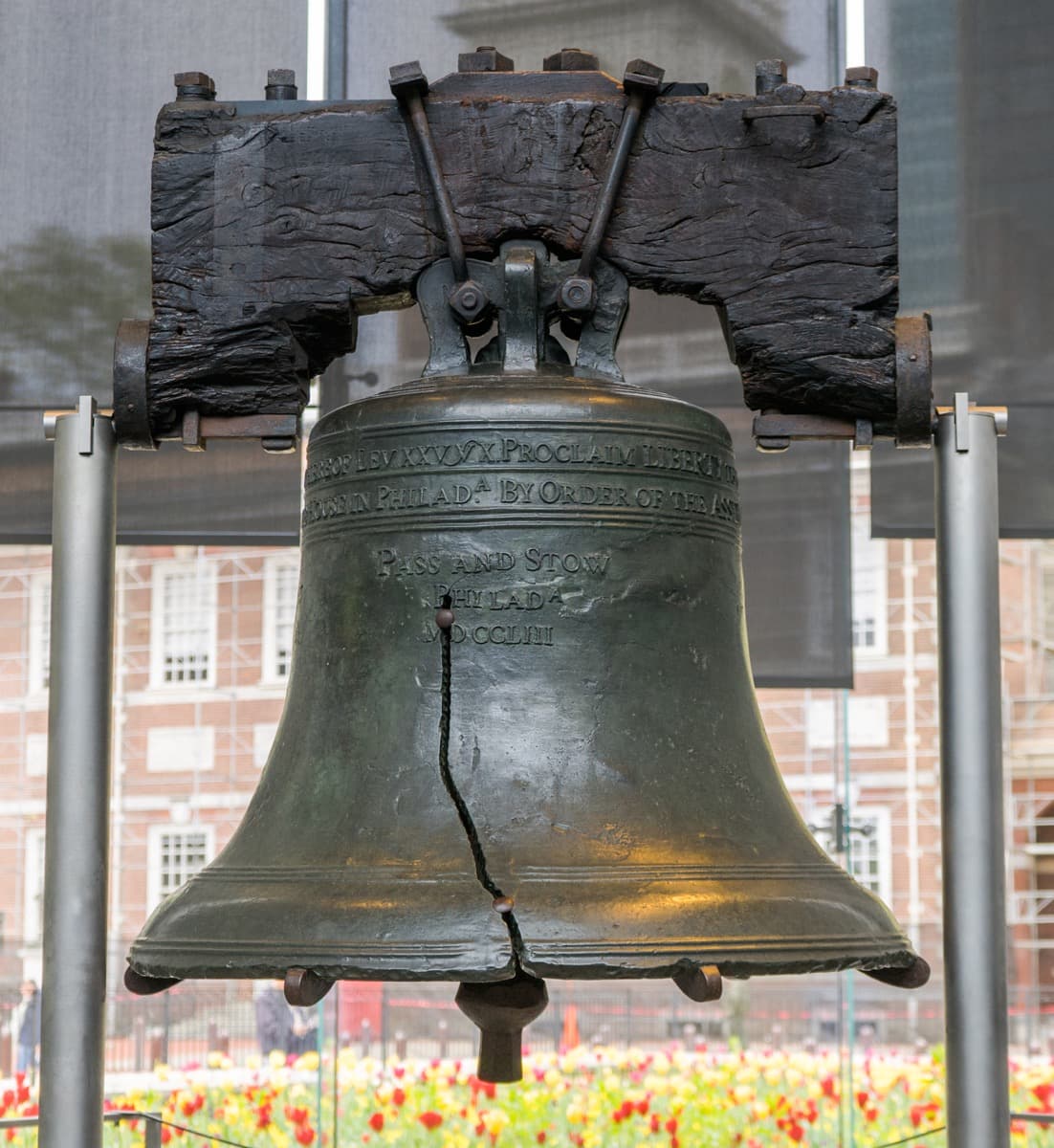
526 Market Street. The bell was cast in 1752 in London by the Whitechapel Bell Foundry, then trading as Lester and Pack, as the State House Bell. The name "Liberty Bell" was coined in the 1830s by abolitionists in the Anti-Slavery Record, arguing the inscription condemned slavery. The Center opened October 9, 2003.
- 4
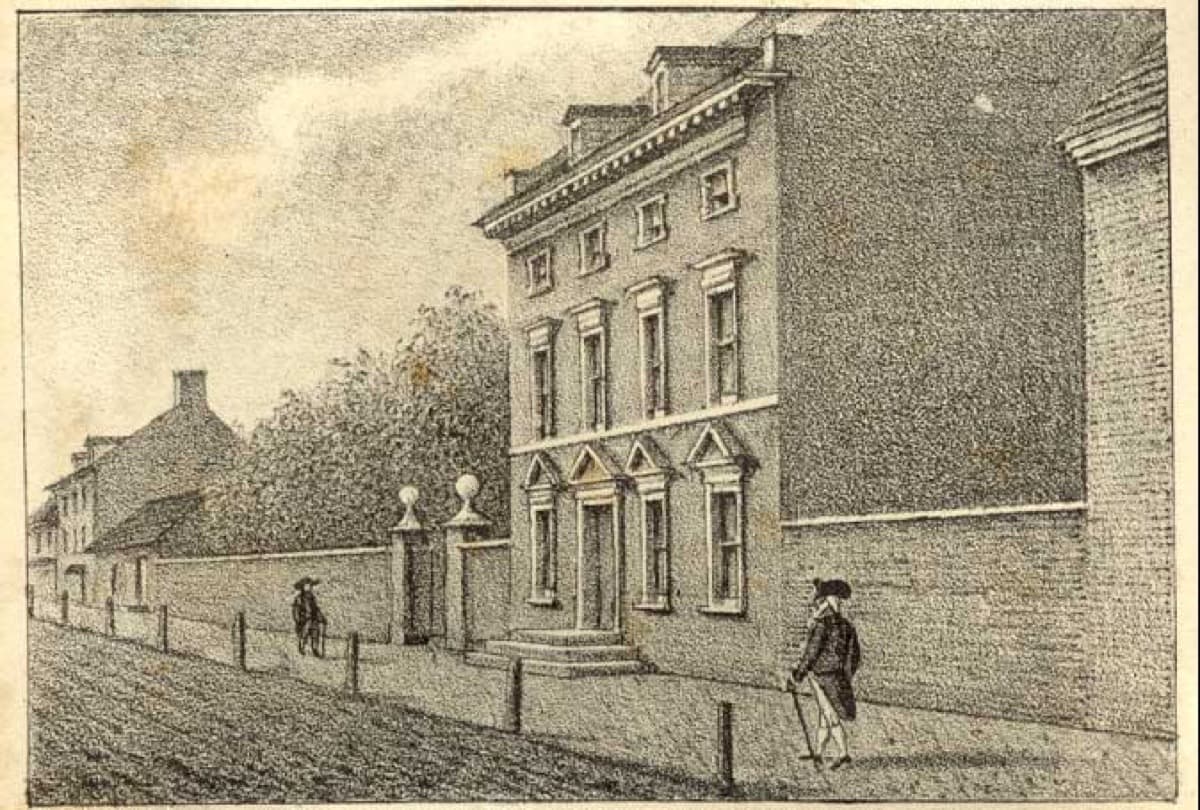
The President's House Site: The Paradox Made Spatial
Northeast corner of Sixth and Market. George Washington occupied the President's House here from November 27, 1790 to March 10, 1797. He brought eight enslaved domestics from Mount Vernon, including Oney Judge and Hercules Posey. The 2010 open-air memorial by Kelly Maiello Architects marks the footprint. The slave quarters sat approximately five feet from the Liberty Bell Center entrance.
- 5
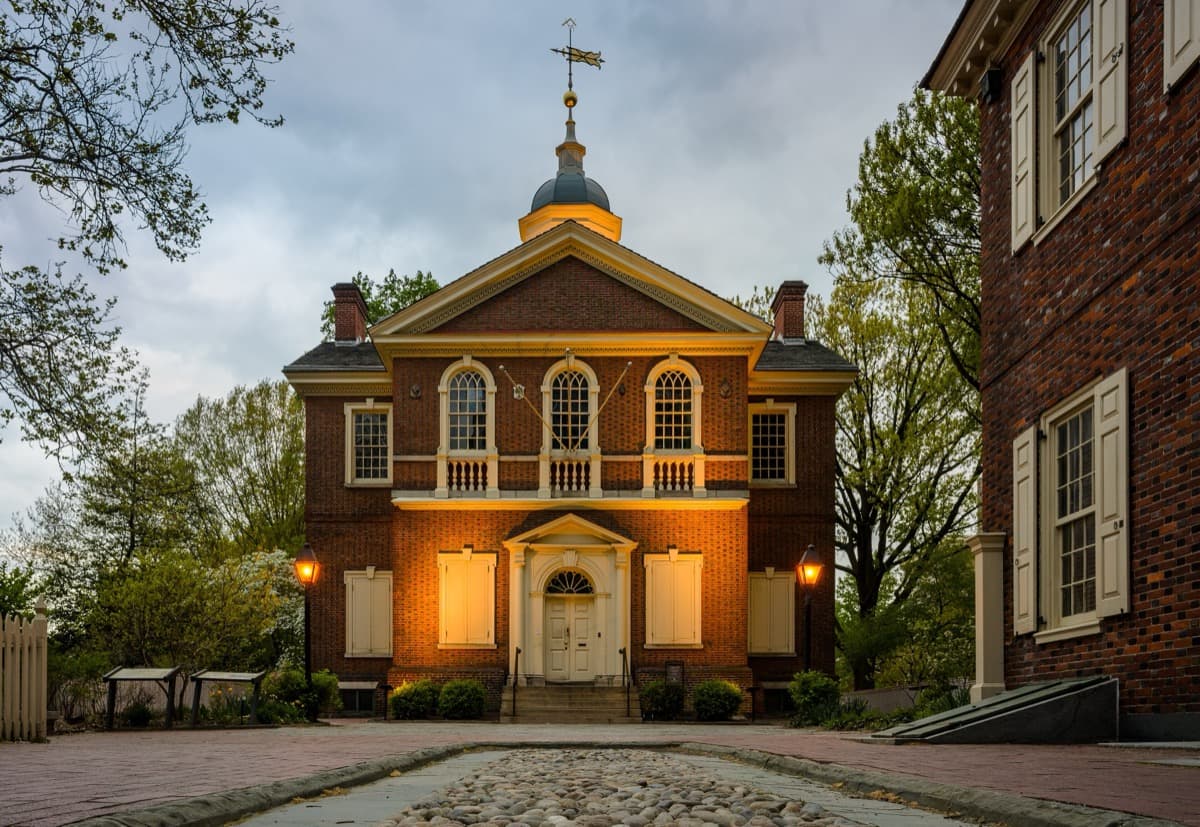
Carpenters' Hall: The Pre-Argument
320 Chestnut Street. Completed 1775 by Robert Smith for the Carpenters' Company of Philadelphia, the oldest existing US craft guild. The First Continental Congress met here September 5 to October 26, 1774. The Continental Association of October 1774 included a resolution to end the importation of enslaved people, thirteen years before the Constitutional Convention agreed to extend it until 1808.
- 6
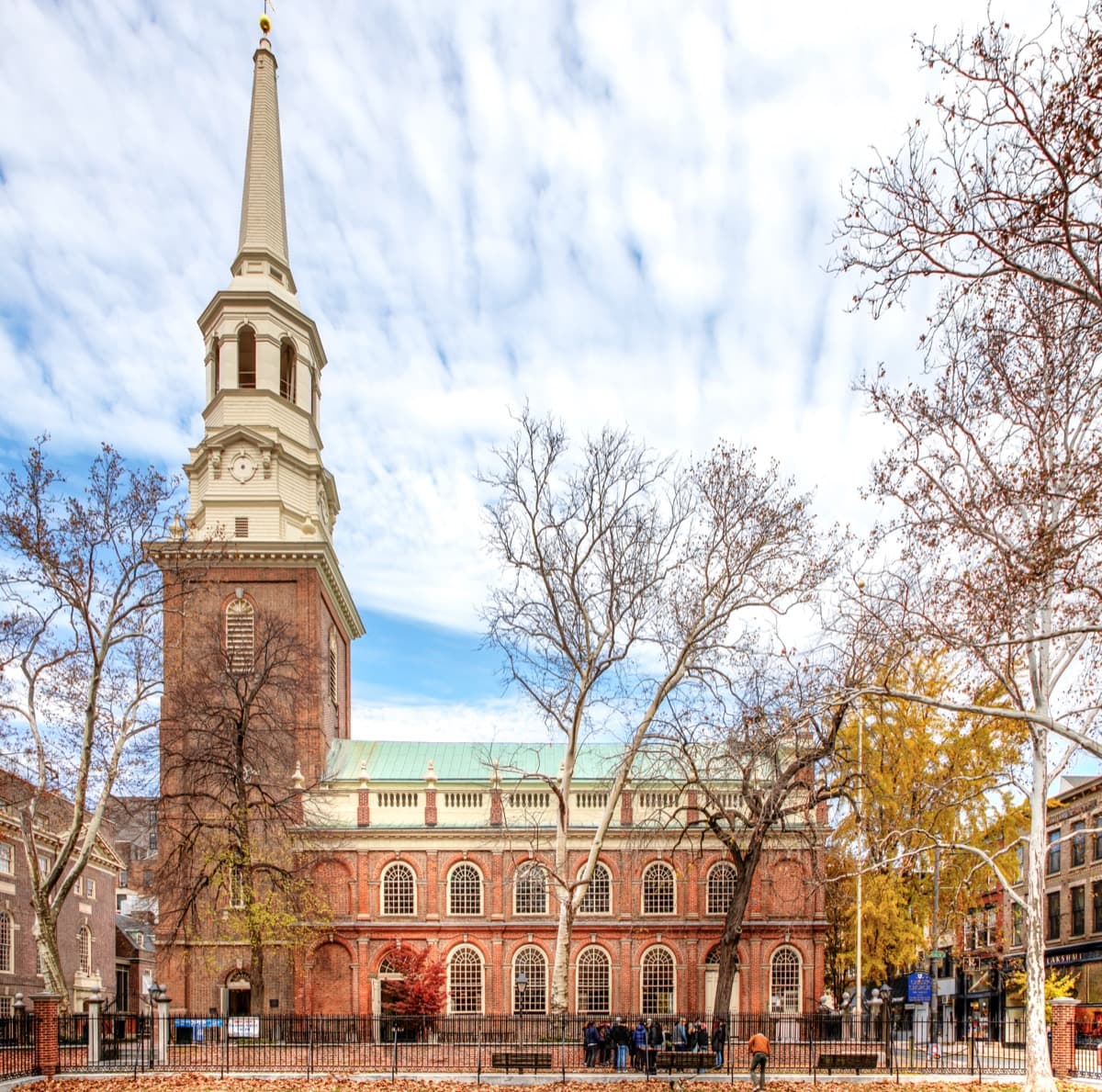
Christ Church: The Social Fabric the Argument Required
Second Street between Market and Arch. Built across the 18th century, the steeple completed in 1754 and once the tallest structure in colonial America. Active Episcopal parish of George Washington, Benjamin Franklin, Betsy Ross, John Adams, Robert Morris, and most signers of the Declaration of Independence who were Anglican.
- 7
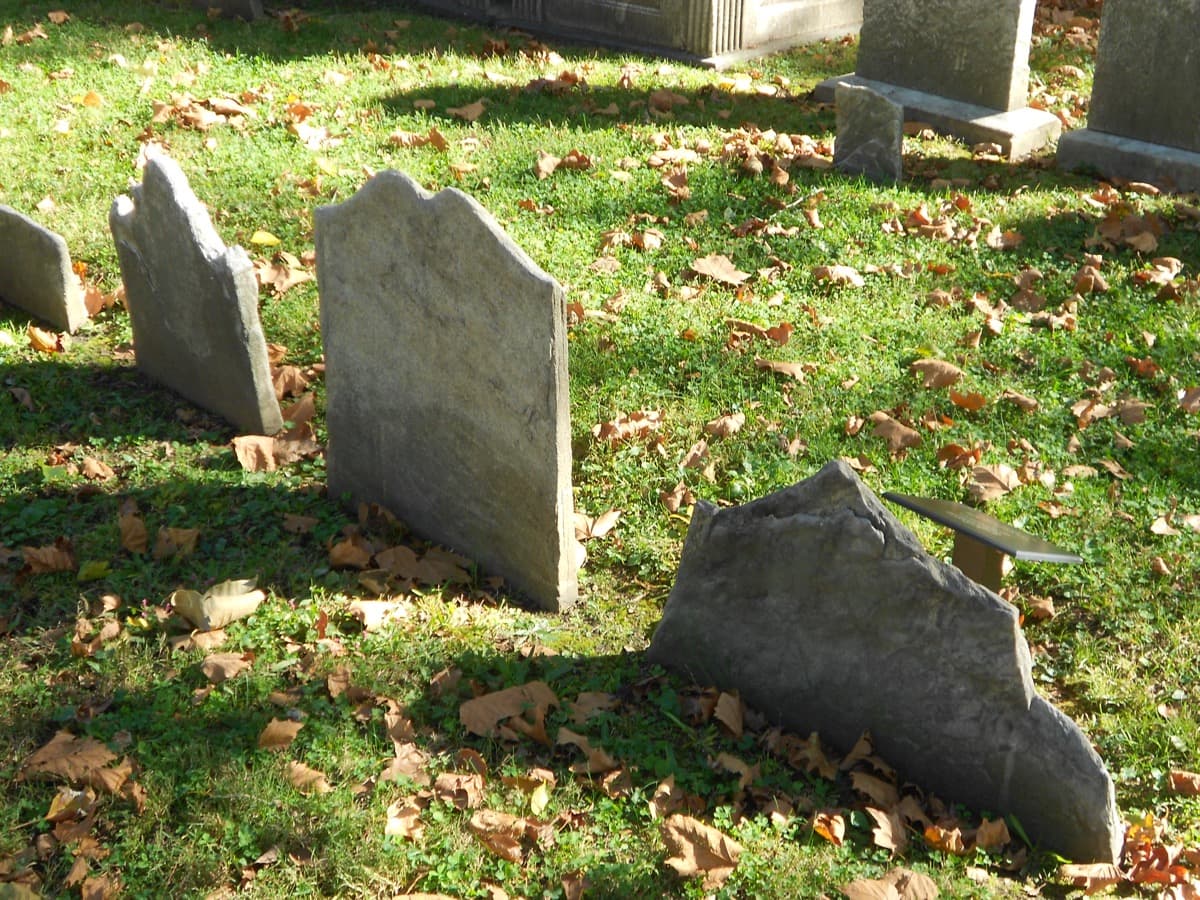
Christ Church Burial Ground: Franklin's Last Argument
Northeast corner of Fifth and Arch. Benjamin Franklin's grave is visible through the corner fence; the flat stone reads "Benjamin and Deborah Franklin." Five signers of the Declaration of Independence are buried in the yard. Franklin, as president of the Pennsylvania Society for Promoting the Abolition of Slavery, signed the society's petition to the First Congress against the slave trade in early 1790, three months before his death.
- 8
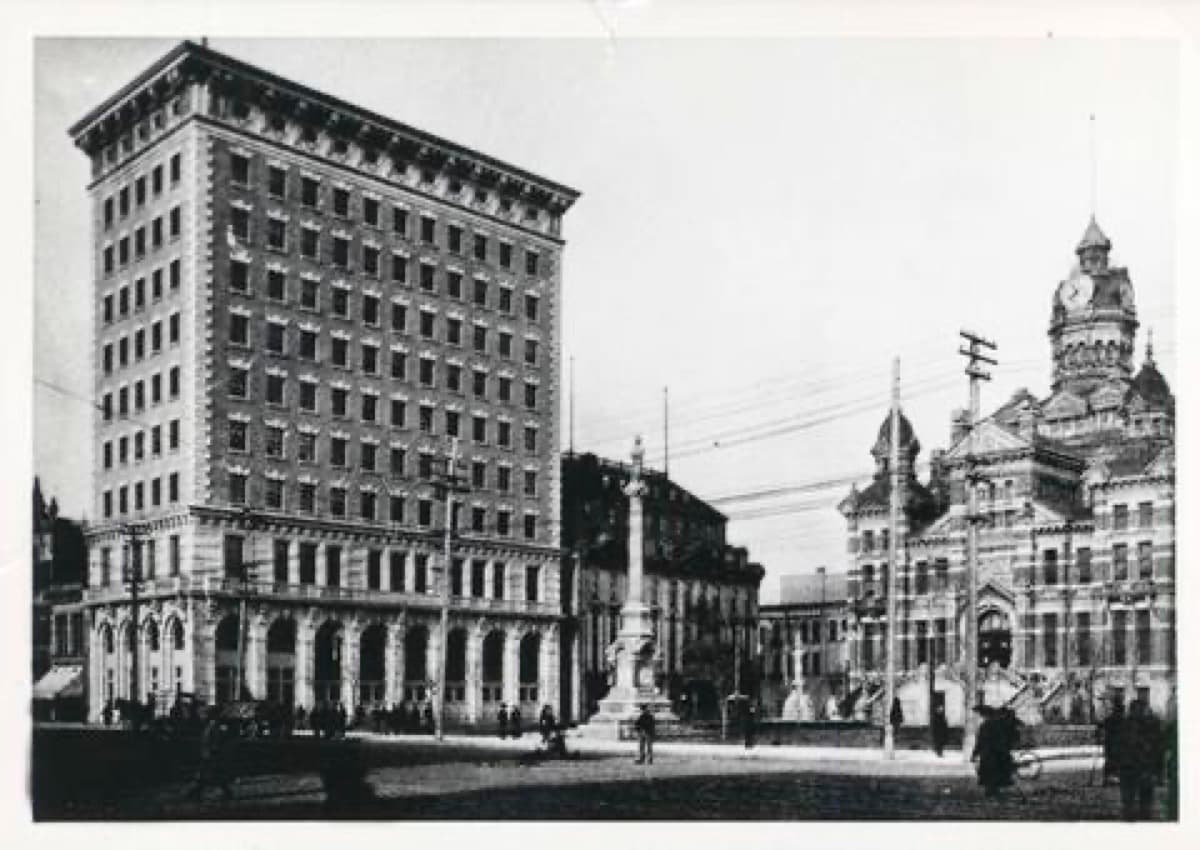
Old City Hall and the Second Bank: The Institutions the Room Built
Old City Hall at the northeast corner of Fifth and Chestnut, completed 1791, housed the US Supreme Court from 1791 until the federal government moved to Washington in 1800. The Second Bank of the United States at 420 Chestnut, a Greek Revival temple completed in 1824. The closer holds both readings of the paradox without synthesis.
Details
Best Time to Visit
Morning is the cleanest time on the corridor. Independence Hall requires a free timed-entry pass from March through December and slots fill up by midmorning in peak season; book through Recreation.gov before you arrive. The Liberty Bell Center opens at nine and reads cleanly before the school groups arrive around ten. The President's House open-air memorial reads in any weather but the granite frame is most legible in raking morning or late-afternoon light. Christ Church Burial Ground keeps seasonal hours, typically March through November, with a small admission ticket; the corner view of Franklin's grave from Fifth and Arch is free from the sidewalk year-round. Late afternoon light is on the brick of Independence Hall and the Christ Church steeple from the south. The walk is comfortable in spring, fall, and most of summer. Winter mornings are sharp but the interior stops are heated.
Pro Tips
- •Book your Independence Hall timed-entry pass through Recreation.gov before you arrive. Same-day passes from the Independence Visitor Center are limited and can be gone by midmorning in peak season.
- •The Liberty Bell Center main entrance is approximately five feet from the President's House slave-quarters footprint. The spatial proximity is the load-bearing fact at Stop Four; the two doorways are essentially the same doorway.
- •Christ Church Burial Ground offers two ways in. The corner view of Franklin's grave from the northwest corner of Fifth and Arch is free from the sidewalk and is the canonical view. Interior access, which includes the other signers' graves farther into the yard, requires a small ticket and seasonal hours apply.
- •Carpenters' Hall opening hours vary by day and season; check ahead. If the interior is closed, the exterior reads fully from the brick courtyard set back from Chestnut, and the editorial point of the stop is the building plus the seventeen seventy-four Continental Association resolution, both of which the courtyard supports.
- •Edward Lawler Junior's January two thousand and two paper in the Pennsylvania Magazine of History and Biography is the canonical scholarly source for the President's House rediscovery. The site's interpretive panels draw on his work.
- •The popular story attributing the Liberty Bell crack to the eighteen thirty-five death of Chief Justice John Marshall is unreliable; the documentary record cannot date the crack to a specific event. Treat the crack as undated.
- •If the paradox the tour walks holds your attention, Pauline Maier's American Scripture (nineteen ninety-seven), Richard Beeman's Plain, Honest Men (two thousand and nine), and David Waldstreicher's Slavery's Constitution (two thousand and nine) are the scholarly triple-anchor for the founding-room compromises.
- •The walk is roughly one point eight kilometres on level ground in Old City and around Independence Mall, comfortably done in seventy-five to ninety minutes including dwell time at each stop.
Safety & Precautions
- •Independence National Historical Park sites have airport-style security screening at Independence Hall and the Liberty Bell Center. Bring minimal bags, no weapons, no large containers, no food or drink beyond water.
- •Independence Hall tour groups climb a staircase to reach the second-floor Assembly Room. The route is not step-free; ask a ranger about accessible entry if needed.
- •The President's House memorial is open-air with no roof. Bring sun protection on summer afternoons and rain protection in shoulder seasons; the granite frame offers no cover.
- •The walk crosses Market, Chestnut, Arch, and several Center City side streets including Fifth, Sixth, and Second. Use marked crosswalks; the corridor has active traffic and frequent delivery vehicles.
- •Photography of the Liberty Bell and inside Christ Church is permitted; flash is restricted inside Independence Hall's Assembly Room to protect the eighteenth-century furnishings. The Burial Ground permits exterior photography from the corner without restriction.
Travel advisory: Exercise Normal Precautions (Level 1).
Gallery
Related Reading
Go deeper on what you'll see, hear, and walk through.
Overview
Best Self-Guided Walking Tours in Philadelphia (2026)
4 min
Overview
One Day in Philadelphia: A Walkable Historic-Core Itinerary (2026)
6 min
Overview
Philadelphia Travel Guide: How Many Days, Getting Around, Is It Safe (2026)
5 min
Thematic
Best History Walking Tours in Philadelphia (2026)
2 min
Thematic
The Founding City on Top of Erased Histories
4 min
Thematic
What to Eat in Philadelphia: A Food Guide (2026)
5 min
Companion
The Room Where the Country Was Argued: An Old City Companion
3 min
Deep dive
Nine Names in the Sightline of the Liberty Bell
4 min
Read the walk
The full story of Old City: The Room Where the Country Was Argued, in words. Prefer to listen? Play it narrated, from home or on location.
Introduction
A single room on the second floor of a brick Georgian building, about forty by forty feet, with tall south windows kept closed for secrecy in two separate summers. That is where the country was argued into existence.
The room is the Assembly Room of Independence Hall, in Philadelphia, Pennsylvania. The Declaration of Independence was approved there on July fourth, seventeen seventy-six. Eleven years later, in the same room, the Constitutional Convention agreed to count three of every five enslaved persons toward state representation, and to forbid Congress from banning the importation of enslaved people until eighteen oh-eight. The phrase "all men are created equal" and the three-fifths clause were written by overlapping rosters of men in overlapping chairs in the same forty-by-forty-foot space. That is the paradox the walk holds.
This is not a tour about a monument. It is a tour about an argument. The argument is held in the room. Every other stop on the walk is a sequel to the room. The paradox archetype does not collapse one reading into the other; both stay on the table.
The walk is eight stops, about one point eight kilometres, and eighty-five minutes, on a tight grid bounded by Chestnut, Market, Second, and Sixth. Most buildings sit inside Independence National Historical Park; entry is free except for a small ticketed fee at Christ Church Burial Ground. Independence Hall itself requires a free timed-entry pass booked in advance through Recreation.gov.
When you arrive at Independence Hall on Chestnut Street, begin with stop one.
1. Independence Hall: The Building Around the Room
You have arrived at Independence Hall. Stand on the north side of Chestnut Street, facing the brick Georgian façade with the tower above the central bay. Look up at the tower.
Here is the building. Construction began in seventeen thirty-two and finished in seventeen fifty-three, on a design by Edmund Woolley and Andrew Hamilton, with Woolley as builder. The original name was the Pennsylvania State House. It was the seat of the colonial Pennsylvania assembly. The name Independence Hall is later commemorative; it was given to the building in the nineteenth century, after the events that made the second-floor room famous. In nineteen seventy-nine, UNESCO designated this building a World Heritage Site.
Notice what the building is, and what it is not. It is a working colonial government building, brick on stone foundations, with a Georgian symmetry that was unremarkable for its time. The tower above the central bay was added in the seventeen-fifties to house the State House Bell. The building is not large. The building is not architecturally daring. The building is the box that holds the room.
The room is on the second floor, on the east side, behind the wall directly above the doors. About forty by forty feet. It is called the Assembly Room because it was where the Pennsylvania assembly met before the Continental Congress took it over in May of seventeen seventy-five. You are about to walk inside.
This is not a tour about a monument. It is a tour about an argument. The argument happened upstairs. Two documents came out of that room. One declared independence in seventeen seventy-six. The other, eleven years later, compromised on who counted as a person. Both readings stay on the table for the entire walk.
Now walk to the central doors below the tower and present your timed-entry pass. The ranger will lead you up the stairs to the second floor. I will pick you up inside the Assembly Room.
2. The Assembly Room: What Looks Like One Thing Is Two
You have arrived inside the Assembly Room. Stand near the railing where the ranger has positioned the visitors. Look at the chairs around the small tables. Look at the central desk with the silver inkstand. Look at the green baize tablecloths. Look at the tall chair at the front, the one with the carved sun on the upper crest rail. That is the Rising Sun chair. Benjamin Franklin pointed to that chair on September seventeenth, seventeen eighty-seven, on the day the Constitutional Convention finished, and remarked that throughout the summer he had not been able to tell whether the sun on its back was rising or setting. By the end, he said, he had concluded it was rising.
Here is what looks like one thing and is two. You came to see Independence Hall the building. You are now standing in Independence Hall the room. Same address. Two protagonists. The building is brick and quiet. The room is small and crowded with arguments.
The Second Continental Congress sat in this room from May tenth, seventeen seventy-five, through March first, seventeen eighty-one, with one interruption when British troops occupied Philadelphia from September of seventeen seventy-seven to June of seventeen seventy-eight and the Congress moved temporarily to York, Pennsylvania. On July fourth, seventeen seventy-six, the delegates approved the Declaration of Independence unanimously in this room. The phrase "all men are created equal" was written into the document Thomas Jefferson drafted and the Congress edited, line by line, around these tables.
Eleven years later, between May twenty-fifth and September seventeenth of seventeen eighty-seven, a different convention sat in the same chairs. George Washington presided. The windows were closed in summer heat for secrecy, just as they had been in seventeen seventy-six. James Madison kept the notes of the proceedings that are now the most complete record we have of what was said. Over those four months, the convention agreed to count three of every five enslaved persons toward state representation in the new Congress, and it agreed that the federal government could not prohibit the importation of enslaved people until eighteen oh-eight. Both clauses are in the text of the Constitution. The eighteen-oh-eight date is written into Article One, Section Nine.
The same chairs. The same room. Eleven years apart. Two documents, both signed by overlapping rosters of the same men. The universal language and the compromised practice were not written in different buildings by different people. They were written here.
The room you are standing in was restored to a documented eighteenth-century state across campaigns that ended in nineteen sixty-five. The National Park Service considers it one of the most accurate historic interior renovations the agency has ever completed. The chairs and tables are documented to inventory; the Rising Sun chair is the original. What you see is, to the extent the historical record permits, what the men in seventeen seventy-six and seventeen eighty-seven saw.
Now follow your ranger group back down the stairs. When you exit onto Chestnut Street, turn right and walk a short block north onto the Independence Mall lawn, toward the glass-walled building one block north. I will meet you inside, in front of the bell.
3. Liberty Bell Center: The Name Came Later
You have arrived at the Liberty Bell Center. Walk through security to the south end of the glass hall and stand in front of the bell. Look at it. The crack runs from the lip up the right side. The inscription wraps the crown: "Proclaim LIBERTY Throughout all the Land unto all the Inhabitants Thereof," followed by the chapter and verse, Leviticus twenty-five, ten.
Here is what the bell is, and here is what the name is. The bell was cast in seventeen fifty-two in London, by the Whitechapel Bell Foundry, then trading as Lester and Pack. It was commissioned by the Pennsylvania Provincial Assembly as the State House Bell, for the building you just left. Its purpose was civic and ordinary. It summoned lawmakers to session. It marked public proceedings. The inscription was drawn from Leviticus, chapter twenty-five, verse ten, the biblical proclamation of liberty in the jubilee year.
The bell was not called the Liberty Bell when it was cast. It was called the State House Bell. The name you know it by is younger than the bell by about eighty years.
In the eighteen-thirties, abolitionists in the American Anti-Slavery Society began publishing the inscription in their pamphlets as an argument against slavery. The society's journal, the Anti-Slavery Record, first used the phrase "the Liberty Bell" in its pages in the mid-eighteen-thirties. In eighteen thirty-seven the society published a magazine titled Liberty featuring the bell beneath the inscription. The naming was deliberate. The abolitionists were arguing that the inscription on the State House Bell condemned the institution the State House had legitimated, that what the room across the lawn had produced in seventeen eighty-seven was at odds with what the bell on top of the building proclaimed in seventeen fifty-two.
The name "Liberty Bell" was given to this object by people arguing against the room. That is the editorial fact you want to hold.
The crack you are looking at developed at some point between eighteen seventeen and eighteen forty-six. The most likely period is the early eighteen-forties. There is a popular story attributing the crack to the death of Chief Justice John Marshall in eighteen thirty-five; that story originated in a retelling published in eighteen seventy-six, and the documentary record does not support it. The Wikipedia entry on the bell, citing the standard scholarly literature, treats the Marshall story as unreliable. The honest answer is that the crack developed during a period of heavy use, and no single event has been documented as the cause.
The Liberty Bell Center where you are now standing opened on October ninth, two thousand and three. The building was sited deliberately on the axis you just walked, so that the bell is visible through the south glass wall against the Independence Hall tower beyond. The bell and the tower are in the same line of sight on purpose. The two arguments are meant to be read together.
Now exit through the north doors of the Center. Cross the small lawn to the corner of Sixth and Market. You are about to stand on a granite frame in the open air. I will meet you there.
4. The President's House Site: The Paradox Made Spatial
You have arrived at the President's House site. Stand inside the open-air pavilion at the corner of Sixth and Market, where the granite walls outline the footprint of the building that once stood here. Look down at your feet. The footprint of the slave quarters is marked on the…
Full narration for this stop unlocks with the tour.
5. Carpenters' Hall: The Pre-Argument
You have arrived at Carpenters' Hall. Stand in the small brick courtyard set back from Chestnut Street, in front of the Georgian hall with the cupola. The building was completed in seventeen seventy-five on a design by Robert Smith. It was, and still is, the meeting hall of the…
Full narration for this stop unlocks with the tour.
6. Christ Church: The Social Fabric the Argument Required
You have arrived at Christ Church. Stand on Second Street, facing the brick façade and the tall white steeple above. The steeple was once the tallest structure in colonial America. The body of the church was built across the first half of the eighteenth century. The architecture…
Full narration for this stop unlocks with the tour.
7. Christ Church Burial Ground: Franklin's Last Argument
You have arrived at Christ Church Burial Ground. Stand on the corner of Fifth and Arch, at the northwest corner of the brick wall. Look through the iron fence. The flat stone closest to the corner reads "Benjamin and Deborah Franklin." The date carved on the stone is seventeen…
Full narration for this stop unlocks with the tour.
8. Old City Hall and the Second Bank: The Institutions the Room Built
You have arrived at the closing stop. Stand at the corner of Fifth and Chestnut. The brick building immediately east of Independence Hall, with the cupola, is Old City Hall. The Greek Revival temple half a block east, with the Doric columns and the marble façade, is the Second…
Full narration for this stop unlocks with the tour.