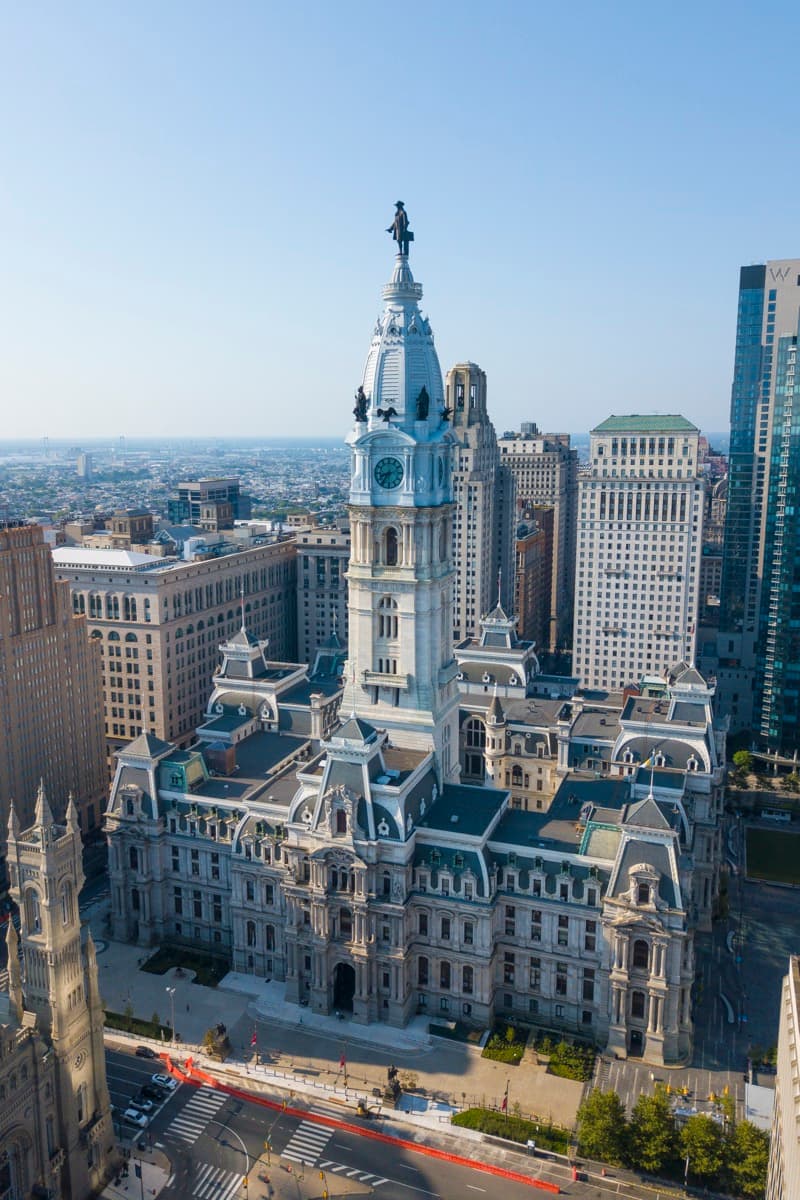
The Mural Arts tour walks a sequence of walls that together tell the story of how Philadelphia turned graffiti abatement into the largest public art program in the United States. The point of the tour, and of this companion, is that these murals are not a gallery hung outdoors. They are a decades-long argument about who gets to put marks on the city's walls, and the argument is still going.
It started as a crackdown
In January 1984, Mayor Wilson Goode launched the Philadelphia Anti-Graffiti Network to fight the spread of graffiti across the city. The network hired the artist Jane Golden, and rather than only scrubbing walls, she did something unexpected: she went to the graffiti writers themselves and offered them a legal wall and a paying job. The program that grew out of that decision, formally the Mural Arts Program from 1986, is the origin the tour's early stops are built around. The "anti-graffiti wall" stop is literally about this founding tension: a program designed to erase illegal marks that survived by employing the people making them.
That program has since ushered more than 4,000 murals into being and calls itself the nation's largest public art program. Golden ran it for four decades. The tour's structure follows that arc from crackdown to canvas.
The eras the tour walks
Hear a stop from this walk
Era 1: The Anti-Graffiti Wall
The tour is organized in eras, and that is the smart way to read the walls. The first era is the anti-graffiti origin: walls made to replace tags, often paint-over-the-problem in spirit. The second era is collaboration, when the program learned to work with communities rather than on them, and it includes contested walls, murals that neighborhoods argued about, because a public wall is public property and people disagree about what should be on it. The third era is restorative justice, murals made with incarcerated and formerly incarcerated Philadelphians, which pushes the whole premise further: art not as decoration but as a form of civic repair.
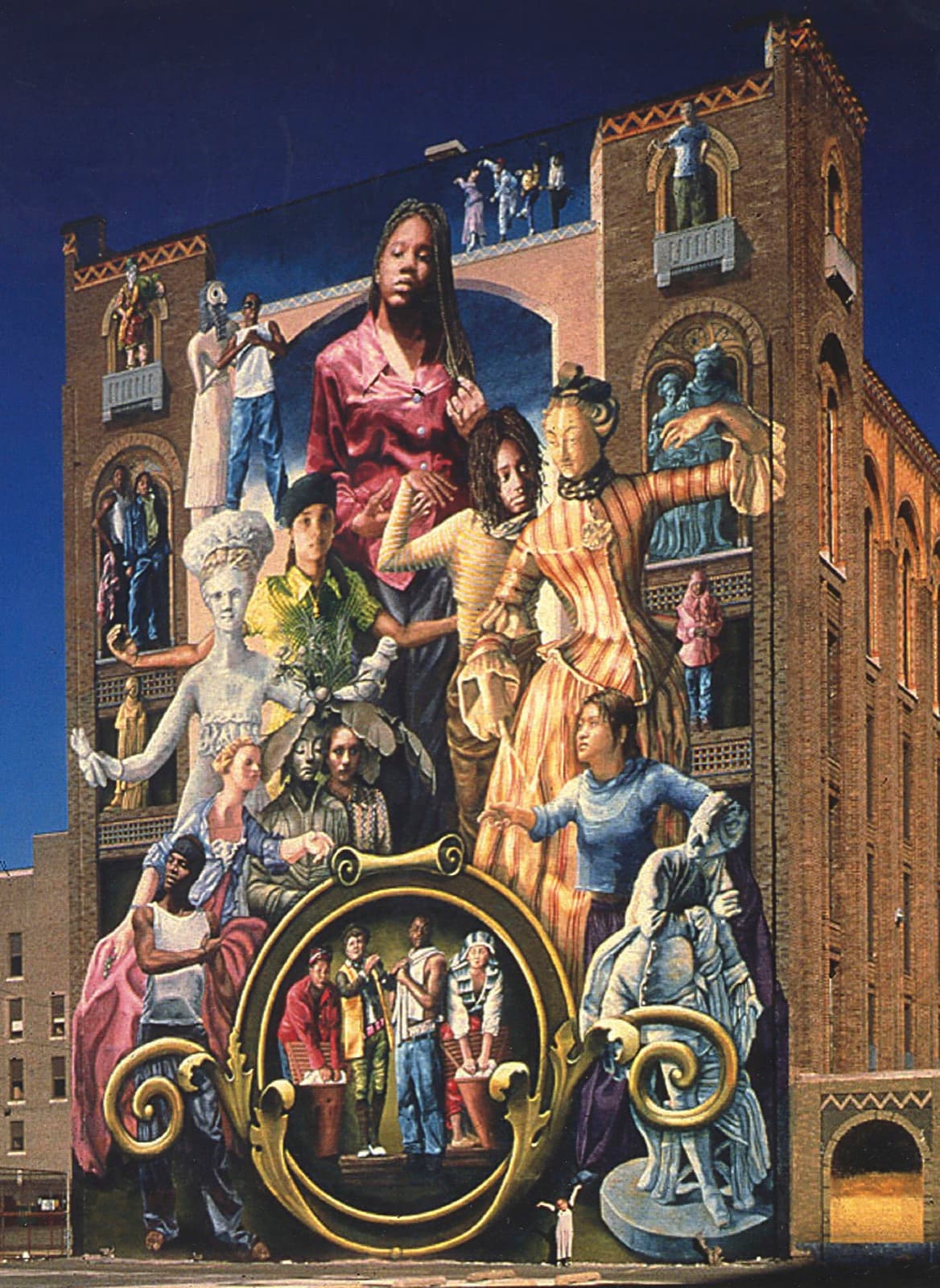
Along the way the tour passes signature works. Common Threads, by the artist Meg Saligman at Broad and Spring Garden, is one of the program's landmark large-scale murals, juxtaposing classical sculptural figures with portraits of local high school students to argue that the two belong to the same human story. The tour's stops on "the contract" and the "resolution wall" close the arc, turning the walk into a single sustained argument rather than a list of pretty pictures.
How to read a mural on this tour
The tour teaches you to ask, at each wall, three questions that the murals themselves are arguing about: who commissioned it, who painted it, and who lives with it. A crackdown-era wall answers those questions very differently from a restorative-justice-era wall, and the difference is the whole history of the program in miniature. Once you are asking those questions, the walls stop being scenery and become a record of a city arguing with itself, in paint, for forty years.
Before you go
Read the Mural Arts origin deep dive for the full crackdown-to-canvas story, and the founding-city thesis for how the murals fit Philadelphia's larger pattern of recording the people its monuments left out. Then walk the walls as an argument.
Ready to experience it?
The Wall as Argument: Philadelphia's Mural Mile
90 min · 3.5 km · moderate
More from Philadelphia
Explore more at your own pace.
One Day in Philadelphia: A Walkable Historic-Core Itinerary (2026)
The Founding City on Top of Erased Histories
One Market, Three Immigrations: A South 9th Street Companion
Penn's Green Country Town: A Center City Companion
The Room Where the Country Was Argued: An Old City Companion