The Center City tour walks eight stops across the grid that William Penn ordered laid out in 1682. What makes it worth a companion piece is that the grid is not scenery. It is the oldest large-scale urban design decision in the country, and every stop on the tour is either part of the original plan or a response to it.
What Penn actually planned
In 1682 William Penn instructed his surveyor general, Thomas Holme, to lay out what Penn called a "greene country towne" on the land between the Delaware and Schuylkill rivers. Penn had watched London burn in the Great Fire of 1666 and suffer through plague, and he wanted the opposite of London's dense tangle: a regular gridiron of wide, straight streets that could not carry fire block to block, with generous lots so houses would sit apart with room for gardens.
Holme's plan, printed in 1683, is the earliest design for a planned community in America and the first city plan in the country to provide for long-term growth. It set two grand axes crossing at the center, Broad Street running north to south and High Street (now Market) running east to west, and it reserved five public squares: a large central square where the axes met, and one square in each of the four quadrants. Those four are today's Rittenhouse, Washington, Franklin, and Logan squares. The tour visits Rittenhouse, Washington, and Logan, so you are literally walking Penn's 1682 reservations.
The center square filled in
Hear a stop from this walk
Logan Square and Swann Memorial Fountain: The Amended Corner
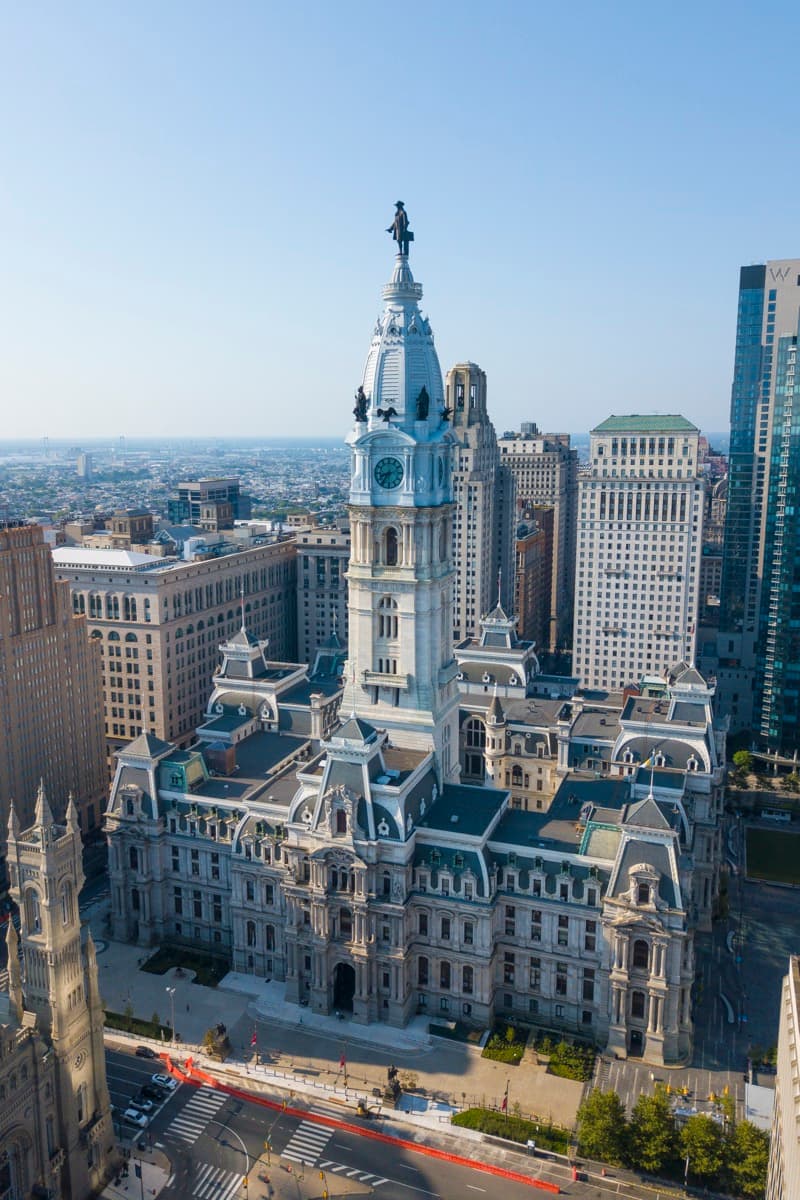
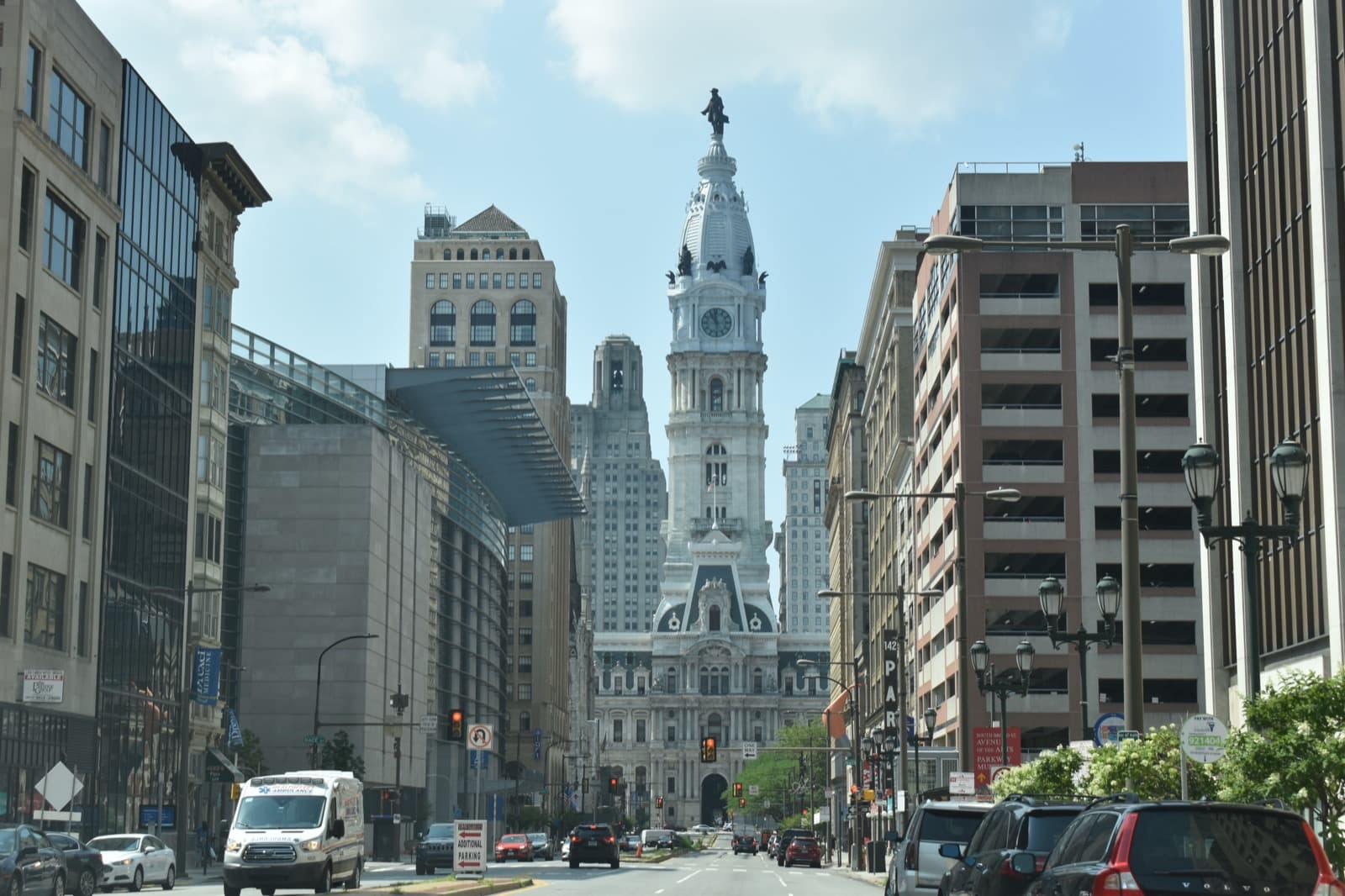
Penn left the central square open. Philadelphia filled it, two centuries later, with the single most emphatic building in the city. Philadelphia City Hall, the tour's first stop, was built from 1871 to 1901 to a design by John McArthur Jr. in the French Second Empire style. It is the largest free-standing masonry building in the country, and from 1894 to 1908 its tower made it the tallest habitable building in the world.
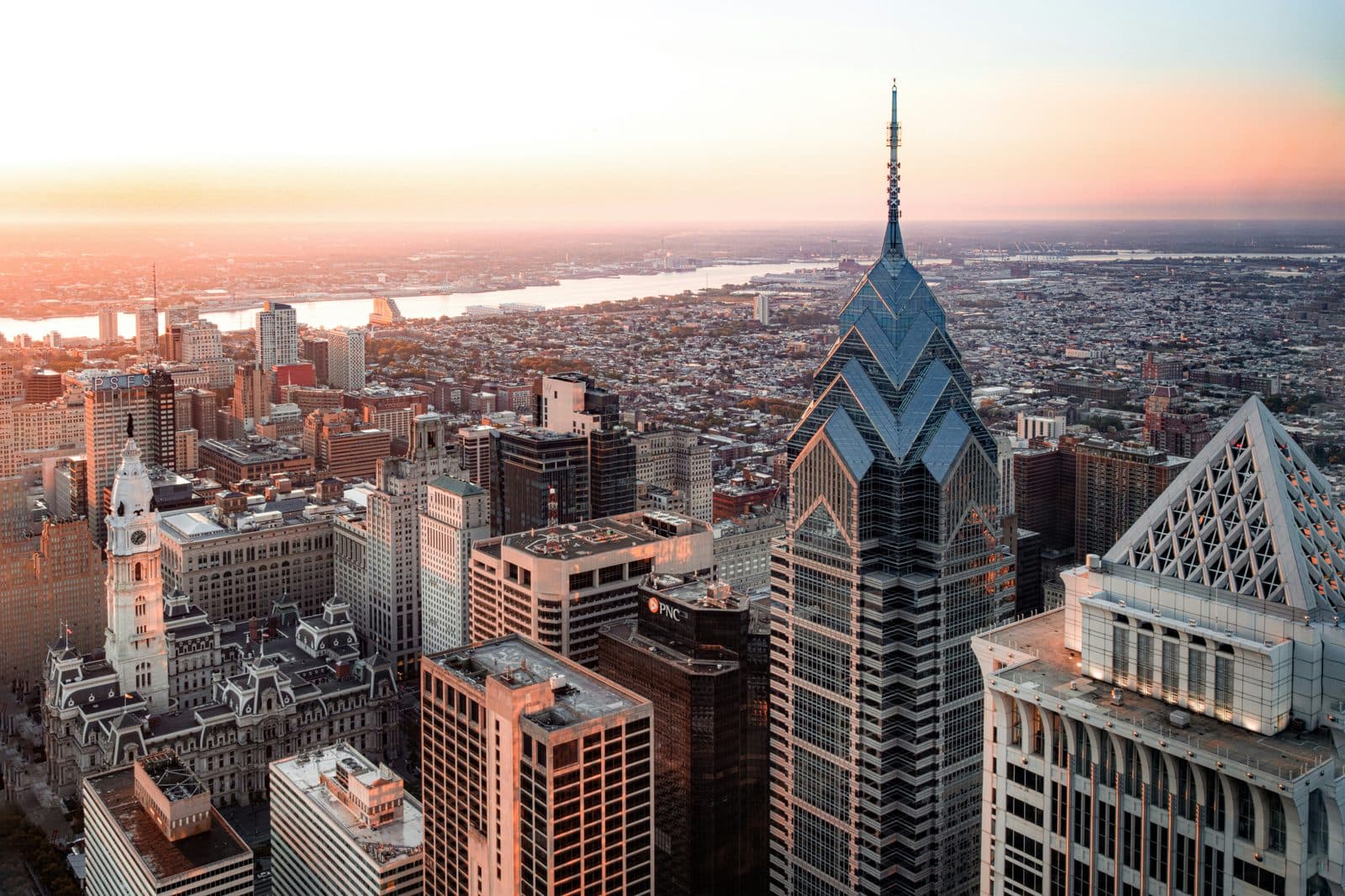
On top stands a 37-foot bronze statue of William Penn by Alexander Milne Calder, the tallest statue on any building anywhere. For most of the twentieth century an informal "gentlemen's agreement" kept no Philadelphia building taller than Penn's hat. It held until 1987, when One Liberty Place broke the line, and Philadelphians only half-jokingly blamed the "Curse of Billy Penn" for the city's sports droughts afterward. Penn planned the empty square in 1682; the city answered it with a building that argued, for a century, about how high the town was allowed to reach.
What the grid became: Wanamaker's
The tour's stop at the Wanamaker Building is the story of what the grid grew into commercially. John Wanamaker opened his business in 1861 and built modern retail as we know it. He is credited with inventing the price tag, so every customer paid the same posted price, and with the money-back guarantee. The current building, completed in 1911, holds the Wanamaker Organ, the largest fully functional pipe organ in the world, with more than 28,000 pipes. It was first played on June 22, 1911, timed to the coronation of King George V. Reading Terminal Market, another stop, is covered in depth in the Reading Terminal food companion.
Before you go
Read the City Hall and the Curse of Billy Penn piece for the full height story, and the founding-city thesis for how Penn's grid became a container for everyone who arrived after him. Then walk the tour knowing that the streets under your feet were drawn in 1682 by a man who wanted a city that would not burn.
Ready to experience it?
Center City: William Penn's Three-Hundred-Forty-Three-Year Experiment
85 min · 3 km · easy
More from Philadelphia
Explore more at your own pace.
One Day in Philadelphia: A Walkable Historic-Core Itinerary (2026)
The Founding City on Top of Erased Histories
From Crackdown to Canvas: A Mural Arts Companion
One Market, Three Immigrations: A South 9th Street Companion
The Room Where the Country Was Argued: An Old City Companion