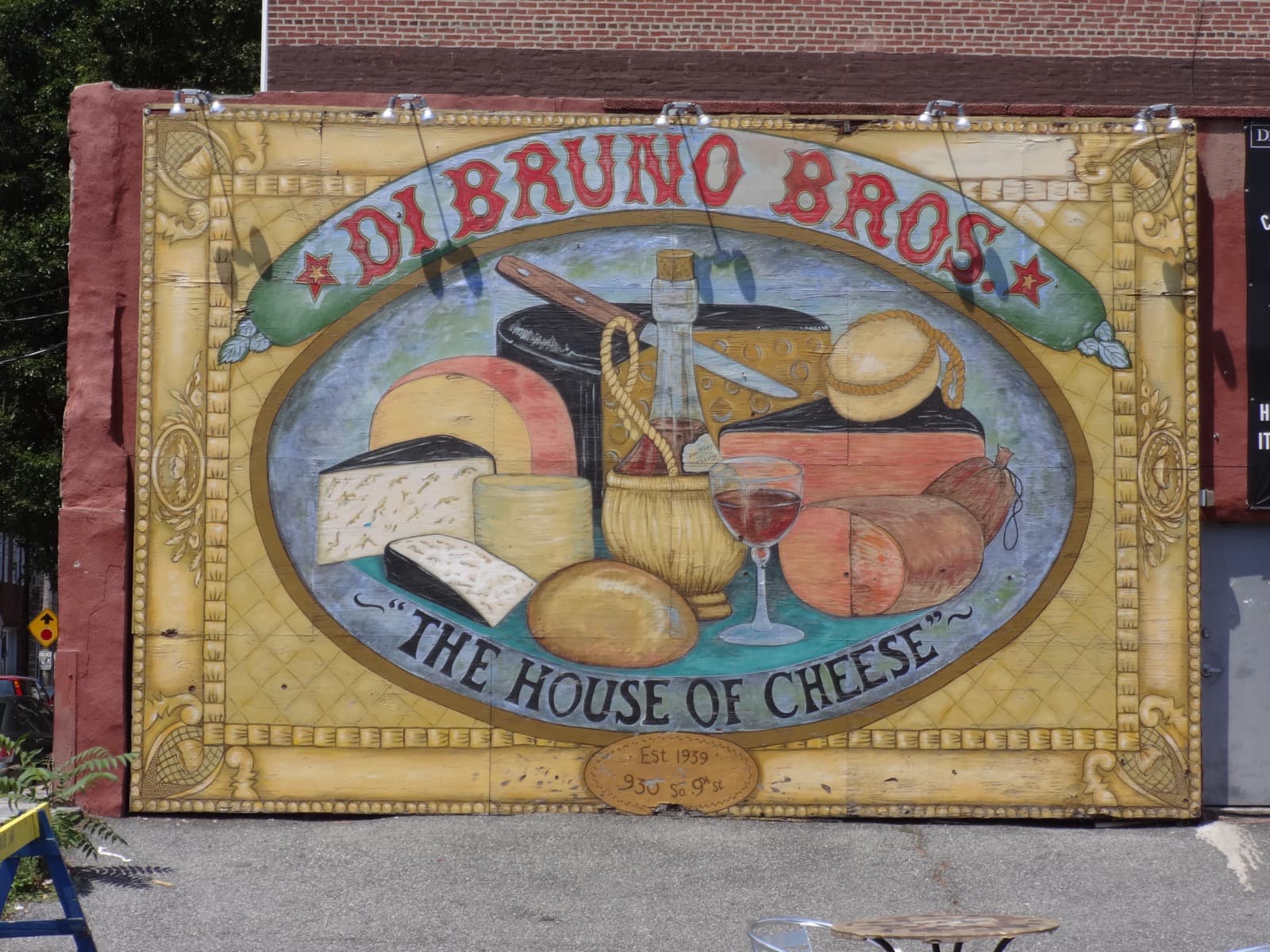
A name-survival biography of an American immigrant-substrate market. Ninth Street is still called the Italian Market, but the awnings today read in four languages and three immigrant histories, and the persistence of the name across the changing storefronts is the editorial subject.
Start · St. Paul's Catholic Church: The Parish That Was Inherited
DirectionsStops
- 1
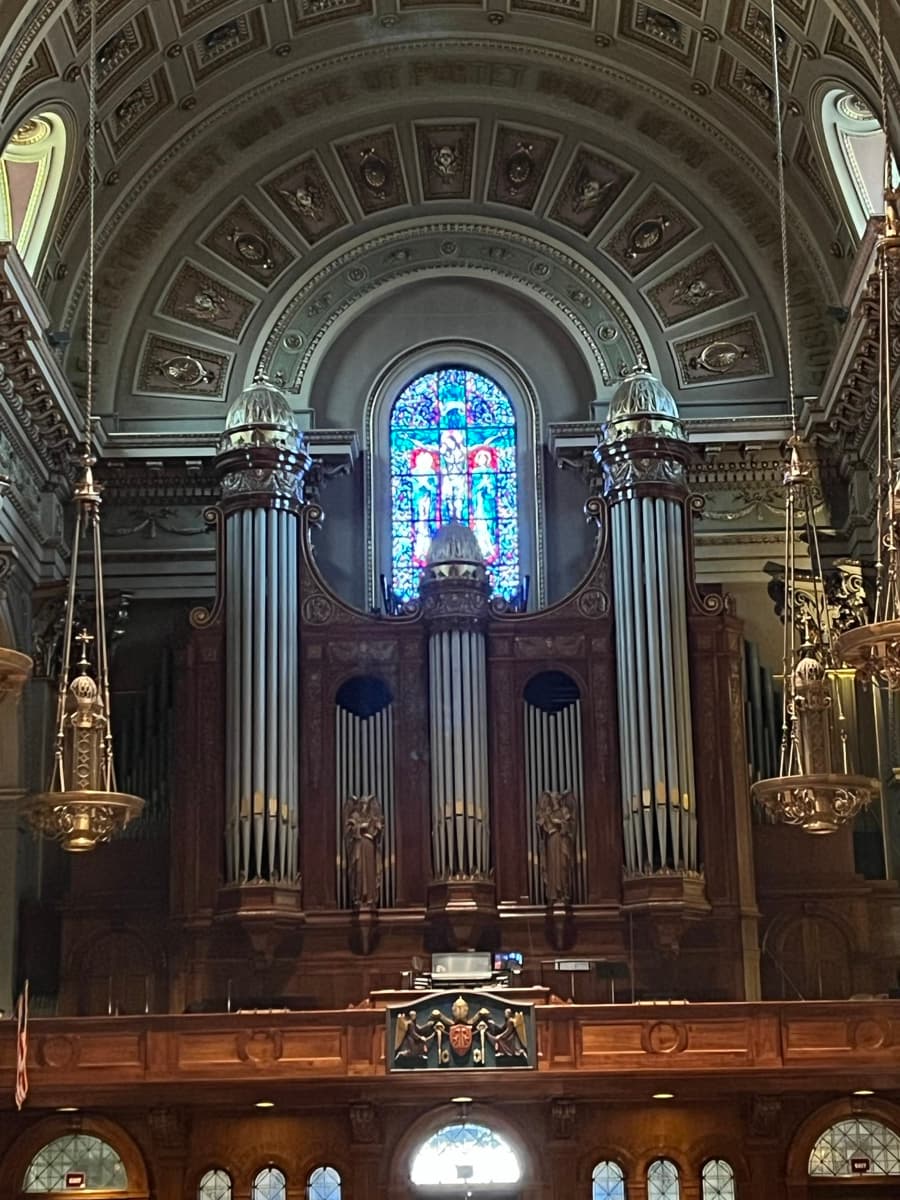
St. Paul's Catholic Church: The Parish That Was Inherited
923 Christian Street. Cornerstone blessed May 7, 1843 by Bishop Francis Kenrick; dedicated July 4, 1847; Father Michael Donovan's 1902 night school served approximately 85,000 Italian South Philadelphians with only two churches and seven priests. The parish was founded for the Irish Catholic congregation and inherited by the Italian South Philadelphia population. Structurally identical to the corridor's name-survival thesis, at the institutional scale.
- 2
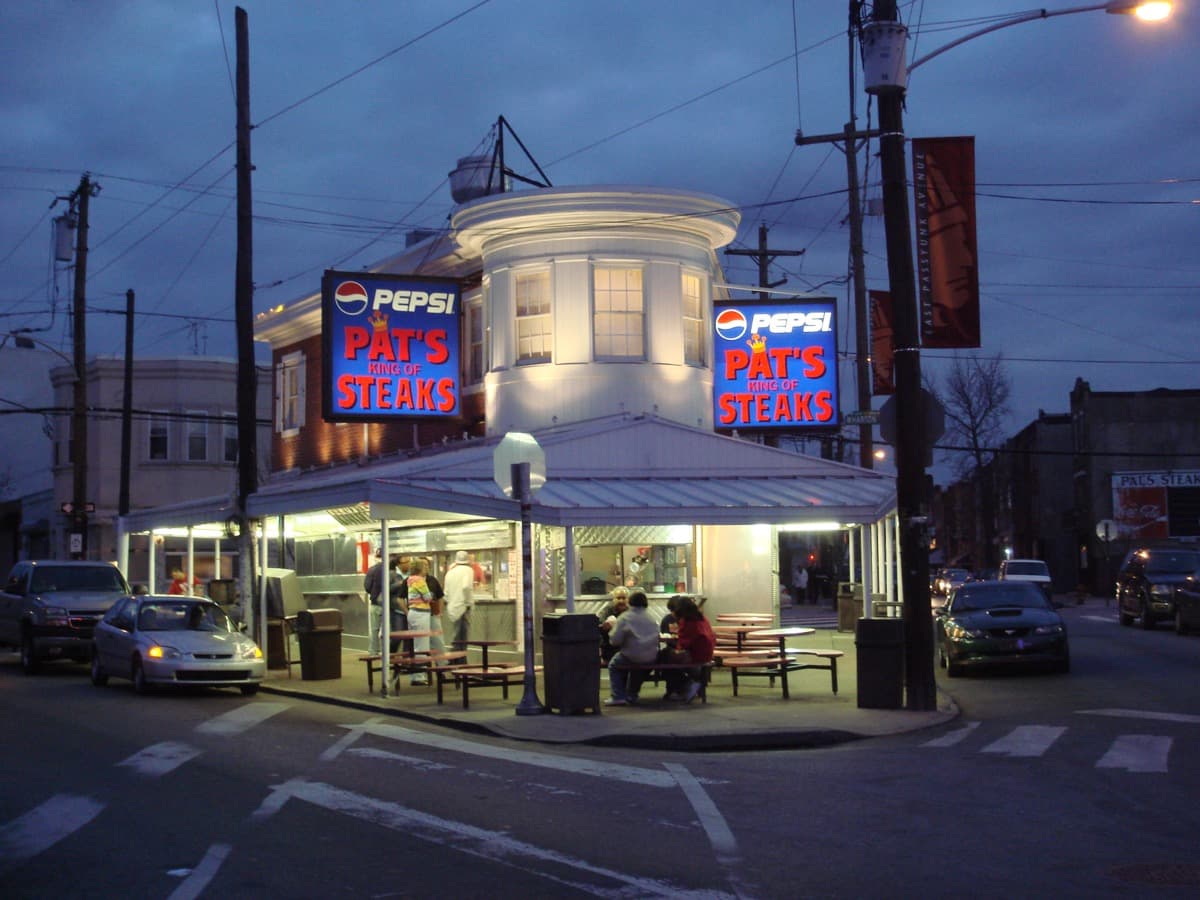
Pat's and Geno's: One Corner, Two Italian Generations
1237 East Passyunk Avenue and 1219 South 9th Street. Pat's founded 1930 by the Olivieri brothers, cheesesteak invention dated 1933 by family lore. Geno's founded 1966 by Joey Vento across the intersection. Joey Vento's June 2006 'Order in English' sign, the Philadelphia Commission on Human Relations probable-cause finding February 2007, the Commission ruling March 19, 2008. What reads as one cheesesteak corner is two operations separated by 36 years and one Italian-corridor pushback moment.
- 3
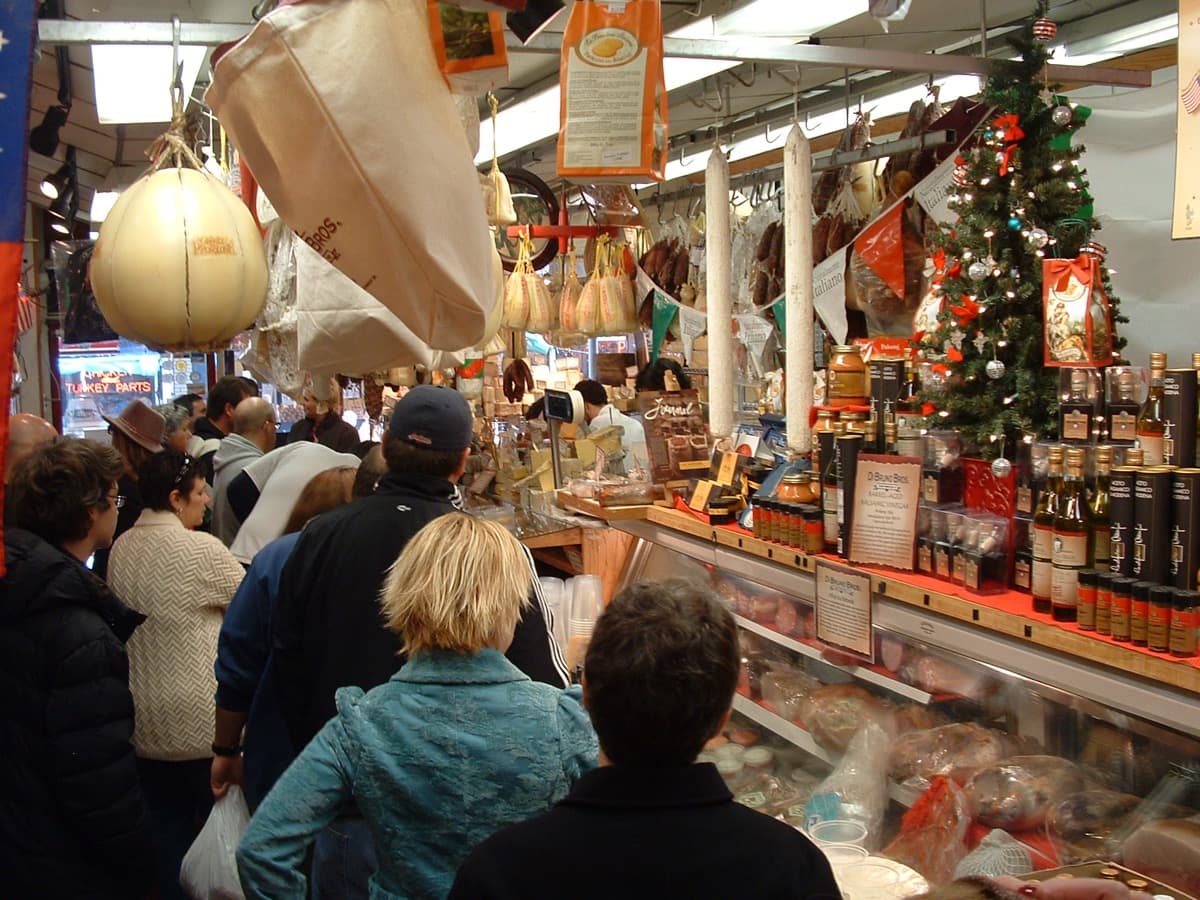
The Italian Commercial Spine: Fante's, DiBruno's, Termini's, Anastasi
Standing point: Fante's Kitchen Shop, 1006 South 9th Street, founded 1906 by Luigi L. Fante Sr. and Domenico Fante; the Giovannucci family took over April 1981. DiBruno Bros. founded 1939 by Danny and Joe Di Bruno at 930 South 9th. Termini Brothers Bakery founded 1921 by Giuseppe and Gaetano Termini at 1514 South 8th, current flagship at 1523 South 8th. Anastasi Seafood established 1919 by Thomas Anastasi, current location 1039 South 9th. Four family-named businesses, four documented founding dates, all still operating in 2026.
- 4
The Mexican Blocks: The Puebla Arrival
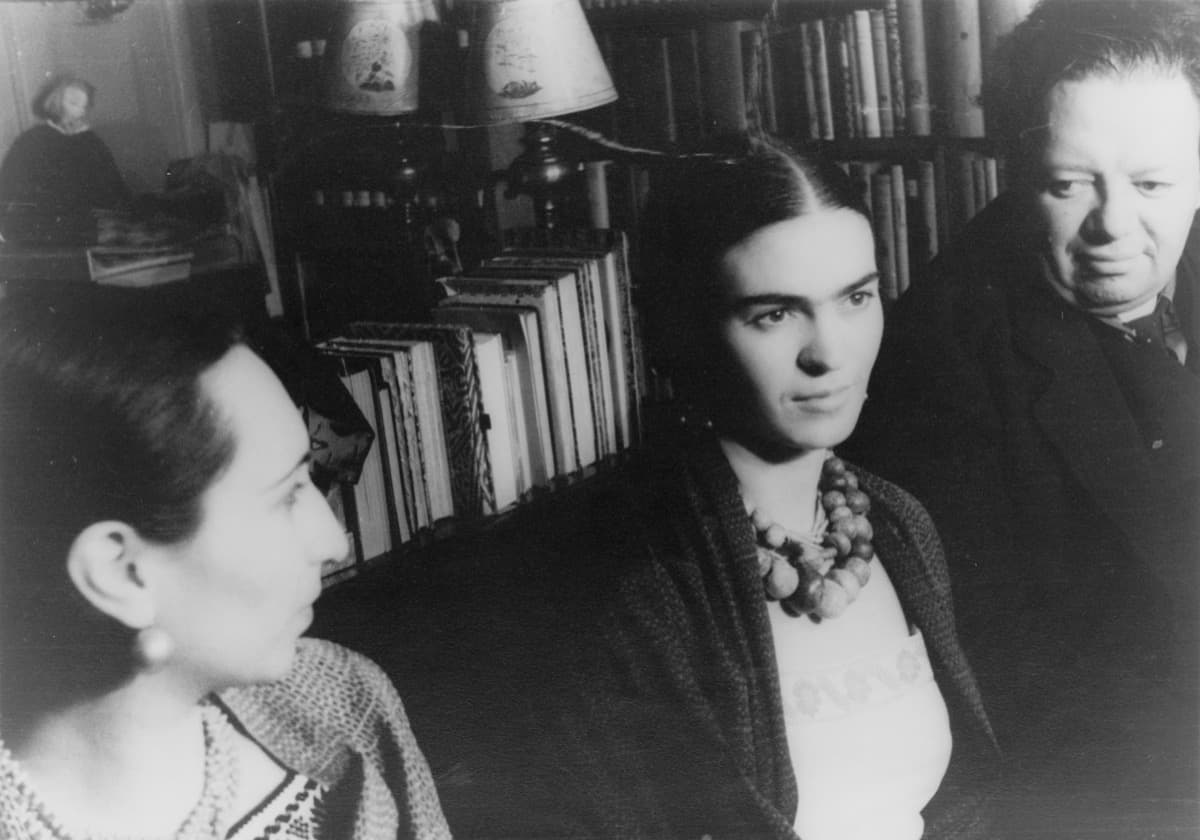
9th Street between Washington Avenue and Federal Street. The 1990s wave that opened the South Philadelphia Mexican community, the 1998-onward acceleration, Puebla-state-origin majority as of 2011 per Wikipedia 'Mexicans in Philadelphia.' The community east of Broad Street reached approximately 20,000 people by 2025. Carnicerías, tortillerías, and Mexican grocery stores interleaved with surviving Italian shops. Named to the demographic and origin region, not to individual shop owners.
- 5
The 8th Street Extension: The Post-1975 Refugee Resettlement
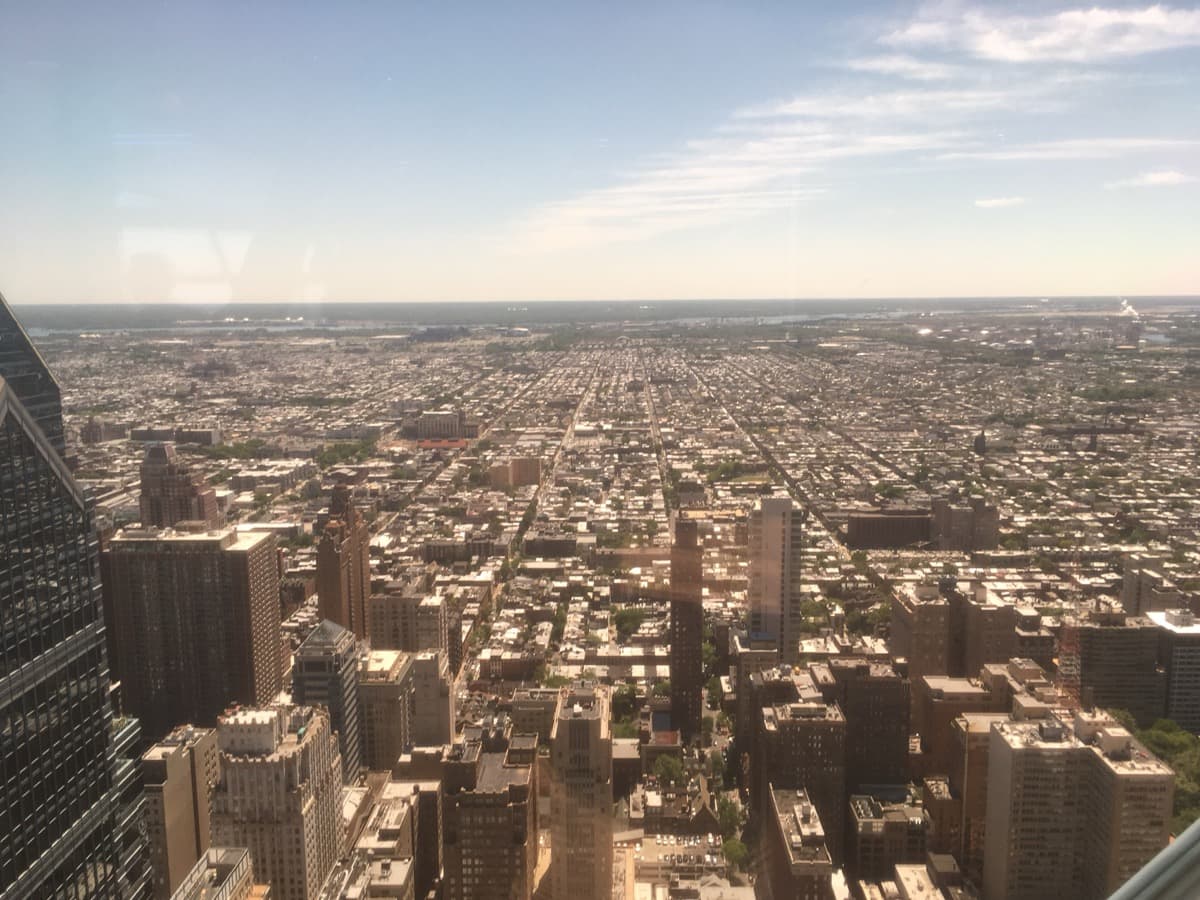
8th Street at Washington Avenue. Vietnamese (post-fall of Saigon, April 30, 1975) and Cambodian (post-fall of Phnom Penh, April 17, 1975; Khmer Rouge regime 1975-1979) refugee resettlement; Refugee Act of 1980 formalizing U.S. resettlement. Philadelphia became one of the major American Cambodian resettlement cities. Vietnamese and Cambodian named as distinct national-origin communities, never flattened to 'Southeast Asian.'
- 6
The Awning Block: The Artifact
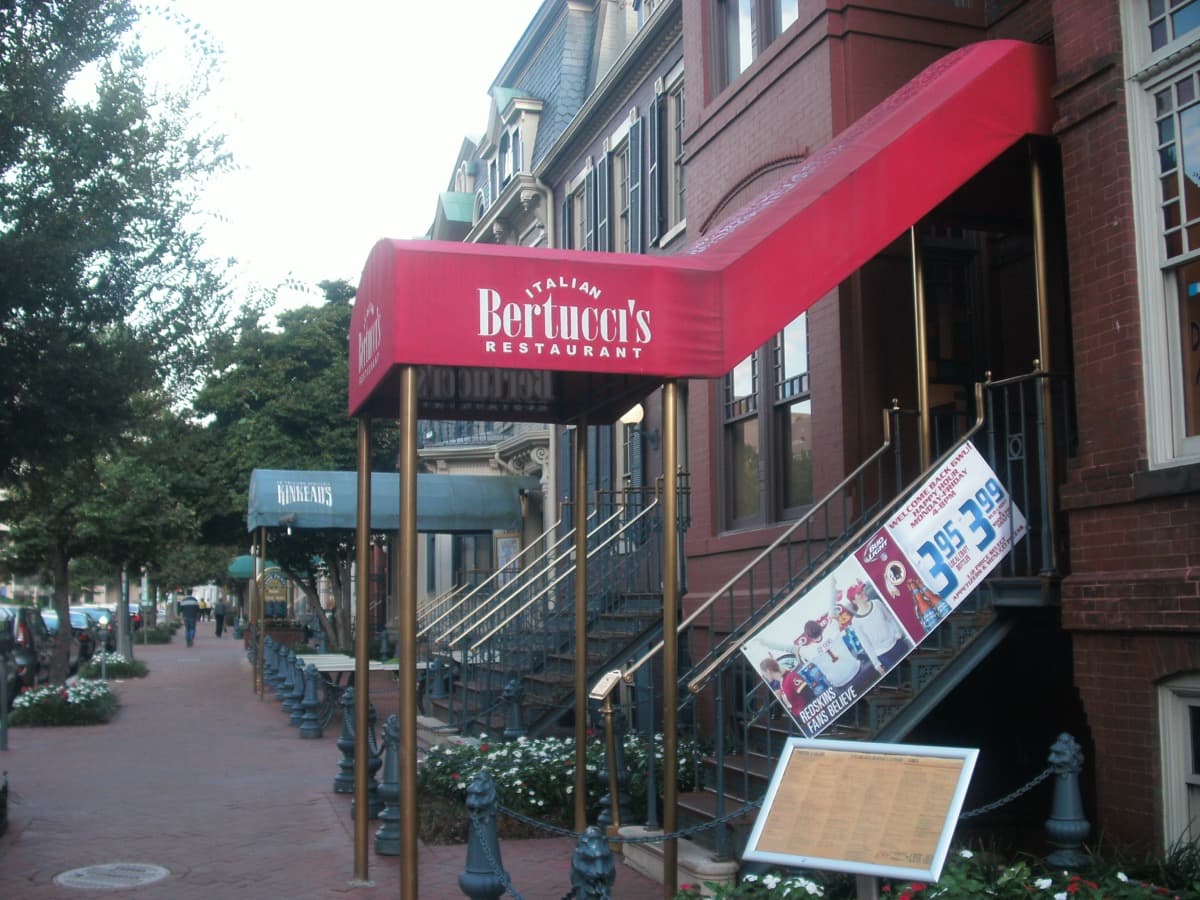
9th Street between Christian Street and Washington Avenue. The corridor's most-photographed sub-block: the awning-shaded curb stalls, the Italian-named family-business signage, the Spanish-language secondary signage underneath, the Vietnamese fishmonger and Cambodian grocer presence on the same corridor. The visceral moment when the name-and-substrate thesis lands. The TURN beat of the tour.
- 7
9th and Federal: The Marker and the Three Names
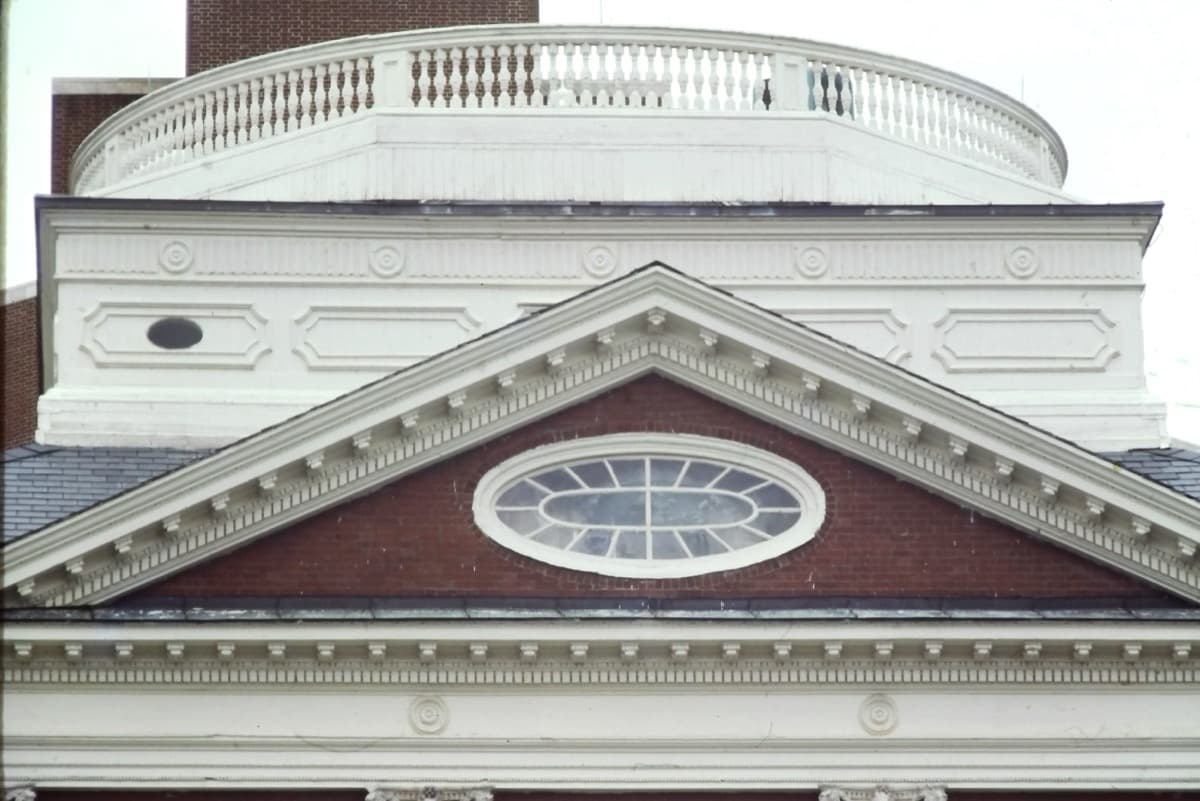
9th Street at Federal Street. Southern boundary of the 1915 South Ninth Street Business Men's Association corridor (Catharine to Federal Streets). The Pennsylvania State Historical Marker dedicated October 12, 2007 reads 'South 9th Street Curb Market.' The tourist brochures still call it 'the Italian Market.' The corridor's shopkeepers, residents, customers, and merchants in 2026 are Italian, Mexican, Vietnamese, and Cambodian. All three names describe the same place.
Details
Best Time to Visit
Weekday mornings from about nine to eleven o'clock are the easiest read of the corridor: the curb stalls are open, the produce is fresh, and the foot traffic has not yet thickened to weekend density. Saturday mornings carry the corridor at peak volume; the awning block between Christian and Washington fills with shoppers from the suburbs and from the South Philadelphia neighborhoods, and the multilingual layer of the tour reads most viscerally then. May through October is the most reliable weather window; the corridor's open-air curb stalls do not run at the same density in January and February. The Ninth Street Italian Market Festival, traditionally held in May, doubles the corridor's crowd; if you want quiet, avoid that weekend. Evening light from about four o'clock onward in fall is the best photographic window for the awning block and the storefront signage in multiple languages.
Pro Tips
- •Stop one, St. Paul's Catholic Church, is at nine twenty-three Christian Street between Ninth and Tenth. The parish is administered by the Augustinian Province of Saint Thomas of Villanova; if you arrive during a Mass or a parish event, stay on the sidewalk and read the building from outside rather than entering the sanctuary.
- •Stop two, the Pat's and Geno's intersection, is a five-way meeting of Ninth Street, Wharton Street, and East Passyunk Avenue. Traffic is constant in all directions. The safest standing point for the dual sight-line to both signs is the northwest sidewalk corner. The cheesesteak line at Pat's is shortest before noon on a weekday; the audio reads the corner from outside, no purchase required.
- •Stop three is anchored at Fante's Kitchen Shop at ten oh-six South Ninth Street. From the Fante's sidewalk, DiBruno Bros. at nine thirty South Ninth is visible one block north; Anastasi Seafood at ten thirty-nine South Ninth is two doors south; Termini Brothers Bakery is one block east at fifteen twenty-three South Eighth. The audio names the four anchors by reference; you do not have to walk to each.
- •Stop four, the Mexican blocks between Washington Avenue and Federal Street, is best read from the sidewalk between Carpenter and Federal, where the Spanish-language signage is densest. The lens for this tour treats the Mexican arrival as a chapter named to the Puebla-origin demographic, not to individual shop owners; the audio does not name specific shops on this block.
- •Stop five is one block east of the main corridor at Eighth and Washington Avenue. The Cambodian and Vietnamese commercial presence extends east on Washington toward Seventh Street; the audio reads the intersection from the corner, but you can extend the walk east if you have additional time. The two communities are named distinctly: Vietnamese arrival traces to the fall of Saigon, Cambodian arrival to the fall of Phnom Penh and the Khmer Rouge regime.
- •Stop six, the awning block, is the sub-corridor between Christian Street and Washington Avenue. This is the most-photographed sub-block of the entire market, and the audio asks you to stand and read the layered signage. The Pennsylvania State Historical Marker may be mounted within or near this block; the audio references it as part of the closing thesis even if the marker's physical location turns out to be at the southern terminus.
- •Stop seven, the southern terminus at Ninth and Federal, is the boundary of the nineteen fifteen South Ninth Street Business Men's Association footprint. The corridor's residential streets one and two blocks east and west have changed substantially since the Italian peak; if you walk one block east on Federal, you cross into a more recently Mexican-residential block, which is a useful coda to the closing thesis but not part of the formal route.
- •Stefano Luconi's From Paesani to White Ethnics: The Italian Experience in Philadelphia, State University of New York Press, two thousand and one, is the canonical scholarly anchor for the Italian South Philadelphia arc. The encyclopedia entries on Italian Market Philadelphia, Mexicans in Philadelphia, South Philadelphia, Pat's King of Steaks, and Geno's Steaks are the immediate Tier 1 source pool for the dates and named individuals in this tour.
Safety & Precautions
- •The Italian Market corridor is an active commercial street with vehicles, delivery trucks, and curb-stall loading happening at all hours of the operating day. Stay on the sidewalk; do not stand in the curb-stall lane. Trucks back into the loading positions without much warning, especially in the early morning.
- •The Pat's and Geno's intersection at Ninth, Wharton, and East Passyunk is a five-way meeting with continuous vehicle traffic. Use the marked pedestrian signals. The audio reads the corner from outside; the cheesesteak lines themselves are a separate experience and the audio does not require you to join them.
- •Stop five extends the route one block east to Eighth and Washington Avenue. Washington Avenue is a wider, faster street than Ninth. The intersection at Eighth and Washington has standard pedestrian signals; use them. The Cambodian and Vietnamese commercial corridor continues east; venture only as far as you are comfortable, the audio does not require it.
- •The corridor's curb stalls and family businesses are open for retail; the audio is designed to be heard from the public sidewalk and does not ask you to enter or photograph any private shop interior. Some shopkeepers welcome questions and conversation; others are at work and prefer the sidewalk-only register. Respect the difference.
- •The Pennsylvania State Historical Marker referenced at stops six and seven is a public-record historical marker mounted on the corridor; the audio describes its plaque text and dedication date from the public sidewalk. The marker's exact location may vary slightly from the audio reference; if you want to read the plaque directly, look for the standard blue Pennsylvania state marker design within the corridor between Christian and Federal.
Travel advisory: Exercise Normal Precautions (Level 1).
Gallery
Related Reading
Go deeper on what you'll see, hear, and walk through.
Overview
Best Self-Guided Walking Tours in Philadelphia (2026)
4 min
Overview
One Day in Philadelphia: A Walkable Historic-Core Itinerary (2026)
6 min
Thematic
The Founding City on Top of Erased Histories
4 min
Thematic
What to Eat in Philadelphia: A Food Guide (2026)
5 min
Companion
One Market, Three Immigrations: A South 9th Street Companion
3 min
Read the walk
The full story of 9th Street: The Market That Outlasted Its Name, in words. Prefer to listen? Play it narrated, from home or on location.
Introduction
South Ninth Street in Philadelphia carries three names at once. The tourist brochures call it the Italian Market. The Pennsylvania State Historical Marker, dedicated October twelfth, two thousand and seven, calls it the South Ninth Street Curb Market. The people behind the counters today are Italian, Mexican, Vietnamese, and Cambodian. All three names describe the same corridor.
The Italians began arriving around eighteen eighty-four, when Antonio Palumbo housed newcomers in his boardinghouse on Christian Street. The South Ninth Street Business Men's Association formally organized in nineteen fifteen, covering the corridor from Catharine to Federal. The Italian commercial peak ran from the eighteen nineties through the nineteen twenties. From the nineteen sixties onward, Italian families moved out to South Jersey and the Delaware County suburbs. The shops they had built mostly stayed. In the nineteen nineties the first significant wave of Mexican arrivals opened a community here, predominantly from Puebla. The Vietnamese and Cambodian extension to the east traces to the post-nineteen-seventy-five refugee resettlement. The corridor never re-named itself. The name on the awning stayed Italian. The body underneath cycled.
This is a Character tour, and the character is a piece of language: a brand name that has survived three immigrant successions while the people behind the counters have completely changed.
The walk is seven stops, about one point eight kilometres, and seventy-five minutes including stop dwell, from the institutional backbone to the southern terminus where the state marker reads one name and the awnings still read another.
When you arrive at South Ninth Street and Christian Street, begin with stop one.
1. St. Paul's Catholic Church: The Parish That Was Inherited
You have arrived at St. Paul's Catholic Church, at Ninth and Christian. Stand on the sidewalk facing the church. The building you are looking at is the corridor's longest continuously operating institution. The cornerstone was blessed by Bishop Francis Kenrick, the third Bishop of Philadelphia, on May seventh, eighteen forty-three. The first Mass was celebrated Christmas Day of the same year. The church was dedicated July fourth, eighteen forty-seven, with completion delayed.
Here is the part of St. Paul's history that connects to everything else on this walk. The parish was founded for the Irish Catholic congregation of mid-nineteenth-century South Philadelphia. The Italian arrival to this neighborhood was still forty years away. When the Italian immigration peak began in the eighteen nineties, the parish was inherited by the new congregation. By nineteen oh-two, Father Michael Donovan, the rector at this church, was running a night school for an Italian South Philadelphia population of approximately eighty-five thousand people, served by only two Catholic churches and seven priests. The name on the church did not change. The congregation behind the doors did.
This is the same mechanic that operates one block east, on the awnings of Ninth Street. A name persists. The people behind the name cycle. The Italian families who filled this parish at the turn of the twentieth century began moving out to South Jersey and the Delaware County suburbs from roughly the nineteen sixties onward. The Augustinian Province of Saint Thomas of Villanova administers the parish today. The name has now persisted across three demographic substrates: Irish, Italian, and the more plural twenty-first-century South Philadelphia congregation. The corridor we are about to walk does the same trick. Hold the church in mind as we go.
Walk south on Ninth Street, about four hundred metres, to the five-way intersection where Ninth meets East Passyunk Avenue and Wharton Street. Two neon signs face each other across the street. That is the next stop.
2. Pat's and Geno's: One Corner, Two Italian Generations
You have arrived at the cheesesteak corner. Stand at the five-way intersection of Ninth Street, Wharton Street, and East Passyunk Avenue. Look at the two neon-lit operations facing each other across the street. The standard story tells you these are the two famous Philly cheesesteak shops. What is harder to see is that they are also two distinct Italian-American business eras, separated by thirty-six years and one street.
Pat's, on the south side of the intersection at twelve thirty-seven East Passyunk Avenue, was founded in nineteen thirty by the Italian-American brothers Pat Olivieri, who lived from nineteen oh-seven to nineteen seventy-four, and Harry Olivieri, born May twenty-fifth, nineteen sixteen, died July twenty-second, two thousand and six. According to family lore, the cheesesteak itself was invented at this counter in nineteen thirty-three. The Olivieri brothers grilled thinly sliced steak with chopped onions; a cabdriver, a regular customer, asked to try it. They sold the sandwich for ten cents. The shop has stayed in the family. Frank Olivieri Junior, Harry's grandson, runs the original location today.
Geno's, directly across the street at twelve nineteen South Ninth, was founded thirty-six years later, in nineteen sixty-six, by Joey Vento, born December eighteenth, nineteen thirty-nine, died August twenty-third, two thousand and eleven. Pat's was a Depression-era working-class lunch counter. Geno's was the mid-century brand builder, the orange-and-yellow neon arrival that turned the cheesesteak rivalry into a tourist destination.
Now the layered part of this corner. In June of two thousand and six, Joey Vento posted a sign at the Geno's order window that read Order in English. The corridor's storefronts a few blocks north had been turning Spanish-speaking for a decade. The Philadelphia Commission on Human Relations found probable cause of discrimination in February of two thousand and seven. The Commission ruled on March nineteenth, two thousand and eight, that the sign did not violate the city's Fair Practices Ordinance. The sign was quietly removed before the twenty sixteen Democratic National Convention. The episode is the documented moment when one Italian-named business at the corridor's south end pushed back, in English, against the Spanish-speaking neighbors who had been moving in for a decade.
Walk back north on Ninth Street, about two hundred and fifty metres, to ten oh-six South Ninth. A kitchen shop with an Italian family name on the awning. That is the next stop.
3. The Italian Commercial Spine: Fante's, DiBruno's, Termini's, Anastasi
You have arrived at Fante's Kitchen Shop, at ten oh-six South Ninth Street. Stand on the sidewalk facing the storefront. The awning carries the family name. The shop was founded in nineteen oh-six by Luigi L. Fante Senior and his father Domenico Fante, a stone mason, originally as a home furnishings store. Of the four anchor family businesses on this corridor with verifiable founding dates, Fante's carries the oldest. It is one hundred and twenty years old this year.
The shop has not been in the Fante family since April of nineteen eighty-one, when the retiring Fante family handed it to Mariella Giovannucci. The Giovannucci family had emigrated from northern Italy in the mid-nineteen-sixties. The succession at Fante's is a small version of the corridor's larger biography: an Italian-American shop, founded by Italian immigrants from one wave, continued by an Italian immigrant family from the next wave, the name on the awning held steady.
From this same standing point, you can read the rest of the surviving Italian commercial spine without walking to each shop. DiBruno Bros., founded nineteen thirty-nine by the Italian immigrant brothers Danny and Joe Di Bruno as a neighborhood cheese shop, sits one block north at nine thirty South Ninth. Bill Mignucci Junior, the grandson, has managed it since the nineteen nineties; his cousins Billy and Emilio Mignucci co-manage. Termini Brothers Bakery was founded in nineteen twenty-one by Giuseppe and Gaetano Termini, Sicilian-born, from Enna; the brothers had worked over two years at the Stetson Hat Company to save enough to open their first storefront at fifteen fourteen South Eighth. The current flagship is at fifteen twenty-three South Eighth, one block east. Anastasi Seafood was formally established in nineteen nineteen by Thomas Anastasi, who had been pushing a fish cart through South Philly in the early nineteen hundreds; the family now operates at ten thirty-nine South Ninth, with the fourth generation, Janet Stechman and her brother Salvator Anastasi, at the counter.
Four family businesses. Four founding dates: nineteen oh-six, nineteen nineteen, nineteen twenty-one, nineteen thirty-nine. All on or one block off Ninth Street. All still operating in two thousand and twenty-six. The Italian commercial spine has persisted continuously through the Italian residential exodus to the suburbs and through the Mexican arrival from the nineteen nineties forward. Look at the block to your immediate south. The Mexican carnicería interleaved on the same block, three doors down, is not a replacement of Fante's. Both shops are open today. The successions on this corridor are layered, not sequential.
Walk south on Ninth Street, about two hundred metres, past Washington Avenue. The signage starts changing language. That is the next stop.
4. The Mexican Blocks: The Puebla Arrival
You have arrived on the Mexican blocks. Stand on Ninth Street between Washington Avenue and Federal Street. Look at the storefronts. Spanish-language signage on the awnings: carnicería, tortillería, panadería. The shop windows show pan dulce, dried chiles, fresh masa, cuts of…
Full narration for this stop unlocks with the tour.
5. The 8th Street Extension: The Post-1975 Refugee Resettlement
You have arrived on the Eighth Street extension. Stand at Eighth and Washington Avenue. Look at the storefronts on this corner and east along Washington. Cambodian grocers. Vietnamese restaurants. The signage is in Khmer characters and in Vietnamese with the diacritical marks…
Full narration for this stop unlocks with the tour.
6. The Awning Block: The Artifact
You have arrived at the awning block, on Ninth Street between Christian and Washington. Stand anywhere on this sub-block. Look up. The awnings shade the curb stalls on both sides of the street. The names on the awnings carry the Italian families that built this corridor: Fante,…
Full narration for this stop unlocks with the tour.
7. 9th and Federal: The Marker and the Three Names
You have arrived at the southern terminus of the corridor, at Ninth and Federal. Stand at the corner. This is the southern boundary the South Ninth Street Business Men's Association set when it formally organized in nineteen fifteen. The corridor runs from here, north to…
Full narration for this stop unlocks with the tour.