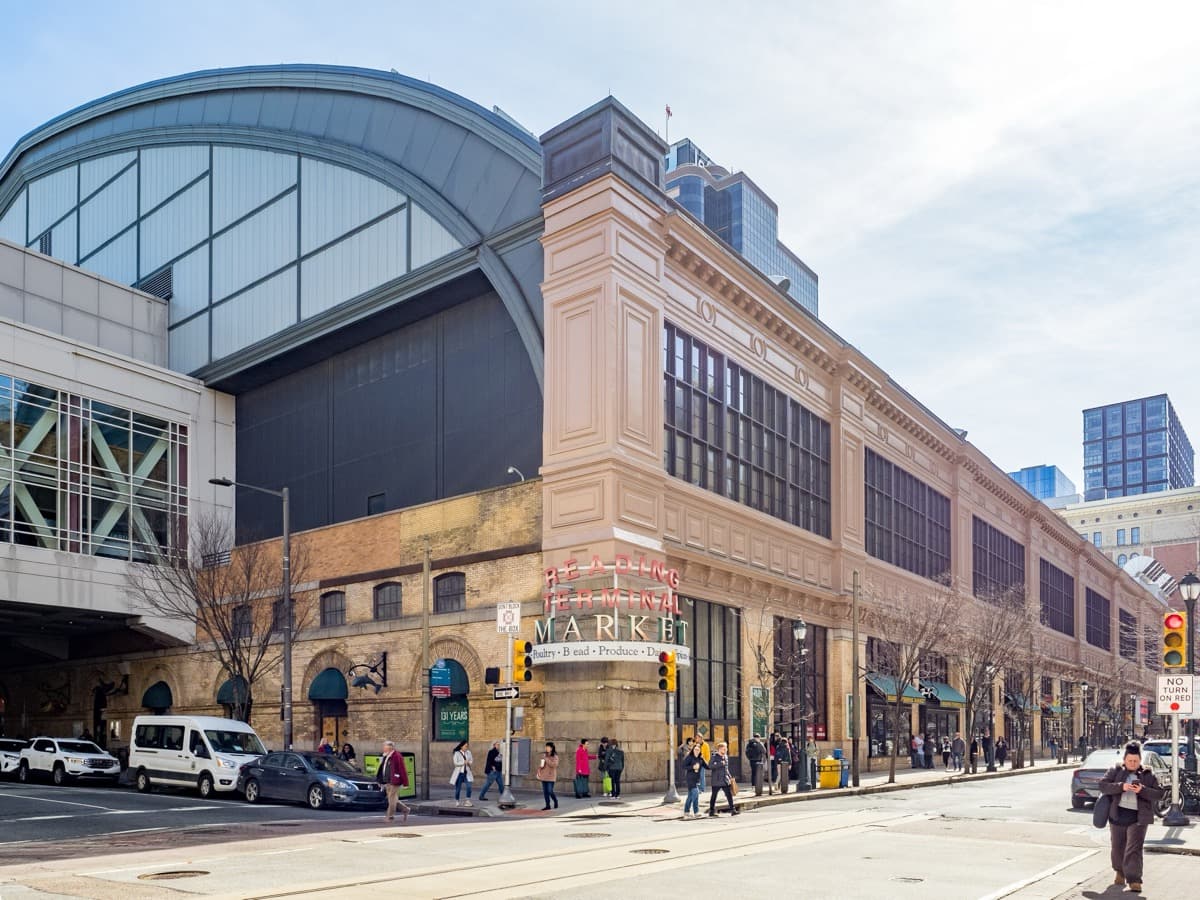
The Center City tour stops at Reading Terminal Market because it is the clearest single answer to the question of how Philadelphia eats. It has been answering that question since 1893, and the remarkable thing is that it is still open, because almost nothing else that shares its origin story survived.
Built under the trains
The market opened in 1893, and it opened underneath a railroad. The Reading Railroad built its grand terminal here, an elevated train shed carrying tracks and trains above street level, and put a public market on the ground floor below. For decades, trains arrived over the heads of shoppers buying produce, meat, and fish. The market was the pantry beneath the platform.
That arrangement made it convenient and busy, and it also tied the market's fate to the railroad's. When American railroads collapsed in the mid-twentieth century, the market went with them. Suburbanization pulled shoppers to supermarkets. By 1954 the market was running deficits, and by the end of the decade occupancy had fallen to around 70 percent. The trains stopped using the shed above it in 1984. A Victorian food market attached to a dying railroad is exactly the kind of thing that usually gets demolished.
The survival
Hear a stop from this walk
Logan Square and Swann Memorial Fountain: The Amended Corner
It did not get demolished. In 1994 a nonprofit corporation took over its operation, and over the following years occupancy climbed back above 90 percent. The market that had been left for dead became one of the country's most beloved public markets, and one of the oldest continuously operating.
What survived, and what you walk through today, is a genuine cross-section of Philadelphia's food. The Pennsylvania Dutch vendors, from the farm country west of the city, run stalls that famously close on Sundays and sell the German-rooted foods, soft pretzels, scrapple, shoofly pie, that are as much a part of the regional table as the cheesesteak. Alongside them are old-line butchers and fishmongers, a nonprofit farmstand run by Fair Food that connects the market to regional farms, and newer vendors selling everything the city has come to eat since. It is not curated to look historic. It simply kept adding layers, which is why it reads as a real map rather than a museum.
How it pairs with the other market
Reading Terminal and the 9th Street Italian Market are the two poles of Philadelphia's food geography, and they tell the story in opposite registers. The Italian Market is an outdoor street market that records immigration in its awnings, Italian then Mexican then Vietnamese, block by block. Reading Terminal is an indoor Victorian hall that records the city's regional and institutional food, Pennsylvania Dutch farm country meeting downtown Philadelphia under a former train shed. Walk both and you have the full map: the street and the hall, the immigrant blocks and the regional pantry.
What to eat, and why the tour stops here
The tour stops here because the market is not a detour from Penn's grid; it is what the grid filled up with. A city planned in 1682 to feed itself from the surrounding country still does exactly that, in a hall built for trains that no longer run. Order a pretzel from a Pennsylvania Dutch stall, then something from a vendor who arrived last decade, and you are eating the same layered history the Center City companion walks you through above ground. The founding-city thesis puts it in the frame of a city forever filling up with the people and foods its founders never planned for.
Ready to experience it?
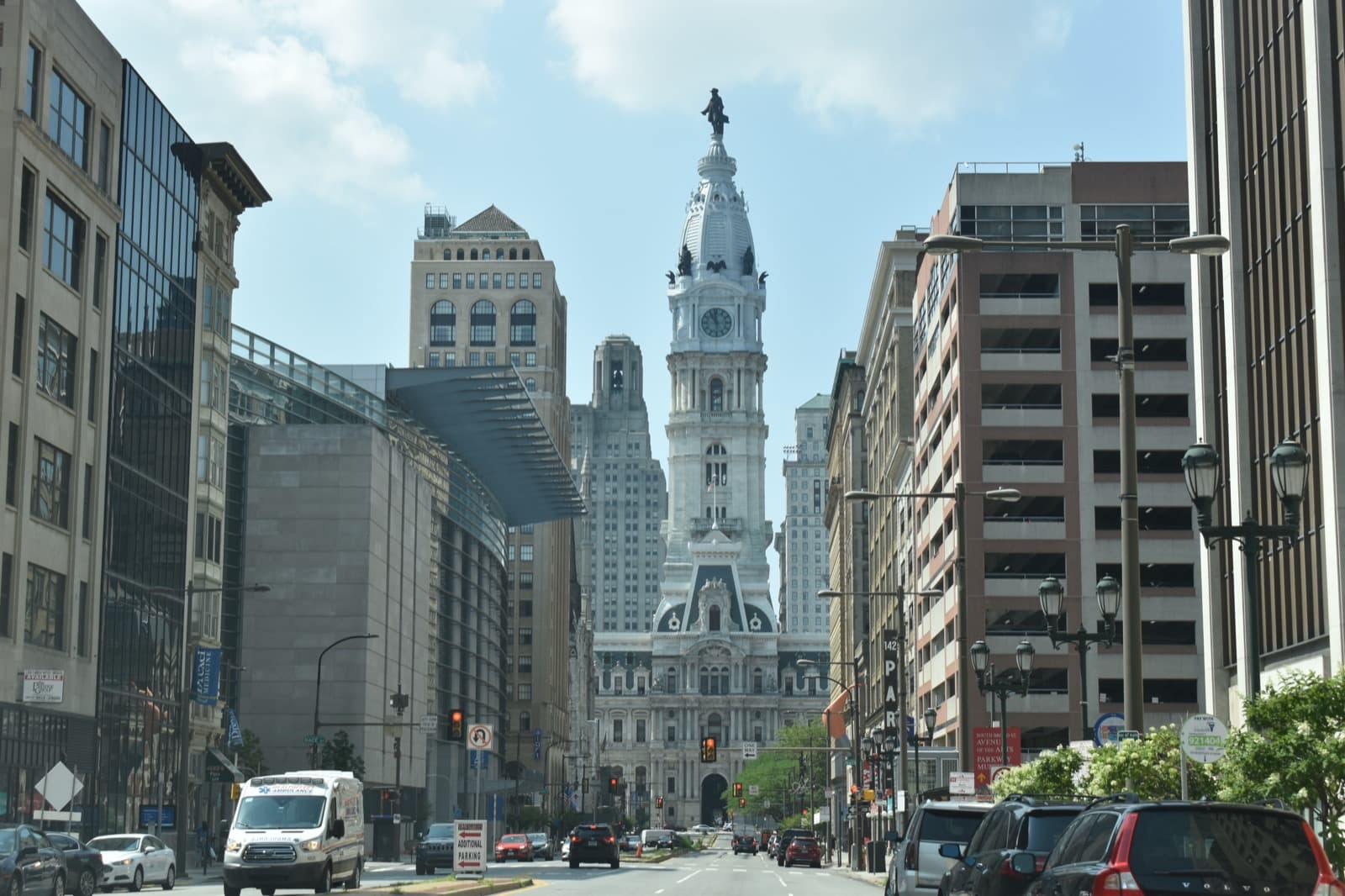
Center City: William Penn's Three-Hundred-Forty-Three-Year Experiment
85 min · 3 km · easy
More from Philadelphia
Explore more at your own pace.
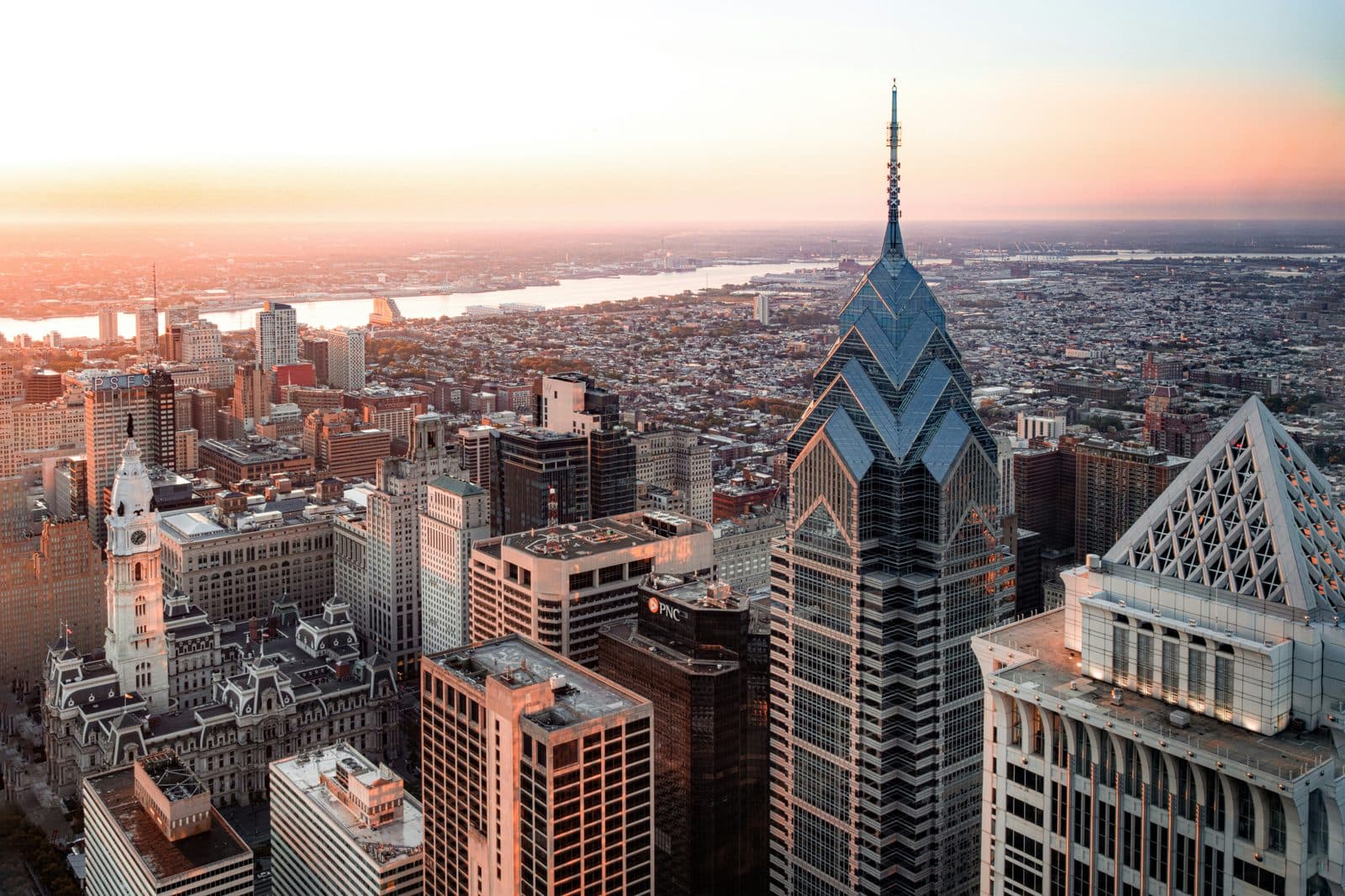
One Day in Philadelphia: A Walkable Historic-Core Itinerary (2026)
The Founding City on Top of Erased Histories
From Crackdown to Canvas: A Mural Arts Companion
One Market, Three Immigrations: A South 9th Street Companion
Penn's Green Country Town: A Center City Companion