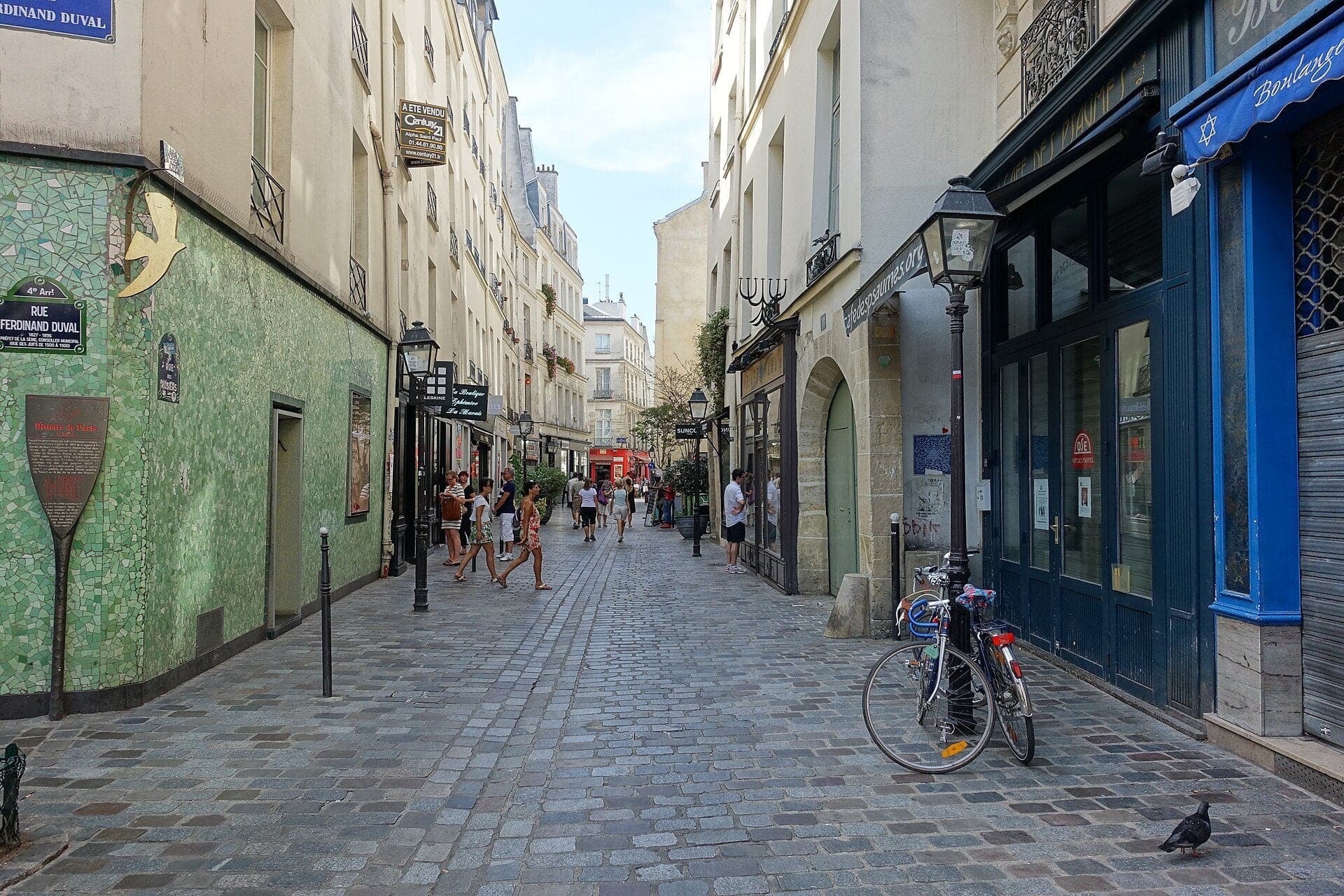
The Rue des Rosiers is the heart of the Pletzl, usually translated from Yiddish as "little place," the historic Jewish quarter of the Marais where the Le Marais walk ends. The single fastest way to read that history is to eat down the street, because the food is stacked in exactly the same layers the neighborhood is. Here is what you are tasting and why it is here.
Two traditions, one street
The Jewish Marais is not one tradition but at least two. Ashkenazi Jews from Romania, Austria-Hungary and Russia came to Paris in large numbers between 1881 and 1914, about 20,000 in all, and the area around the Rue des Rosiers became their quarter. Sephardic Jews from North Africa are part of the street today as well; we have not dated their arrival, and we do not give the decades you may read elsewhere. Both traditions are on the street now, often a few doors apart.
The Ashkenazi layer: bread, poppyseed, and pastrami
Hear a stop from this walk
Rue des Rosiers: The Heart of the Pletzl
The older layer is the bakery and delicatessen tradition. Look for pletzel, the flat onion-and-poppyseed bread, which some say shares a root with the quarter's name, alongside poppyseed and cheese strudels, rye breads, and pickled and smoked fare. This is the food of the community that built the Guimard synagogue at 10 rue Pavée in 1913 and 1914, a congregation of nine Orthodox societies of mainly Russian origin. What is on offer changes from year to year, so use this as a map of what to look for rather than a list of shops.
The falafel counters and the North African street
The food most visitors queue for is the falafel: chickpea fritters in pita with fried aubergine, hummus, cabbage and harissa, eaten standing on the street. We do not date it or credit it to one community. The lunchtime queues outside the busiest counters are the most visible sign that this is a living food street and not a museum piece, and many of the Jewish-owned shops and restaurants close on Saturdays, so plan around the Sabbath.
The street's memory
The Marais as a whole was rescued by public money rather than left alone by the market, as we tell in the Marais companion, and this street holds a recent memory of its own. Its restaurant Goldenberg was the target of an attack on 9 August 1982 that killed six people and wounded 22. The street is narrow and crowded at lunch, and it is pedestrianised on Sundays, not every day.
How to walk and eat it
Do the Le Marais walk first and eat second: it ends on the Rue des Rosiers, at lunch time if you start in the morning. The synagogue on rue Pavée and the food of rue des Rosiers are the same story told in two media, architecture and cuisine. The synagogue is an active place of worship, so look at it from the street. For the deeper immigrant hillside on the other side of the city, where Chinese Wenzhou cooking layered onto North African cafés, see eating Belleville's Chinatown. For the whole city as a stack of layers, read Paris in layers.
Ready to experience it?
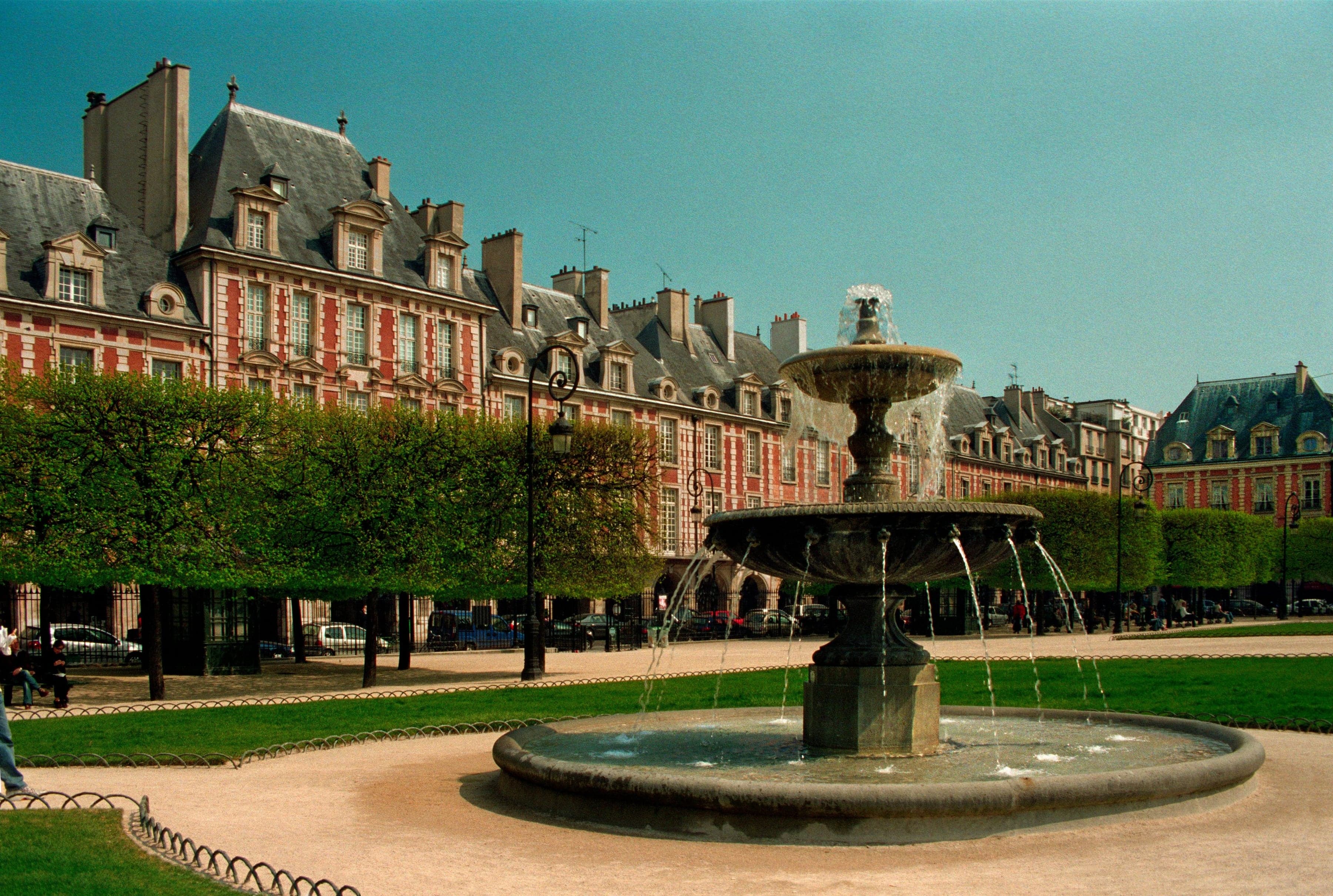
Le Marais: The Mansions That Went to Work
90 min · 2.6 km · easy
More from Paris
Explore more at your own pace.
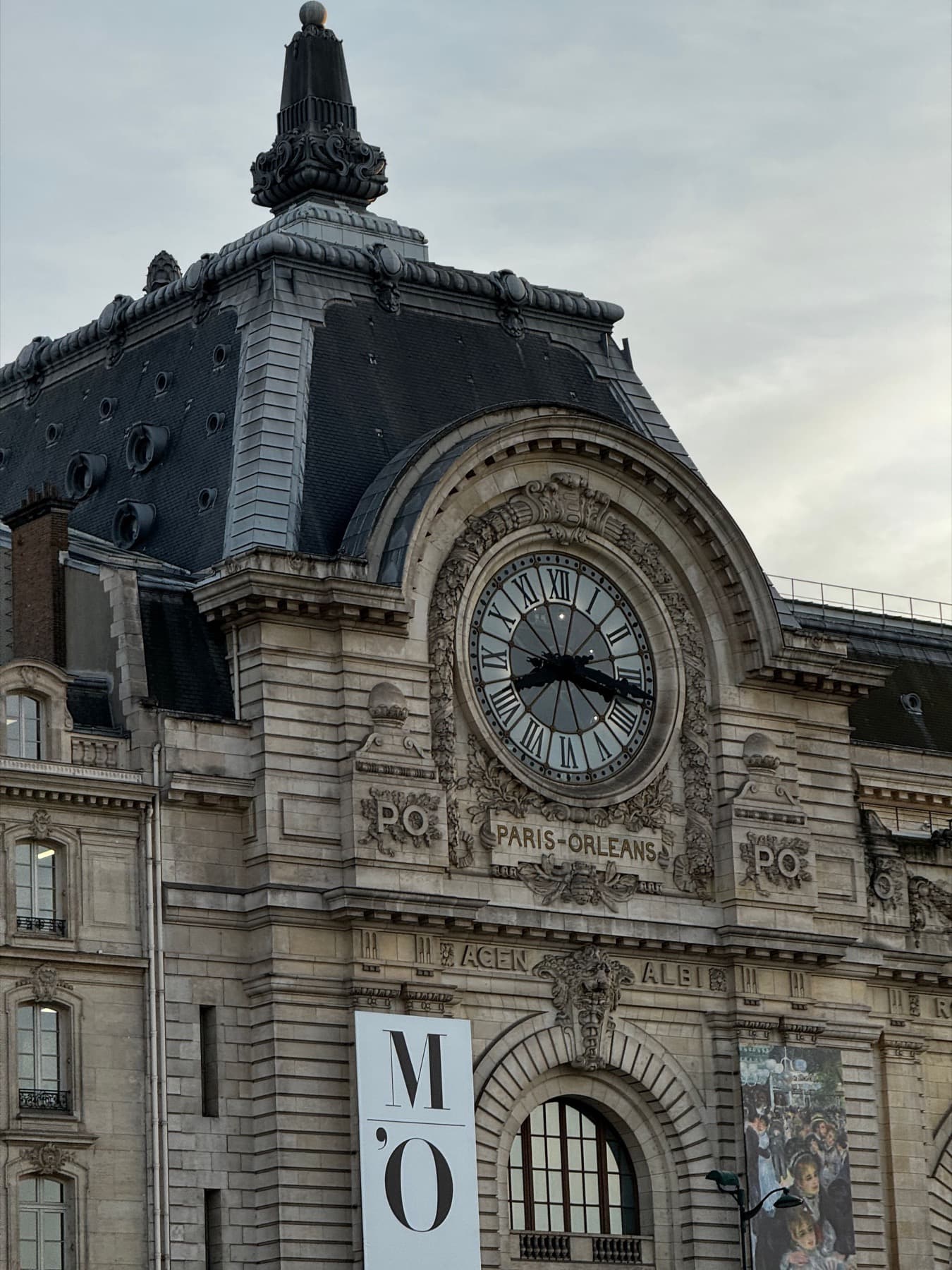
Musée d'Orsay: What to See, Floor by Floor
The Code of Hammurabi at the Louvre: Which Room, and the Story of the Stone
The Louvre: What to See, by Wing and Room Number, and a Two-Hour Route
The Mona Lisa: Which Room It Is In and What to Know
The Raft of the Medusa at the Louvre: Where It Hangs and the True Story