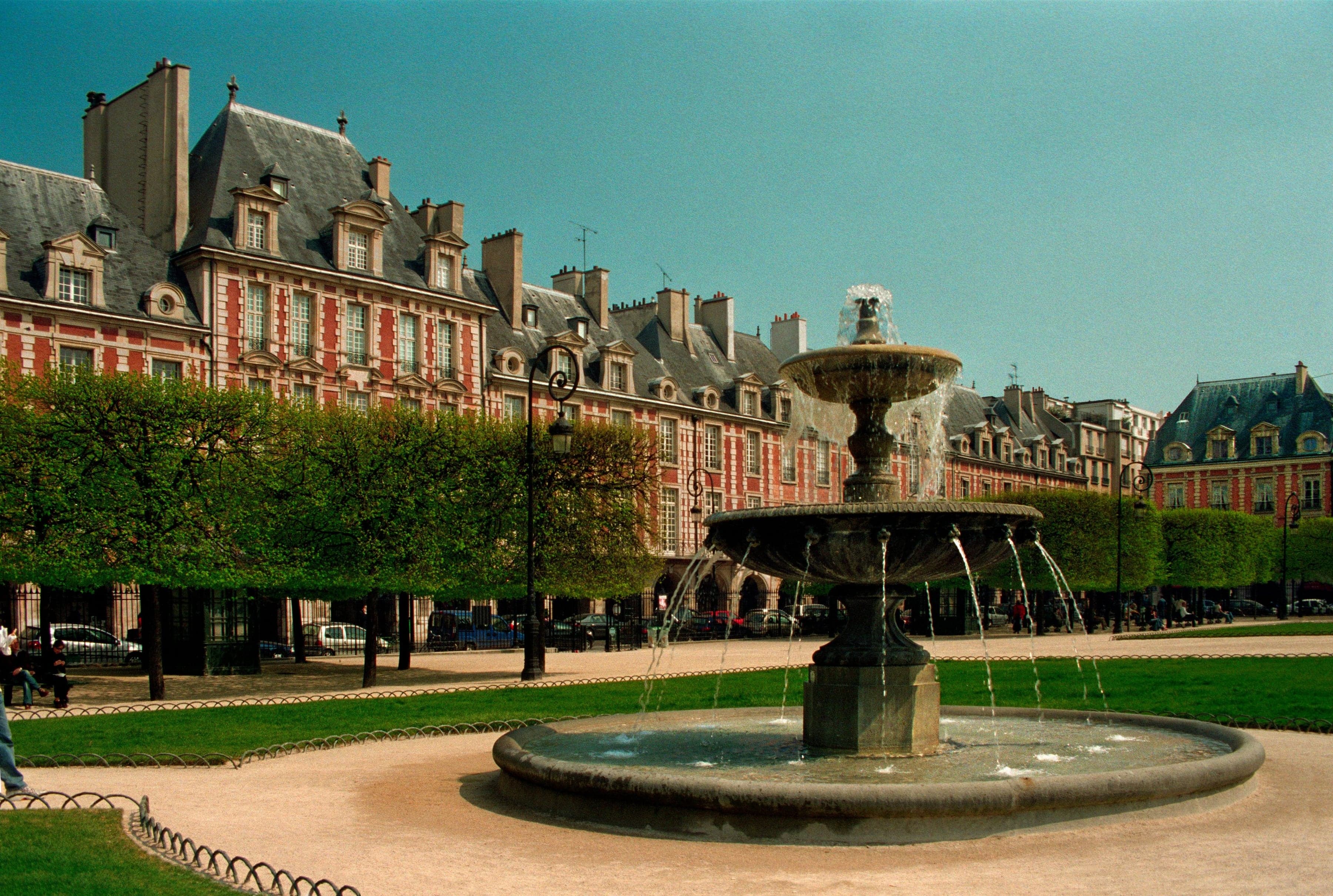
From the Hôtel de Ville past Saint-Gervais, two timber houses, the Hôtel de Sens and Philippe Auguste's wall to the Hôtel de Sully, the Place des Vosges, the Carnavalet, Guimard's synagogue and Rue des Rosiers.
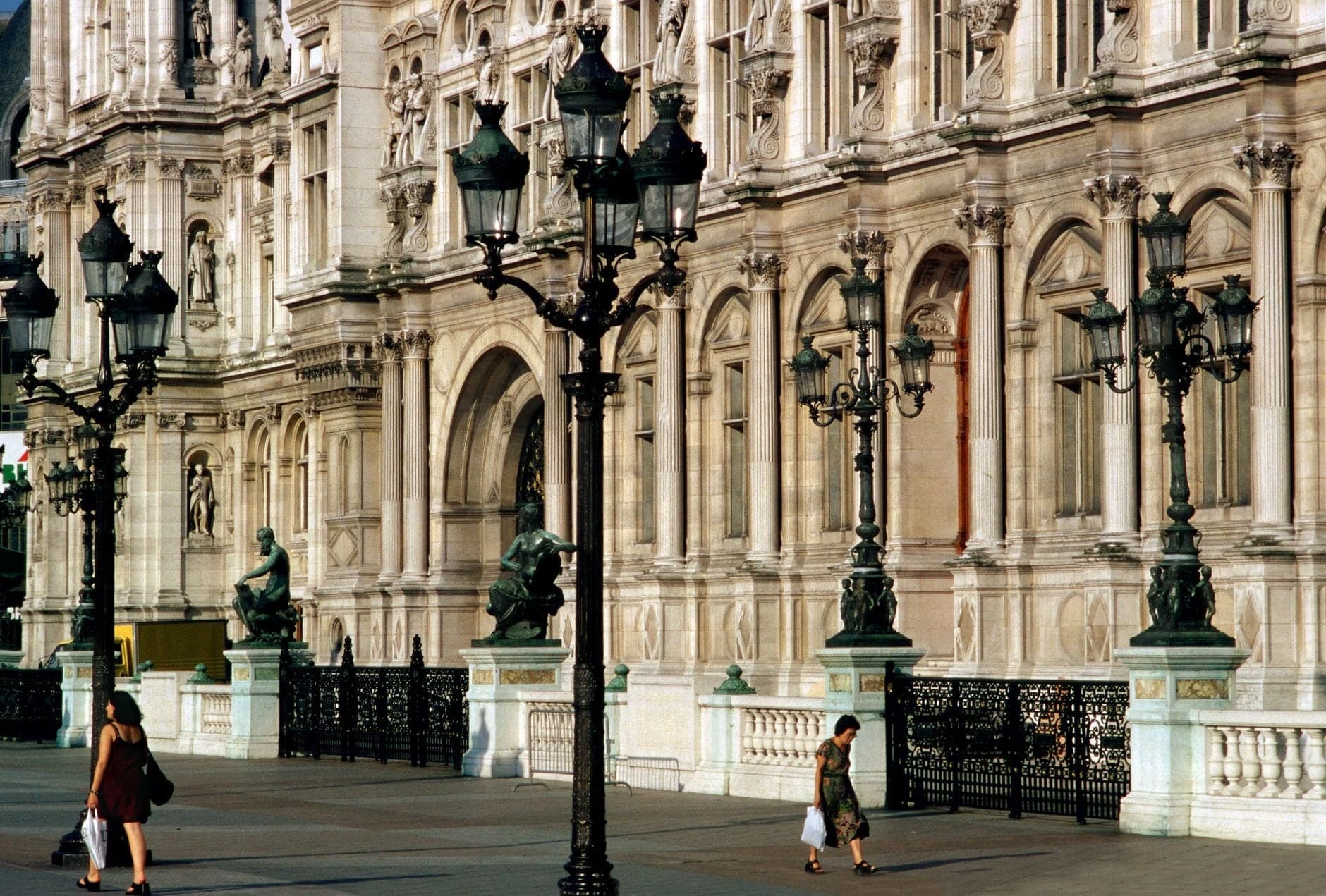
Start · Hôtel de Ville: The City Hall That Is a Copy
DirectionsStops
- 1
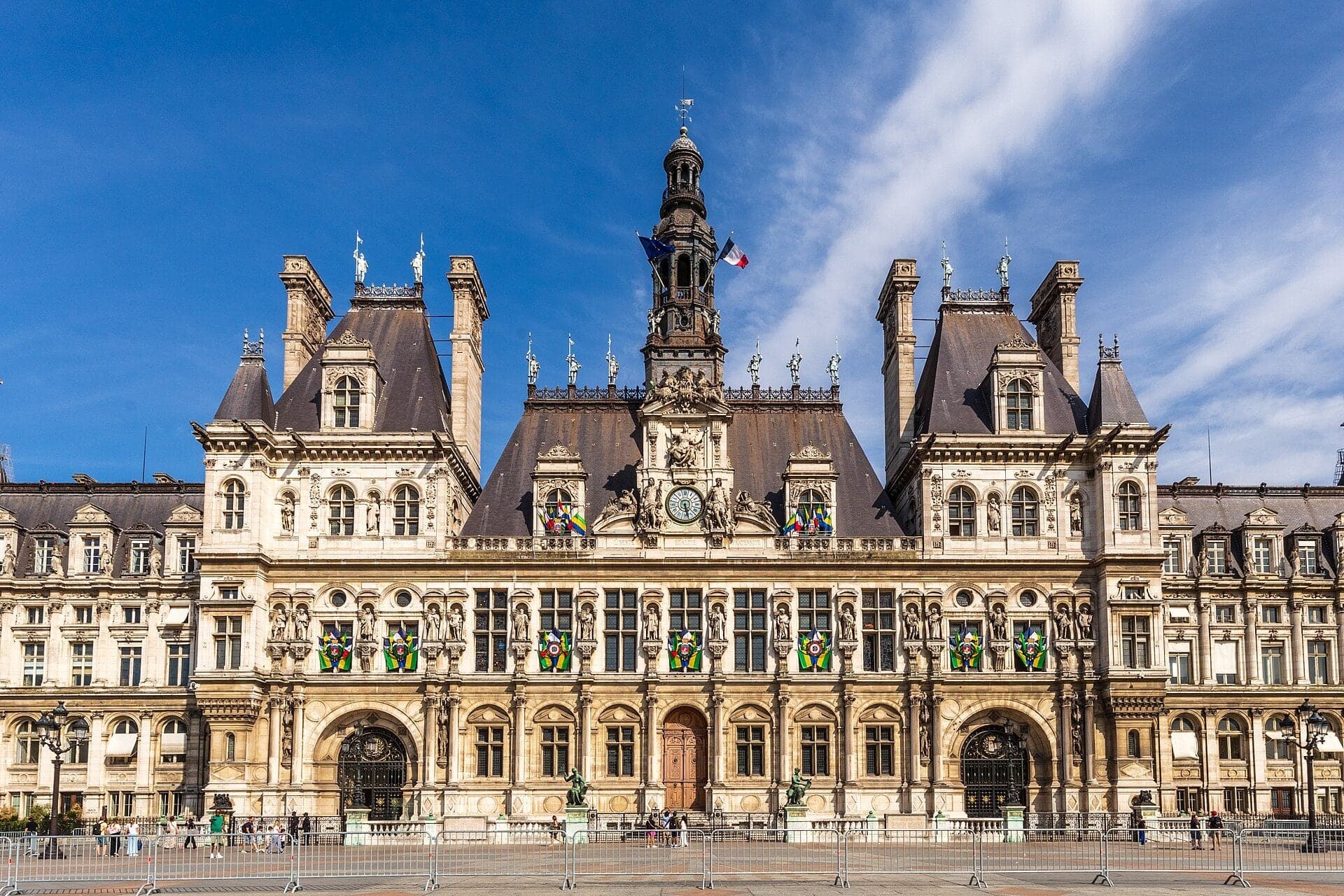
Hôtel de Ville: The City Hall That Is a Copy
City Hall rebuilt as a copy of itself. Begun in 1533 and burned in 1871, it was rebuilt in the 1870s and 1880s with its Renaissance front remade as it had been.
- 2
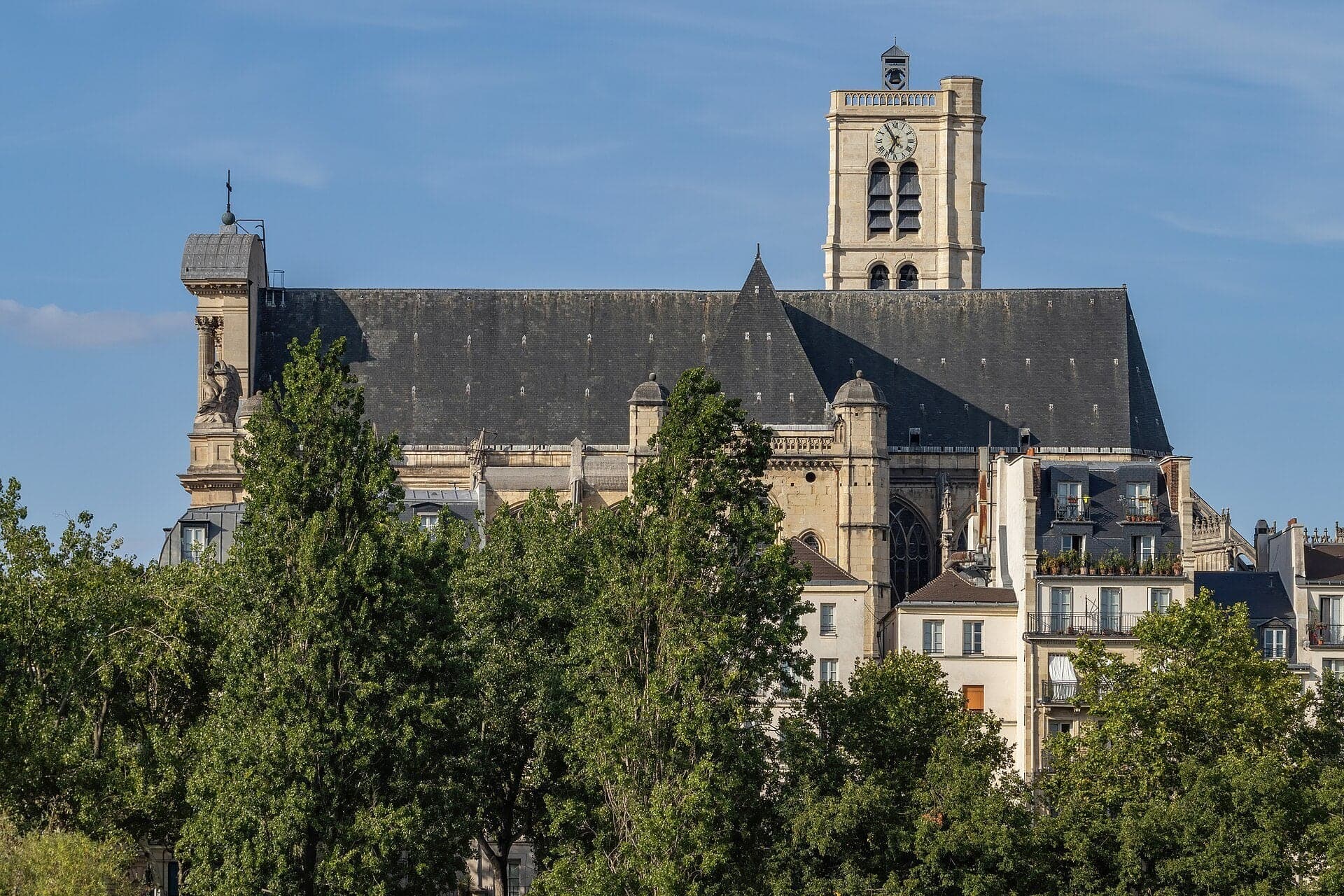
Saint-Gervais: A Classical Front on a Gothic Church
A classical front on a Gothic church. Saint-Gervais was begun in 1494, given its column-lined front from 1616 to 1621; the elm before it was planted in 1935.
- 3
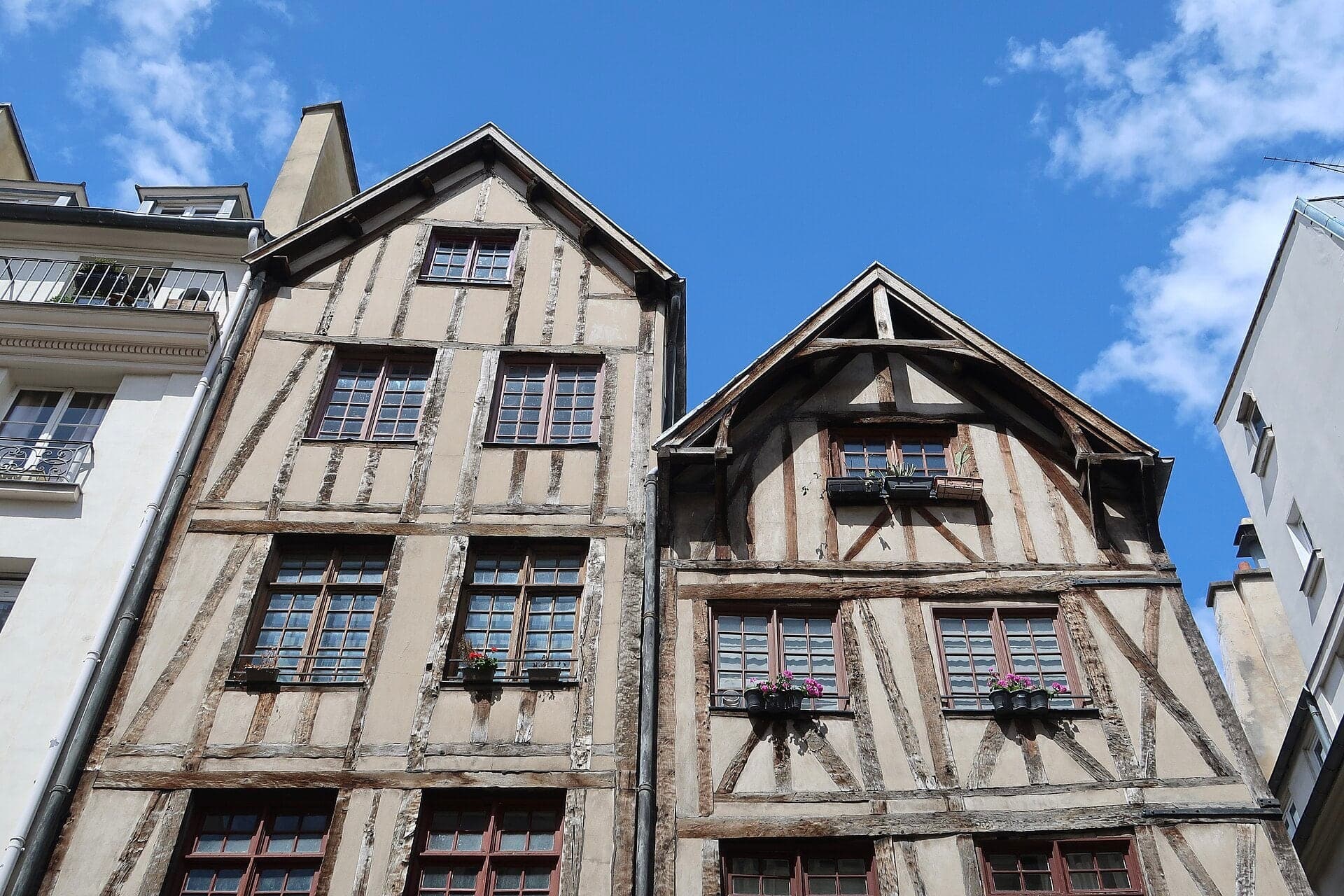
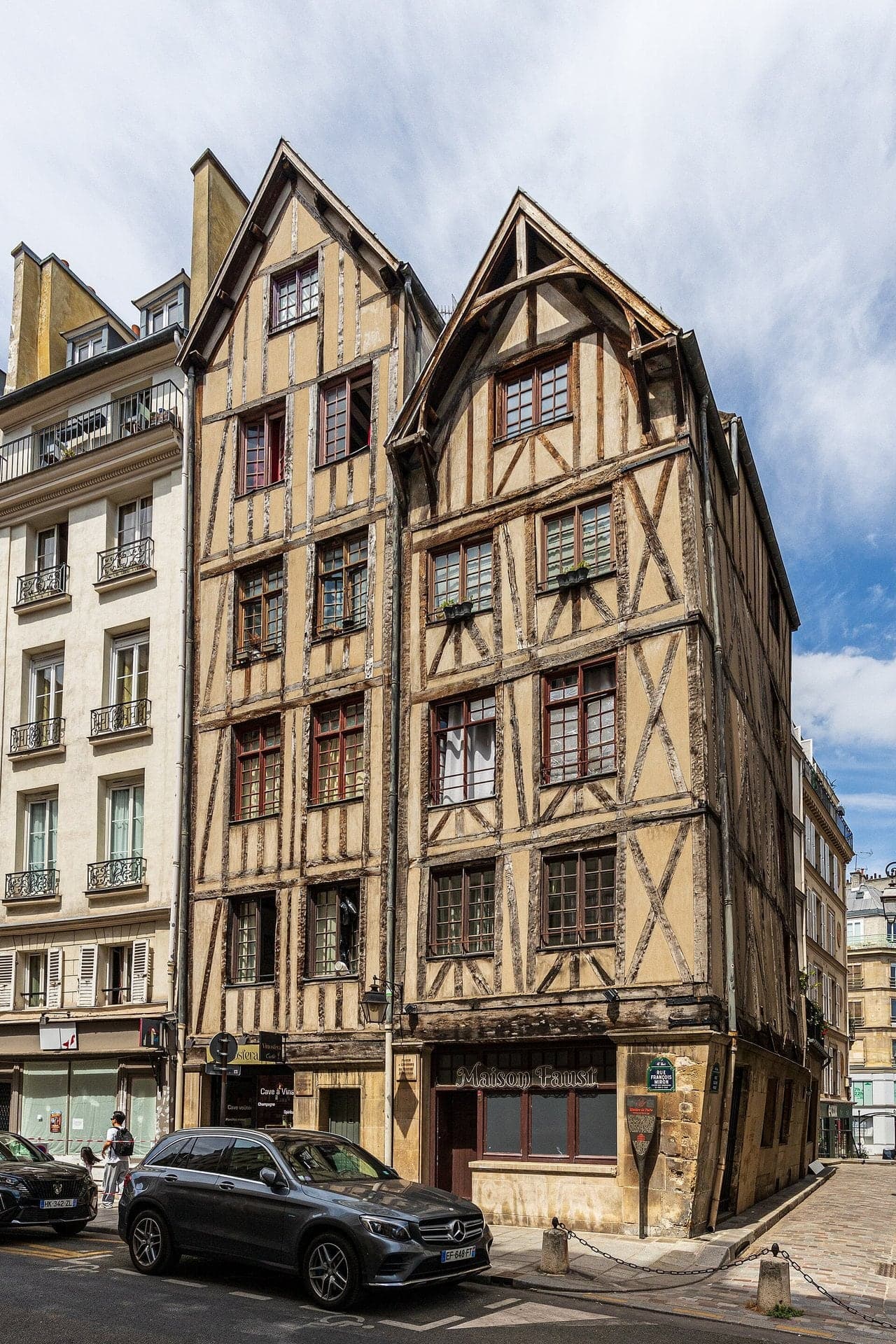
Rue François-Miron: Two Timber Houses Uncovered
Two timber houses hidden under plaster. Numbers 11 and 13 date from about the early 1500s and were uncovered and heavily restored in 1967 and 1968.
- 4
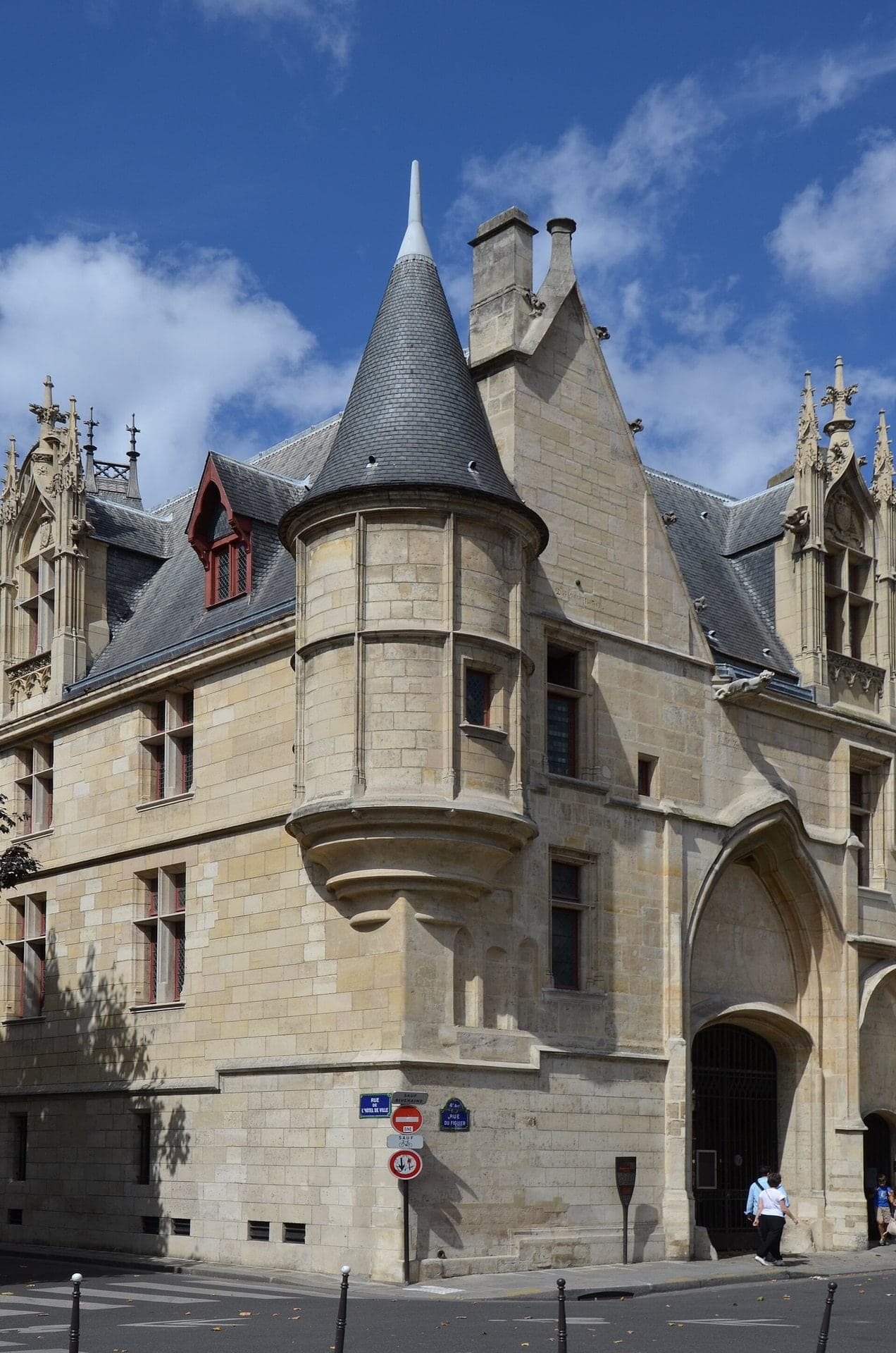
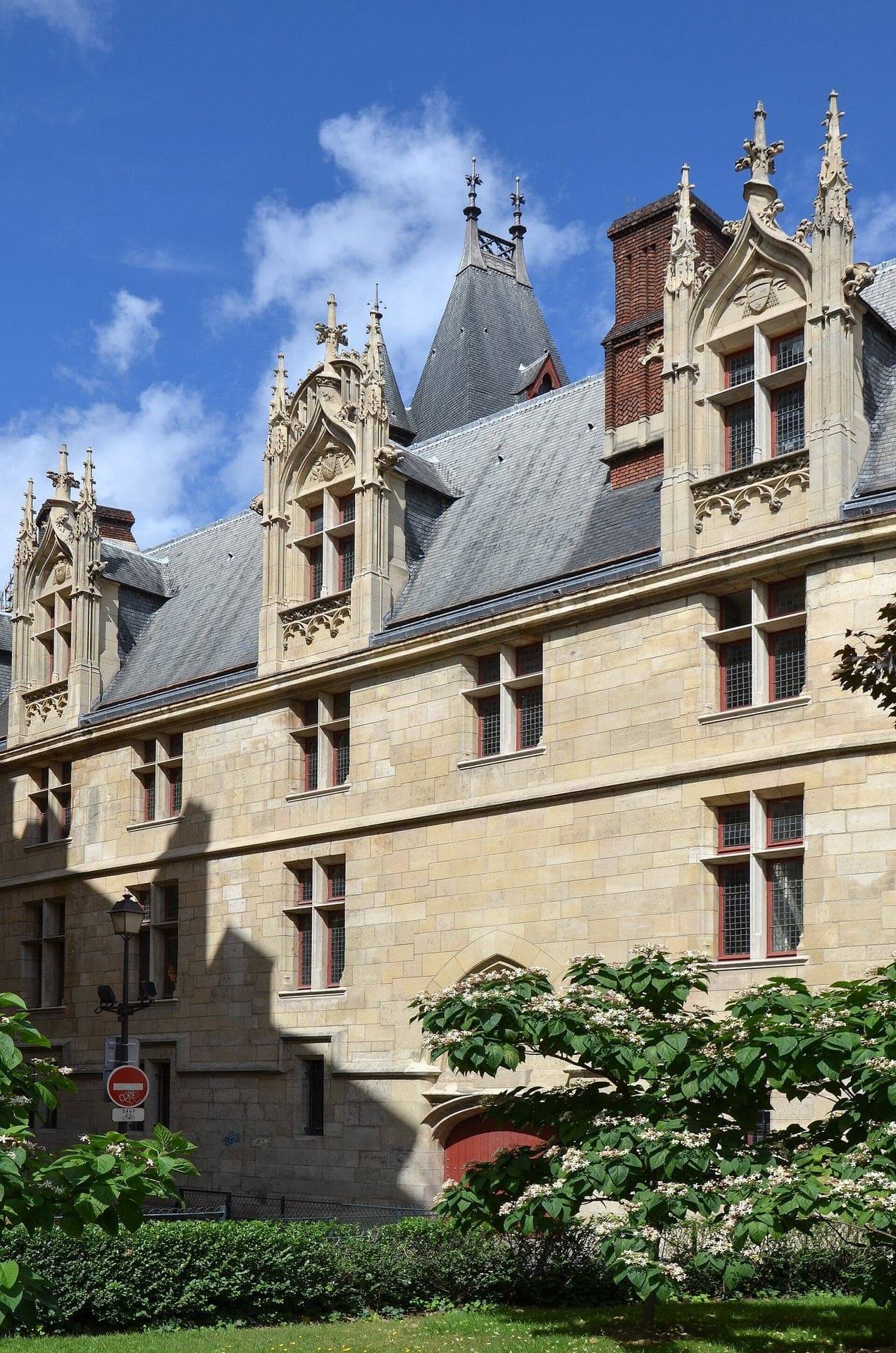
Hôtel de Sens: An Archbishop's Medieval Mansion
A medieval mansion built like a castle. The Hôtel de Sens was built from 1475 to 1519 for the archbishops of Sens and is now a City of Paris library.
- 5
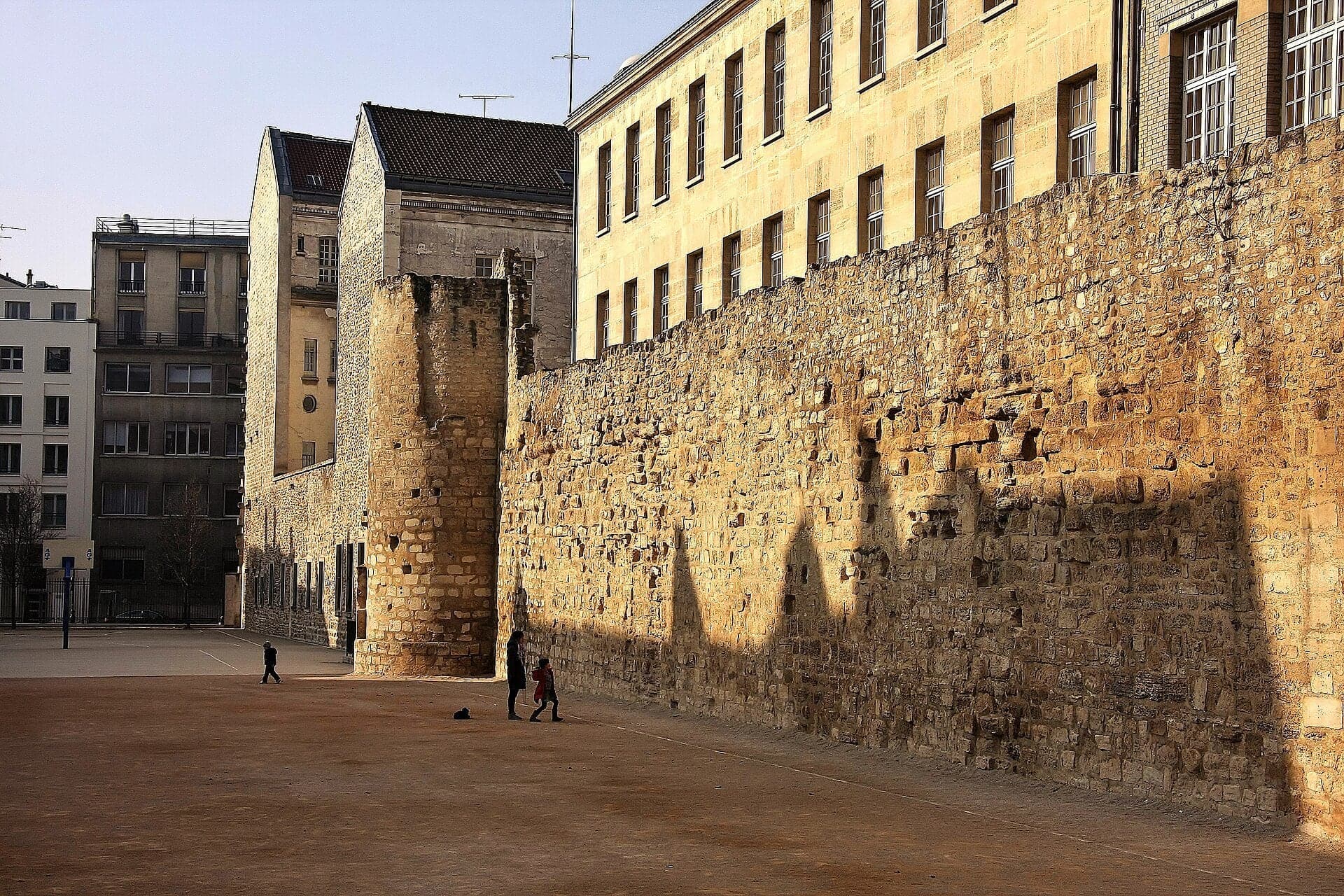
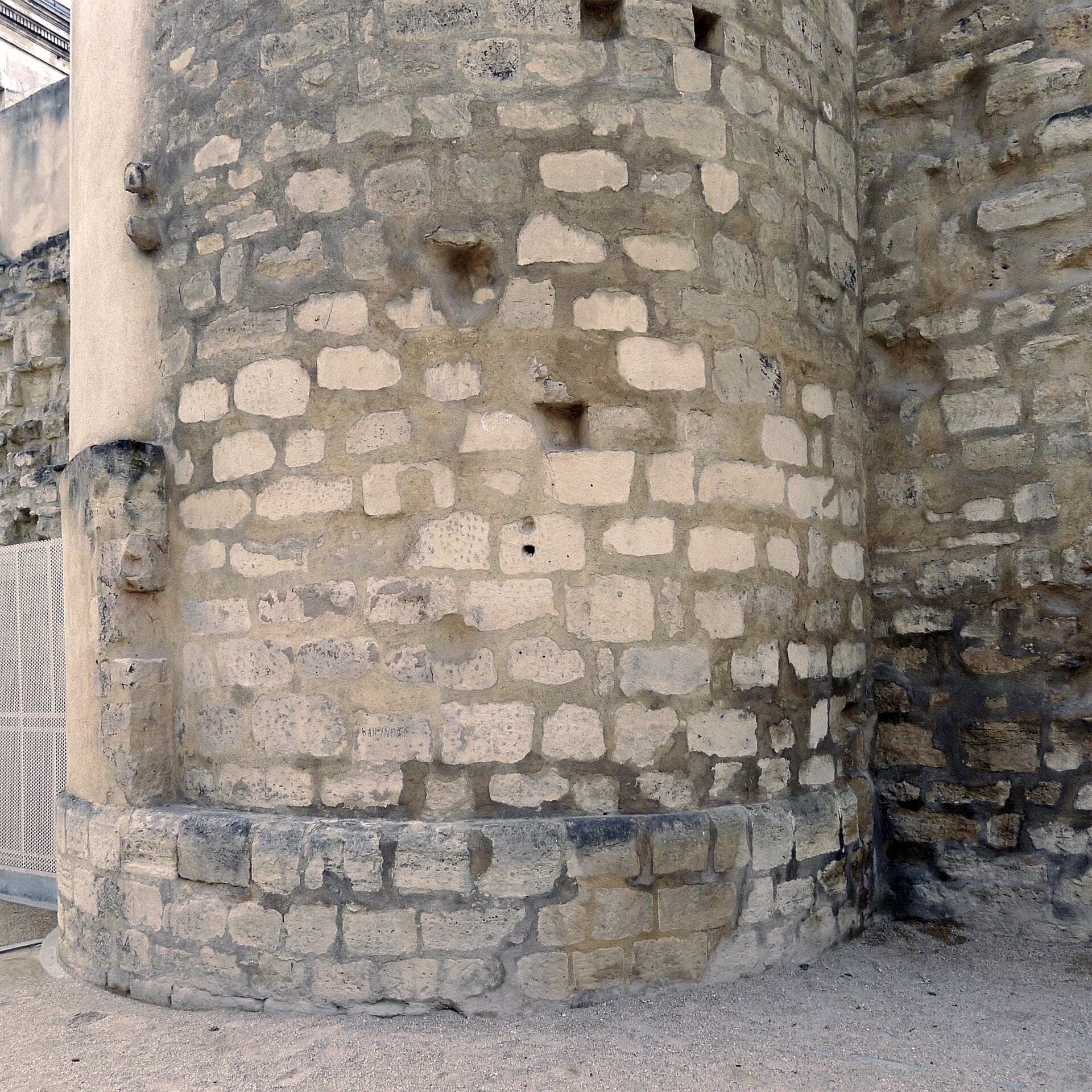
Philippe Auguste's Wall: Paris in the 1190s
About 60 metres of the 1190s wall. About 60 metres of King Philippe Auguste's rampart, cleared of the housing around it in 1946.
- 6
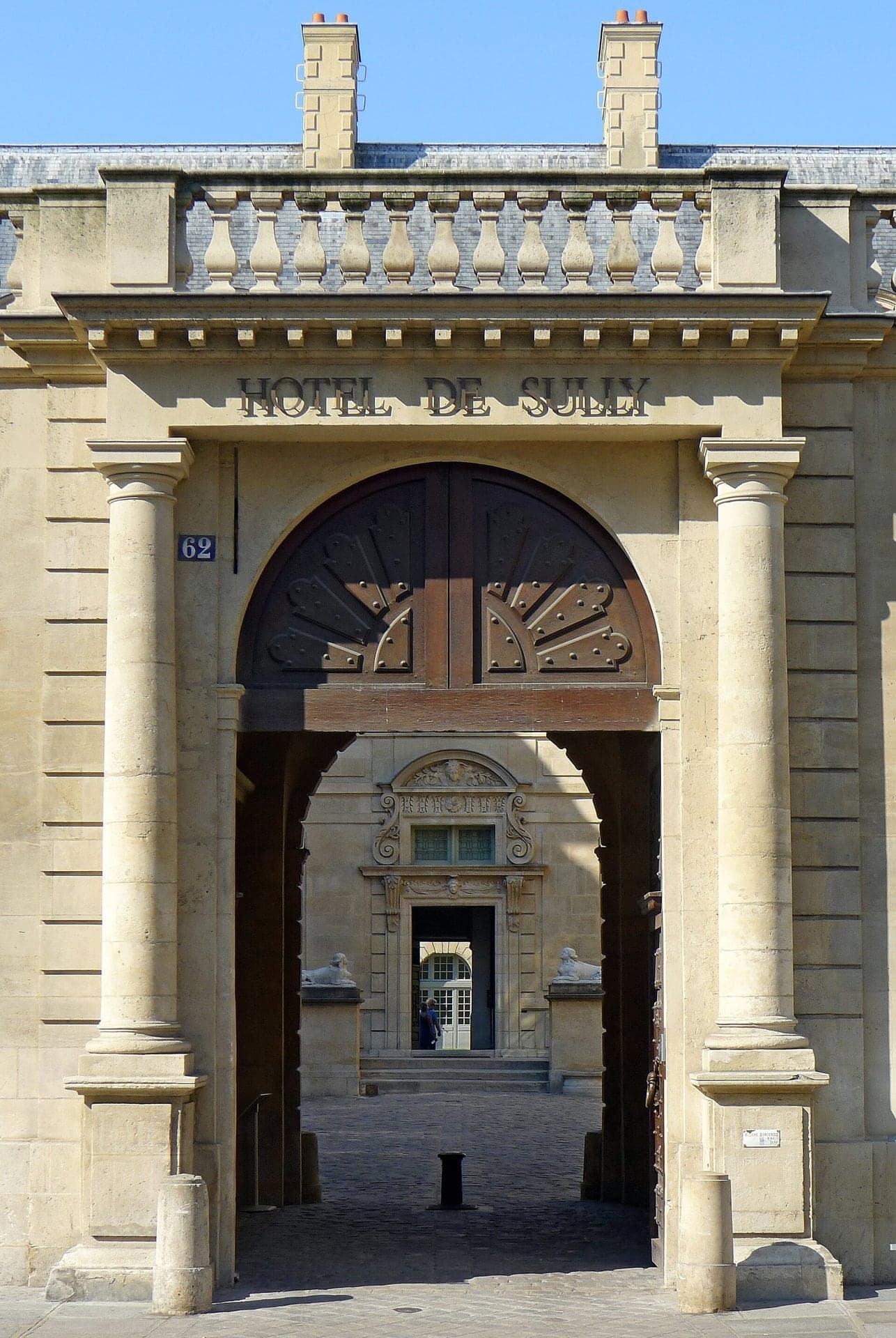
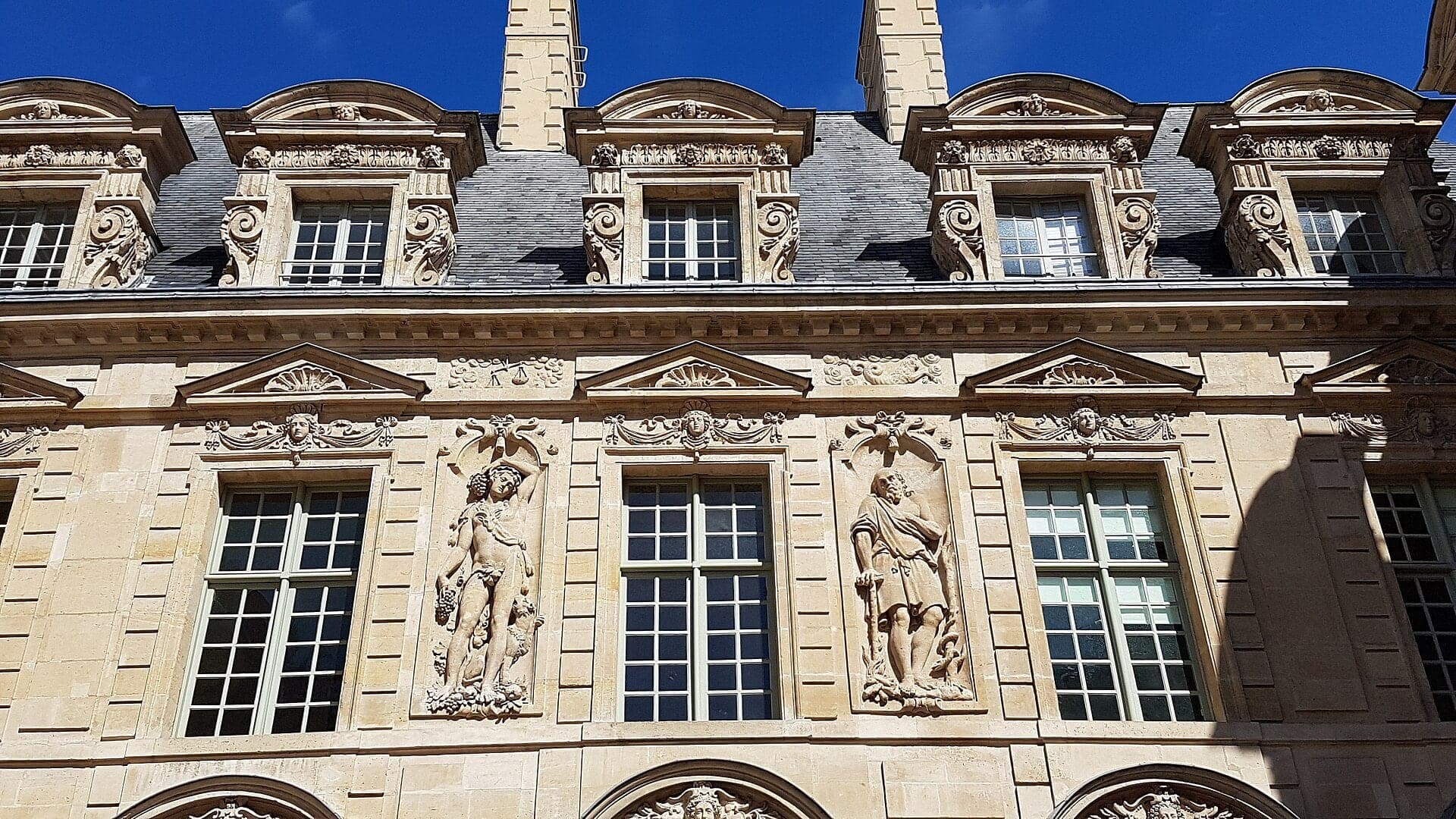
Hôtel de Sully: Between Courtyard and Garden
A 1620s mansion between court and garden. The Hôtel de Sully was bought in 1634 by Henri IV's former finance minister and opens onto the Place des Vosges.
- 7
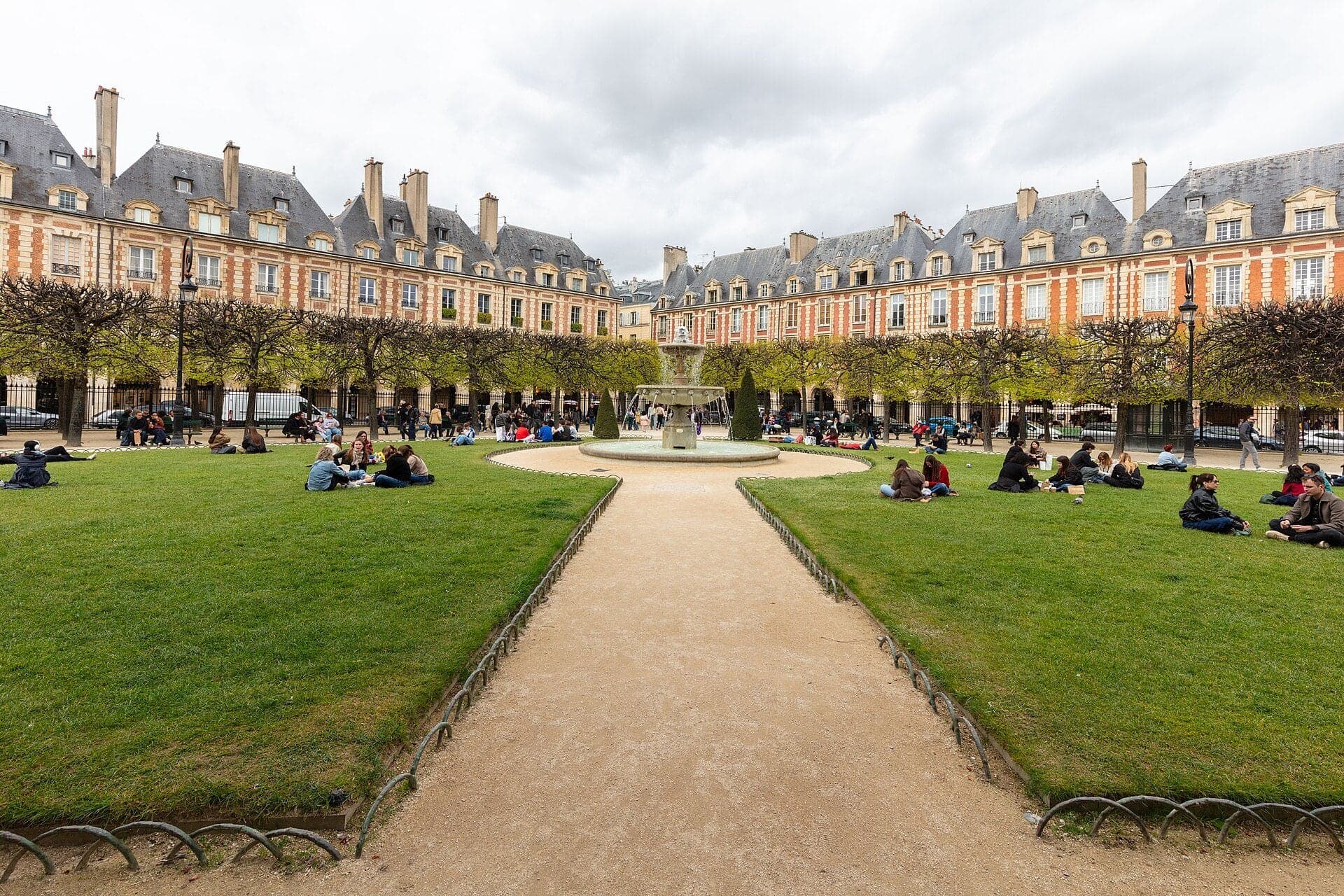
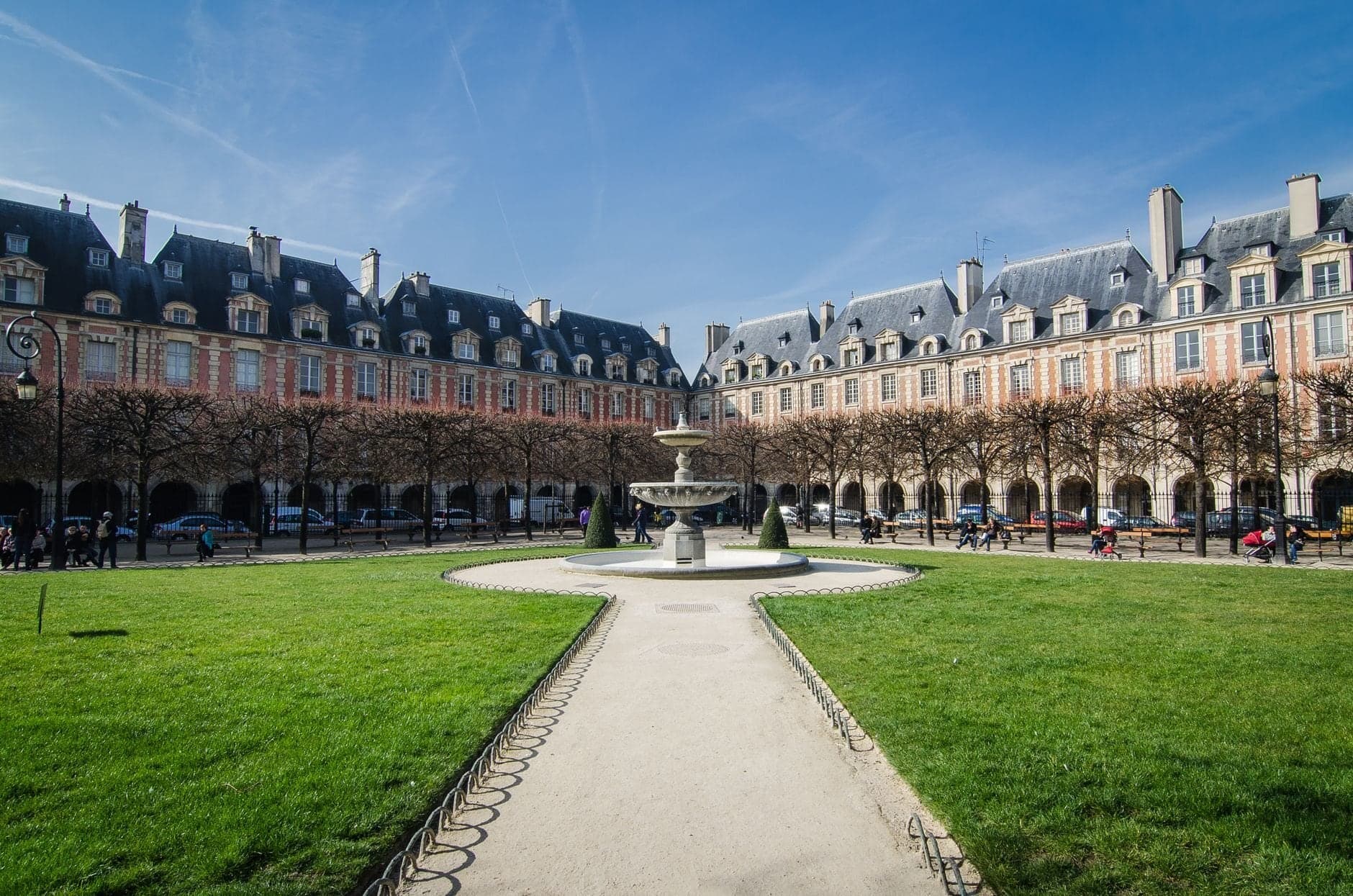
Place des Vosges: A King's Square in Brick and Stone
A royal square of one design. Begun in 1605 and inaugurated in 1612, its thirty-six houses of brick and stone stand over a continuous arcade.
- 8
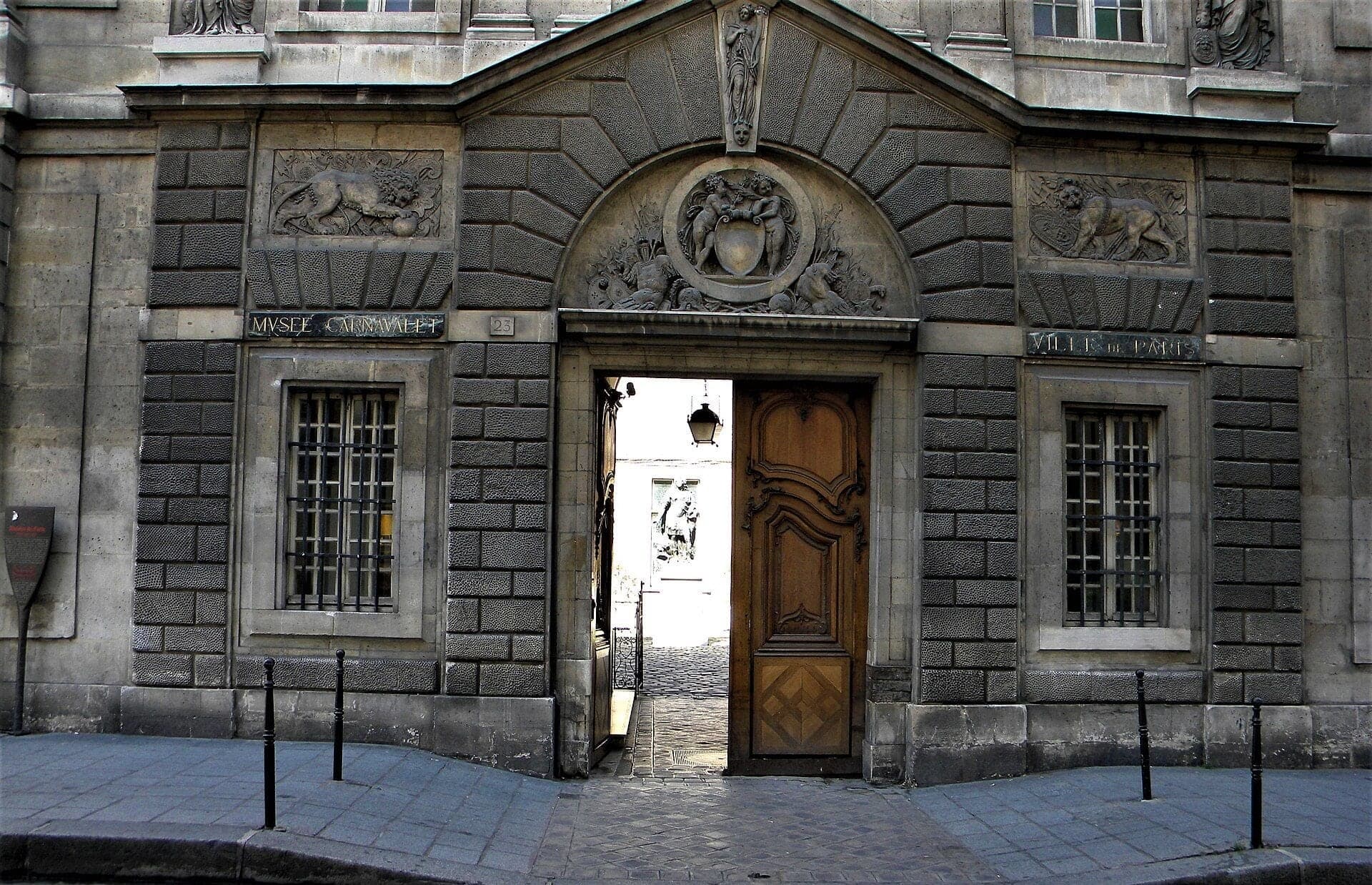
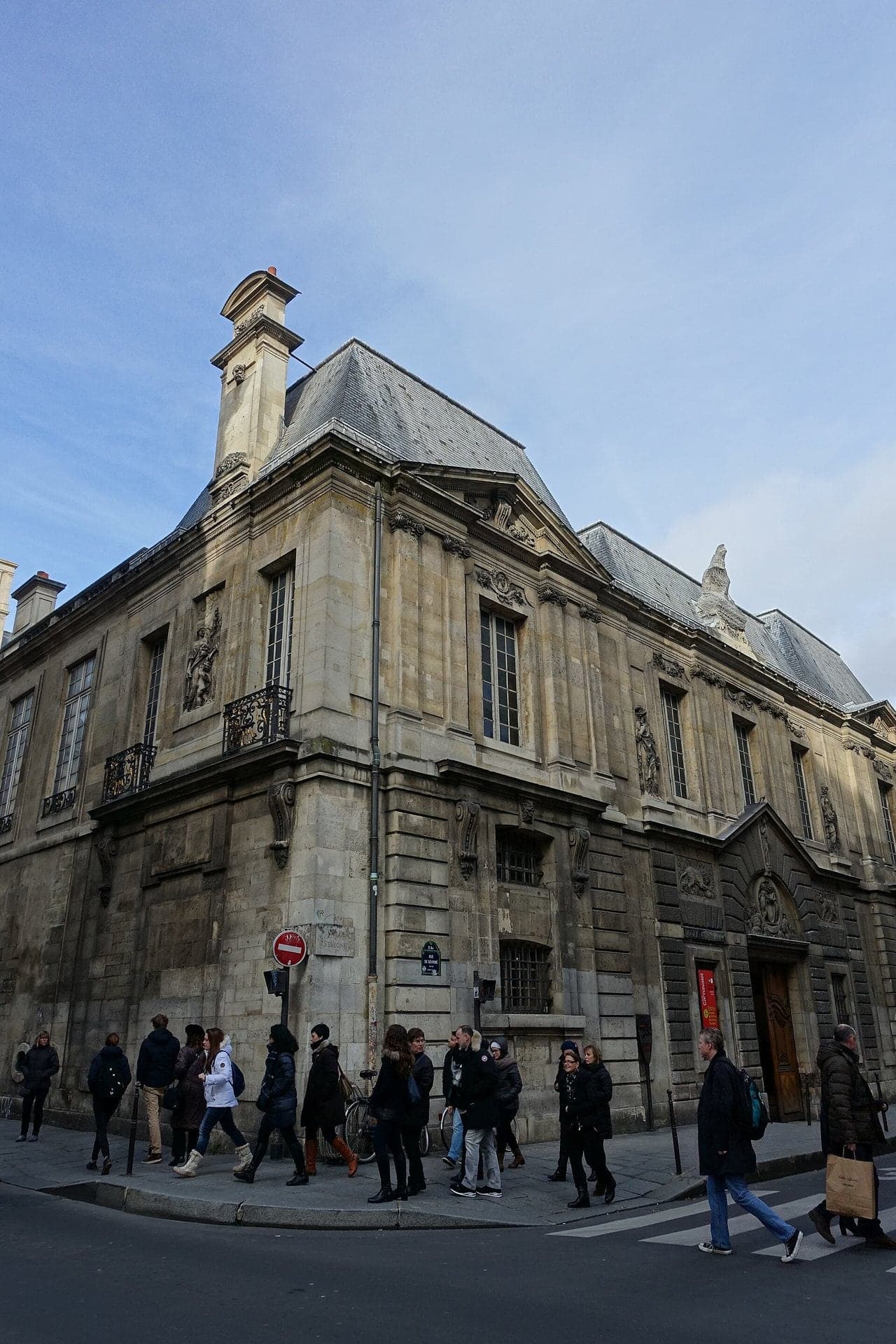
Musée Carnavalet: A Mansion Turned City Museum
The City of Paris's own museum. The Hôtel Carnavalet was built from 1548 to 1560, bought by the City in 1866 and opened as a museum in 1880; it is free to enter today.
- 9
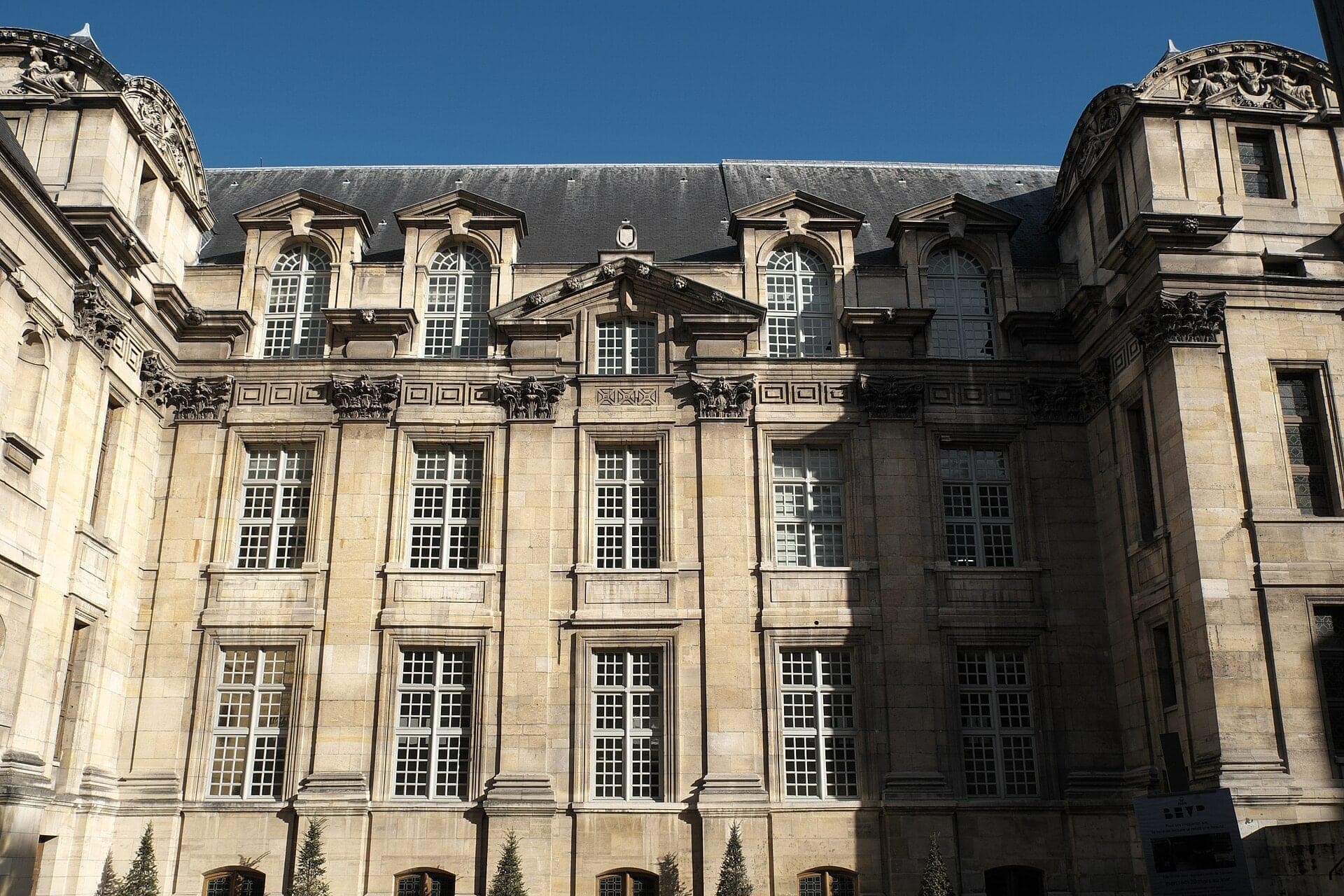
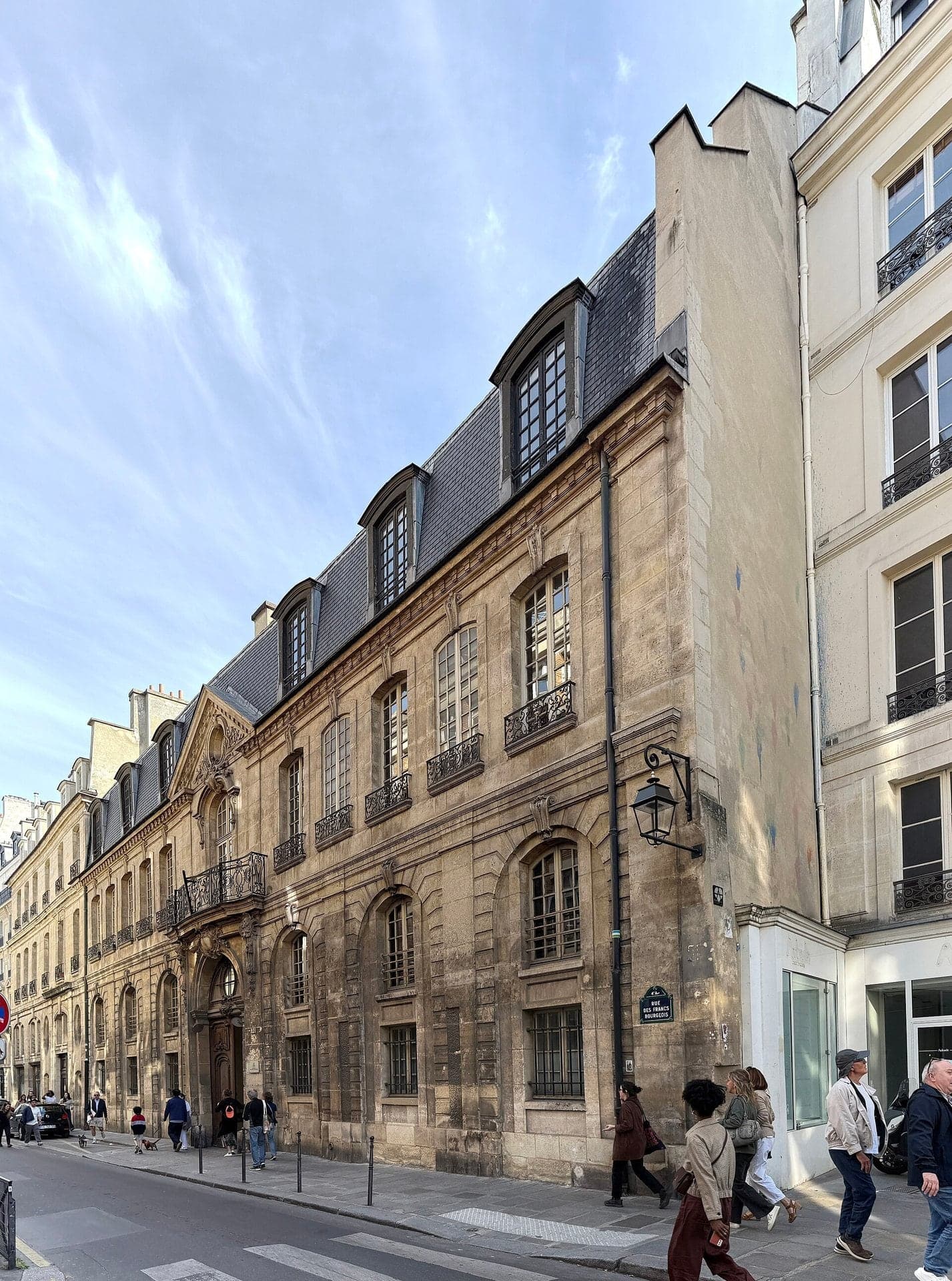
Hôtel de Lamoignon: The Turret on the Corner
A 1559 mansion now a library. The Hôtel de Lamoignon became a factory and shops, then the City's historical library.
- 10
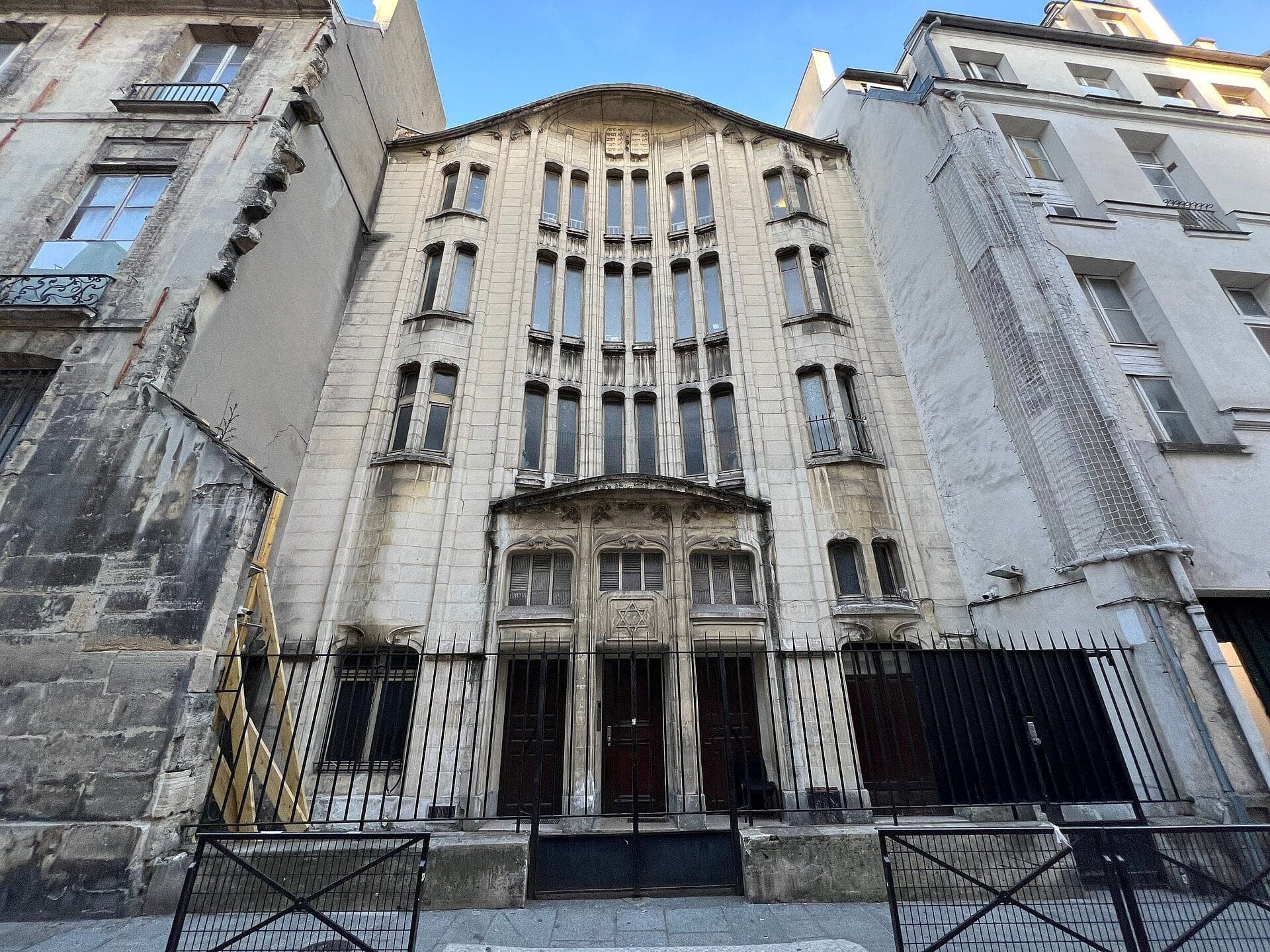
Rue Pavée Synagogue: Hector Guimard's Curving Front
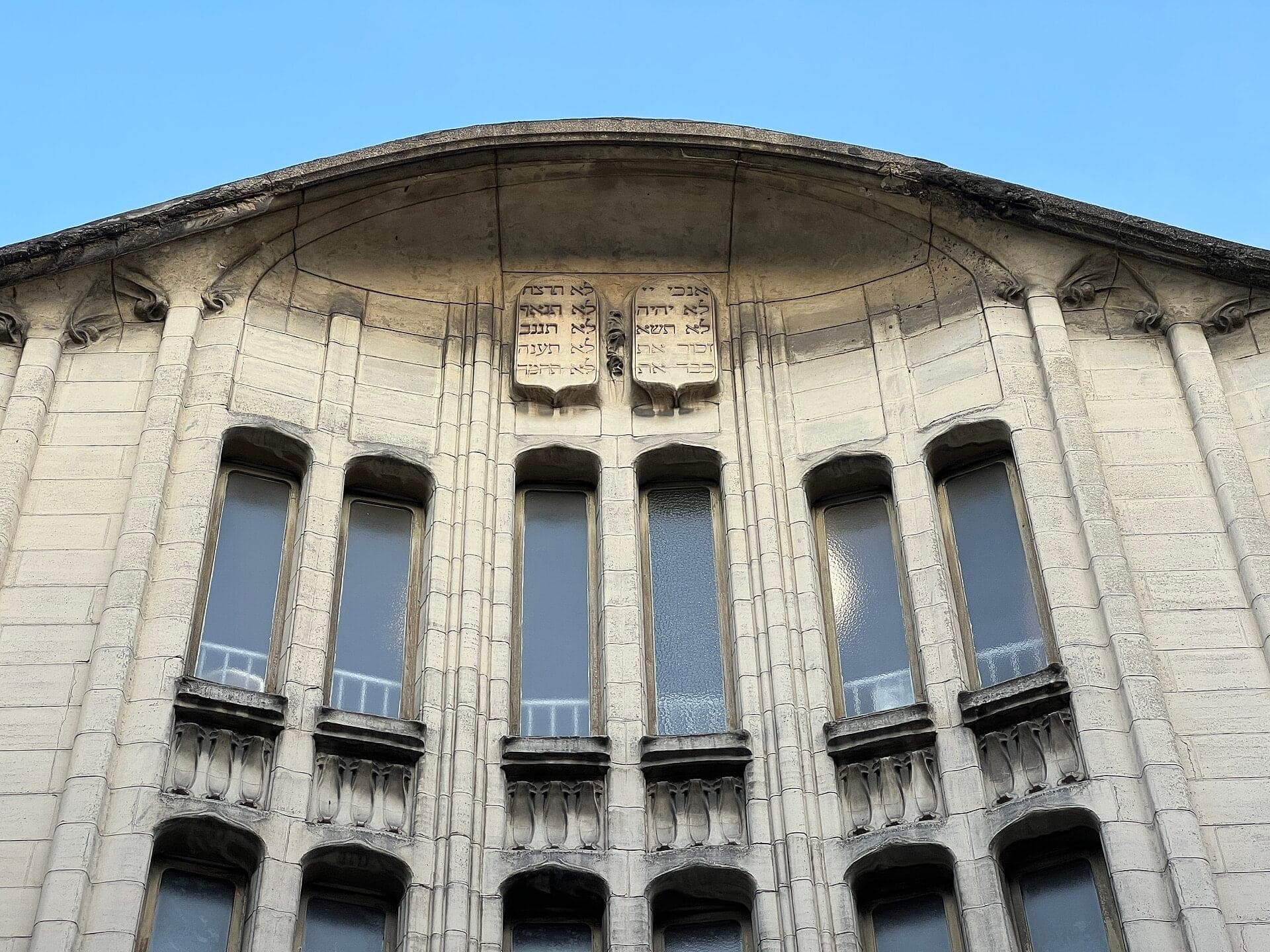
Built in 1913 on a narrow plot. Hector Guimard built this synagogue in 1913 and 1914 on a narrow plot, in stone blocks on concrete.
- 11
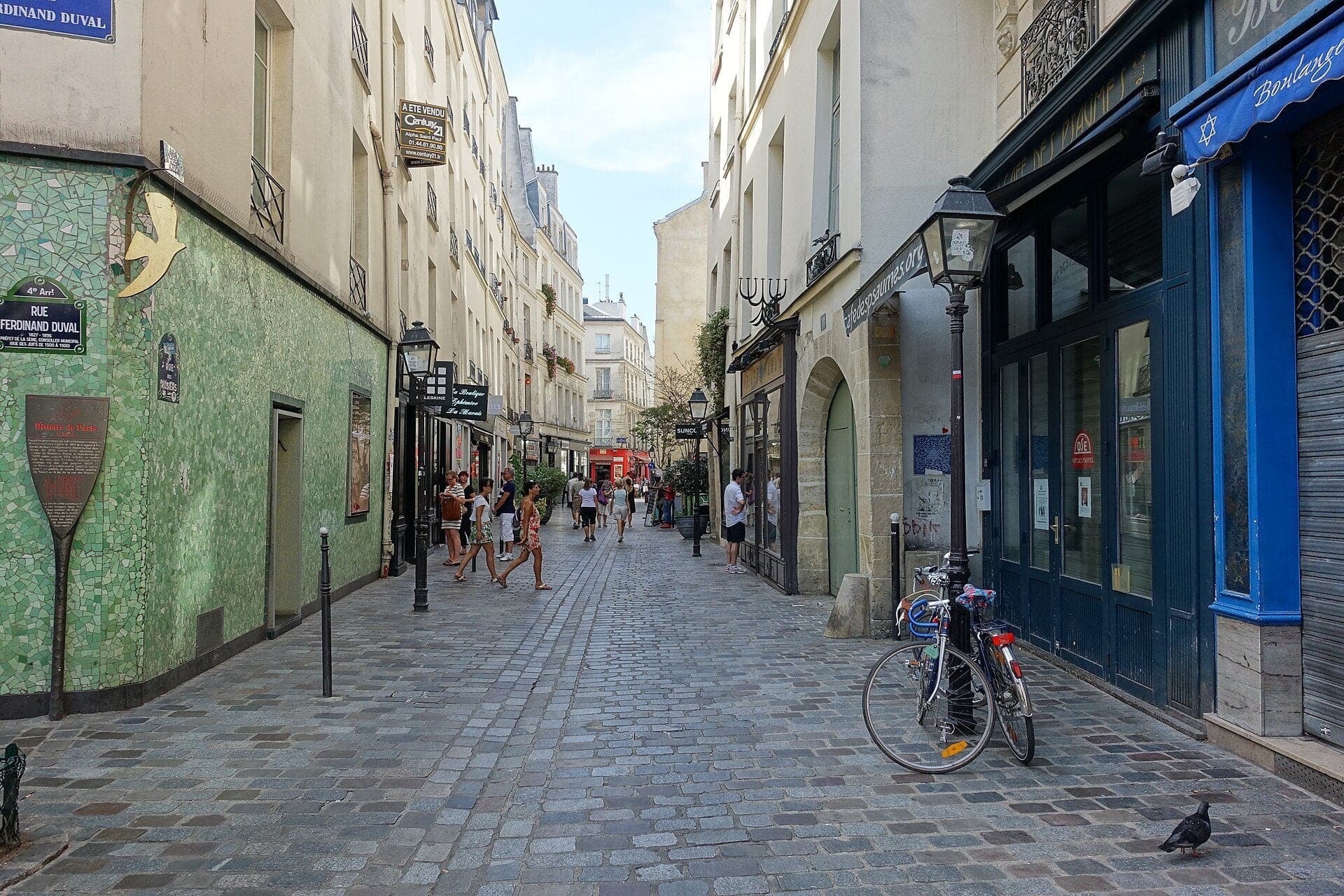
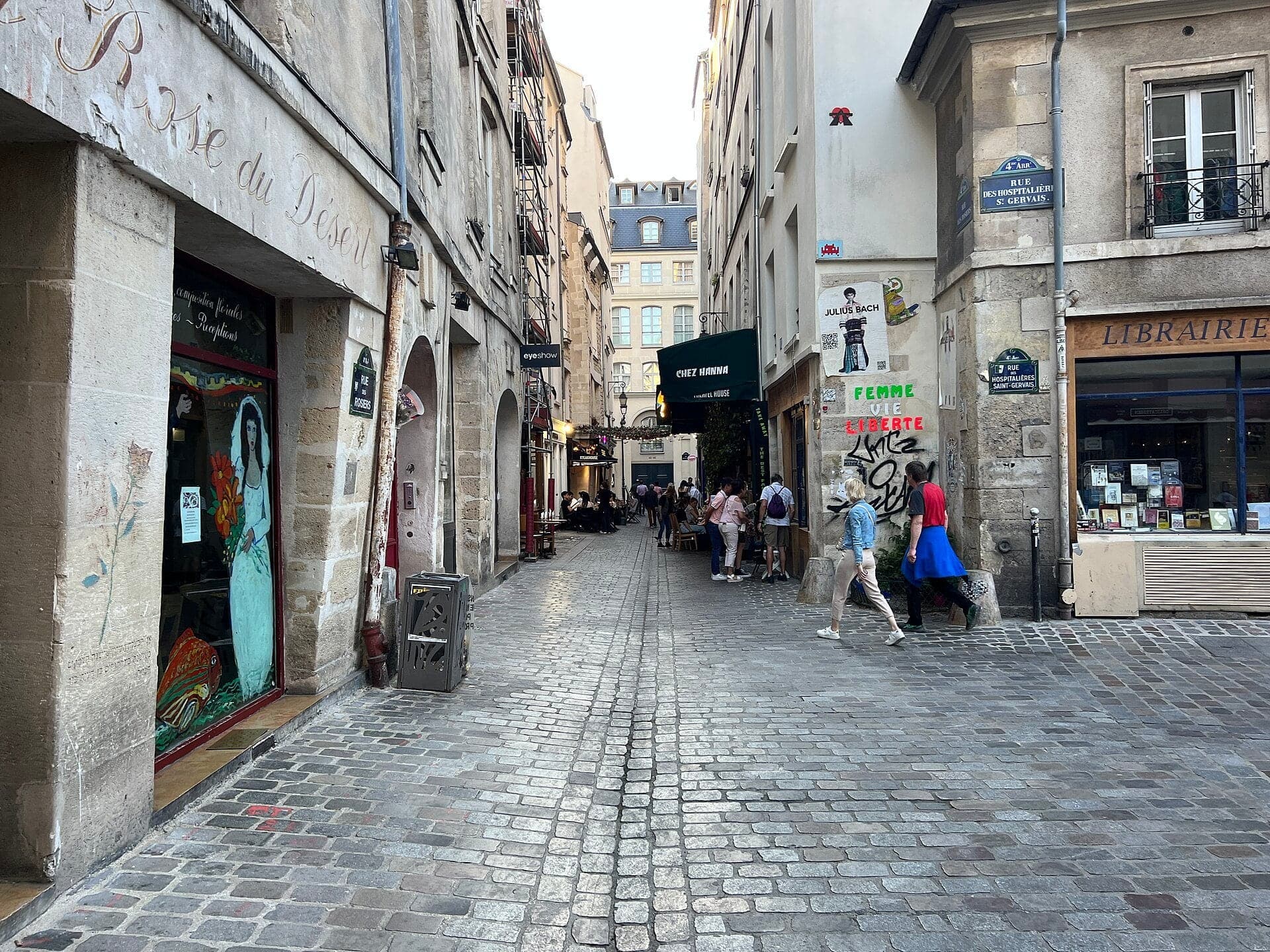
Rue des Rosiers: The Heart of the Pletzl
A street named by 1230. Rue des Rosiers, named by 1230, became the center of the Pletzl and carries the memory of 1942 and 1982.
Details
Best Time to Visit
A weekday from Tuesday to Friday, starting between about 10am and 2pm. The Carnavalet museum is free and open Tuesday to Sunday 10am to 6pm; the Hôtel de Sully's courtyard and garden are open daily 9am to 7pm; the Forney library's exhibition rooms open in the afternoon, Tuesday to Saturday. Rue des Rosiers is crowded at lunchtime and on Sundays. The Place des Vosges garden closes at 7.30pm until 24 October 2026, earlier in winter; its arcades stay open, and the route never needs the garden. Checked 7 October 2026.
Pro Tips
- •Getting to the start: Hôtel de Ville Metro (lines 1 and 11) is beside the square; Châtelet (many Metro lines and the RER) is about ten minutes' walk west. The walk ends near Saint-Paul Metro (line 1); Pont Marie (line 7), Chemin Vert (line 8) and Bréguet-Sabin (line 5) are a little further. Checked 7 October 2026.
- •Hôtel de Sully (stop 6): the courtyard and garden are free, daily 9am to 7pm, and you can walk straight through them to the Place des Vosges instead of going round by the street. Closed 1 January, 1 May, 1 and 11 November and 25 December. Checked 7 October 2026 at hotel-de-sully.fr.
- •Musée Carnavalet (stop 8): the permanent collections are free, Tuesday to Sunday 10am to 6pm (ticket desk until 5.15pm), closed Mondays. The entrance is at 23 Rue de Sévigné, round the corner from the stop. Checked 7 October 2026 at carnavalet.paris.fr.
- •Bibliothèque Forney (stop 4): the exhibition rooms are free and open in the afternoons, Tuesday to Saturday. The garden behind the Hôtel de Sens, the Jardin Monica Vitti, is open until 24 October 2026 Monday to Friday 8am to 6.50pm and at weekends 9am to 6.50pm, with shorter winter hours after that. Checked 7 October 2026.
- •Place des Vosges (stop 7): the garden is open until 24 October 2026 Monday to Friday 8am to 7.30pm and at weekends 9am to 7.30pm (shorter in winter), and has public toilets. Victor Hugo's apartment at number 6 is a museum; check its official site for hours. Checked 7 October 2026.
- •The garden of the Hôtel de Lamoignon (stop 9), entered at 25 Rue des Francs-Bourgeois, is a public garden, open until 24 October 2026 daily from 8am (9am at weekends) to 6.30pm, shorter in winter, and closed in high wind. Checked 7 October 2026.
- •Saint-Gervais (stop 2) is free to enter outside services and holds organ recitals; one is listed for Saturday 10 October 2026 at 7.30pm. Checked 7 October 2026.
Safety & Precautions
- •Between stops 1 and 2 the route crosses Rue de Lobau at a zebra crossing with no lights; it has three lanes and buses use it, so look both ways and wait for a clear gap. Before that, the route runs along the pavement beside the busy riverside road and crosses a narrow one-way service lane with no markings: watch for buses.
- •Step-free note: just before stop 2 the route can drop down two short flights of steps with handrails into Place Saint-Gervais; to avoid them, stay on the pavement of Rue de Brosse into the square.
- •Under the arch into the Place des Vosges (stop 7), Rue de Birague runs through the pavilion: for a few metres walkers share it with one-way traffic. Keep to the narrow arcade footways.
- •Just before stop 9, the route crosses Rue des Francs-Bourgeois at the Rue Pavée corner, where there are no lights. Look both ways.
- •The Hôtel de Sully's courtyard and garden close at 7pm and on five public holidays, and bags are checked at the gate. After hours, take the street route by Rue Saint-Antoine and Rue de Birague.
- •The synagogue on Rue Pavée (stop 10) is an active place of worship under guard. Look from the pavement, keep your voice down and do not photograph the guards; it is not open to visitors as part of this walk.
- •Rue des Rosiers (stop 11) is narrow and very crowded at lunchtime and on Sundays, and many shops may be closed on Saturdays. Watch your bags in the queues and on the Hôtel de Ville square.
- •The Hôtel de Ville square is sometimes fenced for events; if it is, start from its edge.
- •Do not sightsee inside Saint-Gervais during a service.
Travel advisory: Exercise Increased Caution (Level 2).
Gallery
Related Reading
Go deeper on what you'll see, hear, and walk through.
Overview
Best Self-Guided Walking Tours in Paris (2026)
5 min
Overview
One Day in Paris: A Walkable Right-Bank-to-Latin-Quarter Itinerary (2026)
6 min
Overview
Paris Travel Guide: How Many Days, Getting Around, When to Go (2026)
5 min
Thematic
Best History Walking Tours in Paris (2026)
2 min
Thematic
Eating Belleville's Chinatown: Wenzhou, Teochew, and Kabyle Cafés on One Hill
3 min
Thematic
Paris in Layers: How Five Centuries of Power Left the City We Walk
7 min
Thematic
What to Eat in Paris: A Food Guide (2026)
5 min
Companion
Reading Haussmann's Paris: A Field Guide to the Marks He Left
4 min
Companion
The Marais: Mansions That Went to Work, and the Quarter That Was Rescued
4 min
Deep dive
Eating the Marais: Falafel, Poppyseed, and the Two Jewish Traditions That Share One Street
3 min
Read the walk
The full story of Le Marais: The Mansions That Went to Work, in words. Prefer to listen? Play it narrated, from home or on location.
Introduction
Paris, the capital of France, has a quarter you can read in layers. Le Marais, by the Seine, is named for the marsh it was drained from, and for the gardens that followed. Here you will see a city wall from the eleven nineties, timber-framed houses, an archbishop's mansion, great stone town houses built between a courtyard and a garden, a royal square, and the old Jewish quarter called the Pletzl.
By the eighteen hundreds its grand houses held workshops, shops, a laundry, even a jam factory. Then the City of Paris began to buy them, and in the nineteen sixties the Marais became the first district in Paris protected under a new national law.
Three people matter along the way. Henri the Fourth, the king who planned the royal square. The Duke of Sully, his finance minister, whose mansion had a back door onto it. And Hector Guimard, the architect of the Art Nouveau Metro entrances, who built one synagogue in this quarter. Near the end, the walk turns to what happened to the quarter's Jewish families in the Second World War.
The walk is eleven stops over just over two and a half kilometres, about a mile and a half, and takes about ninety minutes. It runs from the Hôtel de Ville to Rue des Rosiers. The Carnavalet museum and the Hôtel de Sully's courtyard are free to enter; the details are on their stops' cards.
1. Hôtel de Ville: The City Hall That Is a Copy
Welcome to the Place de l'Hôtel de Ville, and to the start of our walk through Le Marais. Across the open square stands the Hôtel de Ville, the City Hall of Paris: a long palace of pale stone, with rows of statues standing in niches along its front.
Paris has been governed from this spot since thirteen fifty-seven, when the head of the city's merchants bought a house here and made it the seat of the town. The square was then called the Place de Grève. The story goes that men looking for work gathered here, and that this is where the French word for a strike, grève, comes from.
A grand new City Hall was begun here in fifteen thirty-three and finished in sixteen twenty-eight, in the Renaissance style. It is not the building you are looking at. On the twenty-fourth of May, eighteen seventy-one, in the last week of the Paris Commune, Communards set it on fire. The fire took the city's historical library and its registers of births, marriages and deaths.
The architects who won the competition to rebuild it proposed to remake the Renaissance front exactly as it had been. So what stands across the square went up in the eighteen seventies and eighteen eighties, as a careful copy of the palace that burned.
Keep that in mind. In the Marais, an old-looking front is a question, not an answer: some of what you will see is original, some restored, some rebuilt. Remember the burned library, too. It comes back later.
Follow the route along the river side of the square to a church with a tall classical front. On the way, cross Rue de Lobau at the zebra crossing, which has no lights: look both ways, because buses use it.
2. Saint-Gervais: A Classical Front on a Gothic Church
Walk on into the little square and stop with the church front ahead of you, up a short rise. This is Saint-Gervais. It stands on a low mound that stayed dry above the marshy ground around it, and the City of Paris says a church here is first mentioned in a will of the late five hundreds. It is free to go in when there is no service.
Look up at the front. It is a tall face of classical columns, in the manner of ancient Rome, and it was built between sixteen sixteen and sixteen twenty-one, by a leading architect of the day and his master mason. The City of Paris calls it one of the great pieces of architecture in France.
Now think about what is behind it. The church itself is late Gothic. It was begun in fourteen ninety-four and built in stages, with its nave finished only in the sixteen hundreds. So this is a Roman-style front put onto a medieval church: a new fashion, worn on the outside.
In front of the church, look for the elm. An elm has marked this spot since the twelve hundreds, but the tree has been cut down and replanted many times. The one standing today was planted in nineteen thirty-five.
This church has known grief. On Good Friday, the twenty-ninth of March, nineteen eighteen, during the service, a shell from a German long-range gun struck it, and part of the vault fell on the congregation. Ninety-one people were killed. A chapel inside remembers them. Beside this square, a small garden remembers the victims of the attacks of the thirteenth of November, twenty fifteen.
For about one hundred and seventy years, a family of organists, the Couperins, played here; a plaque to them is on a house nearby.
Follow the route along Rue François-Miron, crossing at the lights, to two houses with wooden fronts.
3. Rue François-Miron: Two Timber Houses Uncovered
Walk on and stop on this side of the street, across from two narrow houses with their wooden frames showing on the front. Tilt your head up: posts and beams of timber rise through every floor to a pointed gable.
They are numbers eleven and thirteen. Facing them, the house on the left, number eleven, is the house at the sign of the Reaper. The one on the right, on the corner of a narrow lane, is number thirteen, the house at the sign of the Sheep. Before Paris numbered its houses, a house was known by its sign.
Most of Paris is built of stone, so wood on a street front stands out. These two date from about the early fifteen hundreds, though the experts do not agree on exactly when. For centuries they were hidden: their timber was plastered over, and the street saw only plaster.
They were uncovered in the nineteen sixties, and restored in nineteen sixty-seven and sixty-eight. The restorers redrew the gables, and gave up the old overhangs that once leaned out over the street. So these are old houses, much restored, and not a medieval street frozen in time. You may hear them called the oldest houses in Paris. They are not; that title is usually given to a stone house elsewhere in the city, dated fourteen oh seven.
The restoration came at a turning point for the whole quarter. In nineteen sixty-two France passed a law to protect entire historic districts, and in the mid nineteen sixties the Marais became the first in Paris to be protected under it. Keep that law in mind.
Follow the route on through quiet streets to a mansion with turrets, built for an archbishop.
4. Hôtel de Sens: An Archbishop's Medieval Mansion
Walk on to the end of Rue du Figuier and stop beside the old mansion with towers and turrets. This is the Hôtel de Sens. In French, an hôtel in this sense is not a hotel: it is a great private town house, and the Marais is full of them.
This one was built between fourteen seventy-five and fifteen nineteen for the archbishop of Sens, and the City of Paris calls it one of the rare pieces of medieval civil architecture left in Paris, meaning a house, not a church.
Look at it from this close angle. Towers at the corners, a turret that carried the staircase up the outside of the building, and a great arched gateway. A rich man's house in Paris at the end of the Middle Ages still looked like a small castle. Keep that picture. In a few stops you will see how later houses turned their backs on the street in a different way.
Then, like the other great houses of the Marais, it came down in the world. In the eighteen hundreds this archbishop's mansion housed a haulage company, a laundry and a jam factory.
In nineteen eleven the City of Paris bought it, in ruins, and restored it. Since the early nineteen sixties it has housed a public library, the Bibliothèque Forney, and its exhibition rooms are free to visit in the afternoons from Tuesday to Saturday. Beside it is a public garden, open in the daytime.
Look at the street sign, too: Rue du Figuier, the street of the fig tree. Legend has it that a queen who lived in this house had the old fig tree cut down.
Follow the route round the corner to a long, high stone wall, much older than this mansion.
5. Philippe Auguste's Wall: Paris in the 1190s
Walk on and look across the street for a long, high wall of stone, set back from the pavement, with no windows and no doors. Orient by the wall itself: it runs along the far side of the street. This is a piece of the wall that King Philippe Auguste built around Paris between…
Full narration for this stop unlocks with the tour.
6. Hôtel de Sully: Between Courtyard and Garden
Walk on along Rue Saint-Antoine and stop at the tall carriage gateway of the Hôtel de Sully. Its courtyard and garden are free to enter every day from nine in the morning to seven in the evening, except on a few public holidays; the details are on this stop's card. This is the…
Full narration for this stop unlocks with the tour.
7. Place des Vosges: A King's Square in Brick and Stone
Walk on through the arch under the tall pavilion, and stop on the pavement at its mouth, before the road that circles the square. If you came through the Sully garden, stand at the arch and face into the square. This is the Place des Vosges. The pavilion over the arch is the…
Full narration for this stop unlocks with the tour.
8. Musée Carnavalet: A Mansion Turned City Museum
Walk on along Rue des Francs-Bourgeois and stop just before the corner of Rue de Sévigné, with a gateway between two small pavilions just ahead. This is the Hôtel Carnavalet, today the Carnavalet museum, and it is free to enter; the details are on this stop's card. Its entrance…
Full narration for this stop unlocks with the tour.
9. Hôtel de Lamoignon: The Turret on the Corner
Cross the end of Rue Pavée and stop on its far pavement. The big stone house across Rue Pavée is the one whose corner you just passed: look back up at that corner, where a small turret is built out high above the street. This is the Hôtel de Lamoignon. It was begun in fifteen…
Full narration for this stop unlocks with the tour.
10. Rue Pavée Synagogue: Hector Guimard's Curving Front
Walk on along Rue Pavée and stop across the street from a tall, narrow front of curving stone. This is a working synagogue, and it is guarded. Please look from the pavement, keep your voice low, and do not photograph the guards. The street is narrow, so to see the whole front,…
Full narration for this stop unlocks with the tour.
11. Rue des Rosiers: The Heart of the Pletzl
Walk on to the corner where Rue des Écouffes meets Rue des Rosiers, and stop there, by the street signs. This is the heart of the Pletzl, the name Yiddish speakers gave this quarter: the little place. Rue des Rosiers means the street of the rose bushes. It already had that name…
Full narration for this stop unlocks with the tour.
- This picture was uploaded via app "Wiki Loves Monuments France". — Matthias_Süßen, CC BY-SA 4.0 · source
- Landscape scenic view from the banks of the River Seine looking north toward the Right Bank, highlighting the upper Gothic clerestory walls — iMahesh, CC BY-SA 4.0 · source
- Maisons médiévales, 11-13 rue François Miron, à l'angle avec la rue Cloche-Perce (Paris, 4e). — Polymagou, CC BY-SA 4.0 · source
- Two of the oldest houses in Paris, rue Francois Miron 11-13, 4th around. — Matthias Süßen, CC BY-SA 4.0 · source
- Hotel de Sens, Paris, France — Pline, CC BY-SA 3.0 · source
- Hotel de Sens in Paris, France — Pline, CC BY-SA 3.0 · source
- Enceinte of Philippe-Auguste, Paris. — Adrian Scottow from London, England, CC BY-SA 2.0 · source
- Enceinte de Philippe-Auguste (tour rue des Jardins-Saint-Paul) - Paris IV — Mbzt, CC BY-SA 3.0 · source
- Hôtel de Sully (62 rue Saint-Antoine) - Paris IV — Mbzt, CC BY-SA 3.0 · source
- Paris-Marais, Hôtel de Sully — Ricardalovesmonuments, CC BY-SA 4.0 · source
- Place des Vosges, Paris, France — Diego Delso, CC BY-SA 4.0 · source
- Paris, France. Hotel Carnavalet. (PA00086125)(The entrance) — Britchi Mirela, CC BY-SA 4.0 · source
- Le Marais @ Paris — Guilhem Vellut from Paris, France, CC BY 2.0 · source
- Hôtel de Lamoignon, heute Bibliothèque historique de la ville de Paris, im 4. Arrondissement in Paris (Île-de-France/Frankreich) — GFreihalter, CC BY-SA 3.0 · source
- Hôtel Lamoignon, Paris. — Chabe01, CC BY-SA 4.0 · source
- Synagogue de la rue Pavée, Paris. — Chabe01, CC BY-SA 4.0 · source
- Synagogue de la rue Pavée, Paris. — Chabe01, CC BY-SA 4.0 · source
- Jewish quarter @ Rue des Rosiers @ Le Marais @ Paris — Guilhem Vellut from Paris, France, CC BY 2.0 · source
- Rue des Rosiers, Paris. — Chabe01, CC BY-SA 4.0 · source
Images may be cropped or resized. Other photos via Unsplash and Pexels.