
Yes, you can see the heart of Paris in a day on foot. Here is the route.
You cannot fit two thousand years of Roman ruins, royal palaces, revolution, and reinvention into a single day, and you should not try. What you can do is walk the dense, connected core of the city where its most legible districts sit within reach of each other: the island where the city began its cathedral and its royal chapel, the layered lanes of the Marais, and the student quarter across the Seine. This itinerary routes those three around a comfortable walking day, and names the self-guided Paris walking tour that anchors each block so the history walks with you.
A note on pace before you start. This is a full day of walking, roughly 8 to 12 km with the transfers, mostly flat, with a couple of short metro hops between districts, so wear proper shoes, carry water, and treat the bakery and café stops below as part of the plan, not interruptions to it.
Morning: the Île de la Cité
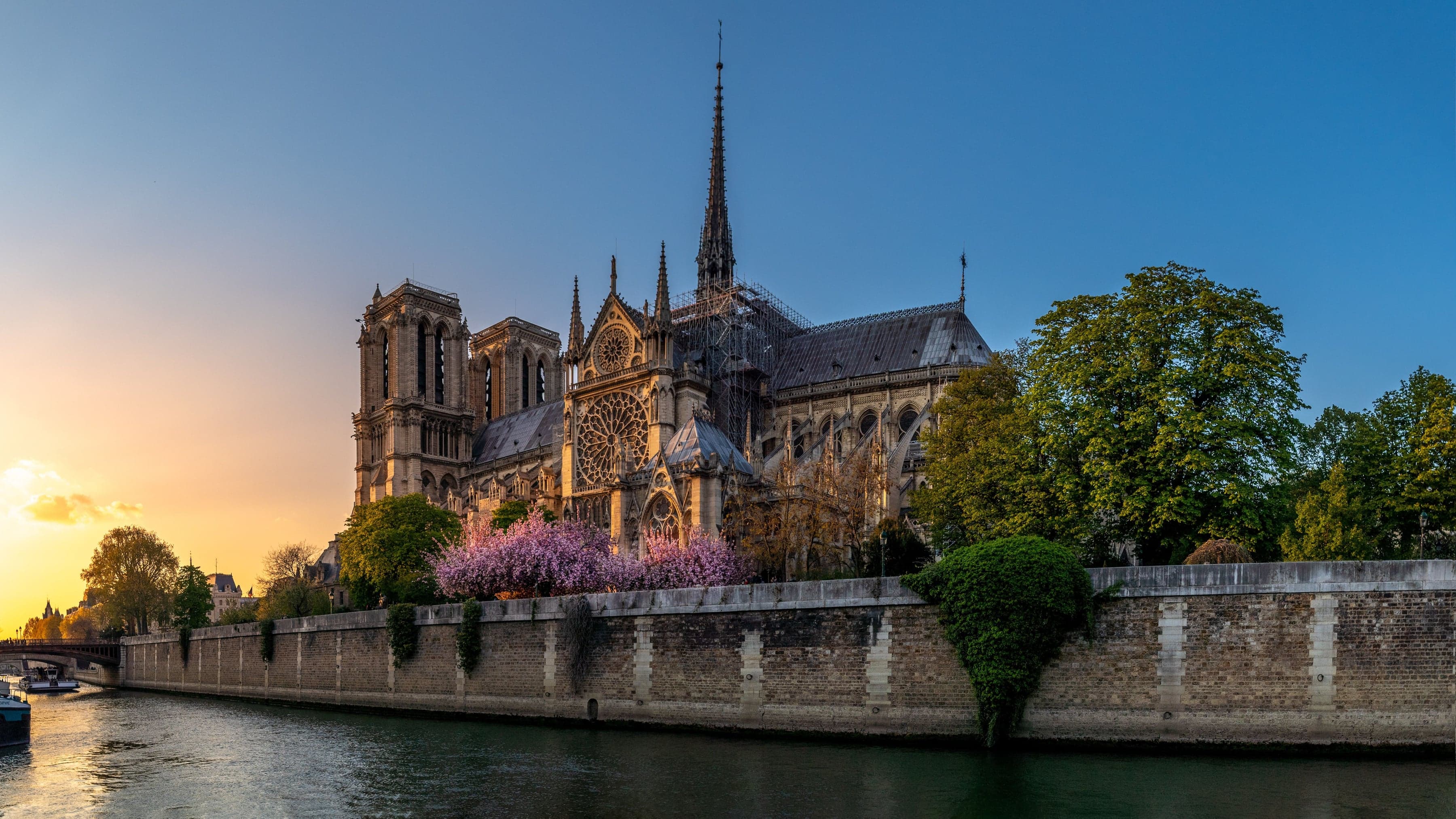
Start on the island by 9, when the bridges are awake but not yet crowded. The Notre-Dame and Île de la Cité walk has twelve stops and runs from the Pont Neuf to the Quai d'Anjou on the Île Saint-Louis, past the Conciergerie, the Sainte-Chapelle, Notre-Dame and the back of the cathedral. Expect scaffolding and fenced areas: the City is rebuilding the surroundings of the cathedral on a schedule that runs to 2028 and beyond, and the cathedral's own restoration is planned to finish around 2032 to 2033. The island is also a lesson in what the nineteenth century did to the old city. For that background, read Reading Haussmann's Paris before you set out, or the companion piece on Paris in layers.
Morning is also the moment for your first proper Paris ritual: a croissant and a café crème at a corner boulangerie or café. See what to eat in Paris for the pastries and the café habits worth learning here.
Midday: the Marais
Hear a stop from this walk
Quai d'Anjou and the Hôtel de Lauzun: A Plain Front, a Rich House
From the island, cross to the Right Bank and into the Marais, the low-rise, medieval-grid district spanning the third and fourth arrondissements. The Le Marais walk starts at the Hôtel de Ville, which is a copy of the city hall the Commune burned in 1871, and passes a stretch of the wall of Philippe Auguste from the 1190s, the Hôtel de Sully, the Place des Vosges of 1605 to 1612, and the Hôtel Carnavalet before it ends on the Rue des Rosiers, the heart of the old Jewish quarter. That is also the best lunch of the day: the street is known for its falafel counters, and the Marais food guide tells you what to order and why the street holds two Jewish culinary traditions at once.
Afternoon: across the Seine to the Latin Quarter
Mid-afternoon, take a short metro hop to the Left Bank and the Latin Quarter. The Latin Quarter and Saint-Germain walk starts at Saint-Julien-le-Pauvre, just across the river from Notre-Dame, and climbs through the Roman baths of the Cluny museum, the Sorbonne, the Panthéon and the Luxembourg Garden. The Sorbonne began as a college for poor students founded in the twelve-fifties, and the Panthéon was turned into a national necropolis by the Revolution in 1791. This is a natural spot for a mid-afternoon coffee or an early apéro at a café terrace before the light turns.
Evening: Saint-Germain-des-Prés
Let the afternoon carry you west to Saint-Germain-des-Prés, where the Latin Quarter walk ends, and to the quays for the last light. The bookshops, the café terraces, the bouquiniste stalls along the river, and the bridges catching the low sun make this the right stretch to slow down and simply be in the city. It is also where the day should end at a table: a proper bistro dinner of steak frites or a seasonal plat du jour, a glass of wine, and no rush. See what to eat in Paris for the bistro classics worth ordering.
The one-day route at a glance
| Block | Where | Anchor tour |
|---|---|---|
| Morning | Pont Neuf, Notre-Dame, Sainte-Chapelle, the Île Saint-Louis | Notre-Dame and Île de la Cité |
| Midday | Hôtel de Ville, Place des Vosges, Rue des Rosiers, lunch | Le Marais: The Mansions That Went to Work |
| Afternoon | Cluny, Sorbonne, Panthéon, Luxembourg Garden | The Latin Quarter and Saint-Germain |
| Evening | Saint-Germain, the quays, bistro dinner | (the Latin Quarter walk ends here) |
If you have a second day
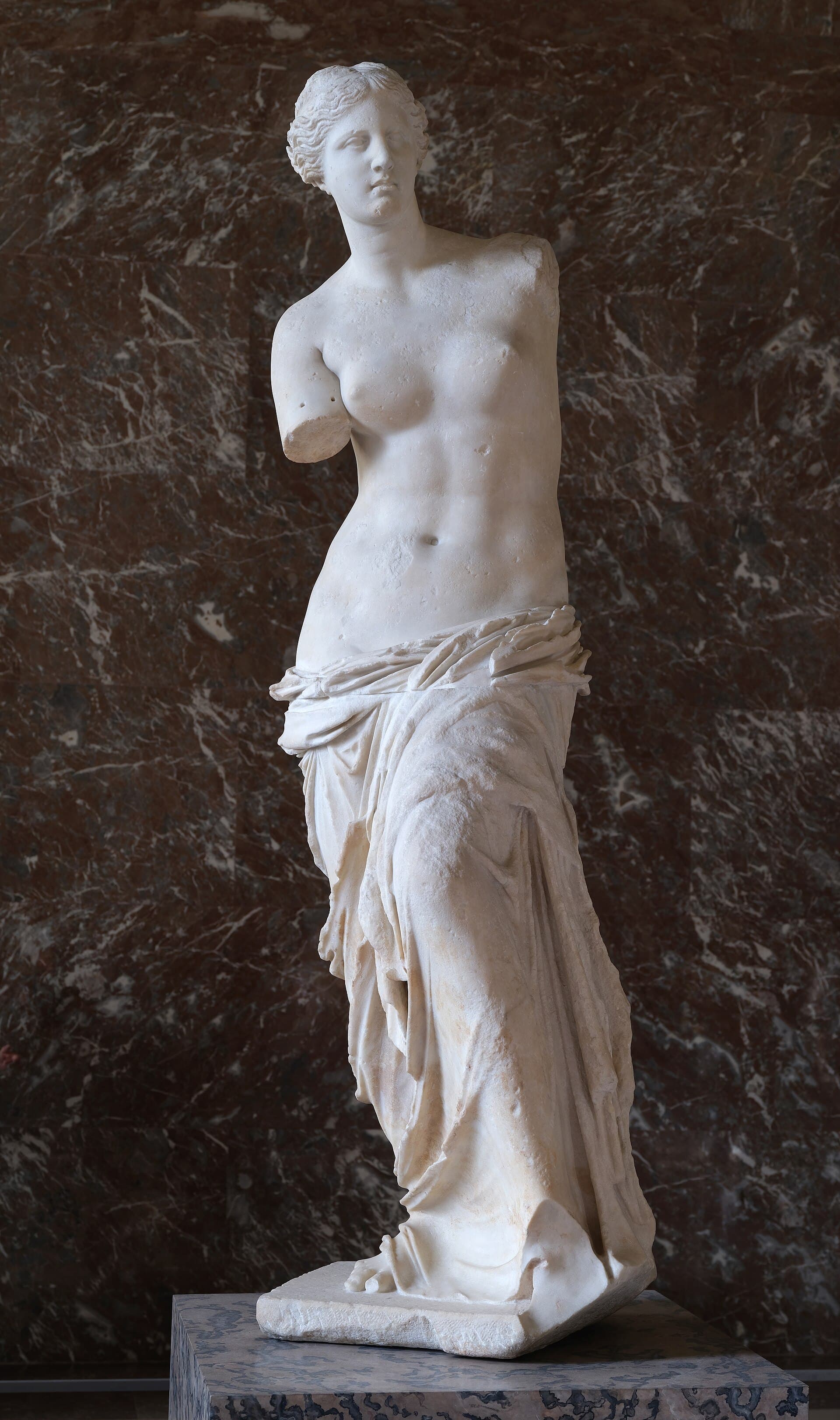
If a museum is on your list, Roamer's independent audio guide to the Louvre covers it room by room, with no route to follow: read what to see at the Louvre or open the Louvre guide.
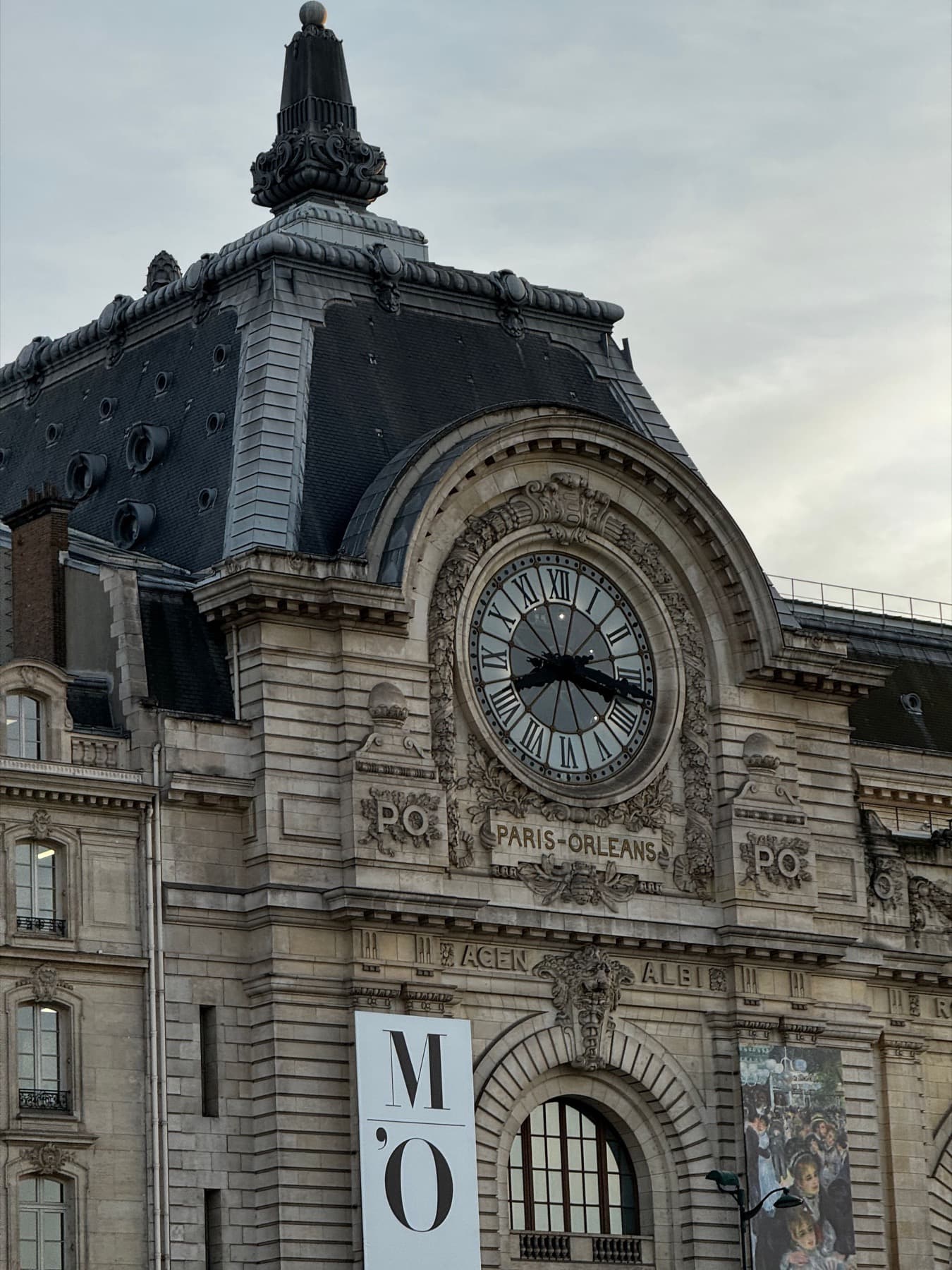
Three more walks use the same format. The Louvre and Tuileries walk runs from the Colonnade to the Place de la Concorde in twelve stops, down the central path of the Tuileries. The Montmartre walk climbs from the Abbesses to the Sacré-Cœur in eleven. The Eiffel Tower walk goes from the Trocadéro across the Champ de Mars lawns to the École Militaire in nine. If you would rather spend part of the day indoors, the Musée d'Orsay guide covers a former railway station full of Monet, Van Gogh and Manet in routes of 45 to 75 minutes.
Plan the rest of your trip
One day covers the core. For how many days Paris really deserves, how to get around on the metro and Navigo, and when to go, read the Paris travel guide. For what to order at every stop above, see what to eat in Paris. For every route in the city, see the best self-guided walking tours in Paris, or browse all Paris tours. Every tour is free to start: the introduction and first stop play in full, and every later stop plays a short preview before an optional purchase.
Frequently asked questions
- Can you see Paris in one day?
- You cannot see all of Paris in a day, but you can see its walkable core well. A focused day covers the Île de la Cité, the Marais, and the Latin Quarter across the Seine, three connected districts you can walk between with only short metro hops. Trying to add far-flung sights like Versailles or a full Louvre visit in the same day means rushing, so most travelers save those for a second day. Most guides suggest three to four days for a first visit; one focused day is a strong start.
- What is the best area to base a one-day visit to Paris?
- Base yourself centrally near the Marais, Chatelet, or the Latin Quarter, all within walking distance of several metro and RER lines. This route runs from the island through the Marais and back across the Seine to the fifth arrondissement, so a central base keeps your transit time low and your walking time high. Central Paris is unusually compact for a major capital, which is why so much of a good day can be done on foot.
- How much walking is a one-day Paris itinerary?
- Expect roughly 8 to 12 km on foot across the day, most of it flat on boulevards, quays, and narrow lanes, with a couple of short metro hops to save your legs between districts. Wear real walking shoes, carry water, and treat the café and bakery stops below as part of the plan. Paris is a walking city, and the streetscape is the sight.
- Do I need to book anything in advance for one day in Paris?
- Most of this route needs no booking: the quays and bridges of the island, the Marais lanes, and the Latin Quarter squares are all free to walk, though Sainte-Chapelle and the Conciergerie are ticketed and Notre-Dame is in a long programme of works. If you want to add a museum, book a timed slot in advance, especially for the Louvre or Musee d Orsay, where walk-up lines are long. The self-guided audio tours that anchor each block are free to start and download in advance, so the history walks with you even without signal.
Ready to experience it?
Notre-Dame and Île de la Cité: An Island Rebuilt Three Times
90 min · 2.1 km · easy
More from Paris
Explore more at your own pace.
Musée d'Orsay: What to See, Floor by Floor
The Code of Hammurabi at the Louvre: Which Room, and the Story of the Stone

The Louvre: What to See, by Wing and Room Number, and a Two-Hour Route

The Mona Lisa: Which Room It Is In and What to Know

The Raft of the Medusa at the Louvre: Where It Hangs and the True Story